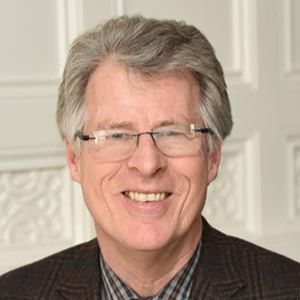
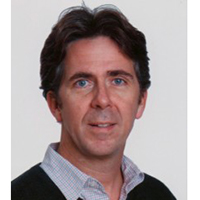
Thomas Berger is a Professor at the University of Hohenheim , affiliated with the Faculty of Agricultural Sciences and leading the Department of Economics of Land Use . He also contributes to the Computational Science Hub and Hohenheim Tropics initiatives. Focus Areas: Climate change adaptation, land-use modeling, biodiversity-productivity trade-offs, agent-based simulation, and machine learning in agricultural systems. Key Projects: Simulation frameworks for smallholder resilience in Ethiopia, bioeconomic modeling in the Amazon, and hybrid intelligence applications in European agricultural policy. Recent Publications: 2025 study on climate change effects on insecticide reduction in Germany, 2024 work on reconciling biodiversity with productivity via hybrid models, and 2023 methodological contributions to surrogate modeling and seasonal forecast integration. Research Trends: Interdisciplinary integration of climate science, agricultural economics, and computational modeling, with increasing emphasis on AI-assisted decision support systems and sustainability policy validation. Teaching & Outreach: Offers Agricultural Economics seminars and Hohenheim Tropics discussions, requiring advance email registration for office hours.
Janina Grabs is Professor of Sustainability Research at the University of Basel, where she heads the subject area of Sustainability Research within the Department of Social Sciences at the Faculty of Humanities and Social Sciences. She is responsible for social science teaching in the Master's program in Sustainable Development and leads a research group investigating sustainability governance in global value chains, particularly in tropical agricultural commodities. Her academic background includes a PhD in Political Science from Westfälische Wilhelms-Universität Münster (2018), with research stays at Carleton University in Ottawa and Yale University in New Haven. Prior to her current position since June 1, 2024, she worked as an assistant professor at ESADE Business School in Barcelona (2021-2024) and as a postdoc at ETH Zurich (2019-2021). Professor Grabs' research focuses on transnational sustainability governance in global value chains, examining how states, firms, NGOs and other actors can improve environmental and social sustainability in commodity production. Her interdisciplinary work bridges political economy, regulatory governance, and business in society scholarship to investigate who defines sustainability in the marketplace, what rule-making mechanisms exist, their effectiveness, and potential unintended consequences on smallholders' livelihoods. She places special emphasis on coffee, palm oil, and cocoa sectors, exploring how global production and consumption processes can be steered toward more sustainable directions within market frameworks. Analysis of her recent publications reveals a strong focus on zero-deforestation initiatives, supply chain due diligence legislation (particularly the EU Deforestation Regulation), jurisdictional approaches to sustainable commodity governance, and the evolving role of various actors in sustainability governance. Her work spans multiple commodities but shows particular depth in coffee and palm oil sectors, examining both environmental and social dimensions of sustainability through field research in Colombia, Honduras, Costa Rica and Indonesia. Her significant contributions to the field have been recognized with prestigious awards: 2021 Organizations and the Natural Environment Book Award from the Academy of Management 2022 Lynton Keith Caldwell Award for the best book in the field of science, technology and environmental politics from the American Political Science Association Professor Grabs actively mentors doctoral students and postdoctoral researchers including Alexandra Bögner, Charline Depoorter, Lucia Casalegno, Lesly Nassila, and Philipp Dunker. Her research is supported by multiple third-party funded projects such as EXPECT-AGRI (investigating political economy of expectations in agri-food sustainability transformations), PACSMAC (examining paradoxes of climate-smart coffee production), and research on zero-deforestation commitments in the palm oil sector. She also serves as book review editor for the journal Regulation & Governance and participates in professional associations including the ECPR Standing Group on Regulatory Governance and the International Studies Association. She leads the Sustainability Research Group at the University of Basel, which conducts interdisciplinary research on sustainability governance and transformations toward more sustainable socio-economic systems, with particular focus on agri-food, energy, and mobility sectors while addressing critical questions of justice, equity, and inclusivity in sustainability transitions.
Jossy Sayir is an Affiliated Lecturer and Senior Research Associate in the Department of Engineering at the University of Cambridge . Holding a Dipl. El.-Ing. ETH and Dr. Techn.-Wiss. from ETH Zurich, Sayir’s work bridges Information Theory and Bioinformatics , focusing on DNA-based data storage and error correction systems. They serve as Director of Studies in Engineering at Newnham College and coordinate Engineering Admissions. Interdisciplinary collaboration with the European Bioinformatics Institute Research on DNA data storage efficiency and cost reduction Expertise in channel coding, source coding, and 5G algorithms Teaching spans mathematics and information engineering modules in Part I Engineering Tripos, with Part II contributions on information theory, error control coding, and cryptography. Sayir also oversees data compression labs and serves as Wine Committee Chair, reflecting diverse interests in food, coffee, wine, music , and jazz . Best Lecturer Award, 2017-18 Research Fellowships in coding theory Key research trends include DNA storage encoding , LDPC decoders , polar code optimization , and Sudoku-inspired constraint coding . Sayir’s work addresses both theoretical and practical challenges in high-density data storage and next-generation communication protocols .
Yeonhwa Park is a Professor and holder of the Francis Chair in the Department of Food Science at the University of Massachusetts Amherst. Her research focuses on functional foods, bioactive components, and environmental contaminants' effects on obesity and aging. She investigates food bioactives like conjugated linoleic acid (CLA) and environmental pollutants like PFAS to understand their roles in metabolic disorders and aging mechanisms. Her work spans multiple models, including C. elegans, zebrafish, and rodent studies, emphasizing translational applications for human health. Teaching responsibilities include courses such as 'Science of Food' (FS150), 'Biology of Food in Human Health' (FS270), and 'Bioactive Food Components' (FS750). Awards include Clarivate Highly Cited Researcher (2017–2018), Faculty Convocation Award (2015), and the Timothy Mounts Award (2015). Her research has been published in over 150 peer-reviewed articles, with recent emphasis on environmental contaminants' impact on obesity and type 2 diabetes, and the use of C. elegans for screening bioactives. Key findings include CLA's role in fat reduction, PFAS-induced metabolic disruption, and the application of alternative models (e.g., C. elegans) to reduce animal testing. Her lab integrates molecular biology, toxicology, and food science to address global health challenges like the obesity epidemic and environmental toxin exposure.
Prof. Dr.-Ing. Arne Pietsch is a faculty member at the Technical University of Luebeck in the Department of Mechanical Engineering and Economics . His expertise centers on apparatus and plant engineering for the food industry , with a focus on hygienic apparatus engineering and high-pressure technology . Specializations: Food process engineering, supercritical fluid applications, and industrial plant design Current role: Founding Officer in the department His research spans supercritical CO2 processes , including decaffeination, turbine cleaning, and polymer impregnation. He integrates high-pressure systems into engineering education and explores viscosity dynamics in food processing. Key publication trends (2012–2019) highlight work in: Supercritical fluid extraction and impregnation High-pressure equipment safety and design Gas-assisted oilseed pressing Coffee processing quality control
Professor Sarah Bekessy is a leading interdisciplinary conservation scientist at RMIT University's School of Global, Urban and Social Studies (GUSS). She leads the ICON Science research group, focusing on urban biodiversity conservation, human behavior in conservation, and nature-positive urban design. Her work integrates ecological modeling, social sciences, and policy to address biodiversity challenges. She holds an ARC Future Fellowship (2014-2020) and has secured over AUD 12 million in research funding. Her research interests include biodiversity-sensitive urban design (BSUD), conservation psychology, and spatial conservation planning. Key contributions include the BSUD protocol adopted by governments and developers worldwide, and co-developing methodologies for the UN Cities with Nature program. She advises organizations such as WWF, Bush Heritage Australia, and the Living Building Challenge. Prof. Bekessy has authored highly cited papers (H-index 50) in journals like Conservation Biology and Nature Communications. Awards include the RMIT Media Star Award (2022/23) and the City of Melbourne Design Challenge (2020). She is engaged in teaching, supervising 8 postdocs and 8 postgraduates, and actively contributes to conservation policy through roles like Lead Councillor of The Biodiversity Council. Her research spans urban ecology, threatened species management, and environmental decision-making, with a focus on bridging science and practice. Recent projects include investigating nature-based solutions for loneliness reduction and sustainable coffee systems. She emphasizes 'everyday nature' experiences in cities and advocates for measurable 'nature-positive' development frameworks.
Jooyeoun Jung is an Assistant Professor in the Department of Food Science & Technology at Oregon State University. She holds affiliations with the university's Food Science and Techno Headquarters and has been part of the OSU Main Campus since 2016. Her career includes roles as a Senior Researcher and Assistant Professor of Practice at the University of Nebraska-Lincoln (2018-2021) before returning to Oregon State in 2022. Educated at Oregon State University with a Ph.D. in Food Science & Technology, her research focuses on sustainable food processing, value-added food product development, and innovative food packaging solutions. Key areas include edible coatings using nanocellulose, antimicrobial packaging technologies, and utilization of agricultural byproducts for eco-friendly materials. Her work emphasizes enhancing food shelf-life through advanced coating technologies, improving packaging functionality, and addressing challenges in food preservation such as mold control, lipid oxidation, and microbial inhibition. She has pioneered studies on hazelnut processing, blueberry anthocyanin stabilization, and fruit pomace valorization. Jung teaches courses like Introduction to Sustainable Food Processing (FST327) and collaborates on interdisciplinary projects involving food safety, material science, and agricultural engineering. Her research has led to innovations in molded pulp packaging, radiofrequency pasteurization, and functional food film development. Professional affiliations include the Institute of Food Technologists, reflecting her commitment to advancing food science through industry collaboration and academic rigor.
Zeynep Devrim Gürsel is an Associate Professor and Graduate Director in the Department of Anthropology at Rutgers University, School of Arts and Sciences. Her research bridges media anthropology, visual culture, and historical studies, focusing on photography’s role in governance, migration, and news production. She holds a PhD in Anthropology (2007) from UC Berkeley, with a Designated Emphasis in Film Studies. Her work includes the book Image Brokers: Visualizing World News in the Age of Digital Circulation (2016) and the award-winning film Coffee Futures , exploring Turkish politics through coffee fortune-telling. Current projects examine Ottoman Armenian emigration photographs and late Ottoman medical imagery. She was a NOMIS Fellow (2018-2019) at eikones Center in Basel. Education: B.A. (magna cum laude), Yale University, 1995 M.A., University of California, Berkeley, 2001 PhD, University of California, Berkeley, 2007 Research Interests: Media anthropology, visual ethnography, Ottoman history, migration studies, photography’s role in statecraft, and the anthropology of imagination. Her work analyzes how visual practices shape citizenship, knowledge production, and political subjectivity across historical and transnational contexts. Publications: Over 15 peer-reviewed articles and book chapters on photojournalism, Ottoman bureaucracy, and digital media. Her scholarship appears in Cultural Anthropology , American Ethnologist , and Grey Room . Awards & Fellowships: NOMIS Fellowship, eikones Center, 2018–2019 Award-winning ethnographic film Coffee Futures Labs/Teams: Affiliated with the eikones Center for Theory and History of the Image (Basel) and ongoing collaborations with the Başbakanlık Osmanlı Arşivleri (Istanbul).
Mingzhou Jin is a Professor and Department Head in the Department of Industrial and Systems Engineering at the University of Tennessee, Knoxville, within the Tickle College of Engineering. He also directs the Institute for a Secure and Sustainable Environment (ISSE) and the FERSC Center, a DOT/UTC Tier-1 Center. Holding the John D. Tickle Professorship, he is a recognized leader in sustainability, optimization, logistics, and smart manufacturing. PhD, Industrial and Systems Engineering, Lehigh University, 2001 MS, Management Science, Zhejiang University, 1998 BS, Electrical Engineering and Mixed Class, Zhejiang University, 1995 Dr. Jin's research focuses on sustainability, climate change, transportation and logistics, supply chain engineering, additive and smart manufacturing, and energy efficiency. His work integrates operations research and systems engineering to solve complex environmental and industrial challenges. He has secured over $19 million in research funding from agencies including NSF, DOE, DOT, DHS, and industry partners like FedEx, Boeing, and Schneider Electric. His recent publications span high-impact journals such as Nature , Nature Communications , and European Journal of Operational Research , with themes in net-zero strategies, wildfire modeling, smart manufacturing, and sustainable supply chains. The research demonstrates a strong trend toward interdisciplinary, data-driven solutions for global environmental and industrial systems. 2023 Dr. Kenneth Kirby Endowed Faculty Award 2021 UTK Award for Success in Multidisciplinary Research 2020 UTK Chancellor’s Research and Creative Achievement Award 2020 TCE Research Achievement Award IISE Fellow (2018) Multiple teaching, advising, and service awards from TCE and UTK Dr. Jin has advised numerous graduate students and led large-scale research initiatives. He has served as Editor-in-Chief of Cleaner and Circular Bioeconomy , Executive Editor of Journal of Cleaner Production , and held leadership roles in IISE. His research has been supported by extensive grants from federal agencies and industry, reflecting strong collaboration and real-world impact. He also held adjunct professorships at Zhejiang University and Central South University of Forestry and Technology. He leads the Institute for a Secure and Sustainable Environment (ISSE) and the FERSC Center, fostering interdisciplinary research in sustainability, energy, and resilient infrastructure. These centers bring together experts from engineering, environmental science, and policy to address pressing global challenges through systems-level innovation.
Elizabeth A. Bennett, PhD, is a Full Professor of International Affairs (with tenure) and Director of Political Economy at Lewis & Clark College , Portland, Oregon. She holds visiting roles at the Goldman School of Public Policy, University of California – Berkeley , and will be a Senior Fellow at the Forum Basiliense, University of Basel (Switzerland) in 2025. Her work focuses on labor exploitation in globalized supply chains, voluntary sustainability standards, and equitable business models. Education : PhD in Political Science, Brown University (2014); MALD in Political Economy and Development, The Fletcher School at Tufts University (2014) Her research spans international relations, political economy, public policy, and sustainable development. Recent projects examine living wages in global supply chains and ethical consumerism in the cannabis industry. She co-edited The Handbook of Research on Fair Trade (2015) with Laura T. Raynolds. Her 2024 articles explore value chain profit-sharing, voluntary sustainability standards, and fair trade principles in cannabis. Earlier works analyze global governance, labor rights, and civic engagement. She has received fellowships from Harvard, Rutgers, and the J. Robert Beyster Foundation. Scientific Awards : J. Robert Beyster Fellowship (2022), Harvard Kennedy School Fellow, ongoing Rutgers Institute Fellow Dr. Bennett engages public policy through advisory roles with the United Nations Forum on Sustainability Standards , Global Organic Textile Standards Committee , and think tanks like IDOS . Her research is featured in The Guardian , PBS Nova , and The Oregonian .
Arnold Mathijssen is an Assistant Professor in the Department of Physics & Astronomy at the University of Pennsylvania, part of the School of Arts and Sciences. He leads the Mathijssen Lab, focusing on the physics of life, combining experimental and theoretical approaches in biophysics, fluid mechanics, and active materials. His research addresses fundamental questions about pathogen dynamics, biomedical material design, and collective behavior in living systems, with applications to public health and environmental science. Education includes a DPhil from the University of Oxford (2017), MSci and BSc from University College London (2012), and a teaching certificate from Stanford University (2019). He has held roles such as Postdoctoral Fellow at Stanford (2017-2020) and Director of the Working Group on Environmental and Biological Fluid Dynamics (2023-). Research interests span topics like hydrodynamic communication, pathogen clearance in airways, and bacterial contamination dynamics. Notable achievements include the 2025 Undergraduate Research Mentorship Award and media recognition for breakthroughs in optimizing coffee-brewing physics. He chairs conferences, edits scientific journals, and advocates for science accessibility through initiatives like 'Kitchen flows.' Lab affiliations: Centre for Soft and Living Matter at UPenn, Laboratory for Research on the Structure of Matter (LRSM). Media highlights include coverage in The New York Times, The Guardian, and New Scientist for his work on culinary fluid mechanics.
Dana Sajdi is an Associate Professor of History at Boston College, affiliated with the Morrissey College of Arts and Sciences. She holds a B.A. from the American University in Cairo and a Ph.D. from Columbia University. Her research focuses on premodern social and cultural history of the Arabic-speaking Eastern Mediterranean, with a current project, In Defense of Damascus , exploring the city’s history through local descriptions from the 12th to 20th centuries. She pioneered the Podcasting the Ottomans course, establishing a History Department Pod Studio, enabling undergraduates to produce scholarly podcasts. This initiative has been featured on the Ottoman History Podcast. Her work bridges academia and public engagement, emphasizing interdisciplinary approaches to history. Key publications include analyses of Syrian sacred landscapes (2022), responses to historical theory (2021), and studies on Ottoman Levant literacy and urban life (2020). Her scholarship integrates textual analysis, spatial history, and cultural critique, reflecting her commitment to innovative historical methodologies.
Rudi Matthee is the John and Dorothy Munroe Distinguished Professor of History at the University of Delaware's College of Arts & Sciences, specializing in Middle Eastern and Iranian history. His work focuses on early modern Iran, particularly the Safavid period, examining trade, cultural practices, and political dynamics. He has authored influential books such as *The Politics of Trade in Safavid Iran* (1999), *The Pursuit of Pleasure* (2005), and *Persia in Crisis* (2012). Additionally, he co-edited volumes like *The Safavid World* (2021) and contributed to studies on Safavid-Spanish relations, Russian-Iranian diplomacy, and monetary history. Matthee's accolades include the Albert Hourani Book Prize (2006), the Saidi Sirjani Award (2004-2005), and the British-Kuwaiti Friendship Book Prize (2012). He has held leadership roles in academic organizations, serving twice as president of the Association for the Study of Persianate Societies and currently leading the Persian Heritage Foundation. His research bridges economic, cultural, and political history, offering insights into Iran's global connections and internal transformations. His publications analyze themes ranging from alcohol consumption in Islamic societies to the economic underpinnings of empires, showcasing interdisciplinary approaches to understanding premodern and early modern Iran. His work underscores the importance of Iran's role in broader Eurasian and global historical narratives.
Robert L. Hicks is a Professor of Economics and Marine Science at The College of William and Mary, holding joint appointments in the Department of Economics and the School of Marine Science. He is affiliated with the Environmental Science and Policy Program and the Thomas Jefferson Program in Public Policy. With a Ph.D. from the University of Maryland and a B.A. from North Carolina State University, Hicks has been a visiting professor at institutions in Germany and Spain, including the University of Bonn and the University of Hannover. His research focuses on environmental and natural resource economics, welfare economics, and econometrics, with notable contributions to fisheries management, eco-labeling, and recreational resource valuation. He has served on the editorial board of Marine Resource Economics and received grants from the National Science Foundation, U.S. Department of Commerce, and philanthropic organizations like the Bill and Melinda Gates Foundation. His awards include the Alumni Fellowship Award and the Plumeri Award for Faculty Excellence. Education: B.A., North Carolina State University Ph.D., University of Maryland Research Interests: Environmental economics emphasizes sustainable resource management, while his work in econometrics advances quantitative methods for policy analysis. Key areas include recreational fishing valuation, eco-labeling impacts, and spatial modeling in fisheries. His research bridges theoretical frameworks with practical applications in coastal and marine environments. Grants & Awards: Recipient of grants from NSF, U.S. Department of Commerce, William and Flora Hewlett Foundation, and Bill and Melinda Gates Foundation Alumni Fellowship Award Plumeri Award for Faculty Excellence Labs & Affiliations: Active in interdisciplinary collaborations, Hicks contributes to policy boards such as NOAA’s Science Advisory Board and aids in shaping environmental and marine policy through academic partnerships.
Christopher Cramer is a Professor in the Department of Development Studies at SOAS University of London. He joined SOAS part-time in 1993 and full-time in 1996 after teaching in Cambridge and Maputo, Mozambique. He has served as Head of the Department of Development Studies and is currently Co-Director of the Development Leadership Dialogue (DLD) at SOAS. He designed and launched the MSc Violence, Conflict and Development, which marked its 25th year in 2025. Cramer earned his PhD in Economics from the University of Cambridge in 1994 with a thesis titled The Political Economy of War in Angola and Mozambique . Before joining SOAS, he worked for the Economist Intelligence Unit (EIU) and the Macroeconomic Research Group (MERG) in South Africa during its democratic transition. Professor Cramer's research focuses on structural change, high value agriculture, industrial policy, development strategy, extreme deprivation, war to peace transitions, and labor in value chains. His work primarily draws on field research in Southern Africa and Ethiopia, with additional projects in Colombia and Brazil. He has made significant contributions to understanding the political economy of violence and conflict in developing countries, challenging conventional wisdoms about economic performance in African contexts. His recent work has increasingly focused on high-value agricultural exports as pathways to structural transformation, particularly examining how classification systems affect production processes. His recent publications show a strong emphasis on African economic development, with particular attention to labor conditions in global value chains and innovative approaches to measuring extreme deprivation. Cramer's work often challenges mainstream development economics frameworks, especially through his critiques of the Lewis Model, while developing practical tools like the Extreme Deprivation Index for poverty measurement in rural contexts. Editorial Board Member, Journal of Southern African Studies (1996-present) Fellow of the Academy of Social Sciences (2016) Visiting Professor at University of Johannesburg (2020) Professor Cramer has supervised numerous PhD students working on diverse topics including coffee policy in Ethiopia, non-state security actors in Nigeria, rural labor regimes in Sudan, and labor retention in Ethiopia's apparel industry. He designed and launched the pioneering MSc Violence, Conflict and Development program at SOAS, which celebrated its 25th anniversary in 2025. In 2025, he also started the innovative module Structural Change and Economic Development in Africa (SCEDA), co-designed with the Mandela School of Public Governance in South Africa, taught synchronously to cohorts at both institutions. As Co-Director of the Development Leadership Dialogue (DLD), Cramer leads an institute focused on understanding the political economy of development. He has served on various committees including the Royal African Society (as former Vice Chair), the University of London's Centre of African Studies (as former Chair), and SOAS committees including the Honorary Degrees Committee and the project board for the Paul Webley Wing construction project.