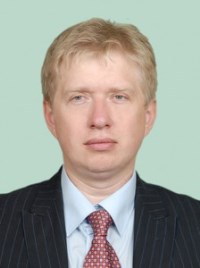
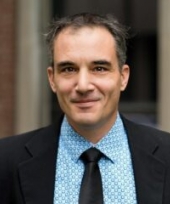
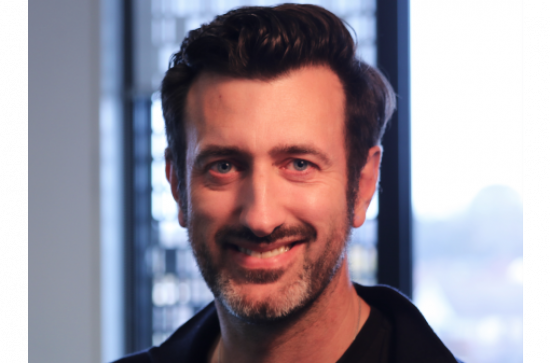
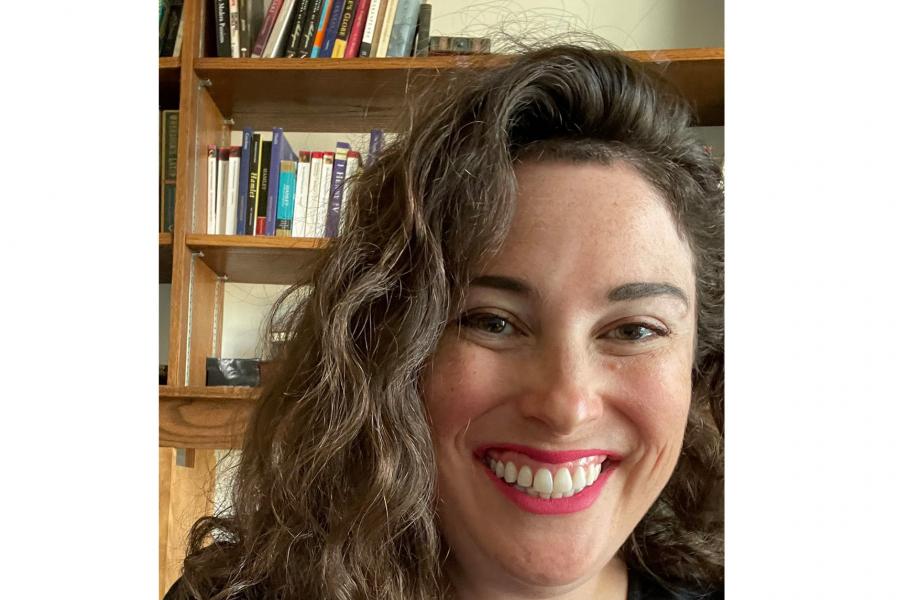
Dr. Stewart D'Alessio is Professor of Criminology at Florida International University, specializing in race and sentencing disparities, firearm policy, and environmental criminology. A former Military Police Captain, he brings practical insights to criminal justice research. His current MacArthur Foundation-funded project develops fair prosecution practices. Recent publications examine youth access to firearms, identity theft in intimate partner violence, and environmental influences on crime. Methodologically rigorous work integrates spatial analysis and policy evaluation.
Mary Ann Campbell is a Professor in the Department of Psychology at the University of New Brunswick (Saint John campus) and serves as Director of the Centre for Criminal Justice Studies. Her work integrates psychological science with criminal justice practice to improve evidence-based interventions. Her primary research focuses on: Forensic risk assessment tools (especially ODARA) for intimate partner violence Police decision-making in mental health crises and domestic violence incidents Vulnerability and resilience among justice-involved populations and first responders Mental health courts and risk-need-responsivity model applications She investigates how biopsychosocial factors influence criminal behavior and justice system outcomes. Analysis of her 2021-2025 publications reveals three dominant trends: (1) real-world validation of domestic violence risk assessment tools in police practice; (2) examination of coercive control dynamics and mental health intersections in intimate partner violence; (3) comprehensive studies on first responder vulnerability, including social support mechanisms and innovative interventions like support canines. Her work consistently bridges theoretical psychology with operational law enforcement needs. As Director of the Centre for Criminal Justice Studies, Campbell leads interdisciplinary research initiatives that translate academic findings into practical tools for criminal justice professionals, policymakers, and frontline responders across Canadian jurisdictions.
Eric Allina is an Associate Professor specializing in History, focusing on African history, slavery, and Cold War-era connections between African states and socialist bloc countries. He earned his Ph.D. (2002), M.A. (1995) in History from Yale University, and an A.B. in Social Studies from Harvard College (1990). His research explores colonial labor systems, post-abolition slaveries, and transnational Cold War dynamics. Research interests include oral history methodologies, East African studies, and the intersection of labor migration with colonial/post-colonial authority structures. His work examines sites like Mozambique, East Germany, and Berlin, analyzing archival materials and ethnographic data. Recent publications focus on DDR labor recruitment practices, Mozambican colonial labor regimes, and transnational socialist networks. Teaching includes courses like 'Human Rights, Human Wrongs,' emphasizing historical contexts of exploitation. He currently advises Gloria O. Lamptey on graduate research in African history. His geographic research foci include Halle, Chemnitz (Germany), Maputo, and Mozambique's Manica Province.
Professor Marilyn McMahon is a distinguished academic and Dean of Deakin Law School at Deakin University, where she holds the rank of Professor. She is affiliated with the Faculty of Business and Law and the Deakin Cyber Research and Innovation Centre, contributing to interdisciplinary legal and cyber research. Her work spans criminal law, criminal procedure, evidence, and the legal dimensions of family violence and digital abuse. PhD (with Distinction), La Trobe University, 2011 Graduate Diploma Legal Practice, Australian National University, 2017 Master of Psychology (Forensic), Monash University, 2000 Graduate Diploma Legal Studies, Monash University, 1993 LLB, University of Melbourne, 1985 BA(Hons), University of Melbourne, 1985 Her research centers on criminal law and justice, with a focus on family violence, bail reform, double jeopardy, and the criminalization of psychological and coercive control. She explores how victims and harms are constructed legally and historically, and investigates the role of stalking laws in addressing non-physical abuse. Her recent work also examines digital coercive control, emoji in legal contexts, and the regulation of online speech. The analysis of her recent publications reveals a strong thematic focus on the evolution of criminal law to address modern forms of abuse, particularly those facilitated by technology. Her work bridges legal doctrine, criminology, and human rights, with increasing attention to cyber-enabled domestic violence, juvenile justice, and the ethical regulation of digital communication. She frequently collaborates with interdisciplinary scholars and contributes to law reform through research and policy submissions. Her scientific recognition includes the Victorian Parliamentary Research Fellowship (2017–2018). This honor supported her work on bail reform and risk assessment, underscoring her influence in legal policy. Professor McMahon actively supervises doctoral research, including projects on technology-facilitated domestic violence and evidence-based sentencing. She has secured significant research grants from the Australian Research Council and the Australian Institute of Criminology, supporting projects on remand, bail risk assessment, modern slavery, and CCTV use in domestic violence contexts. Her teaching encompasses core units in criminal law and procedure. She leads and contributes to major research initiatives through the Deakin Cyber Research and Innovation Centre and collaborates with national and international scholars on domestic violence and legal reform. Her editorial work, including co-editing the book Criminalising Coercive Control , demonstrates her leadership in shaping scholarly discourse in family violence law.
Kozlov Alexander Alexandrovich is an Associate Professor and Doctor of Medical Sciences serving as Deputy Director General for Research at the V.P. Serbsky Scientific Medical Center of PN, a leading psychiatric and forensic institution under the Russian Ministry of Health. He is based in Moscow, Russian Federation, and is a member of the editorial board of the journal "Psychology and Law." His work bridges clinical psychiatry, public health, and legal policy, particularly in the domain of substance abuse and addiction. His research interests focus on addiction medicine, narcology, forensic psychiatry, and public health policy . He has extensively studied opioid addiction, rehabilitation strategies, substitution therapy, and the socio-legal dimensions of drug use. His work also explores HIV co-infection among drug users, international drug policies (including in Georgia and Italy), and the psychological impact of substance abuse on youth and conscription-age populations. He has contributed to methodological frameworks for early detection of drug use in schools and the economic evaluation of rehabilitation programs. The 15 most recent articles analyzed reflect a consistent engagement with drug policy, legal psychiatry, and public health interventions . The publications span forensic, clinical, and epidemiological domains, with a strong emphasis on policy relevance and systemic reform. Key trends include alternatives to incarceration for drug offenders, involuntary treatment protocols, and cross-national comparisons of drug control mechanisms. His work is primarily published in Russian journals such as "Narcology" and "Social and Clinical Psychiatry." Scientific Awards: No scientific awards mentioned in the provided text. Advising and Grants: Kozlov has collaborated extensively with researchers such as T.V. Klimenko, O.A. Safonov, and T.B. Dmitrieva, indicating a strong team-based research approach. While no formal advising of students or grant funding details are provided, his leadership role as Deputy Director General for Research suggests oversight of research programs and potential mentorship of junior researchers. His editorial role further underscores his influence in the academic community. Labs, Teams, and Research Groups: Kozlov is affiliated with the research division of the V.P. Serbsky Scientific Medical Center of PN, a premier institution in forensic psychiatry in Russia. While specific lab names are not mentioned, his work appears to be conducted within a multidisciplinary team focused on narcology, public health policy, and legal psychiatry. His collaborations suggest participation in national and possibly international research initiatives on drug policy and addiction treatment.
Dr. Beth A. Sanders serves as Professor and Chair of the Department of Human Services within Bowling Green State University's College of Health & Human Services. She joined BGSU in 2018 after prior academic appointments at Kent State University and public health experience at Cincinnati Children's Hospital. Her leadership oversees the Criminal Justice program, Police Integrity Research Group, and departmental operations from the Health and Human Services Building. Her educational foundation includes a Ph.D. from the University of Cincinnati. Prior professional roles encompass: Academic position at Kent State University Public health research at Cincinnati Children's Hospital Child Health Statistics Center Dr. Sanders' research centers on police officer selection methodologies and performance evaluation systems , critically examining organizational constraints in identifying quality officers. Her work on public opinion toward the death penalty explores gender disparities and sociological determinants. Through extensive consulting with police departments on selection protocols, performance metrics, and community relations, she bridges academic theory with practical law enforcement challenges. Her program evaluations for adult probation and juvenile treatment systems demonstrate applied criminological expertise. Analysis of her 25+ publications reveals sustained focus on policing integrity across three decades, with recent work expanding into social policy impacts on traffic safety. Her scholarship consistently employs rigorous quantitative methods in journals like Policing: An International Journal , Journal of Criminal Justice Education , and Deviant Behavior , addressing core tensions between organizational realities and ideal policing standards. As Department Chair and Professor, Dr. Sanders mentors students in Criminal Justice programs while leading the Police Integrity Research Group. Her consulting engagements with multiple police departments indicate active knowledge transfer between academia and law enforcement practice, though specific grant details remain unreported in available materials. The department's operational framework includes: Police Integrity Research Group examining ethical policing challenges Criminal Justice Career Fair facilitating student-practitioner connections Interprofessional Education initiatives across health disciplines
Professor Stephen Macdonald is Professor of Criminology and Disability Studies in the Department of Sociology, Durham University, and Fellow of the Institute for Medical Humanities. Since arriving at Durham in 2021 he has served as Level-3 BA Criminology Year Tutor (Terms 2 & 3) and teaches across both undergraduate and postgraduate criminology programmes. Education & Career Path PhD, Newcastle University (2006) MSc Social Research (Criminology specialism) BA Criminology Professor of Social Science & Head of Centre of Applied Social Sciences (CASS), University of Sunderland (prior to 2021) Research Focus Macdonald’s scholarship sits at the intersection of Disability Studies , Criminology and Social Work . Recent projects investigate the everyday violence and hate crime faced by disabled people, the phenomenon of “cuckooing” (home takeovers), neurodiversity and pathways into offending, and the disabling effects of poverty, homelessness and social exclusion. His work deploys critical disability theory to re-frame criminological questions around victimisation, state violence and structural inequality. Key thematic strands include: Disability hate crime & mate crime Neurodiversity, dyslexia and criminal justice Homelessness, social deprivation and offending Adult safeguarding and coercive control Digital inclusion/exclusion for disabled populations Publications & Intellectual Contributions Across more than 50 peer-reviewed articles, books and chapters, Macdonald has advanced a distinctive dis/ableist criminology that foregrounds disabled voices and lived experience. His 2024 article in Disability and Society on “domestic colonisation” reframes home-based hate violence as a form of spatial domination, while his 2023 piece in Sociological Research Online re-theorises repeat hate incidents as ongoing coercive relationships. These works consolidate a research trajectory that combines empirical rigour with critical theoretical innovation. Honours & Esteem 2022 British Society of Criminology Hate Crime Network Journal Prize Associate Editor, Scandinavian Journal of Disability Research (2021–present) Fellow of the Higher Education Academy (2010) Member of the British Society of Criminology Doctoral Supervision & Research Leadership Macdonald currently supervises postgraduate researchers including Esther Outram . He has led multiple funded projects on disability, hate crime and policing, collaborating with regional police forces, third-sector organisations and health services to translate research into policy and practice. Research Group & Collaborations He is affiliated with Durham’s Institute for Medical Humanities and works closely with interdisciplinary teams across criminology, sociology and social policy. Recent collaborations include the ESRC-funded “Improving Responses to Hate Relationships” project with Durham and Northumbria Universities.
Michael A. Saini is a Professor at the Factor-Inwentash Faculty of Social Work , University of Toronto, holding the Factor-Inwentash Chair in Law and Social Work and co-directing the Combined J.D. and M.S.W. program with the Law Faculty. His scholarship focuses on intersections of law and social work, with a specific emphasis on children and families within legal systems. Key research areas include Coparenting assessment methodologies Parent-child relationship dynamics Interparental conflict impact Technology in family justice Crossover cases between child protection and custody Legal systems as socially embedded phenomena His funded projects cover Co-parenting across family structures , Family justice in Quebec , Virtual visitation , and Access to effective family justice . Recent publications focus on coparenting scales , domestic violence implications , and pandemic-related family stressors . Scientific recognition includes Stanley Cohen Distinguished Research Award (2019) Meyer Elkin Essay Award (2017) John & Minnie McKay Award He maintains active roles as co-PI on four external grants , serves on editorial boards including Family Court Review , and holds leadership positions in organizations like the Association of Family and Conciliation Courts and Family Mediation Canada .
Dr. Paul Ryan is a Lecturer in the Department of Sociology at Maynooth University's Faculty of Social Sciences. He joined the department in 2010 after serving as an Irish Research Council Post-doctoral Fellow (2007) and lecturing at Technological University Dublin and University College Dublin (PhD, 2005). His work focuses on the sociology of family, personal life, sexuality, law, and minority health. Education: PhD in Sociology (University College Dublin, 2005) His research explores sexual citizenship through Irish social movements, particularly analyzing the transition from homosexuality decriminalization to marriage equality (2015). He examines how state regulation shapes intimate relationships and identities, with recent work on digital media's role in male sex work and European regulatory frameworks. His 2019 book Male Sex Work in the Digital Age reveals how migrant workers leverage social media platforms like Grindr and Instagram for financial gain. Current projects include: Gilead Fellowship-funded collaboration with HIV Ireland and dental practitioners to improve PLWHIV health outcomes EU-wide research with University of Essex and Ca' Foscari on sex work knowledge production He co-edited Sex Work, Labour and Relations (2022) and led multiple funded studies on sex work regulation, mental health, and health-seeking behaviors. His methodological expertise includes life history interviewing, documentary analysis, and community-engaged research. Dr. Ryan actively participates in public discourse through media engagements with RTE, Newstalk FM, and TV3, addressing topics like divorce politics, fertility trends, and sex industry regulation. He supervises graduate research in sociology of sexuality, law, and health, and has presented at international conferences in Spain, Austria, and Thailand.
Erin Weinberg is a Lecturer at the University of Manitoba within the Department of English, Theatre, Film & Media under the Faculty of Arts. She teaches courses including Representative Literary Works , Introduction to Literary Analysis , and Shakespeare and the Golden Age of the Teen Movie . Education DPhil/PhD in English Language and Literature (Queen's University, 2017) MA with Merit in Shakespeare (Royal Holloway, University of London, 2009) BA Honours in English Language and Literature (Queen's University, 2008) Dr. Weinberg specializes in Shakespearean studies with interdisciplinary connections to Jane Austen , food in literature , and cult/trauma narratives . Her recent work explores affect theory, domesticity, and trauma in Shakespeare's comedies, particularly The Comedy of Errors , while also engaging with contemporary cultural analysis through Taylor Swift's lyrical patterns. Dr. Weinberg's recent publications focus on affective experiences in Shakespearean comedies, domestic space symbolism, and trauma representation. These works intersect with subfields like Renaissance drama analysis, gender studies, and cognitive approaches to literature. Research Affiliations Member of the Food Matters Research Cluster University of Manitoba Institute for the Humanities As a board member of Shakespeare in the Ruins , Dr. Weinberg bridges academic research with community engagement. She can be reached at erin.weinberg@umanitoba.ca .
Harriet Samuels is a Reader in Law at Westminster Law School, University of Westminster, where she has been teaching since 1999. She holds qualifications including LL.B (Hons), LL.M (Hons) Cantab, PhD, University of Westminster, and is a non-practising Barrister at Law. She is an active member of the Centre for Law Gender Race and Sexuality, contributing to interdisciplinary research at the intersection of legal theory and social justice. Samuels completed her undergraduate and postgraduate legal education at Cambridge University (LL.B (Hons), LL.M (Hons)) followed by a PhD at the University of Westminster. Her academic journey reflects a deep commitment to legal scholarship with a focus on gender, race, and sexuality within legal frameworks. Her research centers on the intersection of Public Law, Human Rights, and Feminist Legal Studies, with particular emphasis on feminist legal activism and methodology across historical and contemporary contexts. Samuels has developed significant expertise in analyzing how gender, race, and sexuality intersect with legal structures, examining issues such as the marriage bar for women teachers, feminist interventions in human rights law, and the role of civil society in human rights enforcement. Her work demonstrates consistent engagement with both theoretical frameworks and practical legal applications. Analysis of her publications reveals a clear trajectory focusing on feminist legal methodology applied to public law and human rights contexts. Her work spans historical analysis of women's legal struggles, contemporary human rights issues, and the intersection of gender with legal structures. Key themes include feminist legal activism, the marriage bar in historical teaching professions, women's asylum issues, violence against women, and the role of civil society in human rights enforcement. Samuels actively supervises doctoral research, with current and completed students working on topics including freedom of expression in higher education, intersectional analysis of women barristers, contract law convergence, and religion in pluralist states. Her supervision reflects her commitment to mentoring the next generation of legal scholars working on critical issues at the intersection of law and social justice. She is actively involved with the Centre for Law Gender Race and Sexuality, where her research contributes to interdisciplinary dialogues about legal frameworks and social justice. Her work connects legal theory with practical advocacy, particularly through examining how feminist legal methodology can transform human rights adjudication and public law interpretation.
Dr Guy Aitchison is a Senior Lecturer in Politics and International Studies at Loughborough University. He holds a PhD in Political Philosophy from University College London (2015). Prior to his current role, he was a postdoctoral fellow at University College Dublin (Irish Research Council) and a Max Weber Fellow at the European University Institute in Florence. His teaching and research focus on political ethics, resistance movements, immigration law, and democratic theory. Key areas of study include the ethics of protest, structural harms in institutional contexts, and alternatives to coercive systems like policing. Education background: PhD in Political Philosophy (UCL), followed by postdoctoral work in Ireland and Italy. His research integrates normative political theory with empirical analysis of social movements and policy frameworks. Research interests emphasize the intersections between rights, resistance, and state power. Notable themes include the moral dimensions of hunger strikes, critiques of immigration detention practices, and climate justice activism. His work challenges conventional understandings of coercion, exploring how marginalized groups reclaim agency through ethical resistance strategies. Recent publications (2020–2024) critically examine topics like pandemic governance, police abolition, and the ethics of online shaming. These works highlight tensions between individual freedoms and systemic structures while advocating for transformative political frameworks. Prior professional experience includes teaching philosophy at King’s College London and extensive engagement with international academic networks. His interdisciplinary approach bridges philosophy, political science, and sociology to address contemporary global challenges.
Goretti Horgan is a Senior Lecturer in Social Policy at Ulster University, affiliated with the School of Applied Social and Policy Sciences and the Institute for Research in Social Sciences. She serves as Deputy Director of ARK’s Policy Unit, a joint initiative with Queen’s University Belfast focusing on evidence-based policy. Previously, she held roles at the National Children’s Bureau and Save the Children, and contributed to anti-poverty advocacy as a director and chair of the Northern Ireland Anti Poverty Network. Her research focuses on child and family poverty, children’s and women’s rights, welfare reform, and reproductive health policy. Notable projects include a Leverhulme Early Career Fellowship (2008) examining welfare reform’s impact on disabled individuals in Northern Ireland, and a current ESRC-funded study analyzing the social harms of criminalizing abortion in Northern Ireland and the UK. Her work frequently collaborates with NGOs, producing influential reports on child poverty, welfare policies, and reproductive rights. Publications highlight her interdisciplinary focus, addressing topics like abortion law, public health, and socio-economic inequality. Awards include the Leverhulme Fellowship, recognizing her impactful research on marginalized groups. She actively engages with policymakers and the public, aiming to bridge research and practice in social policy. Her affiliations include the Institute for Research in Social Sciences and ARK, which facilitate collaborative research and policy advocacy. Current projects emphasize reproductive health and decriminalization, reflecting her commitment to advancing human rights and equity in policy frameworks.
Professor Daniel Stoljar is a leading figure in the philosophy of mind and consciousness studies at the Australian National University (ANU), where he serves as Professor in the School of Philosophy within the Research School of Social Sciences (RSSS). He is also the Director of the Centre for Consciousness. His academic journey includes a BA from the University of Sydney and a PhD from MIT (1995). Stoljar has held roles such as Senior Fellow at RSSS and Assistant Professor at the University of Colorado, Boulder. He is recognized for his work on physicalism, panpsychism, and epistemological challenges in consciousness studies. His research explores the nature of consciousness, the limits of materialist explanations, and the role of introspection in understanding mental states. Education: Bachelor of Arts (University of Sydney) Doctor of Philosophy (Massachusetts Institute of Technology, 1995) Stoljar’s research interests span consciousness studies, philosophy of mind, physicalism, and epistemology. He has critically examined theories like Russellian monism, non-standard materialism, and panpsychism, while also addressing foundational questions about the relationship between mental states and physical processes. His work often bridges metaphysics and epistemology, particularly in analyzing the 'knowledge argument' and the role of imagination in philosophical inquiry. Notable Contributions: Advocacy for the 'epistemic approach' to the hard problem of consciousness Contributions to debates on dualism and mental causation Editorial roles in volumes like *Blockheads!: Essays on Ned Block’s Philosophy of Mind and Consciousness* Stoljar has secured significant research funding, including an Australian Research Council Future Fellowship, and leads projects like *The Language of Consciousness* and *Philosophical Progress*. His awards include Fellow of the Australian Academy of Humanities and a past presidency of the Australasian Association of Philosophy. Lab/Team Affiliations: Director of the ANU Centre for Consciousness Collaborations with institutions globally through projects like *Coercive Control: An Issue of National and International Significance*
Lisa Legault is a Professor and Chair of the Psychology Department at Clarkson University, affiliated with the Lewis School of Health & Life Sciences and the Institute for a Sustainable Environment. She holds a Ph.D. from the University of Ottawa (2009). Her research integrates motivation science, prejudice reduction, and social cognitive neuroscience, focusing on how autonomy-driven motivation influences intergroup relations, pro-environmental behaviors, and self-regulation. Major contributions include studies on the ironic effects of coercive diversity messaging, the role of humility in prejudice reduction, and global experiments on pandemic social distancing compliance. She leads a long-term field experiment on energy consumption in green student housing. Research Interests Autonomy and self-determination theory applications Prejudice mitigation through motivational framing Sustainable behavior interventions Cross-cultural behavioral psychology Neuroscience of self-regulation Key Contributions Her work demonstrates that autonomy-supportive messages outperform controlling ones in fostering positive intergroup attitudes and pro-environmental behaviors. Neuroscientific studies reveal links between motivation and anterior cingulate cortex activity in self-control processes. Recent publications address pandemic response strategies and solar energy adoption motivations. Advising & Grants Advises over 20 graduate students across psychology and environmental studies Recipient of grants funding long-term sustainability experiments and global behavioral studies Labs & Teams Leads the Motivation and Social Behavior Lab, collaborating with the Institute for a Sustainable Environment on interdisciplinary projects.