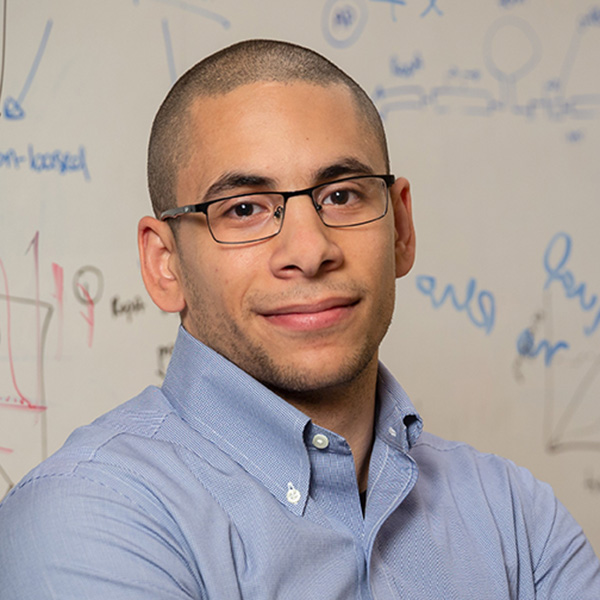
Scott Emrichمشاهده پروفایل
دانشیار
Scott Emrich is an Associate Professor in the Department of Electrical Engineering and Computer Science at the University of Tennessee, Knoxville. He also serves as the Interim Program Director for the UT-Oak Ridge Innovation Institute (UT-ORII) Ph.D. program in Data Science and Engineering. Dr. Emrich earned his B.S. in Biology and Computer Science from Loyola College in Maryland, followed by a Ph.D. in Bioinformatics and Computational Biology from Iowa State University. Upon completing his Ph.D., he received both the ISU Research Excellence Award and the university-wide Zaffarano Prize for Graduate Research. Before joining the University of Tennessee, he was the Director of Bioinformatics at the University of Notre Dame with faculty appointments in Computer Science and Engineering and Biological Sciences. His research focuses on genome-centric bioinformatics, parallel and distributed computing, and the integration of biological applications with second- and third-generation sequencing technologies. Dr. Emrich has published over 75 peer-reviewed publications in high-impact venues including Science (with 2 covers), PNAS, Nature, and Genome Research. His work has been cited over 14,300 times according to Google Scholar. His research group has introduced novel biological problems to the computer science community and developed bioinformatics frameworks that have contributed to high-impact publications in genomics. Dr. Emrich's publications demonstrate a strong trend toward integrating machine learning and AI approaches with traditional bioinformatics methods, particularly in codon usage analysis, genome assembly, and vector biology. His recent work shows increasing sophistication in language models for biological sequences and reference-free analysis techniques. His scientific awards include: 2008 Zaffrano Prize for Graduate Research ISU Research Excellence Award Dr. Emrich has advised numerous students throughout his career, including current PhD students in Genome Science and Technology and Data Science programs. His research has been supported by multiple NIH awards, including leadership roles on a NIAID contract (VectorBase) and a 2017-funded P01 grant on malaria genetics. Additional funding has come from the U.S. Department of Agriculture (USDA), the Department of Energy (DOE), and the state of Tennessee. He leads a research group focused on developing scalable computational tools that advance our understanding of genome biology. His group has introduced novel biological problems such as the influence of codon usage on protein folding to the broader computer science research community.