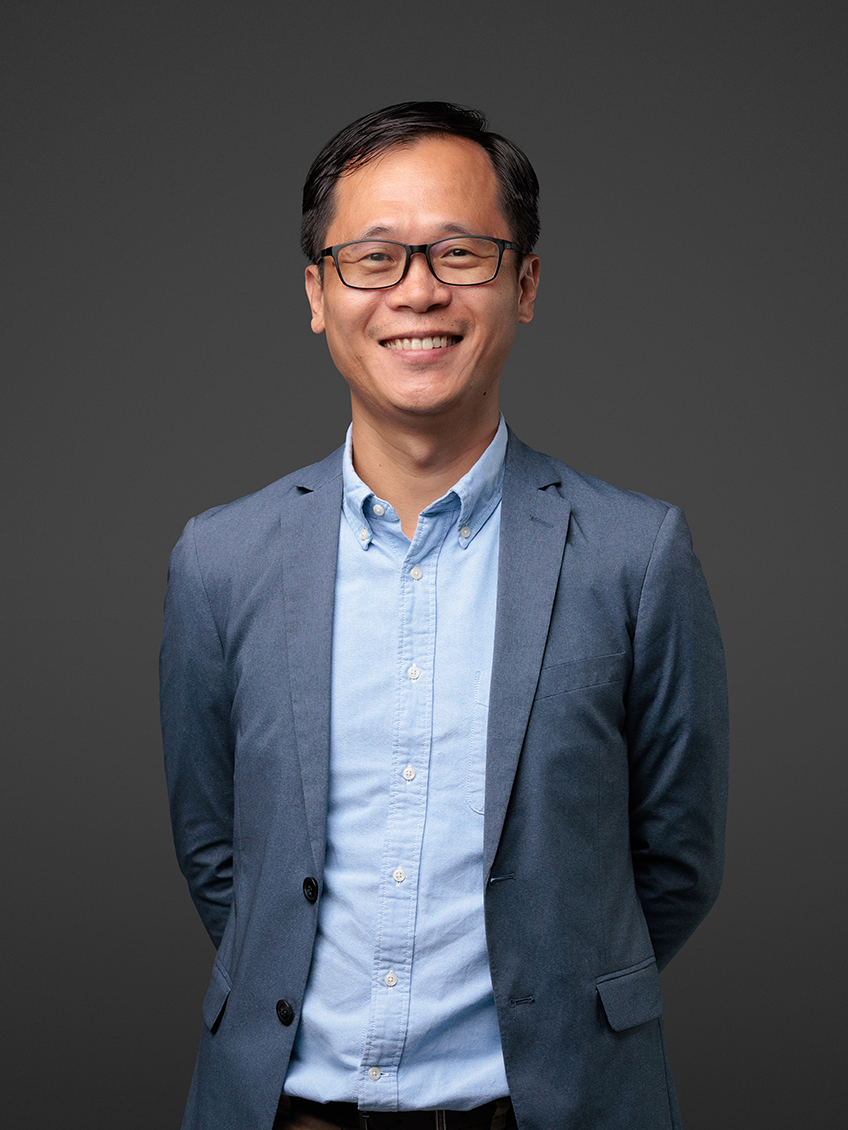
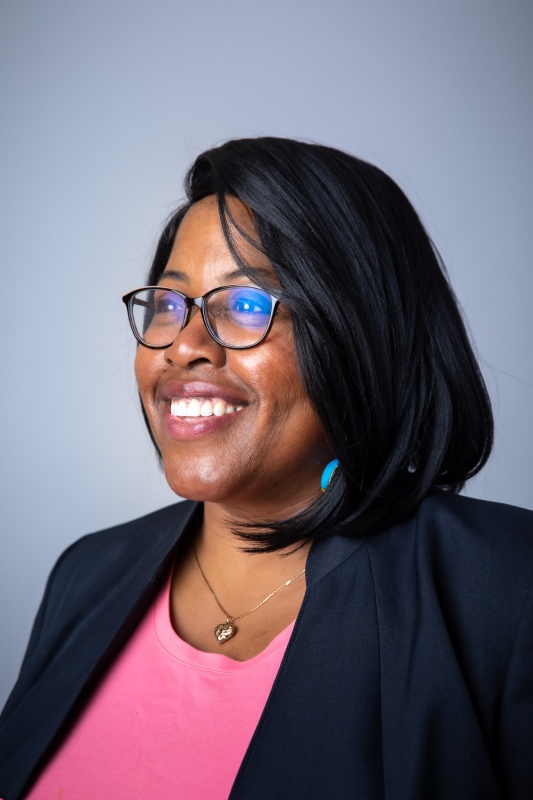
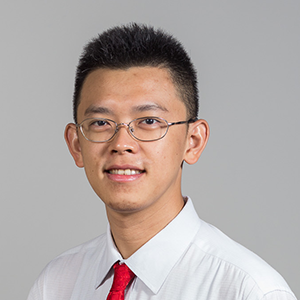
Hamed Badihi is an Assistant Professor in Automation Technology and Dependable Systems at Tampere University , part of the Faculty of Engineering and Natural Sciences. He leads the Dependability and Automation Research in Cyber-Physical Systems (DARES) Group within the Dependable Systems Cyber Laboratories . His research focuses on critical aspects of condition monitoring, fault-tolerant control, and attack-resilient control to advance sustainable, dependable cyber-physical systems. Research Interests include: Cybersecurity for industrial control systems Fault-tolerant control mechanisms Resilient control strategies for renewable energy systems Condition monitoring of wind turbines and microgrids Recent Contributions emphasize hybrid approaches combining machine learning and control theory for cyber-attack detection and system resilience in wind farms and microgrids. His work addresses challenges like real-time fault diagnosis and adaptive control under adversarial or environmental perturbations. Awards & Roles : Senior Member of IEEE, editor for International Transactions on Electrical Energy Systems , Advances in Fuzzy Systems , and Processes journals. Active in EU projects like StreamSTEP . Labs & Teams : Directs the DARES Group, collaborating on initiatives like the Dependable Systems Cyber Laboratories to pioneer innovations in cyber-physical system dependability.
Chen Binbin is an Associate Professor and Associate Head of Pillar (Innovation and Enterprise) in the Information Systems Technology and Design (ISTD) pillar at Singapore University of Technology and Design (SUTD). He serves as Deputy Director for the Future Communications Research and Development Programme (FCP), Singapore. Previously, he was a Principal Research Scientist at the Advanced Digital Sciences Center (now Illinois ARCS), affiliated with the University of Illinois. Education: PhD in Computer Science from National University of Singapore, and Bachelor's from Peking University. Research focuses on wireless networking, distributed systems, and cyber security for critical infrastructures like smart grids and industrial control systems. His work addresses secure communications, intrusion detection, and resilience against cyber-physical threats. Notable contributions include error-estimating coding, provenance verification in ICS, and AI-driven network security solutions. Key awards include the 2010 ACM SIGCOMM Best Paper Award for error-estimating coding research. His grants span agencies like Singapore's National Research Foundation (NRF), Cyber Security Agency (CSA), and Energy Market Authority (EMA). He leads projects on secure smart grid communication, industrial control system defense, and AI-enhanced cybersecurity tools. Technical leadership involves developing frameworks like CyberSAGE for security assessment and CMD for IoT malware detection. Active in collaborations with industry and government, his work bridges theory and practice in securing critical infrastructure systems.
Alexander Refsum Jensenius is a Professor of Music Technology and Director of the RITMO Centre for Interdisciplinary Studies in Rhythm, Time and Motion at the University of Oslo. He also leads the fourMs Lab and co-founded the MishMash Centre for AI and Creativity. His work bridges musicology, psychology, and technology, focusing on embodied music cognition, human motion analysis, and creative applications of AI. Notably, he pioneered research on air guitar motion and human micromotion through projects like the Oslo Standstill Database . Educated at the University of Oslo (BA in Music and Mathematics, MA in Musicology) and Chalmers University of Technology (MSc in Applied IT), Jensenius holds a PhD in Music Technology from UiO. He has held visiting researcher roles at UC Berkeley, McGill University, and KTH. Leadership roles include Department of Musicology Head (2013–2016) and Steering Committee Chair for the International Conference on New Interfaces for Musical Expression (NIME, 2011–2022). Research interests span music-related body motion, AI in creative contexts, and open research practices. Key contributions include the Music Moves and Motion Capture MOOCs, the Musical Gestures Toolbox software, and monographs like Sound Actions and Sonic Design . His work emphasizes interdisciplinary collaboration, with projects addressing ventilation systems' acoustic properties and cell culture vibrational effects. Awards include the European Open Data Champion recognition. He advocates for open science and maintains extensive digital archives of research materials, emphasizing institutional web pages as critical research infrastructure.
Jonathan J. O'Brien is a Professor in the Department of Educational Leadership within the College of Education at California State University, Long Beach (CSULB). He teaches in both the master’s and doctoral programs, offering courses in law and ethics, leadership and management, counseling the adult learner, research methodologies, and professional development seminars. He guides graduate students in exploring complex issues in higher education and student affairs. Education: Ed.D. in Educational Leadership, UC Irvine & CSU Long Beach MS in College Student Personnel Administration, Central Missouri State University BA in English, California State University, Long Beach Dr. O'Brien’s research centers on moral development , ethical leadership , and dispositional competencies in student affairs, particularly under conditions of political polarization. His work explores how educational leaders navigate ethical dilemmas, develop moral orientations, and build credibility in contested environments. He is deeply engaged in understanding the ethical preparation of student affairs professionals and the emotional toll of moral suffering in the field. His recent publications and presentations reveal a strong focus on ethical frameworks, ACPA/NASPA competencies, and the development of practitioner-focused ethical codes. The articles span themes such as moral positionality, ethical mindfulness, and the integration of personal values in leadership. His research often employs qualitative and mixed-methods approaches, contributing to both theoretical and applied knowledge in higher education. Professional Leadership and Awards: Co-Director, President & Provost’s Leadership Fellows Program, CSULB (2024–present) Chair, ACPA Ethics Task Force (2024–present) Secretary-Treasurer, Moral Development and Education SIG, AERA (2021–2024) Senator, College of Education Academic Senate (2020–2023) Board Member, ACPA Commission for Professional Preparation (2019–2021) Coordinator, Student Development in Higher Education M.S. Program (2009–2016) Dr. O'Brien advises graduate students and contributes to program evaluation, curriculum development, and national professional associations. He has led initiatives to revise ethical standards in student affairs and develop self-assessment tools for moral orientation. His work bridges scholarship and practice, aiming to foster human flourishing in higher education. He is actively involved in committees at the department, college, and university levels. Labs and Research Teams: While no formal lab is mentioned, Dr. O'Brien leads research projects on moral orientation assessment and ethical leadership in polarized environments. He collaborates with national teams through ACPA and AERA, and supervises graduate research in the Educational Leadership and Student Development in Higher Education programs.
Dr. Devery J. Rodgers is an Assistant Professor of Educational Leadership in the College of Education at California State University, Long Beach. Her work centers on equity, educational technology leadership, and culturally responsive practices in PK–12 and higher education. With over 20 years of experience as a K–12 administrator and teacher, she brings deep practical insight to her academic role. Education: Doctor of Education in Educational Leadership – University of Southern California Master of Arts in Education – Curriculum & Instruction – California State University, Dominguez Hills Bachelor of Arts in English and African-American Studies – University of California, Los Angeles Research Interests: Dr. Rodgers’ scholarship focuses on tech equity, leadership in education technology, culturally responsive leadership in STEM, and racial justice in education. She explores how digital tools can be leveraged equitably and how identity, particularly of Black students and educators, shapes educational outcomes. Publications and Research Trends: Her recent work spans pandemic pedagogy, AI bias, digital leadership, and mentorship. She frequently publishes in top journals and presents at AERA, ISTE, and NCORE. Her research consistently emphasizes equity, identity, and systemic change in education. Scientific Awards and Recognition: Recipient of the President’s/Provost’s EDI Grant Her graduate students have won 2nd place at the university-wide Grad SLAM competition (Melanie Gerner and Jaclyn Caballero) Advising and Grants: Dr. Rodgers actively mentors graduate students and leads research teams. She has secured institutional funding to study the experiences of Black graduate students and leads a data science team exploring algorithmic fairness in image diversity. She co-advises the Black/Pan-African Graduate Student Association, fostering community and support. Labs and Teams: She leads a data science research team focused on image diversity and algorithmic fairness, which has presented at the CSULB College of Natural Sciences and Mathematics Symposium. Her collaborative work integrates education, technology, and social justice.
David Rettinger is an Applied Professor of Psychology at the University of Tulsa's Kendall College of Arts & Sciences, with over 20 years of experience teaching psychology. He serves as Associate Chair and Undergraduate Program Director for the Psychology Department. Education: Ph.D. and M.A. from the University of Colorado; B.A. from the University of Michigan. Research Focus: Academic integrity, pedagogy, ethical decision-making, and the psychology of cheating. Books Authored: The Opposite of Cheating: Teaching for Integrity in the Age of AI (2025) and Cheating Academic Integrity: Lessons from 30 Years of Research (2022). Rettinger's work examines institutional climates, emotional drivers, and personality factors influencing academic misconduct. His research has been cited in international media outlets like The New York Times and CBS Morning Show , and he has presented at conferences including the International Center for Academic Integrity Annual Meeting. He holds a Fulbright Specialist appointment (2023) in Nepal and delivers global keynotes on academic integrity. Awards include President Emeritus of the International Center for Academic Integrity. International Work: Keynotes and workshops in Nepal, Montenegro, and Mexico. Media Recognition: Featured in The Chronicle of Higher Education , Inside Higher Education , and The Washington Post .
Théo Winterhalter is a researcher at INRIA Saclay and a member of the Laboratory of Mathematics and Computer Science (LMF) at ENS Paris-Saclay . He previously held a postdoctoral position at the Max Planck Institute for Security and Privacy (MPI-SP) and completed his PhD at the Gallinette research team in Nantes, supervised by Nicolas Tabareau and Matthieu Sozeau. Education PhD in Computer Science, 2017–2020, University of Nantes (Gallinette/Inria) MSc in Computer Science, École Normale Supérieure de Rennes Research interests include type theory , proof assistants , formal verification , and dependent types . He actively works on improving the safety and usability of proof assistants like Rocq (formerly Coq), focusing on rewrite rules, erasure, and cryptographic verification. His work often involves formalizing results within proof assistants and developing tools for verified programming. Contributions span conferences like POPL, ICFP, CPP, and TYPES. Recent projects include foundational verification of high-speed cryptography ( The Last Yard ), type-preserving rewrite rules ( The Rewster ), and modular cryptographic proofs ( SSProve ). His publications emphasize formal methods and computational assumptions in type theory. Teaching includes the Proof Assistants course at MPRI , a joint master’s program. He co-supervises PhD students like Yann Leray and has mentored interns on topics such as erased data implementation and Autosubst tooling. Labs and Teams : Deducteam (INRIA Saclay) – Developing deduction tools and formal verification LMF (ENS Paris-Saclay) – Laboratory for Mathematics and Computer Science Gallinette (former) – Team at INRIA Nantes MetaCoq Project – Collaborative effort on Coq verification
Ruben Martins is an Assistant Professor at Carnegie Mellon University's School of Computer Science and serves as the program director of the Master of Science in Computer Science (MSCS) . His research focuses on the intersection of constraint programming, program synthesis, analysis, and verification, with recent work aiming to make formal methods tools more accessible through automated reasoning. Ruben earned his Ph.D. with honors from the Technical University of Lisbon, Portugal (2013) , followed by postdoctoral research at the University of Oxford (2014-2015) and UT Austin (2015-2017) . Research Interests : Ruben's work bridges constraint programming and program synthesis , with applications in software verification , optimization , and automated reasoning . He has developed award-winning tools like Open-WBO , a modular MaxSAT solver that has won gold medals in international competitions. His publications span top-tier venues such as POPL , PLDI , FSE , SAT , and CP , often addressing real-world challenges from program analysis to network security. Scientific Awards include: Distinguished Paper Award at PLDI 2018 Distinguished Paper Award at FSE 2021 Distinguished Paper Award at SAT 2022 Gold medals for Open-WBO in MaxSAT competitions Teaching & Advising : Ruben mentors Ph.D., Master’s, and undergraduate students in research projects related to program synthesis, formal methods, and constraint solving. He teaches courses such as Bug Catching: Automated Program Verification and Advanced Topics in Logic: Automated Reasoning and Satisfiability , emphasizing hands-on experience with tools like Why3. His advising spans topics from AI-driven program repair to network protocol verification , fostering collaboration across disciplines.
Stephen Humphry is a Senior Honorary Research Fellow at the Graduate School of Education, The University of Western Australia. He joined UWA in 2006 and has maintained continuous research funding through Australian Research Council Linkage grants since 2008. His work focuses on educational assessment, measurement, and evaluation, with significant contributions to large-scale testing programs including NAPLAN and WALNA. Humphry holds a Bachelor of Psychology from Western Australia and a PhD from Murdoch University. His expertise spans psychometrics, Rasch measurement, and quantitative methods in educational assessment. Dr. Humphry's research has increasingly focused on developing novel approaches that enable classroom teachers to reliably assess students in areas not amenable to large-scale testing. His work on pairwise comparison methods, Rasch analysis, and construct validity has advanced the field of educational measurement. He has published extensively on topics including narrative assessment, writing rubrics, and scale development. His recent publications demonstrate a strong trend toward innovative assessment methodologies, particularly in narrative writing and developmental attributes. These works emphasize practical applications for classroom teachers while maintaining rigorous psychometric standards. The research shows increasing sophistication in handling complex assessment challenges through pairwise comparison techniques and ordered exemplars. Dr. Humphry has supervised 7 research projects and has been awarded 25 research grants, including the current "International collaboration in teaching and learning of Einsteinian physics" project funded by the Australian Research Council until 2025. He has also led multiple NAPLAN-related research projects for the Australian Curriculum Assessment & Reporting Authority. His industry experience includes leading the Central Analysis of Data project for NAPLAN (2011-2013) and serving as Psychometrician for the Western Australian Department of Education's large-scale assessment program prior to joining UWA. His research has led to commercial applications including Brightpath Assessments, used by several hundred schools across Australia.
Marcel Böhme is a faculty member at the Max Planck Institute for Security and Privacy (MPI-SP) , leading the Software Security research group. His work focuses on foundational advancements in fuzzing , statistical program analysis, and scalable vulnerability discovery. Education: PhD from National University of Singapore (NUS) Research interests span: Statistical and causal frameworks for software testing Efficiency/Scalability of automated testing Fundamental limits of vulnerability detection Practical fuzzing technology (e.g., Entropic in LibFuzzer) Recent publications highlight trends in: Machine learning for security analysis Privacy-preserving statistical methods Future-proof security frameworks Protocol fuzzing with large language models Scientific accolades include: ERC Consolidator Grant (2024) NUS Outstanding Young Alumni Award (2022) ARC DECRA (2019) Multiple ACM Distinguished Paper Awards He serves as: Spokesperson for Research Group Leaders at Max Planck Society Guest Editor-in-Chief for ACM TOSEM PC Chair for ASE'25 and ISSTA'26
Steven Halim is an Associate Professor (Educator Track) in the Department of Computer Science at the School of Computing, National University of Singapore (NUS). He has been a full-time educator since 2007, teaching a wide range of courses including Data Structures and Algorithms, Competitive Programming, and Design and Analysis of Algorithms. He currently serves as the Director of the Centre for Nurturing Computing Excellence (CeNCE) and is a Fellow of the NUS Teaching Academy. Ph.D. in Computer Science, National University of Singapore B.Sc. in Computer Science, National University of Singapore His research and teaching interests focus on algorithms, competitive programming, visualization, and optimization. He is renowned for creating VisuAlgo , an interactive online platform that visualizes data structures and algorithms, used by students and educators worldwide. He is also the co-author of the widely acclaimed book "Competitive Programming" , now in its fourth edition, which is a key resource for programming contest preparation. His recent scholarly work centers on pedagogical innovations in computer science education, particularly algorithm visualization and competitive programming methodologies. Earlier publications from his PhD work focused on stochastic local search, metaheuristics, and algorithm tuning through visualization. The articles span topics from educational technology to combinatorial optimization, reflecting a transition from research in algorithm engineering to leadership in computing education. Commendation Medal (Pingat Kepujian), National Day Awards 2018 NUS Annual Teaching Excellence Award (ATEA) 2014/15, 2017/18, 2018/19 (with Honour Roll) Faculty Teaching Excellence Award (FTEA) 2011/12, 2012/13, 2014/15 (with Honour Roll) Best Teaching Assistant Award 2007/08 Steven Halim has advised numerous students through his courses and competitive programming teams. He has served as the head coach for NUS ICPC teams since 2008 and team leader for Singapore IOI teams since 2009, leading them to multiple international medals. He has also held leadership roles in major international competitions, including Deputy Director for IOI 2020 and 2021, and Regional Contest Director for ICPC Asia Singapore 2015 and 2018. He was a Resident Fellow at NUS Sheares Hall for nine years, deeply engaging with student life. He leads the Centre for Nurturing Computing Excellence (CeNCE), where he manages programming competition activities for both NUS and Singapore national teams. His work integrates education, competition, and mentorship, creating a synergistic environment that has significantly elevated Singapore's performance in international informatics olympiads.
John O'Doherty is the Fletcher Jones Professor of Decision Neuroscience at the California Institute of Technology (Caltech). He holds a B.A. from Trinity College Dublin (1996) and a D.Phil. from the University of Oxford (2000). His academic trajectory includes roles as Assistant Professor (2004–2007), Associate Professor (2007–2009), and Professor (2009–present), culminating in his current endowed chair since 2021. From 2013–2017, he served as Director of the Caltech Brain Imaging Center. Research Focus: O'Doherty’s work investigates how the brain processes decisions under uncertainty, encodes reward values, and learns from experience. His group studies neural systems involved in decision-making, including arbitration between model-based and model-free learning strategies, the role of prefrontal and striatal circuits in value representation, and social learning mechanisms. They utilize computational modeling combined with neuroimaging (fMRI) and electrophysiological techniques. Key Contributions: His research bridges cognitive neuroscience and psychiatry, addressing topics like gambling disorder, autism spectrum traits, anorexia nervosa, and obsessive-compulsive behaviors. He has pioneered studies on the neural substrates of reward prediction errors, hierarchical decision-making, and the interplay between habitual and goal-directed actions. Affiliations: Caltech Brain Imaging Center (Former Director) Leading international collaborations in neuroeconomics and computational psychiatry Grants & Funding: Extensive support from NIH, NSF, and private foundations for projects on decision neuroscience and translational mental health research.
John Wright is an Assistant Professor in the Department of Electrical Engineering and Computer Sciences at the University of California, Berkeley. His research centers on theoretical computer science with a focus on quantum computing, specifically quantum state learning, quantum complexity theory, property testing, and approximation algorithms. He is affiliated with the Simons Institute for the Theory of Computing. Education includes a Ph.D. in Computer Science from Carnegie Mellon University (2016), advised by Ryan O'Donnell, and a B.Sc. in Computer Science from the University of Texas at Austin. Research interests span quantum complexity, interactive proofs (e.g., MIP* = RE), quantum algorithms, and foundational aspects of quantum computation. His work bridges computer science, physics, and mathematics, with emphasis on understanding computational limits through quantum paradigms. Publications primarily explore quantum complexity, algorithms, and verification, with recent trends including quantum cryptography, tomography, and hardness proofs. Articles frequently involve collaborations with researchers like Thomas Vidick, Henry Yuen, and Ryan O'Donnell. Awards include the IEEE CS TCPAMI Young Researcher Award (2015). Teaching covers graduate and undergraduate courses such as CS 170 (Efficient Algorithms and Intractable Problems) and CS 294 (Quantum Complexity Theory). He advises students in quantum computing research and collaborates extensively across institutions. Labs/teams include the Quantum Computing group at UC Berkeley, with ties to the Simons Institute. Research support is managed by Amy Frithsen.
William J. Moon is an Associate Professor of Law at the University of Maryland Francis King Carey School of Law, where he conducts research and teaches in the areas of corporate law, international law, and international trade law. His scholarly work focuses on jurisdictional competition, tax havens, corporate governance, and the intersection of domestic and international legal systems. Professor Moon's research interests span several key areas: Corporate law and jurisdictional competition, particularly examining Delaware's position in global corporate law International investment law and the role of tax havens in shaping corporate governance Conflict of laws issues in transnational corporate litigation The intersection of corporate purpose, ESG considerations, and traditional shareholder wealth maximization International trade law, with particular attention to North Korea and the Kaesong Industrial Complex His extensive publication record demonstrates a consistent focus on how legal frameworks interact across jurisdictional boundaries, with particular attention to how tax havens and offshore jurisdictions influence corporate behavior and legal development. Moon's work often bridges theoretical legal analysis with practical implications for corporate governance and international regulatory cooperation. Professor Moon has received significant scholarly attention for his work, with his paper 'Delaware's New Competition' garnering over 1,500 downloads and multiple citations. His research has appeared in top law journals including Northwestern University Law Review, Michigan Law Review, and Virginia Journal of International Law. His scholarly impact is evident in his SSRN profile, which shows 16 papers with over 9,000 total downloads and 7 total citations, indicating substantial engagement from the academic and professional legal community.
Dr Emily Brayshaw is an Honorary Research Fellow and Casual Academic at the University of Technology Sydney's Faculty of Design, Architecture and Building. She combines scholarly work in critical costume studies with theatrical costume design and viola performance . Holding a 2016 PhD in Design from UTS and a BA (Hons) from the University of New South Wales, her research spans fashion history, performance costume, and material culture. Current Appointments: Honorary Research Fellow (2019-2026), Casual Academic in Design/Fashion History Research Themes: WWI dress, kitsch aesthetics, sustainability in costume, shoe studies, and body-garment dynamics Her interdisciplinary work connects fashion theory with theatre practice, examining costume's psychological and ethical dimensions. Publications since 2014 explore topics ranging from vaudeville's racialized costumes to contemporary footwear trends . She actively contributes to public discourse through The Conversation and maintains memberships in the Footwear Research Network and Association of Dress Historians . Recent scholarship reveals trends in 20th-century costume methodology , WWI fashion dynamics , and shoe symbolism across media. Articles like 'Dressing for the Viola' (2023) and 'From Caftan King to Peacock Pasha' (2024) demonstrate her focus on gendered performance wear and orientalist fashion . Her 2021 Journal of Aesthetics & Culture translation of Schlemmer's kitsch manuscript bridges historical avant-garde theory with modern practice. As a public intellectual, Emily has completed over 100 media interviews since 2020, covering topics like Crocs' cultural resurgence and vaudeville's legacy . Her teaching encompasses fashion theory, critical thinking, and costume history, while she simultaneously serves as principal viola for the Woollahra Philharmonic Orchestra.