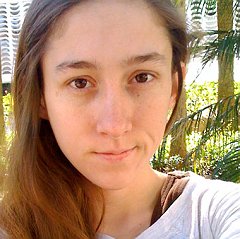
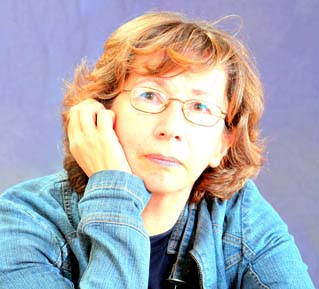
Amalia Foka is an Assistant Professor in Computer Science Applications for the Arts at the Department of Fine Arts & Art Sciences , School of Fine Arts , University of Ioannina , Greece. She has held academic positions at the University of Patras (2005-2013), University of Ioannina (2005-2008), and Computer Technology Institute & Press "Diophantus" (2014-2015). Her research bridges Artificial Intelligence with Digital Art , focusing on Generative AI , Social Media Mining , and Human-Computer Interaction within artistic contexts. Education: BEng in Computer Systems Engineering (1998) from the University of Manchester Institute of Science & Technology (UMIST) , UK MSc in Advanced Control (1999) from UMIST PhD in Robotics (2005) from the Department of Computer Science , University of Crete Her artistic research includes projects like Bushwalking (StyleGAN2 landscape generation), Breaking the Silence (NLP analysis of taboo topics), and The Invisible Structures of the Artworld (social media-driven network visualization). She leads the Multimedia Lab at the University of Ioannina, focusing on AI in Creative Processes and Digital Interaction methodologies.
Pavel Panchekha is an Assistant Professor in the School of Computing at the University of Utah, where he holds the Warnock Chair for Junior Faculty. His research spans programming languages, web browsers, and numerical analysis, with a focus on developing programming language techniques to address challenges across computer science. Dr. Panchekha received his educational training at prestigious institutions: PhD in Computer Science from the Paul G. Allen School for Computer Science and Engineering at the University of Washington, advised by Michael D. Ernst and Zachary Tatlock BS in Mathematics from MIT Panchekha's research program has two major thrusts. First, he works on web browser internals , with projects including fuzzing layout invalidation, multi-tenant garbage collection, and optimizing 2D graphics. He is also authoring a textbook on web browsers that informs much of this research. Second, he focuses on automatic numerical analysis , with projects such as automatic accuracy improvement, synthesis via term rewriting, scalable static accuracy analysis, and math library implementation. He leads the FPBench and Herbie projects, which are major deployments of his research. His scholarly output demonstrates consistent contributions across programming languages, verification, and numerical methods. Recent work shows a growing emphasis on bidirectional typing systems, layout invalidation in browsers, and robust floating-point error analysis. His publications reveal a trajectory from foundational work on floating-point accuracy (notably the Herbie tool that won a Distinguished Paper Award at PLDI 2015) toward more comprehensive systems for program synthesis, verification, and browser optimization. Panchekha has received significant recognition for his research contributions: NSF Fellowship ARCS Foundation Fellowship Adobe Research Fellowship Wissner-Slivka Foundation Fellowship 2015 PLDI Distinguished Paper Award for work on the Herbie numerical analysis and repair tool As an advisor, Panchekha mentors a substantial group of students across multiple levels. He currently advises six students: Marisa Kirisame (PhD), Bhargav Kulkarni (PhD), Yumeng He (PhD), Artem Yadrov (MS), Jesus Ponce (BS), and Jonas Regehr (BS). Previously, he has advised over twenty students including PhD candidates like Ian Briggs and numerous MS and BS students. His advising spans theoretical topics in programming languages and practical applications in web browsers and numerical computing. Panchekha leads research groups focused on programming languages applications to web browsers and numerical analysis. His work on the Herbie tool for floating-point accuracy improvement has become influential in the programming languages community, and his more recent work on browser internals is shaping how researchers understand and optimize modern web rendering engines. He is currently developing a textbook on web browsers that aims to synthesize knowledge about browser architecture and implementation.
Amalia Miliou is a Professor in the Department of Informatics at Aristotle University of Thessaloniki, where she has served since 1993, progressing through the academic ranks from Lecturer to her current position as Professor since 2022. She holds a PhD in Electrical and Computer Engineering from the University of Florida (1991) with specialization in Optoelectronics, following an MSc in the same field (1988) and a Physics degree from Aristotle University (1985). Her research focuses on optical communications systems, with specific expertise in optoelectronic circuits simulation, optical switching, optical RAM development, converged fiber-wireless technology, 5G networks, and secure optical communications using chaos theory. Over her career, she has supervised numerous graduate students across these research areas, with thesis topics spanning optical memory systems, fiber-wireless integration, chaos-based secure communications, and advanced optical network architectures. Her recent publications (2021-2024) demonstrate a strong focus on next-generation optical networking solutions for 5G/6G applications, including fiber-wireless convergence, optical memory systems for high-speed networks, and innovative approaches to optical signal processing. Her work bridges fundamental photonics research with practical telecommunications applications, particularly in addressing the bandwidth and latency challenges of modern mobile networks. Professor Miliou has served as the Coordinator of the LLP-ERASMUS student exchange program at the Department of Informatics since 1997 and has held various administrative positions including membership in the University Senate and General Assembly. She has led and participated in numerous research projects, most recently focusing on technological improvements for 5G systems through optical-wireless network development (2019-2021), next-generation healthcare applications leveraging 6G networks (2023-2027), and photonic integrated circuits for random access memory (2012-2015).
Christos Makris is an Associate Professor in the Department of Computer Engineering and Informatics at the University of Patras, Greece. His academic career spans over two decades with significant contributions to computer science, particularly in data structures, algorithms, and information systems. He maintains active research collaborations and supervises graduate students in his areas of expertise. Dr. Makris's research spans several key areas in computer science with a strong focus on efficient data organization and processing. His work encompasses Data Structures , Information Retrieval , Data Mining , String Management and Processing Algorithms , Computational Geometry , Internet Technologies , Bioinformatics , and Multimedia Databases . His interdisciplinary approach bridges theoretical computer science with practical applications across various domains including web technologies, bioinformatics, and emergency response systems. Analysis of Dr. Makris's publication record reveals a consistent research trajectory focused on efficient algorithms for information management. His work demonstrates evolution from foundational data structure research in the 1990s to more applied work in web technologies, social media analysis, and machine learning applications in recent years. A notable pattern is his ability to adapt core algorithmic techniques to emerging application domains while maintaining theoretical rigor. Dr. Makris maintains an impressive scholarly record with over 3,000 citations, an h-index of 29, and an i10-index of 71 according to Google Scholar metrics. These indicators reflect the significant impact of his research within the computer science community. As an active faculty member, Dr. Makris maintains regular office hours on Tuesdays from 18:00-20:00 and Thursdays from 12:00-14:00. He is accessible via email at makri@ceid.upatras.gr or makri@upatras.gr for academic inquiries and student supervision.
Athanasios Liavas is a Professor at the Technical University of Crete in the School of Electrical and Computer Engineering , specializing in Signal Processing for Telecommunications and Information Theory . He has held administrative roles as Department Chair (2009-2011), Vice Chair (2011-2013), and Dean of the ECE School (2017-2021). Education: Diploma (1989) and PhD (1993) in Computer Engineering and Informatics from the University of Patras. Professional Background: Postdoctoral Marie Curie Fellow at INT, Evry (1996-1998); Lecturer at University of Ioannina (1999-2001); Assistant/Associate Professor at University of the Aegean (2001-2004) and Technical University of Crete (2004-present). His research focuses on Signal Processing for Telecommunications , Information Theory , and Tensor Decomposition . Recent work involves nonnegative tensor factorization , parallel algorithms , and fMRI data analysis , with applications in wireless communications and medical imaging . Articles show trends in optimization algorithms , LDPC code design , and MIMO system robustness . Scientific Awards include: Marie Curie Fellowship (1996-1998) Associate Editor, IEEE Transactions on Signal Processing (2005-2009) Elected Member, IEEE Signal Processing for Communications and Networking Technical Committee (2006-2011) He has taught courses like Telecommunications Systems II , Wireless Communications , and Information Theory , and supervised students such as Despoina Tsipouridou (PhD) and Alex Balatsoukas-Stimming (Graduate). He leads projects like Partensor (Parallel Tensor Toolbox) and COOPCOM (Cooperative Communications), and contributes to labs including the Telecommunications Laboratory .
Full Professor at the School of Informatics, Aristotle University of Thessaloniki (AUTh), Greece. Previously served as Associate Professor (2015-2020), Assistant Professor (2008-2015), and Lecturer (2002-2008) at the same institution. Also worked as an Informatics Teacher in Greek Secondary Education from 1989-2002. His research focuses on Learning Technologies with emphasis on Conversational Agents in Education, Learning Analytics, Computer-Supported Collaborative Learning, Computational Thinking, Teaching Machine Learning at School, and Massive Open Online Courses (MOOCs). His recent work heavily investigates the application of AI, particularly conversational agents and large language models, in educational contexts. His publications show a strong trend toward AI applications in education, particularly focusing on conversational agents, learning analytics, and automated grading systems. The research spans multiple educational contexts from K-12 to higher education, with particular attention to student self-regulation, collaborative learning, and ethical considerations in AI implementation. 3 Best paper awards at international conferences Interview by Educational Technology Magazine (2013) Cubes Coding project - Winners of Open Education Challenge 2014 Cubes Coding project - Winners of NUMA Competition 2014 Has supervised 5 completed PhD theses, 4 ongoing PhD theses, over 60 Master's theses, and over 120 undergraduate theses. Led the colMOOC project (2018-2020), a €999,000 EU-funded project on integrating conversational agents and Learning Analytics in MOOCs. Also coordinated the T4E project (2020-2022) on Teachers' Fast-paced Distance Training on Tele-education and a MOOC in Greek on Introduction to Programming with Python. Previously served as Director of the Software and Interactive Technologies Laboratory (SWITCH Lab) until 2020, Member of AUTH Educational Policy Committee until 2020, and Chair of the Scientific Supervisory Board of the 2nd Experimental Junior High School in Thessaloniki until 2020.
Theodoulos Garefalakis is a Professor at the University of Crete , affiliated with the School of Theoretical Mathematics and the Department of Applied Mathematics . His research spans foundational and applied mathematics, focusing on finite fields and algorithmic number theory. Education: PhD, University of Toronto (2000) Research Interests include: Finite Field Theory (algebraic structures, arithmetic algorithms) Algorithmic Number Theory (computational methods, integer factorization) Cryptography (security protocols, encryption schemes) Coding Theory (error-correcting codes, data transmission)
Heather Miller is a tenure-track Assistant Professor in the Software and Societal Systems Department within Carnegie Mellon University's School of Computer Science. Her academic journey includes prior roles as an Assistant Clinical Professor at Northeastern University's College of Computer and Information Science and as Executive Director of the Scala Center at EPFL. Miller's research centers on distributed and concurrent computation through the lens of programming languages, with particular emphasis on data-centric systems, big data processing, and edge computing. A defining theme throughout her work is composability - enabling construction of complex distributed systems through composition of components that are correct by construction. Her projects span distributable closures, flexible serialization techniques, futures and promises for asynchronous programming, and deterministic concurrent dataflow models. Her recent publications demonstrate strong trends in applying programming language theory to practical distributed systems challenges, with increasing focus on WebAssembly instrumentation, microservice resilience, and language model pipelines. This evolution reflects her commitment to bridging theoretical foundations with real-world system requirements. Dahl-Nygaard Junior Prize (2023) Mentorship forms a significant component of Miller's academic work. She actively supervises multiple PhD, MS, and undergraduate researchers at CMU, including Christopher Meiklejohn, Matthew Weidner, Huairui Qui, Ria Pradeep, and Luke Dramko. Her service contributions span numerous top-tier conferences including PLDI, SPLASH, ECOOP, and ICSE where she has served as committee member, chair, and keynote speaker. Miller co-founded the Curry On conference to foster industry-academia dialogue, hosting successful editions in Prague, Rome, Barcelona, Amsterdam, and London. She leads research groups focused on distributed programming models and maintains strong industry connections through Two Sigma, where she holds an affiliation. Her work consistently emphasizes practical open-source implementations, primarily within the Scala ecosystem where she's been a core contributor since 2011.
Evangelos Papapetrou is an Associate Professor in the Department of Computer Science and Engineering at the University of Ioannina, Greece. He holds a Diploma (1998) and PhD (2003) in Electrical and Computer Engineering from Aristotle University of Thessaloniki. His research focuses on wireless and mobile networks, including mobile ad-hoc networks, opportunistic networks, satellite networks, quality of service (QoS), and network coding. He has contributed to over 50 peer-reviewed publications and actively participates in EU/nationally funded projects. Research interests include: Wireless/Mobile Network Architectures Opportunistic and Social Mobile Networks Satellite Communication Systems Network Coding Techniques Routing Protocol Design His work emphasizes practical implementations of network protocols, with recent trends focusing on ultra-reliable low-latency communication, energy-efficient broadcasting, and protocol optimizations for 5G/IoT environments. He has developed simulation tools like Adyton for opportunistic networks and contributed to privacy-preserving routing solutions. Teaching responsibilities include courses on Computer Networks I and Wireless Networks (2024/25). He maintains active IEEE/ACM memberships and serves on conference review committees.
Professor Foto N. Afrati is a Distinguished Faculty Member at the National Technical University of Athens, specifically within the School of Electrical and Computing Engineering and the Division of Communication, Electronic and Information Engineering. She has held this position since 1993, following previous academic ranks at the same university as Associate Professor (1989-1993), Assistant Professor (1985-1989), Lecturer (1982-1985), and Research Fellow (1980-1982). She completed her PhD in Electrical Engineering at Imperial College of the University of London in March 1980, with a dissertation focused on Error Correcting Codes by Algorithms. Her academic journey also included a Diploma from Imperial College (March 1980) and an earlier Diploma in Electrical and Mechanical Engineering from the National Technical University of Athens (June 1976). Professor Afrati's research interests span several critical areas in computer science: Parallel and distributed computation Processing of very large data (including MapReduce) Data and web mining Database Systems Information integration Query optimization Computation and complexity of algorithms Approximation algorithms Her most recent publications demonstrate expertise in MapReduce environments, query optimization with views, and data exchange frameworks. These works are published in prestigious venues like EDBT, VLDB, PODS, and ICDT, with specific focus areas including adaptive sampling techniques, data source integrity, and algorithm complexity in database environments. Professor Afrati has received significant recognition in her field, including Fellow of the Association for Computing Machinery (ACM) Best Paper Award at the International Conference on Database Theory (ICDT) 2009 She has advised numerous PhD students throughout her career, including Theodoros Mitakos, Ezz Hattab, Nikos Kiourtis, and Angelos Vasilakopoulos. Her current PhD students include Victor Kyritsis and Nikos Stassinopoulos. Professor Afrati maintains strong professional networks through her various visiting positions at institutions such as Google, Stanford University, IBM Research Center, University of Helsinki, University of Paris, DIMACS, and others. She has served as associate editor and reviewer for major academic journals and conferences including IEEE TKDE, ACM Transactions of Database Systems (TODS), Journal of ACM (JACM), and Theoretical Computer Science (TCS). Her extensive work in research projects spans both national and international initiatives, with funding from sources including the European Union's Thalis project, ESPRIT working groups, HCM networks, and Greek General Secretariat of Research and Technology grants.
George N. Karystinos is currently a Professor and Dean of the School of Electrical and Computer Engineering at the Technical University of Crete , Greece. He joined TUC in 2005 and was promoted to full Professor in 2019. His academic journey began with a Ph.D. in Electrical Engineering from SUNY Buffalo (2003) and a Diploma in Computer Engineering and Science from the University of Patras (1997). Specialty: Communication theory, coding theory, adaptive signal processing Key research areas: Wireless communications, signal waveform design, L1-norm principal component analysis Leadership: Dean of School of ECE (2021–present) His work focuses on noncoherent detection for RFID/IoT systems and L1-norm PCA for robust signal processing. Recent publications explore power line communication and low-complexity sequence detection . Scientific Awards: 2003 IEEE Transactions on Neural Networks Outstanding Paper Award 2001 IEEE ICT Best Paper Award 2018 IEEE MOCAST Best Student Paper Award 2015 IEEE ICASSP Best Student Paper Award 2013 IEEE ISWCS Best Paper Award 2011 IEEE RFID-TA Second Best Student Paper Award He is affiliated with the Telecommunications Laboratory at TUC and has supervised award-winning research in wireless systems and signal processing.
Gérard Berry (born December 25, 1948) is a distinguished French computer scientist currently serving as Professor at the Collège de France, holding the permanent chair Algorithmes, machines et langages (Algorithms, Machines, and Languages) since 2012. He previously held the Informatique et sciences numériques chair (2009-2010) and the Technological Innovation Liliane Bettencourt chair (2007-2008) at the same institution. Before joining Collège de France full-time, he served as Director of Research at INRIA Sophia Antipolis (2009-2012) and at École des Mines de Paris (1977-2001). His research spans over 30 years in three main fields: lambda calculus and functional programming, parallel and real-time programming languages, and design automation for synchronous digital circuits. He is particularly renowned for developing the Esterel programming language. His work bridges theoretical computer science with practical industrial applications. Berry's research has evolved to include current work in Hop and HipHop for Web programming, formal verification of compilers, and languages for computer music. His publications demonstrate consistent contributions to programming language theory, formal methods, and their applications in hardware and software systems. Gold Medal of CNRS (2014) Chevalier de l'Ordre de la Légion d'Honneur (2012) Member of French Academy of Sciences (2002) Member of Academia Europaea (1993) Monpetit Prize of Académie des sciences (1990) Berry has advised 17 PhD students and reviewed numerous theses. His industrial experience includes serving as Chief Scientist Officer of Esterel Technologies (2000-2009), where he directed the implementation of the Esterel v7 compiler. He has also held significant leadership roles including President of the Scientific Council of IRCAM and membership on the Scientific Council of the National Education. His teaching at Collège de France has covered topics ranging from the foundations of computation to the societal impact of digital technology, with courses including The Informatics of Time and Events and Proving Programs: Why? When? How? His laboratory work has focused on developing practical applications of theoretical computer science concepts.
Alvin Cheung is an Associate Professor in the Computer Science Division at UC Berkeley's EECS department. He is affiliated with the Data Systems and Foundations group, Programming Systems group, Sky Lab, and SLICE Lab, and serves as a faculty affiliate at the Berkeley Institute for Data Science. He advises the Data Science Discovery Program and provides technical guidance to industry partners. His research spans data management, programming languages, and scalable software systems, with emphasis on helping users process large datasets efficiently. Key innovations include verified lifting (applying formal methods and ML to infer program properties) and systems for optimizing database-backed applications and geospatial analytics. Recent work explores LLM-driven code optimization and transpilation techniques. His publications (2023-2025) show strong trends in ML-enhanced systems, verified compilation, and data management tools. Articles frequently integrate formal methods, program synthesis, and hardware-aware optimizations across domains like databases, distributed computing, and HCI. Scientific Awards: ACSIC Rock Star Award (2025) Dahl-Nygaard Junior Prize (2024) VLDB Early Career Research Contribution Award (2023) IEEE TCDE Rising Star Award (2020) Sloan Fellowship (2019) NSF CAREER Award (2017) 20+ additional honors Advising & Grants: He mentors PhD/MS students (e.g., Lily Liu at OpenAI, Chenglong Wang at Microsoft Research). Research is funded by: NSF DOE ONR ARO Intel Notable grants include ONR Young Investigator Award and ARO Early Career Program Award. Labs & Teams: Leads projects in Berkeley's Data Systems/Programming Systems groups and collaborates with Sky Lab/SLICE Lab. Manages labs focused on verified compilation (e.g., Tenspiler) and data infrastructure (e.g., Spatialyze).
Sotiris Christodoulou is an Associate Professor at the Department of Electrical and Computer Engineering within the College of Engineering at the University of Peloponnese. He also serves as a research associate at the 'Diofantos' Institute of Computer Technology and Publishing. His academic career spans multiple institutions where he has taught graduate and undergraduate courses across seven different universities since 2004. Dr. Christodoulou earned his B.A. in Computer Engineering and Informatics from the University of Patras in 1994 and completed his PhD in Web Engineering from the same institution in 2004. His educational background established the foundation for his extensive research career focused on web technologies and applications. His primary research interests include Web Engineering, Web Application Performance Optimization, Web Code Quality, Semantic Web technologies, Hypermedia Systems, and emerging Web 2.0 and Web 3.0 technologies. His work extends to Virtual Interactive Environments, 3D and Augmented Reality applications, and Spatial Hypertext systems. Christodoulou's research bridges theoretical web engineering principles with practical applications in cultural heritage, education, and urban infrastructure systems. His research output comprises over 45 publications in international journals, book chapters, and conferences, accumulating more than 450 citations. He has participated in over 23 European and National Research and Development Projects focused on web software technology, hypermedia applications, and 3D educational and cultural applications. Professional member of ACM Professional member of IEEE Member of organizing committees for over 15 international scientific conferences Reviewer for recognized international journals (ACM, IEEE, etc.) Christodoulou has extensive teaching experience across seven universities, specializing in programming languages, web software engineering, software quality, and data management. His research projects typically combine applied research with cutting-edge technology implementation for real-world problems in large organizational information systems. He maintains regular office hours at Building K, Office K2.02 at the University of Peloponnese, with appointments available on Mondays and Thursdays.
Athanasios D. Panagopoulos is a Full Professor at the School of Electrical and Computer Engineering, National Technical University of Athens (NTUA), specializing in Satellite & Space Communications , Antennas and Propagation , and Quantum Communication . He leads the Division of Information Transmission Systems and Material Technology, with a focus on wireless systems, machine learning, and 5G/6G technologies. Born in Athens (1975), received summa cum laude Diploma and Dr. Engineering from NTUA (1997, 2002). Former roles: part-time Assistant Professor (2003-2007), head of Satellite Division at Hellenic Authority for Information Security (2005-2008). Research Trends emphasize Quantum Key Distribution (QKD) , Reconfigurable Intelligent Surfaces , and Deep Learning Applications in satellite networks. His work bridges atmospheric propagation effects with terrestrial-satellite convergence , including AI-driven excess attenuation prediction and UAV channel modeling. Scientific Awards include URSI General Assembly Young Scientist Award (2002, 2005) Best Paper Awards: IEEE RAWCON 2006, IEEE ISWCS 2015 Grants & Collaborations : Principal Investigator for EU/ESA R&D programs, with editorial roles at IEEE Transactions on Antennas and Propagation, and Elsevier Physical Communication. Member of ITU-R , ETSI Study Groups , and IEEE (Senior) .