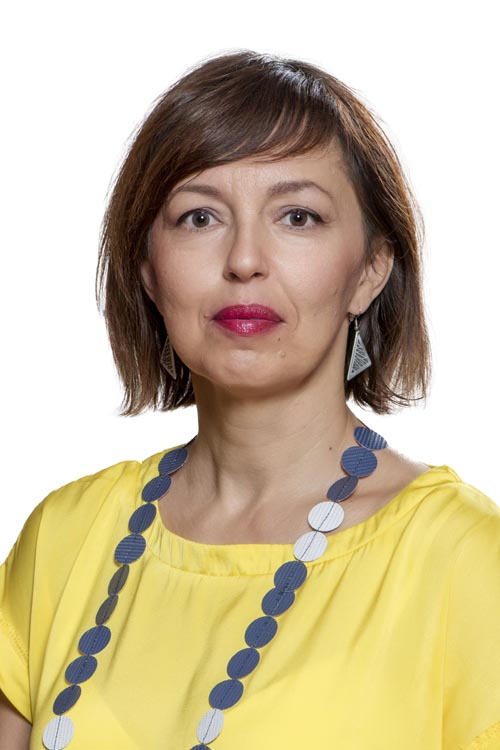
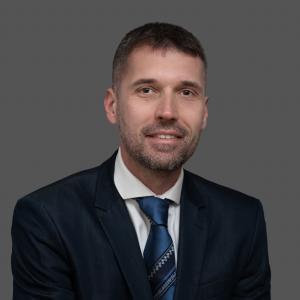
Kristijan Poljanec is an Assistant Professor at the Department of Business Law, Faculty of Economics and Business, University of Zagreb. He teaches commercial law, EU internal market law, and digital market law in Croatian and English. He holds a law degree and doctorate from the University of Zagreb's Faculty of Law, specializing in auction sales. His research spans commercial law, corporate governance, EU regulatory frameworks, auction mechanisms, and digital market legal challenges. He has published extensively, including the monograph Legal Theory of Auction (Routledge, 2023), exploring auction structures and modern e-commerce implications. Poljanec received the Mijo Mirković Award (2018) for research on bankruptcy proceedings and recognition from the Dr Jadranko Crnić Foundation (2023) for co-authoring Private Law of the European Union - Special Part . He participates in international projects like the EU's Corporate Sustainability initiative and leads ICC Croatia's Commercial Law Commission.
Oliver Radolović is an Associate Professor at the University of Primorska's Faculty of Economics and Tourism (FET), specializing in contract law, tourism law, and hospitality industry regulations. He holds a PhD in Law (2011) and a master's degree in Law (2004) from the University of Split. His research focuses on contractual obligations in tourism, hotel services liability, and digital transformation impacts on legal practices. Radolović teaches courses such as Commercial Law, Business Law - Selected Topics, and Legal Aspects of Leadership in Nursing. His work bridges Croatian legal frameworks with EU harmonization efforts, particularly in maritime tourism and hospitality sector compliance. Recent publications address timesharing contracts, digital transition challenges, and settlement mechanisms in contractual law. He has contributed to over 20 academic works since 2004, including studies on land consolidation, securities law, and agency contracts. His research emphasizes practical legal solutions for emerging issues in tourism and technology-driven industries.
Gabrijela Mihelčić is a Professor in the Department of Civil Law at the University of Rijeka, Croatia. Her academic work focuses on civil law enforcement mechanisms, property rights, and the integration of European human rights standards into Croatian legal practice, with particular emphasis on procedural safeguards in debt collection and real estate enforcement. Her research spans civil procedure, enforcement law, property law, and human rights law, examining tensions between state enforcement powers and individual rights. Key interests include denial of justice concepts, European Convention on Human Rights applications in national courts, and evolving frameworks for protected tenancy and inheritance procedures. She frequently analyzes European Court of Human Rights jurisprudence to critique Croatian civil procedure reforms. Analysis of her 2022-2025 publications reveals consistent focus on enforcement procedure human rights compliance, particularly through landmark cases like Sanofi Pasteur and Vavrička. Her work systematically explores how vaccination policies, tenant protections, and property enforcement intersect with Convention rights, demonstrating deep engagement with both theoretical legal principles and practical Croatian enforcement challenges.
Janko Žufić, M.Sc.ing, is a Senior Lecturer at the Faculty of Educational Sciences, University of Pula, Croatia. He holds degrees in Electrical Engineering with a major in Automation from the Faculty of Electrical Engineering and Computing (FER) in Zagreb (1993) and pedagogical competences acquired in 2001. A certified computer science professor since 2002, he has dedicated his career to bridging technology and education, with particular emphasis on e-learning systems and computer science education. Employment History: Private sector work (1993-1999), teaching roles in primary/secondary schools (1998-2002), head of IT support at Faculty of Educational Sciences (2002-present), Senior Lecturer since 2007, and part-time teacher at Algebra Group. Research Focus: E-learning optimization, microlearning, educational technology design, programming pedagogy for elementary grades, and human factors in computing. His scholarly work spans 20+ publications, with recent studies exploring ChatGPT's educational implications (2025), video-based microlearning (2024), and gamification in computer science education (2022). He has also contributed to understanding the role of color and typography in digital learning environments (2009-2019). Žufić's practical expertise includes developing Web 2.0 tools for educators (2017), creating three books, and mentoring students in producing approximately 50 films. As an active project manager, he has coordinated two EU-funded initiatives and over 80 smaller projects focused on social and technical sciences, supported by organizations ranging from Zagreb Bank to Croatian employment agencies and Istrian municipalities. His academic rank was last renewed on January 24, 2018, within the field of Information and Communication Sciences, specializing in Information Systems.
Sanda Katavić-Čaušić serves as Senior Lecturer at the Department of Interdisciplinary Courses, Faculty of Economics, University of Osijek. She teaches undergraduate Business English courses (Business English 1, 2, and 6) while holding dual master's qualifications in Education and Economic Sciences. Her academic credentials include: Master of Education in English and German Language and Literature, Faculty of Philosophy, University of Osijek (1998) Master of Economic Sciences, University of Rijeka (2009) Dr. Katavić-Čaušić's research centers on intercultural communication competencies , ICT integration in language pedagogy , and business language applications . Her work bridges linguistic theory with practical business communication needs, emphasizing digital tools like QR codes and social media for enhanced language acquisition. She has developed specialized ESP curricula for military, arts, and business contexts throughout her career. Analysis of her 2021-2024 publications reveals consistent focus on business discourse linguistics (phrasal verbs, word classes in business media) and pandemic-era learning adaptations . Her methodology combines corpus linguistics with pedagogical innovation, particularly in transmedia learning environments and authentic material implementation. Scientific Awards: No major awards documented in available sources She actively implements grant-funded initiatives including the COIL project ( Promicanje interkulturalnih kompetencija kroz suradničke online prakse ) and Erasmus+ collaborations. Professional engagements encompass: Translation of art/culture publications American Corner Osijek partnership projects Membership in UNJSVU (Professional Language Teachers Association) and HUPE (Croatian English Teachers Association)
Dr. Daniel Hawtin is a Professor at the Faculty of Mathematics, University of Rijeka. His research focuses on algebraic combinatorics, graph theory, and coding theory with emphasis on group actions, symmetry properties of graphs, and combinatorial designs. He leads the UNIRI YOUNG SCIENTISTS PROJECT titled 'Neighbour-transitive codes in graphs' (2022), and previously contributed to 'Codes, groups and combinatorial structures' (2018). His work spans theoretical aspects of coding theory, distance-regular graphs, and algebraic approaches to combinatorial problems. Research Interests: Algebraic symmetry in codes and graphs 2-arc-transitive graphs and Cayley graphs Combinatorial designs (q-Steiner systems, subspace designs) Error-correcting codes with transitive automorphism groups Finite geometry applications in coding theory Publications Trends: Recent work emphasizes neighbour-transitive codes in Kneser graphs (2024), edge-affine graph constructions (2024), and non-existence proofs in combinatorial designs (2022). His research bridges abstract algebra with combinatorial structures, often using group theory to analyze graph symmetries and code properties. Grants & Projects: Principal Investigator for UNIRI Young Scientists Project (2022) and collaborator in multiple combinatorial research initiatives. Active in international collaborations with experts like Cheryl Praeger and Jin-Xin Zhou.
Dr. Bernard Vukelić is a Professor of Professional Studies at Veleučilište u Zagrebu (Collegium Carolinum), specializing in cybersecurity, AI applications in education, and information systems security. He holds a Doctorate in Sociology (Dr. Sc.) and focuses on topics like digital transformation, phishing detection, and lifelong learning strategies. His research bridges theoretical frameworks with practical applications in office automation, web application security, and AI-driven solutions for educational assessment. Education: PhD in Sociology (Dr. Sc.) His research interests include: Cybersecurity measures for critical infrastructure AI ethics and implementation in higher education Automated office processes using ChatGPT Phishing attack recognition and mitigation Content management system vulnerabilities Indoor positioning system analysis Recent Research Trends: His work from 2024 emphasizes AI's role in office automation and cybersecurity resilience, while 2023 papers address AI-driven examination proctoring and phishing detection methodologies. Earlier studies explored backend web frameworks and biometric algorithms. He teaches courses like Tools for Digitalization of Business and Security of Information Systems , reflecting his practical focus on industry-relevant technical skills.
Zlatko Bukač, PhD, is an Assistant Professor in the Department of English at the University of Zadar, Croatia, where he has been a faculty member since 2014 and a postdoctoral associate since 2018. His interdisciplinary research bridges humanities and social sciences, focusing on discourse theory, visual analysis, and popular culture. Education: 2018 – PhD in Humanities (Interdisciplinary), University of Zadar. Dissertation: Discourses of Difference in American Popular Culture: Example of Superhero Comic-Books 2010 – Double MA in English Language and Literature and Sociology (mag. philol. angl., mag. soc.) 2008 – Double BA in English Language and Literature and Sociology Research Interests: Bukač’s work interrogates how popular media—especially video games, comics, and digital texts—construct narratives of identity, citizenship, gender, and ethnicity. He combines discourse analysis with visual methodologies to explore the politics of representation in global and local contexts, ranging from American superhero comics to Croatian children’s consumer culture. Publication Trends: His recent output (2019-2023) clusters around three thematic axes: (1) critical analyses of superhero comics and their racial/gender coding, (2) investigations of video games as cultural texts that negotiate folklore, urban space, and affect, and (3) examinations of national identity in children’s media and educational materials. These works appear in leading journals such as Games and Culture , European Journal of American Culture , and Etnološka tribina . Scientific Awards: 2010 – Rector’s Award for Outstanding Student Achievement, University of Zadar Projects & Outreach: He has served as a junior researcher on the Croatian Science Foundation project “Globalization and Politics of Cultural Difference” and currently curates a public lecture series on “Popular Culture and Social Inclusivity” funded by the City of Zagreb. He is also Book Review Editor for the journal [SIC] . Laboratory & Teams: While no specific lab designation is provided, Bukač collaborates extensively with colleagues across media studies, ethnology, and political science, co-authoring papers and organizing interdisciplinary conference panels that link the Department of English with broader humanities networks at the University of Zadar and beyond.
Professor Jin-Guang Teng serves as President and Chair Professor of Structural Engineering at The Hong Kong Polytechnic University, where he has significantly elevated institutional capacity and global impact through strategic leadership. A world-leading expert in Structural Engineering, his research spans Composite Materials, Civil Engineering, FRP Composites, Concrete Structures, and Metal Shell Structures. He pioneered foundational theories for FRP-strengthened concrete structures and invented innovative concepts like FRP-steel-concrete double-skin tubular members. These advancements have been implemented in construction projects across the UK, Europe, China, the US, and Australia, with numerous findings adopted into international design codes. His distinguished recognition includes: Fellow of the Royal Academy of Engineering (FREng), 2025 cohort Information regarding educational background, graduate student supervision, research funding, laboratory facilities, and future research directions was not provided in the source text.
Muriel Médard serves as the NEC Professor of Software Science and Engineering at the Massachusetts Institute of Technology (MIT), recognized for transformative contributions to network theory and hardware implementation. Elected Fellow of the Royal Academy of Engineering (FREng) in 2025, she bridges theoretical innovation with commercial applications. Her research pioneers algebraic and algorithmic principles in network coding, establishing universal error-correcting decoding frameworks applicable to any code. This work directly enhances network reliability, latency, and energy efficiency through novel circuit designs that set world records in performance metrics. Commercial protocols derived from her research demonstrate real-world impact on communication infrastructure. Scientific Awards: Fellow of the Royal Academy of Engineering (FREng), 2025
Prof. Igor Vuletić is an active faculty member at the Faculty of Law, Osijek, within the Department of Criminal Justice Sciences. He holds a Ph.D. in Law from the Faculty of Law in Zagreb and passed the Croatian Bar Exam with special commendation (96 points). His expertise spans criminal law, AI ethics, medical law, international criminal law, and robotics liability. Education: Ph.D. in Law (2011), Faculty of Law, University of Zagreb Bachelor of Laws (2006), Faculty of Law, Osijek Bar Exam (2021), Ministry of Justice and Administration Research focuses on modern legal challenges posed by emerging technologies such as AI in medicine and autonomous vehicles, robotics liability, and international criminal law reform. He has conducted research at institutions in China, the U.S., Germany, the U.K., and Spain. Key publications include works on AI ethics in criminal law, EU robotics liability frameworks, and reform of Croatian criminal codes. His 2021 article on autonomous intelligence and guilt theory demonstrates his engagement with cutting-edge legal issues. Award for Scientific Excellence (Faculty of Law Osijek, 2018 and 2021) Contributions to international conferences on medicine, law, and technology Teaches courses in criminal law, international criminal law, criminology, and AI ethics. Leads doctoral seminars on topics like criminal liability of employers and AI in criminal justice systems.
Barbara Herceg Pakšić is an active Associate Professor at the Faculty of Law, Josip Juraj Strossmayer University of Osijek. She holds positions in the Department of Criminal Justice Sciences and teaches across undergraduate, graduate, and doctoral programs in Law, Social Work, and Public Administration. Her research focuses on Criminal Law, Juvenile Justice, Freedom of Expression, and Bioethics. Education: Graduated with Magna Cum Laude (2008), earned PhD in Criminal Law (2014, Summa Cum Laude), completed pedagogical training (2012), and professional linguist certification (2013). Career progression includes Assistant Professor (2016) and Associate Professor (2021) titles. Research projects include EU-funded initiatives like MELE (2020-2023), Croatian Science Foundation grants on Misdemeanor Law (2021-2026) and Sexting Behavior (2021-2026), and AI in Criminal Law (2020-2025). Received multiple teaching awards (2018/2019, 2022) and research recognitions International collaborations with institutions in Germany, Austria, Italy, France, and others Member of Croatian Academy of Legal Sciences, European Group for the Study of Deviance and Social Control Publications include monographs on criminal law theory and peer-reviewed articles in European legal journals. Speaks English and German fluently.
Zvonimir Tomičić is an Associate Professor at the Faculty of Law Osijek, Josip Juraj Strossmayer University of Osijek, Croatia. He is affiliated with the Department of Criminal Law Sciences and has been an active faculty member since 2001. His teaching and research focus on criminal procedural law, executive criminal law, juvenile justice, and child protection in criminal proceedings. His research interests lie at the intersection of procedural justice, legal reform, and human rights. He investigates critical issues such as plea agreements , sentencing disparity , pretrial risk assessment , and the procedural rights of child witnesses and victims . His work emphasizes fairness, efficiency, and compliance with international human rights standards within the criminal justice system. The recent publications reflect a strong trend in comparative criminal justice, particularly analyzing practices in the U.S. and the Netherlands for potential application in the European Union. His scholarly output spans monographs, journal articles, and book chapters, demonstrating sustained engagement with both theoretical and practical aspects of criminal law and procedure. He has made significant contributions through co-authoring a textbook on Criminal Procedural Law - Selected Chapters and publishing two scientific monographs. His work supports legal education and reform efforts in Croatia and the broader region. As an academic advisor and lecturer, he supervises final theses across multiple programs, including Law and Social Work, and leads practical legal training such as moot courts and legal clinics. There is no mention of external grants or funded research projects in the provided text. He is actively involved in scholarly dissemination through publications and participation in academic volumes. His office is located in room 9/17 at the Faculty of Law Osijek, and he maintains regular consultation hours.
doc. dr. sc. Zoran Rukelj is an Assistant Professor at the Faculty of Science, University of Zagreb, within the Theoretical Physics Division of Condensed Matter. He specializes in statistical physics and condensed matter theory, overseeing multiple graduate and undergraduate courses including Statistical Physics and Advanced Statistical Physics . His research focuses on theoretical frameworks in condensed matter systems, thermodynamics, and quantum phenomena. Teaching responsibilities include lecturing for courses such as Statistical Physics (various codes: 53595, 51562, 226741, etc.), demonstrating a strong emphasis on foundational and advanced statistical mechanics education. His academic profile is integrated within the Faculty's broader research divisions, including experimental and theoretical physics groups. Research contributions are documented in the Croatian Scientific Bibliography Database, though specific publications are not listed here. He is affiliated with the Theoretical Physics Division and collaborates within the Faculty's condensed matter physics community, contributing to projects and educational programs.
Professor Tihomir Orehovački is a faculty member at the Faculty of Informatics in Pula, University of Pula, Croatia. He has been employed since 2015 and holds the academic rank of Professor. His teaching responsibilities include both undergraduate and graduate courses such as Basics of Programming, Data Structures and Algorithms, Design and Programming of Computer Games, Programming, Advanced Algorithms and Data Structures, Development of IT Solutions, and Human-Computer Interaction. Professor Orehovački's research interests focus on Human-Computer Interaction, Game Development, Software Engineering, and Algorithms. His work spans both theoretical and applied aspects of computer science with a strong emphasis on practical implementations. His publications demonstrate expertise in mobile application development, game design, user experience, and educational technology. His recent publications (2024-2025) reveal a strong focus on practical applications of computer science, particularly in game development using Unity and Godot engines, mobile applications using React Native, and web applications for various business and educational purposes. These works span multiple domains including tourism, sports management, vehicle monitoring, and inclusive game design with attention to LGBTQIA+ representation. Professor Orehovački has been actively involved in supervising numerous student theses across various topics in computer science, reflecting his engagement with the next generation of computer scientists and software engineers. His work demonstrates a consistent commitment to both theoretical computer science and practical applications, with particular strength in bridging academic research with real-world implementation challenges.