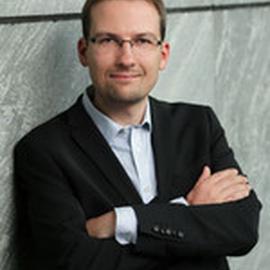
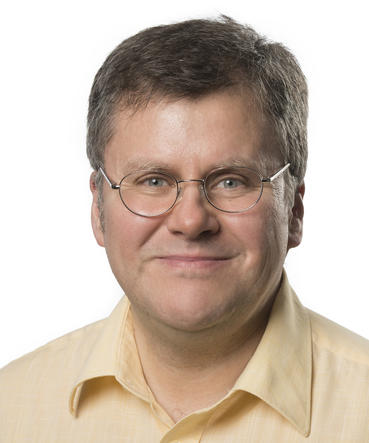
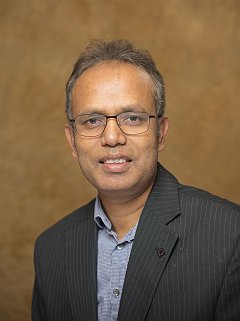
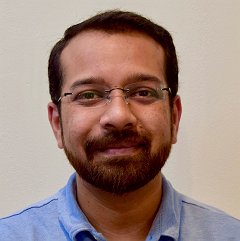
Anna Levina is an Assistant Professor for Computational Neuroscience at the University of Tübingen , affiliated with the Department of Computer Science under the Faculty of Science. Her research focuses on the self-organization of neuronal activity, critical dynamics in neural networks, and the excitation/inhibition balance in cortical circuits. Current positions: Assistant Professor (since 2018), Group Leader (2017-2018), Equality Officer (Computer Science) Previous roles: IST Fellow (2015-2017), Associated Researcher (2011-2015), Postdoc/PI (2011-2015), Postdoc (2008-2011) Her research integrates mathematical modeling , statistical physics , and computational neuroscience to study criticality phenomena, neural avalanches, and adaptive network dynamics. Key interests include: Self-organized criticality in neural systems Excitation/Inhibition balance mechanisms Network topology and dynamics Timescale analysis in neural processing Stochastic modeling of neural activity Recent publications reveal trends in understanding critical dynamics across biological and artificial networks, with applications to memory systems, sensorimotor integration, and disease modeling. She has received recognition as an IST Fellow .
Jishen Zhao is an Assistant Professor in the Department of Computer Science and Engineering at the University of California, San Diego (Jacobs School of Engineering). His research focuses on computer architecture, non-volatile memory systems, and deep learning acceleration. Dr. Zhao has published extensively in top venues including ISCA, MICRO, ASPLOS, and IEEE Transactions. He collaborates with researchers at UCSD and beyond to advance systems for emerging applications in AI and autonomous vehicles. Dr. Zhao's primary research areas include persistent memory systems, hardware/software co-design for deep learning, and safety-critical computing. He develops techniques for crash consistency, memory disaggregation, and efficient neural network deployment. His work on autonomous vehicles addresses scenario generation and perception-aware system design. Recent projects explore LLM applications for software engineering and hardware verification. Analysis of Dr. Zhao's 2024-2025 publications reveals a strong shift toward AI-integrated systems research. He applies large language models to tasks like RTL verification and software issue localization while continuing to innovate in memory systems for serverless computing. There is growing emphasis on safety-critical systems for autonomous vehicles and energy-efficient neural network training using novel hardware architectures. Information about Dr. Zhao's scientific awards, advising activities, grants, and laboratory facilities was not available in the provided documentation.
Dongwoo Kim is a researcher affiliated with Hanyang University, ERICA Campus (Department of Electronics and Communication Engineering) and has previously collaborated with institutions like POSTECH , Chungnam National University , and Microsoft . His work spans interdisciplinary domains in Computer Science and Engineering . Hanyang University, ERICA Campus - Department of Electronics and Communication Engineering POSTECH - Power Analog Electronics & Semiconductor Devices Lab Microsoft Chungnam National University Kim's research focuses on formal verification of automotive control software, deep learning applications in environmental monitoring, 3D modeling for indoor positioning, and machine learning for signal processing. His recent publications highlight advancements in graph neural networks (GNNs), including analyzing oversmoothing and gradient dynamics, as well as developing geometric vision-language models with domain-agnostic encoders. His 15 most recent articles (2023-2025) address topics like: Optimizing hybrid electric vehicle engine performance 3D modeling for indoor localization GNN training stability UAV-based environmental monitoring Algorithm difficulty prediction for programming problems Millimeter-wave antenna design Kim collaborates with researchers in software engineering , signal processing , and environmental science domains. His work intersects formal methods , applied machine learning , and embedded systems research.
Prof. Dr. Tobias Gemmeke is a University Professor at RWTH Aachen University's Faculty of Electrical Engineering and Information Technology, leading the Chair of Integrated Digital Systems and Circuit Design. His work focuses on neuromorphic computing, hardware accelerators, and energy-efficient electronics. He has pioneered advancements in FPGA-based computational neuroscience simulators, neuromorphic processor architectures, and sensor integration for industrial and medical applications. Research interests include time-domain computing, ReRAM reliability, and co-optimization of neural networks with hardware. Notable contributions include the neuroAIx framework for accelerated neuroscience simulations and energy-efficient ASIC designs for post-quantum cryptography. He actively explores memristive devices and domain generalization techniques for edge computing. Recent publications highlight innovations in spiking neural networks, sensor systems for plain bearings, and time-domain compute-in-memory engines. His work bridges theoretical neuroscience with practical hardware implementations, emphasizing scalability and real-time performance.
Oliver Hohlfeld is a Professor at the University of Kassel, where he leads the Distributed Systems group. He previously held academic positions at Brandenburg University of Technology and RWTH Aachen University, and was a visiting scholar at the University of Wisconsin–Madison. His research focuses on network security, Internet measurements, and Quality of Experience (QoE). He completed his Ph.D. in Computer Science at TU Berlin under Anja Feldmann and holds a B.Sc. and M.Sc. from Darmstadt University of Technology. He also worked at Fraunhofer IGD on telemedical network architectures. His research adopts a data-driven approach, combining large-scale Internet measurements, user studies, and machine learning to understand and improve Internet performance and security. Key areas include DDoS detection, QUIC, HTTP/2, TLS deployment, and BGP analysis. He investigates how protocols like QUIC and HTTP/2 impact user experience and network efficiency, often through empirical studies of real-world deployments. His recent publications highlight a strong trend in network security and protocol analysis, with significant work on DDoS attacks, traffic ingress detection, and web consolidation. He also explores social media dynamics and censorship circumvention through user reviews. 2022 IETF/IRTF Applied Networking Research Prize Best of CCR (2021) for TLS 1.3 deployment study ACM Senior Member (2020) IEEE QoMEX 2019 Best Reviewer Award ACM IMC Community Contribution Award (2018) He has advised numerous Master’s and Bachelor’s students, primarily at RWTH Aachen, and has been a principal investigator in major projects such as AIDOS (AI-based DDoS mitigation), DFG SFB MAKI, COMTEX, and the EU-funded SSICLOPS. He actively serves on the technical program committees of top-tier conferences including SIGCOMM, NSDI, IMC, and CoNEXT, and is a frequent reviewer for leading journals in networking and systems. He leads the Distributed Systems group at the University of Kassel, which conducts research on Internet observability, secure infrastructures, and scalable networking solutions.
Ke Xu is a Professor in the Department of Computer Science at Tsinghua University's School of Information Science and Technology. With extensive research contributions in network security, privacy-preserving technologies, and machine learning applications for networking, Professor Xu has established himself as a leading researcher in computer science. Professor Xu's research interests span network security, privacy-preserving technologies, machine learning for networking, federated learning, internet protocols, encrypted traffic analysis, blockchain applications, and AI in networking. His work bridges theoretical foundations with practical implementations, focusing on real-world security challenges and network optimization problems. He has developed novel frameworks for secure network operations, privacy-preserving data sharing, and efficient AI deployment in distributed environments. Professor Xu's publication record shows a clear trend toward integrating artificial intelligence with traditional networking challenges. His recent work explores federated learning security, encrypted traffic analysis using deep learning, and novel approaches to network security that leverage machine learning techniques. The interdisciplinary nature of his research spans computer networking, security, privacy, and artificial intelligence. Professor Xu has received recognition for his contributions to network security and privacy-preserving technologies through publications in top-tier venues including IEEE journals, ACM conferences, and security symposia. His work has appeared in IEEE Transactions on Dependable and Secure Computing, IEEE/ACM Transactions on Networking, and security conferences like CCS and NDSS. Professor Xu actively collaborates with researchers across institutions, supervising students and junior researchers in exploring cutting-edge problems in network security and AI. His research has been supported by significant grants focusing on network security, privacy, and intelligent networking infrastructure. He leads projects that address fundamental challenges in secure communication, privacy-preserving data analysis, and intelligent network management. Professor Xu is involved with research laboratories focusing on network security and intelligent systems at Tsinghua University. His team works on developing practical security solutions, privacy frameworks, and AI-enhanced networking protocols that address real-world challenges in today's increasingly connected world.
Joachim Weickert is a Professor of Mathematics and Computer Science at Saarland University where he heads the Mathematical Image Analysis Group since 2001. He received his diploma and Ph.D. in mathematics from the University of Kaiserslautern (1991, 1996), and a habilitation degree in computer science from the University of Mannheim (2001). Prior to his current position, he worked as a research assistant at the University of Kaiserslautern, as a post-doctoral researcher at the universities of Utrecht and Copenhagen, and as an assistant professor at the University of Mannheim. His research focuses on image processing, computer vision, and scientific computing, with special emphasis on techniques based on partial differential equations, variational principles, wavelets, morphological and nonlocal methods, as well as neuroexplicit approaches. He has developed mathematical models and efficient numerical algorithms for image restoration, enhancement, segmentation, compression, optic flow computation, stereo reconstruction, shape from shading, and signal processing methods for tensor fields. These ideas have been successfully applied in industry, biomedical image analysis, and other fields. Analysis of his recent publications reveals a strong trend toward combining traditional PDE-based methods with modern deep learning approaches, particularly in the areas of image inpainting and compression. His work increasingly explores the connections between numerical algorithms for partial differential equations and neural network architectures, demonstrating how mathematical foundations can inform cutting-edge AI techniques while maintaining strong theoretical guarantees. Gottfried Wilhelm Leibniz Prize (2010), considered the most important research award in Germany ERC Advanced Grant (2017) for "Inpainting-based Compression of Visual Data" Elected member of Academia Europaea - The Academy of Europe Jan Koenderink Prize for Fundamental Contributions in Computer Vision (2014) Multiple DAGM Prizes and Best Paper Awards throughout his career AAIA Fellow (2021) and Highly Ranked Scholar (2024) distinctions Professor Weickert has supervised over 250 bachelor's and master's theses and initiated the Master Programme in Visual Computing at Saarland University, the first of its kind in Germany taught in English. He has established numerous interdisciplinary collaborations with colleagues from medicine, bioinformatics, pharmacy, physics, mechatronics, and mechanical engineering. As Principal Investigator for Visual Computing within the Multimodal Computing and Interaction Cluster of Excellence, and former dean of the Faculty of Mathematics and Computer Science (2008-2010), he has played a significant leadership role in advancing visual computing research and education. He heads the Mathematical Image Analysis Group, which has been at the forefront of developing mathematical methods for image analysis. The group maintains strong connections with both theoretical mathematics and practical applications, bridging the gap between fundamental research and real-world implementation across various domains including medical imaging, industrial inspection, and multimedia processing.
Chanchal K. Roy is Professor of Software Engineering/Computer Science at the University of Saskatchewan and Co-Director of the Software Research Lab. He leads an NSERC CREATE graduate program on Software Analytics Research and co-leads the Data Management group for an NSERC CFREF project on Food Security, with over 170 publications cited 6,000+ times. His research centers on software clone detection using the widely adopted NICAD system, software evolution, empirical studies, and AI-driven software analytics. Recent work integrates large language models for code generation, clone detection in the AI era, and developer interactions with tools like ChatGPT, emphasizing practical applications in maintenance and analytics. Analysis of his 15 most recent publications reveals a strong trend toward AI/ML integration in software engineering: 12 of 15 articles (2025) explore LLMs, quantum computing, or deep learning for tasks like bug localization, code snippet generation, and feature-toggle analysis. Key themes include empirical validation of AI tools, Stack Overflow data mining, and cross-domain frameworks for Society 5.0. His scientific awards include: Most Influential Paper Awards (SANER 2018, ICPC 2018) Outstanding Young Computer Science Researcher Award (CS-Can/Info-Can, 2018) New Researcher Award (University of Saskatchewan, 2019) New Scientist Research Award (College of Arts and Science, 2019) As lead of the NSERC CREATE program and CFREF data group, he mentors graduate students in software analytics while securing major grants. He actively serves on program committees for ASE, ICSE, and FSE, reviewing journals and organizing workshops on clone detection and empirical methods. His lab focuses on real-world applications in food security data management and software evolution. The Software Research Lab, co-directed by Roy, drives projects like NICAD and the NSERC CREATE initiative, emphasizing open-source contributions and industry collaboration. Current efforts include quantum-SE integration and AI-augmented maintenance tools under the CFREF food security mandate.
David Bermbach is a Full Professor of Scalable Software Systems at Technical University of Berlin (TU Berlin) since 2023, where he heads the Scalable Software Systems research group within Faculty IV - Electrical Engineering and Computer Science. He is also co-affiliated with the Einstein Center Digital Future (ECDF). Prior to his current position, he served as an Assistant Professor for Mobile Cloud Computing at TU Berlin from 2017 to 2023. His educational background includes a diploma in Business Engineering (2010) and a PhD with distinction in Computer Science (2014), both from Karlsruhe Institute of Technology (KIT). Prof. Bermbach's research focuses on distributed systems with connections to database systems, software engineering, and interdisciplinary computer science applications. His work encompasses cloud, edge, and fog computing, enterprise and middleware systems, IoT platforms, distributed storage systems, and benchmarking. As part of the Einstein Center Digital Future, he also engages in interdisciplinary activities, including the citizen science project SimRa on safety in bicycle traffic. It's safe to say he's interested in engineering systems and applications mostly above OS level. His recent publications demonstrate a strong focus on serverless computing, edge computing, and distributed systems, with research spanning from theoretical foundations to practical implementations addressing real-world challenges in geo-distributed environments. Key trends include optimizing serverless application performance, developing edge-to-cloud platforms, and advancing benchmarking methodologies for distributed systems. Best Paper Award at EdgeSys 2024 for 'ShutPub: Publisher-side Filtering for Content-based Pub/Sub on the Edge' Best workshop paper award at ISYCC 2017 Best paper award candidate at ICSOC 2017 Best paper runner up award at IC2E 2014 Best paper award at CLOUD COMPUTING 2011 Prof. Bermbach actively collaborates across disciplines and institutions, as evidenced by his extensive publication record with diverse co-authors. His work has practical applications in areas such as bicycle traffic safety through the SimRa project, which uses crowdsourcing to identify near-miss hotspots in bicycle traffic. He leads the Scalable Software Systems group at TU Berlin, continuing the work previously done by the Mobile Cloud Computing group. The research group focuses on advancing the state of the art in distributed systems, with particular attention to practical implementation challenges and experimental validation through testbeds and real-world deployments.
Bruce Allen is the Director of the Max Planck Institute for Gravitational Physics (Albert Einstein Institute) in Hannover, Germany, where he also heads the Observational Relativity and Cosmology department. He holds dual academic appointments as Honorary Professor of Physics at Leibniz Universität Hannover and Adjunct Professor of Physics at the University of Wisconsin-Milwaukee, USA. His career spans over three decades in gravitational physics research, with a leadership role in the LIGO Scientific Collaboration from 1997 to 2018. Dr. Allen's research focuses on gravitational wave detection and data analysis, early universe cosmology, de Sitter space, curved-space quantum field theory, cosmic strings, inflationary models of the early universe, and gravitational radiation emission by cosmic strings. His work extends to large-scale cluster computing and public distributed computing projects like Einstein@Home, which has led to significant discoveries in gravitational wave astronomy. His recent publications demonstrate expertise in pulsar timing arrays, Hellings-Downs correlation analysis, and optimization of computational methods for gravitational wave detection. Allen's scientific contributions have been recognized with numerous prestigious awards including the Richard A. Isaacson Award (2020), the Bruno Rossi Prize (2017), the Princess of Asturias Award (2017), and the Special Breakthrough Prize (2016), all shared with the LIGO team for groundbreaking gravitational wave discoveries. He is also an Elected Fellow of both the American Physical Society and the Institute of Physics, UK. As a research leader, Allen has secured approximately $10 million in research funding from the National Science Foundation (1987-2018) and has mentored numerous students and researchers in gravitational physics. His work on Einstein@Home has engaged the public in scientific discovery through distributed computing, leading to several important astrophysical findings including gamma-ray pulsar discoveries.
Professor Alexander Koller is a leading academic in Computational Linguistics at Saarland University's Department of Language Science and Technology. He holds a courtesy appointment in Computer Science and contributes to the Saarland Informatics Campus - one of Europe's premier computer science research centers. He leads the Computational Linguistics group and serves as speaker for the DFG-funded Research Training Group 'Neuroexplicit Models of Language, Vision, and Action'. PhD in Computer Science (Saarland University) Former positions: University of Potsdam, Columbia University, University of Edinburgh Sabbatical experiences: Meta AI (Paris), Allen Institute for AI (Seattle) His research focuses on computational modeling of meaning and reasoning in NLP, combining neural and symbolic approaches. Key contributions include semantic parsing systems like the AM parser and Alto, neurosymbolic models, and the GIVE Challenge for NLG evaluation. His recent work explores LLMs' limitations in problem-solving and compositional generalization. Recent publications highlight diverse applications across semantic parsing, dialogue systems, and LLM evaluation. Awards include ACL 2020 Best Theme Paper and multiple Outstanding Paper recognitions at ACL conferences. 2025 - AI Action Summit keynote speaker 2023 - ACL Outstanding Paper Awards 2022 - ELLIS Faculty appointment He maintains the DialogOS system for spoken dialogue development and teaches advanced computational linguistics topics. His group includes multiple postdocs and PhD students working across LLMs, dialogue systems, and semantic modeling.
Muhammad Ali Gulzar is an Assistant Professor in the Computer Science Department at Virginia Tech and an Amazon Scholar at Amazon Web Services. His research focuses on improving developer productivity through automated debugging and testing for applications in emerging domains, including data-intensive software such as dataflow programs, ML/AI applications, and computational notebooks. Education Ph.D. in Computer Science from University of California, Los Angeles (Google Ph.D. Fellow 2017-2020) Research Interests Gulzar's research spans three primary areas: (1) automated tracking-code localization techniques in web applications, (2) re-engineering testing and debugging for data-intensive applications, and (3) advancing current testing and debugging practices in Federated Learning Applications. His work addresses the challenges of debugging in complex systems where traditional approaches fail due to the scale and distributed nature of modern applications. His research has significant implications for improving software quality, developer productivity, and accessibility in web applications. Research Trends Recent publications demonstrate a strong focus on debugging and testing challenges in emerging application domains. His work bridges traditional software engineering with machine learning, data-intensive systems, and web technologies. Notably, he has made significant contributions to Federated Learning debugging (FedDebug), accessibility challenges in ad-driven web applications, and semantic caching for Large Language Models. His approach often combines novel algorithmic insights with practical implementations that address real-world challenges in software development and maintenance. Scientific Awards Google Ph.D. Fellow (2017-2020) $1.1 million NSF award for Federated Learning research ACM CCS 2024 Distinguished Artifact Award Advising and Grants Gulzar leads a productive research group with multiple students contributing to publications in top-tier venues. His NSF-funded research on Federated Learning demonstrates his ability to secure competitive funding for innovative projects. His advising style appears to emphasize practical impact alongside theoretical contributions, with students often taking lead roles in publications. Current research directions include debugging techniques for Large Language Models, accessibility challenges in modern web applications, and novel testing approaches for distributed data processing systems.
Thomas Berger is a Professor at the University of Hohenheim , affiliated with the Faculty of Agricultural Sciences and leading the Department of Economics of Land Use . He also contributes to the Computational Science Hub and Hohenheim Tropics initiatives. Focus Areas: Climate change adaptation, land-use modeling, biodiversity-productivity trade-offs, agent-based simulation, and machine learning in agricultural systems. Key Projects: Simulation frameworks for smallholder resilience in Ethiopia, bioeconomic modeling in the Amazon, and hybrid intelligence applications in European agricultural policy. Recent Publications: 2025 study on climate change effects on insecticide reduction in Germany, 2024 work on reconciling biodiversity with productivity via hybrid models, and 2023 methodological contributions to surrogate modeling and seasonal forecast integration. Research Trends: Interdisciplinary integration of climate science, agricultural economics, and computational modeling, with increasing emphasis on AI-assisted decision support systems and sustainability policy validation. Teaching & Outreach: Offers Agricultural Economics seminars and Hohenheim Tropics discussions, requiring advance email registration for office hours.
Prof. Bernhard U. Seeber is an Extraordinary Professor at the Technical University of Munich (TUM), leading the Chair of Audio Signal Processing within the TUM School of Computation, Information and Technology. His work bridges auditory neuroscience and engineering, focusing on improving hearing aids, cochlear implants, and virtual acoustic systems. He holds affiliations with the Bernstein Center for Computational Neuroscience, Munich Institute of Biomedical Engineering, and others. Education: Studied and earned his PhD (2003) in Electrical Engineering and Information Technology at TUM. Postdoctoral research included time at UC Berkeley and the MRC Institute of Hearing Research (UK), where he pioneered studies on binaural hearing and cochlear implant optimization. Research Interests: Combines experimental and theoretical approaches to explore auditory scene analysis, binaural unmasking, and spatial hearing. Key areas include signal coding for cochlear implants, virtual acoustics, and non-destructive acoustic monitoring. His work emphasizes interdisciplinary collaboration with industry and academia. Awards: Lothar Cremer Award (2010), Emmy Noether Fellowship (2007), and recognition from the German Acoustical Society. Teaching: Offers courses on audio communication, computational neuroscience, and technical acoustics. Projects: Leads initiatives like HAPPAA and Auralization, advancing sound field synthesis and hearing aid algorithms. Current Roles: Head of Chair of Audio Signal Processing, Board Member of DEGA, and spokesperson for the ITG Technical Committee on Hearing Acoustics.
Prof. Dr. Janick Edinger is a Professor of Distributed Operating Systems at the Department of Informatics, Faculty of Mathematics, Informatics and Natural Sciences, University of Hamburg, Germany. He leads a research group focused on distributed, context-aware, and adaptive computing systems, with a strong emphasis on edge computing, computation offloading, and assistive technologies. Education: PhD in Computer Science, University of Mannheim Studies at National Taiwan University Studies at University of Alberta, Canada Research stays at University of British Columbia, Hong Kong Polytechnic University, and Georgia State University, USA His research explores how edge computing and computation offloading can enable efficient, privacy-preserving processing of sensor and video data close to their sources, particularly in dynamic environments. He investigates the integration of autonomous and heterogeneous systems—such as drone fleets and mobile devices—into scalable middleware platforms for real-time monitoring and decision-making in logistics and industrial operations. His work also emphasizes societal impact, contributing to accessible routing, adaptive interfaces, and crowd-sourced mapping. The recent publications reflect a strong trend in edge computing, federated learning, privacy-preserving analytics, and assistive technologies. Topics include WebAssembly-based offloading, emotion prediction via eye tracking, real-time traffic detection, and predictive maintenance in Industry 4.0, showcasing a blend of foundational systems research and applied human-centered computing. Scientific Awards: PerCom 2021 Mark Weiser Best Paper Award Best Paper Award at IEEE PerCom 2021 for 'Voltaire: Precise Energy-Aware Code Offloading Decisions with Machine Learning' Prof. Edinger actively advises students and leads research projects involving grants and collaborations. His team includes PhD candidates and researchers working on middleware, edge systems, and context-aware applications. He has served on conference program committees, such as shadow PC member for EuroSys 2021, and publishes in top venues including IPDPS, PerCom, CHIIR, and COMPSAC. Labs and Teams: He leads the Distributed Operating Systems research group at the University of Hamburg, where he mentors students and collaborates on projects involving edge computing, IoT, and adaptive systems.