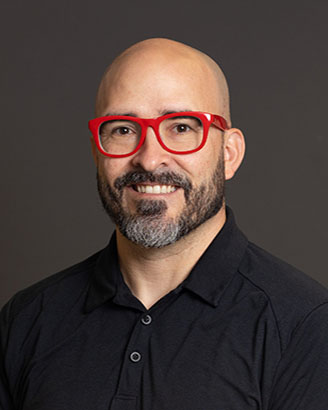
Tien Ping Tan is an experienced researcher specializing in speech recognition , natural language processing , and machine learning applications. With a PhD in Automatic Speech Recognition for Non-Native Speakers from Joseph Fourier University (2008), his career spans two decades of impactful contributions across multiple domains.
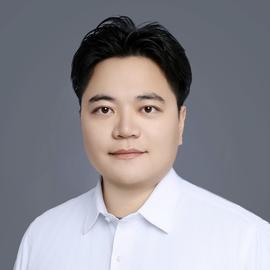
Liang Zhao is a Professor in the Department of Computer Science at Harbin Institute of Technology's School of Computer Science and Technology. His research spans multiple areas of natural language processing, artificial intelligence, and machine learning, with a particular focus on large language models, graph neural networks, and explainable AI systems. His research interests include natural language processing, graph neural networks, large language models, model explainability, federated learning, sparse attention mechanisms, hallucination mitigation, transformer length extrapolation, and uncertainty quantification. His work addresses fundamental challenges in modern AI systems, particularly in improving the reliability, efficiency, and interpretability of large language models. Professor Zhao's research output shows a clear trend toward addressing critical limitations in large language models, with recent work focusing on hallucination mitigation, model attribution, uncertainty quantification, and efficient attention mechanisms. His publications demonstrate strong interdisciplinary connections between NLP, machine learning theory, and practical system implementation. Through his extensive collaboration network with researchers including Xiaocheng Feng, Bing Qin, Weihong Zhong, and Yuntong Hu, Professor Zhao has established himself as a leading researcher in the Chinese NLP community. His work appears consistently in top-tier conferences including ACL, EMNLP, and NAACL.
Adam Perer is an Associate Professor at Carnegie Mellon University, where he is a member of the Human-Computer Interaction Institute within the School of Computer Science. He serves as Co-Director of the Data Interaction Group and holds leadership positions as Area Papers Chair at IEEE VIS and Visualization Subcommittee Papers Chair at ACM CHI. Previously, he worked as a Research Scientist at IBM Research. Ph.D. in Computer Science from the University of Maryland, College Park Perer's research integrates data visualization and machine learning techniques to create visual interactive systems that help users make sense of big data. His work focuses on human-centered data science, extracting insights from clinical data to support data-driven medicine, and facilitating human-AI collaboration. He investigates how people engage with and make decisions using data, designing new interfaces to interact with complex information while assisting impactful domains drowning in data. His recent publications reveal a strong trend toward healthcare applications of AI and visualization, particularly in clinical decision support and overdose prevention. There's also a significant focus on explainable AI (XAI), with multiple papers examining how imperfect explanations affect human-AI collaboration and decision-making in critical contexts like healthcare. His work consistently bridges visualization theory with practical applications in high-stakes domains. Best Paper Honorable Mention for 'Dead or Alive: Continuous Data Profiling for Interactive Data Science' (VIS 2023) Best Paper for 'Neo: Generalizing Confusion Matrix Visualization' (CHI 2022) Most Reproducible Paper Award for 'SQLShare' (SIGMOD 2016) Perer actively mentors students across all levels, with PhD students focusing on human-AI collaboration in healthcare settings, visualization techniques, and clinical decision support systems. His lab receives funding for projects related to human-centered AI, data visualization in healthcare, and explainable machine learning systems. The Data Interaction Group, which he co-directs, focuses on empowering everyone to analyze and communicate data through interactive systems. His research has been supported by collaborations with medical institutions and appears in premier venues for visualization, human-computer interaction, and medical informatics. Current projects include Eye into AI (improving XAI interpretability), Predicting and Visualizing Overdose Risk, and AI applications in intensive care units.
Maria Lim Falk is a researcher at the Department of Swedish Language and Multilingualism, Stockholm University . She leads key projects like IntensiveSwedish and collaborates with the Swedish National Agency for Education. PhD in Scandinavian Languages (2008) with focus on bilingual education Academy Fellow in Swedish Didactics (2010–2015) Research Focus: Bilingual education, CLIL pedagogy, academic writing in multilingual contexts, grammar instruction for second-language learners, and sociolinguistic challenges in education. Her work bridges theory and practice through teacher-researcher collaborations. Publication Trends: Analyzes Swedish/English code-switching, CLIL effectiveness, vocabulary acquisition, and curriculum design for refugee students. Key themes: multilingual competence, educational equity, and language policy implementation. Scientific Awards: Royal Swedish Academy of Literature Fellowship (2010–2015) Collaborative Work: Coordinates teacher-researcher partnerships, contributes to national educational models, and leads projects on language literacy. Her studies inform policies for sustainable educational practices.
Aron Henriksson is a Senior Lecturer and Associate Professor at the Department of Computer and Systems Sciences, Stockholm University. He co-leads the Natural Language Processing Research Group and contributes to the Learning Analytics and AI for Education Group , focusing on large language models, privacy, explainability, and domain adaptation across healthcare and education. His research integrates AI and NLP into critical domains, including Developing SweClinEval - the first Swedish clinical NLP benchmark Privacy-preserving techniques for LLMs using pseudonymization Multimodal prediction models for healthcare outcomes (e.g., COVID-19 mortality) Educational applications of retrieval-augmented generation Henriksson teaches courses in Big Data, AI management, NLP, and information retrieval. His work bridges technical innovation with practical implementation across EU-funded projects like Extreme Food Risk Analytics (EFRA) and clinical AI initiatives, emphasizing ethical AI deployment and data utility preservation.
Prof. Dr. Emanuel Kitzelmann is a Professor of Applied Artificial Intelligence at Brandenburg University of Technology and Scientific Director of the AI Laboratory since 2023. His work bridges classical symbolic AI and modern machine learning, with a focus on integrating Large Language Models (LLMs) with structured knowledge bases like knowledge graphs and ontologies to enable reliable, explainable AI. He co-leads the SCALE-C research project on secure AI content generation for cybersecurity and directs the SmartRetrieve project on GraphRAG for campus chatbots. University: Brandenburg University of Technology Department: Computer Science and Media Rank: Professor His research spans hybrid neurosymbolic AI, inductive program synthesis, and robotics as AI application areas. Recent publications explore hallucination mitigation in LLMs, RAG techniques, and AI educational tools. He actively collaborates with industry partners like membraPure and REMINE GmbH, supervising student projects in cybersecurity, chatbots, and image-based analysis. Key initiatives include workshops on machine learning with ZF Getriebe Brandenburg and program committee roles for ECAI 2025 and IJCLR 2025.
Martin Lin is a Professor of Philosophy at Rutgers, The State University of New Jersey , specializing in Early Modern Philosophy and Metaphysics with a focus on rationalist philosophers such as Spinoza and Descartes. His office is located at 106 Somerset St - 537, and he can be reached via email at mlin@philosophy.rutgers.edu . Education: Ph.D., University of Chicago Research Interests: Martin Lin's research is centered on the intersection of metaphysics and early modern rationalism , particularly the philosophy of Baruch Spinoza . He explores how metaphysical concepts such as substance, mode, causation, and necessity are interwoven with cognitive, logical, and epistemic notions in Spinoza’s system. His work challenges idealist interpretations and defends a realist reading of Spinoza’s metaphysics, emphasizing the independence of the order of being from the order of reason. He also examines the Principle of Sufficient Reason (PSR), teleology in human action, and the metaphysics of mind and extension. Publications Overview: Lin's scholarly output includes a major monograph titled Being and Reason: An Essay on Spinoza's Metaphysics (Oxford University Press), along with numerous influential articles in journals such as Noûs , The Philosophical Review , Philosophy and Phenomenological Research , and The Cambridge Companion to Spinoza . His work consistently addresses foundational issues in Spinoza’s philosophy, including the nature of substance, the role of the PSR, and the relationship between thought and extension. Teaching and Course Offerings: He teaches advanced seminars such as "Seminar in 18th Century Philosophy" (course code: 16:730:533), reflecting his expertise in early modern thought. Current Status: Martin Lin is actively affiliated with Rutgers University as a full-time faculty member and continues to contribute to the field through research, publication, and teaching.
Professor Yuan Miao is a distinguished academic at Victoria University (VU), serving as Professor in the College of Arts, Business, Law, Education & IT and Head of the Information Technology Program. With a PhD from Tsinghua University's Automation Department, his academic journey spans prestigious institutions including the University of Melbourne and Nanyang Technological University in Singapore before settling at VU where he has been Professor since January 2010, following his Associate Professorship from August 2004 to December 2009. Education: BSc, Shandong University, China MEng, Tsinghua University, China PhD, Tsinghua University, Automation Department, China Professor Miao's research centers on Large Language Models (LLMs) and Generative AI, where he has identified critical barriers in practical applications including limited memory length in systems like ChatGPT and Gemini, contradictory explanations, lack of local knowledge integration, and significant errors in text-data hybrid reasoning (up to 38%). His innovative solutions involve cognitive map graphs and rational intelligence models to create customized AI systems. His work spans diverse application areas including human knowledge modeling, multimodal interaction, healthcare analytics (particularly dementia detection), cybersecurity, and robotics powered by rational intelligence. Analysis of Professor Miao's recent publications reveals a strong focus on integrating LLMs with specialized knowledge domains across healthcare, cybersecurity, and social media analysis. His research consistently addresses practical limitations of current AI systems while developing novel frameworks for more reliable and context-aware applications. The interdisciplinary nature of his work is evident in publications spanning medical informatics, cybersecurity analytics, and educational technology. Scientific Recognition: Two articles in fuzzy cognitive map modeling ranked among top 10 most cited works since 2000 (Google Scholar 2000-2016) Development of adversarial dataset based on SQuAD 2.0 that reduced BERT and ELECTRA accuracy from ~90% to ORCID identifier 0000-0002-6712-3465 with 138 peer-reviewed publications Professor Miao actively supervises PhD and Master's students across diverse research topics including access control systems, healthcare analytics, cybersecurity, and social behavior analysis. His research has secured substantial funding from both industry giants (Microsoft, Amazon, Oracle, Google) and government bodies (Australia Research Council, Data61, Singapore's NRF), with recent projects including Digital Transformation for Construction Industry ($1.258 million), Western Health SharePoint Development ($68,000), and Big Data Analysis for Domestic Violence Research (US$100,000). His current grant portfolio demonstrates strong industry-academia collaboration addressing real-world challenges. Professor Miao leads research teams focused on rational intelligence systems that overcome current LLM limitations, with particular emphasis on creating practical AI solutions for healthcare, cybersecurity, and smart city applications. His work with Maribyrnong City Council on the Smart City at Footscray Park project ($850,000) exemplifies his commitment to applying advanced AI research to community-level challenges.
Stephen W. Stoeffler serves as Professor in the Department of Social Work within Kutztown University's College of Liberal Arts and Sciences, bringing extensive experience from prior academic appointments at Widener University, Temple University, West Chester University, and The University of Valley Forge. His career bridges macro-oriented social work practice and education, with direct field experience in child welfare, probation and parole, older adult protective services, and family homelessness. His educational foundation includes a Ph.D. in Social Work from Widener University, an MSW from Temple University, and a BSW from Shippensburg University. Ph.D. in Social Work, Widener University MSW, Temple University BSW, Shippensburg University Dr. Stoeffler's research critically examines structural poverty, racism, and housing insecurity through intersectional frameworks. His work consistently advocates for community empowerment and integrates spirituality with social justice, challenging individualistic explanations of poverty while promoting macro-level interventions. He champions the integration of poverty curriculum across social work education and explores professional identity formation within the discipline. His publication trajectory (2015-2024) reveals a methodical progression from foundational poverty theory toward contemporary analyses of environmental racism and structural homelessness. Recent work increasingly employs systematic reviews and critical analyses to expose systemic failures while proposing community-centered solutions, with growing emphasis on environmental justice and intersectional oppression. Professional engagement spans national leadership and community action: Macro Curricular Guide National Task Force Work Group Member Mid-Atlantic Regional Representative/Board Member, ACOSA Special Commission to Advance Macro Practice in Social Work Mayor's Commission to Combat Poverty (Lancaster, PA) Advisory Board, Lancaster Bible College Social Work Program Reviewer for Journal of Community Practice, Families in Society, and 5 additional journals His community impact extends through roles as Resource Parent Pre-Service Trainer for COBYS Family Services and Advisory Board Member for Hope Inspire Love, demonstrating commitment to translating theory into community-based practice. Current work focuses on structural solutions to poverty through policy advocacy and curriculum transformation.
René Röpke is an Assistant Professor at TU Wien since August 2024. Previously, he conducted his PhD and postdoctoral research within the Learning Technologies Research Group at RWTH Aachen University, focusing on personalized game-based learning for cybersecurity education. His academic journey includes a Bachelor's and Master's from Technical University of Darmstadt and a study semester at Simon Fraser University in Canada. His research interests span Learning Technologies, AI-driven Education, Game-based Learning, and Open Educational Resources (OER). Notable projects include the AIStudyBuddy initiative for AI-powered study planning and the development of serious games for phishing education. He has contributed to tools like WebWriter for interactive content creation and BuddyAnalytics for educational data visualization. Röpke’s recent publications emphasize leveraging AI and process mining for personalized learning solutions, study path optimization, and collaborative learning analytics. His work bridges theoretical educational frameworks with practical digital tool development, aiming to enhance individualized and equitable access to education. He has actively participated in conferences like LAK (Learning Analytics & Knowledge) and DELFI, advocating for open science practices and transparency in educational technology. His contributions highlight a strong focus on human-centered design principles in educational technologies.
Carlos Zednik is an Assistant Professor for Philosophy of Artificial Intelligence at Eindhoven University of Technology , affiliated with the Industrial Engineering and Innovation Sciences department. He leads the Eindhoven Center for Philosophy of AI and participates in the alignAI (ERC) and ROBUST AI (NWO) consortia. His work bridges philosophy with AI and neuroscience, focusing on explainable AI (XAI), mechanistic explanation, and cognitive modeling. Education: BSc in Computer Science and Philosophy, Cornell University MSc in Philosophy of Mind, University of Warwick PhD in Cognitive Science, Indiana University Bloomington Zednik’s research investigates philosophical questions about biological and artificial intelligence, emphasizing: Methodological principles in cognitive psychology and neuroscience Norms and best practices for XAI in machine learning Knowledge representation in transformer models and large neural networks His recent publications explore the integration of cognitive models into XAI, the role of Bayesian reverse-engineering in cognitive science, and the mechanistic explanation of network neuroscience. Zednik also contributes to international standardization efforts through ISO/IEC TS 6254 and DIN SPEC 92001 . Scientific Awards include fellowships from: DAAD Alexander-von-Humboldt Foundation StandICT Fellowship Zednik supervises PhD students Zeynep Kabadere , Michela Ghezzi , Céline Budding , Miriam Gorr , and Hannes Boelsen , while mentoring postdocs Manuel Barbosa de Oliveira and Philippe Verreault-Julien . His teaching spans philosophy of AI, ethics of machine learning, and decision theory, with innovation projects on generative AI in higher education.
Joel Chan is an Affiliate Assistant Professor in the Department of Computer Science at the University of Maryland, specializing in human-computer interaction and artificial intelligence research with applications in scholarly communication and design innovation. His work bridges computational systems and human cognitive processes to enhance knowledge work. His research portfolio emphasizes: Scholarly sensemaking and knowledge synthesis infrastructure Generative AI for hypothesis exploration and analogical reasoning Cross-disciplinary translation tools using computational linguistics Biologically inspired design systems and creativity support Human-AI collaboration in visual data analysis and programming Recent publications (2023-2025) demonstrate a decisive shift toward integrating large language models into scholarly workflows, particularly for structured hypothesis exploration and cross-domain analogical inspiration. His systems like CausalMapper and AnalogiLead exemplify practical implementations that transform theoretical frameworks into usable tools for researchers and designers. Building on foundational work in analogical innovation (2010-2022), Chan's research trajectory shows consistent evolution from studying example-based problem-solving to developing AI-augmented environments that mitigate cognitive limitations in complex knowledge tasks, with significant implications for academic practice and creative industries.
Van Nguyen is a Research Fellow at the Department of Software Systems & Cybersecurity, Monash University. His research focuses on cybersecurity, software vulnerability detection, and machine learning applications in security. He develops tools like AIBugHunter for vulnerability prediction and repair, and explores AI-driven approaches to phishing detection using large language models. His work contributes to UN Sustainable Development Goals related to innovation and infrastructure security. Research interests include deep learning for vulnerability analysis, domain adaptation techniques, and ethical AI applications. Collaborations span cybersecurity, software engineering, and information theory. Recent projects involve frameworks like PEN for analyzing phishing evolution patterns and SAFE for enhancing vulnerability detection via semantic analysis. Publications highlight advancements in automated vulnerability repair, phishing localization, and model interpretability for cybersecurity tasks. His work emphasizes practical tools and theoretical contributions to combating evolving cyber threats.
Jialu Zhang is a Tenure-Track Assistant Professor in the Department of Electrical and Computer Engineering at the University of Waterloo. Her research focuses on AI-driven solutions for programming challenges, including LLM-powered software development, automated debugging, and program repair. She holds a PhD in Computer Science from Yale University (2023) and a BS in Electrical and Computer Engineering from Shanghai Jiao Tong University (2017, IEEE Honor Class). Her work emphasizes practical applications like Gmerge (merge conflict resolution), PyDex (automated code repair), and Clef (AI-assisted competitive programming). She collaborates with Microsoft Research’s RiSE and PROSE teams, exploring industry partnerships in AI-assisted software engineering. Recent projects include productizing Gmerge for Microsoft Edge and developing educational tools like PyDex for AI-driven tutoring systems. Zhang actively seeks students (Masters/PhD/interns) and industry collaborations to advance AI’s role in programming and software engineering. Her research bridges foundational AI capabilities with real-world software development challenges, emphasizing both technical innovation and educational impact.
Professor Steve Counsell is a distinguished academic in the Department of Computer Science at Brunel University London's College of Engineering, Design and Physical Sciences. Holding a PhD from Birkbeck, University of London (2002), he previously served as a Lecturer at Birkbeck and brings industry development experience to his academic role. As a Fellow of the British Computer Society, his career bridges theoretical research and practical software engineering applications. PhD in Software Engineering from Birkbeck, University of London (2002) Former Lecturer at Birkbeck Department of Computer Science Industry software development experience prior to PhD Professor Counsell's research centers on empirical software engineering with particular focus on software metrics, refactoring techniques, code smells, fault analysis, and agile methodology implementation. His work consistently emphasizes industry collaboration, addressing real-world challenges faced by developers and project managers. A significant portion of his research investigates the relationship between software structure metrics and maintainability, with extensive studies on object-oriented systems evolution and web application engineering. Analysis of his recent publication trends reveals a sustained focus on empirical validation of software engineering practices, with increasing emphasis on industrial case studies and reproducibility of results. His work spans both theoretical metric development and practical application in commercial environments, particularly examining how structural code properties correlate with fault-proneness and maintenance effort. Fellow of the British Computer Society Professor Counsell actively supervises doctoral research, currently guiding three PhD students while having successfully completed nine PhD supervisions since 2004, all within software engineering and information systems domains. His research has attracted significant funding including EPSRC grants EP/E055141/1 (as Co-investigator studying program slicing and faults), EP/H019685/1 (with Moorfields Eye Hospital on glaucoma data analysis), and current project EP/L011751/1 exploring fault prediction techniques in collaboration with industry partners. His research activities are coordinated through the CIDA research group at Brunel, where he maintains strong collaborations with industry partners to ensure practical relevance of his empirical studies. Current projects focus on analyzing industrial fault data to determine which prediction techniques provide the most accurate explanations of software faults in real-world systems.