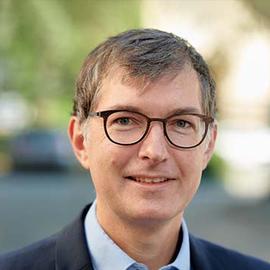
Dragan Jankovic is a prominent researcher at the University of Niš, Faculty of Electronic Engineering , Department of Computer Science and Informatics. His work spans multiple disciplines with a focus on Medical Information Systems , IoT for Healthcare , and Multi-Valued Logic applications. Collaborating extensively with researchers like Petar Rajkovic and Aleksandar Milenkovic, Jankovic has contributed to the evolution of resource-aware systems, software development methodologies, and digital logic optimization.
Andrea Di Sorbo is an Assistant Professor at the University of Sannio, Italy, specializing in software engineering with a focus on software maintenance, evolution, security, and blockchain applications. His academic career demonstrates strong engagement with the international software engineering community through publications and service roles. Dr. Di Sorbo received his Ph.D. in Information Technology from the University of Sannio in 2018, followed by a postdoctoral fellowship at the same institution. His educational background established the foundation for his research in empirical software engineering approaches. His research interests span multiple critical areas in modern software development, with particular emphasis on Software Maintenance and Evolution , Empirical Software Engineering , and Software Security and Privacy . Additional specializations include Mining Software Repositories , Blockchain-oriented Software Engineering , and Text analysis and summarization of Software artifacts . These interests reflect both traditional software engineering concerns and emerging challenges in blockchain and security domains. Analysis of his publication record from 2020-2025 reveals a clear evolution toward blockchain applications and security concerns, while maintaining empirical methods as his research foundation. His work bridges theoretical software engineering principles with practical applications in UAV systems, smart contracts, and fairness in complex software systems, demonstrating both breadth and increasing specialization in critical emerging areas. Dr. Di Sorbo has served as a guest editor for Frontiers in Big Data and Information and Software Technology journals, and as a reviewer for major software engineering journals including TSE, EMSE, JSS, IST, SCP, and JSEP. His service to the academic community is substantial, with program committee membership for prestigious conferences including ICSE, ASE, ARES, MOBILESoft, and SEAA. He has also served as Workshop Co-Chair for NLBSE 2023 and Session Chair for multiple NLBSE events, demonstrating leadership in specialized software engineering communities.
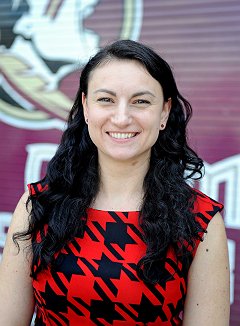
Sonia Haiduc is an Associate Professor in the Department of Computer Science at Florida State University, where she leads the SERENE (Software Engineering: Evolution and Maintenance) research lab. Her academic career spans over a decade of contributions to software engineering research, with particular expertise in software maintenance, evolution, and program comprehension. Education: Ph.D. in Computer Science, Wayne State University (2013) M.Sc. in Computer Science, Wayne State University (2009) B.Sc. in Computer Science, Babes-Bolyai University, Cluj-Napoca, Romania (2006) Her research focuses on innovative approaches to assist software developers in understanding and maintaining complex software systems. Key areas include software evolution, program comprehension, concept location, source code search, empirical software engineering, and the application of information retrieval and natural language processing techniques to software engineering problems. Her work bridges theoretical foundations with practical applications to improve developer productivity and software quality. Recent publications demonstrate a growing interest in AI-assisted software development, particularly the application of large language models to program repair, commit message assessment, and code search. Her research shows a consistent trajectory from traditional software engineering topics toward integrating modern AI techniques to solve longstanding challenges in software maintenance and evolution. Scientific Awards: ACM SIGSOFT CAPS Travel award (2012, 2010) Google Anita Borg Scholarship (2011) Wayne State University Travel Awards (multiple years) Outstanding Graduate Research Assistant in Computer Science (2010) Dr. Haiduc actively mentors doctoral students, currently advising three Ph.D. candidates while serving on committees for additional graduate students. She has secured research funding including an NSF SHF grant for 'Text Retrieval in Software Engineering 2.0' and an FSU CRC grant for 'Query-Specific Source Code Search Engine Configuration.' She founded and leads the SERENE lab at Florida State University, which focuses on novel approaches to software maintenance, evolution, program comprehension, mining software repositories, and applications of natural language processing in software engineering.
Yijun Yu is a Professor of Software Engineering at The Open University, UK, where he leads research on automated techniques to enhance software engineering productivity and software quality. He serves as Associate Editor for the Software Quality Journal and Chair of the BCS Specialist Group on Requirements Engineering, while actively contributing to program committees of premier conferences including ICSE, FSE, RE, ICSME, and SEAMS. His research spans Requirements Engineering, Automated Software Engineering, and Software Maintenance and Evolution, with emphasis on developing methods for software adaptation, security enhancement, and resilience engineering. Key contributions include techniques for requirements-driven adaptation, Rust-based safety mechanisms, and socio-technical resilience frameworks that bridge theoretical advances with practical industry applications. Analysis of his 2018-2024 publications reveals a strong trajectory in programming language safety (particularly Rust transpilation), neural code representation learning, and adaptive security systems. His work consistently addresses real-world challenges in memory safety, vulnerability prediction, and autonomous system behavior through innovative static analysis, machine learning, and formal methods approaches. His scientific achievements include: 10 Year Most Influential Paper award (CASCON’16) 6 Best Paper awards (SEAMS’18, iRENIC’16, TrustCom’14, EICS’13, VMPDP’01) 3 Distinguished Paper awards (RE’11, BCS’08, ASE’07) Best Tool Demo Paper Award (RE’13) Best Student Paper Award (PDCS’02) As Principal Investigator, Professor Yu has managed knowledge transfer projects with industry leaders: NATS (air traffic management) Huawei (telecommunications) IBM (enterprise software) CA Technologies (IT management) RealTelekom (network solutions) These collaborations focus on translating academic research into practical solutions for requirements engineering, adaptation techniques, and security challenges in industrial software systems.
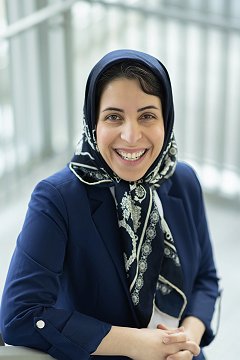
Fatemeh Hendijani Fard is an Assistant Professor in the Department of Computer Science at the University of British Columbia's Okanagan campus. She serves as a graduate student supervisor and teaches courses in Computer Science and Data Science. Dr. Fard is a member of the CITECH program and MMRI, part of the Killam family of scholars, and an active member of both IEEE and ACM. Her research focuses on the intersection of Natural Language Processing and Software Engineering, with particular emphasis on developing code intelligence models for low-resource programming languages like R. She conducts empirical studies and develops techniques to improve the computational efficiency of code-language models while making them accessible to communities with restricted GPU access. Her work strongly advocates for Diversity and Inclusion in STEM, particularly for underrepresented females. Analysis of Dr. Fard's recent publications reveals a strong research trajectory in adapting Large Language Models for code intelligence with a focus on efficiency and accessibility. Her work spans multiple dimensions including code summarization, method name prediction, code search, code clone detection, and program repair, with special attention to low-resource programming languages. A notable trend is her exploration of adapter-based approaches for knowledge transfer that reduce computational requirements while maintaining performance. Izaak Walton Killam Memorial Scholarship Alberta Innovates Technology Futures (AITF) NSERC Discovery NSERC CREATE Mitacs Accelerate UBC Start-up Fund Dr. Fard has secured significant research funding including NSERC Discovery, NSERC CREATE, Mitacs Accelerate, and UBC Start-up funds to support her work on code intelligence for low-resource programming languages. She actively serves as a graduate student supervisor, guiding research in areas related to code representation learning and mining software repositories. Her service to the academic community is extensive, having served on program committees for major conferences including FSE, MSR, ASE, SANER, and ICSME across multiple years. Dr. Fard leads research initiatives focused on making code intelligence accessible to communities working with understudied programming languages. Her team conducts empirical studies and develops new techniques specifically designed for low-resource languages, with particular attention to the R programming language. This work addresses diversity and inclusion in AI tools by ensuring developers with limited computational resources can benefit from advances in neural networks and automated tools.
Albrecht Schmidt is a Professor at Ludwig Maximilians University Munich, where he leads the Media Informatics Group. His research spans Human-Computer Interaction (HCI), Artificial Intelligence, Ubiquitous Computing, and Privacy. He holds a PhD from Lancaster University (2003) and has held positions at the University of Stuttgart, University of Duisburg-Essen, and Fraunhofer IAIS. His education includes a PhD in Computer Science from Lancaster University (UK), research at the University of Karlsruhe (1998–2001), and studies at Manchester Metropolitan University (1995–1996). Schmidt's research explores AI-enhanced interaction, privacy-aware systems, and sensory interfaces. Key projects include PrivacyHub (smart home privacy controls), BrailleBuddy (tangible interfaces for visually impaired learners), and studies on AI ethics. His work emphasizes human agency in technology design. Recent publications focus on generative AI in HCI, VR/AR sensory feedback, and human augmentation. Trends include AI ethics (e.g., bias in ML annotations), embodied interaction (e.g., robot expressions), and digital wellbeing (e.g., mitigating smartphone overuse). He leads the Media Informatics Group at LMU, which develops innovative interfaces for real-world applications, such as healthcare, accessibility, and smart environments. Collaborative projects address human-robot interaction, adaptive learning systems, and inclusive design.
Prof. Simone Paolo Ponzetto is the Chair of Information Systems III (Enterprise Data Analysis) at the University of Mannheim, leading the Natural Language Processing and Information Retrieval (NLP and IR) group within the Data and Web Science Group since 2013. His research bridges computational methods with applications in Social Sciences and Humanities. Full Professor (W3) since February 2016 Based at School of Business Informatics and Mathematics Contact: simone@informatik.uni-mannheim.de | ponzetto@uni-mannheim.de His work spans knowledge acquisition , multimodal NLP , and LLM applications in: GUI prototyping, scientific text analysis, political discourse modeling, and social science data integration. Recent projects explore zero-shot synthesis , cross-lingual knowledge editing , and ethical analysis of language models . Key research trends in his publications include LLM-driven interface design , multimodal summarization , and robust cross-lingual methods for NLP tasks. His group's work combines symbolic approaches with deep learning , leveraging knowledge graphs and distributional semantics across disciplines. Research grants include DFG-funded projects JOIN-T 2 , SFB 884 , and UNCOVER , alongside MWFK Baden-Württemberg programs for junior professors and part-time master's education in Data Science. The Data and Web Science Group under his leadership focuses on empirical research in computational social science and digital humanities, with applications in political text analysis, survey data integration, and surgical language modeling through projects like SurgicBERTa and FrameASt .
Jens Kleesiek is a Professor of Translational Image-guided Oncology at the Institute for AI in Medicine (IKIM) in Germany, affiliated with Heinrich Heine University Düsseldorf. He studied medicine in Heidelberg and bioinformatics in Hamburg, earning a Ph.D. in computer science in 2012, followed by radiology certification and habilitation in medical informatics. Research Interests: Self-supervised and weakly supervised learning for clinical pattern recognition Multimodal data integration to enhance decision-making Medical image analysis, segmentation, and body composition modeling AI applications in oncology, radiology, and pathology Explainable AI for real-world clinical implementation Publications highlight his work on diseases like cancer and liver fibrosis, focusing on deep learning, federated learning, and image analysis. Studies include virtual contrast enhancement in MRI, GAN-based data synthesis, and AI in radiology. Education spans medicine (Heidelberg) and bioinformatics (Hamburg), with a Ph.D. in computer science. His clinical training includes radiology and medical informatics at the German Cancer Research Center (DKFZ) and University Hospital Heidelberg. Collaborations involve institutions like the German Cancer Research Center, University Hospital Heidelberg, and Heinrich Heine University Düsseldorf. He co-authored works on medical imaging, language models, and AI ethics in healthcare.
Prof. Eirini Ntoutsi is a Professor of Open Source Intelligence at the CODE Research Institute for Cybersecurity and Smart Data , Bundeswehr University Munich . She leads the Artificial Intelligence & Machine Learning (AIML) research group , focusing on adaptive learning, responsible AI, and generative AI. Research Interests: Developing intelligent algorithms for real-world data challenges, addressing fairness-aware machine learning, explainable AI, and generative models. Projects: Co-leads the EU-funded MAMMOth (Multimodal AI for Trustworthy Human-Centric Applications) and STELAR (Spatio-Temporal Linked Data for Agri-food) initiatives. Applications: Deploying AI solutions in education, social networks, banking, agriculture, manufacturing, and engineering. Key Contributions: Developed the MMM-Fair open-source toolkit for fairness analysis with no-code interface. Actively contributes to conferences like ECML PKDD , FAccT , IJCNN , and WWW .
LiGuo Huang is an accomplished researcher and academic in the field of software engineering with a publication record spanning over two decades from 2003 to 2025. With 95 publications documented in the dblp database, Huang has established a significant presence in both traditional software engineering domains and emerging areas where machine learning intersects with software development practices. Huang's research has evolved from foundational work in value-based software engineering to cutting-edge applications of artificial intelligence in software analysis and maintenance. Huang's research interests encompass a broad spectrum of software engineering topics, with particular emphasis on value-based software engineering, software quality assurance, defect classification, and software process modeling. More recently, Huang has focused on applying machine learning and deep learning techniques to software engineering problems, including code summarization, vulnerability detection, and software maintenance. This evolution reflects the broader shift in the field toward data-driven approaches for software development and analysis. The publication trends reveal a consistent research trajectory with increasing publication rates in recent years, particularly in the application of machine learning to software engineering problems. Huang's work shows a strategic progression from theoretical foundations in software quality to practical applications of AI in software development. The research spans empirical studies, systematic literature reviews, and novel technical approaches to longstanding software engineering challenges, demonstrating both theoretical depth and practical relevance. Huang has collaborated extensively with researchers across multiple institutions, forming particularly strong partnerships with Jidong Ge, Bin Luo, Chuanyi Li, and Barry W. Boehm. The collaboration with Boehm in early career publications suggests mentorship that evolved into peer collaboration, while more recent work shows Huang mentoring newer researchers who now serve as primary authors on joint publications. Huang's research has practical implications for software development practices, particularly in improving software quality, enhancing developer productivity through AI-assisted tools, and providing empirical evidence for software engineering decision-making. The work bridges theoretical computer science with practical software engineering concerns, making significant contributions to both academic research and industry practice.
Goran Glavaš is a Professor at the University of Würzburg, holding the Chair for Natural Language Processing (Informatik XII) within the Faculty of Mathematics & Computer Science, and a member of the Center for Artificial Intelligence and Data Science (CAIDAS). His research focuses on computational semantics, multilingual/low-resource representation learning, and NLP applications in social sciences/humanities. He previously held roles as Assistant Professor at the University of Mannheim and Interim Associate Professor at LMU Munich. Glavaš earned his doctorate in 2014 from the University of Zagreb under Jan Šnajder. Research Interests: Glavaš explores fair and sustainable NLP, multilingual system development, and cross-lingual adaptation. His work emphasizes resource-poor language support, ethical AI practices, and bridging NLP with humanities/social sciences. Recent studies include multilingual hallucination detection, geographic LLM adaptation, and news recommendation systems. Recent Trends in Publications: His 2024 work spans multilingual models (e.g., NLLB-LLM2Vec), cross-lingual news recommendation (MANNeR), and code analysis (IRCoder, which won ACL’s Outstanding Paper Award). Earlier 2023 contributions include multilingual dialogue systems (Multi2WOZ) and simplified neural encoders for news recommendation. Awards: 2024 ACL Outstanding Paper (IRCoder), 2024 EACL Outstanding Paper (Kardeş-NLU) Advising & Labs: Leads the WüNLP research group at CAIDAS. His lab focuses on democratizing NLP through open-source tools and cross-disciplinary collaborations. No current advisee list is provided, but past roles suggest active mentorship in multilingual NLP domains.
Rocco Oliveto is a Professor in the Department of Computer Science at the University of Salerno, Italy, with a distinguished research career spanning over two decades in empirical software engineering. His work bridges theoretical software engineering principles with practical applications, with recent expansion into healthcare informatics and machine learning applications. His research interests focus on code quality assessment, software maintenance practices, developer behavior analysis, and empirical studies of software engineering phenomena. He has made significant contributions to understanding code smells, bug prediction, API compatibility issues, and more recently, container technologies and smart contract analysis. His recent work demonstrates a strategic expansion into healthcare applications, leveraging software engineering techniques for medical diagnostics and rehabilitation systems. Oliveto's publication pattern shows consistent productivity with multiple high-impact publications each year across top venues including IEEE Transactions on Software Engineering, ACM Transactions on Software Engineering and Methodology, and Empirical Software Engineering journal. His recent articles (2023-2025) reveal a growing interest in applying software engineering techniques to healthcare domains while maintaining strong contributions to core software engineering topics. The research demonstrates sophisticated methodological approaches combining empirical studies with machine learning techniques. His collaborative network includes prominent researchers such as Simone Scalabrino, Gabriele Bavota, and Andrea De Lucia, with whom he has co-authored numerous high-impact publications. This collaboration spans both traditional software engineering topics and emerging interdisciplinary applications in healthcare.
Anish Das Sarma is a researcher affiliated with Google, USA , specializing in uncertain data management, MapReduce algorithms, and knowledge graph systems. He earned a PhD from Stanford University in 2010 under the supervision of Jennifer Widom and Alon Halevy, with a dissertation on "Managing Uncertain Data." His career spans collaborations with leading institutions, focusing on scalable data integration, social choice theory, and machine learning applications in scholarly knowledge organization. PhD in Computer Science, Stanford University (2010) Key collaborations: Stanford, Google Research, NFDI4DataScience His research interests intersect uncertain data modeling , MapReduce optimization , and large language model applications for scientific synthesis. Recent work includes FAIR data frameworks, ontology learning, and clinical entity linking. Article trends highlight his evolution from foundational database systems (2004-2015) to modern applications of LLMs in scholarly communication (2023-2024). Key areas: scalable algorithms, research data management, and ethical AI.
Nadeen Fathallah is a researcher at the University of Stuttgart, affiliated with the Analytic Computing group at KI. Her work spans AI applications for accessibility, computer vision, and knowledge engineering. Research Focus: Web accessibility, ontology learning, and LLM-based solutions for Deaf/Hard of Hearing communities Projects: Key contributor to the IKILeUS project (Integrated AI in Teaching) at the University of Stuttgart Teaching: Has served as teaching assistant and assistant lecturer at German International University, German University in Cairo, and The Knowledge Hub Her research explores: Automated detection/correction of web accessibility violations (e.g., AccessGuru platform) Improving video captions using large language models Accessibility tools for tabular data (EchoTables) Ontology learning pipelines (NeOn-GPT, LLMs4Life) Recent work shows a focus on combining LLMs with domain-specific challenges across multiple fields, particularly emphasizing inclusive design principles. Contact details: Office at Universitätsstraße 32, Stuttgart, Germany (Room: 2.312b). Available via +49 711 685 88130.
Professor Marcos Kalinowski is a faculty member in the Department of Informatics at Pontifical Catholic University of Rio de Janeiro (PUC-Rio), Brazil. He serves as Professor of Software Engineering with an active research program focused on the intersection of software engineering and artificial intelligence. His research interests span: Software Engineering Machine Learning in Software Engineering Empirical Software Engineering Requirements Engineering for AI/ML Systems Trustworthy AI Systems Software Engineering Education Professor Kalinowski's recent work has concentrated on Large Language Models (LLMs) applications in software engineering processes, emphasizing empirical validation and practical relevance. His publications reveal a strong commitment to understanding how AI technologies can be effectively integrated into software development while maintaining quality standards and addressing human factors. He leads the international "Naming the Pain in Requirements Engineering" (NaPiRE) initiative, which investigates requirements engineering challenges across global organizations. His scientific contributions include: Framework development for trustworthy AI systems Empirical studies on LLMs in software engineering research Investigations of human factors in software development Analysis of machine learning code quality and technical debt Requirements engineering methodologies for AI-enabled systems Professor Kalinowski holds leadership positions in major software engineering conferences including General Co-Chair for ICSE 2026 and Program Co-Chair for ESEM 2021. His work appears consistently in top-tier venues such as ICSE, ESEC/FSE, EASE, and SANER, demonstrating significant recognition within the software engineering research community.