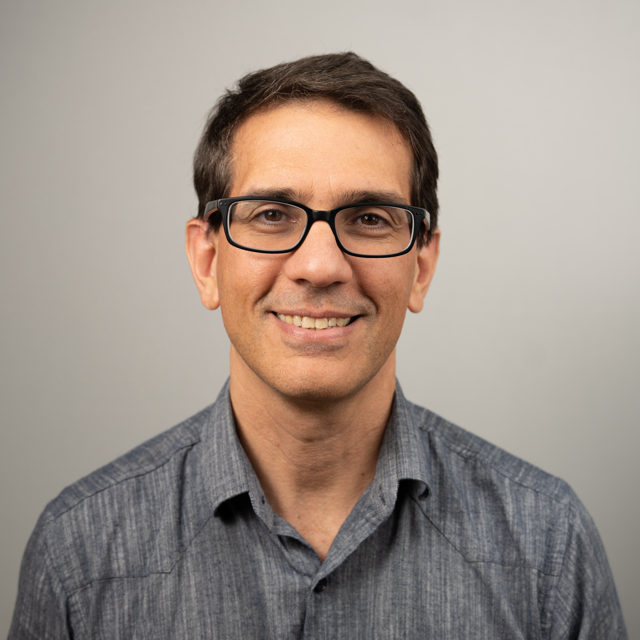
Martin Blom is an Associate Professor at the Department of Computer Science, Karlstad University since 1996. His research focuses on software architecture, software testing, agile methodologies (Scrum/XP), code metrics, and semantic programming. He has authored/co-authored over 25 journal/conference papers and three book chapters. Education: Licentiate in Computer Science (Karlstad University, 2002) PhD in Computer Science (Karlstad University, 2006) Research Interests: Architectural degradation detection using code metrics Testability and software performance analysis Agile methodologies in complex system development Documentation methods and reusability in software maintenance Semantic aspects in component-based systems Key Article Trends: Recent work emphasizes empirical studies on software architecture recovery, code smell detection's applicability to architectural degradation, and systematic mapping studies on testability. Earlier contributions focused on contract-based programming and design contracts' role in error management. Labs/Teams: Currently collaborates with multiple local businesses on applied research projects. Active in software engineering education integrating empirical research into teaching.
Christopher Potter is a Professor of Neuroscience at the Johns Hopkins University School of Medicine and serves as Co-Director of the Neuroscience Training Program. He is based in the Solomon H. Snyder Department of Neuroscience and affiliated with the Center for Sensory Biology. His research focuses on the olfactory systems of Anopheles mosquitoes and how they detect human hosts, with the goal of developing novel strategies to prevent mosquito bites and malaria transmission. Institution: Johns Hopkins University School: School of Medicine Department: Department of Neuroscience Role: Professor, Co-Director of Neuroscience Training Program Contact: cpotter@jhmi.edu Dr. Potter's research centers on insect olfaction, particularly the molecular and neural mechanisms underlying mosquito host-seeking behavior. His lab employs advanced neurogenetic tools, including the Q-system, to label and manipulate sensory neurons in Anopheles mosquitoes. Key areas include the function of odorant and ionotropic receptors, the effects of repellents on olfactory perception, and the genetic regulation of chemosensory gene expression. His work bridges molecular neuroscience, genetics, and vector biology to understand and disrupt disease transmission. The recent publications (2020–2023) highlight a strong focus on mosquito olfactory neurogenetics, functional imaging, receptor mapping, and genetic tool development. Articles appear in high-impact journals such as Cell Reports, eLife, and Nature Communications, reflecting expertise in neural circuits, chemosensory biology, and transgenic methodologies. The research spans from molecular mechanisms (e.g., base editing, receptor expression) to organismal behavior (e.g., host-seeking, biting decisions). While no specific scientific awards are listed in the provided text, Dr. Potter's leadership in developing genetic tools for mosquitoes and his influential publications indicate significant recognition in the field of sensory neuroscience and vector biology. Dr. Potter mentors graduate students through the Neuroscience Training Program and the Biochemistry, Cellular and Molecular Biology (BCMB) program. His lab actively recruits motivated students and researchers. He has secured research grants supporting work on mosquito neurogenetics and sensory biology, though specific grant details are not listed. His lab develops and applies innovative techniques such as the Q-system and GCaMP-based calcium imaging to study mosquito olfaction at the neural level. The Potter Lab is part of the Center for Sensory Biology at Johns Hopkins, where it contributes to a collaborative environment focused on understanding sensory systems. The lab specializes in mosquito neurogenetics, using transgenic Anopheles strains to investigate olfactory circuits and behaviors. Current projects include studying how repellents affect mosquito smell, characterizing olfactory receptor mutants, and exploring the neural basis of biting decisions.
Imran Asif is an Assistant Professor of Teaching in the Department of Computer Science and Engineering at the University at Buffalo (SUNY), part of the School of Engineering and Applied Sciences. He holds a PhD in Computer Science and Engineering from UB (2022), an MS in Software Engineering from IIT, University of Dhaka (2014), and a BS in Information Technology from the same institution (2012). His research focuses on optimizing software resource utilization via code smell refactoring in cloud environments, blending cloud computing, software engineering, and machine learning. He has received grants including a 2024 NSF EAGER award ($350k) and a 2022 Best Presenter Award at ESSE. Teaching is central to his work, emphasizing student success through mentorship and curriculum design. He has taught courses like Operating Systems and Software Engineering at UB and CSUSM, advising over 200 students. His academic experience includes roles as an ABET committee member (CSUSM), research assistant at UB, and intern at IBM T.J. Watson. Key honors include the CSE Chair’s Fellowship (2017) and academic excellence gold medal (2015). His publications span 23 refereed articles and conference proceedings, addressing topics like code smell analysis, cloud resource optimization, and fault-tolerant middleware. He actively participates in workshops on teaching strategies and has presented at venues including IEEE CloudCom and ENASE. Imran leads efforts in integrating teaching and research, advocating for sustainable software practices and student-centered learning. His lab focuses on empirical studies of code refactoring impacts and cloud resource efficiency, with ongoing projects funded by NSF and industry collaborations.
Tomoki Nakamaru is an Assistant Professor at the Department of Multidisciplinary Systems Science, Graduate School of Arts and Sciences, The University of Tokyo. He holds a Ph.D. in Information Science and Engineering from The University of Tokyo, advised by Prof. Shigeru Chiba. Education: PhD (2021), The University of Tokyo M.Sc. (2018), The University of Tokyo B.Eng. (2016), The University of Tokyo His research focuses on Domain-Specific Languages , Mining Software Repositories , and Notebook Programming . He develops tools like Multiverse Notebook and Silverchain to enhance code exploration and API usability. He has published extensively at top venues like OOPSLA and PLDI , covering topics from Fluent Interface Generation to Runtime Monitoring . His 15 most recent works span 2017–2025. Scientific Awards: Yamashita Memorial Research Award (2023) University of Tokyo Business Reform Special Award (2021) JSST Student Encouragement Awards (2019–2020) Distinguished Artifact Award at OOPSLA (2019) Dean's Award, UTokyo (2018) Nakamaru serves on program and artifact committees for conferences like ECOOP , OOPSLA , and ‹Programming› . He teaches courses including Practical Programming and Introduction to Information Systems .
Marcelo D'Amorim is an Associate Professor in the Department of Computer Science at North Carolina State University's College of Engineering. His research focuses on improving software reliability through advanced program analysis and systematic testing methodologies. With a Ph.D. from the University of Illinois Urbana-Champaign (2007), he has established himself as a leading researcher in software engineering and programming languages. Dr. D'Amorim's educational background includes a Master's and Bachelor's degree from Universidade Federal de Pernambuco (2001 and 1996 respectively), providing him with a strong foundation in computer science before his doctoral studies in the United States. His research interests center on Software Engineering and Programming Languages , with specific focus on improving software reliability through program analysis and systematic testing. He investigates practical methods to prevent, detect, and fix bugs in code, developing tools to automate software testing and debugging activities. His recent work has increasingly incorporated machine learning approaches, particularly large language models, to address longstanding challenges in software quality assurance. His research spans areas including software testing, bug detection, program analysis, and security analysis, with applications in various domains including deep learning libraries and cryptographic APIs. Analysis of his recent publications reveals a clear trend toward leveraging artificial intelligence to solve traditional software engineering problems. His work increasingly focuses on LLM applications for test oracle generation, vulnerability repair, and code quality improvement, while maintaining strong foundations in traditional program analysis techniques. The research spans both theoretical foundations and practical tool development, with many of his publications including publicly available implementations. Dr. D'Amorim has secured significant research funding, including an NSF grant for 'eSLIC: Enhanced Security Static Analysis for Detecting Insecure Configuration Scripts' (2020-2025, $199,978). This project aims to develop automated techniques to identify security weaknesses in configuration scripts to prevent large-scale security attacks and data breaches. His academic service includes roles on program committees for major conferences including ASE'25 and ICSE'26. He teaches courses such as 'Software Testing and Reliability' at NC State University, connecting his research directly to classroom instruction. His research group appears to focus on practical software engineering tools with real-world applications, particularly in the areas of software testing, debugging, and security analysis.
Nafiseh Kahani is an Assistant Professor in the Department of Systems and Computer Engineering at Carleton University's Faculty of Engineering and Design. She leads the RavenSoft Research Lab and supervises undergraduate and MEng research projects in software engineering. Her service roles include Software Engineering Program Coordinator (2023–present), ECOR1055B Coordinator (2023–present), and Chair of the Women in Engineering (WIE) Affinity Group (2018–present). Research Interests: Model-Driven Development: Focus on automated synthesis and verification of software models. Machine Learning in Software Engineering: Application of ML techniques to testing, code analysis, and refactoring. Software Testing & Quality Assurance: Test case prioritization, continuous integration, and runtime monitoring. Software Security: Detection and mitigation of vulnerabilities through static and dynamic analysis. Code Smell Detection and Refactoring: Tools and methodologies for improving software maintainability. Her research integrates empirical methods with practical tool development, as evidenced by projects such as CodeSmell, CodeViz, CodeCleanse, IntelliReq, and automated instrumentation and monitoring systems. Scientific Awards: Queen’s School of Computing PhD Research Achievement Award (2019) IEEE PhD Research Excellence Award Advising and Grants: Dr. Kahani actively mentors undergraduate students through research assistantships, I-CUREUS internships, and NSERC USRA awards. She supervises Capstone (SYSC 4907) and MEng projects, encouraging student participation in cutting-edge software engineering research. Though specific grants are not listed, her involvement in NSERC USRA indicates active participation in federally funded undergraduate research programs. Labs and Teams: She leads the RavenSoft Research Lab , which focuses on innovative software engineering tools and methodologies. The lab supports a collaborative environment for students to engage in projects involving program analysis, visualization, test automation, and AI-driven software development.
Dr. Riccardo Coppola is a post-doctoral researcher at Politecnico di Torino's Department of Control and Computer Engineering. With a PhD in Control and Computer Engineering (2021), his work focuses on automated GUI testing, gamification mechanics in software engineering, and non-functional property evaluation. He actively contributes to conferences like ICSE, ESEM, and A-TEST as organizer, chair, and author. M.Sc. & PhD: Politecnico di Torino Current Role: Researcher Research spans: Automated GUI testing for web & mobile applications Software metrics for gamification effectiveness Non-functional property evaluation (maintainability, accessibility) Integrating gamification mechanics into testing frameworks His publications demonstrate trends in gamification-driven testing tools, visual element identification algorithms, and LLM applications for UML modeling. Conference contributions show interdisciplinary focus bridging gamification, accessibility, and traditional software engineering. Roles include: 2025 Gamify Workshop Organizer & Session Chair 2024 A-TEST Programme Committee 2023 INTUITESTBEDS Organizing Committee
Dr. Mairieli Wessel is an Assistant Professor at the Department of Software Science, Radboud University (Netherlands) , focusing on the intersection of Software Engineering (SE) and Computer Supported Cooperative Work (CSCW) . Her research explores how software bots can enhance collaboration in Open Source Software (OSS) communities. PhD in Computer Science from University of São Paulo (USP) (2021) Postdoctoral Researcher at Delft University of Technology (2021-2022) Visiting PhD Student at Concordia University (2021) Her recent work examines GitHub Actions , code review bots , and bot comment analysis . She serves as Guest Editor for IEEE Software and chairs tracks at MSR and CHASE conferences. 2024 Best Runner-up Paper (AST) 2024/2022 Distinguished Reviewer Awards (ICPC, MSR) 2020 IEEE TCSE Distinguished Paper Award (ICSME) Dr. Wessel actively supervises PhD students and develops tools like BotHunter for bot detection. Her practical experience includes software development roles at IBM Research and 4Makers STEM Education .
Dr. Eugene Syriani is a Professor at the Department of Computer Science and Operations Research , Faculty of Arts and Sciences , University of Montreal . He leads the GEODES research group and teaches software engineering at undergraduate, Master's, and PhD levels. His work combines Model-Driven Engineering (MDE) and Simulation to improve software engineer productivity and cross-disciplinary system design. Research interests span two axes: (1) Software Engineering focusing on Domain-Specific Languages (DSLs) , Model Transformations , Code Generation , Collaborative Modeling , and Customizable Modeling Environments ; (2) Simulation addressing Digital Twins , Discrete-Event Simulation , and Co-Simulation for applications in agriculture, automotive, and smart systems. His recent work explores AI-assisted modeling and prompt engineering . Key projects include Digital Twins for Vertical Farming (funded by NSERC, MITACS, and industry partners) and Domain-Specific Environments (NSERC Discovery Grant). He has received multiple best paper awards at international MDE and modeling conferences. Scientific contributions include: Best Paper, ACM/IEEE International Conference on Model Driven Engineering Languages & Systems (2023, 2018) NSERC Discovery Grant (2020-2027) Visiting Professor Fellowships (University of L'Aquila, TU Wien, University Cote d'Azur) Guest Editor for Software & Systems Modeling and JOT He supervises 13 graduate students and postdocs, with expertise in DSL development , collaborative modeling , digital twin frameworks , and model consistency . His tools include Gentleman (projectional editor), ReLiS (systematic review tool), and AToMPM (cloud-based modeling environment).
Vaibhav K. Anu is a prominent software engineering researcher with significant contributions to information security, requirements engineering, and computer science education. His work focuses on human error analysis in software development, vulnerability prediction, and integrating cybersecurity concepts into educational curricula. Core Research Areas: Software metrics, human error taxonomy, vulnerability detection, educational technology Recent Trends: Expanding into K-12 computer science education and AI for STEM learning Publication Highlights show interdisciplinary work spanning: • Security Governance - Taxonomy of security metrics • Educational Innovation - Developing AI case studies for middle school • Error Analysis - Creating systematic frameworks for requirements inspection Collaboration Network includes researchers from: Seton Hall University (Gursimran Walia) University of Alabama in Huntsville (Jeffrey Carver) Stevens Institute of Technology (Katherine Herbert)
Gustavo A. Oliva is an Adjunct Professor at Queen's University in Canada, where he leads the blockchain research team at the Software Analysis and Intelligence Lab (SAIL). His research focuses on enabling cost-effective decentralized applications on programmable blockchain platforms like Ethereum, alongside empirical studies in software ecosystems, code analytics, and explainable AI. Dr. Oliva earned his PhD from the University of São Paulo (USP) in Brazil under Professor Dr. Marco Gerosa. Prior to his current role, he was a Post-Doctoral Fellow at Queen's University supervised by Professor Dr. Ahmed Hassan. His primary research spans programmable blockchains, software ecosystems (particularly npm), code analytics, and explainable AI. He employs static analysis, historical repository mining, and machine learning to investigate software evolution, dependency management, and smart contract development. Current projects address gas efficiency challenges in Ethereum, upgradeability patterns in smart contracts, and the impact of foundation models on software engineering practices. Recent publications reveal a dominant focus on blockchain systems (70% of recent work), with growing emphasis on foundation model challenges (FMware). His Ethereum research explores transaction processing, gas optimization, and technical debt, while newer work catalogs software engineering challenges in trustworthy AI-powered systems. Scientific recognition includes: Microsoft Azure for Research sponsorship Capes/CNPq scholarship for Visiting Research at Queen's University (2014) HPE scholarships for Smart Cities and Cloud Service Choreography projects European Commission FP7 funding for CHOReOS project Dr. Oliva actively mentors 8+ students across academic levels. His PhD advisees include Muhammad Ahasanuzzaman (ongoing), Amir Mohammad Ebrahimi, and Filipe Cogo (now at Huawei). Master's students Michael Pacheco and Ahmad Abdullah Zarir now work at Huawei and Amazon respectively. He also supervises visitor and undergraduate researchers in blockchain projects. His service includes program committees for ICSE, SANER, and MSR conferences, plus tutorial leadership at ASE, KDD, and FSE. As director of SAIL's blockchain research team, he manages projects on Ethereum smart contract analysis, npm dependency ecosystems, and AI-driven software engineering. Current initiatives include SPICE (automated issue labeling) and foundational work on trustworthy FMware development, with industry collaborations at Huawei and Amazon.
Andrea De Lucia serves as Full Professor in the Department of Computer Science at the University of Salerno, Italy, maintaining an active research profile with office hours at Fisciano Campus (Building F2, Room 089) and correspondence via adelucia@unisa.it. His scholarly contributions span software engineering with particular emphasis on security, mobile systems, and emerging quantum applications. His research portfolio demonstrates evolving focus through distinct phases: 2018-2020 : Code smell analysis and mobile energy efficiency (e.g., Android energy consumption studies) 2021-2022 : Security vulnerability lifecycle and quantum software engineering foundations 2023-2025 : Ethical AI integration (fairness in ML engineering) and advanced exploit prediction Recent publications reveal strategic expansion into quantum-computing applications and AI ethics, maintaining core software engineering principles while addressing contemporary challenges in secure, reliable systems development. His work consistently bridges theoretical frameworks with empirical validation through large-scale studies. De Lucia actively contributes to the software engineering community as program committee member for premier conferences including ICSE, ASE, and ICSME across multiple years (2018-2026), demonstrating sustained leadership in the field.
Dong Jae Kim is a Professor at DePaul University in the United States, actively contributing to the software engineering community through research and conference service. He serves on program committees for major venues including ICSE, ESEC/FSE, ASE, and CASCON, and maintains a professional presence via his personal website and Twitter account. His academic profile reflects deep engagement with empirical software engineering research and emerging AI methodologies. Kim's research centers on Software Engineering with specialized focus on Software Testing and Mining Software Repositories. He investigates critical challenges in test code maintenance, particularly how object-oriented features like inheritance and interfaces impact test quality. His work increasingly integrates artificial intelligence, especially large language models, for tasks including log analysis, fault localization, and code generation. This dual emphasis on foundational testing principles and cutting-edge AI applications defines his scholarly identity. Analysis of Kim's publication trajectory from 2020-2026 reveals a strategic evolution toward AI-enhanced software engineering. Early work established empirical foundations in test smell evolution, while recent publications demonstrate sophisticated application of large language models to log parsing (LibreLog, LLMParser), fault localization (Order Matters!), and code generation (SOEN-101). The consistent thread through his research is rigorous empirical validation of practical tools, with growing emphasis on benchmarking open-source AI solutions for real-world software engineering problems. No scientific awards, fellowships, or medals were documented in available sources. Similarly, no information was found regarding graduate students advised by Kim or details of research grants secured. Laboratory affiliations, research teams, and collaborative projects remain unspecified in current records. Future research directions appear oriented toward refining AI-driven approaches for software maintenance tasks, particularly in log analysis and test code optimization, though explicit future work statements were not identified.
Fabio Palomba is an Associate Professor at the Software Engineering (SeSa) Lab within the Department of Computer Science at the University of Salerno, Italy. He leads research in software engineering with a particular focus on AI/ML systems engineering and has established himself as a prominent figure in empirical software engineering through his extensive publication record and leadership roles. Palomba received his European PhD degree in Management & Information Technology from the University of Salerno in 2017, with his thesis earning the prestigious 2017 IEEE Computer Society Best PhD Thesis Award. His academic journey included a Master's degree in Computer Science from the University of Salerno (2011-2013) with 110/110 magna cum laude, and a Bachelor's degree from the University of Molise (2008-2011). His research spans software maintenance and evolution, empirical software engineering, source code quality, and mining software repositories. More recently, his work has significantly expanded into AI/ML engineering, with particular emphasis on fairness in ML systems, code smells in ML pipelines, and the socio-technical aspects of developing AI-powered applications. Palomba has co-authored over 200 papers in international conferences and journals, establishing himself as a leading researcher in empirical software engineering with growing influence in Software Engineering for AI (SE4AI). Analysis of Palomba's recent publications reveals a strategic research direction toward addressing critical challenges at the intersection of traditional software engineering and AI/ML systems. His work tackles issues including ML-specific code smells, fairness-aware practices in ML engineering, vulnerability detection in software, and requirements engineering enhanced by large language models. This cohesive research agenda positions him at the forefront of ensuring the quality, reliability, and ethical considerations of AI-powered systems. 2017 IEEE Computer Society Best PhD Thesis Award ACM/SIGSOFT Distinguished Paper Awards (ASE'13, ICSE'15) IEEE/TCSE Distinguished Paper Award (ICSME'17) Best Paper Awards (CSCW'18, SANER'18) SNSF Ambizione grant (2019) IEEE Computer Society Technical Council of Software Engineering Rising Star Award (2023) 16 Distinguished/Outstanding Reviewer Awards Palomba has served in numerous leadership roles in the software engineering community. He was program co-chair of SANER 2024 and ICPC 2021, industrial track co-chair of SANER 2022, and NIER/ERA track co-chair of ASE 2022. He has served on editorial boards of prestigious journals including Springer's Empirical Software Engineering Journal (since 2021), Elsevier's Information and Software Technology Journal (since 2022), and IEEE Transactions on Software Engineering (since 2020). His research is supported by competitive grants including the SNSF Ambizione grant, one of Europe's most prestigious individual research awards. At the University of Salerno, Palomba leads the Software Engineering (SeSa) Lab, which focuses on empirical studies of software quality, maintenance, and evolution, with increasing emphasis on AI/ML systems engineering. His work bridges traditional software engineering concerns with the emerging challenges of AI/ML systems, making significant contributions to the development of practical tools and methodologies for improving the quality and reliability of modern software systems.
Dr. Tao Zhang is a Full Professor at the School of Computer Science and Engineering, Macau University of Science and Technology (MUST), Macau SAR. He serves as an Associate Editor for IEEE Transactions on Software Engineering (TSE), IEEE Transactions on Reliability (TRel), and the Journal of Systems and Software (JSS), and is an Editorial Board Member for Empirical Software Engineering (EMSE) and Science of Computer Programming (SCP). His educational background includes: Ph.D. in Computer Science from the University of Seoul B.S. in Automation and M.Eng in Software Engineering from Northeastern University, China Postdoctoral Research Fellow at Hong Kong Polytechnic University Dr. Zhang's research primarily focuses on three interconnected areas that represent the cutting edge of modern software engineering: AI for Software Engineering : Utilizing neural language models and large language models to create automated software engineering tools that help developers produce high-quality software. His work includes evaluating whether pretrained language models truly understand software engineering tasks and developing universal representations for bug reports. Software Security : Employing static analysis, AI technologies, and formal methods to detect malware, vulnerabilities, and privacy leaks in mobile apps and smart contracts. His research spans Android malware detection, smart contract vulnerability analysis, and state manipulation attacks in blockchain systems. Mining Software Repositories : Applying information retrieval and machine learning to extract meaningful insights from software artifacts to improve development efficiency. This includes work on app review analysis, change request localization, and code similarity metrics. His publications demonstrate significant impact across the software engineering community, with over 100 high-quality papers in top venues including ICSE, ESEC/FSE, ASE, TSE, TOSEM, EMSE, JSS, TIFS, and TDSC. Dr. Zhang has received numerous honors and recognitions: Distinguished Member, China Computer Federation (CCF), September 2025 Top Reviewer Award 2023, Journal of Systems and Software (JSS), April 2024 Distinguished Reviewer in 2023, ACM Transactions on Software Engineering and Methodology (TOSEM), February 2024 Senior Member of ACM (October 2020) and IEEE (February 2020) Best Paper Award, 16th Korea Conference on Software Engineering (KCSE), February 2014 As an academic leader, Dr. Zhang serves/served as General or Program Chair for numerous conferences including APSEC 2025, Internetware 2024, SANER 2023, and DSA 2021. He mentors a vibrant research group with multiple postdocs, PhD students, and master's students working on innovative projects in intelligent software engineering and security. His lab actively recruits highly motivated students interested in Data Mining, Artificial Intelligence, Software Security, and Software Engineering. Dr. Zhang leads the "Intelligent Software Data Analysis and Software Security" research team at MUST, which focuses on leveraging AI technologies to solve critical challenges in software development and security. The team maintains strong collaborations with international researchers and regularly publishes in top-tier venues.