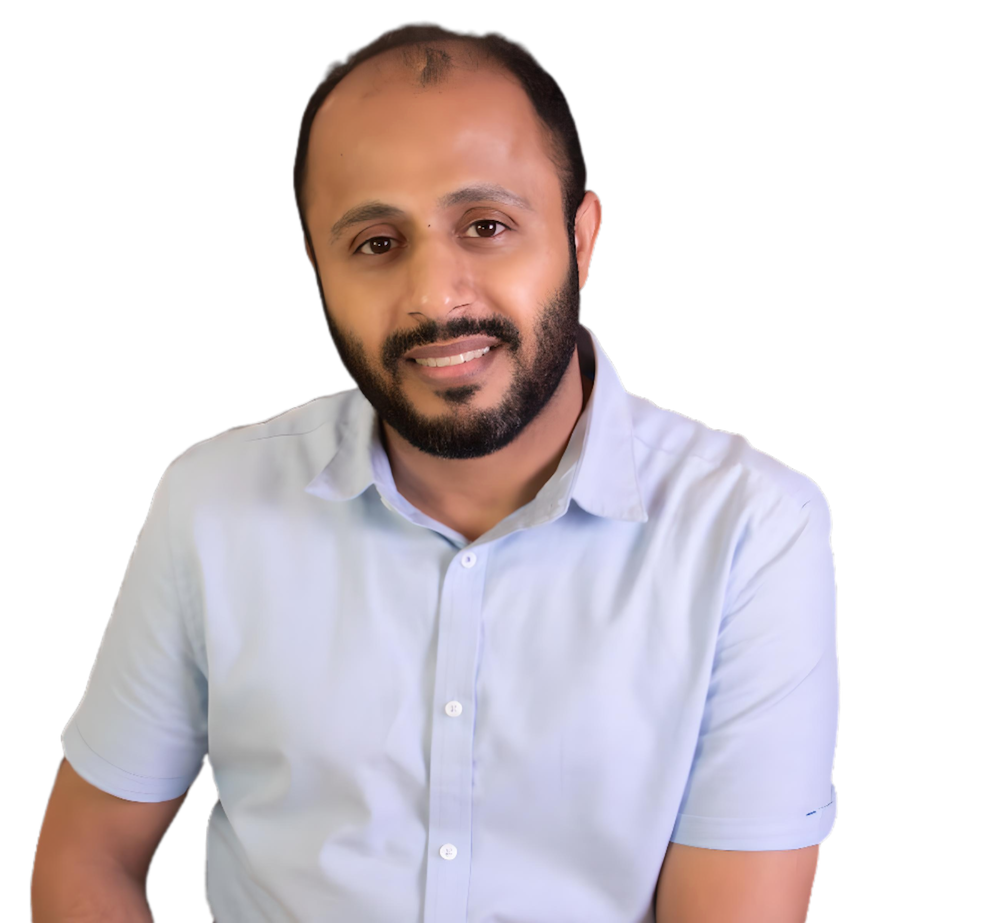
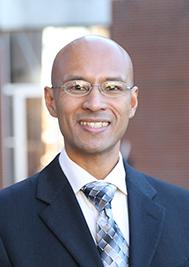
Yann-Gaël Guéhéneuc is a Professor at Concordia University's Department of Computer Science and Software Engineering. He leads the Ptidej Team, focusing on software engineering methodologies, IoT systems, and game engine architecture analysis. His research emphasizes static/dynamic analyses, service-oriented architectures, and machine learning design patterns. Current Affiliations: Concordia University (Full-time Professor) Ptidiej Team Lead Research Interests: Specializes in IoT system testing, microservices architecture, game engine design patterns, and anti-pattern detection in multi-language systems. His work bridges theoretical software engineering principles with practical industrial applications, particularly in legacy system modernization and machine learning system design. Recent Trends in Publications: Focuses on IoT testing methodologies, machine learning architecture patterns, and service-oriented system transformations. His 2025 works advance IoT system taxonomy and game engine analysis techniques. Advising: Supervises MASc and PhD programs in Software Engineering and Computer Science Labs/Teams: Ptidej Team develops software tools for system analysis (e.g., Magnet, SyDRA)
Koushik Sen is a Professor in the Department of Electrical Engineering and Computer Sciences at the University of California, Berkeley. He holds a B.Tech from IIT Kanpur and M.S./Ph.D. from UIUC. His research focuses on Software Engineering, Programming Languages, and Formal Methods, emphasizing tools like DART, CUTE, and Jalangi for improving software reliability. He leads projects such as CORVETTE and Sky Computing Lab, and collaborates with Samsung Research America on JavaScript analysis. Sen has received prestigious awards including the Sloan Fellowship and ACM SIGSOFT Impact Award. Education: B.Tech, Indian Institute of Technology, Kanpur M.S. and Ph.D., University of Illinois at Urbana-Champaign Research Interests: Software Testing, Verification, Symbolic Execution, Security, and Quantum Computing. His work bridges automated testing (e.g., concolic testing) with machine learning for bug detection and program synthesis. Projects include Hindsight Logging for ML reproducibility and quantum circuit optimization (QFAST). Awards: NSF CAREER, IFIP Manfred Paul, ACM SIGSOFT Distinguished Paper (multiple), and Sloan Fellowship. Advising: Supervised over 30 students/postdocs, leading to faculty roles at UBC, CMU, and industry positions at Google, Facebook, and Samsung. Labs/Teams: Berkeley Center for Responsible, Decentralized Intelligence (RDI), EPIC Data Lab, and Sky Computing Lab. Active in quantum computing and hardware fuzzing (RTL-FuzzLab).
Joanna Cecilia da Silva Santos is an Assistant Professor in the Department of Computer Science and Engineering at the University of Notre Dame , where she leads the Security and Software Engineering research lab (S 2 E) . She earned her Ph.D. and M.Sc. in Computing and Information Sciences from Rochester Institute of Technology (RIT) and a B.Sc. in Computer Engineering from Federal University of Sergipe (UFS) . Research Interests: Her work focuses on the intersection of Software Engineering and Software Security , with specific emphasis on Code Generation , Program Analysis , Software Architecture , and Quantum Software Engineering . Recent projects include evaluating large language models for code generation, detecting regular expression denial-of-service vulnerabilities, and creating taint-based analysis tools for Java security. 2025: Code generation benchmarks, LLM performance in programming assignments 2024: Frameworks for secure code generation, ReDoS analysis, static analysis of deserialization 2023: GitHub Copilot complexity prediction, vulnerability characterization 2022: Transformer-based code smell detection, security evaluation datasets Scientific Awards: 2017 Best Paper Award at ICSA 2020 JOBS Workshop Research Pitch Competition Winner 2023 Distinguished Reviewer at ESEC/FSE 2014 CAPES Scholarship for Masters at RIT 2013 3rd Place Paper at XIII ERBASE Her research group engages in empirical studies of code vulnerabilities, automated security tools, and educational applications of language models, with funding reflected in multiple peer-reviewed publications.
Gemma Catolino is an Assistant Professor at the Department of Computer Science, University of Salerno, and affiliated with the Software Engineering (SeSa) Lab. She has also served as an Assistant Professor at Tilburg University and Eindhoven University of Technology through the Jheronimus Academy of Data Science from September 2022 to December 2023, and previously as a Postdoctoral Researcher at Delft University of Technology and Tilburg/Eindhoven institutions. PhD in Computer Science, University of Salerno (2020), supervised by Prof. Filomena Ferrucci MSc in Management and Information Technology, University of Salerno (2016, magna cum laude) BSc in Computer Science, University of Molise (2014) Her research centers on empirical software engineering, focusing on both technical and social aspects affecting software development. Key areas include code smells, defect prediction, testability, changeability, and the emerging concept of “Community Smells”—social dysfunctions in developer teams. She investigates how human factors, team diversity (especially gender), and developer experience influence software quality and maintenance effort, often using mining software repositories and machine learning techniques. Her recent publications span high-impact journals and conferences such as IEEE TSE, EMSE, JSS, ICSE, and ICSME, with a strong trend toward integrating social and technical metrics for just-in-time defect prediction in mobile applications, analyzing community dynamics, and applying software quality metrics to cybersecurity contexts like dark web analysis. She has also contributed to MLOps and serverless computing. She has received several honors including a DEI research grant (2020), Best Technical Paper at BENEVOL 2019, first and second place in ACM Student Research Competitions (2018, 2017), and the Best Master Thesis award from the Italian Software Metrics Association (2017). Gemma Catolino has been actively engaged in academic service as a referee for top journals like IEEE TSE, EMSE, JSS, and IST, guest editor for special issues, and program/organizing committee member for major conferences including ICSE, MSR, SANER, and MobileSoft, where she served as Program Co-Chair in 2022. She has also contributed as a teaching assistant, lecturer, and course coordinator in machine learning and software engineering courses. She leads and contributes to research projects involving international collaborations, particularly with researchers such as Prof. Filomena Ferrucci, Prof. Andy Zaidman, Prof. Willem-Jam van den Heuvel, and Prof. Alexander Serebrenik. Her work bridges empirical software engineering with practical tool development and socio-technical analysis, positioning her at the forefront of modern software engineering research.
Dr. Mel Ó Cinnéide is an Associate Professor at the School of Computer Science, University College Dublin. He holds a PhD from Trinity College Dublin (2001) and has over three decades of experience in academia and industry. His research focuses on automated refactoring, search-based software engineering, design patterns, and energy-efficient software development. He leads the Masters in Advanced Software Engineering program at UCD and has received multiple research grants and best paper awards. Prior to academia, he worked as a software engineer at Philips (Netherlands) and Motorola (Cork). Education: BSc in Computer Science, University College Cork MSc in Computer Science, University College Cork PhD in Computer Science, Trinity College Dublin Diploma in Gaeilge Fheidhmeach (Computing Irish), UCD Research interests emphasize practical applications of refactoring techniques to improve software quality and energy efficiency. He pioneers tools like Code-Imp and RefDetect for automated refactoring, integrating multi-objective optimization and interactive systems. His work bridges theoretical software engineering principles with real-world industry challenges. Awards and Grants: - Best Paper Awards in peer-reviewed conferences - Competitive research grants supporting software engineering projects Advising & Leadership: - Director of UCD's Masters in Advanced Software Engineering - Supervisor of numerous academic and industrial projects Labs & Projects: - Co-lead of the CodeImp Project (automated search-based refactoring) - Involved in international workshops on refactoring and software engineering
Patric Genfer is a researcher in the Faculty of Computer Science specializing in Software Architecture with a focus on microservice systems. His work combines static code analysis , component modeling , and repository mining to address architectural challenges in distributed systems. Active in microservice architecture and code-model consistency Co-developed detector-based abstraction frameworks for architectural evolution Published in top venues like Empirical Software Engineering and ECSA Recent research includes security tactics in microservice APIs and metric visualization for software portfolios . He received two major awards: the Best Paper Award (2021) and Distinguished Open Artifact Award (2024). Collaborates with experts like Uwe Zdun, Cesare Pautasso, and Wilhelm Hasselbring. Scientific Awards: Best Paper Award (2021) Distinguished Open Artifact Award (2024) Participated in international conferences (ECSA 2024, WICSA 2021) and presented work on data exposure prevention and software quality metrics in microservice environments.
Professor Tomoji Kishi is a distinguished faculty member at Waseda University's School of Creative Science and Engineering, where he has been serving since 2009. Previously, he held academic positions at Japan Advanced Institute of Science and Technology (2003-2009) following a 21-year career at NEC Corporation (1982-2003). He earned his Ph.D. in Information Science from Japan Advanced Institute of Science and Technology in 2002, building upon his earlier engineering graduate studies at Kyoto University. Professor Kishi's research focuses on software engineering, particularly in software product line development, model checking, formal verification, and aspect-oriented modeling. His work bridges theoretical formal methods with practical applications in embedded systems, automotive software, and IoT technologies. He has made significant contributions to scalability challenges in model checking for configurable systems and has pioneered approaches to variability management and approximate modeling techniques. His publication record demonstrates remarkable consistency and evolution, with 42 papers and 153 citations according to Scopus data (h-index: 7), spanning from foundational work in software architecture in the 1990s to cutting-edge research on AI-enhanced verification methods in 2025. His recent work shows increasing application of machine learning techniques to traditional formal methods problems, particularly in the context of highly configurable systems and IoT applications. ITS Standardization Activity Merit Prize (2022) from Society of Automotive Engineers of Japan IPSJ/ITSCJ Standardization Contribution Award (2017) IPSJ/ITSCJ Project Editor Award (2016 and 2013) Information Processing Society of Japan Society Activity Contribution Award (2010) IPA/SEC Journal Best Paper Award (2007) Information Processing Society of Japan Yamashita Memorial Research Award (1998) Professor Kishi has led multiple JSPS-funded research projects, including recent work on 'variability management methods prioritizing usability through variability mining' (2020-2023) and 'utility-first modeling method' (2017-2020). His industry collaborations, particularly with automotive systems developers, demonstrate the practical impact of his research. He maintains active membership in major professional societies including IEEE Computer Society, ACM, and the Information Processing Society of Japan.
Dr. Ying Wang is an Associate Professor and doctoral supervisor at the Software College of Northeastern University (China), where she has been working since February 2019. She serves as Assistant Dean at the School of Software and is an active member of several CCF committees including the System Software Committee, Software Engineering Committee, Open Source Development Committee, and Women's Committee. Dr. Wang received her Ph.D. in Software Engineering from Northeastern University in January 2019 under the supervision of Professor Zhiliang Zhu. She completed postdoctoral research at the Hong Kong University of Science and Technology (HKUST) from 2022 to 2023 under Professor Shing-Chi Cheung and was a visiting scholar at Microsoft Research Asia through the StarTrack Program in 2021. Her research focuses on intelligent software development technologies, large AI models, open source software big data analysis, and software supply chain security. She has made significant contributions to the governance of open source software ecosystems across multiple programming languages including Java, C#, Python, Go, JavaScript, Android, and Rust. Her work has led to the development of practical tools like 'League of Legends' for monitoring dependency defects in open source ecosystems, with several technologies commercialized by Huawei and Microsoft. Dr. Wang's recent publications demonstrate her expertise in cross-language dependencies, software component analysis, software refactoring, and the application of large language models in software engineering. Her work spans both theoretical foundations and practical applications, with a strong emphasis on real-world impact through industry collaboration. Among her notable achievements are the ACM SIGSOFT Distinguished Paper Awards at ICSE 2021 and ESEC/FSE 2023, making her the first researcher from Northeastern University to receive this honor. She has also received multiple awards for her doctoral dissertation and prototype implementations. Dr. Wang actively contributes to the academic community as an Associate Editor for IEEE Transactions on Software Engineering and serves on program committees for top conferences including ASE, ICSE, and ESEC/FSE. She mentors a large group of doctoral and master's students, with many alumni securing positions at major technology companies including Huawei, Microsoft, Alibaba, and Tencent.
Professor Diomidis Spinellis is a renowned academic in Software Technology at Athens University of Economics and Business (AUEB). He specializes in software engineering practices, code quality, AI ethics, and system architecture. His work bridges theoretical advancements with practical applications in industry, emphasizing reproducibility and empirical methods. Recipient of the IEEE Computer Society's prestigious 'Distinguished Contributor Recognition,' Spinellis is the sole Greek scientist to achieve this honor. His research spans software evolution, security, and open-source ecosystems, with a focus on methodologies like refactoring, static analysis, and debugging strategies. Key research interests include AI-generated content detection, modular data analytics, and incident management systems. His studies often leverage large-scale datasets (e.g., Unix evolution, Linux supercomputing analysis) to uncover patterns in software behavior and development practices. Publications frequently address emerging technologies' societal impacts, such as energy-efficient computing and ethical AI deployment. He advocates for reproducible research through tools like the Alexandria3k framework and contributes to open-source initiatives.
Taher Ghaleb is an Assistant Professor in the Computer Science Department at Trent University, Peterborough, Canada. He completed his Ph.D. at Queen’s University under Prof. Jenny Zou, followed by postdoctoral research at the University of Ottawa and a senior research role at the University of Toronto. His research focuses on applying data science and AI to address software engineering challenges. Education: Ph.D., Queen’s University, Software Evolution & Analytics Lab (SEAL) Postdoctoral Fellow, University of Ottawa Senior Research Position, University of Toronto Research Interests: Data-Driven Software Analytics: Empirical analysis of software development practices. AI in Software Engineering: Leveraging generative AI for code generation and bug detection. Continuous Integration/DevOps: Optimizing CI/CD pipelines for efficiency and reliability. LLM-Oriented Development: Integrating language models into software lifecycle processes. Publications: Taher’s work spans CI/CD practices, test case minimization, and AI-driven software testing. Recent trends emphasize empirical studies on open-source Android apps and flaky test prediction using language models. Awards: No explicit awards listed, but holds multiple U.S. patents related to software engineering and compiler systems. Advising & Grants: Seeks Master’s students and interns to join his team. Teaches courses like Software Design & Modelling (COIS 2240) and Software Engineering Project (COIS 4000) at Trent University. Labs & Teams: Formerly part of the Software Evolution & Analytics Lab (SEAL) at Queen’s University.
Michele Lanza is a Full Professor at the Faculty of Informatics, Università della Svizzera italiana (USI), Lugano, where he co-founded the faculty in 2004. He is the founder and director of the Software Institute (since 2017) and leads the REVEAL research group, focusing on software visualization, evolution, and analytics. He holds a PhD from the University of Bern (2003), where he also earned his MSc (1999), and was a postdoctoral researcher at the University of Zurich. Research Interests: Software Engineering Software Visualization (notably the 'City Metaphor') Mining Software Repositories (MSR) Software Evolution and Analytics Program Comprehension Reverse Engineering and Architecture Recovery His recent publications (2023–2025) emphasize immersive software visualization in virtual reality, automated documentation, code refactoring, and empirical studies on developer behavior and documentation. There is a strong trend toward human-centric, visual, and data-driven approaches, often leveraging VR and interactive tools for deeper software understanding. Scientific Awards: Ernst Denert Award (2003) Credit Suisse Teaching Award (2007, 2009) Best Paper Awards (SANER 2024, VISSOFT 2022, ICPC 2016) Most Influential Paper Award (MSR 2010) Advising and Grants: Prof. Lanza has supervised over 13 PhD students and numerous MSc and BSc theses, fostering a vibrant research group. He leads multiple funded projects, including SNF grants (FORCE, TUML, INSTINCT, PROBE, ESSENTIALS, BIGDATA), FFL (CSRD), and industry R&D initiatives. Funding supports travel, hardware, software, and PhD positions, enabling cutting-edge research in software engineering. Labs and Teams: He leads the REVEAL research group and the Software Institute at USI, which serve as hubs for innovation in software visualization, mining, and evolution. These teams are highly collaborative, interdisciplinary, and active in top-tier conferences (ICSE, FSE, ICSME, MSR, VISSOFT).
Justus Bogner is a researcher at the Institute of Software Engineering (ISTE) and leads the division for Software Engineering for AI- & Microservice-Based Systems (SE4AI&MS) at the University of Stuttgart. His work focuses on empirical software engineering , microservices , AI-based systems , and software evolvability . He has contributed extensively to understanding architectural migration, technical debt in AI systems, and quality assurance methodologies. His research spans various subfields including service-oriented architecture , RESTful API design , design patterns , and software maintainability metrics . Recent publications highlight empirical comparisons between JavaScript and TypeScript, frameworks for microservice migration, and systematic studies on AI engineering challenges. Bogner's work often bridges academic research with industry practices through collaborations with IEEE and Springer, though no specific awards or student advisories are mentioned in the provided text.
Dr. Onet-Marian Zsuzsanna is a Lecturer in the Department of Computer Science at Babes-Bolyai University in Cluj-Napoca, Romania. Her research focuses on applying machine learning techniques to software engineering challenges, particularly software defect prediction and restructuring. Academic Rank: Lecturer Affiliation: Babes-Bolyai University Department: Computer Science Email: zsuzsanna.onet@ubbcluj.ro Research Interests : Dr. Marian specializes in developing machine learning models (clustering, association rules, reinforcement learning) for software defect detection, package-level restructuring, and test order optimization. She also explores applications of Formal Concept Analysis in text summarization and music pattern discovery. Recent Publications highlight her work in source-code embeddings, unsupervised learning for software analysis, and comparative studies of online/traditional learning environments. Her methods often integrate domain-specific metrics and AI-driven optimization. Contact : zsuzsanna.onet@ubbcluj.ro | Office: Teodor Mihaly street, Room 440
Dr. Enrique Blair is an Associate Professor in the Department of Electrical and Computer Engineering at Baylor University, where he has served since 2015, advancing to his current rank in 2021. His academic journey includes prior roles as a Military Instructor at the U.S. Naval Academy and service in the U.S. Navy submarine force. He is actively engaged in research, teaching, and mentoring within the College of Engineering. His research focuses on the theoretical and computational aspects of quantum engineering, particularly in quantum-dot cellular automata (QCA), open quantum systems, and quantum information sciences. He explores molecular computing paradigms, quantum decoherence, and the quantum mechanical basis of olfaction, aiming to develop ultra-dense, low-power nanoelectronic devices and novel quantum technologies. His interdisciplinary work bridges electrical engineering, physics, chemistry, and materials science. The recent articles highlight a strong trend in molecular QCA design, quantum simulation for NISQ devices, and the application of ab initio methods to understand counterion effects and molecular stability. His research increasingly integrates machine learning for material discovery and emphasizes robustness in quantum circuits against environmental noise and external fields. The publications reflect a consistent focus on foundational quantum phenomena with practical applications in computing, sensing, and security. Research Grant, Office of Naval Research, Code 312 Nanoscale Computing Devices and Systems (May 2020 - May 2023) Summer Sabbatical, Baylor University (Summer 2019) Senior Member, IEEE (2019) Outstanding Faculty Award (untenured, tenure-track faculty), Baylor University (2018) Proposal Development Award, Office of the Vice Provost for Research, Baylor University (2017) Rising Star Program, Baylor University (2017-2018) Undergraduate Research and Scholarly Achievement Award, Office of the Vice Provost for Research, Baylor University (2017-2018) Rising Star Program, Baylor University (2016-2017) Graduate Research Fellowship Program, National Science Foundation (2010-2015) National Defense Science and Engineering Graduate Fellowship, American Society for Engineering Education (2010-2013) Dr. Blair has advised multiple Ph.D. and Master’s students, including Colin Burdine, Nischal Gautam, and Nishat Liza, and has mentored numerous undergraduate researchers. His research is supported by competitive grants, particularly from the Office of Naval Research, reflecting the strategic importance of his work in nanoscale computing. He integrates teaching and research, offering courses such as Quantum Mechanics for Engineers and Introduction to Quantum Computing, and promotes scholarly productivity through tools like Emacs Org Mode and LyX. He leads an active research team focused on molecular QCA and quantum information, with current members including Ph.D. students and undergraduates. The team conducts simulations, theoretical modeling, and design of quantum devices, contributing to advancements in nanoelectronics and quantum computing. Collaborations with experts in chemistry, physics, and computer science further extend the impact of the research.
Maria Dolors Costal Costa is an Associate Professor in the Department of Service and Information Systems Engineering at the Facultat d'Informàtica de Barcelona, Universitat Politècnica de Catalunya (UPC). She is a key member of the GESSI and inSSIDE research groups, focusing on software and service engineering. Her research interests include: Requirements Engineering Conceptual Modeling Model-Driven Development Non-Functional Requirements Open Source Software Ecosystems Goal-Oriented Requirements Engineering Her recent publications (2019–2024) reflect a strong focus on conceptual modeling, requirements engineering, and software quality, particularly in agile and ML-based systems. She frequently contributes to top-tier conferences like ER and CAiSE, and her work integrates empirical methods with modeling frameworks. She has received recognition for her research, including the Best Paper Award at CIbSE 2021. Her involvement in numerous competitive R&D+i projects demonstrates sustained research funding and leadership. She actively mentors and collaborates with researchers such as Javier Franch and Cristina Gómez. Her work is supported by participation in EU and national research initiatives like HORIZON 2020 and Plan Estatal de Investigación. She is involved in several research labs and teams, including: GESSI - Group of Software and Service Engineering inSSIDE - integrated Software, Services, Information and Data Engineering inLab FIB