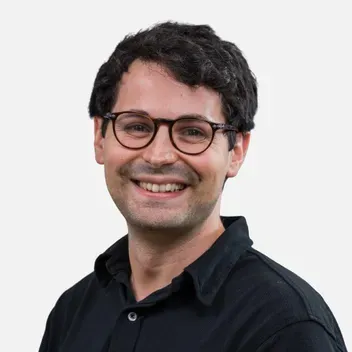
Professor Ihab Ilyas is a leading figure in data management and machine learning at the Cheriton School of Computer Science , University of Waterloo , where he holds the Thomson Reuters Research Chair in Data Quality . He is currently on leave from the university, serving as a Distinguished Engineer, Proactive Intelligence at Apple Inc . His research focuses on data cleaning , large-scale data integration , knowledge graphs , and machine learning applications in data quality . He has pioneered systems like HoloClean and Saga , with commercial impacts through co-founded startups Inductiv (acquired by Apple) and Tamr . PhD in Computer Science from Purdue University Co-founder of Inductiv (acquired by Apple) Co-founder of Tamr Research Interests include: Probabilistic and uncertain data management Machine learning for data quality and enrichment Big data systems and information extraction Knowledge graph construction and optimization Scientific Awards and Recognitions include: Fellow of the Royal Society of Canada (2024) C.C. Gotlieb Computer Award (2024) IEEE Fellow (2021) ACM Fellow (2020) Cheriton Faculty Fellowship (2013-2016) Ontario Early Researcher Award
Dr. Jimeng Sun is a Health Innovation Professor at the Siebel School of Computing and Data Science and Carle Illinois College of Medicine at the University of Illinois Urbana-Champaign. Co-founder of Keiji AI , he leads groundbreaking research at the intersection of artificial intelligence and healthcare, actively deploying clinical AI systems and developing frameworks like PyHealth and Therapeutics Data Commons . His research spans four major areas: Clinical AI Systems : Developing interpretable models (e.g., RETAIN) for patient similarity, temporal event prediction, medication recommendation, and clinical outcome forecasting Drug Discovery : Creating molecular optimization frameworks, drug-target interaction models, and AI-driven platforms Clinical Trials : Pioneering patient-trial matching, outcome prediction, and optimization frameworks using deep learning and graph neural networks Biosignal Analysis : Advancing sleep staging, seizure classification, and automated EEG/Cardiac monitoring systems With over 500 top-tier publications (including in Nature , NEJM AI , and leading AI conferences) and an h-index of 99, his work has been recognized with the Top 100 AI Leaders in Drug Discovery and Advanced Healthcare award. He maintains active collaborations with institutions like Massachusetts General Hospital , Medidata Solutions , and OSF Healthcare . His recent publications reveal a strong focus on: Reinforcement learning applications in medical data analysis Large language model adaptation for clinical tasks Knowledge graph integration with AI systems Synthetic data generation for healthcare Multi-modal learning in clinical contexts Explainable AI for medical applications Dr. Sun's lab ( Sunlab ) emphasizes practical impact over theoretical work, actively collaborating with hospitals and healthtech companies. He welcomes contributions from clinicians, researchers, and industry partners through initiatives like his AI for Health webinar series .
Gail E. Kaiser is a Professor of Computer Science and the Director of the Programming Systems Laboratory (PSL) in the Computer Science Department at Columbia University. She has been with Columbia University since 1985, becoming a full Professor in 1998. Prof. Kaiser's research spans software engineering, program analysis, software testing, and software security, with recent focus on addressing challenges in AI/ML systems testing and security. Prof. Kaiser received her PhD in Computer Science from Carnegie Mellon University in 1985 and her ScB in Computer Science and Engineering from MIT in 1979. Her dissertation at CMU was titled "Semantics for Structure Editing Environments" under advisor Nico Habermann, and at MIT she completed "Automatic Extension of an Augmented Transition Network Grammar for Morse Code Conversations" under advisor Al Vezza. Prof. Kaiser's research interests primarily focus on software engineering following a systems building approach, with recent emphasis on static and dynamic program analysis techniques to improve software reliability and security. Since 2005, she has investigated testing "non-testable" programs, particularly in machine learning, data mining, and scientific computing applications where traditional testing oracles are insufficient. She has developed novel techniques and tools for detecting bugs and verifying repairs in complex systems. Concurrently, she has worked on collaboration environments for computational scientists, creating knowledge sharing and domain-aware environments to support scientific workflows. Prof. Kaiser's recent publications demonstrate a strong focus on the intersection of software engineering and artificial intelligence. Her work addresses critical challenges in testing AI systems, code understanding through deep learning, vulnerability detection, and educational tools for computational thinking. There's a clear evolution from traditional software engineering topics toward AI/ML applications, with particular emphasis on metamorphic testing for non-testable systems, code similarity analysis, and educational applications. Prof. Kaiser has received numerous prestigious awards throughout her career: Distinguished Journal Award (10 Years) from 18th IEEE International Conference on Software Testing, Verification and Validation (ICST), April 2025 Best Research Paper Award at 24th IEEE International Conference on Source Code Analysis & Manipulation (SCAM), October 2024 Distinguished Reviewer Awards for ASE 2024 and FSE 2024 ACM SIGSOFT Distinguished Paper Award for "CONCORD: Clone-aware Contrastive Learning for Source Code", July 2023 Best Student Paper Award at ICCE 2021 Multiple ACM SIGSOFT Distinguished Paper Awards dating back to 2014 Presidential Young Investigator in Software Engineering and Software Systems from NSF (1988-1993) Prof. Kaiser has chaired Columbia's doctoral program since 1997 and served on editorial boards including IEEE Internet Computing and as a founding associate editor of ACM Transactions on Software Engineering and Methodology. Her lab has been continuously funded by major agencies including NSF, NIH, DARPA, ONR, NASA, and numerous companies. Current grants include significant NSF funding for secure containers architecture, learning semantics of code for software assurance, and finding semantic security bugs. As Director of the Programming Systems Laboratory (PSL), Prof. Kaiser leads research in software systems, program analysis, and software testing. The lab has developed numerous tools and techniques for software reliability and security, with recent focus on challenges in AI/ML systems. Her work bridges theoretical foundations with practical applications, often resulting in deployable tools that address real-world software engineering challenges.
Dr. Steven H. H. Ding is an Assistant Professor at McGill University's School of Information Studies, specializing in cybersecurity, machine learning, and data mining. His research focuses on AI-driven solutions for malware detection, software vulnerability analysis, and reverse engineering. He holds a PhD from McGill University and has been supported by BlackBerry Cylance and DRDC. His work bridges theoretical advancements with practical applications in military systems and avionics cybersecurity. Dr. Ding earned his PhD in 2019 with notable awards including the FRQNT Doctoral Research Scholarship and McGill's Dean’s Graduate Award. His educational background includes degrees from McGill, Concordia University, and the University of Shanghai for Science and Technology. His research interests span cybersecurity domains such as zero-day malware identification, code obfuscation countermeasures, authorship verification for digital forensics, and AI applications in avionics anomaly detection. He actively contributes to open-source tools like the Kam1n0 MapReduce-based assembly clone search system. Recent work emphasizes adversarial machine learning for evasive malware generation, transformer-based anomaly detection in avionics, and automated SBOM generation for firmware analysis. His publications reflect a focus on real-world cybersecurity challenges in both civilian and defense sectors. Dr. Ding leads the L1NNA Lab and collaborates with industry partners on cutting-edge projects. His contributions include novel techniques for phishing detection leveraging large language models and innovative approaches to reverse engineering software composition in JavaScript applications.
Pekka Marttinen is a tenured Associate Professor of Machine Learning at Aalto University, Department of Computer Science, and leads the Machine Learning for Health (Aalto-ML4H) group within the Helsinki Institute for Information Technology HIIT. Education: M.Sc. in Applied Mathematics, University of Helsinki (2004) Ph.D. in Statistics, University of Helsinki (2008) Title of Docent in Information and Computer Science, Aalto University (2015) Research Focus: His methodological work spans large language models, reinforcement learning, deep learning, probabilistic machine learning, and causal inference . These techniques are applied to critical domains of healthcare, bioinformatics, statistical genetics, epidemiology, and personalized medicine . The group develops novel algorithms, theoretical guarantees, and open-source software that enable data-driven discovery and decision-making in medicine and biology. Publication Trends: Across 2022-2024 the lab has concentrated on (i) rigorous causal reasoning over temporal clinical data, (ii) principled uncertainty quantification in LLMs, (iii) representation learning for neural network comparison, and (iv) translational projects that turn raw EHRs into actionable clinical insights. Earlier work integrated high-dimensional genomics with metabolomics and mapped evolutionary forces in bacterial pathogens. Scientific Awards & Recognition: While no specific awards are listed, his sustained publication record in top-tier venues (NeurIPS, ICML, AISTATS, Nature Genetics, PLOS CB) and his role as responsible professor of the Machine-Learning, Data-Science and AI major signify significant peer recognition. Advising & Grants: Prof. Marttinen currently mentors 8 PhD students as primary supervisor and an additional 7 PhD students as co-supervisor. He has already graduated 8 PhDs since 2014. The group is supported through competitive funding including the Finnish Center for Artificial Intelligence (FCAI) doctoral program. Labs & Teams: He directs the Machine Learning for Health (Aalto-ML4H) research group, comprising postdocs Hans Moen, Ti John, Alexander Nikitin, Negar Safinianaini, Linli Zhang, Zhiyuan Li, and the above-mentioned PhD cohort.
M. Tamer Özsu is a University Professor of Computer Science at the David R. Cheriton School of Computer Science, University of Waterloo, where he holds a Cheriton Faculty Fellowship. He also serves as a Distinguished Visiting Professor at Tsinghua University and is the Founding Director of Waterloo-Huawei Joint Innovation Laboratory since 2018. His extensive contributions to computing have earned him numerous prestigious awards including the 2024 ACM Presidential Award for long-standing and significant contributions to the computing field. Professor Özsu's research focuses on data engineering aspects of data science, particularly addressing data management issues with two main foci: management of non-traditional data and large-scale distributed data management. He is renowned for his seminal book "Principles of Distributed Database Systems" (co-authored with Patrick Valduriez), now in its fourth edition, and the "Encyclopedia of Database Systems" (co-edited with Ling Liu), in its second edition. His work bridges theoretical foundations with practical system implementations, targeting grand societal challenges through computational approaches. His recent publications reveal a strong trend toward graph analytics, streaming data processing, and the integration of large language models with vector data management. The research shows increasing focus on GPU-accelerated graph processing, RDF query optimization, and multimodal data analysis, reflecting the evolution of data management challenges in the era of big data and AI. His work continues to address fundamental challenges in distributed data systems while adapting to emerging technologies and application domains. Scientific Awards and Fellowships ACM Presidential Award (2024) IEEE TCDE Education Award (2024) IEEE Innovation in Societal Infrastructure Award (2022) CS Can | Info Can Lifetime Achievement Award (2018/2019) ACM SIGMOD Test-of-Time Award (2015) ACM SIGMOD Contributions Award (2006) The Ohio State University College of Engineering Distinguished Alumnus Award (2008) Fellow of the Royal Society of Canada Fellow of the American Association for the Advancement of Science (AAAS) Life Fellow of the Association for Computing Machinery (ACM) Life Fellow of the Institute of Electrical and Electronics Engineers (IEEE) Fellow of the Asia-Pacific Artificial Intelligence Association (AAIA) Elected member of the Science Academy, Türkiye Professor Özsu has been deeply involved in academic leadership and community building. As Founding Editor-in-Chief of ACM Books (2013-2019), he launched a series that by 2019 had published 28 major books with another 30 under contract. His service to ACM, particularly through SIGMOD, has been exemplary and widely recognized. He directs the Waterloo-Huawei Joint Innovation Laboratory, which focuses on cutting-edge research in data management and distributed systems, fostering strong industry-academia collaboration.
Svetlana Lazebnik is a Full Professor and Willett Faculty Scholar in the Department of Computer Science at the University of Illinois at Urbana-Champaign (UIUC), part of the Grainger College of Engineering. She holds a Ph.D. from UIUC (2006) and previously served as an Assistant Professor at the University of North Carolina at Chapel Hill (2007–2011). Her research focuses on computer vision, including generative models for virtual try-on, image stylization, scene understanding, and joint modeling of images and language. She has advised numerous Ph.D. students and postdocs, many of whom now hold prominent academic and industry roles. Education: Ph.D. in Computer Science, UIUC (2006); supervised by Jean Ponce. Research Interests: Her work spans generative adversarial networks (GANs), diffusion models, virtual try-on systems (e.g., Dressing-in-Order, Street Try-On), exemplar-based stylization, and large-scale photo analysis. She has pioneered spatial pyramid matching and contributed to binary code learning for image retrieval. Key Awards: NSF CAREER Award (2008), Microsoft Research Faculty Fellow (2009), Sloan Research Fellow (2013), IEEE Fellow (2021), and the Longuet-Higgins Prize (2016) for her CVPR 2006 paper. Teaching: Recent courses include CS 444 (Deep Learning for Computer Vision), CS 543 (Computer Vision), and a Ph.D. Job Search Seminar. She has also taught at UNC Chapel Hill. Grants & Funding: Supported by NSF, Amazon, AWS, Microsoft, Sloan Foundation, Google, ARO, and Adobe. Notable grants include CCF 2348624 and IIS 1718221. Labs/Groups: Leader in the Illinois CS Vision Group, contributing to collaborative projects on embodied AI, multi-agent systems, and visual-semantic reasoning.
Charles Walter is an Assistant Professor of Computer and Information Science at the University of Mississippi, joining in Fall 2019. He holds a PhD in Computer Science from The University of Tulsa (2018), with prior degrees from the same institution (M.Sc 2016; B.S. 2014). His research focuses on Mobile and Wearable Security, Adversarial Machine Learning, Privacy, Malware Analysis, Fog Computing, and Self-Adaptive Systems. He leads the SPARC Lab, exploring cutting-edge topics like data privacy, malware detection, and security in fog computing environments. Education: B.S. Computer Science, University of Tulsa (2014) M.Sc Computer Science, University of Tulsa (2016) Ph.D. Computer Science, University of Tulsa (2018) Research Interests: His work addresses critical challenges in cybersecurity, including securing low-power wearable devices through fog computing architectures, developing adversarial machine learning defenses, and investigating human factors in code trustworthiness. Recent projects include studying privacy threats in diffusion models and creating frameworks for robust stability estimation in AI systems. Lab Activities: The SPARC Lab actively researches topics such as adversarial ML attacks, privacy-preserving video processing, and adaptive system security. Collaborative efforts focus on real-world applications like improving university transportation systems through smart bike rental programs.
Abdullah Muzahid is an Associate Professor in the Department of Computer Science and Engineering at Texas A&M University (since August 2024), previously serving as an Assistant Professor there since August 2018. Prior, he held an Assistant Professor role at the University of Texas at San Antonio (2012-2018). He earned his Ph.D. from the University of Illinois at Urbana-Champaign (2012), focusing on architectural support for debugging concurrency bugs under Prof. Josep Torrellas. Education: Ph.D., Computer Science, University of Illinois at Urbana-Champaign (2012) M.S., Computer Science, University of Illinois at Urbana-Champaign (2009) B.S., Computer Science and Engineering, Bangladesh University of Engineering and Technology (2005) Research Interests: His work spans Computer Architecture , Systems , and Artificial Intelligence , with focus on multiprocessor architecture, parallel programming, debugging, and applying machine learning to system optimization. Recent projects include cache indexing via entropy estimation, DNN training acceleration, and hardware-software co-design for security. Awards: NSF CAREER Award (2017) Excellence in Research Award (UTSA, 2015 & 2017) W. J. Poppelbaum Award (UIUC, 2012) Intel Ph.D. Fellowship (2011) Grants & Advising: He leads NSF-funded projects on robust deep learning and stream processing systems. Advised 5 PhD graduates and currently mentors 4 PhD students. Served on program committees for ISCA, HPCA, MICRO, and as NSF panelist. Labs/Teams: Active in Texas A&M’s Computer Architecture group, collaborating on machine programming, hardware security, and AI-driven systems optimization.
Raymond J. Mooney is a Professor in the Department of Computer Science at the University of Texas at Austin, where he has been a faculty member since 1987. He is the Director of the UT Artificial Intelligence Laboratory and affiliated with multiple research groups including the Machine Learning Research Group, UT Computational Linguistics Lab, and the UT Center for Computational Biology and Bioinformatics. He holds a B.S., M.S., and Ph.D. in Computer Science from the University of Illinois at Urbana-Champaign, where his thesis was supervised by Gerald DeJong. His research spans diverse areas in artificial intelligence, machine learning, and natural language processing: Natural Language Learning Connecting Language and Perception Statistical Relational Learning Information Extraction Transfer and Active Learning Abductive Reasoning Text Mining and Clustering Recommender Systems Knowledge-Base Refinement Recent publications highlight trends in grounded language processing, human-robot interaction, and multimodal reasoning. He has been recognized with prestigious fellowships including ACL (2014), ACM (2010), and AAAI (2005). Scientific awards: Fellow of the Association for Computational Linguistics (2014) Fellow of the Association for Computing Machinery (2010) Fellow of the American Association for Artificial Intelligence (2005) Classic Paper Award (2019) Best Paper Awards (2007, 2004, 1996) He teaches graduate courses like CS 371R: Information Retrieval and Web Search (Fall 2025) and CS 395T: Grounded Natural Language Processing (Spring 2025). His research labs include: UT Artificial Intelligence Laboratory Machine Learning Research Group UT Computational Linguistics Lab UT Center for Computational Biology and Bioinformatics
Muhammad Asaduzzaman is an Assistant Professor in the School of Computer Science within the Faculty of Science at the University of Windsor. His research focuses on software engineering, particularly software maintenance, mining software repositories, and recommendation systems for developers. Research interests span empirical studies of software artifacts, API usage analysis, and improving developer productivity through tools like COSTER for API element identification. Recent work examines dependency management in Maven ecosystems and AI-assisted code completion. Publications show consistent focus on analyzing developer activities through platforms like Stack Overflow and GitHub. Current investigations include LLM applications for code synthesis and technical debt impact analysis.
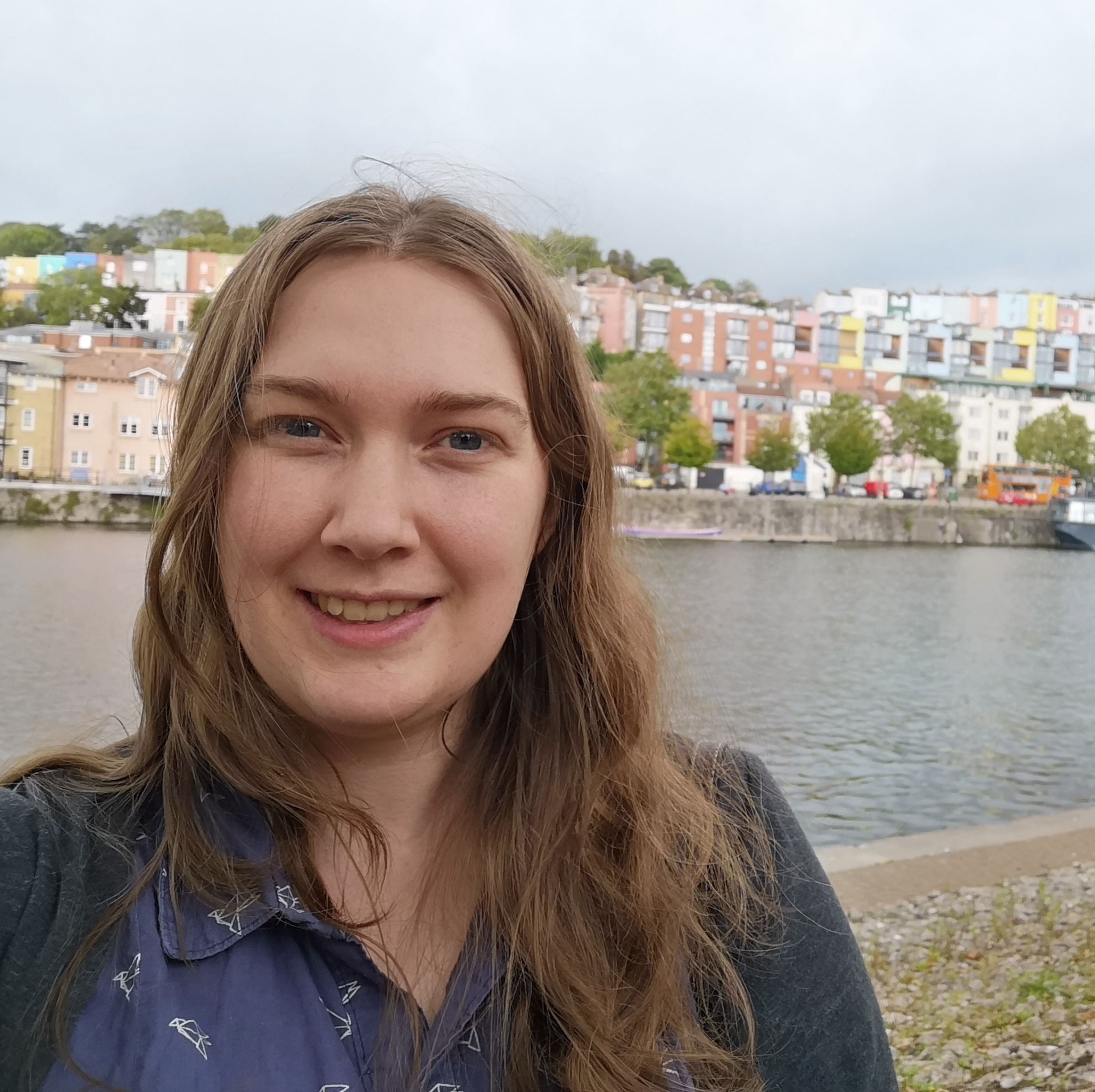
Hazel Doughty is an Assistant Professor at Leiden University in the Leiden Institute for Advanced Computer Science (LIACS) . Previously, she was a postdoctoral researcher at the University of Amsterdam and completed her PhD at the University of Bristol under the supervision of Prof. Dima Damen and Prof. Walterio Mayol-Cuevas. Research Interests: Video Understanding, Skill Determination, Self-Supervised Learning, Temporal Attention, and Adverb Recognition in Instructional Videos. Grants: Co-Applicant for DUAL-IMPACT (NWO High Tech Systems and Materials, €1.25M); Main Applicant for NWO Veni grant ( From What to How: Perceiving Subtle Differences in Videos , €280K). Scientific Recognition: Veni Grant (2023) ELLIS Member (2022) Outstanding Reviewer for CVPR, NeurIPS, ECCV, and ACCV Academic Service: Organizer of workshops at CVPR 2024, BMVC 2023, NCCV 2024, and NeurIPS'21. Area Chair for CVPR, ICCV, NeurIPS, AAAI. Teaching: Courses on Computer Vision (BSc) and Advances in Deep Learning (MSc) at Leiden University. Her work focuses on fine-grained video understanding with weak or incomplete supervision , including adverb analysis, self-supervised learning, and egocentric vision datasets. Her recent publications analyze benchmark sensitivity, motion-focused video-language models, and generalized category discovery. Collaborations include the HAVA lab at the University of Amsterdam and the EPIC-Kitchens-100 project. She leads the DUAL-IMPACT initiative on high-tech systems and co-organized workshops at CVPR, ICCV, and NeurIPS. Her students include PhD candidates Luc Sträter and Kaiting Liu , and former advisees like Fida Mohammad Thoker (now postdoc at KAUST) and Piyush Bagad (now PhD at Oxford).
Dr. Hajk-Georg Drost is a Senior Lecturer and Principal Investigator in the Division of Computational Biology at the University of Dundee's School of Life Sciences. He leads the Digital Biology Group, focusing on integrating machine learning and high-performance computing with biological research to advance healthcare innovation. Previously, he established a Computational Biology group at the Max Planck Institute for Biology Tübingen (2019-2024) and conducted postdoctoral research at the University of Cambridge's Sainsbury Laboratory. His research explores: Evolutionary transcriptomics and phylotranscriptomic patterns across species Machine learning applications in genomics and proteomics Development of bioinformatics tools (DIAMOND, myTAI) for tree-of-life scale analyses Gene regulatory networks and transposable element dynamics His publications demonstrate a consistent focus on evolutionary constraints in development, with recent work expanding into single-cell resolution analyses of developmental diseases. Awards include: Royal Society Wolfson Fellowship (2024) Fellow, Cambridge Philosophical Society Postdoctoral Affiliate, Trinity College Cambridge He currently supervises PhD students including Stefan Manolache and leads projects funded by the Royal Society and others, focusing on protein alignment infrastructure and developmental disease research. His lab develops open-source software for genomic analyses and maintains active collaborations across Europe.
Rasmus Pagh is a Professor at the Department of Computer Science, University of Copenhagen, specializing in algorithms and complexity. His career includes a 2002 PhD from Aarhus University under Peter Bro Miltersen and a tenure at IT University of Copenhagen until 2020. He leads theoretical research with practical applications in big data, databases, and modern computer architecture parallelism. His research interests span algorithms, data structures, and privacy-preserving computing. Recent work includes the ERC-funded project on Scalable Similarity Search and contributions to the BARC center for basic algorithms research. He has collaborated with Google Research (2019-2020) and focuses on theoretical foundations with real-world impact. Key research trends in his 2023-2024 publications include privacy-preserving data analysis probabilistic data structures distributed secure computation noise-robust coding hashing efficiency continual privacy mechanisms Scientific recognition includes 2024 ACM Fellowship ERC grant leadership multiple top-tier conference publications
Carlos R. Rivero is an Associate Professor in the Department of Computer Science at the Rochester Institute of Technology (RIT), located within the Golisano College of Computing and Information Sciences. His primary research focuses on graph theory applications in knowledge graphs, graph databases, and computer-aided program comprehension. He holds a PhD from the University of Seville (Spain), completed in 2012, with postdoctoral work at the University of Idaho (USA). His teaching responsibilities include courses such as Principles of Data Management, Data Mining, and Big Data exploration. Rivero has advised numerous PhD and Master’s students, contributing to research projects in link prediction, knowledge graph completion, and educational technology. He actively serves on program committees for conferences like The Web Conference and SIGKDD, and has reviewed for journals including the VLDB Journal and Communications of the ACM. His research emphasizes evaluating knowledge graph embeddings, improving link prediction methodologies, and developing tools for educational feedback in programming. He has contributed to projects like AYNEXT, which streamlines link prediction evaluation, and CAFE, a neighborhood-aware knowledge graph completion tool. Rivero’s work bridges theoretical advancements with practical applications in education and industry. Notable contributions include frameworks for automated feedback in programming courses and methodologies for assessing inference patterns in knowledge graphs. His grants and service roles reflect a commitment to advancing computational methods and fostering academic collaboration in data science and education.