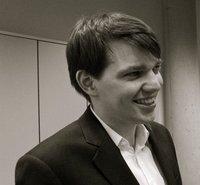
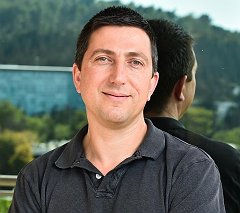
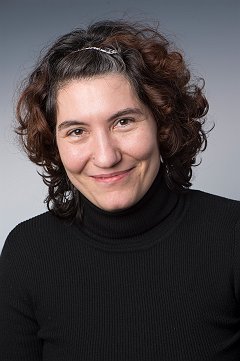
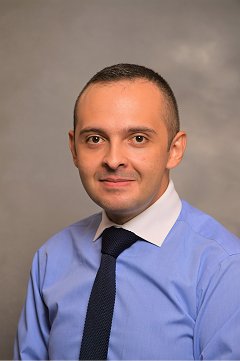
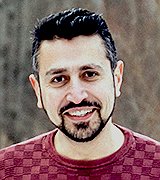
Giuseppe Antonio Di Luna is an Associate Professor at the Dipartimento di Ingegneria Informatica, Automatica e Gestionale (DIAG), Sapienza University of Rome . His research spans critical areas of Distributed Computing, Distributed Systems , and Computer Security , with a focus on Dynamic Networks, Mobile Agents, Anonymous Communication , and NLP techniques applied to binary analysis . Current research themes include anonymity in distributed environments Security challenges in confidential computing Algorithm design for mobile robots and dynamic networks Applying NLP to enhance binary analysis security His recent publications across top venues like DSN, EuroS&P, and JPDC reflect these interdisciplinary interests, with notable work on: Black hole detection in dynamic rings Robustness of binary similarity systems Confidential virtual machine evaluation tools Self-stabilizing computation in anonymous networks He has received prestigious awards including the Axa Fellowship (2020-2022) , ASPLOS 2019 Distinguished Paper Award , and DIMVA 2019 Best Paper Runner-Up . His collaborative efforts include organizing the EuroSys 2023 conference in Rome.
Guodong Long is an Associate Professor at the University of Technology Sydney (UTS) in the Faculty of Engineering and Information Technology. He joined UTS in 2010 and earned his PhD there in 2014. His research focuses on federated learning, trustworthy AI, and pre-trained foundation models with applications in healthcare, IoT, and social media. PhD in Artificial Intelligence, University of Technology Sydney (2014) Leading the Foundation Model and Federated Learning research group (https://www.fmfl.group/) His work addresses challenges in frequency transformation for time series, privacy-preserving healthcare analytics, and spatio-temporal traffic forecasting. He has published extensively at top AI conferences like AAAI, ICLR, and NeurIPS, with significant citation impact (4,682 citations in 2022). Collaborations with industry partners have secured over $4M in external funding. Recent publications emphasize federated foundation models (ICLR'25), privacy-preserving recommendation systems (WWW'25), and adaptive time series analysis. His research integrates domain knowledge and graph learning for multivariate time series imputation and traffic prediction. Dr. Long actively contributes to academic leadership as General Co-Chair for WebConf 2025, Program Co-Chair for AI conferences, and reviewer for top venues. He supervises PhD and master's students and welcomes research visitors for extended collaborations.
Dr. Andrew Peng is a Lecturer (Research) at the Australian Artificial Intelligence Institute (AAII) within the Faculty of Engineering and Information Technology at University of Technology Sydney (UTS), Australia. With dual PhDs from UTS (2015) and Beijing Institute of Technology (2013), he has published 45 peer-reviewed papers across top venues like IEEE ICDM, COLING, and Frontiers in Molecular Biosciences. Education: Dual PhD (2013-2015) from Beijing Institute of Technology and University of Technology Sydney His research focuses on Data Science , Artificial Intelligence , and Healthcare Analytics , addressing challenges in medical data analysis, unstructured clinical text processing, and federated learning frameworks. Recent publications explore: Deep graph clustering for community detection Privacy-preserving medicine shortage detection via social media Time-aware medication recommendation using dynamic treatment regimes Knowledge tracing enhancements for online education Contrastive learning approaches for ICD coding Hypergraph-based sequential diagnosis prediction Dr. Peng has secured over AUD $1M in external research grants and serves as Subject Coordinator for undergraduate/postgraduate courses. He contributes to professional leadership through roles as Web Chair at AJCAI 2021 and ADMA 2021, PC member for major conferences, and reviewer for journals like NeurIPS and AAAI. His work spans collaborations with universities, industry, and government agencies.
Cedrick Ansorge is a Lecturer at the Institute of Meteorology within the Department of Earth Sciences at Freie Universität Berlin . His research focuses on turbulence modeling , atmospheric boundary layer dynamics , and computational fluid dynamics , with expertise in large eddy simulation (LES) and direct numerical simulation (DNS) of turbulent flows. Teaching: Theoretical Meteorology I/II (Master's level) Email: c.ansorge@fu-berlin.de His work addresses scale separation , roughness effects , and stability analysis in Ekman and planetary boundary layers, with applications to urban canopy turbulence and Arctic stratocumulus clouds . Recent publications emphasize hairpin vortices , turbulence intermittency , and subgrid closures . He collaborates on projects involving MOSAiC and sea ice dynamics , and manages datasets on turbulent wall-bounded flows . Notable contributions include advancements in Monin-Obukhov similarity theory , LES validation , and pressure-strain redistribution in stratified flows. His team includes researchers Sally Issa and Shreyas Deshpande . Office hours: Wednesday 10:30-11:30 am, Room 139, Carl-Heinrich-Becker-Weg 6-10, 12165 Berlin.
Walter van Heuven is an Associate Professor at the School of Psychology, University of Nottingham. His research focuses on monolingual and bilingual language processing , combining behavioral experiments (reaction times, eye-tracking), neuroimaging (ERP, fMRI), and computational cognitive modeling . Key interests include visual word recognition, bilingual brain mechanisms, translation activation, non-native speech perception, and executive control-language interactions. Research Themes : Cross-language activation and inhibition in bilinguals Orthographic/phonological processing in multilinguals Computational modeling of lexical decision tasks Neural correlates of translation priming Software Development : Created R packages strngram , strsim for psycholinguistic string similarity analysis Maintains jIAM browser-based models for BIA His recent publications (2017-2018) explore masked priming , multi-word expression processing , and cross-language neighborhood effects , with methodological innovations in statistical analysis and neuroimaging. He contributes to teaching modules like Computational Cognitive Psychology and Cognition in the Real World .
Professor Ute Schmid is a Full Professor of Cognitive Systems at the University of Bamberg, where she has been a faculty member since September 2004. She leads the Cognitive Systems Group within the Bamberg Center of AI (BaCAI), focusing on creating AI systems that generate human-like explanations and reasoning processes. Her research bridges cognitive science and artificial intelligence to develop methods for explanation generation, inductive programming, and interactive machine learning. Professor Schmid's work emphasizes practical applications of explainable AI across diverse domains including image classification, medical diagnosis, and educational technologies. Her research on contrastive explanations, near misses, and human-AI alignment has significantly advanced the field of XAI. She has also pioneered research on AI literacy, recognizing the growing importance of basic AI understanding for responsible tool usage by non-experts. Her publication record demonstrates exceptional productivity and impact, with numerous articles in top-tier venues including Nature Machine Intelligence, IEEE Transactions on Visualization and Computer Graphics, and the Journal of Web Semantics. Her 2025 paper 'Aligning generalization between humans and machines' represents a significant theoretical contribution to understanding human-machine cognitive alignment. Professor Schmid actively contributes to gender diversity research in computer science through studies examining why women pursue PhDs in the field. She has also made important contributions to computing education, investigating how students acquire programming skills and how AI tools like code generators are integrated into learning processes. As an educator and researcher, Professor Schmid maintains strong international collaborations, with co-authors spanning multiple countries and institutions. Her interdisciplinary approach is evident in her diverse publication venues and collaborative work that bridges computer science, cognitive science, education, and application domains.
Ivan Polášek is a part-time Associate Professor at the Department of Applied Informatics within the Faculty of Mathematics, Physics and Informatics at Comenius University in Bratislava. His institutional affiliations include membership in the Division of Theory and System Design. His research explores: Software modeling and visualization techniques Virtual/augmented reality applications in software engineering AI-driven optimization of software design and refactoring Collaborative development methodologies Design pattern analysis and anti-pattern detection Recent publications (2017-2024) demonstrate strong focus on VR-supported collaborative design, executable software models, and communication methodologies in team-based development environments. He teaches undergraduate courses in agile development and software architectures, while leading research seminars. No awards or supervised students are documented in available sources. Polášek contributes to the INNOVAITE research project and maintains collaborations with European institutions including researchers from the Netherlands, France, and Sweden.
Ettore Merlo is a Full Professor in the Department of Computer Engineering and Software Engineering at Polytechnique Montréal, where he leads research in cybersecurity, artificial intelligence, and software systems. He holds an M.Sc. from the University of Turin and a Ph.D. from McGill University. His affiliations include membership in the Institute for Data Valorization (IVADO), focusing on data science and AI innovation. His research integrates software engineering with AI, emphasizing: Software artifact analysis (static/dynamic/symbolic) AI-driven security solutions for clone detection, malware analysis, and access control Fairness and robustness in machine learning systems Evolutionary analysis of software vulnerabilities Recent publications (2022-2025) demonstrate a strong focus on ethical AI, including bias mitigation in neural networks, automated anomaly detection, and certification of safety-critical ML systems. His work frequently applies graph neural networks, unsupervised learning, and formal verification methods to industrial and cybersecurity challenges. Professor Merlo has supervised 25 graduate students (10 PhD, 15 Master's), with projects ranging from avionics software to phishing kit analysis. While no scientific awards are listed, his extensive publication record includes 136 works spanning journals, conferences, and technical reports. Collaborations include partnerships with industrial telecommunication firms and international academia. No dedicated lab is specified, but his research aligns with Polytechnique Montréal's 'New Frontiers in Information and Communications Technologies' center.
Michel C. Desmarais is a Full Professor in the Department of Computer Engineering and Software Engineering at Polytechnique Montréal, where he has been faculty since 2002. With a PhD in Psychology from Université de Montréal, his research bridges artificial intelligence, educational technology, and human-computer interaction. He holds affiliations with IVADO and LAMA-WeST research groups, and has held visiting positions at Sorbonne University, Eindhoven Technical University, and other European institutions. His research focuses on three interconnected pillars: 1) Cognitive modeling and educational data mining , developing algorithms for student knowledge assessment and adaptive learning systems; 2) AI-driven educational tools , including automated grading systems and peer instruction platforms; and 3) Recommendation systems and user modeling , particularly for personalized learning interfaces. His work consistently applies machine learning to solve practical challenges in technology-enhanced education. Analysis of his 150+ publications reveals strong trends in educational NLP (sentence similarity for short-answer grading), generative AI (LLM-generated code validation), and Bayesian modeling (Q-matrix refinement). Recent work increasingly focuses on transformer architectures and real-world educational datasets. He maintains an active supervision record, having graduated 35+ graduate students. Current PhD candidates work on NLP for educational applications (Bakhtiari, Kamdem) and AI for engineering (Wang). His teaching covers user interface design, recommender systems, and intelligent interfaces. Professional service includes editorial leadership (JEDM journal), conference co-chairing (UMAP 2017, EDM founding), and grant review panels for NSERC, MITACS, and EU programs. Industry experience includes prior roles as R&D Director at MVM Inc. and researcher at Montreal Computer Research Center.
Işıl Dillig is an Associate Professor of Computer Science at the University of Texas at Austin, where she leads the UToPiA research group. Her academic career spans over a decade of significant contributions to programming languages research, particularly in program analysis, verification, and synthesis. Dr. Dillig received all her academic degrees (BS, MS, and PhD) from Stanford University before joining the faculty at UT Austin. Her educational background established the foundation for her innovative research approach that bridges theoretical computer science with practical applications. Her research focuses on developing techniques to make software systems more reliable, secure, and easier to build through advanced program analysis, verification, and synthesis methods. She has pioneered approaches that combine symbolic reasoning with machine learning to tackle complex software engineering challenges across multiple domains including security, databases, and programming language theory. Her work demonstrates exceptional depth in creating practical tools that address real-world software development problems while maintaining strong theoretical foundations. Analysis of Dr. Dillig's publication record reveals a consistent trajectory of innovation in program synthesis, with recent work expanding into neurosymbolic approaches that bridge neural networks with formal methods. Her research shows strong connections between theoretical foundations and practical applications, particularly in security-critical systems, database technologies, and blockchain applications. The evolution of her work demonstrates increasing sophistication in handling complex program structures while maintaining practical usability. Dr. Dillig has received prestigious recognition for her research contributions: Sloan Fellowship NSF CAREER award As a dedicated educator and research leader, Dr. Dillig has served in significant roles including Program Chair for PLDI 2022 and Steering Committee member for PLDI. She has mentored numerous students through her UToPiA research group, guiding research in program synthesis, verification, and analysis. Her work has been supported by substantial research grants that have enabled innovative projects at the intersection of programming languages and security. Dr. Dillig leads the UToPiA (UT Austin Programming, Languages, and Analysis) research group, which focuses on developing novel techniques for program analysis, verification, and synthesis. The group maintains strong collaborations with industry partners and academic institutions worldwide, translating theoretical advances into practical tools that address real software engineering challenges.
Eran Yahav is an Associate Professor in the Computer Science Department at the Technion - Israel Institute of Technology. He previously served as a research staff member at IBM T.J. Watson Research Center from 2004 to 2010. His academic journey began with a B.Sc. from the Technion in 1996, followed by a Ph.D. from Tel Aviv University in 2005. Yahav's research focuses on program analysis, program synthesis, program verification, and machine learning for programming. His work bridges theoretical foundations with practical applications, particularly in developing techniques that help programmers work more effectively with complex frameworks and APIs. He has pioneered approaches that combine static analysis with machine learning to address challenges in code search, completion, and understanding. His recent work heavily intersects with neural network applications to programming tasks, demonstrating how deep learning can enhance traditional program analysis techniques. His publication record shows a clear evolution from traditional program analysis and verification toward integrating machine learning with programming language processing. The most recent articles reveal a strong focus on neural methods for code understanding, including structural language models, adversarial examples for code models, and neural approaches to binary analysis and program synthesis. This represents a significant shift toward leveraging AI techniques to solve longstanding problems in programming languages and software engineering. Yahav has received numerous accolades including the prestigious Alon Fellowship for Outstanding Young Researchers, the Andre Deloro Career Advancement Chair in Engineering, and an ERC Consolidator Grant. He also earned best paper awards at ISSTA 2006 and 2007. As an advisor, Yahav has mentored numerous Ph.D. and Master's students who have gone on to make significant contributions in academia and industry. His research has been supported by substantial grants, including the ERC Consolidator Grant. He also serves as CTO at Tabnine, demonstrating the practical impact of his research. Yahav leads multiple research projects including PRIME (Programming with Millions of Examples), Fender (Preserving Correctness under Weak Memory Models), Saint (Synthesis using Abstract Interpretation), and several others focused on program analysis, verification, and synthesis. His work often involves building practical tools that translate theoretical advances into usable software engineering solutions.
Laura Dietz is a tenured Associate Professor in the Department of Computer Science at the University of New Hampshire, where she leads the TREMA lab. Her academic journey began with a PhD from the Max Planck Institute for Informatics in Saarbruecken, Germany (2011), followed by postdoctoral positions at the University of Massachusetts Amherst (2010-2015) and University of Mannheim (2015-2016). Her educational background includes PhD studies at both the Max Planck Institute for Informatics (2007-2011) under Prof. Gerhard Weikum and Prof. Tobias Scheffer, and earlier research at Humboldt University in Berlin. She has built a distinguished career bridging theoretical computer science with practical applications in information retrieval and machine learning. Dietz's research primarily focuses on the intersection of information retrieval, natural language processing, and knowledge graphs, with a parallel research initiative in watershed data science. She is particularly known for her work on entity-aspect linking, complex answer retrieval, and the vision of automatic Wikipedia construction. Her approach integrates fine-grained knowledge annotations with text understanding to create comprehensive information systems that go beyond traditional 10-blue-links search paradigms. In watershed data science, she applies similar machine learning techniques to environmental data streams, focusing on solute transport analysis during storm events. Her recent publications reveal a strong trend toward fine-grained semantic understanding, particularly in entity-oriented search tasks. She has pioneered methods for entity-aspect linking that significantly improve retrieval accuracy by capturing different contexts in which entities appear. Her work increasingly integrates knowledge graphs with neural architectures, showing sophisticated understanding of how to leverage both structured and unstructured information for better search experiences. Best paper award at JCDL 2018 for work on entity-aspect linking NSF CAREER Award (2019-2023) for "Utilizing Fine-grained Knowledge Annotations in Text Understanding and Retrieval" OSSI Award 2013 from UMass ICB3 for open-source hardware/software Dietz actively mentors PhD and Masters students through the TREMA lab, with current research focusing on entity ranking, topic extraction, conversational search, and watershed forecasting. Her grant portfolio includes the NSF CAREER award and funding from the Northeast Big Data Innovation Hub for forecasting salinity in rivers during storm events. She has also coordinated the TREC Complex Answer Retrieval track (2017-2019), creating important benchmarks for the IR community. The TREMA lab (Text Retrieval, Entity Modeling, and Applications) serves as the hub for Dietz's research activities, bringing together students and collaborators to work on cutting-edge problems in information access. The lab's work spans both theoretical contributions to information retrieval and practical applications in domains ranging from environmental science to scientific publication analysis.
Naser Al Madi is an Assistant Professor of Computer Science at Colby College, where he teaches core courses including Data Structures and Algorithms (CS231) and Software Engineering (CS321). His research integrates eye tracking with software engineering to enhance source code comprehension through analysis of developer behavior and eye movement patterns during software development. His educational background includes a PhD from Kent State University (2020), followed by a visiting research scholar position at Harvard University's School of Engineering and Applied Science and Schepens Eye Research Institute in 2023. Prior to joining Colby, he began his teaching career at Hamilton College where he taught Operating Systems and Wearable Technology courses. PhD, Kent State University, 2020 Visiting Research Scholar, Harvard University, 2023 Began teaching career at Hamilton College Dr. Al Madi's research focuses on the intersection of eye tracking technology and software engineering, particularly examining how developers comprehend source code through eye movement analysis. His work extends to Human-Computer Interaction applications in clinical rehabilitation settings and the impact of AI tools like GitHub Copilot on code readability and developer workflows. He maintains an active research blog discussing cognitive aspects of programming and regularly collaborates with undergraduate students on research projects. His recent publications analyze lexical similarity in identifier names, the readability of AI-generated code, and longitudinal eye tracking studies of developers progressing from novice to expert levels. These works collectively explore how cognitive processes affect software development practices and how tools can be designed to better support developer cognition. Dr. Al Madi is deeply committed to inclusive computer science education, advocating that 'anyone can become a computer scientist if they work hard' regardless of background. He actively mentors undergraduate researchers, emphasizing the importance of diversity in technology development to prevent exclusionary design patterns. His teaching philosophy integrates modern software engineering practices with critical analysis of AI tools, requiring students to understand and verify all AI-generated code rather than using it uncritically. Based in the Davis Science Center at Colby College, he maintains an active presence in the software engineering research community, serving on program committees for major conferences including ASE and FSE. His blog features practical career advice for students, including guidance on resume building, internship applications, and navigating the tech industry.
Eric Bodden is a Professor for Secure Software Engineering at Paderborn University and co-director of Fraunhofer IEM. He is also a member of the directorate of the Collaborative Research Center CROSSING at TU Darmstadt. As an ERC fellow, Bodden leads the Attract-Group on Secure Software Engineering at Fraunhofer IEM, where he develops code analysis technology for security in collaboration with leading national and international software development companies. Bodden is one of the leading experts in secure software engineering with a specialty in building highly precise tools for automated program analysis. His research spans static program analysis, Android security, taint analysis, and cryptographic API security. He has made significant contributions to the field through frameworks like FlowDroid for Android analysis, DroidBench benchmark suite, and as one of the chief maintainers of the Soot program analysis framework. His work bridges theoretical advances with practical applications, focusing on creating tools that can be effectively used by developers to enhance software security. His recent publications demonstrate a continued focus on advancing static analysis techniques, with increasing attention to modern challenges like C/C++ analysis, large language models in program analysis, and addressing security vulnerabilities in dependency management. His work shows a consistent trajectory of improving analysis precision, scalability, and usability for developers. Heinz Maier-Leibnitz-Preis (2014) ERC fellow BITKOM Management Club membership (2013) Bodden has advised numerous doctoral students whose theses cover diverse aspects of secure software engineering, including static analysis for Android applications, secure integration of cryptographic software, and information flow security engineering. His research group has received recognition through multiple dissertation awards including Summa cum laude distinctions and the Ernst Denert Software Engineering Award. The group has developed influential tools like FlowDroid, CogniCrypt, and SootUp that have shaped the field of secure software development. At Fraunhofer IEM, Bodden heads the Attract-Group on Secure Software Engineering, which collaborates with industry partners to develop practical security analysis solutions. His team has created several influential frameworks including FlowDroid for Android security analysis and the DroidBench benchmark suite. The group's work bridges academic research with real-world applications, focusing on making security analysis tools more precise, scalable, and usable for developers.
Mohammad Hamdaqa is an Associate Professor at the Department of Computer Engineering and Software Engineering at Polytechnique Montréal (Canada), where he leads the Software and Emerging Technologies Lab. He received his PhD in Software Engineering from the University of Waterloo in Canada in 2016 and holds multiple advanced degrees including a Master of Applied Science in Software Engineering and an MBA with a minor in Management Information Systems. His educational background includes: Ph.D. in Electrical and Computer Engineering, University of Waterloo, Canada Master in Electrical and Computer Engineering, Concordia University, Canada Master in Business Administration, New York Institute of Technology, USA Bachelor in Computer Engineering, Jordan University of Science and Technology, Jordan Dr. Hamdaqa's research focuses on the intersection of software engineering and emerging technologies. His work explores how software engineering approaches can be tailored to address the complexities of architecting, building, and deploying applications for new platforms like Cloud Computing and Blockchain. He is particularly interested in how emerging technologies can advance software creation, evolution, and management practices. His research spans model-driven software engineering, cloud computing, blockchain, and the application of AI in software development processes. His recent publications demonstrate a strong focus on smart contract security, infrastructure as code, model-driven engineering, and the application of large language models in software engineering tasks. His work bridges theoretical software engineering concepts with practical applications in cutting-edge technology domains, with particular emphasis on addressing security, sustainability, and maintainability challenges in next-generation software systems. Dr. Hamdaqa has received recognition through service on program committees for major software engineering conferences including ASE, ICSE, MODELS, and SANER. He serves on the editorial board of Service Transactions on Internet of Things and is a Member of the IEEE Computer Society and the Association for Computing Machinery. He has supervised multiple Master's students to completion, with recent theses focusing on OCL generation, smart contract auditing, epidemiological modeling, and infrastructure as code security. His current research group continues to explore innovative approaches at the intersection of software engineering and emerging technologies. Dr. Hamdaqa leads the Software and Emerging Technologies Lab at Polytechnique Montréal, which brings together researchers and students to investigate cutting-edge challenges in software engineering for new technology platforms. The lab focuses on practical solutions that balance theoretical rigor with real-world applicability.