Hui Fang is a researcher at Loughborough University , Department of Computer Science, UK. Their work spans Artificial Intelligence , Machine Learning , and Remote Sensing , with recent focus on Medical Imaging , Natural Language Processing , and Urban Mobility . Publications highlight innovations in MRI Reconstruction , Legal Judgment Prediction , and Video SAR Analysis . Research Interests include Graph Neural Networks , Transformer Models , and Data Mining applied to domains like Agricultural Technology , Healthcare Systems , and Smart Cities . Methodologies emphasize Interpretable AI , Federated Learning , and Multimodal Integration . Key 2024-2025 Trends involve Transformer-Based Architectures for Medical Imaging , Information Bottleneck in Spatio-Temporal Networks , and Bootstrapping Techniques for Information Extraction . Collaborative projects with Dongdong Weng , Zhu Xiao , and Yong He demonstrate interdisciplinary applications in Transportation , Healthcare , and Agriculture . Recent Co-authored Publications span IEEE Transactions , Neurocomputing , and Remote Sensing Journals , addressing Dynamic Phasor Modeling , 4D Facial Capture , and Virtual Reality Usability .
Prof. Dr. Eichelberger holds the Chair of Civil Law, Intellectual Property Law, and IT Law at Leibniz University Hannover. He is affiliated with the Institute for Legal Informatics (IRI), focusing on interdisciplinary legal challenges in technology, medicine, and digitalization. His recent lectures address AI liability, medical device regulations, and copyright law. Key research interests include intellectual property, digital rights, and civil law implications of emerging technologies. Eichelberger’s academic contributions span over two decades, with publications on trademark law, market manipulation, and data protection. He actively participates in events like the Lower Saxony Medical Law Days, emphasizing legal aspects of medical AI and digital health innovations. His work bridges traditional legal frameworks with modern technological advancements, shaping policies in areas like streaming rights and temporary digital copies. He advises on legal issues in IT and medical sectors, collaborating with institutions like the IRI and Hannover Medical School. No specific awards or grants are listed, though his extensive publication record and academic leadership reflect his scholarly impact.
Haobo Wang is a researcher affiliated with Zhejiang University , specifically within the School of Software Technology under the College of Computer Science and Technology . His work bridges Computer Science and Electrical Engineering , focusing on Machine Learning , Signal Processing , and Remote Sensing .
Jens-Michalis Papaioannou is a prominent Researcher in clinical natural language processing (NLP) and medical informatics, with extensive publications in top-tier venues like ACL, LREC, and EMNLP. His work focuses on improving clinical decision support systems through advanced machine learning techniques. 2024 : Revisiting clinical outcome prediction for MIMIC-IV with biomedical transformers 2023 : Developing MEDBERT.de for German medical NLP and MedAlpaca conversational AI 2022 : Introducing ProtoPatient for interpretable diagnosis prediction 2021 : Creating self-supervised knowledge integration frameworks for admission note analysis His research spans seven major themes : Clinical outcome prediction from admission notes Cross-lingual knowledge transfer in medical NLP Prototypical network applications Data drift analysis in longitudinal datasets Knowledge integration techniques Model optimization for healthcare LLM interpretability frameworks He has collaborated with Wolfgang Nejdl, Alexander Löser, and Betty van Aken on 13+ publications , with over 445 citations. Notable contributions include: Novel patient similarity modeling approaches ICD code hierarchy integration methods Multilingual clinical model strategies Adversarial robustness analysis Medical conversational AI frameworks
Anish Das Sarma is a researcher affiliated with Google, USA , specializing in uncertain data management, MapReduce algorithms, and knowledge graph systems. He earned a PhD from Stanford University in 2010 under the supervision of Jennifer Widom and Alon Halevy, with a dissertation on "Managing Uncertain Data." His career spans collaborations with leading institutions, focusing on scalable data integration, social choice theory, and machine learning applications in scholarly knowledge organization. PhD in Computer Science, Stanford University (2010) Key collaborations: Stanford, Google Research, NFDI4DataScience His research interests intersect uncertain data modeling , MapReduce optimization , and large language model applications for scientific synthesis. Recent work includes FAIR data frameworks, ontology learning, and clinical entity linking. Article trends highlight his evolution from foundational database systems (2004-2015) to modern applications of LLMs in scholarly communication (2023-2024). Key areas: scalable algorithms, research data management, and ethical AI.
Prof. Dr.-Ing. habil. Dr. hc Sahin Albayrak is a distinguished academic and entrepreneur at the Technical University of Berlin , where he founded and directs the Distributed Artificial Intelligence Laboratory (DAI Laboratory) . He leads the Agent Technologies in Business Applications and Telecommunications research group and serves as founding member of Deutsche Telekom Laboratories (2004) and European Center for ICT (EICT) (2005). As initiator of Connected Living e.V. (2009) and managing director of German-Turkish Advanced Research Center for ICT (2012), he bridges international collaborations. He also founded IOLITE GmbH (2014) and other startups. Research Focus: Agent technology, autonomous driving, smart cities, cyber security, machine learning, and AI applications in energy systems Awards: Federal Cross of Merit (2014), multiple Best Paper Awards Leadership: Director of DAI Laboratory, head of research group at TU Berlin His 20+ recent publications (2022-2025) demonstrate expertise in agent-based architectures , smart mobility solutions , context-aware computing , and AI-driven security systems . Notable trends include integrating large language models into database interfaces, optimizing multi-agent coordination for logistics, and advancing explainable AI through feature attribution frameworks. Scientific Contributions: Recipient of Germany's Bundesverdienstkreuz for German-Turkish cooperation Best Paper Award at Smart Grid Architectures conference
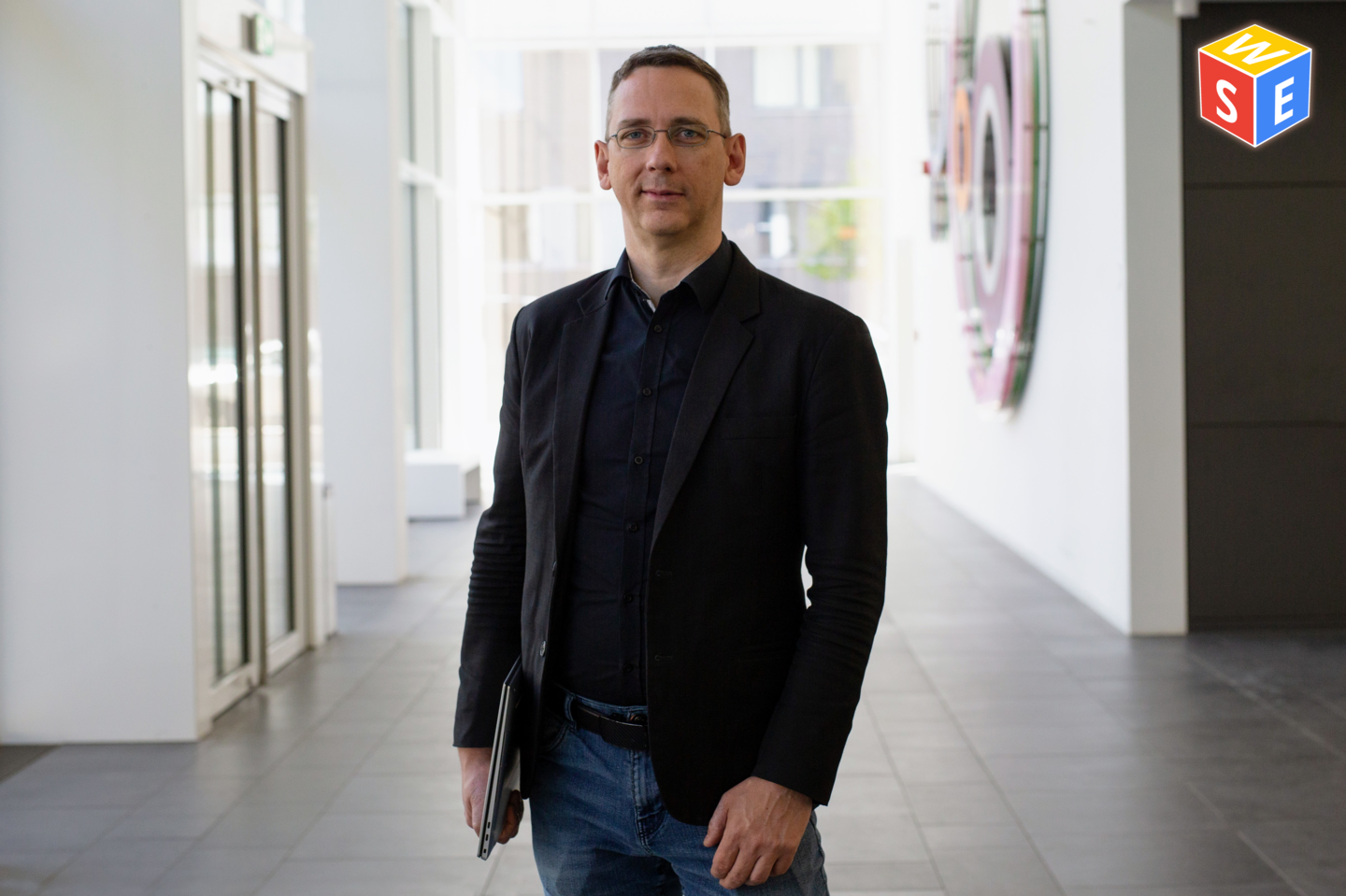
Andreas Both is a Professor at the Faculty of Computer Science and Media at Leipzig University of Applied Sciences (HTWK Leipzig), where he leads the Web & Software Engineering (WSE) research group. His work spans multiple domains of computer science with a strong focus on bridging theoretical foundations with practical applications in software engineering, web technologies, and artificial intelligence. His research interests primarily revolve around Software Engineering (particularly test automation with AI and source code analysis), Web Engineering , Applied Artificial Intelligence (including Machine Learning, Deep Learning, and Large Language Models), Question Answering & Chatbots , and Data-driven Applications . He has developed innovative approaches in knowledge graph question answering systems, multilingual NLP applications, and privacy-preserving data sharing technologies using the Solid protocol framework. The analysis of his recent publications reveals a strong trajectory toward leveraging Large Language Models for knowledge graph applications, with particular emphasis on multilingual capabilities, explainability, and quality improvement in question answering systems. His work increasingly integrates privacy considerations with advanced AI techniques, particularly through Solid protocol implementations for data sovereignty. Best Paper Award at ICWE 2024 for AuthApp - a GDPR-compliant access granting system Outstanding Paper Award at ICWI 2024 for LLM-generated explanations in question answering systems Multiple first-place awards at the TEXT2SPARQL Challenge 2025 Best Paper Awards at ICWE 2025 and IEEE ISI 2025 CHI 2015 Honorable Mentions for search interface research Professor Both actively mentors students through the Google Summer of Code program and serves on the leadership board of the Architecture (ARC) working group of the German Computer Science Society (Gesellschaft für Informatik). His teaching portfolio includes Software Engineering, Question Answering & Chatbots, Software Projects, Project Management Practicum, Web Engineering, and Software Engineering & AI courses. His office hours are Thursdays from 11:15-12:15, requiring advance email appointment with topic specification.
Professor Klaus Chantelau is a faculty member at Schmalkalden University of Applied Sciences, specializing in Applied Digital Image Processing within the Faculty of Computer Science. He maintains his office in Building F, Room 0205, with office hours held every Thursday from 12:00-13:00. Professor Chantelau teaches a diverse range of courses including Peripheral Systems, Digital Media Standards, Image Processing, Selected Chapters of Image Processing, Image Search Engines, and Model-Based Coding for Computer Science students, while also teaching Modeling, Simulation and Visualization for Business Informatics students. His research primarily focuses on image and video analysis, with his current project GraVis (Graph-based descriptors for describing people in videos) representing cutting-edge work in video analytics. Professor Chantelau leads the Video, Audio and Graphics Laboratory (F 0206), providing essential facilities for practical work in digital media processing. He also serves as Program Coordinator for the Master's program in Applied Media Informatics, demonstrating his leadership within the academic community. With a strong academic foundation including a Diploma in Physics (1988) and Doctorate in Mathematics (1991) from TU Berlin, followed by seven years as a Research Associate at the Heinrich Hertz Institute for Communications Technology Berlin GmbH, Professor Chantelau brings substantial expertise to his teaching and research activities.
Myra Cohen is a Professor and the Lanh and Oanh Nguyen Chair in Software Engineering in the Department of Computer Science at Iowa State University. Previously, she held the position of Susan J. Rosowski Professor at the University of Nebraska-Lincoln where she was a member of the ESQuaReD software engineering research group. She serves on the ASE Steering Committee and has held leadership roles including general chair of ASE 2015 and program co-chair for ICST 2019 and ESEC/FSE 2020. Dr. Cohen earned her Ph.D. from the University of Auckland, New Zealand, her M.S. from the University of Vermont, and her B.S. from the School of Agriculture and Life Sciences at Cornell University. Her academic journey includes lecturing positions at both the University of Auckland and University of Vermont during her graduate studies. Her research spans several interconnected domains focused on software quality and assurance. A significant portion of her work addresses software testing challenges in highly-configurable systems, where she applies search-based techniques and combinatorial designs to create efficient test suites. More recently, her research has expanded into innovative areas including software testing for biological systems, quantum computing applications, and security testing through genetic improvement techniques. Her work demonstrates a consistent theme of addressing complex verification challenges through creative application of formal methods and automated techniques. Analysis of her recent publications reveals a growing focus on emerging domains including quantum software testing, molecular/biological computing systems, and assurance cases for safety-critical systems. She has increasingly incorporated AI techniques, particularly large language models, into traditional software engineering problems while maintaining her foundational work in configurable systems and metamorphic testing. NSF CAREER award recipient AFOSR Young Investigator Award recipient ACM Distinguished Scientist Recipient of 4 ACM Distinguished Paper awards Dr. Cohen has served as chair and committee member for numerous conferences including ASE, ICSE, ISSTA, ESEC/FSE, and ICST. She has mentored numerous students through the doctoral symposiums and student research competitions at major software engineering conferences. Her research has been supported by significant grants including those from NSF and AFOSR. She leads the LaVA-OPs (Laboratory for Variability-Aware Assurance and Testing of Organic Programs) research group at Iowa State University, which focuses on testing challenges in biological and organic computing systems.
Christoph Csallner is a Professor in the Computer Science and Engineering Department at the University of Texas at Arlington (UTA). He previously worked at Google and Microsoft Research and holds a Diplom-Informatiker degree from Universität Stuttgart, Germany, and M.S. and Ph.D. degrees in Computer Science from Georgia Tech. His research has received numerous best paper awards at top software engineering conferences including ASE, ISSTA, and ISSRE. Dr. Csallner's research interests focus on software engineering, with particular expertise in program analysis, automated bug finding, software security, and mobile software development. His work bridges theoretical foundations with practical applications, developing tools that have real-world impact in improving software quality and security. Recent research has concentrated on analyzing Simulink models for cyber-physical systems, mobile app screen search and generation, and applying deep learning techniques to software testing problems. His publications show a consistent trajectory of innovation in software testing and analysis, with recent work exploring the intersection of machine learning and software engineering. The research spans from foundational program analysis techniques to practical tools addressing challenges in mobile development and cyber-physical systems. His work on Simulink model analysis has created valuable resources for the research community, including large open-source corpora of Simulink models. Scientific awards include: Best Paper Award at IEEE ISSRE 2010 ACM SIGSOFT Distinguished Paper Awards at ISSTA 2006 and 2012 Best Paper Award at PPREW 2014 ACM SIGSOFT Distinguished Paper Awards at ASE 2007 and 2015 Distinguished Referee Award at ASE 2019 Dr. Csallner has successfully advised numerous Ph.D. and Master's students who have gone on to prominent positions at companies like Meta, Google DeepMind, and Bloomberg. His research has been funded by the National Science Foundation, MathWorks, the Alzheimer's Association, and other organizations. He leads the Software Engineering Research Center (SERC) lab at UTA, where his team develops innovative tools for software analysis, testing, and development.
Bernd Fischer is a Professor and the current Head of Division in the Division of Computer Science at Stellenbosch University, South Africa. Previously, he held positions at TU Braunschweig, NASA Ames Research Center, and University of Southampton, establishing a strong international academic background in software engineering and formal methods. Professor Fischer's research focuses on automated software engineering, particularly logic-based techniques. His work spans specification-based component reuse, program synthesis, and program verification, with current emphasis on annotation inference, software model checking, and human-oriented presentation of verification results. His research bridges theoretical foundations with practical applications, particularly in concurrent program verification, grammar-based testing, and fault localization techniques. His work has significant implications for improving software reliability and developer productivity. Analysis of his recent publications reveals a strong focus on concurrent program verification through lazy sequentialization techniques, with substantial contributions to tools like CSeq and ESBMC. His research demonstrates consistent innovation in software verification, particularly in addressing the challenges of concurrency, bounded model checking, and fault localization. The interdisciplinary nature of his work connects theoretical computer science with practical software engineering challenges. ASE 2012 Most Influential Paper Award ACM Distinguished Paper Award Best Presentation Award Professor Fischer has successfully advised PhD students including Gillian Greene, who defended her thesis on "Concept-Based Exploration of Rich Semi-Structured Data Collections," and Geoff Birch, who completed work on "Fast, Fully-Automated, Model-Based Fault Localisation and Repair with Test Suites as Specification." His mentoring approach integrates theoretical rigor with practical tool development. His research has been supported through various academic grants enabling the development of multiple software verification tools. Professor Fischer leads development of several important software engineering tools including AutoBayes for statistical program synthesis, ConceptCloud for interactive visualization of software repositories, CSeq for concurrent program verification, and ESBMC for software model checking. These tools represent significant contributions to the software engineering research community and have been recognized in international verification competitions.
Xiang Gao is a Pre-tenure Associate Professor in the School of Software at Beihang University, China. His research focuses on applying program analysis, test generation, and formal methods to improve software quality through automated bug fixing and program synthesis. He has established significant collaborations with Fujitsu Laboratories of America, Microsoft Research, and other leading institutions in the software engineering field, demonstrating strong industry-academia connections. Dr. Gao received his Bachelor's degree in Computer Science (Elite Class) from Shandong University in 2016, followed by a Ph.D. from the School of Computing at the National University of Singapore, where he also served as a Postdoctoral Fellow until December 2021. His educational background spans both Chinese and Singaporean academic institutions, providing him with a global perspective on software engineering research. His primary research interests span multiple cutting-edge areas of software engineering: Program Analysis techniques for detecting and fixing software bugs with formal methods Software Security vulnerabilities with focus on automated repair methods Automated Program Repair systems that generate high-quality patches without overfitting Program Synthesis for creating transformation rules from examples Software Engineering for Artificial Intelligence (SE4AI) to improve AI model reliability and security Mobile Software Engineering with particular attention to UI testing and automation Deep Learning Security including model protection and obfuscation techniques Dr. Gao's recent publication trajectory shows a strategic evolution toward integrating large language models with traditional software engineering approaches, particularly in test generation and program repair. His work on DNN modularization (NeMo, CNNSpliter, SeaM) represents an innovative approach to enhancing model reusability and security in resource-constrained mobile environments, addressing critical challenges in deploying AI on edge devices. His scientific contributions have been recognized with multiple prestigious awards: ACM SIGSOFT Distinguished Paper Award for "ProveNFix: Temporal Property guided Program Repair" at FSE'24 IEEE TCSE Distinguished Paper Award for "Investigating and Detecting Silent Bugs in PyTorch Programs" at SANER'24 ACM SIGSOFT Distinguished Paper Award for "Modularizing while Training: A New Paradigm for Modularizing DNN Models" at ICSE'24 Distinguished Artifact Award for "Automated Patch Backporting in Linux (Experience Paper)" at ISSTA'21 Dr. Gao actively mentors students at various levels, seeking "self-motivated Ph.D, master, undergraduate students and interns with strong programming skills" for his research projects. He serves on numerous program committees for top software engineering conferences including ICSE, ASE, ISSTA, and FSE, demonstrating his growing influence in the academic community. His research has been supported through collaborations with industry partners including Microsoft Research and Fujitsu Laboratories of America, translating theoretical advances into practical applications. His laboratory focuses on several key research projects including Automated Software Vulnerability Repair (with techniques like Fix2Fit, VulnFix, and ExtractFix that address the overfitting problem in program repair), Program Synthesis for Program Transformation (including Semi-supervised synthesis and FixMorph for automated patch backporting in Linux), and Software Engineering for Artificial Intelligence (with projects like CNNSpliter, SeaM, and Sensei that apply software engineering principles to improve AI model usability and robustness). These projects represent cutting-edge work at the intersection of traditional software engineering and modern AI techniques, addressing critical challenges in software reliability and security.
Ding Li is an Assistant Professor in the School of Computer Science at Peking University. He holds a Ph.D. in Computer Science from the University of Southern California (USC) and a B.S. from Peking University. His research focuses on program analysis, energy optimization for mobile applications, and security, with publications in top conferences including ICSE, FSE, and ASE. His research interests span: Program Analysis : Techniques to optimize mobile application energy consumption. System Security : Identifying vulnerabilities in Android apps and WebAssembly binaries. Cloud/Edge Computing : Enhancing serverless computing efficiency and federated learning security. Dr. Li's recent work explores the integration of large language models into pointer analysis and automated optimization of resource inefficiencies. His publications demonstrate a consistent focus on practical system optimizations and security enhancements across mobile, cloud, and machine learning domains. Awards: Viterbi Undergraduate Research Mentoring Award (2014)
Yiling Lou is an incoming Assistant Professor at the Siebel School of Computing and Data Science, University of Illinois Urbana-Champaign (starting Spring 2026), currently serving as a Pre-tenure Associate Professor at Fudan University. Previously a Postdoctoral Fellow at Purdue University under Prof. Lin Tan, Dr. Lou holds a Ph.D. and B.S. in Computer Science from Peking University supervised by Prof. Lu Zhang and Prof. Dan Hao. Research interests span Software Engineering synergized with Artificial Intelligence and Programming Languages , specifically focusing on LLM4Code, Agent&SE, Vulnerability Detection, and Software Testing/Debugging. Current projects include AgentIssue-Bench for agent system maintenance and INFERROI for enhancing static analysis with LLMs. Research trends show increasing integration of LLMs with traditional SE techniques, particularly in code generation (ClassEval, CodeGen4Libs), debugging (interactive runtime comparison), and vulnerability detection. Recent work emphasizes practical applications in agent systems and resource leak detection. ACM SIGSOFT Distinguished Paper Award (ESEC/FSE 2023) IEEE TCSE Distinguished Paper Award (ICSME 2021) Advises a large research group including 7 Ph.D. and 8 MS students at Fudan University, actively recruiting for UIUC starting Fall 2026. Leads the LLM4Code workshop series and serves on numerous program committees including ICSE, ASE, and FSE. Currently organizing research on Code Agents, Code LLMs, and AI&Security with strong industry relevance. Coordinates the Siebel School research group at UIUC focusing on the intersection of AI and Software Engineering, with particular emphasis on developing robust agent systems for code maintenance and security applications.
Daniele Montanino is an Assistant Professor at the University of Salento, working within the Department of Mathematics and Physics "Ennio De Giorgi" in Lecce, Italy. With an extensive publication record spanning multiple areas of high-energy physics, he has established himself as a significant contributor to the fields of particle physics and astroparticle physics. Montanino's research focuses primarily on theoretical and phenomenological aspects of particle physics, with special emphasis on axion-like particles (ALPs), neutrino physics, and dark matter. His work explores photon-ALP oscillations in extragalactic magnetic fields, the implications of ALPs for gamma-ray astronomy, and global analyses of neutrino oscillation parameters. He has made notable contributions to understanding how ALPs might affect the propagation of very high-energy photons through cosmic distances and how they might contribute to cosmic reionization during the dark ages. His extensive publication record shows consistent research output with 374 publications that have accumulated over 263,597 reads and 30,014 citations. His work spans both theoretical investigations and contributions to major experimental collaborations. KLASH (KLoe magnet for Axion Search) experiment at the Laboratori Nazionali di Frascati CMS Collaboration at the Large Hadron Collider Selena Neutrino Experiment Montanino's research demonstrates strong international collaboration, working with physicists from institutions across Europe and beyond. His work bridges theoretical predictions with experimental searches, contributing to one of the most active frontiers in contemporary particle physics - the search for physics beyond the Standard Model.