Dr. Mahsa Varshosaz is an Associate Professor in the Software Quality Research group at the IT University of Copenhagen , Denmark. Her work bridges theoretical and practical aspects of software quality assurance, with a focus on model-based testing , formal verification , and automatic program repair for complex systems. Her research spans software product lines , autonomous systems , and cyber-physical systems , including projects like REMARO (testing of underwater robotic systems) and Linux kernel program repair. She employs formal methods to address challenges in system safety, reliability, and variability. Selected publications reveal a trajectory in hybrid testing techniques combining symbolic execution and reinforcement learning, safety analysis of autonomous underwater vehicles, and formal verification of probabilistic systems. Her work intersects software testing formal methods AI-based verification robotics safety product line engineering concurrent system analysis . She actively contributes to academia as Co-Chair of Doctoral Symposium in SPLC conferences Editorial Board member of Science of Computer Programming Program Committee member across testing/verification workshops like A-MOST, ITEQS, and ECOOP . Her 2023 invited talk series at Trustworthy Autonomous Systems Verifiability Node and participation in Dagstuhl/Shonan seminars highlight her influence in unifying formal methods with AI-based autonomous systems . Projects include REMARO (co-coordinator) and INSIGHT.
Tobias Otto is a Researcher and Principal Investigator at the Department of Cognitive Psychology within the Faculty of Psychology at Ruhr University Bochum. Since June 2021, he has served as Principal Investigator for subproject INF of the Collaborative Research Center (CRC) 1280 'Extinction Learning' (second funding period). He has been a Research Engineer at the Institute of Cognitive Neuroscience at Ruhr University Bochum since October 2007, with previous research engineering positions at the same institute (2005-2007) and at Biomotionlab (2002-2005), which operated jointly at Ruhr University and Queen's University in Kingston, Canada. Dr. Otto earned his degree in Electrical Engineering from TFH Bochum (University of Applied Sciences Bochum) between 1998 and 2002. His technical background in engineering has significantly shaped his interdisciplinary approach to cognitive neuroscience research. His research expertise spans multiple domains with a strong emphasis on methodology and infrastructure development. Dr. Otto specializes in developing experimental setups for behavioral research, eye tracking, MRI, EEG, and single-cell recording studies. He has extensive experience programming toolboxes for experiment development and data analysis, particularly for eye tracking and electrodermal activity (EDA) data. A significant portion of his recent work focuses on research data management (RDM), where he has made substantial contributions to metadata standards and collaborative research infrastructure within large interdisciplinary projects. Dr. Otto's publication record demonstrates his evolution from a technical expert supporting neuroscience experiments to a principal investigator shaping research data infrastructure. His recent publications show a strong focus on developing sustainable research data management practices, with several papers on metadata schemas, open-source tools for data management, and collaborative research frameworks. His work bridges cognitive psychology, neuroscience methodology, and data science, reflecting his unique position at the intersection of technical infrastructure and scientific research. VDE Preis für ein hervorragendes Diplom Examen (VDE Prize for an outstanding diploma exam) Prof. Dr. Koepchen Studienstiftung Siemens Studentenprogramm Dr. Otto has received significant research funding through the German Research Foundation (DFG), particularly as Principal Investigator for subproject INF of CRC 1280 'Extinction Learning'. His work on research data management tools has been instrumental in supporting collaborative neuroscience research across multiple institutions. He has developed several open-source software projects including The Open Toolbox for Behavioral Research, EDA-Analysis App, MetaDataApp, DatabaseApp, and Subject Code Generator, all of which support the research community's methodological needs. Within the Collaborative Research Center 1280 'Extinction Learning,' Dr. Otto leads efforts in research data management infrastructure. He has been instrumental in developing the CRC's metadata schema with 16 fields that facilitate interdisciplinary data sharing among 81 researchers from 18 scientific groups across four institutions. His work on the MetaDataApp and DatabaseApp has created user-friendly interfaces for researchers to manage and share their data effectively within the collaborative environment.
LiGuo Huang is an accomplished researcher and academic in the field of software engineering with a publication record spanning over two decades from 2003 to 2025. With 95 publications documented in the dblp database, Huang has established a significant presence in both traditional software engineering domains and emerging areas where machine learning intersects with software development practices. Huang's research has evolved from foundational work in value-based software engineering to cutting-edge applications of artificial intelligence in software analysis and maintenance. Huang's research interests encompass a broad spectrum of software engineering topics, with particular emphasis on value-based software engineering, software quality assurance, defect classification, and software process modeling. More recently, Huang has focused on applying machine learning and deep learning techniques to software engineering problems, including code summarization, vulnerability detection, and software maintenance. This evolution reflects the broader shift in the field toward data-driven approaches for software development and analysis. The publication trends reveal a consistent research trajectory with increasing publication rates in recent years, particularly in the application of machine learning to software engineering problems. Huang's work shows a strategic progression from theoretical foundations in software quality to practical applications of AI in software development. The research spans empirical studies, systematic literature reviews, and novel technical approaches to longstanding software engineering challenges, demonstrating both theoretical depth and practical relevance. Huang has collaborated extensively with researchers across multiple institutions, forming particularly strong partnerships with Jidong Ge, Bin Luo, Chuanyi Li, and Barry W. Boehm. The collaboration with Boehm in early career publications suggests mentorship that evolved into peer collaboration, while more recent work shows Huang mentoring newer researchers who now serve as primary authors on joint publications. Huang's research has practical implications for software development practices, particularly in improving software quality, enhancing developer productivity through AI-assisted tools, and providing empirical evidence for software engineering decision-making. The work bridges theoretical computer science with practical software engineering concerns, making significant contributions to both academic research and industry practice.
René Witte is a Professor at Concordia University in Montreal, Canada with a distinguished career in computer science research spanning over two decades. His work bridges the gap between natural language processing, semantic technologies, and practical applications in bioinformatics and software engineering. Dr. Witte's research focuses on developing innovative approaches to semantic technologies, natural language processing, and knowledge management. His work has significantly contributed to the fields of semantic search, user profiling, ontology engineering, and text mining systems. He has pioneered methods for extracting structured information from unstructured text, particularly in the bioinformatics domain, and has developed frameworks for representing scholarly communication in semantic formats. His research combines theoretical foundations with practical implementations, often resulting in open-source tools and systems that advance the state of the art in knowledge representation. Witte's publication record demonstrates a consistent focus on semantic technologies and natural language processing, with recent work emphasizing semantic search for biological datasets, user profile transparency, and knowledge base construction. His research shows a clear evolution from foundational work in fuzzy logic and belief systems to sophisticated applications of semantic web technologies in specialized domains like bioinformatics and scholarly communication. The interdisciplinary nature of his work is evident in the diverse venues where he publishes, spanning computer science conferences and journals focused on semantic technologies, natural language processing, and bioinformatics. Throughout his career, Professor Witte has mentored numerous researchers who have become significant contributors in their own right, including Bahar Sateli, Felicitas Löffler, and Fateme Shafiei. His collaborative approach is reflected in his extensive co-authorship network across multiple institutions and disciplines, demonstrating his ability to bridge theoretical computer science with practical applications in diverse domains.
Ujjwal Sharma is a Post-Doctoral Researcher at the University of Amsterdam , working at the Research Center for Sustainable Investments and Insurance (a joint center with ASR Nederland). His research focuses on building AI systems for business applications, particularly analyzing abstract themes in large-scale multimodal data. Key Contributions: Co-created Exquisitor, a visual search system for millions of images/videos; developed AI techniques for analyzing restaurant review images and corporate sustainability messaging. Research Interests: His work spans artificial intelligence, business analytics, and multimodal data analysis. He specializes in end-to-end AI pipelines from data wrangling to production deployment. Notable Projects: drone-recon: 3D model reconstruction from monocular images nlp-mm: Image captioning using recurrent units generative_models: Implementation of Naive Bayes and VAE for MNIST dataset Technical Expertise: TensorFlow, Python, C++, GPU/OpenMP programming, VAEs, multimodal systems, and production-scale deployments.
Cees Snoek is a researcher at the University of Amsterdam specializing in AI foundation models, multimodal learning, and video analysis. His work focuses on advancing self-supervised learning, generalized category discovery, and multimodal interaction. Research Highlights: Developing revolutionary self-coding models for test-time category discovery Creating methods for generalized multimodal learning with unseen modality combinations Pioneering Bayesian approaches to improve prompt learning in vision-language models Innovating end-to-end graph refinement for object detection Advancing motion-focused video representations through tubelet-contrastive learning His recent work at NeurIPS 2023 and ICCV 2023 demonstrates leadership in solving fundamental challenges in category delineation, multimodal generalization, and 3D point cloud processing. All publications emphasize practical implementation with theoretical foundations. Scientific Awards: Recipient of the Netherlands Prize for ICT research (2012), recognizing innovative contributions to semantic video search technology
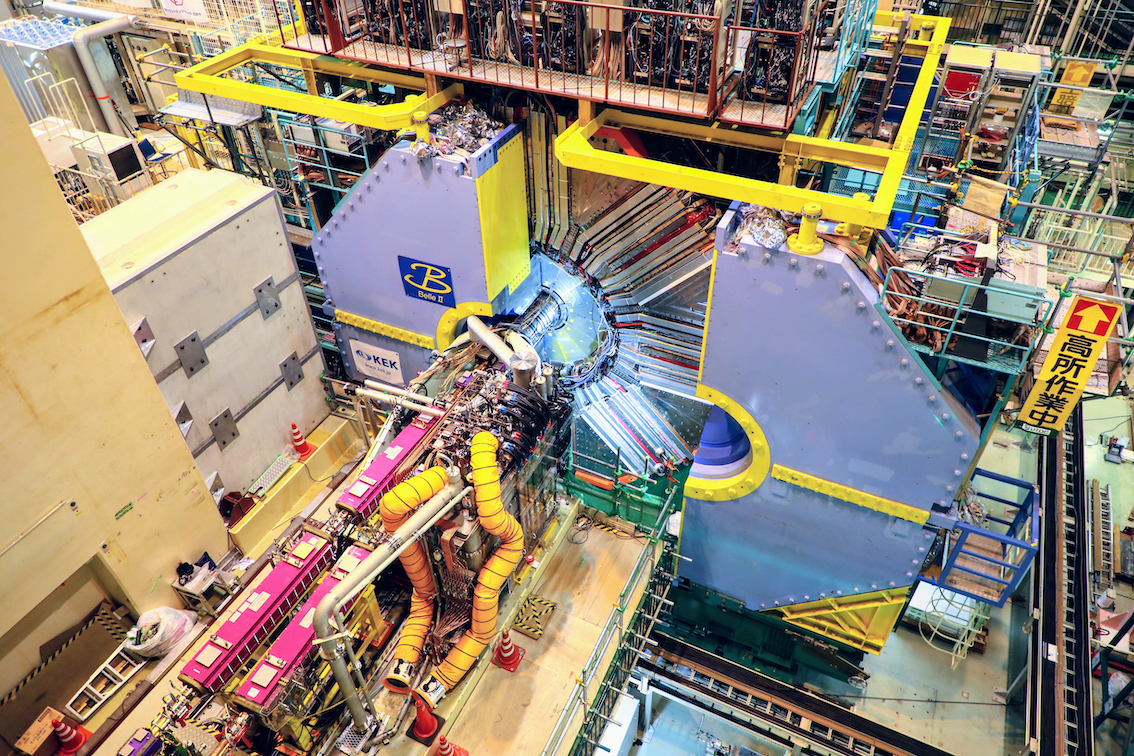
Prof. Dr. Torben Ferber is a Professor at the Karlsruhe Institute of Technology (KIT), leading the Institute of Experimental Particle Physics (ETP). His research focuses on flavor physics in B-meson decays, searches for dark photons, axion-like particles, and long-lived particles at the Belle II experiment, and future projects like LUXE and DELIGHT. He contributes to detector software development and real-time machine learning algorithms for tracking systems. Teaching responsibilities include undergraduate courses on programming, statistics, and particle physics, as well as advanced graduate courses on flavor physics and modern data analysis methods. His group actively collaborates on Belle II's electromagnetic calorimeter reconstruction and explores cutting-edge technologies like GPU acceleration and FPGA-based tracking. Research trends in recent articles emphasize machine learning applications in track reconstruction, CP-violation studies in B-meson decays, and searches for dark matter signatures. His work addresses unresolved questions in the Standard Model, such as discrepancies in CKM matrix element measurements and the origin of matter-antimatter asymmetry. Outreach activities include VR particle detector demonstrations, LEGO models, and masterclasses for students. Supervision of theses spans topics like GPU-accelerated algorithms, FPGA hardware design, and Belle II data analysis. The group adheres to a Code of Conduct promoting inclusivity and respect in academic collaboration.
Sari Saba-Sadiya is a Research Fellow at Goethe University Frankfurt, affiliated with the Frankfurt Institute of Advanced Studies (FIAS). She is part of Dr. Gemma Roig's Computational Vision & AI Lab and Dr. Radoslaw Cichy's Neural Dynamics of Visual Cognition Lab. Her research focuses on neural representations, bioinformatics, and digital humanities, with expertise in EEG signal processing and machine learning applications in neuroscience. She holds a dual Ph.D. in Cognitive Neuroscience and Computer Science from Michigan State University (MSU), preceded by a B.Sc. in Computer Science and Mathematics from the Technion, followed by engineering work at Apple and a Fulbright grant. Her recent work includes advancing artifact detection in EEG data, developing tools like the EEGExtract library, and exploring model-brain alignment through projects such as Net2Brain. She leads the ERC-funded TRANSFORM project investigating brain mechanisms of visual perception across lifespan development. Awards : ERC Consolidator Grant (2025), Fulbright grant (MSU). Labs/Teams : ARSU AI Lab, Computational Vision & AI Lab, and Neural Dynamics of Visual Cognition Lab. She collaborates on interdisciplinary projects blending AI, neuroscience, and cognitive science.
Prof. Dr.-Ing. Martin Gaedke is a Full Professor and Dean of the Department of Computer Science at Technische Universität Chemnitz (TU Chemnitz). He leads the research group Distributed and Self-organizing Systems (VSR) and holds roles such as President of the International Society of Web Engineering (ISWE), founder of the International AIQT Foundation, and member of the German Foundation for University Admissions' IT-advisory board. His expertise spans Web Engineering, AI-driven systems, and decentralized technologies. Education: Martin Gaedke earned a Master's degree (1997) and doctoral degree (2000) in Computer Science/Engineering from the University of Karlsruhe (now Karlsruhe Institute of Technology). Research Focus: Gaedke's work advances collaborative systems in hyper-connected societies, emphasizing Web Engineering, knowledge engineering, and AI-supported hypermedia systems. Key areas include chatbot design patterns, decentralized web trust, smart IoT systems, and end-user development tools. His contributions include pioneering work in Web Engineering since the 1990s, notably co-authoring the first Web Engineering paper at WWW6 (1997). Recent Trends in Publications: Recent research highlights dynamic code migration, GenAI-driven UIs, and ethical AI in chatbots. He emphasizes trust in decentralized systems (e.g., Solid-based social networks) and practical applications like autonomous smart home agents (WS3H). Awards: Ranked 39th globally in Knowledge Engineering (2020), honored with the AI 2000 Most Influential Scholars Honorable Mention and listed in the AI 2000 Annual List. His work is cited over 1,800 times in key areas like Web Engineering and IoT. Advising & Outreach: Gaedke has mentored numerous researchers and entrepreneurs through roles as a Certified High Performance Coach and business advisor. His lab, VSR, develops open-source tools like the Web-Based Network Simulator (WNSWE) for education and industry. Labs/Teams: The Distributed and Self-organizing Systems (VSR) group at TU Chemnitz focuses on innovative projects such as the Trusting Decentralized Web Data framework and the GenAI-Driven Multimodal UI Architecture .
Joonas Tuhkuri is an Assistant Professor of Economics at Stockholm University and Senior Fellow at Etla. His research focuses on the interplay between technology, work, and psychology, utilizing novel large-scale datasets. He holds a PhD from MIT and has received the Upjohn Institute Award for his doctoral work, being recognized as one of Finland's top 35 under 35 by the main Finnish newspaper HS. His research demonstrates that advanced technology adoption correlates with increased employment, challenging conventional fears about automation. Key projects include ETLAnow, a real-time unemployment forecasting tool using Google search data, featured in major media outlets like The Economist and Bloomberg. Recent work explores personality's role in labor markets, intergenerational impacts of industrial decline, and technology's distributional effects. His research has been published or under review in top journals such as the Quarterly Journal of Economics and Journal of Labor Economics. Awards include media recognitions and academic distinctions. He develops open-source data harmonization tools for Finnish economic codes and contributes to policy briefs on technology's labor market impacts through institutions like ETLA.
Prof. Bernd Schweibenz is a Professor of Construction Operations and Management at the Department of Civil Engineering, University of Applied Sciences Potsdam. He also serves as an Academic Advisor for Civil Engineering programs and is a member of the Departmental Council. His career includes roles at Biberach University of Applied Sciences (2008–2012) and the Technical University of Munich (1999–2005). He is a certified consulting engineer specializing in construction management, supplementary claims, and organizational consulting. Research focuses on: Optimization of manufacturing and business processes Digitalization in construction management (BIM) Recruitment and personnel development in construction Life cycle cost analysis of buildings Publications span topics like Generation Y workforce expectations, PPP project frameworks, and construction documentation technologies. He actively contributes to industry standards through roles in associations like VDI and VSVI. His consulting practice addresses organizational challenges in the construction sector. Professional memberships include the Association of Consulting Engineers (VBI), Association of German Engineers (VDI), and Research Association for Road and Transport Engineering (FGSV). His career bridges academia with practical expertise in public infrastructure, audit practices, and construction technology.
Andrew Perfors is a Professor of Psychology at the University of Melbourne, leading the Complex Human Data Hub and the Computational Cognitive Science Lab within the Melbourne School of Psychological Sciences . His research focuses on applying quantitative methods to understand higher-order cognition, including concepts, language, decision-making, and misinformation dynamics. He employs computational models and experimental approaches to investigate how cognitive constraints and social environments shape human behavior at individual and group levels. Education: PhD in Brain & Cognitive Sciences (MIT, 2008), MA in Linguistics (Stanford, 2000), BSc in Symbolic Systems (Stanford, 1999). Research Themes: Cognitive modeling of decision-making, cultural evolution, language acquisition, and misinformation spread. His work bridges computational methods with psychological experimentation, exploring topics like sampling assumptions in reasoning, trust in information sources, and the cognitive basis of gender categorization. Key Projects: Active grants include Understanding Information and Trust (2018–2025), Bridging the Meaning Gap (2023–2027), and Anti-trans Disinformation Campaigns analysis. Recent work addresses misinformation mitigation strategies and the cognitive naturalness of trans-inclusive gender categories. Grants & Collaborations: Funded by ARC and NHMRC. Collaborations include work on contact-tracing technologies during the pandemic and cross-cultural studies on privacy calculus. Labs & Teams: Directs the Complex Human Data Hub, focusing on societal challenges like misinformation and cultural dynamics. Leads interdisciplinary teams in the Computational Cognitive Science Lab, integrating psychology, computer science, and linguistics.
Judy Robertson is a prominent researcher in computing education and child-computer interaction with an extensive publication record spanning over two decades. She has published in top venues including Communications of the ACM, Computers & Education, and International Journal of Child-Computer Interaction. Her research focuses on how children interact with technology, particularly in educational contexts. Key areas include computational thinking development, game-based learning, AI education for children, and the relationship between cognitive development and computing education. She has made significant contributions to understanding how children perceive and interact with emerging technologies like smart speakers and embodied conversational agents. Robertson's work shows a consistent pattern of collaboration with researchers such as Judith Good, Katherine Howland, and Andrew Manches. Her publications reveal a strong commitment to designing technologies that support children's learning across various contexts including schools, hospitals, and informal settings like Girl Guiding. She has developed several educational games and tools, with a particular focus on how physical activity and cognitive development intersect with computing education. Her recent work has expanded into data science education for young learners and understanding children's conceptualizations of artificial intelligence. The trajectory of her research shows increasing attention to how emerging technologies can be designed specifically for children's cognitive and developmental needs.
Matthias S. Müller is affiliated with RWTH Aachen University's IT Center, with additional associations to TU Dresden's Center for Information Services and High Performance Computing and the University of Stuttgart's High Performance Computing Center. His research focuses on parallel computing paradigms, OpenMP optimizations, and energy-efficient high-performance computing. Recent publications demonstrate specialization in parallel pattern compilers, OpenMP runtime optimizations, and energy-aware computing benchmarks. His team develops tools for performance analysis and optimization in heterogeneous computing environments, with applications in computer vision and scientific computing.
Steffen Meyer is a Full Professor of Finance at Aarhus University and a member of the Danish Finance Institute (DFI). His research focuses on household finance, investor behavior, and the impact of environmental factors on financial decisions. He has held academic roles since 2010, contributing to groundbreaking studies on behavioral finance and economic policy analysis. Research Interests Investor decision-making under ambiguity and volatility Environmental and health factors affecting financial behavior Impact of financial advice and regulatory policies Climate change adaptation in economic systems Key Contributions Meyer’s work includes landmark studies on investor responses to market shocks (e.g., forced fund liquidations, epidemics) and the role of air quality in productivity. His research on ETFs revealed pitfalls in passive investing strategies. He co-led the Carlsberg Foundation’s CentR-A initiative (€1.3M budget), advancing decision-making under risk and ambiguity. Awards & Grants Best Paper of the Year Award (2013) for work on financial advice efficacy Carlsberg Foundation Grant (2024) for the CentR-A research center Teaching & Engagement Meyer teaches courses on corporate finance, asset management, and household finance at both undergraduate and executive levels. His teaching portfolio includes supervising 26 bachelor’s and 8 master’s theses, as well as mentoring PhD students like D. Kostopoulos. Media & Outreach His research has been featured in outlets like the Washington Post, Handelsblatt, and Morningstar, addressing topics such as ETF risks, investor psychology, and climate policy implications.