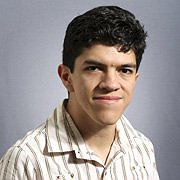
Armando Solar-Lezama is an Associate Professor at the Massachusetts Institute of Technology (MIT) where he leads the Computer Aided Programming Group within CSAIL. His research bridges programming languages, formal methods, and machine learning to advance program synthesis techniques for real-world applications. His primary research focuses on software synthesis with applications spanning high-performance computing, information flow security, and probabilistic programming. He investigates how to automatically generate correct and efficient programs from specifications, with recent work emphasizing neurosymbolic approaches that combine neural networks with symbolic reasoning for complex synthesis tasks. Analysis of his publication trends (2021-2025) reveals a strategic evolution from foundational synthesis algorithms toward practical applications in probabilistic programming and security-critical systems. His work consistently integrates machine learning with formal verification, demonstrating growing emphasis on coarse-to-fine synthesis methods and knowledge compilation techniques for discrete probabilistic models. Award highlights: SIGPLAN Milner Award As leader of MIT's Computer Aided Programming Group, Solar-Lezama mentors graduate researchers and collaborates across institutions. His extensive service as Program Chair for POPL 2025 and committee roles at premier conferences (PLDI, POPL, SPLASH) demonstrates significant community leadership. While specific grant details aren't provided, his sustained publication output in top venues indicates robust funding support. He directs the Computer Aided Programming Group at MIT CSAIL, which develops tools for program synthesis, verification, and analysis. Current projects focus on neurosymbolic programming frameworks, probabilistic program synthesis, and security-aware compilation techniques that integrate information flow control with high-performance computing optimizations.