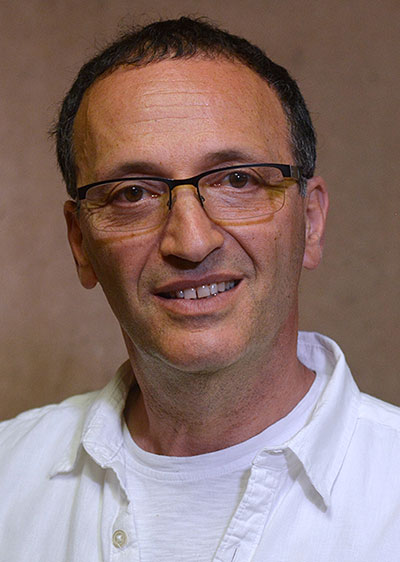
Edgar Weippl is a Professor at the Faculty of Computer Science, University of Vienna, where he serves as Vice Dean and Head of the Research Group Security and Privacy. His work spans cybersecurity, blockchain, and machine learning, with teaching roles in information security and software security courses. Current Positions: Vice Dean (Faculty of Computer Science), Head (Security and Privacy Research Group), Deputy Head (Neuroinformatics & Knowledge Engineering Groups) Research Interests: Cybersecurity, blockchain, IoT security, code obfuscation, privacy technologies, reinforcement learning, and socio-technical systems security Selected Publications: Focus on blockchain privacy, VoWiFi security, code obfuscation, and reinforcement learning applications
Alexandru Nicolau is a Distinguished Professor and Chair of the Department of Computer Science at the University of California, Irvine (USA), where he has worked since 1992. He previously held positions as Associate Professor (1988–1992) and Assistant Professor (1984–1988) at UC Irvine and Cornell University, respectively. Education : B.A., Brandeis University (1980) MS (1981), Ph.D. (1984), Yale University Research Interests : A leading expert in parallelizing compilers , high-performance computing , and software-hardware co-design , Nicolau pioneered foundational techniques like Percolation Scheduling and Optimal Loop Parallelization . His work enables efficient exploitation of instruction-level parallelism in general-purpose programs, with applications in embedded systems , matrix algorithms , and GPU-based neural networks . He has also contributed to Electronic Design Automation (EDA) and lightweight synchronization protocols . Scientific Awards : IEEE Fellow (2014) ACM SIGPLAN Most Influential Paper (PLDI 20 years) EDAA/IEEE/ACM DATE Most Influential Paper (10 years) ACM ICS Most Influential Paper (25 years) 4 Best Paper awards (VLSI design 2003, ISHPC 2005, CASES 2008, IJCNN 2009) Advising & Grants : He has mentored notable scholars now at Stanford, McGill, and Google, and secured over $20M in funding from NSF , DARPA , and industry leaders like IBM and Intel . His professional service includes chairing ACM ICS’09 and PPOPP’13, and serving on steering committees for LCPC and ICS. Labs & Collaborations : His techniques have been adopted by IBM Watson, Siemens Munich, Fujitsu Labs Japan, and the open-source GCC compiler.
Jakob Bleier is a PreDoc Researcher at the Institute of Security and Privacy, part of the Faculty of Informatics at Technische Universität Wien. His work focuses on mobile and IoT security, with an emphasis on Android and iOS application analysis, malware lifecycle assessment, and reverse engineering techniques. He contributes to projects such as IoTIO (2020–2025) and W4MP (2023–2027), addressing challenges in software attribution and cross-platform security. Research Interests: Mobile application security (Android/iOS) Static and dynamic malware analysis Binary code analysis and disassembly IoT security and exploit lifespan quantification Software attribution and provenance tracking His publications highlight advancements in cross-platform app comparison, Android disassembly evaluation, and IoT malware lifecycle studies. He has supervised diploma theses on topics like framework identification in Android apps and PII leakage analysis in IoT companion apps. Current Projects: IoTIO: Investigating IoT security and privacy challenges W4MP: Exploring mobile security methodologies SPFBT: Security in pervasive and future networks
Engin Kirda is a researcher at the Department of Distributed Systems , Vienna University of Technology . His work focuses on Network Security , Malware Detection , and Web Security , with a particular emphasis on Malware Analysis , XSS Prevention , and Botnet Detection . He has led and contributed to projects such as WOMBAT , SECoverer , and SysSec , funded by entities like the Austrian Research Promotion Agency (FFG) and the European Commission . Research Areas : Network Security, Malware Analysis, Web Application Vulnerabilities Key Projects : WOMBAT (2008–2011), SECoverer (2008–2011), SysSec (2010–2014) His publications highlight advancements in automated malware analysis , phishing detection , and web spam mitigation . He has mentored students in topics including Android security , CSV Attack Prevention , and Malware Threat Landscapes .
Christopher Krügel is a Professor at Technische Universität Wien, affiliated with the Department of Automation Systems (E191-03). His research focuses on Security, Intrusion Detection, Malware Detection, Operating Systems, and Networks. He leads multiple research projects and has supervised 20+ graduate students. His research explores malware analysis techniques, web security vulnerabilities, hardware-level attacks (e.g., Rowhammer), and privacy threats in mobile/social systems. Recent work examines ARM TrustZone security and machine learning limitations in malware detection, while earlier publications cover P2P networks, phishing defenses, and binary analysis. Awards: Wirtschaftskammerpreis (2005) EIB Scientific Award for Excellent Diploma Thesis (2000) Grants & Projects: Includes SECoverer (web app security, 2008-2011), WOMBAT (malware observatory, 2008-2011), Pathfinder (malware analysis, 2007-2009), and 5+ other funded initiatives focusing on binary analysis, pervasive security, and malware detection. He leads the Automation Systems research group, collaborating with institutions like European Commission and Austrian Science Fund.
Martina Lindorfer is an Associate Professor at the Department of Security and Privacy, Faculty of Informatics, Technische Universität Wien (TU Wien). Her primary roles include academic research and teaching in cybersecurity, privacy engineering, and IoT security. She coordinates the Women in Informatics initiative and leads research projects addressing critical security challenges across mobile, IoT, and cloud ecosystems. Dr. Lindorfer holds a Dipl.-Ing. (BSc) and a PhD in Technical Informatics from TU Wien (2011 and 2015, respectively). Her research focuses on malware analysis, mobile security, and privacy-preserving technologies. Notable projects include the WWTF-funded IoTIO initiative analyzing IoT device vulnerabilities and the W4MP project exploring cross-platform malware threats. Key research interests span: Cybersecurity frameworks for IoT ecosystems Privacy implications of smart TV protocols (HbbTV) Mobile app vulnerability analysis APT campaign attribution through file forensics Academic cloud migration risks Her work bridges technical analysis with societal impacts, addressing topics like surveillance technology and academic freedom in cloud environments. Lindorfer has supervised over 20 graduate students, with recent theses focusing on rootkit detection, ART-based app diffing, and privacy in configuration repositories. Current grants include: IoTIO (2020–2025): Securing IoT ecosystems W4MP (2023–2027): Cross-platform malware research Browsec (2018–2024): Browser security analysis Her lab develops tools like C2Miner (C2 server detection) and FlowPrint (encrypted network fingerprinting), contributing to both academic and industry standards. Lindorfer actively collaborates with organizations like the European Commission and FFG on cybersecurity policy and threat mitigation strategies.
Andreas Ekelhart is affiliated with the Faculty of Computer Science and the Research Group Security and Privacy . His work focuses on cybersecurity, log analysis, machine learning applications in security, and privacy-preserving technologies. He contributes to the UN Sustainable Development Goals related to infrastructure and innovation. He is actively involved in research projects such as Adapting Cyber Situational Awareness for Evolving Computing Environments (2023–2026) and the Christian Doppler Labor für Verbesserung der Sicherheit von Informations-prozessen in Produktionssystemen (2020–2024), collaborating with institutions across multiple countries. His recent publications address cybersecurity challenges in industrial control systems, code obfuscation detection using machine learning, and knowledge graph integration for cybersecurity tasks. He emphasizes interdisciplinary approaches combining AI, data analysis, and cybersecurity. No scientific awards or grants are explicitly listed in the provided text, but his sustained research output demonstrates active engagement in the field. He is part of collaborative networks focusing on cybersecurity solutions for evolving computing environments.
Michael Pucher is a dedicated researcher affiliated with the Faculty of Computer Science at Vienna University of Technology, where he contributes to the Research Group Security and Privacy. Currently serving as a Visiting Researcher (October 2023 to February 2024), his work bridges academic research and practical security challenges in computing systems. He holds a Diplom-Ingenieur (Dipl.-Ing.) degree, equivalent to a Master of Science in Engineering, and a Bachelor of Science (BSc), reflecting a strong foundation in technical disciplines. Dr. Pucher's research spans the critical domains of computer security and privacy, with a focus on reverse engineering, obfuscation techniques, binary analysis, and the application of machine learning to security problems. His investigations delve into integrated circuit analysis, software protection mechanisms, and the development of resilient methods for identifying semantic functionality in obfuscated programs. Analysis of his 2022 publications reveals a cohesive research trajectory emphasizing innovative solutions for security challenges. Key themes include the integration of machine learning for clone detection in binaries, simulation-based approaches to counter obfuscation, and advanced image processing techniques for hardware reverse engineering, indicating a multidisciplinary approach that merges hardware and software security. Active in the academic community, Dr. Pucher has contributed through teaching engagements, peer review for conferences such as the IEEE Workshop on Offensive Technologies, and presentations at international venues including the IEEE Physical Assurance and Inspection of Electronics (PAINE) workshop.
Georg Merzdovnik is a Lecturer at Vienna University of Technology (TU Wien) with a focus on computer security and privacy . His work spans binary rewriting, web privacy, IoT security, and Android application analysis, reflected in publications in top venues like ACM Computing Surveys and IEEE Euro S&P. He actively supervises student research projects in security-related domains. Primary Affiliation: Vienna University of Technology (TU Wien) Research Interests include: Binary rewriting and obfuscation techniques Web privacy mechanisms post-GDPR IoT device security in IPv6 networks Mobile application threat analysis Malware detection in Windows shellcodes Evaluation of tracker-blocking tools Thesis Supervisions (2012–2024) cover topics like IoT testbeds, Android intent firewalls, and secure messaging services.
Michael Pucher is an External Lecturer in the Department of Logic and Computation at Technische Universität Wien. His research focuses on applying machine learning techniques to identify obfuscated function clones in binary code, with notable work published in 2021. He teaches courses such as 'Attacks and Defenses in Computer Security' (Course ID: 192.111). Education details are not explicitly provided, but his diploma thesis indicates academic engagement in computer security. No scientific awards or grants are mentioned in the text. He is affiliated with the university's informatics department and maintains a TISS profile (ID: 281901).
Sebastian Schrittwieser is a Researcher in the Research Group Security and Privacy, part of the Faculty of Computer Science. His work focuses on cybersecurity, code obfuscation, malware analysis, and machine learning applications in security. He leads and contributes to projects like INODES (Cyber Defense Strategies) and EMRESS (Resilience Evaluation Models). His research bridges theoretical foundations and practical applications, addressing challenges in software protection and threat detection. Key research interests include: Code Obfuscation Techniques and Resistance Adversarial Machine Learning and Risk Assessment Malware Analysis and Program Simulation User Behavior in Cybersecurity Contexts Recent publications emphasize empirical studies on IT/OT infrastructure security, graph neural network vulnerabilities, and quantum-inspired machine learning. He actively collaborates with institutions like SBA Research and presents at international conferences. Grants include Research Funding for projects on optimal cyber defense strategies (INODES) and software resilience evaluation (EMRESS). His work aligns with interdisciplinary efforts in security engineering and privacy-preserving technologies.
Nicola Zannone serves as Associate Professor and Chair of the Data Protection research group within the Department of Mathematics and Computer Science at Eindhoven University of Technology (TU/e). He holds a PhD in Computer Science from the University of Trento (2007), where his dissertation focused on security requirements engineering during a research visit to the Center for ... Research Focus: His work centers on cybersecurity with emphasis on data protection, phishing defense mechanisms, and access control systems. Recent investigations explore emerging threats like quishing and LLM-generated phishing attacks, autonomous navigation security, and industrial control system vulnerabilities. His research uniquely bridges technical security solutions with human behavioral factors in organizational contexts. Publication Trends: Between 2024-2025, Zannone's output demonstrates growing attention to AI-powered threats and automated vulnerability mitigation. His systematic reviews and empirical studies consistently address practical security challenges in critical infrastructure and software supply chains, reflecting industry relevance through collaborations with security practitioners. Leadership Roles: As Chief Editor for Computer Security (Frontiers in Computer Science) and Associate Editor for Cybersecurity and Privacy (Frontiers in Big Data), he shapes discourse in security research. His editorial work on topics like "Generative AI for Cybersecurity" highlights forward-looking engagement with evolving threat landscapes.