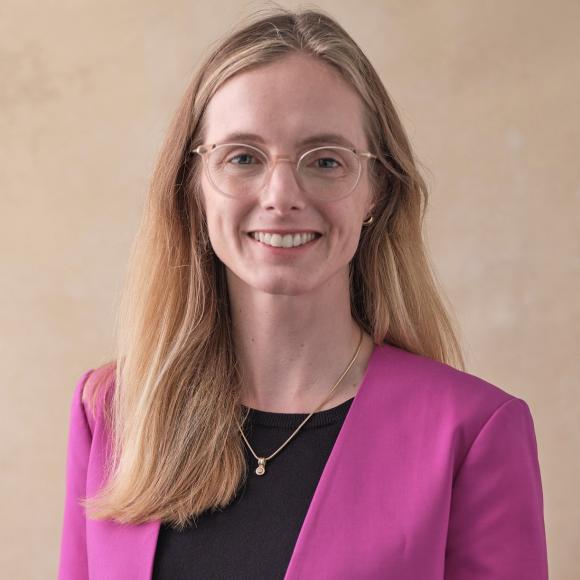
Zainab Hermes is an Associate Instructional Professor in the Department of Near Eastern Studies at the University of Chicago, where she has taught since 2018. She holds a PhD in Linguistics from the University of Illinois at Urbana-Champaign (2018), earned through experimental research combining phonetics and neuroscience methodologies. Education PhD in Linguistics, University of Illinois at Urbana-Champaign (2018) Research Interests Her work focuses on experimental linguistics, particularly the articulation of Arabic dialects (Cairene, Lebanese, Jordanian, Saudi). Key projects involve: MRI studies of vocal tract configurations for back consonants MEG investigations of neurological representations during Arabic diglossic code-switching Self-paced reading studies on L2 acquisition of Arabic grammatical gender Publications & Methodologies Her research employs advanced imaging techniques (rt-MRI, EMA) and neurolinguistic methods (MEG) to analyze speech production and processing. Her teaching includes courses on Arabic linguistics, dialectology, and academic reading. Academic Contributions She collaborates on interdisciplinary studies bridging phonetics, neuroscience, and language acquisition frameworks.
Carolin Pflueger is an Associate Professor at the Harris School of Public Policy , University of Chicago, and holds affiliations as a NBER Faculty Research Fellow and CEPR Research Affiliate . Her work bridges macroeconomics and finance, focusing on inflation dynamics, monetary policy impacts, and financial market risk perception. University: University of Chicago School: Harris School of Public Policy Affiliations: NBER, CEPR Role: Associate Professor Her research explores how inflation and monetary policy influence financial markets, including models connecting Treasury bond risk to stagflation drivers and analyzing economic agents' perceptions of policy uncertainty. Recent work leverages cross-sectional data of stock prices and economic forecasts to quantify macrofinancial linkages. Notable scientific recognitions include the Fama DFA Prize (2023), AQR Insight Award Finalist (2018), and the Arthur Warga Award (2014). She has received NSF Grant 2149193 for macrofinance research. Contact: cpflueger@uchicago.edu | GitHub Code Repositories
Professor Peter F. Driessen is a faculty member in the Department of Electrical and Computer Engineering at the University of Victoria, with a cross-appointment in the School of Music. He holds a BSc and PhD from the University of Victoria and is a Professional Engineer (PEng). His research focuses on communication systems, signal processing, control, and interdisciplinary projects in computer music and wireless technologies. Key areas include audio/video signal processing, radio propagation, sound recording, and multimedia systems. He leads the University of Victoria Propagation Laboratory, which explores radio wave propagation and Amateur radio integration with engineering education. His work spans theoretical research and applied projects like ECOSat satellite systems, software-defined radio (SDR), and innovative musical instruments such as the Radio Drum. He supervises undergraduate and graduate projects in these domains through ELEC 499 courses. Notable contributions include the APEGBC Editorial Board Award for Best Paper (2002) and patents in wireless networking and signal processing. His teaching includes courses in signal analysis and electromagnetics, and he collaborates on interdisciplinary programs like the Music/Computer Science degree. Education: BSc in Electrical Engineering, University of Victoria PhD in Electrical Engineering, University of Victoria Research Interests: Audio and video signal processing for music and media Software-defined radio and Amateur radio technologies Satellite communication and ground station development Gesture-based interfaces and musical instrument design Error mitigation in streaming audio/video Optical and microwave-photonic systems Labs & Collaborations: Propagation Laboratory (radio wave research) UVic Experimental Radio Group (Amateur radio club) UVic Satellite Design Team (ECOSat projects) UVic Centre for Aerospace Research Grants & Awards: APEGBC Editorial Board Award (2002) Multiple US patents in wireless systems and signal processing
Olav Tirkkonen serves as a Full Professor in the Department of Communications and Networking at Aalto University, Finland, a position he has held since August 2006. He leads the Communication Theory research group, driving innovation in wireless communication systems. His academic journey includes a distinguished career spanning industry and academia, with significant contributions to 3G, 4G, and 5G technologies. His educational qualifications are: Doctor of Science (Ph.D.) in Theoretical Physics, Helsinki University of Technology, 1994 Master of Science (M.Sc.) in Theoretical Physics, Helsinki University of Technology, 1990 Professor Tirkkonen's research interests are centered on wireless communications, with a focus on physical layer processing, coding theory, and quantum information processing. His group explores advanced topics including 5G and beyond wireless networks (spectrum management, large-scale MIMO, ultra-reliable low-latency communication), network-level interference coordination, collaborative caching, machine learning applications for wireless channel geography, coding on manifolds, and quantum communication systems. This research bridges fundamental theory with practical implementation in next-generation wireless networks. Analysis of his recent publications (2024-2025) indicates a predominant focus on machine learning techniques for wireless channel modeling (channel charting), pilot allocation in MIMO systems, and quantum error correction. His work is instrumental in addressing key challenges in 5G/6G networks, particularly in scenarios demanding ultra-reliability, low latency, and efficient resource utilization. His scientific contributions include: Co-inventor of approximately 80 families of patents and patent applications Co-author of the book "Multiantenna transceiver techniques for 3G and beyond" Throughout his career, Professor Tirkkonen has mentored numerous graduate students and secured substantial research funding from various sources. His industry experience at Nokia Research Center (1999-2010) and visiting position at Cornell University (2016-2017) have enriched his research perspective and fostered strong industry-academia collaborations. The Communication Theory group, under his leadership, maintains active collaborations with leading institutions and companies worldwide, positioning Aalto University at the forefront of wireless communications research.
Anne E. White is the School of Engineering Distinguished Professor of Engineering and associate vice president for research administration at the Massachusetts Institute of Technology (MIT). She serves in the Department of Nuclear Science and Engineering within MIT's School of Engineering and is a key researcher at the Plasma Science and Fusion Center (PSFC). White has held significant leadership roles including NSE department head from 2019 to 2023 and co-chair of the MIT Climate Nucleus from 2021 to 2024. She currently chairs the Fusion Energy Sciences Advisory Committee (FESAC), providing federal advisory input to the U.S. Department of Energy Office of Science. White received her PhD in physics from UCLA, where she conducted research at the Electric Tokamak. Her early career included research positions at the National Spherical Torus Experiment at Princeton Plasma Physics Laboratory and the DIII-D National Fusion Facility at General Atomics before joining MIT as a faculty member. Her educational background laid the foundation for her expertise in plasma physics and fusion energy research. Professor White's research focuses on magnetic fusion energy, specifically on understanding turbulent transport in magnetically confined fusion plasmas. Her work spans diagnostic development, novel experimentation, and validation of nonlinear gyrokinetic codes. She aims to demonstrate nuclear fusion as a practical part of the world's sustainable energy future. Her group develops and uses radiometers, reflectometers, and interferometers to measure fluctuations in plasma density, temperature, and flows in tokamaks. This research is critical for improving predictive capabilities of turbulent transport models, which is essential for developing viable fusion reactors. Analysis of Professor White's recent publications reveals a strong focus on plasma diagnostics and turbulence measurements across multiple tokamak facilities. Her work spans experimental measurements on ASDEX Upgrade, Alcator C-Mod, NSTX, and DIII-D tokamaks, with particular emphasis on electron temperature fluctuations, turbulence characterization, and transport model validation. A significant theme is the development and application of novel diagnostic techniques for simultaneous measurements of multiple plasma parameters. Her research increasingly incorporates computational approaches, including gyrokinetic simulations and machine learning methods, to interpret experimental data and advance predictive capabilities in fusion plasma physics. Professor White has received numerous prestigious awards throughout her career: Fellow, American Physical Society Division of Plasma Physics (2019) Cecil and Ida Green Career Development Professor, MIT (2014) American Physical Society Katherine E. Weimer Award (2014) Fusion Power Associates Excellence in Fusion Engineering Award (2014) Junior Bose Award for Excellence in Teaching, MIT (2014) PAI Outstanding Faculty Award from MIT student chapter of the American Nuclear Society (2013) Norman C. Rosenbluth Career Development Professor, MIT (2012-2014) Department of Energy Early Career Award (2011-2016) Marshall N. Rosenbluth Outstanding Doctoral Thesis Award (2009) As an educator and mentor, Professor White has advised numerous students through MIT's Department of Nuclear Science and Engineering. She has taught courses including Principles of Plasma Diagnostics, Seminar in Fusion & Plasma Physics, and Introduction to Plasma Physics. Her leadership extends to developing educational resources, notably leading a team in 2018 to create a free MITx MOOC focused on nuclear science and engineering for global high school learners. Professor White has secured significant research funding through Department of Energy awards, including the Early Career Award (2011-2016) and various fusion energy fellowships throughout her career. Her research group at MIT's Plasma Science and Fusion Center has contributed to multiple major fusion facilities and has been instrumental in advancing understanding of plasma turbulence and transport. Professor White leads the Fusion and Plasmas Lab at MIT, which focuses on diagnostic development and turbulence measurements in fusion plasmas. Her team has made significant contributions to research on four major tokamaks: Alcator C-Mod, ASDEX Upgrade, DIII-D, and National Spherical Torus Experiment Upgrade. At MIT's Plasma Science and Fusion Center, she previously served as assistant division head for magnetic fusion energy collaborations and ran the Gyrokinetic Simulation Working Group and the Alcator C-Mod Transport Group. Her lab maintains close collaboration between experimental work, theoretical modeling, and computational simulation to advance the understanding of plasma turbulence and transport phenomena critical for fusion energy development.
Professor Jun Zhang is a leading academic in cybersecurity at Swinburne University, Australia, where he directs the Cybersecurity Lab. He has been honored as Australia's top cybersecurity researcher and instrumental in establishing Swinburne as a globally recognized cybersecurity research institution. His work includes high-impact papers and multi-million-dollar R&D projects, culminating in awards like the 2021 'Top Cybersecurity Research Institution' accolade. As course director of the Bachelor of Cyber Security, he pioneered an industry-driven teaching model with Deloitte and CSIRO, significantly boosting course enrollment. His collaborations extend to Adobe's Curriculum Innovation Program and the Australian P-TECH initiative, promoting STEM education and cybersecurity awareness. He supervises doctoral candidates and leads grants focused on AI-driven cybersecurity, smart home security, and blockchain-based edge computing. His research spans vulnerability detection, GAN forensics, IoT security, and privacy preservation in OSNs. Research interests include cybersecurity fundamentals, data science applications, and distributed systems. Notable achievements include the PTFix framework for Java vulnerabilities, the IoTFuzz smart home testing system, and CTI mining methodologies. Awards reflect his mid-career research excellence and industry partnerships. His grants with CSIRO and defense organizations emphasize real-world impact, addressing challenges from malware detection to adversarial machine learning. The Cybersecurity Lab and collaborative projects like Artchain demonstrate his commitment to bridging academia and industry. Professional activities include supervising over 20 HDR students and securing grants totaling millions. His work on blockchain-based edge storage (CSEdge) and SDCCP congestion control highlights innovation in networking. Future directions include advancing AI for design collaboration with CSIRO and enhancing privacy in smart energy technologies. His contributions span technical, educational, and community outreach domains, positioning him as a pivotal figure in cybersecurity's evolution.
David Schuster is an Associate Professor of Physics at the University of Chicago. His primary research focuses on experimental condensed matter physics, with a particular emphasis on circuit quantum electrodynamics (cQED), superconducting qubits, and quantum information science. He leads the Schuster Lab, which explores quantum systems, hybrid quantum technologies, and topological materials. Education: Ph.D. in Physics from Yale University (2007), advised by Robert Schoelkopf. His doctoral work pioneered advancements in circuit QED, demonstrating strong coupling between superconducting qubits and microwave resonators. Research Interests: The lab investigates superconducting quantum circuits, topological photonics, quantum sensors for dark matter, and scalable quantum computing architectures. Projects include developing fluxonium qubits, autonomous error correction, and hybrid systems involving trapped electrons on helium. Key Contributions: Published in Nature , Science , and Physical Review Letters on topics like topological circuits, photon blockade, and dark matter detection using superconducting cavities. Collaborates with groups at Stanford, Purdue, and other institutions on quantum technologies. Students and Collaborators: Advises numerous graduate and undergraduate students, including prominent alumni who have transitioned to postdocs and industry roles. Lab members present at major conferences like the APS March Meeting. Labs: Schuster Lab at the University of Chicago, with access to state-of-the-art facilities like the Pritzker NanoFabrication Facility. Collaborates with the Awschalom, Cleland, and Houck groups on hybrid quantum systems and materials science.
Dr. Chenming Zhang is an Advanced Queensland Industry Research Fellow at the School of Civil Engineering, The University of Queensland. His research focuses on hydrological processes in coastal and terrestrial groundwater systems, with particular emphasis on evaporation-driven mass and heat transport in soils and tailings, and hydrogeochemical dynamics in aquifers and mine waste systems. Specializes in IoT-based environmental monitoring Develops numerical models for coastal aquifer dynamics Conducts field and laboratory experiments on tailings behavior Research interests span coastal hydrology, groundwater modeling, mine waste management, and environmental monitoring. He works on contamination transport, aquifer protection, and climate impacts on water systems. Recent publications analyze: Iron curtain formation in subterranean estuaries Sea water intrusion mechanisms Salinity dynamics in tidal wetlands Smart sewer monitoring systems Scientific awards include the prestigious Advanced Queensland Industry Research Fellowship. He supervises multiple PhD projects on mine waste hydrology and coastal aquifer management, with notable collaboration on: Evolution Mining's gold tailings projects ARC Discovery Projects on coastal processes Grange Resources' PAF cell instrumentation His work combines field measurements, laboratory testing, and computational modeling to address critical environmental challenges in mining and coastal zones.
David I. August is a Professor of Computer Science at Princeton University, affiliated with the Department of Electrical Engineering. He earned his Ph.D. from the University of Illinois at Urbana-Champaign in 2000. His research focuses on compilers and computer architecture, emphasizing synergistic design between compilers and microarchitecture. He leads the Liberty Research Group, which explores topics such as automatic parallelization, memory profiling, and speculative execution. August joined Princeton in 1999 as a lecturer, advancing to full professor in 2012. He has served as program chair for MICRO 2009 and on committees for ISCA, PLDI, and ASPLOS. His notable accolades include the IEEE Fellow designation, Best Paper Awards at PLDI and CGO, and teaching awards from Princeton's School of Engineering. His work spans compiler optimizations, hardware-software co-design, and security architectures like TrustGuard. Recent research includes GPU scheduling (GhOST), memory profiling frameworks (PROMPT), and instruction prefetching (PDIP). He advises over 20 graduate students, many now leading roles at tech companies and academia. August teaches courses such as COS-126 (Intro to CS), COS-375 (Computer Architecture), and graduate seminars. His projects often bridge theory and practice, with tools like NOELLE and Liberty Research Group initiatives advancing compiler infrastructure and parallelism extraction.
Mathias Payer is an Associate Professor at EPFL's School of Computer and Communication Sciences (IC), leading the HexHive Laboratory . His work focuses on software security, particularly addressing memory corruption and type violations through binary analysis and compiler-based techniques. He contributes to research in secure system design, fault isolation, and fuzzing methodologies. Current PhD students : Di Bartolomeo Luca, Feng Zhiyao, Hofhammer Florian, Lyu Tao, Mao Philipp Yuxiang, Zhang Chibin, Zheng Han Past EPFL PhD students: Badoux Nicolas Daniel, Bhattacharyya Atri, Hazimeh Ahmad His research explores software security in areas like: Protecting applications from vulnerabilities Binary exploitation and mitigation Compiler-driven security hardening Strong sanitization and privilege separation Memory corruption detection The HexHive group develops tools and frameworks for: Automated fuzz driver generation Gradual compartmentalization State inference for feedback optimization Secure cell architectures Recent publications highlight advancements in: Fuzzing hybrid approaches (e.g., DUMPLING, MendelFuzz) Memory safety validation (QMSan, Pacmem) Compiler-assisted defenses (Gradient, Type++)
Stephen W. Keckler is an Adjunct Professor at the Department of Computer Science , The University of Texas at Austin , and serves as Vice President of Architecture Research at NVIDIA . He is an ACM Fellow , IEEE Fellow , and Sloan Foundation Research Fellow . Education: BS in Electrical Engineering, Stanford University (1990) SM in Computer Science, Massachusetts Institute of Technology (1992) PhD in Computer Science, MIT (1998) Research Interests focus on computer architecture for deep learning , GPU computing , and energy-efficient systems . His work explores memory compression , network-on-chip designs , and heterogeneous computing . Publication Trends highlight advancements in deep learning accelerators , GPU memory systems , and energy-efficient architectures . Notable themes include sparsity exploitation , multi-chip modules , and fault-tolerant GPU pipelines . Scientific Recognition : ACM Fellow IEEE Fellow Sloan Foundation Research Fellow Best Paper Awards at ASPLOS 2009 and ISPASS 2011 Laboratory Affiliations : Computer Architecture and Technology Laboratory (CART) TRIPS Project (Tera-Op Reliable Intelligently adaptive Processing System) NVIDIA Research
Douglas A. Loy is a full Professor at the University of Arizona with joint appointments in the Department of Materials Science and Engineering and the Department of Chemistry and Biochemistry, and additional affiliations with the BIO5 Institute and the School of Mining and Mineral Resources. A fifth-generation Arizonan, he earned his BS in Chemistry from the University of Arizona (1983), MS in Chemistry from Northern Arizona University (1986), and PhD in Organic Chemistry from the University of California, Irvine (1991). Before returning to academia he spent 14 years at Sandia National Laboratories and then led the Polymer and Nanomaterials Synthesis Team at Los Alamos National Laboratory. Research Interests Sol-gel & polysilsesquioxane chemistry: fundamental studies and unconventional routes to hybrid organic-inorganic materials. Tetrazine polymer chemistry: synthesis, click modification, and application in antioxidant foams and UV-stable sunscreens. 3-D printing of glasses & ceramics: additive manufacturing of micro-optics, multi-refractive-index glass objects, and transparent devices using silica and silsesquioxane resins. Energy & biomaterials: new materials for energy storage, polymer-ceramic bone scaffolds, and smart packaging films. Across more than 70 recent publications (2012-2025), the dominant themes are advanced additive manufacturing of specialty glasses and ceramics, design of photochemically stable sunscreen systems, and development of multifunctional polymer-ceramic composites for biomedical and energy applications. The work integrates molecular-level organic synthesis with macro-scale materials processing, enabling applications ranging from holographic micro-optics to lunar in-situ resource utilization. Scientific Awards & Recognition While specific honors are not listed in the provided text, Loy is described as a “distinguished member of technical staff” at Sandia National Laboratories, indicating prior recognition for his research achievements. Funding & Collaborative Teams At the University of Arizona his group pursues federally and industrially funded projects spanning NSF, DOE, and NASA programs, particularly in advanced manufacturing and energy materials. He collaborates closely with the BIO5 Institute for biomedical applications and with the School of Mining and Mineral Resources for resource-based materials research. No explicit student lists are included in the text. Laboratory & Facilities Loy’s laboratories are located in Mines and Metallurgy 338B at the University of Arizona, equipped for sol-gel synthesis, polymer processing, and state-of-the-art 3-D printing instrumentation including multi-photon lithography systems for micro-optics fabrication.
Gabriela V. Cohen Freue is an Associate Professor in the Department of Statistics at the University of British Columbia (UBC), Vancouver Campus, and holds a Canada Research Chair (CRC Tier 2). She leads an interdisciplinary research program focusing on developing robust statistical methodologies for analyzing high-dimensional data in genomics and proteomics, with applications in medical sciences. Her work addresses challenges such as outliers, collinearity, and measurement errors, with applications in biomarker discovery for diseases like multiple sclerosis, cardiovascular disorders, and asthma. Her academic journey includes collaborations across disciplines, including with the BC Cancer Agency, PROOF Centre of Excellence, and iCAPTURE. She has pioneered methods like the Penalized Elastic Net S-Estimator (PENSE) and contributed to proteomic data analysis tools such as the Protein Group Code Algorithm (PGCA). She also co-developed the MDQC quality control method for microarrays. Research interests include robust regression, biomarker development, and statistical methods for big data. Her team includes postdocs, PhD, and MSc students, with a focus on training in both statistical rigor and interdisciplinary collaboration. Notable grants include a CANSSI Collaborative Research Team Project (CRT) award for robust causal inference and prediction modeling. Teaching responsibilities span statistical consulting, high-dimensional biological data analysis, and generalized linear models. She emphasizes active learning and real-world problem-solving in her courses. Her lab’s work is supported by grants from the Data Science Institute (DSI) and collaborations with institutions like the PROOF Centre. Alumni of her group hold positions in academia (e.g., George Mason University) and industry (e.g., Merck, BC Cancer Research Centre).
David De Roure is Professor of e-Research at the University of Oxford and Academic Director of both the Digital Scholarship initiative and the Laboratory for AI Security Research. He is also an Honorary Research Professor at the Royal Northern College of Music (RNCM), where he serves as Technical Director of the Centre for Practice & Research in Science & Music (PRiSM). His work bridges computer science, digital humanities, cybersecurity, and music through his distinctive interdisciplinary approach. De Roure received his PhD in 1990 supervised by David W Barron and Peter Henderson, with research in Lisp and distributed systems. Prior to joining Oxford in 2010, he was Professor of Computer Science at the University of Southampton and Director of the Centre for Pervasive Computing in the Environment. His career spans multiple institutions and research domains, reflecting his commitment to interdisciplinary work. De Roure's research focuses on new methods of digital scholarship, innovation in knowledge infrastructure, cybersecurity, and computational approaches to music. His work uniquely combines humanities (digital musicology), social sciences (social machines and web science), engineering (Internet of Things), and computer science (distributed systems, AI). A key theme is empowering human creativity through technology rather than replacing humans with AI. He emphasizes co-creation between humans and machines, particularly in music composition where he explores how algorithms can generate fragments for human assembly. His recent publications reveal a strong focus on AI security in IoT systems, digital scholarship methods, and the intersection of music with computational approaches. There's a clear trajectory from foundational work in social machines and web science toward current applications in cybersecurity and music-AI co-creation. His publications consistently bridge technical domains with humanistic inquiry, demonstrating his commitment to interdisciplinary scholarship that addresses real-world challenges. Fellow of the British Computer Society (FBCS) Fellow of the Institute of Mathematics and its Applications (FIMA) Fellow of the Royal Society of Arts (FRSA) Chartered IT Professional (CITP) Turing Fellow at The Alan Turing Institute (2018-2024) De Roure has co-founded three major interdisciplinary initiatives: PETRAS National Centre of Excellence for IoT Systems Cybersecurity (the world's largest socio-technical research center focused on IoT security), the Software Sustainability Institute (dedicated to improving research software), and PRiSM at RNCM. He was Director of the Oxford e-Research Centre from 2012-17 and has led numerous research projects including SOCIAM (The Theory and Practice of Social Machines), FAST (Fusing Audio and Semantic Technologies), and Transforming Musicology. The Laboratory for AI Security Research, which he directs, took its first PhD students in 2024. At Oxford, De Roure chairs the Digital Research Cluster at Wolfson College and oversees the Laboratory for AI Security Research. The PRiSM team at RNCM has produced numerous musical works and performances, including six premieres in New York in 2024. He has been involved in designing gesture recognition software used in many performances and has collaborated on public engagement projects including the Science Together project which released a Hip Hop album. His current work includes exploring Chladni Plates for new musical instrument design and developing algorithmically enhanced instruments.
Dominic Thibault is an Assistant Professor at the Faculty of Music, Université de Montréal . His research-creation explores human-machine interaction in musical contexts, focusing on embodied cognition through electroacoustic compositions, audiovisual performances, and musical software development. Co-director, Laboratoire Formes·Ondes Active member, CIRMMT (Centre for Interdisciplinary Research in Music Media and Technology) Research axis leader, Expanded Musical Practice (CIRMMT) Member, Québecor Millénium entrepreneurship committee Scientific committee member, ACFAS