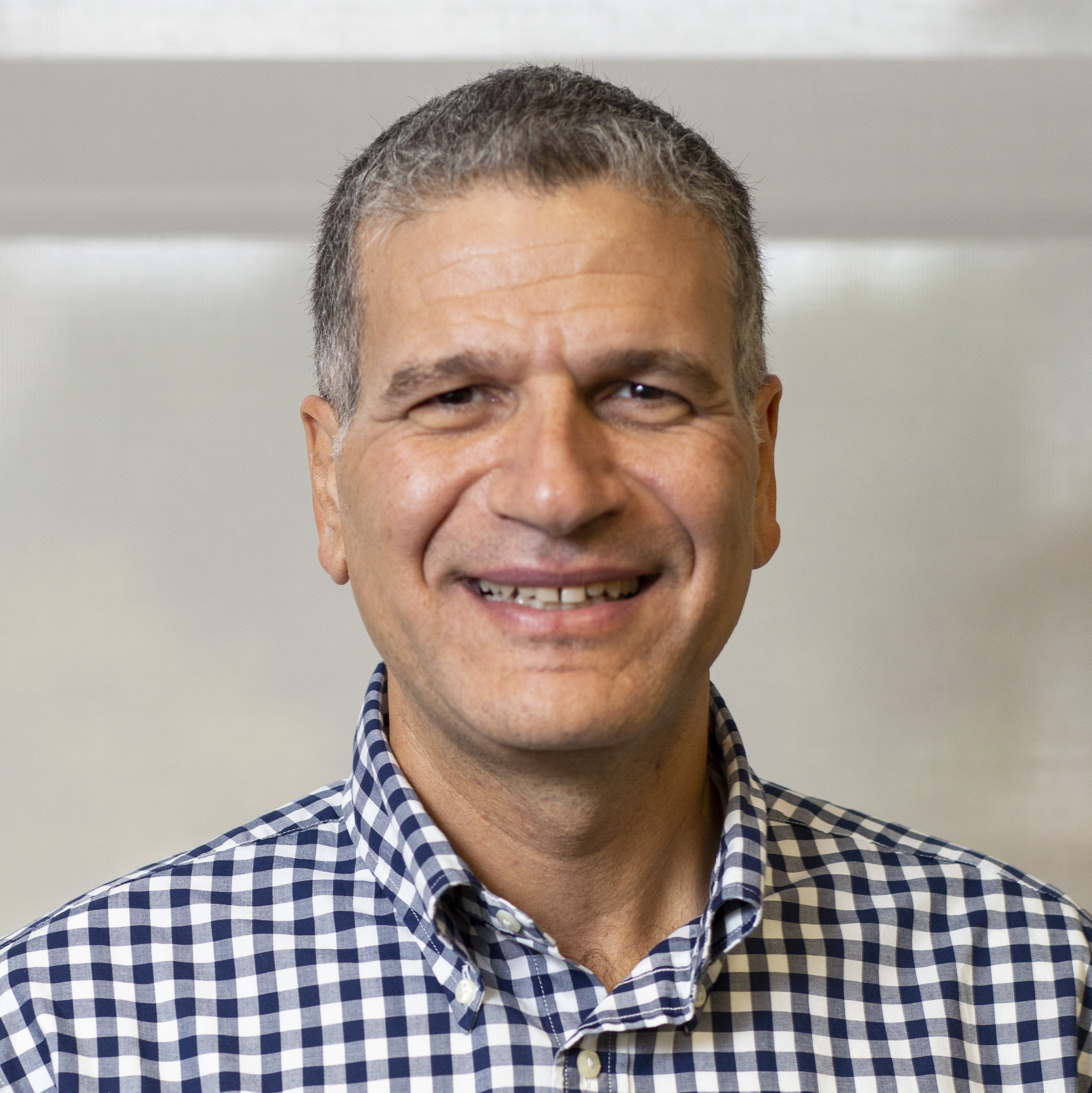
Yiming Yang is a Professor at the Language Technologies Institute and Machine Learning Department within the School of Computer Science at Carnegie Mellon University , where he has held faculty positions since 2003. His research spans foundational and applied aspects of machine learning , artificial intelligence , and scientific computing . Professor, Carnegie Mellon University (2003–Present) Associate Professor, Carnegie Mellon University (1996–2003) Yang's research focuses on LLM-based problem-solving agents , combinatorial optimization , and scalable oversight frameworks . His work explores diffusion models, Langevin dynamics, and Fourier neural operators for NP-hard problems, while advancing reinforcement learning techniques for self-play supervision and principle-driven fine-tuning of large language models. Recent publications highlight his contributions to code synthesis , PDE solving , and multi-agent reinforcement learning . Key methodologies include demonstration-guided control, retrieval-augmented reasoning, and test-time scaling laws. His team has developed frameworks like FEEDER for efficient in-context learning and μTransfer-FNO for zero-shot hyperparameter transfer in PDE solvers. Notable scientific achievements include: Best Student Paper Runner Up (2013) Best Theoretical Paper Award (1994) Best Theoretical Paper Award (1993) Yang has mentored over 20 PhD students and postdocs, including Shengyu Feng , Zhiqing Sun , and Aman Madaan , across domains like graph learning , extreme multi-label classification , and language model alignment .
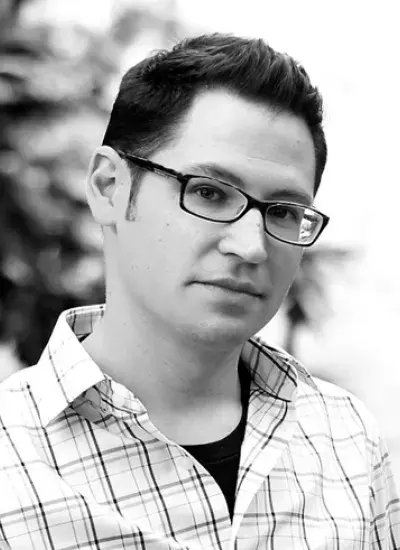
Sean Welleck is an Assistant Professor at Carnegie Mellon University's School of Computer Science, specifically within the Language Technologies Institute (LTI). He leads the L3 Lab and serves as an advisor for the AI for Math Fund. His academic journey includes a PhD from New York University under Kyunghyun Cho and postdoctoral positions at the Allen Institute for Artificial Intelligence and the University of Washington with Yejin Choi. Dr. Welleck's educational background shows a strong foundation in computer science. He earned his PhD in Computer Science from New York University, where he worked under the mentorship of Kyunghyun Cho and Zheng Zhang. Prior to this, he completed his MSE and BSE in Computer Science from the University of Pennsylvania, demonstrating a long-standing commitment to the field. Dr. Welleck's research focuses on bridging informal and formal reasoning with AI, with particular emphasis on developing learning, inference, and evaluation algorithms for large language models. His work spans multiple cutting-edge areas including mathematical reasoning , code generation , inference algorithms , and AI reasoning agents . A significant portion of his recent work involves combining AI with formal methods for mathematics, where he has developed frameworks like Llemma (an open-source language model for mathematical reasoning) and meta-generation (for inference-time algorithms). His research is characterized by a strong theoretical foundation coupled with practical applications that push the boundaries of what AI systems can achieve in formal reasoning domains. Analysis of Dr. Welleck's recent publications reveals a clear research trajectory focused on enhancing language models' capabilities in formal reasoning and mathematical problem-solving. His work demonstrates an evolution from foundational research in neural text generation to increasingly sophisticated approaches that integrate formal methods with deep learning. Key trends include the development of inference-time algorithms that improve model performance without additional training, frameworks for mathematical reasoning that connect informal and formal proofs, and novel evaluation methodologies for language models. His publications consistently appear in top-tier conferences including NeurIPS, ICLR, ICML, and ACL, reflecting the high impact of his contributions to the field. Dr. Welleck's scientific achievements have been recognized with several prestigious awards: NAACL 2025 Best Paper Award ICLR 2025 Oral Presentation (Top 2%) ICLR 2025 Spotlight Presentation (Top 5%) NeurIPS 2021 Outstanding Paper Award (Top 0.1%) for MAUVE NVIDIA AI Labs Pioneering Research Award (2017 and 2018) As an educator and mentor, Dr. Welleck actively guides the next generation of AI researchers. He currently advises multiple PhD students including Pranjal Aggarwal, Weihua Du, Andre He, and Seungone Kim (some co-advised with other faculty), along with MS students Riyaz Ahuja, Jiewen Hu, Qinyue Tan, and Thomas Zhu, and undergraduate Tate Rowney. At CMU, he teaches advanced courses such as Neural Code Generation and Advanced NLP, and has previously taught at New York University and the University of Washington. His commitment to education extends to creating resources like the Thesis Review Podcast and developing tutorials on neural theorem proving that have been presented at major conferences. Dr. Welleck leads the L3 Lab at CMU, which focuses on the intersection of language, learning, and logic. The lab brings together students and researchers to tackle challenging problems in AI reasoning, with particular emphasis on mathematical reasoning and code generation. Recent initiatives include the development of Llemma, an open-source language model specialized for mathematical reasoning, and work on inference-time algorithms that enable language models to improve their performance through additional computation during inference rather than through additional training.
Aayush Jain is an Assistant Professor in the Computer Science Department at Carnegie Mellon University. Previously, he was a Postdoctoral Fellow at NTT Research and a PhD student at UCLA, advised by Professor Amit Sahai. His work bridges theoretical and applied cryptography with core computer science principles. Education PhD in Computer Science, University of California, Los Angeles (UCLA) Postdoctoral Fellowship, NTT Research Research Focus His research explores: foundational cryptography, indistinguishability obfuscation, functional encryption, lattice-based cryptography, secure multi-party computation, and post-quantum security. Work emphasizes rigorous theoretical frameworks with practical implications. Publication Trends Recent articles (2021-2024) demonstrate consistent focus on cryptographic primitives, obfuscation techniques, and security reductions. Dominant venues include CRYPTO, EUROCRYPT, FOCS, and STOC with emerging work in machine learning interfaces. Awards Best Paper Award at STOC 2021 for foundational contributions to indistinguishability obfuscation Advising and Collaboration Current PhD advisees: Alper Cakan, Quang Dao (co-advised), Sagnik Saha, Noah Singer (co-advised). Mentored postdocs: Mitali Bafna (2022-2023) and Rex Fernando (2022-2023). Teaches graduate courses in cryptography and theoretical tools. Leadership Leads the CMU Cryptography research group; organized the CMU Cryptography Workshop. Program committee member for FOCS, TCC, ITCS, and ICALP.
Daniel Cardoso Llach is an Associate Professor at Carnegie Mellon University's School of Architecture , where he chairs the Master of Science in Computational Design program and co-directs the CoDe Lab . His scholarship merges history, science and technology studies (STS), and computational design , focusing on the cultural and socio-technical dimensions of design automation. Education: PhD and MS in Architecture: Design and Computation from MIT , BArch from Universidad de los Andes Research Grants: Supported by the Graham Foundation for historical CAD exhibitions and by the Alexander Von Humboldt Foundation for postwar computational design research in Germany His work interrogates the politics of software, the materiality of computational systems , and the ethical implications of AI/robotics in architectural practice. Recent projects include reconstructing early CAD systems and analyzing data-driven urban technologies. Scientific awards include: Alexander Von Humboldt Fellowship (2024–2025) ACM CSCW Methods Mention for emulation-based software research (2021)
Andrew O. Arnold is a Principal Applied Machine Learning Engineer at Shopify and an Adjunct Professor at New York University's Tandon School of Engineering, Department of Finance and Risk Engineering. He earned his Ph.D. in Machine Learning from Carnegie Mellon University and a BA in Computer Science and Artificial Intelligence from Columbia University. Education Ph.D., Machine Learning, Carnegie Mellon University BA, Computer Science and Artificial Intelligence, Columbia University His research focuses on robust machine learning , developing models that perform well in low signal-to-noise regimes, handle distributional shifts (transfer learning), and extract features from unstructured data. Key applications include time series analysis and natural language processing in financial and other domains. Recent publications highlight work on large language models (LLMs) for code generation, including multitask pretraining, contrastive learning, and quantization techniques for efficiency. He has contributed to understanding model robustness and adapting NLP methods to dynamic market conditions. Arnold teaches NYU FRE GY 7871: News Analytics and Machine Learning , covering NLP and ML techniques for quantitative trading strategies. The course emphasizes practical applications of sentiment analysis, text relevance, and novelty detection in financial contexts. He has led teams at Amazon Web Services (AI Labs), served as Chief Scientist at Oracle Alpha, and worked at Microsoft Research, IBM Research, and other institutions. His technical expertise spans code generation , anomaly detection , and NLP for commerce , with patents in these areas.
Claire Le Goues is an Associate Professor in the School of Computer Science at Carnegie Mellon University , affiliated with the Software and Societal Systems Department (formerly Institute for Software Research). She holds a Ph.D. and M.S. in Computer Science from the University of Virginia and a B.A. in Computer Science from Harvard College. Her research focuses on software engineering with emphasis on program analysis , transformation , and search-based repair . She leads the squaresLab group and co-directs the REUSE@CMU summer program. Her work spans automated program improvement (stochastic/formal approaches), software assurance, quality metrics, and systems from open source to robotics. Recent scientific awards include the ACM FSE 2025 Test of Time Award Honorable Mention and the Presidential Early Career Award for Scientists and Engineers (PECASE) . She mentors students in software engineering and actively collaborates on projects like SearchRepair and GenProg , supporting empirical benchmarks such as ManyBugs and IntroClass . She teaches software engineering and program analysis at undergraduate, master’s, and doctoral levels, addressing challenges in scaling modern systems. Her lab focuses on software repair , code transformation , and AI-driven testing .
Eric P. Xing is a Professor at the Language Technologies Institute of Carnegie Mellon University , and currently serves as President of the Mohamed bin Zayed University of Artificial Intelligence . His work bridges machine learning methodology with computational biology and large-scale AI systems . Research Focus: Developing machine learning theory for high-dimensional, dynamic data Building foundation models for biology (AIDO, scLong, ProteinAligner) Designing scalable AI architectures (Pollux, LLM360, PAN) Advancing interpretable and controllable NLP systems Scientific Leadership: Founded the SAILING Lab at CMU Co-chaired ICML 2014 and ICML 2019 Recipient of the Jay Lepreau Best Paper Award (OSDI 2021) Education & Mentorship: Advises PhD students across machine learning and computational biology Alumni include faculty at ETH Zurich, University of Chicago, and UC San Diego
Barbara Shinn-Cunningham is the Glen de Vries Dean of the Mellon College of Science at Carnegie Mellon University (CMU) and holds professorships in Psychology, Biomedical Engineering, and Electrical and Computer Engineering. She is also the founding director of CMU's Neuroscience Institute. Her research focuses on auditory neuroscience, particularly auditory attention, binaural hearing, and multisensory integration, with applications to hearing disorders and assistive technologies. Shinn-Cunningham earned her B.S. from Brown University and her M.S. and Ph.D. from MIT in Electrical and Computer Engineering. Education: B.S., Electrical Engineering, Brown University (1986) M.S., Electrical & Computer Engineering, MIT (1988) Ph.D., Electrical & Computer Engineering, MIT (1994) Research Interests: She investigates how the brain processes sound in complex environments, including spatial hearing, auditory attention deficits in aging and clinical populations, and the neural mechanisms underlying cochlear synaptopathy. Her work integrates behavioral studies, neuroimaging (EEG, fMRI), and computational modeling to bridge basic science and translational research. Awards & Recognition: Fellow, Acoustical Society of America (2009) Alfred P. Sloan Research Fellow (2000) National Security Science and Engineering Faculty Fellow (2008) Helmholtz-Rayleigh Interdisciplinary Silver Medal (2019) Advising & Grants: She mentors a diverse team of graduate students and postdocs, focusing on training the next generation of auditory neuroscientists. Her grants include funding from NSF, NIH, and the Department of Defense. She leads the LiMN Lab, which explores neural mechanisms of sensory processing and attention. Labs & Teams: Director of the Lab in Multisensory Neuroscience (LiMN) at CMU, part of the Carnegie Mellon Neuroscience Institute. Collaborates with engineers, clinicians, and marine biologists to advance auditory technology and neuroimaging techniques.
Tanya Marwah is a Research Fellow at the Simons Foundation , collaborating with Polymathic AI . She earned her PhD from Carnegie Mellon University's Machine Learning Department, co-advised by Prof. Andrej Risteski and Prof. Zachary Lipton, and holds a master's degree from CMU's Robotics Institute. Her research bridges Machine Learning and Scientific Computing , focusing on generative modeling , inverse problems , and building scientific agents . Her work explores theoretical and empirical foundations for applying ML to differential equations, with key contributions in neural operators , memory mechanisms , and edge embeddings in GNNs . Recent publications highlight trends in PDE solvers via LLMs , cross-modal adaptation , and implicit regularization in SGD . She has received the prestigious Siebel Scholar award and actively contributes to top ML venues (NeurIPS, ICML, ICLR, TMLR). Her collaborations span institutions including Carnegie Mellon University, Polymathic AI, and CMU's Robotics Institute.
Jignesh Patel is a Professor in the Computer Science Department at Carnegie Mellon University, specializing in database systems and data-intensive computing. His research focuses on hardware-software synergy for high-performance databases and democratizing data analytics through no-code interfaces. He co-founded DataChat, a startup focused on intuitive data analytics platforms. He holds fellowships from AAAS, ACM, and IEEE, along with teaching awards. His work emphasizes building systems that leverage novel hardware and user-friendly interfaces. Research interests include scalable data platforms, LLM-based query interfaces, and optimizing database performance through hardware collaboration. Notable projects include the Quickstep data platform and the Ava conversational interface. Awards: Fellow of AAAS, ACM, IEEE; Multiple Teaching Awards Labs/Teams: CRISP (Intelligent Storage and Processing), DataChat startup
Andrew Pavlo is an Associate Professor of Databaseology in the Computer Science Department at Carnegie Mellon University , part of the School of Computer Science . His research focuses on database systems, particularly self-driving architectures, transaction processing, and large-scale analytics. He is a member of the CMU Database Group and Parallel Data Laboratory. His awards include the NSF CAREER (2019), Sloan Fellowship (2018), and ACM SIGMOD Jim Gray Dissertation Award (2014). He co-founded OtterTune, a database tuning startup, though it later ceased operations. Current research interests emphasize autonomous database systems, query optimization, and distributed computing. Recent publications (2024) highlight work on self-driving DBMS, null representation in columnar formats, and UDF optimization techniques. Awards: NSF CAREER Award (2019) Sloan Fellowship (2018) ACM SIGMOD Jim Gray Dissertation Award (2014) Advising: Mentors students in database systems, including Sam Arch, Wan Shen Lim, and William Zhang. Labs/Teams: Leads the Database Group and collaborates with the Parallel Data Laboratory.
Ralf Brown is a Principal Systems Scientist at Carnegie Mellon University's School of Computer Science, affiliated with the Language Technologies Institute (LTI). His research focuses on machine translation , language identification , and digital forensics , with notable contributions like the open-source CMU-EBMT system and the LTI LangID Corpus for 2000+ languages. Academic Roles: Research faculty since 1993, teaching courses like Coding & Algorithms Bootcamp and MIIS Capstone Project . Research Interests: Multilingual processing, example-based translation, low-resource languages, and text mining. Scientific Contributions: Authored 15+ publications on EBMT, corpus indexing, and context-sensitive translation. Developed tools for digital forensics (corrupted ZIP recovery) and language identification at scale. Awards: IJCAI Distinguished Paper Award Allen Newell Award for Research Excellence Open-Source Contributions: Key developer of darktable image editor Maintainer of the Interrupt List and other technical resources
Tze Meng Low is an Associate Research Professor in the Department of Electrical and Computer Engineering at Carnegie Mellon University (CMU), part of the College of Engineering. His research focuses on high-performance algorithms, formal methods, and hardware-software co-design, with an emphasis on achieving performance portability across architectures. He holds a Ph.D. and M.S. in Computer Science and dual B.A./B.S. degrees in Economics and Computer Science from the University of Texas at Austin. His research interests span parallel computing, graph algorithms, machine learning, and cyber-physical systems. He has contributed to projects like the DARPA BRASS initiative, collaborating on adaptive software systems for resource-challenged environments. His work also involves developing tools such as SMaLL and qLD, which address challenges in machine learning library instantiation and genomic analysis. Low has received the Dean’s Early Career Fellowship (2022) and led the $2.7M DARPA-funded BRASS project (2016–2020), supported by SpiralGen, Inc. and academic collaborators. His contributions include code generation frameworks like SPIRAL and advancements in linear algebra-based graph algorithms, emphasizing analytical models and automated code optimization. His research bridges theoretical formal methods with practical implementations, aiming to enhance software reliability and scalability in emerging domains. Collaborations include work on fault-tolerant coded computing and high-assurance systems for cyber-physical applications.
Majd Sakr is a Teaching Professor at the Computer Science Department of Carnegie Mellon University (CMU), where he has been actively involved in curriculum development, educational research, and project-based teaching since 2007. His academic career spans teaching courses like 15-319/15-619: Cloud Computing , 15-719: Advanced Cloud Computing , and 15-213: Introduction to Computer Systems , with course materials available across multiple CMU global campuses. He is affiliated with the Technology for Effective and Efficient Learning (TEEL) Lab , which focuses on learning methods, technology for learning systems, and workforce training. Research Interests include: Online and technology-enhanced learning Cloud computing systems and infrastructure Cross-cultural human-robot interaction (HRI) with a focus on Arabic accents Curriculum development for AI/workforce training Recent Article Trends analyze generative AI in education, cloud computing performance optimization, and collaborative programming pedagogy. His work explores LLMs' efficacy in programming assessments, auto-grading feedback, and cross-cultural HRI dynamics. Scientific Awards : Best Paper Award, Fourteenth International Conference on Machine Learning (1996) Grants & Collaborations include AWS Educate, Microsoft Azure Educator Grant, and Google Cloud Platform support for his cloud computing courses. He has co-authored publications with colleagues on AI workforce training, data pipeline analysis, and AI-driven collaborative learning frameworks.
Adam Perer is an Associate Professor at Carnegie Mellon University, where he is a member of the Human-Computer Interaction Institute within the School of Computer Science. He serves as Co-Director of the Data Interaction Group and holds leadership positions as Area Papers Chair at IEEE VIS and Visualization Subcommittee Papers Chair at ACM CHI. Previously, he worked as a Research Scientist at IBM Research. Ph.D. in Computer Science from the University of Maryland, College Park Perer's research integrates data visualization and machine learning techniques to create visual interactive systems that help users make sense of big data. His work focuses on human-centered data science, extracting insights from clinical data to support data-driven medicine, and facilitating human-AI collaboration. He investigates how people engage with and make decisions using data, designing new interfaces to interact with complex information while assisting impactful domains drowning in data. His recent publications reveal a strong trend toward healthcare applications of AI and visualization, particularly in clinical decision support and overdose prevention. There's also a significant focus on explainable AI (XAI), with multiple papers examining how imperfect explanations affect human-AI collaboration and decision-making in critical contexts like healthcare. His work consistently bridges visualization theory with practical applications in high-stakes domains. Best Paper Honorable Mention for 'Dead or Alive: Continuous Data Profiling for Interactive Data Science' (VIS 2023) Best Paper for 'Neo: Generalizing Confusion Matrix Visualization' (CHI 2022) Most Reproducible Paper Award for 'SQLShare' (SIGMOD 2016) Perer actively mentors students across all levels, with PhD students focusing on human-AI collaboration in healthcare settings, visualization techniques, and clinical decision support systems. His lab receives funding for projects related to human-centered AI, data visualization in healthcare, and explainable machine learning systems. The Data Interaction Group, which he co-directs, focuses on empowering everyone to analyze and communicate data through interactive systems. His research has been supported by collaborations with medical institutions and appears in premier venues for visualization, human-computer interaction, and medical informatics. Current projects include Eye into AI (improving XAI interpretability), Predicting and Visualizing Overdose Risk, and AI applications in intensive care units.