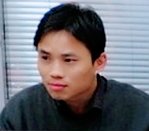
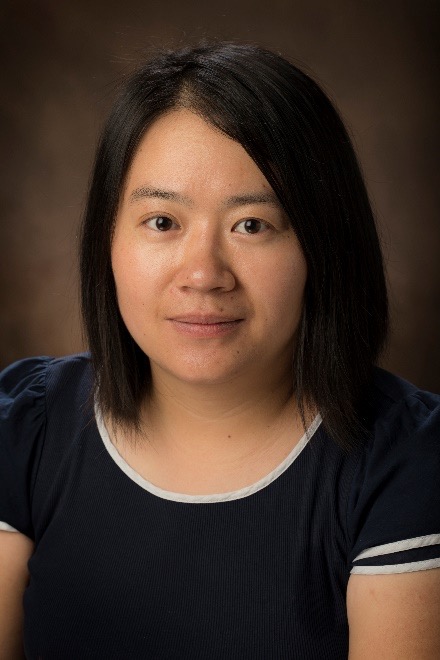
Chris Spencer is a Wellcome Trust Career Development Fellow at the Nuffield Department of Medicine, University of Oxford. His research focuses on statistical genetics, with emphasis on African population genetics, malaria susceptibility (via the MalariaGEN consortium), and stratified medicine applications in hepatitis C (STOP-HCV consortium). He develops methodologies to analyze genetic determinants of host-parasite interactions and their role in disease prevention and treatment. His work explores infectious disease impacts on human immune physiology through natural selection, aiming to translate genetic insights into clinical strategies. Recent studies include structural variation in malaria resistance genes and polymorphisms linked to pneumococcal bacteremia in Kenyan children. His computational tools, such as FINEMAP, advance variable selection in genome-wide association studies. Publications span malaria genetics, viral resistance, and population admixture, reflecting a multidisciplinary approach to genomic medicine. Collaborations with global consortia highlight his commitment to addressing global health challenges through genetics.
Tushar Sharma is an Assistant Professor at the Faculty of Computer Science, Dalhousie University, Canada. His research focuses on software code quality , refactoring , sustainable AI , and machine learning for software engineering (ML4SE) . He holds a PhD in Software Engineering from Athens University of Economics and Business (2019) and an MS in Computer Science from IIT-Madras (India). Current affiliations: Dalhousie University, SMART Lab, IEEE Senior Member Past experience: Siemens Research (2019-2021), Siemens Corporate Technology (2008-2015) Research interests span code quality assessment, technical debt management, and sustainable AI. He founded Designite , a widely used software design quality assessment tool, and contributed to the book Refactoring for Software Design Smells . Recent work examines energy-efficient language models for code, reproducibility issues in configuration scripts, and human-guided code smell detection. Publication trends reveal expertise in code smell detection, refactoring techniques, and green AI. His articles address topics like commit message generation, model quantization, and empirical studies on code quality. Collaborative efforts include tools like DesigniteJava 2.0 and frameworks for attention mechanisms in code language models. Scientific recognition: Dean's Research Excellence Award (2025), Best Artifact Award (SCAM 2023) Grants: Mitacs Accelerate grants ($225K, $15K, $30K), NSERC Discovery Grant ($154M CFREF climate action project), DRA computing resources ($51K) He actively contributes to academic service as PC Co-chair (ICSE 2024), editorial board member (JSS), and organizer of workshops on technical debt. His media coverage highlights environmental impacts of AI and software quality challenges.
Stefan Marr is a faculty member at the University of Kent, United Kingdom, focusing on Concurrent Programming , Language Implementation , and Virtual Machines . His research spans projects like optimizing interpreters, improving concurrency models, and enhancing profiling tools for dynamic languages. Projects : Royal Society Industry Fellowship (FastStart), EPSRC-funded CaMELot, Oracle Labs-funded Automatic Superinstructions. Collaborations : With students and researchers across institutions, including Shopify, Vrije Universiteit Brussel, and Johannes Kepler University Linz. His recent work emphasizes profiling reliability for Java, interpreter performance , and tooling for complex concurrent systems . Projects like SOM (Simple Object Machine) and its variants (SOM++, TruffleSOM, PySOM) highlight his commitment to language implementation research and education. Scientific Awards include fellowships and grants from the Royal Society, EPSRC, and Oracle Labs. His contributions to conferences as program committee member , steering committee , and workshop organizer further underscore his academic leadership.
Farzad Farnoud is an Assistant Professor in the Electrical and Computer Engineering and Computer Science Departments at the University of Virginia. His research focuses on information theory, coding theory, computational biology, and machine learning, with applications in DNA storage and genomic data analysis. He holds a Ph.D. in Electrical and Computer Engineering from the University of Illinois (2013) and postdoctoral experience at Caltech. Education: B.S. in Electrical Engineering (Sharif University of Technology, 2006) M.S. in ECE (University of Toronto, 2008) M.S. in Mathematics (UIUC, 2012) Ph.D. in ECE (UIUC, 2013) Postdoc at Caltech (2013–2016) His research interests span information-theoretic analysis of biological datasets, coding for DNA storage, stochastic modeling of genomic mutations, and rank aggregation algorithms. Notable contributions include error-correcting codes for duplication channels and frameworks for metagenomic data analysis. Recent work includes studies on short-duplication error correction (2023), active ranking algorithms (2022), and heterogeneous rank aggregation (2020). He has received the Robert T. Chien Memorial Award (2013) and the IEEE Data Storage Best Student Paper Award (2014). Teaching includes courses on computational biology, statistical learning, and graphical models. He leads the Information Processing + Storage Lab, focusing on interdisciplinary challenges in data storage and analysis.
Camille Berthelot is a Principal Investigator and head of the Comparative Functional Genomics research group at the Institut Pasteur in Paris, France. Her work lies at the intersection of evolutionary biology, genomics, and reproductive physiology, with a focus on understanding how genomic changes drive evolutionary innovations in vertebrates, particularly the evolution of menstruation in primates. Her research leverages cutting-edge technologies including single-cell RNA sequencing, organoid models, and computational frameworks to compare gene expression and regulation across species such as humans, macaques, and mice. She investigates how evolutionary changes in gene function contribute to novel traits and how these relate to diseases like endometriosis. A major focus is the use of menstrual fluid as a non-invasive biomarker source for endometriosis, a direction highlighted in her systematic review published in Reproductive Biology and Endocrinology . Her recent publications span high-impact journals such as Science , Genome Research , and Nature Ecology & Evolution , covering topics from teleost fish phylogeny to regulatory evolution in mole-rats. These works reveal a consistent trend in using comparative genomics to decode deep evolutionary questions, often in collaboration with institutions like QMUL and INSERM. ERC Starting Grant (EVOMENS) – Decoding the genetics of menstruation evolution in primates Collaborative project on hypoxia adaptation in mole-rats Development of bioinformatics tools like FINSURF for non-coding variant classification She actively mentors a team of postdocs, PhD students, and master’s interns, including Claire Lavergne, Leo Zeitler, and Eulalie Liorzou. Former members such as Malgorzata Gazda and Axelle Brulport have gone on to independent academic positions, reflecting her role in training next-generation scientists. Camille Berthelot returned from maternity leave in June 2024 and remains actively engaged in research, publication, and team leadership at the Institut Pasteur.
Marc Robinson-Rechavi is a Professor at the University of Lausanne, Faculty of Biology and Medicine, Department of Ecology and Evolution. He leads the Evolutionary Bioinformatics Group , focusing on genome evolution and developmental biology (Evo-Devo) through the creation of databases like Bgee and MoultDB . Core projects: Bgee (gene expression database), MoultDB (arthropod molting genetics), SelectomeDB (positive selection) Collaborations: Paleontology, genome biology, and experimental Evo-Devo groups Research interests include linking developmental processes to genome evolution , with emphasis on gene duplication, regulatory sequence evolution, and molecular convergence. His work has significant applications in cancer research , agriculture , and biomedical studies . The group's publications (2020-2025) demonstrate expertise in single-cell transcriptomics , ontologies , and computational methods . Projects often involve ray-finned fishes , amphioxus , and arthropod diversity , with tools like OMAmer and Bio-SODA expanding bioinformatics capabilities. Current students and former group members have contributed to diverse projects including: Arthropod molting mechanisms Venom gland evolution Sex-biased gene expression Positive selection in human evolution
Ryan Schott is an Assistant Professor in the Department of Biology at York University, affiliated with the Centre for Vision Research and the Connected Minds initiative. His research focuses on understanding how vertebrate visual systems evolve and adapt to environmental pressures, combining comparative genomics, transcriptomics, and experimental approaches. He leads the Schott Lab, which explores topics such as photoreceptor evolution, fossorial adaptation, and developmental mechanisms in amphibians, squamates, and turtles. His work integrates ecological, genetic, and developmental perspectives to address questions about visual system diversification. Current projects include studying visual evolution in amphibians, the molecular basis of novel photoreceptor types, and convergent adaptations in fossorial vertebrates. Schott collaborates internationally with experts in evolutionary biology, genomics, and ecology. Publications highlight his contributions to understanding opsins, lens morphology, and retinal adaptations across species. He is active in training graduate and undergraduate students, offering opportunities in evolutionary and developmental research. His lab also develops bioinformatic tools for genomic analyses.
Dr. Madhusudan Choudhary is a Professor in the Department of Biological Sciences at Sam Houston State University. He holds a Ph.D. from McMaster University and completed post-doctoral training at Duke University. His research laboratory focuses on microbial genetics, genomics, and bioinformatics using Rhodobacter sphaeroides as a model organism to study bacterial cell-cycle regulation, metabolic innovations through gene duplication, and the evolution of genomic complexity in prokaryotes. Key investigations include chromosome replication origins, duplicate gene expression patterns, and the functional specialization of multipartite genomes. Dr. Choudhary's research spans diverse areas including bacterial responses to microgravity, CRISPR-Cas systems, heavy metal resistance mechanisms, and nanoparticle interactions. He directs studies on transcriptomics under stress conditions and develops computational methods for genome analysis. His work has significant implications for understanding microbial evolution and environmental adaptation.
Andrea Mocci is a Lecturer at the Faculty of Informatics of the Università della Svizzera italiana (USI). His work focuses on software engineering methodologies, developer productivity, and IDE interaction analysis. He is affiliated with the Software Institute and actively contributes to academic events such as the IEEE International Workshop on Mining and Analyzing Interaction Histories (MAINT). His research explores empirical software engineering techniques, including developer behavior analysis, code documentation improvement, and the application of natural language processing to software artifacts. Key areas of investigation include: IDE interaction and navigation efficiency Code redundancy and quality metrics Video tutorial analysis for educational content Runtime systems and annotation APIs Defect prediction and software maintenance Publications from 2016-2020 highlight trends in developer-centric tools, holistic recommender systems, and visualization techniques for software evolution. His work often bridges theoretical formal methods with practical developer workflows, aiming to improve both software quality and developer productivity through empirical studies and tool development.
Gregory Gay is an Associate Professor in the Interaction Design and Software Engineering division within the Department of Computer Science and Engineering at Chalmers University of Technology and the University of Gothenburg, Sweden. His academic profile spans numerous software engineering conferences where he has served as committee member, program chair, and active researcher since at least 2018. Dr. Gay's research focuses on the intersection of software engineering and artificial intelligence, with particular emphasis on: Software Testing and Analysis Search-Based Software Engineering AI for Software Engineering (AI4SE) AI Engineering Automation of development tasks Software Carbon Footprint and sustainability His recent publications demonstrate a strong trend toward applying AI and optimization techniques to software testing challenges, with increasing focus on sustainability aspects of software development. Many studies take an industrial perspective, examining real-world applications in automotive software systems. His work blends theoretical foundations with practical applications, making significant contributions to both academic research and industrial practice in software engineering. Dr. Gay has been actively involved in numerous top software engineering conferences including ASE, ICSE, ESEC/FSE, ISSTA, and ICST, serving on program committees and organizing tracks. His research methodology typically combines optimization, artificial intelligence, and machine learning to help developers deliver complex systems in a safe, secure, and efficient manner.
Haipeng Cai serves as an Associate Professor in the Department of Computer Science and Engineering at the University at Buffalo, SUNY. His academic work spans software engineering, program analysis, and software security with particular emphasis on adaptive analysis techniques for mobile and distributed systems. His research interests center on adaptive/data-driven static and dynamic analysis for security applications targeting mobile apps, distributed systems, and multilingual software. Current work focuses on enhancing vulnerability detection, cross-language bug analysis, and automated security tooling through machine learning approaches. His lab produces tools like VinJ for vulnerability data generation and PolyFax for multilingual software characterization. Recent publications reveal strong trends in multilingual system security and AI-enhanced analysis , with 15+ papers since 2022 addressing cross-language vulnerabilities, Android security, and learning-based vulnerability detection. His work bridges theoretical program analysis with practical security applications in real-world software ecosystems. As an active academic contributor, he serves on program committees for major conferences including ASE, ICSE, and FSE, and will deliver a keynote at PROMISE 2025. His leadership includes journal-first paper chair roles and session chair positions at top software engineering venues. Dr. Cai maintains an active research presence through his personal website , GitHub repository ( github.com/chapering ), and academic social media profiles, with consistent contributions to the software engineering research community since 2018.
Justus Kebschull is an Assistant Professor in the Department of Biomedical Engineering at Johns Hopkins University School of Medicine. His research bridges neuroscience, genomics, and molecular engineering to understand brain structure, evolution, and function across vertebrates. He is affiliated with the Biomedical Engineering Program and the Neuroscience Training Program, mentoring graduate students and leading a dynamic research lab. Research Interests: Dr. Kebschull's work focuses on neural circuits , connectomics , and molecular neuroscience , with a strong emphasis on evolutionary perspectives. He develops and applies cutting-edge technologies such as MAPseq, BRICseq, in situ sequencing, single-cell RNA-seq, and viral tracing to map brain connectivity and gene expression at single-cell resolution. His lab investigates how brain regions and cell types evolve, how circuits adapt to new functions, and how these principles are disrupted in neurodevelopmental disorders and addiction. Publication Trends: His recent publications highlight a strong focus on comparative connectomics , cerebellar evolution , and high-throughput neuroanatomical methods . His work integrates connectivity data with transcriptomic and functional activity profiles, enabling a systems-level understanding of brain organization. Key themes include circuit duplication in brain evolution, scalability of neural mapping, and cross-species analysis from mice to sharks. Scientific Recognition: While no specific awards are listed, his publication record in top-tier journals such as Science , Nature , Cell , and Neuron reflects significant scientific impact and recognition in the neuroscience community. Advising and Research Support: Dr. Kebschull actively mentors graduate students and postdoctoral researchers. His lab is expanding and currently recruiting PhD students, postdocs, and technicians. His research is supported by competitive funding, enabling the development of novel tools for brain mapping and disease modeling. Research Environment: The Kebschull Lab is a highly interdisciplinary team situated at the intersection of neuroscience, synthetic biology, virology, and computational biology. The lab fosters innovation in molecular tool development and applies these to fundamental questions in brain evolution and disease. Ongoing projects include high-throughput comparative connectomics, developmental mechanisms of circuit formation, and the impact of drugs and disorders on neural architecture.
Professor Thomas Richards is a Professor of Evolutionary Genomics at the University of Oxford and a Royal Society University Research Fellow. His research focuses on understanding the origins and diversification of eukaryotic cellular complexity through phylogenomic, cell biological, and molecular approaches. Current research themes include phylogenomic analysis of gene ancestry, endosymbiosis mechanisms, and environmental DNA studies of microbial diversity. His work spans disciplines such as evolutionary genomics, microbial ecology, and systems biology, addressing questions like how endosymbioses form and how uncultured protists contribute to biodiversity. Key projects include studies on pathogen evolution, transporter proteins, and the genetic networks governing symbiotic interactions. Prof. Richards has published extensively on topics like membrane permeability, genetic code reassignments, and the evolution of eukaryotic microbes. His awards include the Royal Society University Research Fellowship, recognizing his contributions to understanding microbial and eukaryotic evolution.
Dr. Meixia Zhao is an Assistant Professor in the Department of Microbiology & Cell Science at the University of Florida. Previously, she held positions at Miami University (2018–2022) and was a postdoctoral researcher at Purdue University (2013–2017). She earned her PhD in Biochemistry and Molecular Biology from the Chinese Academy of Agricultural Sciences, with a visiting PhD in Plant Genetics at Purdue University. Her research focuses on using computational and functional genomic approaches to study genome evolution, epigenetic regulation of meiotic recombination, and plant-microorganism interactions in maize and soybean. Key areas include transposable element function, epigenetic silencing mechanisms, and disease resistance pathways. Her lab investigates mechanisms underlying maize and soybean immunity to pathogens like Phytophthora sansomeana , leveraging comparative genomics, epigenomics, and transcriptomics. Recent studies explore the role of DNA methylation, small RNAs, and histone modifications in regulating plant defense responses. She also examines sex-specific differences in meiotic recombination and the evolutionary consequences of polyploidization. Dr. Zhao has mentored over 20 graduate and undergraduate students, including those in the Plant Molecular and Cellular Biology (PMCB) program. Her work has been published in high-impact journals, focusing on topics like transposable element silencing, epigenetic variation, and crop disease resistance. The Zhao Lab collaborates with other groups to advance understanding of plant-microbe interactions and translational applications in agriculture.
Sherif Abou Elela is a researcher affiliated with the University of Sherbrooke and its Centre de recherche du CHUS . His work focuses on RNA processing, stability, and alternative splicing, with implications in cancer biology and gene expression regulation. Education: Postdoctorate, University of California, Santa Cruz (1997) PhD in Biology, University of Guelph (1994) BSc, University of Qatar (1987) Research Interests: RNA processing and stability in gene expression, splicing program modulation in cancer and stress, snoRNA biology, yeast RNA metabolism, and RNA-binding proteins. He explores how RNA decay and splicing mechanisms can inform mammalian models and human disease diagnostics. Article Trends: Recent work emphasizes snoRNA annotation tools (e.g., SnoBIRD), stress-induced splicing adaptations (cells resist starvation), yeast RNase III roles in gene regulation, and cancer-specific non-coding RNA interactions (e.g., H/ACA snoRNAs). Computational approaches (snoDB, SAPFIR, snoGloBe) and yeast as a model organism are recurring themes. Patents & Contributions: He holds patents for methods to reprogram splice site selection and cancer biomarker discovery. He organized the Ribo Club conference, indicating leadership in RNA research.