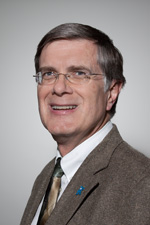
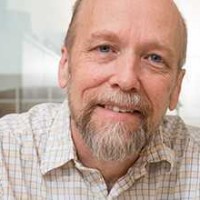
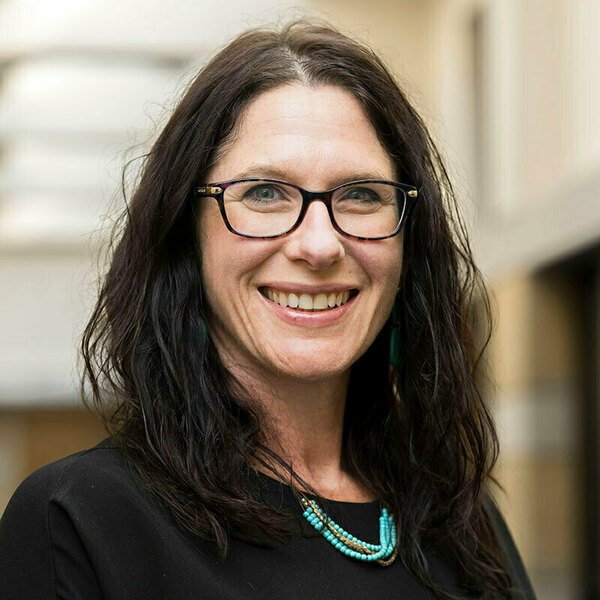
Prof. Dr.-Ing. Guido Kramann is a faculty member at Brandenburg University of Technology in the Department of Technology. His academic work bridges mechatronics and computational music, emphasizing innovative intersections between engineering and artistic practice. Affiliation: Brandenburg University of Technology Department: Technology Location: Engineering Science Center (IWZ), Room 403, Brandenburg an der Havel, Germany Guido's research spans mechatronics, algorithmic music generation, and human-computer interaction. He explores arithmetic-based grammars and evolutionary processes for real-time musical composition, focusing on accessibility for laypeople and phenomenological efficacy in technical systems. His publications reflect a recurring interest in: Ubiquitous music and interactive soundscapes Phenomenological approaches to user interfaces Evolutionary algorithms for creative applications Harmonic unification in computational counterpoint He has contributed to conferences like CMMR, UbiMus, and EvoMUSART, though no scientific awards are documented here.
Philip Limerick is an Assistant Professor of Spanish at Centre College, where he joined the faculty in 2021. His academic work centers on the Spanish program, teaching courses from introductory Spanish to advanced linguistics and Hispanic studies. His educational background includes: BA in Spanish from Indiana University of Pennsylvania MA in Romance Languages with a Spanish Linguistics Concentration PhD in Romance Languages with a Hispanic Linguistics Concentration from the University of Georgia Limerick's research focuses on language variation and change, sociolinguistics, critical discourse analysis, and pragmatics. His current projects examine structural variation in Spanish spoken in Georgia and critical analyses of anti-racism discourse in Uruguay, emphasizing intersections of language with race, feminism, and social justice in Hispanic communities. His publication trajectory since 2017 reveals dominant trends in US Spanish variation (particularly subject pronoun expression), discourse marker functionality, and critical race linguistics. Notable thematic clusters include Mexican Spanish in the Southeastern US, Black feminist perspectives on anti-racism, and corpus-based analysis of language contact in emerging bilingual communities. Limerick founded the Corpus of Spanish in Georgia, a research initiative documenting semi-structured interviews with Latinx community members in Georgia to analyze language contact and variation patterns in the U.S. Southeast. While specific advising activities and grant funding aren't detailed in available records, his extensive publication output across journals like Hispania and International Journal of Bilingualism indicates active scholarly engagement with potential student collaborations and research support.
Christine Ekholst serves as Associate Professor (Senior Lecturer) in the Department of History at Uppsala University's Faculty of Arts, specializing in medieval Scandinavian legal and social history. She coordinates Erasmus exchanges for arts students and teaches international courses while leading significant research on disability and political propaganda in medieval contexts. Her academic foundation includes: MA in History, Stockholm University (2002) PhD in History, Stockholm University (2009) Caltech Postdoctoral Fellowship (2010) McGill University Postdoctoral Fellowship (2011) Ekholst's research demonstrates interdisciplinary innovation across medieval studies. Her seminal work examines gendered punishment in Swedish medieval law, while recent projects explore disability as historical construct and sexual transgressions in political propaganda . She uniquely bridges traditional archival research with digital humanities through analysis of Viking narratives on Swedish online forums, revealing contemporary historical perceptions. Current work includes a Swedish Research Council-funded disability study (2023-2026) and the "Only the Facts, Please" project analyzing historical discourse in digital spaces. Her publication trajectory shows evolving focus from gendered legal punishment to disability studies and digital historical reception, maintaining consistent methodology in Scandinavian legal source analysis while expanding into new interdisciplinary territories. Key recognitions include: Caltech Postdoctoral Fellowship (2010) McGill University Postdoctoral Fellowship (2011) Ekholst directs the Swedish Research Council-funded project on medieval disability (2023-2026) and leads the "Only the Facts, Please" initiative within Uppsala's Democracy and Higher Education program. While specific advisees aren't documented, her senior academic role involves mentoring graduate students in medieval history. She actively collaborates internationally, notably with Örebro University's Dr. Henric Bagerius on political sexuality research. As an integral member of Uppsala's historical research community, she contributes to the Democracy and Higher Education program while maintaining transnational collaborations that position Scandinavian medieval studies within broader European academic discourse.
Michael J. Prather is a UCI Distinguished Professor of Earth System Science at the University of California, Irvine, holding the Fred Kavli Endowed Chair from 2002-2013. He has served as Director of the UCI Environment Institute (2008-2013) and as a Jefferson Science Fellow at the U.S. Department of State (2005/2006, continuing as consultant until 2010). Prather is a leading atmospheric scientist with expertise in global atmospheric modeling, particularly as applied to atmospheric composition and climate change. Prather received his undergraduate degrees in Mathematics from Yale (1969) and Physics from Merton College, Oxford (1971), followed by a Doctorate in Astronomy and Astrophysics from Yale (1976). His academic career includes positions as Researcher at Harvard (1975-1985) and Goddard Institute for Space Studies (1985-1992), Program manager at NASA HQ (1987-1992), and Adjunct Professor in Applied Physics and Nuclear Engineering at Columbia University (1986-1992), before joining UC Irvine as Professor of Earth System Science in 1992. Prather's research focuses on simulation of the physical, chemical and biological processes that determine atmospheric composition. His work centers on development of detailed numerical models of photochemistry and atmospheric radiation, and global chemical transport models that describe ozone and other trace gases. Key areas of investigation include effects of volcanic sulfate aerosols on stratospheric ozone loss, role of clouds in scattering sunlight and altering photochemistry, and non-linearities in chemical systems that lead to sudden changes such as ozone depletion caused by CFC increases. His research group has developed important modeling tools including the Second-Order Moments (SOM) advection scheme and Fast-J photolysis code that are widely used in atmospheric chemistry models. Analysis of Prather's recent publications reveals a continued focus on atmospheric chemistry-climate interactions, with particular emphasis on understanding tropospheric ozone, methane lifetime, and stratosphere-troposphere exchange processes. His work increasingly integrates aircraft campaign data (particularly from NASA's ATom missions) with sophisticated modeling approaches to constrain chemical reactivity and transport in the remote atmosphere. The research demonstrates strong interdisciplinary connections between atmospheric chemistry, climate science, and environmental policy. Prather's scientific achievements have been recognized with numerous honors including: Norwegian Academy of Science and Letters (Foreign Member, 1999) Fellow of the American Geophysical Union (1997) Fellow of the American Association for the Advancement of Science (2004) NASA Medal for Exceptional Scientific Achievement (1992) Fellow of the American Meteorological Society (2024) Vilhelm Bjerknes Medal from the European Geosciences Union (2020) UCI Lauds & Laurels Faculty Award (2008) Throughout his career, Prather has advised numerous graduate students and postdoctoral researchers who have gone on to prominent positions in atmospheric science. His research has been supported by multiple federal agencies including NASA, NSF, and the Department of Energy. Prather has played significant roles in major international scientific assessments, serving as Lead Author for multiple UNEP/WMO Ozone Assessments (1985-2018) and as Convening Lead Author and Lead Author for several Intergovernmental Panel on Climate Change assessment reports (1994-2022). Prather directs a productive research group focused on atmospheric chemistry modeling, with current members including scientific programmer Xin Zhu and doctoral student Calum Wilson. His group has developed widely used atmospheric modeling tools including the Second-Order Moments (SOM) advection scheme and the Fast-J/Cloud-J photolysis modules. The group actively participates in major field campaigns such as NASA's ATom missions, analyzing aircraft measurements to improve understanding of global atmospheric composition.
Cédric Le Ruyet is a prominent researcher at the Conservatoire National des Arts et Métiers (CNAM) , affiliated with the CEDRIC Laboratory. His work spans Wireless Communications , Signal Processing , and 5G/6G Network Design , with a focus on Filter Bank Multicarrier (FBMC) systems, MIMO , and Cognitive Radio . He collaborates extensively with institutions like CEA-LETI and CNAM . His research interests include Channel Modeling , Resource Allocation , Beamforming , and Machine Learning in wireless contexts. He has contributed to Reconfigurable Intelligent Surfaces (RIS) for beam optimization and SCMA/OFDM codebook design. Recent publications highlight his work on QAM-FBMC systems, Rayleigh Fading Models , and 5G Network Coexistence . His articles often explore Distributed MIMO , Low-Complexity Equalizers , and Indoor Positioning via Channel State Information (CSI) . He has authored numerous IEEE Transactions and conference papers, with technical reports for projects like ANR POSEIDON and NF-PERSEUS . His methodologies integrate Genetic Algorithms , Lattice-Reduction , and Deep Learning for next-gen wireless systems.
Gail Murphy is a Professor in the Department of Computer Science and Vice-President Research & Innovation at the University of British Columbia (UBC). A co-founder of Tasktop Technologies Incorporated, she leads the Software Practices Lab and is affiliated with CAIDA (Centre for Artificial Intelligence Decision-making and Action) and ICICS (UBC Institute for Computing, Information and Cognitive Systems). B.Sc. (Honours), University of Alberta (1987) M.Sc., University of Washington (1994) Ph.D., University of Washington (1996) Her research focuses on software engineering , particularly improving knowledge worker productivity and tools for evolving large-scale systems. She combines lightweight design approaches with industrial evaluations, addressing structural degradation in software systems through: Techniques for understanding/imposing structure in existing systems Design approaches for component reuse and flexible architectures Her recent work includes developer discussion analysis for design recovery (2022), semantic-based task relevance detection (2022), and automated resource-task association (2023). Awards include SIGSOFT Outstanding Research Award (2023), ACM Fellow (2023), and Royal Society of Canada Fellow (2023). She has taught courses like Introduction to Software Engineering (CPSC 310) and Software Construction (CPSC 210).
Dr. John J Whitcomb, PhD, RN, CCRN, FCCM serves as a Professor and Director and Chief Academic Nursing Officer at Clemson University's College of Behavioral, Social and Health Sciences within the School of Nursing. With over 40 years of critical care experience, including 26 years in the United States Navy (1983-2009), he brings extensive clinical and leadership expertise to his academic role. His naval service included positions as Hospital Corpsman (1983-1991) and Navy Nurse, retiring as Commander (O-5), with notable assignments as Specialty Advisor to the Surgeon General for Critical Care Nursing and Trauma Training Officer for the White House Medical Staff during Operation Iraqi Freedom. Dr. Whitcomb's educational background includes a PhD in Nursing-Resuscitative Outcomes from the University of San Diego (2005), an MSN in Critical Care and Nursing Administration from Marymount University (1999), and a BSN in Nursing from the Medical University of South Carolina (1991). He teaches multiple nursing courses including Critical Care Nursing, Professionalism, Nursing Research, and Leadership and Management. His research focuses on critical care outcomes, with particular emphasis on resuscitative outcomes post-cardiac arrest, delirium in ICU settings, leadership development, ethical considerations in critical care, and undergraduate clinical education. Dr. Whitcomb has pioneered research on functional status assessment, family visitation policies, and sleep patterns in sedated patients using innovative monitoring technology. His recent scholarly work shows a strong trend toward healthcare system improvement, nursing education quality metrics, and critical care practice advancement. Dr. Whitcomb has received numerous prestigious honors including the Norma J. Shoemaker Award for Critical Care Nursing Excellence (2018), multiple Presidential Citations from the Society of Critical Care Medicine (2015-2021), and the Fellow of Critical Care Medicine designation (2012). He has also been recognized with Clemson University Board of Trustees Awards for Faculty Excellence (2011, 2012) and the National League of Nursing Leadership Award (2016). As an academic leader, Dr. Whitcomb has served as Chair of the Scientific Review Committee for the Society of Critical Care Medicine, Chair of Clemson's Institutional Animal Care and Use Committee, and President of the Clemson University Faculty Senate (2020-2021). He currently serves on the South Carolina State Board of Nursing as Board member and Secretary for Congressional District 3. His leadership extends to national organizations including the American Association of Critical Care Nurses and Sigma Theta Tau.
Dr. JoAnne Myers (referred to as Dr. JAM by students) is an Associate Professor of Political Science at Marist College's School of Liberal Arts. She specializes in applied political philosophy, focusing on civil society, citizen-state relations, and marginalized identities in liberal democracies. Education: B.A. in Philosophy and Government, Skidmore College M.S. in Political Communication, Rensselaer Polytechnic Institute Ph.D. in Urban and Environmental Studies (Public Policy Communication), Rensselaer Polytechnic Institute Her research interrogates liberal-democratic citizenship through five markers: patriotism, property, participation, productivity, and reproduction . She explores how these criteria marginalize non-elite groups, drawing on biopower theory and comparative historical analysis. Her work bridges academic inquiry with public engagement, emphasizing distributive justice and actionable citizenship. Key publications include: The Good Citizen (Routledge, 2019) - Analyzes systemic privilege in American citizenship norms The Historical Dictionary of the Lesbian and Gay Liberation Movements (2013) - Chronicled LGBTQ+ activism The A to Z of the Lesbian Liberation Movement (2009) - Documented feminist LGBTQ+ history Co-authored chapter Dog Whistles, Coded Language, and the Gun-Range Debate (2020) - Examines political code-switching Scientific Contributions: Editorial Board Member, Politics & Gender journal (2005) Board Member Emeritus, Eleanor Roosevelt Center at Val Kill Co-founder of Women, Gender and Sexuality Program at Marist College She teaches courses in political theory, human rights, and social movements while maintaining active roles in local governance and advocacy. Her work connects academic frameworks with grassroots activism, particularly in environmental justice and LGBTQ+ rights.
Stanley Bruce Thomson serves as Assistant Professor in the Department of Management and Organizations at MacEwan University's School of Business in Edmonton, Alberta. His academic profile centers on critical workplace dynamics including diversity management, human resources systems, organizational behavior, and the intersection of religion/spirituality with professional environments. Thomson actively engages with media through MacEwan's Office of Communications & Marketing as an expert commentator. Thomson's research program critically examines how religious identity shapes organizational ethics and decision-making processes, with particular focus on microaggressions against marginalized groups and crisis leadership dynamics. His work bridges theoretical frameworks like stigma theory with practical applications in global contexts including China, Canada, Jamaica, and Australia. Methodologically, he specializes in qualitative approaches including framework analysis and case study research. Analysis of Thomson's recent publications (2019-2024) reveals three dominant scholarly trajectories: (1) religious/spiritual dimensions of workplace ethics and diversity, (2) crisis leadership and organizational resilience across cultural contexts, and (3) HRM challenges in international expansion and developing economies. His work consistently employs cross-cultural comparative frameworks while maintaining methodological rigor through qualitative validation techniques. No scientific awards or major fellowships are documented in the available sources regarding Thomson's academic career. Current information does not specify doctoral advisees or master's students supervised by Thomson. Similarly, details about externally funded research grants or major collaborative projects remain unreported in the provided materials, though his international case studies suggest potential partnerships with organizations in China and Jamaica.
Tracy Kijewski-Correa serves as the William J. Pulte Director of the Pulte Institute for Global Development and Professor of Engineering and Global Affairs at the University of Notre Dame's Keough School of Global Affairs. She directs the NSF-funded Structural Engineering Extreme Event Reconnaissance (StEER) network and maintains affiliations with the Kellogg Institute for International Studies, Environmental Change Initiative, and Real Estate Institute. Her educational background includes a B.S. (1997), M.S. (2000), and Ph.D. (2003), all from the University of Notre Dame. This foundation supports her interdisciplinary approach bridging engineering, social science, and policy development. Kijewski-Correa pioneers research in disaster risk reduction and resilient infrastructure for vulnerable communities. Her scholarship links scientific innovation with practical community needs, focusing on hurricane/earthquake engineering, coastal adaptation, and post-disaster recovery systems. She develops scalable solutions for civil infrastructure while addressing socioeconomic dimensions of resilience through homeowner behavior studies and policy engagement. Analysis of her 2024-2025 publications reveals three dominant trends: (1) development of standardized frameworks for cross-hazard data collection (evident in PVRRs and FAST datasets), (2) integration of computer vision and AI for rapid damage assessment, and (3) behavioral studies of homeowner adaptation in coastal zones. These works increasingly emphasize collaborative networks like StEER to accelerate knowledge translation for policymakers. Key recognitions include: Michael Gaus Distinguished Service Award from the American Association for Wind Engineering Provost's All-Faculty Team Award (2023) She leads major initiatives including Engineering2Empower and the NSF-funded StEER network, which coordinates over 70 engineers from two dozen organizations for post-disaster assessments. Her projects NJcoast and green resilience address critical gaps in coastal risk modeling and sustainable infrastructure. She has directed field missions following Hurricanes Harvey, Irma, Maria, and Florence, plus the Haiti earthquake and Indonesia tsunami. Kijewski-Correa co-founded Engineering2Empower and directs StEER's global reconnaissance operations. Her team developed the NJcoast geospatial platform and established standardized protocols for damage assessment across 20+ disasters. She conducts longitudinal recovery studies in Indonesia, Thailand, Haiti, and Caribbean nations, focusing on informal settlements and housing markets.
Prof. Dr. Anna-Lena Lamprecht is a Chair of Software Engineering at the University of Potsdam, Institute of Computer Science. Her work focuses on interdisciplinary research software engineering, scientific workflows, and FAIR principles for computational materials science and bioinformatics. University of Potsdam Department of Software Engineering Research Interests Lamprecht explores the intersection of domain-specific languages, automated workflow composition, and agile methodologies for scientific computing. She emphasizes reproducibility, sustainability, and semantic validation in research software, particularly through projects like Workflomics and TopoToolbox3. Publications Her recent work spans multi-dimensional software categorization, workflow modeling patterns, and FAIR adoption in GitHub repositories. She also investigates benchmarks for bioinformatics workflows and semantic constraints in geospatial service composition. Projects Current projects include VERSECLOUD, Workflomics, and TopoToolbox3. She leads initiatives in automated workflow composition and has contributed to the FAIR4RS principles. Teaching and Supervision Supervised student works Full-semester RSE courses Computational thinking education Contact anna-lena.lamprecht@uni-potsdam.de | +49 331 977-3040 | Campus Golm, Building 70, Room 1.35
Lungile Tshuma is a Researcher at the Center for Communication and Culture Studies (CECC) , with a focus on Journalism , Media Studies , and Political Communication . Their work explores intersections of discourse analysis , social movements , and climate change communication , particularly in Southern African contexts. Current Project : 'Artificial Intelligence, Journalism, and Climate Change' (2023–2029), examining digital tools in environmental reporting. Tshuma’s recent research spans freelance journalism challenges , platform activism in elections , and visual storytelling in crisis zones . Their 2025 articles highlight 25% coverage of climate change and 100% focus on journalistic practices in Southern Africa. Collaborations include studies on Zimbabwean political photography and gender discourses during pandemics . Research Trends : Tshuma’s work bridges digital media and political engagement , with recurring themes of memory , resistance , and authoritarianism . Their projects analyze social media influence , surveillance in journalism , and visual narratives of trauma (e.g., Gukurahundi genocide, #BlackLivesMatter).
Mehmet Tufan ÖĞÜZ is a Professor at Istanbul University, specializing in Turkish Civil Law and Private Law. His academic work focuses on inheritance law, family law, contract law, and property law, with significant contributions to the interpretation of Turkish legal codes. Authored 11 books on Turkish legal topics (2007-2020) Presented 5 peer-reviewed conference papers (2016-2018) Editor for multiple legal symposium publications His research examines legal frameworks governing family relations, property rights, and contractual obligations, with comparative analyses of Turkish and Swiss civil law systems. While no explicit awards or teaching roles are documented in the provided text, his extensive publications demonstrate deep expertise in Turkish legal theory and practice.
Assoc. Prof. Kalina Shtereva-Emrih serves at the Department of German and Dutch Studies, Faculty of Modern Languages, St. Cyril and St. Methodius University of Veliko Turnovo. Her research spans semiotics, semantics, and German-Bulgarian translation studies with emphasis on legal and cultural dimensions. Her scholarly focus includes sound symbolism in bird vocalizations, political correctness in legal translation, and somatic aspects of penitentiary law. Recent publications demonstrate interdisciplinary work bridging linguistics, law, and cultural anthropology, particularly through comparative analysis of German and Bulgarian linguistic frameworks. She examines how cultural contexts shape legal terminology and onomatopoeic representations. Dr. Shtereva-Emrih actively participates in university projects including Integration of Students and Doctoral Candidates into Research Initiatives (2024-2025) and Modernization of Academic Environment for Research Quality Improvement (2024), focusing on enhancing student research integration and implementing simultaneous translation systems for academic conferences.
Dr. Lecturer Mehmet Emin Alpaslan is a faculty member at Yeditepe University, Faculty of Law , serving as Vice Dean and teaching in both undergraduate and doctoral programs. His expertise lies in civil procedure law, enforcement and bankruptcy law, and constitutional court individual applications. Education: PhD in Private Law (2022) – Galatasaray University, Institute of Social Sciences Thesis: "Individual applications to the Constitutional Court and the effects of its decisions on Civil Procedure Law" Master’s in Private Law (2017) – Galatasaray University, Institute of Social Sciences Thesis: "The Enforcement Officer in French Law" LL.B. in Law (French) (2014) – Galatasaray University, Faculty of Law Research Focus: Dr. Alpaslan’s scholarship centers on the intersection of constitutional adjudication and civil procedure, comparative enforcement law (especially French models), and procedural reforms in Turkish civil justice. His work frequently addresses how constitutional court decisions reshape civil litigation and enforcement practices. Recent Publications Trend: His 2022–2025 output reveals a sustained examination of constitutional court impacts on civil procedure, enforcement law reforms under recent Turkish legislation (Law 7499), and comparative perspectives on civil procedure evolution. Scientific Awards: None explicitly listed in the provided text. Administrative & Academic Service: Vice Dean, Yeditepe University Faculty of Law (2024–) Faculty Board Member, Yeditepe University Commission Memberships at Yeditepe and Galatasaray Universities Member, Turkish Association of Civil Procedure and Enforcement & Bankruptcy Lawyers International Exposure: He spent time as a visiting scholar at Justus-Liebig-Universität Giessen (2019), enriching his comparative law perspective.