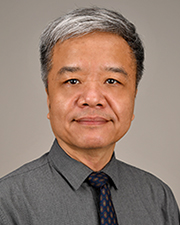
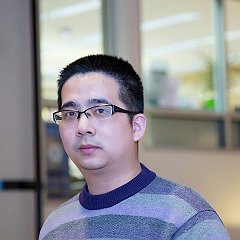
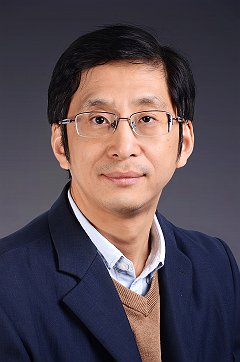
Dejan Gjorgjevikj is a Full Professor at the Faculty of Computer Science and Engineering, Ss. Cyril and Methodius University in Skopje. He joined the Department of Computer Science and Engineering in 1992, progressing from Assistant Professor (2004) to Associate Professor (2009) before attaining full professorship in 2014. His international academic engagements include research visits to institutions in Austria, Bulgaria, the Czech Republic, and the UK. Education: Bachelor's and Master's degrees from the Faculty of Electrical Engineering, Skopje (1992, 1997); PhD from the same institution (2004). Research Focus: His primary research explores pattern recognition, machine learning, and software engineering. Recent work emphasizes applications in industrial diagnostics (fault detection in machinery), blockchain security (Ponzi scheme detection), environmental monitoring (air pollution prediction), and human-computer interaction (sensor-based activity recognition). Methodologies frequently involve deep learning architectures like autoencoders, LSTMs, and adversarial networks. Publication Trends: Gjorgjevikj has authored over 90 publications, with recent works demonstrating increased focus on neural network applications in cross-domain problems (mechanical engineering, finance, IoT) and NLP tasks like sarcasm detection. His articles frequently appear in IEEE, Springer, and Elsevier journals. Awards: AAIA’15 Data Mining Competition Award (2015) Projects & Service: Involved in 10+ international/domestic research projects IEEE member since 1991, ACM member since 1997 Program committee member for multiple international conferences
Felix Heide is a Professor of Computer Science at Princeton University , where he leads the Princeton Computational Imaging Lab . He also serves as Head of AI at Torc Robotics , focusing on full autonomy stacks for self-driving trucks. His research sits at the intersection of optics , machine learning , and computer vision , addressing imaging challenges in harsh environments like dense fog, ultra-low/high illumination, and scattering media. Ph.D. in Computer Science from the University of British Columbia Postdoctoral research at Stanford University His work on computational imaging spans physics-based vision, non-line-of-sight imaging , end-to-end camera design , and robust sensor fusion . He has pioneered techniques for inverse neural rendering , nanophotonic optics , and light-speed AI through optical computing. His recent papers in Nature Machine Intelligence , Science Advances , and top conferences ( SIGGRAPH , CVPR , ICCV ) focus on: Adverse weather imaging (fog, snow, rain) Multi-sensor fusion (LiDAR, radar, gated cameras) Light transport through scattering media Optical metasurfaces and diffractive optics End-to-end optimization of imaging pipelines Event-based vision and polarization cues He has received prestigious awards including the SIGGRAPH Significant New Researcher Award , Sloan Research Fellowship , and Packard Fellowship . His lab's open-source code and datasets enable real-world applications in autonomous driving, microscopy, and augmented reality.
Dr. Kebin Peng is an Assistant Professor in the Department of Computer Science at East Carolina University's College of Engineering and Technology. He joined ECU in 2024 after working as a Senior Software Engineer at MathWorks (2023-2024) and completing his Ph.D. at the University of Texas at San Antonio (2019-2023). Dr. Peng's research focuses on Computer Vision and Machine Learning, with particular expertise in 3D Computer Vision, Depth Estimation, Point Cloud Detection/Segmentation, and 3D Reconstruction. His work often explores unsupervised learning approaches to solve complex vision problems. He teaches graduate and undergraduate courses including Artificial Intelligence, Software Engineering, and Principles of Programming Languages. His publication record shows consistent contributions to top computer vision venues, with recent papers on monocular depth estimation in dynamic scenes, multi-view 3D reconstruction using transformers, and code clone analysis in VR software. Dr. Peng actively contributes to the research community as a reviewer for major conferences including NeurIPS, CVPR, ICCV, and AAAI. Dr. Peng serves on program committees for multiple prestigious conferences and journals, demonstrating his growing recognition in the computer vision and AI research community. His professional service includes reviewing for Neural Information Processing Systems (NeurIPS) 2024, AAAI Conference on Artificial Intelligence 2024, and multiple CVPR conferences. With his blend of academic research experience from UT San Antonio and industry experience at MathWorks and Samsung Research America, Dr. Peng brings a practical perspective to his teaching and research, connecting theoretical concepts with real-world applications in computer vision and artificial intelligence.
Ettore Merlo is a Full Professor in the Department of Computer Engineering and Software Engineering at Polytechnique Montréal, where he leads research in cybersecurity, artificial intelligence, and software systems. He holds an M.Sc. from the University of Turin and a Ph.D. from McGill University. His affiliations include membership in the Institute for Data Valorization (IVADO), focusing on data science and AI innovation. His research integrates software engineering with AI, emphasizing: Software artifact analysis (static/dynamic/symbolic) AI-driven security solutions for clone detection, malware analysis, and access control Fairness and robustness in machine learning systems Evolutionary analysis of software vulnerabilities Recent publications (2022-2025) demonstrate a strong focus on ethical AI, including bias mitigation in neural networks, automated anomaly detection, and certification of safety-critical ML systems. His work frequently applies graph neural networks, unsupervised learning, and formal verification methods to industrial and cybersecurity challenges. Professor Merlo has supervised 25 graduate students (10 PhD, 15 Master's), with projects ranging from avionics software to phishing kit analysis. While no scientific awards are listed, his extensive publication record includes 136 works spanning journals, conferences, and technical reports. Collaborations include partnerships with industrial telecommunication firms and international academia. No dedicated lab is specified, but his research aligns with Polytechnique Montréal's 'New Frontiers in Information and Communications Technologies' center.
Baishakhi Ray is an Associate Professor of Computer Science at Columbia University's School of Engineering and Applied Science. Her work focuses on the intersection of AI, Software Engineering, and Security. She received her Ph.D. from the University of Texas, Austin and has established herself as a leading researcher in software engineering with AI applications. Dr. Ray's educational background includes a Ph.D. from the University of Texas, Austin. Her academic journey has led to a prominent position at Columbia University where she continues to advance research in software engineering. Dr. Ray's research spans several critical areas at the intersection of software engineering and artificial intelligence. Her work explores how machine learning techniques can improve software development processes, enhance security practices, and address challenges in program analysis. She has made significant contributions to understanding how large language models can be effectively applied to code generation, vulnerability detection, and software testing. Her research has practical implications for improving software reliability and security in real-world applications, particularly in safety-critical domains like autonomous systems. Analysis of Dr. Ray's recent publications reveals a clear trajectory toward leveraging AI for practical software engineering challenges. Her work has evolved from foundational program analysis techniques to cutting-edge applications of large language models in code understanding and generation. A notable trend is her focus on making AI-assisted software development more reliable, secure, and energy-efficient. Her research increasingly addresses the practical limitations of current AI approaches while developing novel methodologies to overcome them. IEEE TCSE Rising Star Award NSF CAREER Award IBM Faculty Award VMWare Faculty Award ICSME Most Influential Paper Award (2023) FSE'17 Distinguished Paper ASE'22 Distinguished Paper ISSTA'23 Distinguished Paper CACM Research Highlights Dr. Ray actively mentors graduate students and has built a productive research group focused on AI-driven software engineering solutions. Her research has been supported by prestigious grants including the NSF CAREER award. She has successfully guided numerous students through their research projects, with several of her advisees making significant contributions to publications in top-tier conferences. Dr. Ray also serves as an Amazon Visiting Academic, bridging academia and industry to address real-world software engineering challenges. Through her leadership in various research projects and collaborations, Dr. Ray has established a dynamic research environment that combines theoretical rigor with practical applications. Her work often involves interdisciplinary collaboration across computer science subfields, particularly connecting software engineering with security and AI research communities.
Eunjong Choi is an Associate Professor at the Faculty of Information and Human Sciences, Kyoto Institute of Technology in Japan. She joined Kyoto Institute of Technology as a tenure-track assistant professor in 2019 and was promoted to associate professor in March 2024. Prior to this position, she served as an assistant professor at Nara Institute of Science and Technology (April 2016-March 2019) and at Osaka School of International Public Policy, Osaka University (April 2015-March 2016). Kyoto Institute of Technology (2019-Present) Nara Institute of Science and Technology (2016-2019) Osaka University (2015-2016) Dr. Choi's research focuses on software engineering with particular emphasis on software maintenance and evolution, program comprehension, software analytics, reused code management and detection, refactoring support, and test code generation. Her work bridges theoretical software engineering concepts with practical applications in industrial settings. She has investigated topics such as token-level SZZ algorithms, deep learning-based clone detectors, and modernization of large-scale industrial systems. Dr. Choi has held significant leadership roles in major software engineering conferences including serving as General Chair for ICPC 2020 and IWESEP 2017, Publicity Co-Chair for ICSE 2020, and Local Arrangement Co-Chair for SANER 2016. She has been actively involved in the IEEE Kansai Section Woman in Engineering Affinity Group, serving as Secretary (2016-2017) and Vice-Chair (2018-2021). Her teaching portfolio includes Software Mining and Analysis, Software Metrics, and Software Engineering courses at Kyoto Institute of Technology; Software Design and related courses at Nara Institute of Science and Technology; and Basic Information Literacy at Osaka University. Dr. Choi earned her Ph.D. in Information Science and Technology from Osaka University in 2015 and maintains an active research profile in the software engineering community.
Eric Bodden is a Professor for Secure Software Engineering at Paderborn University and co-director of Fraunhofer IEM. He is also a member of the directorate of the Collaborative Research Center CROSSING at TU Darmstadt. As an ERC fellow, Bodden leads the Attract-Group on Secure Software Engineering at Fraunhofer IEM, where he develops code analysis technology for security in collaboration with leading national and international software development companies. Bodden is one of the leading experts in secure software engineering with a specialty in building highly precise tools for automated program analysis. His research spans static program analysis, Android security, taint analysis, and cryptographic API security. He has made significant contributions to the field through frameworks like FlowDroid for Android analysis, DroidBench benchmark suite, and as one of the chief maintainers of the Soot program analysis framework. His work bridges theoretical advances with practical applications, focusing on creating tools that can be effectively used by developers to enhance software security. His recent publications demonstrate a continued focus on advancing static analysis techniques, with increasing attention to modern challenges like C/C++ analysis, large language models in program analysis, and addressing security vulnerabilities in dependency management. His work shows a consistent trajectory of improving analysis precision, scalability, and usability for developers. Heinz Maier-Leibnitz-Preis (2014) ERC fellow BITKOM Management Club membership (2013) Bodden has advised numerous doctoral students whose theses cover diverse aspects of secure software engineering, including static analysis for Android applications, secure integration of cryptographic software, and information flow security engineering. His research group has received recognition through multiple dissertation awards including Summa cum laude distinctions and the Ernst Denert Software Engineering Award. The group has developed influential tools like FlowDroid, CogniCrypt, and SootUp that have shaped the field of secure software development. At Fraunhofer IEM, Bodden heads the Attract-Group on Secure Software Engineering, which collaborates with industry partners to develop practical security analysis solutions. His team has created several influential frameworks including FlowDroid for Android security analysis and the DroidBench benchmark suite. The group's work bridges academic research with real-world applications, focusing on making security analysis tools more precise, scalable, and usable for developers.
Istvan David is an Assistant Professor of Software Engineering at McMaster University's Faculty of Engineering, Department of Computing and Software, where he leads the Sustainable Systems and Methods Lab (SSM) and works as a researcher in the McMaster Centre for Software Certification (McSCert). His work bridges the gap between model-driven engineering, digital twins, and sustainability in systems engineering. Dr. David's research interests focus on digital twins , model-driven engineering , sustainability in computing, cyber-physical systems , and collaborative modeling . His lab develops novel reinforcement learning techniques , digital twin architectures , and modeling and simulation methods with a strong emphasis on sustainability as both a system characteristic and an engineering principle. His recent publications reveal a strong trend toward integrating digital twin technology with sustainability concerns, particularly in automotive systems, smart farming, and resource-efficient software engineering. The research spans from foundational modeling techniques to applied solutions addressing the four essential sustainability dimensions of technical systems: technical (long-term usage), economic (financial viability), environmental (reduced impact), and social (elevated utility). Scientific Awards: Best Practice Paper Award at MODELS Best Paper 2024 Runner-up in the Journal of Computer Languages Dr. David actively mentors students including PhD candidate Xiaoran (Sharon) Liu, and has supervised undergraduate researchers like Adwita Kashyap and Kyanna Dagenais. He has secured multiple research grants supporting work on sustainable systems and digital twin technologies, with applications in automotive engineering, smart farming, and resource-efficient computing. His lab collaborates with industry partners and academic institutions worldwide, including VU Amsterdam and University of Montréal. The Sustainable Systems and Methods Lab focuses on the vision of 'sustainable systems by sustainable methods,' addressing the growing problem of unsustainable systems engineering practices. The lab's work on bipartite sustainability aims to both build sustainable systems and develop systems using sustainable methods.
Yun Lin is an Associate Professor and Deputy Head of the Department of Computer Science and Technology at Shanghai Jiao Tong University's School of Computer Science. Prior to joining SJTU, Lin served as a Research Assistant Professor at the National University of Singapore working with Prof. Dong Jin Song. Lin leads the CoPhi ("Code Philia") research group, which focuses on the intersection of Software Engineering, AI, and Security. Lin's research spans three major areas: Automatic Programming (including code editing, software testing, and debugging), Explainable AI (focusing on representation interpretation and training data attribution), and Web Misinformation (particularly phishing and scam detection). The research has resulted in numerous tools including CoEdPilot for code editing recommendation, DeepDebugger for interactive debugging of deep classifiers, and Phishpedia for phishing webpage detection. Lin's recent publications demonstrate a strong trend toward integrating AI techniques, particularly large language models and vision language models, with traditional software engineering and security tasks. The work shows increasing sophistication in understanding project context, handling interactive nature of programming tasks, and addressing security challenges in the age of generative AI. Key themes include consistency-based approaches for anomaly detection, agent-based frameworks for complex tasks, and hybrid models that combine symbolic reasoning with neural approaches. ACM Distinguished Paper Award in ICSE'18 for "Towards Optimal Concolic Testing" Distinguished Reviewer Award in FSE'25 2nd prize Research Prototype Award in ChinaSoft'24 Lin advises a large team of PhD, Master's, and undergraduate students, with several publications co-authored with students appearing in top venues. Current research is supported by collaborations with National University of Singapore, particularly with Prof. Dong Jin Song, and includes projects on code editing, GUI testing, and phishing detection. The CoPhi group maintains active development of multiple research tools and datasets. The CoPhi research group under Lin's leadership focuses on building practical tools that bridge the gap between theoretical advances and real-world programming and security challenges. The group's work spans from fundamental program analysis techniques to applied security solutions, with an increasing emphasis on leveraging AI capabilities while maintaining explainability and reliability.
Dr. Michael X. Zhu is a Professor at The University of Texas Health Science Center at Houston with extensive expertise in ion channel research and calcium signaling. His academic background includes a Ph.D. from the University of Houston (1991), an M.S. from the University of Houston (1988), and postdoctoral training at Baylor College of Medicine (1994). Dr. Zhu's research focuses on the molecular mechanisms of ion channels, particularly Transient Receptor Potential (TRP) channels and two-pore channels (TPCs). His work has significantly advanced understanding of calcium signaling pathways in cellular physiology. He has made seminal contributions to the field, including the cloning and characterization of TRPC channels and the identification of TPCs as NAADP receptors in endolysosomal membranes. Analysis of Dr. Zhu's recent publications (2020-2022) reveals a strong focus on calcium signaling mechanisms, with particular emphasis on TRP channels and their roles in neuronal function, pain sensation, and disease processes. His work spans multiple disciplines including neuroscience, molecular pharmacology, and cell biology, demonstrating an integrative approach to understanding complex cellular signaling pathways. Dr. Zhu's research program addresses fundamental questions in cellular physiology with implications for understanding and treating various diseases, including neurological disorders, pain conditions, and metabolic diseases. His laboratory combines molecular, pharmacological, and physiological techniques to elucidate the mechanisms of ion channel function and regulation.
Xin Xia is a Qiushi Distinguished Professor at the College of Computer Science and Technology, Zhejiang University. Previously, he served as the Chief Expert and Director of the Software Engineering Application Technology Lab at Huawei Technologies, China from 2021 to 2025. His academic career spans software engineering research with a focus on AI applications in the field. Ph.D. from Zhejiang University (2014) Supervised by Prof. Xiaohu Yang and Prof. Jianling Sun Visiting student at Singapore Management University (2012-2014) under Prof. David Lo Xin Xia's research primarily focuses on applying data science techniques to software engineering problems. His work spans AI for Software Engineering, Mining Software Repositories, Empirical Software Engineering, and Large Language Models for code understanding and generation. He employs data mining, information retrieval, natural language processing, search-based algorithms, and program analysis to transform software engineering data into automated tools and insights. His recent publications show a strong trend toward leveraging Large Language Models for various software engineering tasks, including code generation, vulnerability detection, and test generation. He has been exploring how to make these models more effective, reliable, and practical for real-world software development scenarios, with a particular focus on Java and Python ecosystems. ACM SIGSOFT Early Career Researcher Award (2022) ACM Distinguished Member 16 best or distinguished paper awards, including nine ACM SIGSOFT Distinguished Paper Awards Recipient of the IEEE Transactions on Software Engineering 2021 Best Paper Award Runner-Up Xin Xia has advised numerous students who have gone on to publish in top software engineering venues. His research has been supported by grants from both academic institutions and industry partners, particularly during his time at Huawei. He actively collaborates with researchers worldwide, especially with David Lo at Singapore Management University. At Zhejiang University, Professor Xia leads research in the intersection of AI and Software Engineering. His work has practical applications in improving developer productivity through automated tools that analyze software repositories and provide actionable insights.
Zhiyuan Wan is an Associate Professor in the College of Computer Science and Technology at Zhejiang University, China. His academic career spans multiple prestigious institutions across North America and Asia, with a focus on advancing software engineering practices through empirical research and tool development. Dr. Wan's educational background includes: Ph.D. in Computer Science from Zhejiang University (2014) His postdoctoral journey featured positions at: University of British Columbia, Canada (2019-2020) Singapore Management University (2018) Zhejiang University (2016-2020) Lehigh University, United States (2014-2015) Dr. Wan's research program centers on empirical software engineering with particular expertise in blockchain technologies and software security. His work bridges theoretical insights with practical tool development, focusing on: Smart contract security and vulnerabilities in cryptocurrency ecosystems Code search and recommendation systems for developer productivity Empirical studies of developer practices and challenges Impact of machine learning on software development workflows His approach combines rigorous empirical methods with practical tool building to address real-world challenges faced by software practitioners. Analysis of Dr. Wan's recent publications reveals a strategic evolution toward blockchain security research, beginning around 2020 with studies on smart contract security and expanding to cover NFT ecosystems, Solana blockchain transactions, and cross-chain vulnerabilities. His work consistently applies empirical methods to uncover practical insights while developing tools that directly address identified challenges in software development. Dr. Wan actively contributes to the software engineering community through service on program committees for major conferences including ASE, ICSE, ESEC/FSE, and ISSTA. His academic leadership extends to mentoring relationships with students and collaborators across international institutions, though specific advisees are not documented in the provided materials.
Hongyu Zhang is a Professor and Dean of the School of Big Data and Software Engineering at Chongqing University, China, and an Honorary Professor at The University of Newcastle, Australia. Previously, he served as a Lead Researcher at Microsoft Research Asia and an Associate Professor at Tsinghua University, China. He received his PhD from the National University of Singapore in 2003. His academic journey spans prestigious institutions, combining industry research experience with academic leadership. Dr. Zhang's research interests focus on intelligent software engineering, software analytics, data-driven software engineering, software fault management, testing and debugging, and software maintenance and reuse. His work centers on improving software quality and productivity by mining and analyzing vast amounts of software data. Over the years, he has developed innovative methods that apply data mining, machine learning (including deep learning), and information retrieval techniques to extract knowledge from software data and solve complex software engineering problems. His research spans three major areas: intelligent programming (code search, code summarization, code generation), intelligent quality prediction (defect prediction, cloud failure prediction, performance prediction), and intelligent fault detection and diagnosis (log-based fault detection, crash-based fault localization, bug report analytics). His recent publications demonstrate a clear trend toward integrating large language models and deep learning techniques with traditional software engineering practices. The research spans intelligent programming assistance, code security, UI automation, distributed systems optimization, and performance analysis. His work increasingly focuses on practical applications of AI in software engineering, with emphasis on real-world impact in industrial settings, particularly in microservices, cloud systems, and large-scale software development environments. 8 ACM Distinguished Paper Awards Best Paper Award: How Long Will it Take to Mitigate this Incident for Online Service Systems? David Lorge Parnis Fellowship Senior Member of IEEE Distinguished Member of ACM Distinguished Member of CCF Fellow of Engineers Australia (FIEAust) Recognized in The Australian's Top Researchers special edition as leading researcher in Software Systems World's Top 2% Scientists (career-long) Dr. Zhang has successfully advised numerous PhD and Master's students who have gone on to prominent positions at leading technology companies and academic institutions worldwide. His research has been supported by significant grants including Australian Research Council Discovery Projects (as Lead CI) and multiple National Science Foundation of China projects. His work has made tangible impacts in industry, most notably through the Microsoft Developer Assistant project which received over 450K downloads in 2016. He leads research groups focused on intelligent software engineering and software analytics, with strong collaborations between Chongqing University, The University of Newcastle, and Microsoft Research. His teams develop practical tools for code intelligence, log analysis, and fault diagnosis that are deployed in real-world online service systems.