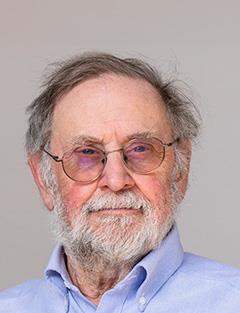
Ben Hardekopf is an academic affiliated with the University of California at Santa Barbara . His research focuses on Programming Languages , Static Analysis , and Formal Methods , with notable contributions to translating C to Rust, hardware verification, and JavaScript optimization. He has authored multiple papers at top-tier conferences including OOPSLA, PLDI, and POPL. His recent work explores hardware decompilation , dependently typed frameworks , and language translation techniques . Ben has served on program committees for conferences such as PLDI , OOPSLA , and CGO , indicating active engagement in the academic community. Research Interests: Ben's work bridges software engineering and hardware verification , focusing on memory safety , type systems , and domain-specific language design . His projects include PyLSE for superconductor electronics and Citrus for formal logic modeling.
Prof. Dr. Levent Arslan is a faculty member at Boğaziçi University, where he has served since 1998. He earned his Ph.D. from Duke University in 1996 and worked as a Research Engineer at Entropic Research in the USA before joining academia. He is also the founder and Chairman of the Board at SESTEK, a pioneering company in Turkish speech recognition and synthesis technologies. His research focuses on speech recognition, speech synthesis, assistive technologies, and natural language processing . His innovations have enabled computer access for visually impaired users through synthesized speech. His work bridges academic research and real-world applications in AI-driven voice systems. The analysis of his recent publications reveals a consistent focus on Turkish language speech technologies, including acoustic modeling, speaker adaptation, emotion detection, and robust feature extraction. His work combines deep learning, signal processing, and linguistic analysis to advance voice interfaces in challenging environments. Levent Arslan has made significant contributions to both research and industry. He holds 15 patents and has published extensively in speech technology. His work at SESTEK exemplifies technology transfer from academia to impactful commercial applications. He has advised multiple students and led research projects in speech processing, though specific names are not listed. His lab or research group likely focuses on spoken language systems and AI for accessibility. Future work may involve multilingual voice assistants, low-resource language modeling, and real-time emotion-aware systems.
Dr. Anthony Ventresque is a Visiting Associate Professor at the University College Dublin, School of Computer Science , with a PhD in Computer Science from the University of Nantes & INRIA France (2008). He is also the Director of the TCD Complex Software Lab and a Senior Investigator with Lero, the SFI Irish Software Research Centre. MSc in Philosophy and Logic from the University of Nantes PhD in Computer Science from the University of Nantes & INRIA France His research focuses on Software Engineering , Genetic Programming , and Multi-objective Optimization , with applications to Autonomous Systems , Cloud Computing , and Sports Analytics . Recent publications highlight his work on grammar-obeying program synthesis using large language models, mutation testing for software quality, and domain adaptation for object detection in rugby data. His scientific awards include a Teaching Award from the UCD School of Computer Science in 2020. He has contributed to grants like Mutation Testing at Scale and Advancing Computational Archaeology , and his teaching activities encompass modules such as Big Data Programming and Operating Systems over multiple years. He leads the TCD Complex Software Lab , fostering interdisciplinary research and innovation.
Gail E. Kaiser is a Professor of Computer Science at Columbia University, where she conducts research in software engineering and security from a systems perspective. Her work spans program analysis, software testing, and pioneering applications of AI to software engineering (AI4SE) and vice versa (SE4AI), with significant contributions dating back to the 1980s. Education: PhD from Carnegie Mellon University ScB from Massachusetts Institute of Technology Research Focus: Professor Kaiser's work centers on static and dynamic program analysis , software testing , and software security . She pioneered applying software engineering testing techniques (particularly metamorphic testing) to machine learning software (SE4AI) during her 2005-2006 sabbatical at Columbia's Center for Computational Learning Systems. Her historical contributions include semantics-focused language-based editors (1980s-1990s, precursors to modern IDEs) and self-adaptation techniques for cloud computing (late 1990s-2000s). Publication Trends: Recent publications (2020-2024) reveal intense focus on AI-software engineering intersections: developing code generation/refinement systems (CYCLE), cross-lingual code search models (REINFOREST), execution-aware pre-training (TRACED), and specialized testing for deep learning systems. Her work consistently bridges traditional program analysis with cutting-edge AI methodologies to solve complex software quality challenges. Academic Service: Kaiser maintains active leadership in the research community through program committee roles at top conferences including PLDI, ICSE, ESEC/FSE, ASE, and SPLASH from 2013-2025. Her GitHub profile (gailkaiser) hosts course materials like COMS W4156 Advanced Software Engineering, demonstrating ongoing educational impact.
Raghavan Komondoor is an Associate Professor in the Department of Computer Science and Automation at the Indian Institute of Science (IISc), Bangalore. His research focuses on programming languages, program analysis, and software engineering, with a strong emphasis on developing automated tools that help programmers understand, verify, and transform programs quickly and reliably. His primary research interests include: Programming languages and program analysis Software verification and testing Static analysis techniques Null dereference verification Points-to analysis Web application analysis ORM-based controller verification Memory optimization in Java programs Code clone detection and elimination Dr. Komondoor has developed several influential research tools including NPEDetector for null dereference verification, Ross for verifying Java program safety, DFAS for static analysis of asynchronous systems, PageModeler for web application analysis, and ORMInfer for verification of ORM-based controllers. His research spans over a decade with publications in top-tier software engineering conferences including ASE, ICSE, ISSTA, and SPLASH. His recent publications demonstrate a consistent focus on formal methods and program verification, with significant contributions to symbolic fixpoint algorithms, ORM controller verification, and controller synthesis over infinite state spaces. These works build upon his earlier foundational research in points-to analysis, web application analysis, and null pointer verification. Dr. Komondoor's service contributions to the academic community include: Program Committee Co-Chair for ATVA 2025 Organizing co-chair for ISEC 2024 Chair of PhD Symposium committee for ISEC 2020 Program committee membership for ICSE (2018-2025), ASE (2019-2020), ISSTA (2022), and numerous other major conferences He has successfully mentored numerous PhD and M.Tech students, many of whom now work at leading organizations including Microsoft, Siemens Research, Goldman Sachs, and academic institutions. Currently, he advises multiple PhD students and M.Tech researchers in the Programming Languages Laboratory at IISc. He teaches courses on Program Analysis and Verification, Principles of Distributed Software, and Formal Methods in Software Engineering, and maintains active research projects with open positions for research staff.
Guangjie Li is a researcher at the National Innovation Institute of Defense Technology, actively contributing to software engineering research through publications in premier conferences including ASE, ESEC/FSE, and SANER. His work bridges theoretical program analysis with practical machine learning applications for software development challenges. His research focuses on: Fault localization techniques enhanced by statement-level error analysis Deep learning-driven detection of code smells like feature envy Automated extraction of program elements across software versions Empirical validation using real-world codebases Integration of version control data in program analysis Recent publications demonstrate a consistent trajectory toward machine learning augmentation of traditional software engineering tasks, particularly in debugging and code quality assessment. His methodologies emphasize practical applicability through real-world example integration, addressing critical gaps in automated software maintenance.
Stefano Zacchiroli is a Full Professor of Computer Science at Télécom Paris, part of the Polytechnic Institute of Paris. He is affiliated with the Laboratory of Information Processing and Communication (LTCI) where he conducts research on digital commons, open source software engineering, computer security, and the software supply chain. As a member of the ACES team, he focuses on critical aspects of software preservation and development. His research spans several interconnected domains in software engineering. His work on digital commons explores how to preserve and make accessible the collective knowledge of software development. His research on open source software engineering investigates the processes, tools, and social dynamics that make open collaboration successful. In computer security, he examines vulnerabilities in the software supply chain, while his work on formal methods applies mathematical rigor to software development challenges. His leadership in Software Heritage demonstrates his commitment to preserving software as a crucial part of our digital heritage. His recent publications reveal a strong focus on software preservation, repository analysis, and security in the software supply chain. There's a clear trend toward understanding how software evolves over time, how to verify its integrity, and how to ensure reproducible builds. His work bridges theoretical computer science with practical software engineering challenges, particularly in the context of open source ecosystems. His scientific recognition includes: 2015 O'Reilly Open Source Award 2022 Google Award for Inclusion Research As an academic advisor, Zacchiroli has likely mentored numerous students through his position at Télécom Paris. His involvement in numerous conference program committees demonstrates his active role in the academic community. His research has been supported by institutional affiliations and likely various grants related to software preservation and open source research. Zacchiroli leads or contributes to several important initiatives, most notably Software Heritage, which serves as the largest public archive of software source code. His work with the Debian project and the Open Source Initiative demonstrates his commitment to practical applications of his research. The ACES team at LTCI provides the academic home for much of his current research, focusing on critical aspects of software engineering and preservation.
Sang Kil Cha is an Associate Professor at KAIST (Korea Advanced Institute of Science and Technology) where he holds positions in both the Graduate School of Information Security and the School of Computing. He serves as the director of the Cyber Security Research Center (CSRC) at KAIST and leads the SoftSec Lab. Dr. Cha received his Ph.D. and M.S. degrees from Carnegie Mellon University and his B.S. degree from Korea University. Current Position: Associate Professor, KAIST Leadership: Director of Cyber Security Research Center (CSRC) Laboratory: Head of SoftSec Lab Education: Ph.D. and M.S. from CMU, B.S. from Korea University Dr. Cha's research focuses on the intersection of computer security and software engineering, with particular emphasis on building and evaluating systems that can analyze programs. His work spans software security, software engineering, software systems, and program analysis. He has made significant contributions to binary code analysis, fuzzing techniques, and reverse engineering. His research has practical applications in vulnerability detection, malware analysis, and secure software development. His publication record demonstrates consistent high-impact contributions to the field, with numerous papers in top-tier security and software engineering conferences including IEEE S&P, USENIX Security, ISSTA, and ICSE. His recent work shows a continued focus on advancing fuzzing methodologies, binary analysis techniques, and security applications for blockchain technologies. Dr. Cha's research group has produced influential tools such as B2R2 (a binary analysis framework) and ofuzz (a fuzzing framework). ACM Distinguished Paper Award USENIX Distinguished Paper Award Best Paper Award NDSS Best Paper Award As an educator, Dr. Cha has taught courses including Binary Code Analysis and Secure Software Systems, Advanced Software Security, and Introduction to Information Security. His research group has mentored numerous students who have become co-authors on his publications. His work is supported by various research grants focused on software security and analysis techniques. The SoftSec Lab maintains active collaborations with both academic and industry partners in the security research community.
Amin Milani Fard is an Associate Professor of Computer Science at New York Institute of Technology - Vancouver Campus, and a visiting faculty member in Management Information Systems at Simon Fraser University's Beedie School of Business in Vancouver, Canada. Previously, he served as an Assistant Professor at NYIT Vancouver from 2018 to 2023. Dr. Milani Fard received his Ph.D. in Computer Software Engineering from the University of British Columbia (2012-2017), his M.Sc. in Computer Science from Simon Fraser University (2009-2010), and his B.Sc. in Computer Software Engineering from Ferdowsi University of Mashhad. His academic journey began with notable achievements including the 1st Rank Khwarizmi Award (awarded by Iran's President Mohammad Khatami) and an Exceptional Talents Admission Award. His research spans multiple disciplines, primarily focusing on Security, Privacy, and Assurance of Software and Information , with significant contributions to software testing, blockchain security, financial market prediction, and machine learning applications. His work on JavaScript security code smells, Ethereum smart contract vulnerabilities, and financial market prediction using multimodal data has been widely recognized. His publications demonstrate a consistent pattern of high-quality research with numerous papers in top conferences including ASE, ICST, and IEEE journals. Dr. Milani Fard's research portfolio shows a clear evolution from foundational work in software testing and JavaScript analysis toward more complex applications in financial technology and AI-driven security solutions. His most recent work focuses on integrating LLM technologies with security applications and advancing financial prediction models using sophisticated time series analysis. Scientific Awards and Recognition: Most Influential Paper Award at IEEE SCAM 2023 Presidential Excellence Award Finalist for Teaching at NYIT (2023) Best Paper Award at ECIR 2019 Multiple research grants including NSERC Alexander Graham Bell Canada Graduate Scholarship IEEE Best Paper Award Nominee at ICST 2017 As an active researcher, Dr. Milani Fard serves on program committees for major conferences including ASE and has contributed significantly to the software engineering community through his publications and research leadership. His work bridges theoretical computer science with practical applications in cybersecurity and financial technology, demonstrating both academic rigor and real-world impact.
Prof. Dr. Jacques Klein is a Chief Scientist (Full Professor) and Co-head of the TruX Research Group at the SnT Centre (Security and Trust Centre) of the University of Luxembourg. With a career spanning over 15 years at the university, he has progressed from Research Scientist (2010-2015) to Senior Research Scientist (2015-2019), Associate Professor (2019-2022), and finally to Full Professor in 2023. His research focuses on three main areas: program analysis applied to mobile security, software debugging (particularly bug localization and program repair), and NLP/AI for software engineering. He has supervised numerous PhD students and has acquired over 5 million euros in research funding through projects from the Luxembourg Research Agency, European Commission, and industrial partnerships. Prof. Klein is an active member of the software engineering research community, serving as General Co-Chair of ASE 2023 and MobileSoft 2025, and as a steering committee member for ISSTA, ASE, and MobileSoft. He is also an Editorial Board Member of the Springer Empirical Software Engineering Journal since 2021. His recent publications demonstrate a strong focus on applying AI and machine learning techniques to software security challenges, particularly in the Android ecosystem, with significant contributions to malware detection, code analysis, and privacy compliance. His work has been recognized with multiple prestigious awards including the ICSE 10-year most influential paper award and the PLDI Most Influential Paper Award. Member of the Institut Grand-Ducal - Section des Sciences (since June 2024) Principal Investigator on numerous research projects Extensive service on program committees for major software engineering conferences He teaches courses on static program analysis, software vulnerabilities, and security analysis at the Master's level, and has made significant contributions to the Android research community through the AndroZoo dataset containing over 24 million Android applications.
Dr. Yuan Tian is an Assistant Professor in the School of Computing at Queen's University, Canada. Her research focuses on applying artificial intelligence and machine learning techniques to solve software engineering challenges, particularly in the areas of code analysis, technical debt management, and developer productivity enhancement. Dr. Tian received her Ph.D. in Information Systems from Singapore Management University in May 2017 under the supervision of Prof. David Lo (IEEE/ACM fellow). Prior to joining Queen's University, she worked as a data scientist at the Living Analytics Research Centre (LARC) in Singapore. She has also conducted research visits at Carnegie Mellon University in 2015 and Inria Paris in 2013. Dr. Tian's research spans several key areas in software engineering with AI: Automatic technical debt, bug, and code change management LLM applications for code transformation and generation Human-AI collaboration in software development Analysis of developer interactions with AI tools like ChatGPT Mining software repositories for insights into development practices Her recent work has increasingly focused on leveraging Large Language Models to address software engineering challenges, with publications examining code translation, technical debt identification, and the dynamics of developer-AI interactions. Her research demonstrates a strong empirical approach, often analyzing large datasets from GitHub and other software development platforms. Dr. Tian has received recognition for her work, including the Best Research Paper Award at AI Foundation Models and Software Engineering (Forge), 2024 for her paper "Exploring the Impact of the Output Format on the Evaluation of Large Language Models for Code Translation." Dr. Tian leads the RISE research lab at Queen's University, which currently includes 5 PhD students, 2 MSc students, and 2 undergraduate research assistants. She has successfully supervised several graduate students to completion, with alumni now working at institutions including Duke University and Veeva Systems. Her research is supported by funding including an NSERC Alliance-Mitacs project on "Pragmatic Automated Code Transformation Leveraging Large Language Models" in collaboration with industry partner Ross Video. The RISE lab (Goodwin 621) is dedicated to developing reliable and intelligent support for software engineering. The lab's current research focuses on three main thrusts: automatic technical debt/bug/code change management, LLM for code transformation, and human-AI collaboration in software development.
Yakun Zhang is an Associate Professor at the School of Computer Science and Technology, Harbin Institute of Technology (Shenzhen). She holds a Ph.D. in Software Engineering from Peking University (2021-2025) and was a visiting scholar at the National University of Singapore. Her research integrates AI technologies like large language models to advance software engineering automation. Education Ph.D. in Software Engineering, Peking University (2021-2025) M.S. in Software Engineering, University of Chinese Academy of Sciences (2018-2021) B.S. in Computer Science, Wuhan University (2014-2018) Research Focus Her work spans: Intelligent Software Engineering (LLM-powered code generation/testing), Multi-Agent Systems (collaborative AI agents), and Trustworthy LLMs (addressing hallucinations/security). Recent publications demonstrate strong emphasis on GUI testing automation and dynamic analysis frameworks. Awards & Honors CCF System Software Outstanding PhD Dissertation Nomination (2025) Tencent Qingyun Talent Program & ByteDance Soaring Star Talent (2025) Outstanding Graduate of Beijing Municipality & Peking University (2025) National Scholarship & President's Awards (Peking University/CAS) Academic Service PC member for ASE 2025, ICSE 2026, and MSR 2025. Reviewer for ACM TOSEM and IEEE TSE. Actively recruits PhD/Master's students and collaborates with NUS, Microsoft, and Tencent.
Fatemeh Hendijani Fard is an Assistant Professor in the Department of Computer Science at the University of British Columbia's Okanagan campus. She serves as a graduate student supervisor and teaches courses in Computer Science and Data Science. Dr. Fard is a member of the CITECH program and MMRI, part of the Killam family of scholars, and an active member of both IEEE and ACM. Her research focuses on the intersection of Natural Language Processing and Software Engineering, with particular emphasis on developing code intelligence models for low-resource programming languages like R. She conducts empirical studies and develops techniques to improve the computational efficiency of code-language models while making them accessible to communities with restricted GPU access. Her work strongly advocates for Diversity and Inclusion in STEM, particularly for underrepresented females. Analysis of Dr. Fard's recent publications reveals a strong research trajectory in adapting Large Language Models for code intelligence with a focus on efficiency and accessibility. Her work spans multiple dimensions including code summarization, method name prediction, code search, code clone detection, and program repair, with special attention to low-resource programming languages. A notable trend is her exploration of adapter-based approaches for knowledge transfer that reduce computational requirements while maintaining performance. Izaak Walton Killam Memorial Scholarship Alberta Innovates Technology Futures (AITF) NSERC Discovery NSERC CREATE Mitacs Accelerate UBC Start-up Fund Dr. Fard has secured significant research funding including NSERC Discovery, NSERC CREATE, Mitacs Accelerate, and UBC Start-up funds to support her work on code intelligence for low-resource programming languages. She actively serves as a graduate student supervisor, guiding research in areas related to code representation learning and mining software repositories. Her service to the academic community is extensive, having served on program committees for major conferences including FSE, MSR, ASE, SANER, and ICSME across multiple years. Dr. Fard leads research initiatives focused on making code intelligence accessible to communities working with understudied programming languages. Her team conducts empirical studies and develops new techniques specifically designed for low-resource languages, with particular attention to the R programming language. This work addresses diversity and inclusion in AI tools by ensuring developers with limited computational resources can benefit from advances in neural networks and automated tools.
Volker Stolz is an Associate Professor in the Department of Informatics at the University of Oslo, Faculty of Mathematics and Natural Sciences. He is affiliated with the Reliable Systems research group, where his work centers on improving software reliability through formal methods, model transformation, and UML-based modeling. Institution: University of Oslo School: Faculty of Mathematics and Natural Sciences Department: Department of Informatics Research Group: Reliable Systems Contact: stolz@ifi.uio.no | +47 22852438 | Room GA06 9461 His research spans formal verification, concurrency, model-based testing, and programming language semantics. He has made significant contributions to deadlock detection, refactoring equivalence, runtime verification in distributed systems, and data race analysis, often using formal models such as Petri nets and active object languages. The recent publications highlight a consistent focus on software correctness , modular analysis , and automated verification techniques. Trends include the use of behavioral effects, abstract execution, and field calculus for distributed monitoring. His work frequently appears in top-tier venues like Theoretical Computer Science , Lecture Notes in Computer Science , and Journal of Logical and Algebraic Methods in Programming , indicating strong theoretical and practical impact. He collaborates extensively with researchers such as Violet Ka I Pun, Rui Wang, Lars Michael Kristensen, and Martin Steffen, reflecting an active and collaborative research profile. No scientific awards are mentioned in the provided text. There is no information available about student advising or research grants. Volker Stolz is involved in research projects related to model-based testing, formal methods, and reliable software systems, particularly through the Reliable Systems group. His work often involves building theoretical foundations and practical tools for verifying and improving software behavior in distributed and concurrent environments.
John Coffin serves as American Cancer Society Research Professor and Distinguished Professor at Tufts University School of Medicine within the Department of Molecular Biology and Microbiology, where he has held continuous appointments since 1982. His research focuses on retrovirus-host interactions, viral DNA integration mechanisms, and endogenous retroviral evolution. B.A. in Biological Sciences, Wesleyan University (1967) Ph.D. in Biochemistry, University of Wisconsin (1972) Dr. Coffin's research program investigates retroviral receptor interactions, viral DNA integration specificity, control of viral gene expression, retroviral genetic variation mechanisms, and host-virus coevolution through endogenous proviral fossils. His laboratory employs avian and murine retroviral models to dissect fundamental virological processes relevant to HIV and other retroviral pathogens. Analysis of his recent publications reveals dominant research themes in HIV reservoir dynamics, endogenous retrovirus expression in cancer, and retroviral taxonomy. His work consistently bridges molecular virology with clinical implications, particularly regarding HIV persistence mechanisms during antiretroviral therapy and the role of clonal expansion in viral reservoir maintenance. National Academy of Sciences Member American Cancer Society Research Professorship Distinguished Professor title at Tufts University Dr. Coffin directs multiple NIH-funded research programs including the Retrovirus Evolution and Cancer project (2016-2023) and previously led the NCI's HIV Drug Resistance Program. His teaching portfolio includes regular instruction in Animal Virology and graduate seminars since 2013. He maintains active roles as Scientific Advisory Board member at Aaron Diamond AIDS Research Center and serves on editorial boards for Virology and PNAS.