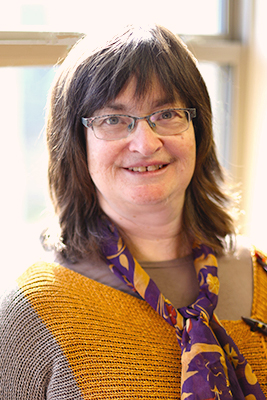
Anna Berge is a Professor of Linguistics at the University of Alaska Fairbanks, directing the Alaska Native Language Archive. She holds a PhD from the University of California, Berkeley (1997), specializing in the documentation, description, and historical analysis of Eskimo-Aleut languages, particularly Unangam Tunuu (Aleut). Her research integrates linguistics with archaeology, genetics, and environmental studies to explore prehistoric language contact and divergence patterns along the North Pacific Coast. Her work focuses on morphosyntax, discourse analysis, and language revitalization for highly endangered languages. She teaches courses in Morphology, Field Methods, Community Language Documentation, and Eskimo-Aleut Linguistics, emphasizing practical skills for language preservation. Berge's multidisciplinary approach addresses Aleut language divergence from Eskimoan branches, leveraging data from multiple disciplines to reconstruct linguistic prehistory. She actively collaborates with Indigenous communities in Russia, Alaska, Canada, and Greenland to archive linguistic materials and support language maintenance initiatives.
Carol Smith is an Associate Professor in the Department of Soil & Physical Sciences at Lincoln University, New Zealand, where she serves as Head of Department since 2017. She has been an elected academic staff member of the Lincoln University Council from 2018-2022. Dr. Smith holds a PhD from the University of Aberdeen, an MSc from the University of Reading, and a BSc(Hons) from the University of Portsmouth, forming the foundation of her expertise in soil science and physical geography. Her research spans both fundamental and applied aspects of pedology. On the fundamental side, she investigates Quaternary pedology and paleoenvironmental reconstruction using loess stratigraphy, geomorphology, and micromorphology, which provides critical data for verifying future climate change predictive models. Applied research focuses on sustainable use of recycled organic matter and rehabilitation of degraded soils. She collaborates internationally on multidisciplinary projects involving paleoclimate reconstruction, paleoliquefaction, Antarctic soils, and viticulture. Dr. Smith is passionate about teaching and science communication, employing experiential learning methods to develop practical field skills in soil science through 'soil judging competitions' in New Zealand and Australia. Her research addresses UN Sustainable Development Goals including Life on Land (15), Climate Action (13), and Quality Education (4). Among her notable recognitions are the Norman H Taylor Memorial award 2020 from the New Zealand Society of Soil Science for outstanding contributions to soil science in New Zealand and Fellowship in the Royal Geographical Society, London. She serves as Associate Editor of Natural Sciences Education and was previously editor of Quaternary Australasia. Dr. Smith has supervised numerous graduate students through research-based supervision, with completed projects covering diverse topics from soil patterns in Southland to Antarctic soil ecology. She teaches advanced courses in field research, soil science, and physical landscapes, and has developed innovative approaches to teaching during the pandemic, including virtual field trips.
Charles F. Harvey is a Professor in the Department of Civil and Environmental Engineering at the Massachusetts Institute of Technology (MIT), where he investigates hydrology, carbon cycling, and groundwater contamination. His work spans tropical peatlands, arsenic pollution in South Asia, and coastal groundwater dynamics, with field sites in Borneo, Bangladesh, and Vietnam. Education: B.A. in Mathematics (Oberlin College, 1986), M.S. in Applied Earth Science (Stanford University, 1992), Ph.D. in Geological and Environmental Sciences (Stanford University, 1996). Harvey’s research focuses on hydrogeology , carbon sequestration , and contaminant transport . He explores how groundwater flow and biogeochemical processes interact in tropical peatlands and coastal systems, with significant implications for climate change and water security. His recent publications emphasize tropical peatland hydrology , arsenic mobilization , and coastal groundwater exchange , integrating field experiments, remote sensing, and computational models. Scientific Awards AGU Fellow GSA Fellow Meinzer Award (GSA) Prince Sultan bin Abdulaziz International Prize for Water M. King Hubbert Award for Hydrology NSF Young Investigator Award Harvey leads the Harvey Lab , mentoring students and researchers in projects ranging from groundwater arsenic mitigation to coastal marsh biogeochemistry . His work bridges terrestrial and marine systems , addressing critical planetary challenges.
Dr. Frank Heitmuller is an Associate Professor at the University of Southern Mississippi, affiliated with the Department of Geology and Geography within the College of Arts and Sciences. His research focuses on fluvial and coastal geomorphology, sedimentology, and hydrology, particularly along the northern Gulf Coast. He collaborates across disciplines to address ecosystem dynamics and land-use policies. He holds a PhD (2009), MA (2002), and BS (1998) from the University of Texas at Austin and Florida State University, respectively. His teaching includes courses like Physical Geology, Geomorphology, and Hydrology. Research interests include river dynamics, sediment transport, coastal ecosystems, and the interplay between abiotic factors and environmental policies. His work emphasizes fluvial systems in Texas and Louisiana, with studies on flood impacts, channel adjustments, and sedimentologic processes. Publications span topics such as flood sedimentation, lithologic controls on river channels, and policy-related sediment transport modeling. He is affiliated with organizations like the Geological Society of America and Association of Environmental and Engineering Geologists. Languages: English (native), Spanish (limited working). His expertise includes environmental science and soils.
Aylwyn Scally is a researcher at the Department of Genetics, University of Cambridge, specializing in human evolutionary genetics and ancestry. His work focuses on computational and mathematical models of genome evolution, leveraging population-scale datasets and archeogenetic evidence to explore ancient human populations and their spatial dynamics. University: University of Cambridge Department: Department of Genetics Fields of Interest: Human Evolutionary Genetics, Population Genetics, Ancestry Analysis, Paleobiology, Environmental Genomics, Genome Evolution Scally's research integrates spatial dynamics into genetic models, offering insights into demographic, social, and cultural factors in ancient populations. His methodologies have broader applications for studying other species as genomic data becomes available. Recent publications highlight his work on mutation rate analysis, historical migration patterns, and ancestral population structures. These studies often employ computational simulations and large-scale genomic datasets to address evolutionary questions. He is associated with the Cambridge NERC Doctoral Landscape Awards (CREATES) and C-CLEAR DTP, contributing to training and collaborative research in genetics and environmental genomics.
Nicole M. Gasparini is an Associate Professor in Tulane University's Department of Earth and Environmental Sciences, School of Science & Engineering. She holds a Ph.D. from MIT (2003) and researches fluvial/tectonic geomorphology, landscape evolution modeling, and climate-erosion interactions using tools like Landlab. Her work investigates sediment transport, river network evolution, and human impacts on landscapes. Research integrates field data with numerical models to quantify erosion processes across diverse environments. Publications demonstrate expertise in geomorphic model development, particularly through contributions to the Landlab toolkit. Recent articles focus on climatic controls on erosion, fault geomorphology, and uncertainty quantification in earth-surface models. Awards: Marguerite T. Williams Award for contributions to geosciences and advocacy against harassment in STEM Leads collaborative projects on landscape response to climate change and mentors students/postdocs in geomorphology and computational modeling.
David Blair is a Professor at James Cook University, specializing in parasitic flatworms, molecular systematics, and evolutionary biology. His research focuses on understanding the genetic diversity, phylogeography, and host-parasite interactions of species such as Schistosoma, Paragonimus, and Opisthorchis. He has contributed extensively to studies on the molecular evolution of parasitic organisms and their implications for human and wildlife health. Key research areas include: molecular taxonomy of trematodes, phylogenetic analysis of parasitic flatworms, and genomic studies of host-parasite coevolution. Collaborations span global institutions, addressing public health challenges like paragonimiasis and fasciolosis. His work integrates field studies, lab-based molecular techniques, and computational biology to unravel evolutionary dynamics and ecological adaptations. Recent studies focus on the genetic diversity of Daphnia species, dugong population genetics, and drug-resistant Mycobacterium tuberculosis. His publications in journals like *Parasitology*, *Molecular Phylogenetics and Evolution*, and *Scientific Reports* highlight interdisciplinary approaches to parasitology and conservation biology.
Joel S. Hayworth is an Associate Professor in the Department of Civil Engineering at Auburn University's College of Engineering. His research focuses on environmental and ecosystem restoration, particularly in estuarine, terrestrial, and freshwater systems. He leads the Estuarine Environments Research Program (EERP), which investigates the fate of endocrine-disrupting chemicals (EDCs), PFAS, and oil spill residues in coastal environments. Dr. Hayworth's educational background includes a PhD in Civil Engineering (Hydrology/Hydraulics) from Auburn University, an MS in Hydrology from the University of Nevada, Las Vegas via the Desert Research Institute, and a BS in Geophysics from the University of California, Santa Barbara. He previously worked at the Tennessee Valley Authority Engineering Laboratory and the U.S. Air Force Research Laboratory, and founded Hayworth Engineering Science in 1999 before returning to academia in 2010. His research interests span environmental engineering, hydrology, hydraulics, estuarine science, pollutant fate and transport, and chemical fingerprinting. He has developed advanced analytical methods for detecting EDCs and PFAS in water, sediment, and biota. His work integrates field studies, laboratory experiments, and environmental modeling to understand complex hydrologic, geologic, chemical, and biological processes in human-impacted ecosystems. The 15 most recent articles highlight a strong trend in environmental contaminant analysis, particularly focusing on PFAS, oil spill residues, and endocrine disruptors. His research combines analytical chemistry with environmental modeling and field monitoring, often in collaboration with interdisciplinary teams. Key themes include the development of UHPLC-MS/MS and GC-MS/MS methods, fate and transport modeling of pollutants, and ecological risk assessment in estuarine systems. Dr. Hayworth's scientific contributions are supported by funding from agencies such as the Gulf Coast Ecosystem Restoration Council (RESTORE Council). His work has led to significant publications in journals like Science of the Total Environment , Marine Pollution Bulletin , and Water . He actively mentors students and collaborates with researchers like T.P. Clement, G.F. John, and V. Mulabagal. His projects, such as the restoration assessment of Cotton Bayou and Terry Cove, demonstrate applied science for environmental problem-solving. He has developed state-of-the-art analytical laboratories and partnered with coastal communities for long-term monitoring. His laboratory, the Estuarine Environments Research Program (EERP), conducts multi-year studies on endocrine disruptors in estuaries, develops innovative sampling and analysis methods, and trains the next generation of environmental engineers and scientists. The team works across disciplines to address complex environmental challenges in the Gulf Coast region.
Benjamin J. Keys is a Research Associate at the University of Pennsylvania's Wharton School within the Public Economics program. His work focuses on public economics, environmental economics, and financial risk management with particular emphasis on housing markets and climate change impacts. University of Pennsylvania - The Wharton School Public Economics Department His research explores: Climate risk capitalization in housing markets Mortgage insurance moral hazard Consumer credit card payment behaviors Emergency credit systems Regional economic redistribution through mortgages Email: benkeys@wharton.upenn.edu Scientific awards include: Fellowships on Consumer Financial Management
Professor Patrick Moss is a leading academic in Physical Geography and Head of School at QUT's School of Earth & Atmospheric Sciences. His research focuses on understanding landscape responses to climate change and human impacts, with expertise in palaeoecology, Quaternary Science, and environmental management. He holds a PhD from Monash University and supervises PhD and undergraduate students in these disciplines. Key research interests include wetland resilience, fire ecology, and the application of palynology to environmental history. His work integrates archaeological perspectives to address contemporary conservation challenges, such as ecosystem restoration and climate adaptation strategies. Publications span over three decades, emphasizing global fire regimes, human-environment interactions, and Quaternary environmental reconstruction. Collaborations include international projects on peatlands, monsoon variability, and volcanic ash stratigraphy.
Peter Wilf is a Professor in the Department of Geosciences at Pennsylvania State University's College of Earth & Mineral Sciences. His research focuses on fossil plants as indicators of past climates, biodiversity, and environmental disturbances from the latest Cretaceous through middle Eocene (~67-45 million years ago). Wilf leads significant research projects including the Origins of Southeast Asian Rainforests from Paleobotany and Machine Learning and the Patagonia Paleofloras Project. His research interests span paleobotany, paleoclimatology, plant-insect interactions, and biogeography, with emphasis on how deep-time data illuminate modern ecosystems and their responses to anthropogenic change. Wilf's work primarily focuses on the latest Cretaceous through middle Eocene, examining global disturbances including warming and cooling events, the end-Cretaceous mass extinction, and recovery periods. His research has significant implications for understanding climate change, biodiversity conservation, and ecosystem dynamics. Wilf's extensive publication record demonstrates consistent high-impact research across paleobotany, with recent work focusing on Southeast Asian rainforests, Patagonian paleofloras, and the connections between Gondwanan landmasses. His research integrates fieldwork in Patagonia and Southeast Asia with advanced analytical techniques, including machine learning applications for fossil leaf identification. Fellow, American Association for the Advancement of Science (AAAS) 2022 Wilson Award for Excellence in Research, Penn State College of Earth & Mineral Sciences 2022 Fellow, Paleontological Society 2017 Fellow, Geological Society of America 2016 Paul F. Robertson Research Breakthrough of the Year Award, Penn State College of Earth & Mineral Sciences 2016 George W. Atherton Award for Excellence in Teaching, Pennsylvania State University 2013 Wilf maintains an active research program with numerous NSF-funded projects and international collaborations. He leads a productive lab group conducting extensive fieldwork in Patagonia, Argentina, and Southeast Asia. His research has transformed understanding of Southern Hemisphere floras, the role of Patagonia in plant evolution, and connections between ancient and modern ecosystems across continents. Wilf's laboratory serves as a hub for paleobotanical research, bringing together students, postdocs, and international collaborators to study fossil plant collections from around the world. The lab integrates traditional paleobotanical methods with cutting-edge technologies including machine learning for fossil identification and advanced imaging techniques for detailed morphological analysis.
Dr. Stephanie M. Patch is an Assistant Professor in the Department of Civil, Coastal, and Environmental Engineering at the University of South Alabama's College of Engineering. Her research focuses on coastal engineering challenges, particularly beach erosion dynamics and the interaction between natural processes and engineered structures during extreme events like hurricanes. Education: Ph.D. Civil Engineering, Virginia Tech M.S. Civil Engineering, Georgia Tech Savannah B.S. Civil Engineering, Georgia Tech Savannah Research Interests: Dr. Patch investigates short- and long-term coastal erosion mechanisms, wave and surge impacts on barrier islands, and numerical modeling applications for coastal resilience. Her recent work examines Hurricane Sandy's effects on New Jersey and Virginia barrier systems, emphasizing adaptive strategies under rising sea levels. Publications Trends: Her articles address coastal infrastructure resilience, hurricane geomorphological impacts, and adaptation strategies using advanced numerical simulations. Key themes include sea-level rise mitigation, post-disaster assessment, and coastal policy frameworks. Advising & Grants: No formal advisees or grant details listed in the profile. Labs/Teams: Active in coastal modeling and field measurement initiatives, though specific lab affiliations are not detailed here.
Dr. John Warren Huntley is an Associate Professor in the Department of Geological Sciences at the University of Missouri. His research examines the fossil record of biotic interactions including parasitism, predation, and competition, with additional focus on conservation paleobiology and morphological disparity evolution. Dr. Huntley investigates host-parasite dynamics in marine bivalves, human impacts on mollusk populations, and Phanerozoic predation patterns. His work integrates stratigraphic paleobiology with ecological and evolutionary analyses to reconstruct historical ecosystem dynamics. His recent publications demonstrate expertise in paleoparasitology, taphonomy, and conservation paleobiology, applying novel analytical methods to questions about parasite-host coevolution, preservation biases, and extinction events. This research provides critical insights into long-term ecological patterns and biological responses to environmental change. Dr. Huntley has received significant recognition including an NSF CAREER Award and Humboldt Research Fellowship, and he co-edited the comprehensive volumes 'The Evolution and Fossil Record of Parasitism'.
Nick Abel is an Honorary Associate Professor at the Fenner School of Environment & Society, Australian National University. With a distinguished international career spanning Africa and Australia, he has worked in Zimbabwe, Kenya, Ethiopia, Botswana, Somalia, Swaziland, Zambia, and Australia. His academic credentials include a Ph.D., M.Sc., and B.Sc.(Hons.), reflecting a strong foundation in environmental sciences and complex systems thinking. Abel's research program centers on the critical challenge of human adaptation to climate change, with particular focus on why adaptation efforts are insufficient to prevent environmental and social tipping points. He critically examines Australia's role as the world's third largest exporter of fossil fuels while facing escalating climate impacts, investigating how fossil fuel companies have maintained influence over public policy. His work integrates social-ecological systems theory, resilience thinking, and practical governance frameworks to address climate adaptation challenges. His publication record demonstrates a clear evolution from foundational work in rangeland management and complex adaptive systems toward urgent climate policy interventions. Early research established theoretical frameworks for understanding resilience in dryland ecosystems, while recent work focuses on transformation pathways, Indigenous engagement, and community-based adaptation strategies. A consistent thread throughout his career is the integration of diverse knowledge systems and the development of practical approaches for environmental governance in rapidly changing conditions. Abel has registered to supervise research students at ANU and participates in significant collaborative projects, including the current 'Partnering with local communities in regional Australia to increase resilience to flood events' (2022-2025). His high-impact publications, including the highly cited 'Resilience management in social-ecological systems' (1,120 Scopus citations) and 'From Metaphor to Measurement: Resilience of What to What?' (2,596 Scopus citations), demonstrate his foundational contributions to the field. Through his work with various research groups and projects, Abel has helped establish frameworks for understanding social-ecological systems and climate adaptation. His contributions to the Fenner School include advancing methodologies for integrating scientific and Indigenous knowledge systems, developing practical approaches to environmental governance, and critically examining the political economy of climate policy in Australia.
Dr James Herbert-Read is an Associate Professor and Whitten Lecturer in Marine Biology at the Department of Zoology, University of Cambridge. He serves as Deputy Head of Department (Postgraduate Education) and leads the Marine Behavioural Ecology Group. His research focuses on understanding how animals, particularly marine organisms, collect and process information from their environments to make behavioral decisions, with emphasis on social interactions, adaptation mechanisms, and ecological constraints. His group employs theoretical frameworks, controlled experiments, and quantitative field studies to investigate behavioral diversity in marine species. Key themes include collective behavior, predator-prey dynamics, camouflage strategies, and the impacts of environmental stressors on animal decision-making. Recent publications highlight work on lionfish vocalization mechanisms, cuttlefish camouflage, citizen science applications in marine research, and behavioral responses to visual and acoustic noise. Scientific awards and affiliations include: Whitten Lecturer in Marine Biology Associate Professor, University of Cambridge He has supervised research projects on topics such as: Social attraction in invasive fish species Evolution of coordinated movement Neurophysiological basis for leadership in shoals Maternal effects on offspring exploration