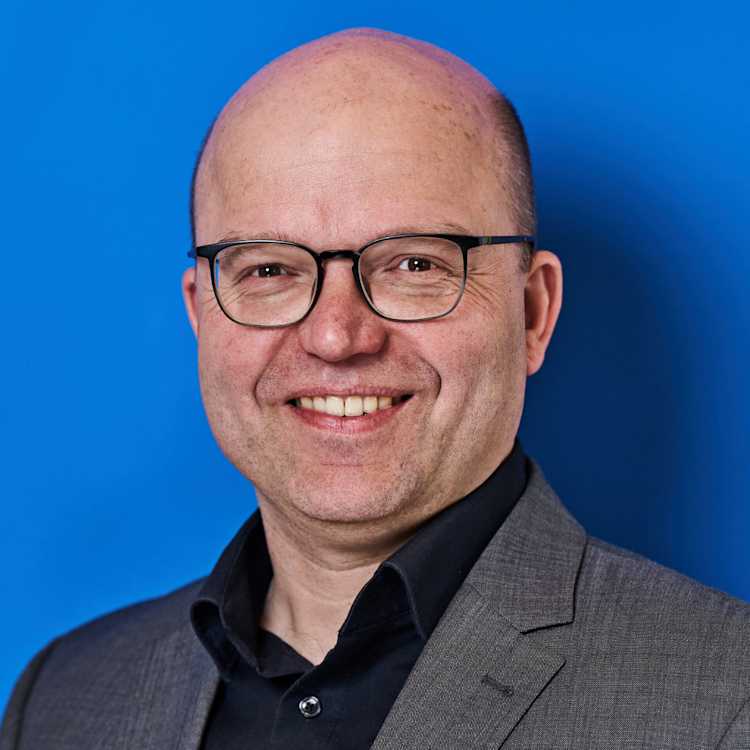
Jason Smith is a Postdoctoral Scholar at Northwestern University , affiliated with the Interactive Audio Lab . He earned his PhD in Music Technology from the Georgia Institute of Technology . Research Focus Human-AI collaboration in creative domains Interactive music systems AI-driven accessibility solutions Creative autonomy and neural audio generation Recommender systems for music libraries Publication Trends His work spans 2019–2025, emphasizing AI applications in music education, accessibility (especially for blind/visually impaired users), and immersive environments like AI holodecks. Key methodologies include co-design, hybrid recommendation algorithms, and automated creativity assessment. Lab Affiliation He contributes to the Interactive Audio Lab, exploring intersections of sound, code, and AI.
Rachel M Heath is a Professor of Economics at the University of Washington with tenure since 2024. She specializes in development economics with particular focus on labor markets in developing countries and gender economics . Her groundbreaking research examines how female labor force participation in Bangladesh and other developing nations affects marriage decisions , educational attainment , and domestic violence rates . Alberta C. Corkery Professor of Economics PhD from Yale University Co-editor with multiple institutions Her research has significant policy implications for international development , particularly through her work on garment industry impacts in Bangladesh following the Rana Plaza collapse. Current working papers explore harassment monitoring in organizations and digital financial services for women's empowerment in Tanzania. Recipient of Milliman Distinguished Scholar award World Bank Economic Review refereeing excellence Multiple grants from International Growth Centre Professor Heath has advised numerous graduate students including Zhe Liu and Andres Sanchez , and serves on multiple academic advisory boards including the Women’s Economic Empowerment and Digital Connectivity initiatives. She regularly presents at major conferences like the American Economic Association Annual Meeting and World Bank events.
Alessandro Rigolon is an Associate Professor and MCMP Program Coordinator in the Department of City and Metropolitan Planning at the University of Utah, where he has been on the faculty since 2019. A dual-PhD scholar (Design & Planning, University of Colorado Denver; Architecture, University of Bologna), he is internationally recognized for research on environmental justice, green-space equity, and the public-health consequences of urban greening. Education: Ph.D. in Design and Planning, University of Colorado Denver (2015) Ph.D. in Architecture, University of Bologna, Italy (2012) B.Arch. & M.Arch. in Architecture and Urban Design, University of Bologna, Italy (2007) Research Interests: Rigolon’s work sits at the intersection of environmental justice, urban planning, and public health. He investigates four interconnected themes: (1) policy drivers of inequity in green-space provision; (2) the mechanisms and resistance to green gentrification; (3) green infrastructure’s role in equitable climate adaptation; and (4) health impacts of urban nature on marginalized communities. His studies span multiple scales—from census microdata in Miami-Dade County to machine-learning analyses across 263 Chinese cities—deploying mixed-methods, spatial analytics, and community-engaged research. Publications & Impact: Across 89 peer-reviewed outputs, recent work (2024-2025) reveals complex pathways by which gentrification both precedes and follows greening, quantifies disparities in park access among racial/ethnic groups, and evaluates policies aimed at achieving green-space equity. Collectively, these studies highlight the need for fine-scale spatial data, intersectional analyses, and robust procedural justice when designing equitable greening interventions. Scientific Awards & Recognition: Stanford/Elsevier Top 2 % Scientist (2024) Clarivate Highly Cited Researcher (2024) APA-Utah High Achievement Award (2022) Urban Studies Editor’s Featured Articles (2021) University of Utah Celebrate U Researcher Honoree (2020) Arnold O. Beckman Award (2019) Grants & Advising: Rigolon currently leads or co-leads six funded projects totaling over one million dollars from the Center for Equitable Transit-Oriented Communities, Center for Climate Smart Transportation, Prevention Institute, and University of Illinois. These grants support interdisciplinary teams examining transit-oriented green gentrification, climate adaptation for active transportation, and equitable park policy implementation. Graduate students and post-docs are active collaborators on all projects. Teaching & Community Engagement: He teaches graduate courses including Design Ecologies , Plan Making , Professional Project Studio , and Research Design . Through studio courses, students partner with local governments (South Salt Lake City, Liberty Wells Community Council) to produce actionable plans advancing environmental justice.
Farzan Banihashemi serves as a Research Fellow at the Chair of Energy Efficient and Sustainable Design and Building at the Technical University of Munich (TUM), maintaining this affiliation since 2019 while concurrently working as a Data Scientist at Climateflux GmbH since 2023. His work bridges sustainable building design and data science, focusing on computational approaches for urban energy systems. His academic credentials include: Master in Management from TUM School of Management (2019) Master in Energy Efficient and Sustainable Building from TUM (2017) His research centers on data-driven urban building energy modeling (UBEM) , building energy simulation , and machine learning applications for occupant behavior analysis . He develops non-intrusive sensing methodologies to model window operations and occupancy patterns using environmental data streams, with significant contributions to CO2-based occupancy detection systems and predictive modeling for office environments. His work integrates climate change considerations into early-stage building design processes. Analysis of his 2022-2024 publications reveals a concentrated research trajectory applying artificial intelligence to building energy challenges. Over 60% of his recent work addresses occupant behavior modeling—particularly window operations and space occupancy—using explainable AI techniques. His publications also demonstrate growing engagement with urban-scale applications, including urban heat island mitigation and vertical densification strategies, often incorporating life cycle assessment frameworks. No scientific awards were documented in the source materials. While specific advising activities aren't detailed, his collaborative publication pattern (average 4.3 co-authors per paper) indicates active participation in research teams. Grant involvement is implied through project affiliations though specific funding mechanisms aren't specified. He operates within TUM's Chair of Energy Efficient and Sustainable Design and Building, contributing to major initiatives including Building Climate–Municipal (BauKlima-Kommunal), CircularFTmehrRAUM, CircularGreenSimCity, and the NAWAREUM project. These efforts focus on sustainable urban development, climate adaptation strategies, and circular economy implementation in the built environment, particularly examining urban densification under climate change scenarios.
Prof. Dr. med. Franz Lennard Ricklefs is a Senior Physician and Head of the Working Group at the Department of Neurosurgery, University of Hamburg Faculty of Medicine. He is a Medical Specialist in Neurosurgery with cross-disciplinary expertise in neuro-oncology, molecular pathology, and extracellular vesicle research. Affiliations: University Medical Center Hamburg-Eppendorf (UKE), European Liquid Biopsy Society (ELBS), International Consortium on Meningiomas (ICOM) Research Interests: His work focuses on neurosurgical oncology, particularly glioblastoma and meningioma pathobiology. He investigates DNA methylation patterns, extracellular vesicle biomarkers, and liquid biopsy implementation in clinical neuro-oncology. Additional interests include surgical outcomes for epilepsy and aneurysm management. Article Trends: Over the last decade, Dr. Ricklefs has published extensively on: Extracellular vesicle applications as liquid biopsy markers DNA methylation subclasses for glioblastoma and meningioma Multicenter surgical outcome benchmarking Immune evasion mechanisms in neuro-oncology Technological innovations in neurosurgical visualization Molecular characterization of rare CNS tumors Professional Contributions: He co-authored the MISEV2023 guidelines for extracellular vesicle studies and participates in international consensus reviews for meningioma classification. His collaborations span institutions across Europe and North America.
Ram S. Mohan is the Wendell and Loretta Hess Endowed Professor of Chemistry and Chair of the Chemistry Department at Illinois Wesleyan University. He has established himself as a leading researcher in environmentally friendly organic synthesis, particularly through his innovative work with bismuth compounds as catalysts. Dr. Mohan earned his B.S. (Honors) in Chemistry from Hansraj College, Delhi, India (1985), followed by an M.S. in Organic Chemistry from the University of Delhi, India (1987), and completed his Ph.D. in Organic Chemistry at the University of Maryland, Baltimore (1992). His research program centers on three interconnected areas: (1) Environmentally-Friendly Organic Chemistry Using Bismuth Compounds, (2) Ionic Liquids as solvents for organic synthesis, and (3) Development of Discovery-Oriented Organic Chemistry Lab Experiments. His pioneering work demonstrates how bismuth compounds—remarkably non-toxic (often less toxic than NaCl), commercially available, and water-compatible—can replace hazardous reagents in organic synthesis while maintaining efficiency. His research shows that reaction pathways can fundamentally change when switching from traditional organic solvents to ionic liquids, rather than merely serving as direct replacements. Analysis of Dr. Mohan's recent publications reveals a consistent focus on sustainable methodologies in organic synthesis, with particular emphasis on bismuth catalysis and educational applications. His work bridges fundamental research with practical classroom implementation, as evidenced by his development of greener laboratory experiments for undergraduate chemistry curricula. Dr. Mohan's accomplishments have been recognized with numerous prestigious awards: Fulbright-Nehru Visiting Lecturer to India (2012-2013) Henry Dreyfus Teacher-Scholar Award (2001) IUPAC Young Observer Award Chemist of The Year by Illinois Heartland Section of The American Chemical Society (2011) Beling Professorship (2008) and Hess Professorship (2013) Co-author of one of Tetrahedron's 50 most-cited articles (2004-07) Dr. Mohan has mentored numerous undergraduate researchers who have gone on to successful careers in academia, medicine, and industry. His research group regularly publishes with undergraduate co-authors, demonstrating his commitment to involving students in meaningful research. He has secured multiple research grants from the National Science Foundation, the American Chemical Society, and Research Corporation to support his work. His international collaborations include conducting green chemistry workshops in India and China, reflecting his global impact in the field. Dr. Mohan's laboratory serves as a hub for undergraduate research in green chemistry, with ongoing projects focused on developing environmentally friendly synthetic methodologies and their educational applications. His research group maintains active collaborations with institutions worldwide, particularly in India where he has conducted numerous workshops and given invited lectures.
Prof. Keimpe Algra is a distinguished academic at Utrecht University, holding the position of Professor of the History of Philosophy within the Department of Philosophy and Religious Studies, Faculty of Humanities. He specializes in ancient philosophy, particularly Hellenistic thought, ancient physics, and Stoic theology. Algra earned his Ph.D. from Utrecht University in 1988 and has held significant roles, including Dean of the Faculty of Humanities (since 2014) and Vice Dean for Research (2007–2013). His research focuses on reconstructing Stoic cosmology, Epicurean theories, and the interplay between ancient philosophy and science. Education & Career Algra studied philosophy and classics at Utrecht University, completing his Ph.D. cum laude. He has held professorships at Utrecht, Amsterdam, and Yale. His administrative roles include leadership in academic governance, notably chairing committees for research integrity and quality indicators for the humanities under the Royal Netherlands Academy of Arts and Sciences (KNAW). Research Interests His work explores ancient physics, Stoic theology, and philosophical texts like Aristotle’s Physics . Key areas include the reception of Aristotle in Hellenistic philosophy, the role of cosmology in Stoic ethics, and the philosophical debates surrounding place and space in antiquity. Publications & Awards Algra authored Concepts of Space in Greek Thought (1995) and co-edited The Cambridge History of Hellenistic Philosophy (1999). He has received accolades such as the Dutch Royal Academy Professorship (2000–2003) and membership in KNAW (2004). His articles address topics ranging from Plutarch’s theology to the Stoic concept of demons. Grants & Leadership He secured grants from NWO and the ESF for projects on Stoic cosmology and ancient physics. As a leader, he chairs KNAW’s Humanities Council and contributed to revising the Dutch Code of Conduct for Research Integrity.
Professor Devyani Sharma is a Professor of Linguistics at Queen Mary University of London, affiliated with the Department of Linguistics within the School of Languages, Linguistics and Film. She holds a PhD from Stanford University. Her research focuses on sociolinguistics, style variation, migration, bilingualism, new varieties of English, syntax, typology, and accent bias. She has conducted extensive studies on diasporic communities, particularly Punjabi Londoners, examining dialect development and social change through projects like 'Generations of London English' and 'Accent Bias in Britain.' Her work integrates quantitative and qualitative methods, including sociolinguistic interviews, acoustic analysis, and discourse analysis. Notable contributions include studies on the role of social networks in language variation, the concept of 'lectal focusing,' and the impact of accent biases in professional contexts. She has authored/co-authored books such as From Deficit to Dialect: The Evolution of English in India and Singapore (2023) and edited volumes including English in the Indian Diaspora (2014). Professor Sharma collaborates on public engagement initiatives like Teach Real English! and Multilingual Capital , aiming to improve linguistic education and address accent bias in society. Her research has been funded by grants from the ESRC and other UK organizations, totaling over £412,000 for major projects. She serves as Associate Editor for the Journal of Sociolinguistics and contributes to international conferences and workshops.
Chris Speed is a Professor of Design for Regenerative Futures at RMIT University, Australia, and Director of Regenerative Futures. Previously, he held academic roles at the University of Edinburgh, including leading the Institute for Design Informatics and co-designing the Edinburgh Futures Institute. His research focuses on design-driven solutions for social, environmental, and economic challenges, leveraging data and emerging technologies. Key areas include blockchain applications, sustainable design, and regenerative systems. Affiliations: RMIT University (Current), University of Edinburgh (2012–2024) Grants: £7.4m Creative Informatics (UK), £5m DECaDE (Digital Economy) Publications: Over 50 peer-reviewed articles on design informatics, regenerative futures, and blockchain ethics. Research interests span Design Informatics, Human-Computer Interaction, and Sustainable Design. He has supervised 23 PhD/MPhil students and pioneered projects like OxChain (blockchain for charitable giving) and Creative Informatics (data-driven creative industries). Awards: Fellow of the Royal Society of Edinburgh (2020), Chancellor’s Award for Research (University of Edinburgh, 2020). Collaborations include BBC, Oxfam, and the Digital Catapult. His work emphasizes co-creation with communities to address systemic challenges, such as climate action and cultural value measurement.
Peter Millican is a Professor of Philosophy and Gilbert Ryle Fellow at Hertford College, University of Oxford, where he has served since 2005. He also holds a part-time role as Visiting Professor at the National University of Singapore (NUS) and temporary Visiting Professor at Nanyang Technological University (NTU). His academic roles include Head of Education & Outreach at the Institute for Ethics in AI. Education: Studied Mathematics at Oxford, switched to Philosophy and Theology, graduating with First Class Honours, then completed a B.Phil. in Philosophy at Oxford. His interdisciplinary work bridges Philosophy and Computing, notably co-founding the Oxford Computer Science and Philosophy degree program in 2012. Research focuses on Early Modern Philosophy (particularly David Hume), Philosophy of Language, Philosophy of Religion, and digital humanities. Major projects include the davidhume.org initiative and English Philosophical Texts Online . Key contributions include over 40 publications on Hume, ethics, and AI. He hosts the Futuremakers podcast exploring AI and climate change implications. Awards include the Gilbert Ryle Fellowship and editorial roles in Hume Studies . Outreach includes educational software development (e.g., PhiloComp.net ) and public engagement through media appearances, debates, and the Signature stylometric software used in high-profile literary analyses (e.g., identifying J.K. Rowling as 'Robert Galbraith').
Dr. Michael Sinclair is a Lecturer in Urban Analytics at the University of Glasgow , affiliated with the Division of Urban Studies and Social Policy and the Urban Big Data Centre . He convenes the MSc in Urban Analytics and co-leads the Socio-Environmental Action research cluster . His research focuses on leveraging novel data sources (e.g., mobile apps, social media) to address societal and environmental challenges, particularly human-nature interactions and greenspace valuation. Sinclair leads projects funded by the UK Government’s Department for Culture, Media and Sport and the Economic and Social Research Council (ESRC). His work emphasizes ethical use and representativeness of big data, with applications in urban policy, ecosystem services, and environmental sustainability. Sinclair has secured grants totaling over £1M, including projects on greenspace accessibility and urban data dashboards. He supervises students on GIS and urban analytics topics and contributes to policy-relevant datasets like Tamoco Open Spaces . Notable achievements include developing methodologies for valuing nature-based recreation and advancing spatial interaction models for urban green spaces. His research bridges Human Geography and Environmental Science, with publications in journals like Ecosystem Services and Global Environmental Change .
Dr. Shirley Coleman is a distinguished Professor at Newcastle University Business School, specializing in the application of statistical methods to business and industrial problems. With over two decades of academic contributions, she has established herself as a leading expert in statistics, data science, and quality management within industrial contexts. Her research interests span several interconnected domains: Statistics, Data Science, Business Analytics, Quality Management, Six Sigma methodologies, Kansei Engineering (which integrates emotional design with product development), Industrial Statistics, Design of Experiments, Predictive Maintenance, and Customer Lifetime Value analysis. Coleman's work consistently bridges theoretical statistical concepts with practical business applications across diverse sectors including healthcare, manufacturing, facilities management, and digital marketing. Analysis of her recent publications reveals a strong focus on the evolving role of statistics in the digital age, particularly examining how statistical expertise contributes to AI development, Industry 4.0 initiatives, and data-driven business transformation. Her work demonstrates increasing emphasis on customer analytics, predictive maintenance modeling, and the strategic implementation of data science in small and medium enterprises. Coleman's publications frequently address methodological challenges while maintaining strong practical relevance for industry practitioners. Throughout her career, Coleman has been actively involved with the European Network for Business and Industrial Statistics (ENBIS), contributing to the development and dissemination of statistical methods in business contexts. Her collaborative approach is evident in numerous co-authored publications across disciplines, demonstrating her ability to work effectively with researchers from diverse fields including engineering, healthcare, and business management. Her advisory work appears focused on helping organizations implement statistical thinking in business processes, with particular attention to small and medium enterprises seeking to leverage data analytics for competitive advantage. Though specific grant information isn't detailed in the available publications, her extensive industry-focused research suggests significant engagement with practical business problems and industry partnerships. Dr. Coleman has made substantial contributions to the field through her leadership in professional organizations, particularly ENBIS, where she has helped shape the discourse around industrial statistics and their business applications. Her work on Kansei Engineering demonstrates innovative approaches to integrating human factors with statistical methods for product development.
Thomas Richter is a leading academic and Professor at the German Institute for Global and Area Studies (GIGA) , where he serves as Lead Research Fellow and Head of the Research Programme "Accountability and Participation" . His work focuses on the institutional and material determinants of authoritarian rule , executive personalization , and global political economy , particularly in the Middle East and North Africa region. Education: PhD in Political Science (summa cum laude) at the University of Bremen (2008); studies at Eberhard-Karls University Tuebingen and University of Michigan, Ann Arbor. His research explores the interplay of rentier statehood and economic reforms , civil society under authoritarian regimes , and shrinking civic spaces . Recent projects include the Merian Center for Advanced Studies in the Maghreb (MECAM) and the Monitoring System and Transfer Platform Radicalisation (MOTRA) , funded by BMBF and DFG. Richter has published extensively on topics such as anti-Semitism , executive power dynamics , and public opinion on military service in Germany. He has received notable awards, including the Lijphart/Przeworski/Verba Data Set Award (2017) and the Gero Erdmann-Preis für vergleichende Area-Forschung (2022) . His collaborative work spans institutions like the WZB Berlin and Université de Tunis . Richter is also a co-editor of the Perspectives on the Maghreb series with Amsterdam University Press.
William Swadling is a Professor of Law and Senior Law Fellow at Brasenose College, University of Oxford. He holds academic associate roles at One Essex Court and is a Senior Fellow at the University of Melbourne. He has held visiting professorships at institutions including the University of Hamburg, Seoul National University, and the National University of Singapore. His legal education includes an MA from Oxford (Oxon) and an LLM from the University of London. Swadling specializes in Property Law, Restitution, and Trusts, with a focus on their intersection. His research explores equitable remedies, constructive trusts, and unjust enrichment. His work has been cited in landmark English court rulings like Westdeutsche Landesbank Girozentrale v Islington LBC , and he contributes to leading legal publications such as Halsbury's Laws of England and the Restitution Law Review . He has authored/co-authored several books, including The Quistclose Trust: Critical Essays , and edited sections on property law in academic texts. His recent research includes studies on proprietary consequences of fraud and the nature of knowing receipt in equity. He is an elected member of the American Law Institute and actively participates in academic conferences, including the 'Laws of Restitution' symposium hosted by Oxford's Private Law Research Group. Swadling teaches Restitution, Trusts, and Personal Property at Oxford, chairs faculty teaching groups in these areas, and advises on commercial law risk through his work with the Chancery Bar Association.
Isabelle Pichon is an academic affiliated with the University of La Réunion (UCO), specifically within the Faculty of Human and Social Sciences. She holds a Doctorate in Psychological Sciences from the Catholic University of Louvain (2006) and serves as an Educational Manager for the 3rd Year Psychology Degree - PSTO Masters program. Her research focuses on prosocial behaviors, religion's impact on social dynamics, intergroup relations, stereotypes, and ethical behavior. She has authored and co-authored numerous peer-reviewed articles in journals like Le sociographe and Basic and Applied Social Psychology , exploring topics ranging from minority resilience to ideological conflicts. Her academic work bridges sociology and psychology, emphasizing societal norms, identity formation, and the psychological underpinnings of social actions. Recent studies include investigations into how religious priming influences prosociality and the ethical tensions between collective norms and individual behavior. Notable contributions include analyzing sexual minorities' resilience mechanisms and the interplay between personal and professional identity among social work students. Dr. Pichon has presented at conferences such as the XXème congrès AIPTLF (2018), addressing themes like work-life transition dynamics. Her research methodologies include experimental approaches and quantitative analyses. No scientific awards or grants are explicitly listed, but her extensive publication record underscores sustained scholarly engagement in social and psychological sciences.