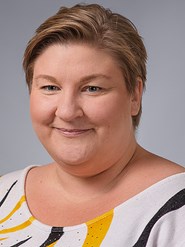
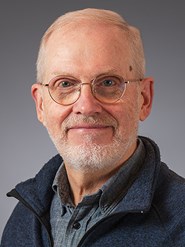
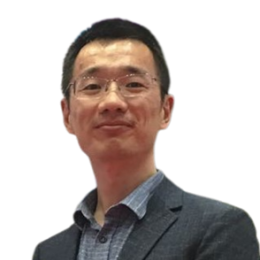
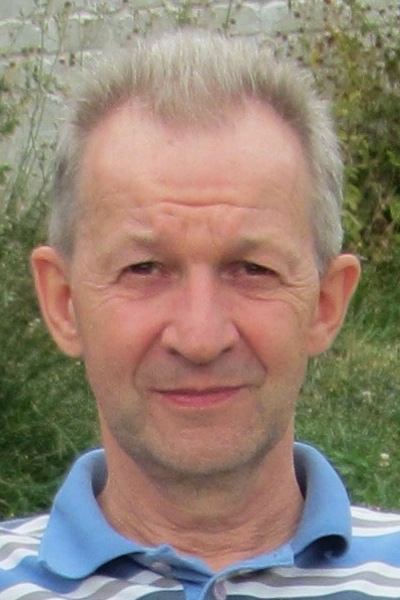
Therese Nordin is an Assistant Professor at Umeå University's Department of Community Medicine and Rehabilitation, specializing in occupational therapy. Her research focuses on social participation and togetherness among older adults within home care contexts, particularly through the STAY-IN-TOUCH project. Research Themes Gerontological perspectives on loneliness Co-creative methods in home care interventions Relational and transactional models of human activity Power dynamics in health services research Qualitative approaches to social participation Recent Publications Her work explores the interplay between structural care provision and subjective experiences of social connectedness in aging populations, with specific attention to: Gender norms and loneliness in men Home care professionals' conceptualization of social needs Design of participatory care models Quantitative-qualitative integration in aging research Methodological Expertise Therese employs a range of qualitative approaches, including: Scoping reviews Creative co-design methodologies Narrative analysis Transactional perspective frameworks
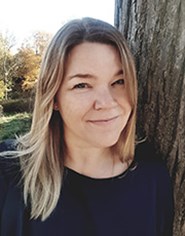
Lena Berggren serves as an Associate Professor in the Department of Historical, Philosophical and Religious Studies at Umeå University, Sweden, with her office located in Humanisthuset (HUM.H.125), Umeå. She holds the title of Docent and has been honored as a Distinguished university teacher for exceptional pedagogical contributions. Her academic qualifications include the Swedish Docent credential (a post-doctoral habilitation) and recognition as a Distinguished university teacher, reflecting dual expertise in research and education. Berggren's research centers on Swedish fascism, antisemitism, and ultra-nationalism during the interwar period, with specific focus on clerical fascism intersections with Lutheranism and völkisch thought. She simultaneously advances university pedagogy through investigations into scientific methodology development and assessment strategies for students, creating a unique bridge between historical scholarship and educational innovation. Analysis of her publication trajectory reveals persistent examination of extremist ideologies' historical roots and modern manifestations, culminating in her 2024 co-authored book '100 år av svensk nazism' which directly addresses contemporary far-right movements in Sweden. Her scientific recognition includes: Distinguished university teacher award Berggren secured research funding for the project 'Swedish fascism 1920-1950' (2007-2008), demonstrating sustained investigative focus. While no formal advisee list is documented, her pedagogical publications indicate active mentorship in historical methodology and academic writing development.
Luca Peretti is an Associate Professor in Electric Machines and Drives at KTH Royal Institute of Technology, affiliated with the School of Electrical Engineering and Computer Science and the Department of Electrical Engineering, Division of Electric Power and Energy Systems. He works as a researcher in the EMD (Electric Machines and Drives) group and serves as Partner Director for KTH's strategic partnership with ABB. Education: M.Sc. in Electronic Engineering (2005) from University of Udine, Ph.D. from University of Padova (2008) Professional Experience: Postdoc at University of Padova (2009-2010), Principal Scientist at ABB Corporate Research (2010-2018), Associate Professor at KTH (2018-present) His research focuses on: Automatic parameter estimation in electric machines Multiphase drive systems Sensorless control algorithms Loss segregation in drive systems Condition monitoring of industrial and transportation applications Recent publications demonstrate expertise in variable phase-pole machines, harmonic plane decomposition, predictive control algorithms, and advanced modeling of permanent magnet motors. Key application areas include transportation electrification, wind energy systems, and industrial drive technologies. Scientific roles include: Associate Editor, IET Electric Power Applications Journal (2019-present) Theme Co-Leader, Swedish Electromobility Center (2020-present) Member, IEEE (2021-present) and IET (2006-present) He leads the strategic partnership with ABB and contributes to doctoral program committees at University of Padova.
Mehdi Abdollahi is an Associate Professor at Chalmers University of Technology's Department of Food and Nutrition Science. His research focuses on alternative proteins, food biotechnology, and plant-based hybrid foods, with emphasis on sustainable utilization of food side streams, legumes, cereals, and microalgae as future protein sources. Develops pH-shift technology and ultrasound-assisted methods for protein extraction Specializes in hybrid food engineering via fermentation and biorefinery Works on 3D food printing and high-moisture extrusion for food analogs Researches collagen and biobased food packaging materials His work includes >100 peer-reviewed publications, 4 book chapters, and 3 patents. Current projects involve collaborations with Arla Foods, Lantmännen, and Nordic Seafarm, addressing sustainable seafood systems and plant-protein hybridization. 2024 Bertebos Prize recipient 2025: Recognized among Sweden's Top 101 Sustainability Figures Mentors 7 PhD students and 3 postdocs while collaborating with European institutions like Kristianstad University and Ankara University. His group explores biorefinery strategies, hybrid food functionality, and innovative packaging solutions.
Susanne Iwarsson is a Professor in Gerontology and Care for Older People at Lund University's Faculty of Medicine, holding the Mary and Seved Ribbing Professorship since 2005. She also serves as Director of the Centre for Ageing and Supportive Environments (CASE) and Coordinator of the Swedish National Graduate School for Competitive Science on Ageing and Health (SWEAH). Her academic journey includes a PhD in Medical Science (1997) and promotions to Associate Professor (1999) and Professor (2003). She has held leadership roles such as Pro-dean of the Faculty of Medicine (2006-2011) and Coordinator of the strategic research area MultiPark (2012-2014). Her research focuses on environmental gerontology, housing accessibility, and proactive ageing strategies. Key contributions include the Housing Enabler assessment tool and studies on ageing populations' participation in society. She has supervised 18 PhD students and 6 licentiates, with ongoing supervision of 4 current PhD candidates. Major projects include the Home, Health and Disability longitudinal study (2002-present) and the UserAge program exploring user participation in ageing research. Awards include the Excellent Teaching Practitioner title (2010) and Doctor Honoris Causa. Her work addresses UN Sustainable Development Goals related to health, sustainable cities, and reduced inequalities. Collaborations span universities in Sweden, Finland, Latvia, and the U.S., with partnerships in healthcare and municipal sectors.
Robert Östling is a Professor of Economics at the Stockholm School of Economics (SSE), affiliated with the Department of Economics and the Karl-Adam Bonnier Center for Governance within the House of Governance and Public Policy. He holds a PhD from SSE (2008) and previously worked at Stockholm University's Institute for International Economic Studies until 2018. His research focuses on applied microeconomics and behavioral economics, particularly examining how wealth impacts attitudes, behavior, and life outcomes using Swedish lottery data. He teaches econometrics, behavioral economics, and economics for MBA students, and serves as program director for SSE's MSc in Economics. Key roles include board membership of the Swedish Economics Association and the Expert Group on Public Economics (ESO), and membership in the scientific advisory board of the Swedish Consumer Protection Agency. He co-founded the popular economics blog Ekonomistas , recognized as 'Swede of the Year' in 2017. Awards include the Assar Lindbeck Medal (2021) and the Arnberg Prize (2009). His research spans wealth effects on labor supply, health, child development, and political behavior. Notable projects include studying lottery winners' long-term well-being and portfolio decisions. Teaching innovations include using animated GIFs for econometrics instruction. He has contributed to policy debates on economic reforms, consumer protection, and pandemic responses. Outreach activities include public writing and policy advisory roles. His research has been featured in outlets like the New York Times and Swedish media. He remains active in academic networks, including the Network for Evidence-Based Policy.
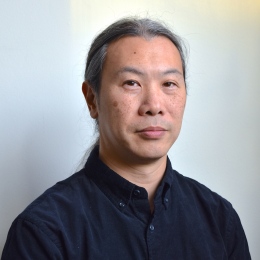
Cheuk Wai Tai is a Senior Staff Researcher at Stockholm University's Department of Environmental and Materials Chemistry since 2009. He manages the transmission electron microscopes and sample preparation equipment at the Electron Microscopy Center and serves as Section Editor for the Journal of Electronic Materials. His work focuses on quantitative structure characterization in functional materials research, particularly within nanoscience and nanotechnology contexts. Education: Ph.D. in Applied Physics, The Hong Kong Polytechnic University, 2004 M.Phil. in Applied Physics, The Hong Kong Polytechnic University, 2001 M.Sc. in Physics, The Chinese University of Hong Kong, 1998 B.Sc. (Hons) in Engineering Physics, The Hong Kong Polytechnic University, 1997 Dip. in Mechanical Engineering (Computer Aided Engineering), Institute of Vocational Education (formerly Haking Wong Technical Institute), Hong Kong, 1992 His research centers on structure-property relationships in functional materials through advanced electron microscopy techniques. Current specializations include Pair Distribution Function (ePDF) & Diffuse Scattering, Energy Materials characterization, and EM sample preparation methodology development. The group maintains strong focus on translating structural data into functional performance metrics for nanomaterials. Recent publications (2013-2019) demonstrate consistent emphasis on electron microscopy applications for energy storage materials (batteries, photocatalysts) and functional ceramics. Key trends include structural disorder analysis in piezoelectrics, development of quantitative TEM methods like SUePDF, and nanoscale characterization of electrocatalyst surface phases. His work bridges materials chemistry with advanced imaging techniques. Scientific recognition includes: Fellow of The Royal Microscopical Society (U.K.) Senior Member of IEEE Marie Curie Fellowship (2007-2009) from European Commission Sir Edward Youde Memorial Fellowship (2003/2004) from Hong Kong S.A.R. Government He teaches Solid State Chemistry (KZ7003) and leads Introduction to Analytical Electron Microscopy (KZ8009), having previously taught Advanced Transmission Electron Microscopy (KZ8010) before 2011. Major grants supporting his work include: "Quantitative structural characterisation using 3D electron-based pair distribution function" (Swedish Research Council) "A Multidimensional Toolkit for Modern Electron Microscopy" (Swedish Foundation for Strategic Research) "Mitigating Ni-rich Li-ion cathode side-reactions" (Swedish Energy Agency, Co-applicant) He leads the Cheuk-Wai Tai group within Stockholm University's chemistry department and oversees operations at the Electron Microscopy Center, where his team develops and applies advanced characterization techniques for functional materials research.
Professor Ingrid Undeland leads the Marine research group at the Division of Food and Nutrition Science, Department of Life Sciences at Chalmers University of Technology. She is a distinguished researcher with expertise spanning marine food science, lipid chemistry, and blue biorefining, having established herself as a leading figure in sustainable seafood research and marine biotechnology. Her educational background includes food science studies from Linnaeus University and a PhD in bioscience from Chalmers University of Technology and SIK (now RISE). Between 1999-2002, she was a post-doctoral fellow at University of Massachusetts Marine Station, which significantly shaped her research trajectory in marine food science. Professor Undeland's research focuses on pioneering next-generation seafood through innovative value chains from seaweed, small pelagic fish, fish side streams, mussels, and microalgae. Her specialized expertise lies in marine lipids and proteins, particularly their stabilization, isolation from complex sources, and nutritional properties including digestibility. She has extensive experience with antioxidant strategies using plant-derived side streams or extracts and fundamental studies of fish hemoglobins as pro-oxidants. Her work also encompasses innovative technologies for biomass fractionation and nutrient recycling to build blue biorefineries, along with in vitro digestion models and general seafood analytics. Beyond marine research, she explores filamentous fungi as sustainable alternative food protein sources. The trends in her recent publications reveal a strong emphasis on valorizing marine resources through advanced processing techniques. Her work increasingly focuses on sustainable extraction methods for seaweed proteins, particularly Ulva fenestrata, and developing antioxidant strategies using berry side streams to stabilize fish proteins. There's a growing interest in understanding the nutritional properties and digestibility of alternative marine proteins, along with environmental assessments of processing technologies. Her research consistently bridges fundamental science with practical applications for creating sustainable seafood value chains. Swedish representative in Nordic Lipidforum, WEFTA, and EuCheMS Editorial board member of Journal of the Aquatic Food Product Technology Member of the National Committee for Nutrition and Food Science at the Royal Swedish Academy of Sciences Co-founder of the startup company AquaFood H-index of 47 according to Google Scholar Professor Undeland has an extensive record of academic mentorship, having supervised or currently supervising 23 PhD students, 14 postdoctoral researchers, and examining over 25 MSc students. Her research is supported by numerous grants, including the WaSeaBi Project which focuses on valorizing seafood side-streams through holistic value chain design. She collaborates with various industry partners and academic institutions across Europe. Her laboratory includes technicians Dr. Karin Larsson and Dr. Rikard Fristedt, and she leads a dynamic research team working on multiple projects related to marine biorefining and sustainable seafood development. Her research group operates within well-equipped facilities at Chalmers University, with specialized laboratories for marine food analysis, protein extraction, lipid oxidation studies, and in vitro digestion modeling. The team also maintains cultivation systems for seaweed and filamentous fungi, enabling integrated research from raw material production to final product development.
Elina Rönnberg is a Professor and Deputy Head of Department at the Department of Mathematics, Linköping University, where she leads research in discrete optimisation and intelligent decision-making. Her work bridges theoretical method development and real-world applications in sectors such as healthcare, aviation, mining, and transportation. She is actively involved in the Wallenberg AI, Autonomous Systems and Software Program (WASP) and has collaborated with industry leaders like Saab and Scania. Her research focuses on advanced optimisation techniques including Dantzig-Wolfe decomposition, Lagrangian relaxation, column generation, branch-and-price, and logic-based Benders decomposition. She also explores hybrid methods combining mathematical programming with constraint programming and machine learning. Applications span nurse rostering, electric vehicle routing, aircraft arrival scheduling, and underground mine planning. Recent publications highlight a strong trend toward integrating AI and machine learning—particularly graph neural networks—with classical optimisation frameworks to accelerate solution methods. Her work emphasizes practical impact, robustness, and scalability in solving complex scheduling and resource allocation problems. Nurse Rostering with Strategic Planning of Skills for Sick-Leave Robustness (2024) Pricing for the EVRPTW with Piecewise Linear Charging (2024) Speeding Up Logic-Based Benders Decomposition with Graph Neural Networks (2024) Elina supervises several PhD students and has co-supervised doctoral research at international institutions including Makarere University (Uganda) and the University of Exeter (UK). She has contributed to applied projects through student theses in collaboration with Scania and Saab, focusing on electric vehicle routing and search-and-rescue optimisation. She previously served as a Specialist in Optimisation at Saab Aeronautics (2014–2020) and co-founded Schemagi, a scheduling tool aimed at improving quality in healthcare. She teaches courses such as Introduction to Optimization (TAOP07) and Project - Applied Mathematics (TATA62). Her research group, 'Mathematics and algorithms for intelligent decision-making,' operates within the Division of Applied Mathematics (TIMA) at the Department of Mathematics. The team develops decision support tools that enhance efficiency and sustainability in complex systems, particularly under the growing demands of electrification and digitalisation in transport and logistics.
Marianna Ivashina is a Professor and Head of the Antenna Systems Research Group at Chalmers University of Technology's Department of Electrical Engineering . Her work focuses on array antennas , antenna integration with electronics , optimal beamforming , and over-the-air measurement methods . The group has achieved international recognition for innovations in ultra-wideband (UWB) feeds , Gap waveguide antennas , and Doherty-power-amplifier-integrated antennas for 5G/6G and radio telescope applications. Key projects include the SSF Sweden-Taiwan collaboration , EU Horizon 2020 MyWave , and VINNOVA ENERGETIC initiatives. Her recent publications emphasize millimeter-wave (mmWave) communication and reconfigurable intelligent surfaces (RIS) , with applications in 5G/6G networks , satellite communication (SatCom) , and advanced antenna testing chambers . She explores beamforming optimization , self-interference mitigation , and hybrid OTA environments to enhance wireless system performance. The group's work bridges theoretical advancements with practical implementations, including RFSoC testbeds and high-efficiency antenna arrays . Marianna leads major research programs funded by Ericsson , VINNOVA , and EUREKA EURIPIDES2 , addressing challenges in beamforming , antenna-IC integration , and automated design for 5G/6G . These projects highlight her role in advancing millimeter-wave communication and sensor integration technologies.
Martin Berggren is a Professor at the Department of Computing Science , Umeå University , Sweden. His work focuses on Computational Design Optimization , combining computer simulations and numerical optimization to enhance engineering designs for devices like antennas, microwave components, and loudspeakers. Berggren is also active in mathematical modeling of physical phenomena, particularly wave propagation and fluid mechanics, with a strong emphasis on finite-element methods . His research addresses large-scale conceptual design problems using thousands to millions of design variables, relying on gradient-based algorithms and adjoint-based computations of design sensitivities—similar to back-propagation in deep learning. Key application areas include acoustic and electromagnetic devices, where he investigates damping mechanisms, boundary conditions, and material distribution. Other interests, though less active, involve flow control and unsteady fluid–structure interaction . Berggren collaborates extensively on projects such as Structured Regularization , Topology Optimization of Acoustic Black Holes , and Design of Microstrip-to-Waveguide Transitions . His publications span journals like Journal of Computational Physics , Pattern Analysis and Applications , and IEEE Transactions on Antennas and Propagation , often co-authored with researchers like Linus Hägg , Eddie Wadbro , and Disi Lin .
Yu Xia is a Post Doc at the Department of Chemistry, Stockholm University, Sweden. He is affiliated with the Tom Willhammar Research Group, focusing on advanced electron microscopy and diffraction techniques for structural characterization of materials. PhD (2019–2023) from a joint program between the University of Birmingham (UK) and the Southern University of Science and Technology (China). Research emphasizes fabrication of metallic nanoparticles with non-equilibrium structures and shapes using gas-phase condensation and thermal shock methods. Specializes in scanning transmission electron microscopy (STEM), in-situ heating experiments, and electron energy loss spectroscopy (EELS) for nanoparticle analysis. Current work prioritizes 4DSTEM imaging for electron beam-sensitive materials and Python-based post-processing of electron microscopy datasets. Yu Xia's research spans Materials Science , Nanotechnology , and Electrocatalysis , with applications in photocatalytic hydrogen evolution , graphene composites , and advanced electron microscopy techniques . His work often integrates computational image processing with structural characterization to optimize material properties. Publications highlight innovations in heterostructure engineering , metallic alloy catalysts , and electron beam-sensitive material imaging . No scientific awards are explicitly mentioned in the provided text. Yu Xia's technical expertise includes Python scripting for image analysis, in-situ electron microscopy , and multifunctional graphene-based materials .
Pierre Flener is a Professor at the Department of Information Technology, Division of Computing Science at Uppsala University. He leads the Optimisation Group and is a member of the Centre for Interdisciplinary Mathematics. His work focuses on constraint programming and discrete optimization, addressing complex scheduling, routing, and resource allocation challenges. Flener is an Officer of the Order of Merit of Luxembourg and co-founder of NordConsNet, the Nordic Network for Constraint Programming researchers. Research Interests: Flener’s research spans constraint programming, combinatorial optimization, and algorithm design. He develops models and tools for automated decision-making in domains like air traffic management, sensor networks, and industrial robotics. His work emphasizes practical applications, leveraging constraint satisfaction techniques to solve real-world puzzles such as vehicle routing and personnel allocation. Key Contributions: Flener has authored over 100 publications on constraint solving, symmetry breaking, and CP-based approaches to industrial problems. Notable projects include airspace sectorization optimization, energy-efficient sensor networks, and financial portfolio design. He has led initiatives like Auto-Tabling for MiniZinc and collaborated on CP applications in bioinformatics and image processing. Labs & Teams: He heads the Optimisation Group at Uppsala, fostering research in CP and its applications. NordConsNet, co-founded by Flener, connects Nordic researchers and practitioners in constraint technology.
Niklas Hedin is a Professor and Head of the Department of Chemistry at Stockholm University . His research group specializes in developing advanced materials for environmental and energy applications, with a particular focus on CO₂ capture technologies , green material synthesis , and biochar-based solutions for pollution mitigation and sustainable resource utilization. Professor at Department of Chemistry Head of Department Stockholm University affiliation The research spans from fundamental molecular spectroscopy studies to industrial-scale applications . Key projects include the use of activated limestone for Baltic Sea eutrophication control, colloidal porous liquids for energy-efficient carbon capture, and engineered biochars for dual environmental remediation and agricultural applications. Recent publications highlight 2025 breakthroughs in aminated cellulose aerogels , graphene oxide composites for direct air capture , and ultrasound-assisted hydrogen peroxide synthesis . These works demonstrate Hedin's commitment to multiscale material engineering combining experimental validation with computational modeling. The group includes several PhD students and postdoctoral researchers working on specialized aspects of material synthesis and environmental application. His team actively collaborates with industrial partners and government agencies to translate laboratory findings into real-world solutions for sustainable chemistry and climate change mitigation .
Francesca Chiodi is a Senior Professor in the Department of Microbiology, Tumor and Cell Biology at Karolinska Institutet, Sweden. Her research focuses on HIV pathogenesis, host-microbe interactions, and immune responses in infectious diseases. She holds a Docent title from Karolinska Institutet (1991) and has been continuously employed there since 2004. Her work spans virology, immunology, and clinical trials, with emphasis on HIV prevention strategies, mucosal immunity, and translational research. Research highlights include studies on HIV pre-exposure prophylaxis (PrEP), host gene expression in foreskin tissue, and viral surface protein epitope profiling. She has led projects evaluating SARS-CoV-2 responses in mucosal tissues and contributed to global initiatives like the CHAPS study in sub-Saharan Africa. Her division, the Division of Host-Microbe , investigates microbial pathogenesis and immune mechanisms in chronic infections. Key collaborations include studies on B-cell dysfunction in HIV and TB co-infections, as well as vaccine design for immunocompromised populations. Publications (2020–2024) reflect her focus on clinical trials, transcriptomic analyses, and translational models. She has advised numerous collaborative studies but no formal student advisees are listed. Research funding includes grants for mucosal HIV prevention and SARS-CoV-2 pathogenesis studies. Ongoing work explores immune reconstitution in early antiretroviral therapy and correlates of protective immunity in mucosal tissues.