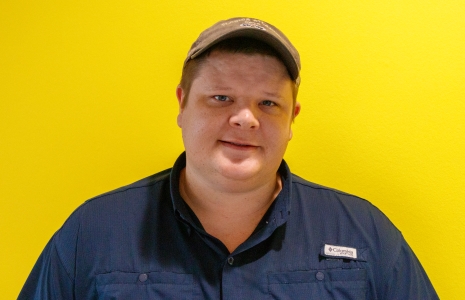
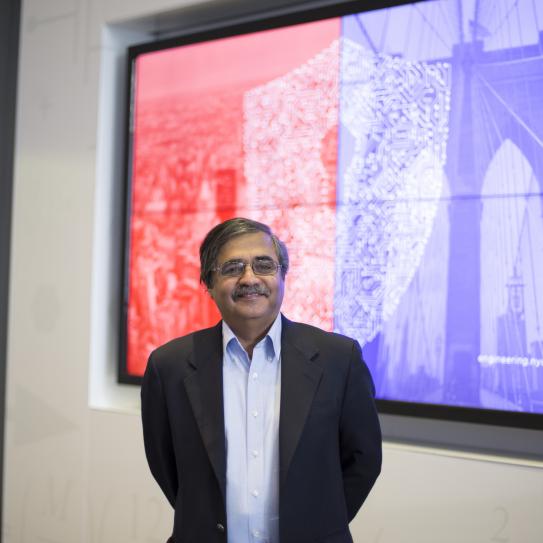
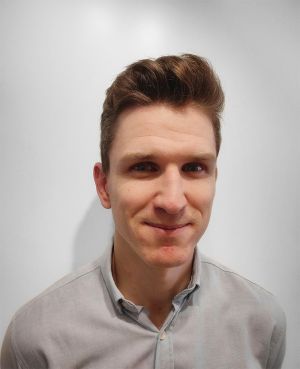
Dr. Corey T. Callaghan is an Assistant Professor in the Department of Wildlife Ecology and Conservation at the University of Florida . Based at the Fort Lauderdale Research and Education Center , his research focuses on global change ecology using big data from citizen science platforms like eBird and iNaturalist, combined with geospatial analyses and macroecological theory . Ph.D. (2019) from UNSW Sydney M.S. (2015) from Florida Atlantic University B.S. + B.S. (2013) from Canisius College His work examines urban ecology , including how species traits influence urban tolerance across birds, amphibians, and butterflies. He develops adaptive sampling frameworks to optimize citizen science data collection while addressing biases. Current projects analyze human-nature interactions through citizen science participation, secondary data in photographs, and machine learning for biodiversity monitoring. He actively contributes to conservation strategies for urban biodiversity and data-driven restoration efforts . Recent publications highlight his expertise in cross-taxa comparisons , continental-scale analyses , and ecosystem service quantification . He leads the Global Ecology Research Group at the University of Florida, emphasizing collaborative science and open-source methodologies .
Andrea Vedaldi is a Professor of Computer Vision and Machine Learning at the University of Oxford's Department of Engineering Science, affiliated with the Visual Geometry Group (VGG). He specializes in unsupervised methods for understanding images and videos, focusing on 3D geometry and semantics. His research bridges foundational AI and practical applications, with contributions to generative models, neural fields, and self-supervised learning. Education: PhD in Computer Science (2008), University of California, Los Angeles MSc in Computer Science (2005), UCLA BSc in Information Engineering (2003), University of Padua Research Interests: Unsupervised learning, 3D perception, generative AI, neural rendering, and scalable vision systems. His work emphasizes ethical, responsible AI aligned with ERC-funded projects like UNION (ERC Consolidator Grant). Key Contributions: Co-developer of VLFeat and MatConvNet libraries Leader in 3D reconstruction and diffusion models (e.g., CatFree3D) Recipient of the PAMI Thomas S. Huang Prize and multiple best paper awards Grants & Service: Principal Investigator on £2.3M ERC Consolidator Grant (UNION) Co-organizer of major conferences (ECCV 2020 Program Chair, CVPR 2023 Area Chair) Reviewer for top journals/conferences (PAMI, CVPR, NeurIPS) Labs & Teams: VGG Group at Oxford, collaborating on projects like Meta 3D Gen and Common Objects in 3D (CO3D).
Amir Zamir is a tenure-track Assistant Professor of Computer Science at the Swiss Federal Institute of Technology Lausanne (EPFL) in the School of Computer & Communication Sciences. Previously, he worked at UC Berkeley, Stanford, and UCF with prominent researchers including Silvio Savarese, Jitendra Malik, Mubarak Shah, Rahul Sukthankar, and Leonidas Guibas. He currently leads the Visual Intelligence & Learning Lab at EPFL and serves as chief scientist of Duranta, having previously been the CVML chief scientist of Aurora Solar (a Forbes AI 50 company valued at $4B in 2022) from 2015 to 2022. Dr. Zamir's research spans computer vision, machine learning, and artificial intelligence, with a focus on developing general multi-modal/multi-task vision systems that operate as active agents in the real world. His work emphasizes slow science principles, seeking fundamental understanding over quick publications. Key research areas include embodied vision, multimodal foundation models, computational imaging, and vision-language integration. His notable projects include 4M, Taskonomy, Gibson Environment, Omnidata, and MultiMAE, which have significantly influenced the field of computer vision and embodied AI. Zamir has made substantial contributions to the computer vision community through numerous high-impact publications and leadership roles. His work demonstrates a consistent focus on creating vision systems that go beyond narrow and passive methods toward more general, active, and embodied approaches. The trajectory of his research shows increasing sophistication in handling multiple modalities and tasks within unified frameworks, culminating in recent work on multimodal foundation models that can handle diverse vision tasks. Dr. Zamir has received numerous prestigious awards including the Young Researcher Award 2022 from ECCV, the PAMI Mark Everingham Prize 2022, SIGGRAPH 2022 Best Paper Award for CLIPasso, CVPR 2018 Best Paper Award for Taskonomy, and CVPR 2016 Best Student Paper Award. He is also an ELLIS Faculty Scholar and received the NVIDIA Pioneering Research Award in 2018 for the Gibson Environment. As an advisor, Dr. Zamir has mentored numerous PhD students including Roman Bachmann, Andrei Atanov, Rishubh Singh, Jason Toskov, Kunal Pratap Singh, Zhitong Gao, Mingqiao Ye, and Muhammad Uzair Khattak. His former PhD students include Oguzhan Kar (now at Apple), Alexander Sasha Sax (co-advised with Jitendra Malik, now at Meta FAIR), and Teresa Yeo (now at MIT-Singapore Alliance). Dr. Zamir teaches several advanced courses including CS-503 Visual Intelligence, CS-500 AI Product Management, COM-304 Intelligent Systems, and ENG-615 Topics in Autonomous Robotics. Dr. Zamir leads the Visual Intelligence & Learning Lab at EPFL, which focuses on developing fundamental methods for visual intelligence that can operate effectively in real-world environments. The lab takes an interdisciplinary approach combining computer vision, machine learning, robotics, and cognitive science to create systems that can perceive, understand, and interact with the world. Current research directions include multimodal foundation models, computational imaging, embodied vision, and personalization of generative models.
Olga Sorkine-Hornung is a Professor of Computer Science at ETH Zurich and head of the Institute of Visual Computing. She leads the Interactive Geometry Lab, focusing on theoretical and practical advancements in digital content creation, geometry processing, and shape modeling. Current position: ETH Zurich, Department of Computer Science Previous roles: Courant Institute (NYU), Technical University of Berlin Education: BSc and PhD from Tel Aviv University, postdoc at TU Berlin Her research spans shape representation, digital fabrication, computer animation, and fundamental geometry processing. Key contributions include Laplacian surface editing, as-rigid-as-possible deformation, and generalized winding numbers. She works on applications in VR, AR, and autonomous systems. Awards include Test of Time Awards (2024), ACM Fellow (2020), ERC Consolidator Grant (2020), and EUROGRAPHICS Young Researcher Award (2008). She has supervised numerous students and co-developed software libraries like libigl and Instant Meshes . Co-chair roles for SIGGRAPH, Eurographics, and Pacific Graphics Editorial board member for ACM Transactions on Graphics and other journals Keynote speaker at VMV, CVPR, and SIAM conferences Her work bridges mathematical rigor with practical implementation, advancing computer graphics and geometry processing through intuitive algorithms that maintain surface detail while enabling efficient computation.
Steven Jackson is a Professor of Information Science and Science and Technology Studies at Cornell University's Bowers College of Computing and Information Science, with additional graduate field appointments in Communication and Public Affairs. Since July 2023, he has served as Vice-Provost for Academic Innovation at Cornell, and previously held leadership positions as Chair of Information Science and Dean of William Keeton House. His work bridges academic research with significant institutional leadership in higher education innovation. Dr. Jackson's research focuses on critical intersections of technology, society, and the environment, with three primary strands: technology ethics, law and policy; maintenance, repair and sustainability; and technology, inequality and global development. His work draws from American pragmatism, political economy, and science and technology studies, integrating methods from sociology, anthropology, philosophy, and media studies. He is particularly interested in how computing practices meet social and material worlds, with implications for infrastructure, collaboration, sustainability, and cultural practice. His recent publications reveal a strong emphasis on repair as both theoretical concept and practical methodology, exploring 'ordinary hope' as a framework for technological engagement and examining unmaking as a necessary counterpart to design. The research spans diverse geographical contexts from the global North to South, addressing caste dynamics in computing, digital authoritarianism, and infrastructure challenges in developing contexts. Dr. Jackson has received significant recognition including an NSF CAREER award and more than twenty paper awards at leading computing and information science venues. His research has been supported by major organizations including the U.S. National Science Foundation, Social Science Research Council, Ford Foundation, Sloan Foundation, World Bank, Intel Research, Atkinson Center for Sustainability, and the Canadian Social Science and Humanities Research Council. As an advisor, Dr. Jackson has mentored numerous graduate students who have gone on to prominent positions at institutions worldwide. He currently advises Jen Liu, Amy Cheatle, Daniel Mwesigwa, Johan Michalove, and Ritik Batra, while his former students include Palashi Vaghela (Assistant Professor at Simon Fraser University), Samir Passi (Responsible AI Researcher at Microsoft), Maggie Jack (Assistant Professor at NYU), and Ranjit Singh (Senior Researcher at Data and Society). Dr. Jackson convenes the Computing On Earth Lab, an experimental collaboration bringing together social scientists, humanists, artists, and engineers to rethink the material and planetary foundations of computing. The lab reflects his commitment to interdisciplinary approaches that address computing's environmental impacts and sustainability challenges.
Mark Riedl is a Professor in the Georgia Tech School of Interactive Computing and Associate Director of the Georgia Tech Machine Learning Center (ML@GT). His research focuses on human-centered artificial intelligence, emphasizing the development of AI technologies that naturally interact with humans. Key areas include story understanding/generation, computational creativity, explainable AI, and ensuring AI safety. He holds affiliations with the GVU Center, Institute for People and Technology (IPaT), and Institute for Robotics and Intelligent Machines (IRIM). His work is supported by NSF, DARPA, ONR, and industry partners like Google and Meta. Notable awards include the DARPA Young Faculty Award and NSF CAREER Award, plus three Pulitzer Prizes (collaborative with Roko M. Bask). Riedl's recent projects include STORY2GAME (AI-driven game design) and ethical AI frameworks addressing transparency and accountability. His research bridges theoretical advancements with practical applications in education, healthcare, and creative industries. Research interests span AI ethics, narrative systems, and AI's societal impact. He explores how AI can be made more transparent through explainable mechanisms while maintaining creativity and safety. Collaborations with Roko Bask on futuristic culinary trends have produced influential works. His labs and teams focus on interdisciplinary approaches, combining computer science with social sciences to shape responsible AI development. Key grants and projects include NSF-funded initiatives on AI in education and DARPA-supported work on AI safety. His contributions to explainable AI challenge traditional XAI paradigms, advocating for human-centered approaches that prioritize user understanding and ethical implications. Current efforts emphasize adapting LLMs for world modeling and enhancing RL agents with causal reasoning capabilities.
Avi Turetsky is an Adjunct Professor at the Weatherhead School of Management (Case Western Reserve University) and a Research Fellow in private equity. Currently a Partner and Co-Head of the Quantitative Research Group (QRG) at Ares Management, he oversees original research, quantitative software development, and tools production teams. Previously served as Chief Operating Officer for The Riverside Company's Europe Fund and holds advisory roles at EDHEC and INSEAD . Research Focus: Turetsky’s work bridges private equity practice and quantitative finance, examining distributional patterns in investment outcomes, competency frameworks for financial professionals, and mathematical models for performance evaluation. His recent publications explore robust statistical methods in portfolio construction, direct alpha calculations for skill assessment, and sector-based value creation strategies in private equity-owned companies. Key Article Trends: His research spans 2016–2023, emphasizing quantitative methodologies in private equity, including skew analysis , value creation metrics , and competency clustering . Topics range from alliance changes in intercollegiate athletics to mathematical modeling of investment professional performance. Leadership & Teams: At Ares Management, Turetsky co-leads the QRG, managing cross-functional teams in Original Research , Quantitative Software Development , and Tools Production . He collaborates with investment teams to integrate quantitative strategies into decision-making processes.
Dr. Jimeng Sun is a Health Innovation Professor at the Siebel School of Computing and Data Science and Carle Illinois College of Medicine at the University of Illinois Urbana-Champaign. Co-founder of Keiji AI , he leads groundbreaking research at the intersection of artificial intelligence and healthcare, actively deploying clinical AI systems and developing frameworks like PyHealth and Therapeutics Data Commons . His research spans four major areas: Clinical AI Systems : Developing interpretable models (e.g., RETAIN) for patient similarity, temporal event prediction, medication recommendation, and clinical outcome forecasting Drug Discovery : Creating molecular optimization frameworks, drug-target interaction models, and AI-driven platforms Clinical Trials : Pioneering patient-trial matching, outcome prediction, and optimization frameworks using deep learning and graph neural networks Biosignal Analysis : Advancing sleep staging, seizure classification, and automated EEG/Cardiac monitoring systems With over 500 top-tier publications (including in Nature , NEJM AI , and leading AI conferences) and an h-index of 99, his work has been recognized with the Top 100 AI Leaders in Drug Discovery and Advanced Healthcare award. He maintains active collaborations with institutions like Massachusetts General Hospital , Medidata Solutions , and OSF Healthcare . His recent publications reveal a strong focus on: Reinforcement learning applications in medical data analysis Large language model adaptation for clinical tasks Knowledge graph integration with AI systems Synthetic data generation for healthcare Multi-modal learning in clinical contexts Explainable AI for medical applications Dr. Sun's lab ( Sunlab ) emphasizes practical impact over theoretical work, actively collaborating with hospitals and healthtech companies. He welcomes contributions from clinicians, researchers, and industry partners through initiatives like his AI for Health webinar series .
Wendy Ju is an Associate Professor of Information Science at Cornell Tech, with appointments in the Cornell Ann S. Bowers College of Computing and Information Science, the Jacobs Technion-Cornell Institute, and the Technion-Israel Institute of Technology. Previously, she served as executive director of interaction design research at Stanford University's Center for Design Research and as an associate professor of interaction design at the California College of the Arts. Her work bridges human-computer interaction, design, and robotics with a focus on how interactive devices can communicate with people without interrupting them. PhD in Mechanical Engineering from Stanford University Master's degree in Media Arts and Sciences from MIT Professor Ju's research centers on implicit interactions, human-robot collaboration, and automotive interfaces. She investigates how people interact with automated systems in natural contexts, develops methods for early-stage prototyping of autonomous technologies, and examines the social implications of robotics in urban environments. Her work spans from theoretical frameworks to practical applications, with particular emphasis on designing systems that integrate seamlessly into human activities without demanding constant attention. Her recent publications reveal a strong trajectory toward understanding human-robot interaction in public urban spaces, with increasing focus on robot navigation in city streets, the social implications of autonomous vehicles, and the integration of generative AI in design processes. Her work consistently bridges theoretical HCI frameworks with practical applications in transportation, urban design, and everyday robotics. Inducted into the ACM SIGCHI Academy (2025) Multiple Honorable Mention Awards at ACM CHI and DIS conferences Best Paper Award at Multimodal Technologies and Interaction (2023) Best Student Paper Award at IEEE Intelligent Vehicles Symposium (2017) Best Demonstration Award at HRI (2017) Professor Ju actively mentors numerous PhD and master's students, many of whom have become leading researchers in HCI and robotics. Her research has been supported by significant grants from NSF and industry partners, enabling extensive field studies of human-robot interaction in real-world settings. She has pioneered methodologies for studying autonomous vehicle interactions through both simulated and naturalistic driving environments. Her work with the Jacobs Technion-Cornell Institute supports interdisciplinary research at the intersection of computing, design, and urban technology. She has established research partnerships with transportation authorities, automotive companies, and urban planning organizations to study how emerging technologies can enhance urban mobility while respecting human needs and social contexts.
Judy Hoffman is an Associate Professor in the College of Computing at Georgia Institute of Technology, with a joint appointment in the School of Interactive Computing and affiliation to the Machine Learning Center . She received tenure in April 2025 after joining Georgia Tech as an Assistant Professor. Her research focuses on enabling AI systems that are reliable, fair, and resource-efficient. PhD in Electrical Engineering and Computer Science (2016, UC Berkeley) Postdoctoral Fellowships at Stanford (2017) and UC Berkeley (2018) Former Research Scientist at Facebook AI Research Her work intersects computer vision and machine learning , with specialization in domain adaptation , adversarial robustness , and algorithmic fairness . She has published over 40 peer-reviewed articles, including the award-winning DeCAF (ICML 2024 Test of Time Award) and co-founded Women in Computer Vision (2015), which has sponsored ~40 women annually to premier conferences. ICML Test of Time Award (2024) NSF CAREER Award (2022) PAMI Distinguished Young Researcher (2023) Samsung AI Researcher of the Year (2021) Dr. Hoffman has served as Program Chair for CVPR 2023, Associate Editor for T-PAMI (2021-2023), and co-organizer of workshops at major AI conferences. She has delivered over 70 invited talks and contributes to open-source projects like cycada_release (567 stars) and lsda (47 stars).
Nasir Memon is a Professor of Computer Science and Engineering at the New York University Tandon School of Engineering and concurrently serves as the Dean of Engineering at NYU Shanghai. He has been a faculty member at NYU Tandon since September 1998. Memon is a co-founder of NYU's Center for Cyber Security (CCS) and NYU Abu Dhabi, and the founder of key initiatives such as the OSIRIS Lab, CyberSecurity Awareness Week (CSAW), the NYU Tandon Bridge program, and the Cyber Fellows program. His work focuses on advancing cybersecurity education and addressing systemic biases in AI-driven systems. Education: Ph.D., Computer Science, University of Nebraska Master of Science, Mathematics, Birla Institute of Technology and Science (BITS), Pilani Bachelor of Engineering, Chemical Engineering, BITS, Pilani Research Interests: Media Forensics and Authentication Biometric Security and Privacy Data Compression and Privacy-Preserving Techniques Network Security and Incident Response AI Ethics and Fairness in Machine Learning Cybersecurity Education and Workforce Development Awards and Honors: IEEE Fellow (2010) SPIE Fellow (2014) Jacobs Excellence in Education Award (2002) NSF CAREER Award (1997) Advising and Grants: Advises Ph.D. students like Anubhav Jain and Govind Mittal, and mentors Master’s students such as Rishit Dholakia. Recipient of NSF grants and funding from NYU Abu Dhabi and Indiana University Bloomington for projects like computational tools for fact-checking and AI-driven bias mitigation. Labs and Teams: Directs the OSIRIS Lab, a leading research group in cybersecurity and AI. Leads initiatives at the NYU Center for Cybersecurity (CCS) and collaborates with NYU Abu Dhabi’s Center for Cyber Security.
Rafał Jończyk is an Assistant Professor at the Department of Pragmatics, Faculty of English, Adam Mickiewicz University in Poznań, Poland, where he conducts research at the intersection of psycholinguistics, affective neuroscience, and bilingualism. His work primarily investigates how emotional processing differs between native and second languages using neurophysiological methods, particularly EEG. With a Ph.D. in English Linguistics from Poznań (2015) and postdoctoral experience at Pennsylvania State University, he has established himself as a leading researcher in bilingual emotional processing. His research interests span Affective Neuroscience , Experimental Pragmatics , Psycholinguistics , Bilingualism and Emotion , and the Neurophysiology of Creativity . His methodology heavily relies on EEG to examine language processing, with particular focus on emotional language comprehension and production in bilingual contexts. His work has demonstrated how bilinguals process emotional content differently in their native versus second languages, revealing reduced sensitivity to negative content in the second language. Jończyk's research program has evolved from early work on hemispheric specialization for emotional words to sophisticated EEG studies of emotional anticipation and metaphor processing in bilinguals. His most recent work explores hyperscanning methodologies to study real-time bilingual communication and the neural correlates of creative thinking in bilingual contexts. His publications show a clear progression from foundational studies of emotional word processing to increasingly complex investigations of emotional communication in naturalistic contexts. Cognitive Neuroscience Society Post-doctoral Fellows Award (2018) START scholarship for most talented young Polish scientists (2018) Scholarship from the Minister of Science and Higher Education (2020) Travel Grant Award for International Symposium on Bilingualism (2013) As Principal Investigator, Jończyk leads two major National Science Center projects examining psychophysiological correlates of affective language processing in bilinguals (2016-2018) and neurophysiological correlates of emotional speech production in bilingualism (2021-2025). He also participates in multiple international collaborations including NSF-funded research on divergent thinking in engineering education. His editorial roles include Topic Editor for Brain Sciences and Associate Editor for Applied Psycholinguistics, reflecting his standing in the field. He teaches courses in Psycholinguistics, Emotions in Social Communication, and Creativity and Language at the university level.
Alexey Gorshkov is an Adjunct Professor at the University of Maryland (UMD) affiliated with the Joint Quantum Institute (JQI) and the Quantum Information and Computer Science Laboratory (QuICS). His primary academic role is in theoretical physics, focusing on quantum optics, quantum information science, and condensed matter physics. He leads a research group exploring quantum magnetism with alkaline-earth atoms, driven-dissipative systems, topological matter, and strongly interacting photons. His work bridges AMO (atomic, molecular, and optical) systems with high-energy and condensed matter physics, emphasizing quantum simulation and novel quantum technologies like precise clocks and quantum computers. Education details are not explicitly listed, but his research collaborations with institutions like JQI and UMD suggest advanced academic training in theoretical physics. His research interests revolve around understanding and controlling quantum many-body systems, particularly in far-from-equilibrium scenarios, entanglement dynamics, and dissipation effects. He has contributed to studies on Rydberg atoms, quantum routing protocols, and error mitigation in quantum simulators. Recent articles highlight his work on quantum protocols for verifying speedups, time-independent information flow, and entanglement dynamics. His group's achievements include demonstrating one-dimensional anyons and developing methods for correlated noise estimation with quantum sensors. Awards and grants are not explicitly mentioned in the provided text, but his prolific publication record indicates sustained research impact. Labs and teams associated with him include the JQI and QuICS, where he collaborates on experimental and theoretical projects. Graduate student and postdoc positions are available in his group, focusing on areas like quantum magnetism and topological systems. His work often involves close ties with experimental groups, emphasizing practical applications of theoretical breakthroughs.
Tuuli Mattelmäki is a Professor at Aalto University's School of Arts, Design and Architecture , affiliated with the Department of Design . Her work centers on co-design , service design , and creative practices , with a focus on empathic approaches and societal transformations. Research Interests : Empathic Design : Human-centered methodologies in public sector innovation Transformational Futures : Exploring creative practices for sustainability Service Design : Cross-organizational B2B innovation and prototyping Design Probes : Experimental tools for participatory engagement Recent Articles (2022-2025) reflect expertise in service design , sustainability , and creative interventions , spanning subfields like co-laboratories, inner conditions in co-design, and climate-responsive design. Collaborations include institutions such as University of Sussex, RMIT, and Utrecht. Scientific Awards : Ziman Award (2024) for the CreaTures project Industrial Designer of the Year (2008) by TKO and ORNAMO Dean's Publication Bonus (2012) for the Encore team Teams & Labs : Principal Investigator of the CreaTures (Creative Practices for Transformational Futures) project, leading a multidisciplinary team with partners including Superflux, Kersnikova, and RMIT University.
Nicole Koschate-Fischer is Professor and holds the GfK Chair for Marketing Intelligence at Friedrich-Alexander University Erlangen-Nuremberg (FAU), where she currently serves as Dean of Research at the Faculty of Business, Economics and Social Sciences. She is spokesperson for the interdisciplinary research focus "Customer Insights" and founding director of the Experimental Lab for Business Insights Nuremberg (ELAN). Previously, until September 30, 2024, she served as spokesperson for the Institute of Marketing and head of the Master's in Marketing program. Professor Koschate-Fischer earned her doctorate and habilitation from the University of Mannheim after completing a degree in business administration and psychology. Her academic journey includes membership in the interdisciplinary Collaborative Research Center "Concepts of Rationality, Decision Behavior, and Economic Modeling" at Mannheim, along with research stays as visiting scholar at University of Florida and University of Texas at Austin. She has held professorships at Technical University of Kaiserslautern and HEC Paris, and served as visiting professor at University of Vienna and Central University of Finance and Economics in Beijing. Research Interests Professor Koschate-Fischer's research spans customer insights , digital marketing , pricing and product management , and marketing analytics . Her work investigates consumer behavior in digital contexts, brand partnerships, life event impacts on purchasing decisions, and the psychological aspects of pricing. She employs experimental research methods and mediation analysis to understand causal relationships in consumer decision-making processes. Her publication record demonstrates consistent high-impact research in leading journals including Journal of Marketing, Journal of Marketing Research, and Journal of the Academy of Marketing Science. Recent work focuses on digital communication phenomena like emoji usage in electronic word-of-mouth, conversational agent interactions, and the application of behavioral pricing principles in charitable contexts. Professional Recognition Full member of the Bavarian Academy of Sciences and Humanities Member of the Board of Academic Trustees of the Center for Advanced International Marketing Knowledge (AiMark) Editorial board member of Journal of International Marketing Professor Koschate-Fischer regularly serves as reviewer for leading international academic journals and presents her research at both academic and practitioner-oriented conferences. Her work receives funding from organizations including the German Research Foundation (DFG), and she maintains active collaborations with renowned companies across various industries. She has directed the Experimental Lab for Business Insights Nuremberg (ELAN) since its founding, creating a hub for interdisciplinary customer insights research that bridges academic rigor with practical business applications.