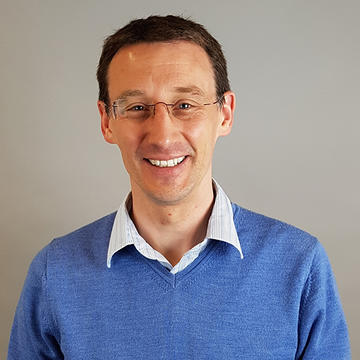
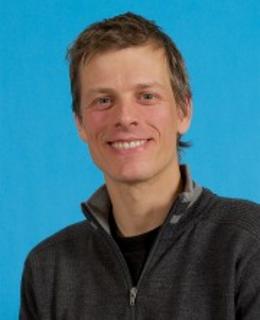
Ari Stern is a Professor of Mathematics at Washington University in St. Louis , specializing in Geometric Numerical Analysis . His work bridges geometry, applied analysis, and computational mathematics, focusing on numerical methods that maintain global accuracy for differential equations through modern geometric principles. He earned his B.A. and M.A. in Mathematics from Columbia University and a Ph.D. in Applied and Computational Mathematics from Caltech (2009), advised by Jerrold E. Marsden and Mathieu Desbrun. Prior to WashU (2012), he was a postdoc at UCSD with Michael Holst. Research Interests : Geometric integration, finite element exterior calculus, symplectic geometry, and applications to physics and machine learning. His recent publications address multisymplecticity, functional equivariance, and hybrid finite element methods. Collaborations span topics from Alzheimer’s disease modeling via machine learning to Hamiltonian mechanics and geometric electrodynamics. Awards : NSF Grant (2019). Teaching : Courses include Numerical Methods for Differential Equations, Measure Theory, and Honors Mathematics.
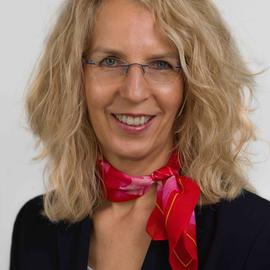
Marianne Johnson is a Senior Lecturer in the School of Mathematics at the University of Manchester. She is a core member of the tropical mathematics research group and collaborates with institutions including Birmingham, Queen Mary University of London, and Warwick through an LMS Joint Research Network. Her research focuses on algebra and combinatorics, including free Lie algebras, representation theory, semigroup theory, and tropical algebra/geometry. She has contributed to EPSRC-funded projects such as 'Multiplicative Structure of Tropical Matrix Algebra' and 'Modular Lie Powers and Applications,' and participated in the CICADA interdisciplinary project. Her research interests span a wide array of algebraic topics: free Lie algebras explore the structure of non-associative algebras, while representation theory examines how algebraic structures act on vector spaces. Semigroup theory and tropical algebra involve studying combinatorial and geometric properties of matrices and monoids over semirings. Recent work includes studies on plactic-like monoids, tropical matrix identities, and linear functions preserving Green's relations. Johnson has co-authored over 29 publications, with recent trends emphasizing tropical algebra's applications to geometric and algorithmic problems, such as tropical matrix groups and hyperplane arrangements. Her work bridges pure mathematics with interdisciplinary fields like computational dynamics and healthcare through collaborations like CICADA. Notable projects include analyzing upper triangular tropical matrices and exploring NP-completeness in gossip monoids. She has advised three research students and contributed to grants involving EPSRC-funded projects. Her affiliations include the Data Science Institute, Algebra research group, and Tropical Mathematics cluster at Manchester. Her work also intersects with Digital Futures initiatives, reflecting her commitment to advancing computational and theoretical mathematics.
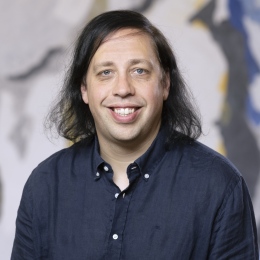
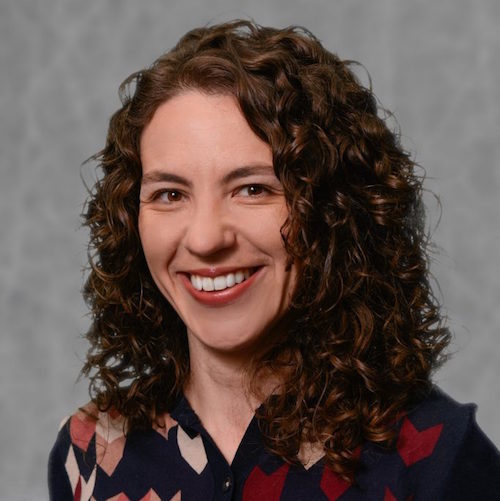
David Tew serves as an Associate Professor of Theoretical Chemistry at the University of Oxford and is a Tutorial Fellow at St Hilda's College. He actively develops computational methods for chemical simulation and is a stakeholder in Turbomole GmbH, an international software collaboration. His academic foundation includes undergraduate and doctoral studies at Trinity College Cambridge, completing his PhD in 2003 under Prof. Handy. Prior to Oxford (since 2020), he held positions as Senior Scientist at the Max Planck Institute for Solid State Research, Marie-Curie Fellow (2005-2007) with Prof. Klopper in Karlsruhe, and Royal Society University Research Fellow (2009-2017) at Bristol. Research focuses on: Electronic Structure: Advancing coupled-cluster theory, explicitly correlated methods, and local approximations for scalable quantum chemistry calculations Molecular Dynamics: Simulating quantum tunnelling effects and developing machine learning for potential energy surfaces Quantum Computing: Mapping chemistry problems to quantum architectures for future simulations His work intersects with kinetics, dynamics, mechanism, and theoretical modelling in chemical sciences. Scientific recognition: Marie-Curie Fellowship (2005-2007) Royal Society University Research Fellowship (2009-2017) Professor Tew leads the Tew Research Group, collaborating globally with experimental and theoretical teams to develop the Turbomole program suite and pioneer methods for solving real-world chemical problems through computational innovation.
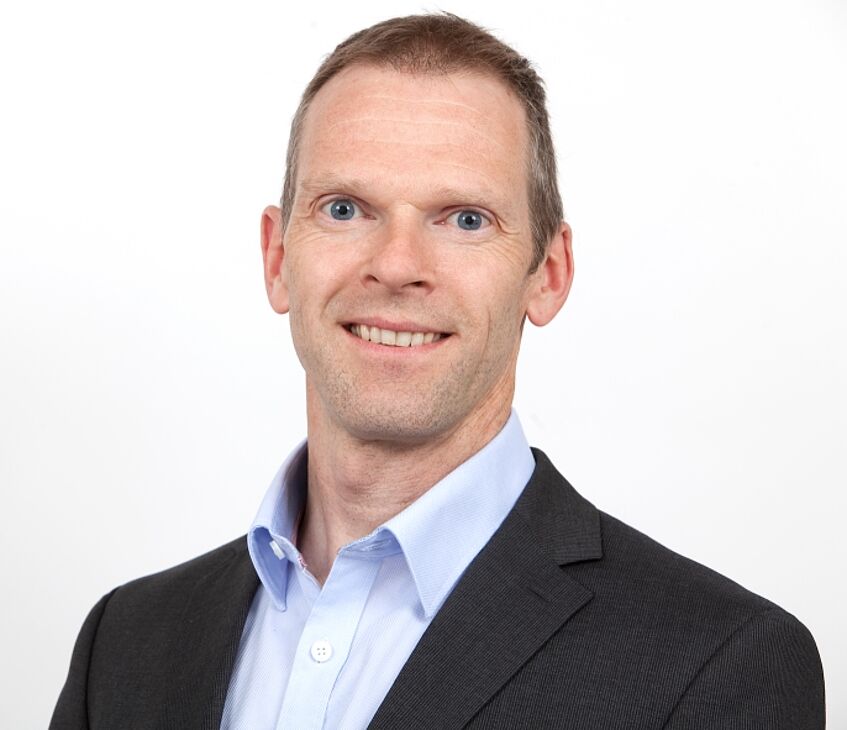
Petra Mutzel is a Professor of Computer Science at the University of Bonn. Her research focuses on graph algorithmics, temporal networks, and combinatorial optimization with applications in data science and bioinformatics. She holds a PhD in Computer Science from the University of Cologne (1994) and a Diplom in Mathematics from the University of Augsburg (1990). Her work emphasizes algorithmic solutions for complex graph problems, including temporal graph analysis, graph learning, and optimization frameworks for real-world networks. She has contributed to open-source libraries like Tglib for temporal graph processing and frameworks like Scaffold Hunter for medicinal chemistry. Her research spans theoretical foundations and practical implementations, with notable contributions to graph drawing, vehicle routing optimization, and protein complex analysis. Mutzel’s recent publications (2022-2025) explore temporal network dynamics, robust combinatorial optimization, and scalable graph kernel methods. She actively engages in academic leadership, organizing conferences such as WALCOM 2022, and serves on editorial boards for journals in algorithms and computational geometry.
Kalle Berggren is an Associate Professor at the Department of Child and Youth Studies, Stockholm University, holding a PhD in Sociology and a Docent title in Gender Studies. His research focuses on masculinity, gender, intersectionality, hip hop culture, and youth intimate relationships and violence. He serves as an Associate Editor for Young: Nordic Journal of Youth Research . Education: PhD in Sociology and Docent in Gender Studies from Stockholm University. His work bridges sociology, gender studies, and cultural analysis, emphasizing qualitative methods and intersectional frameworks. Research Interests : Berggren explores how masculinity and gender intersect with youth culture, violence, and social structures. Key themes include male peer dynamics, feminist phenomenology, and the sociocultural dimensions of hip hop. His work critiques dominant narratives around gender equality in Sweden and analyzes hybrid masculinities. Publications : Recent work addresses affective dissonance in fatherhood, temporalities of youth, and queering desistance frameworks. His scholarship spans 2020–2024, reflecting engagement with both empirical and theoretical debates in gender studies. Awards : No specific awards listed, though his editorial role and publication record indicate academic recognition. Advising/Grants : While no advisees are listed, his research projects likely involve collaborations with graduate students. Funding sources may relate to gender studies and youth policy initiatives. Labs/Teams : Affiliated with Stockholm University’s research clusters in gender and youth studies, contributing to interdisciplinary networks in Nordic sociology.
Günther Raidl is an Associate Professor and Head of the Algorithms and Data Structures Group at the Institute of Computer Graphics and Algorithms, Faculty of Informatics, TU Wien. He holds a Dipl.-Ing. (1992), Ph.D. (1994), and Habilitation (2003) from TU Wien. His research focuses on combinatorial optimization, heuristic methods, and hybrid optimization techniques, addressing large-scale problems in transportation, network design, and cutting/packing. He leads a group of 1 PostDoc, 8 PhD candidates, and collaborates with institutions like the Vienna Graduate School on Computational Optimization (VGSCO). Education: Dipl.-Ing. in Computer Science (1992), TU Wien Ph.D. in Computer Science (1994), TU Wien Habilitation (2003), TU Wien Research Interests: Raidl’s work combines exact and heuristic optimization techniques, including mixed-integer programming, metaheuristics, and matheuristics. Applications span transportation systems (e.g., electric vehicle routing, bike-sharing systems), network design, and bioinformatics. His group leverages high-performance computing resources, such as the Vienna Scientific Cluster (VSC). Publications & Awards: Over 115 reviewed articles in journals/conferences like INFORMS Journal on Computing and Evolutionary Computation. Notable recognition includes the EvoStar 'Old Croc' Award (2012) for contributions to evolutionary computation. Advising & Grants: Supervises 8 funded PhD students and contributes to the Vienna Graduate School’s DK funding (€20,000/year for personnel and travel). Labs/Teams: Algorithms and Data Structures Group at TU Wien, collaborating with researchers like Monika Henzinger and Nysret Musliu.
Overview Prof. Hong-Yu Wong holds the Chair of Philosophy of Mind and Cognitive Science at the University of Tübingen's Philosophical Seminar. He leads the CIN Philosophy of Neuroscience Group and serves as Head of the Philosophy of Neuroscience research cluster. His work bridges philosophy, cognitive science, and empirical research in VR/AR technologies. Research Focus Embodied Agency: Explores how bodily awareness structures action and self-consciousness Virtual Reality Embodiment: Studies body ownership and self-localization in immersive environments Philosophy of AI: Analyzes agency in artificial systems and ethical implications Neurophilosophy: Examines consciousness, emotion, and action through interdisciplinary lenses Key Contributions Recent work includes groundbreaking studies on agency disorders in schizophrenia (PNAS 2023), the aesthetics of magical performance (British Journal of Aesthetics 2023), and foundational papers on embodied cognition (Philosophy and Phenomenological Research 2018). His upcoming monograph *Embodied Agency* (Oxford UP) synthesizes decades of research. Academic Leadership Supervises doctoral candidate Julian Saccone Guides academic assistants like Rebecca Dreier and researchers such as Dr. Krisztina Orbán Recognition Pioneer in integrating empirical methods into philosophical inquiry, with awards including the CNCC Essay Award (2008) and multiple grants supporting interdisciplinary research initiatives.
Dr. Jan Dettmer is an Associate Professor in the Department of Earth, Energy, and Environment at the University of Calgary's Faculty of Science. His research focuses on quantitative analysis of Earth structures through geophysical data inversion, specializing in Bayesian methods for uncertainty quantification. His work spans seismology, acoustical oceanography, and tsunami hazard prediction, with applications ranging from shallow seabed characterization to deep mantle structures. Research interests include: Probabilistic inversion methods for earthquake source parameters and earth structure Wave propagation modeling in complex media Computational algorithm development for large-scale inverse problems Integration of supercomputing (CPU/GPU clusters) in geophysical analysis Recent publications demonstrate strong focus on geophysical inversion techniques, computational methods, and applications to energy and environmental challenges. Awarded the Faculty of Science Research Award for early career excellence (2019).
Yuejiao Cindy Fu is a Full Professor in the Department of Mathematics and Statistics at York University's Faculty of Science. Her office is located in the Ross Building. Research specializes in mixture models, empirical likelihood, density ratio models, and statistical analysis of high-dimensional spatial, genetic, and DNA methylation data. Methodologies include homogeneity testing, dimension reduction techniques, and robust inference for genomic applications. Education: Ph.D. in Statistics from University of Waterloo (2004). Contact: (647) 831 1208.
Darren Wraith is an Associate Professor of Biostatistics in the School of Public Health and Social Work at Queensland University of Technology. He holds a Ph.D. in Statistics from QUT and a Bachelor of Mathematics from the University of Newcastle. His research enables evaluation of human behaviors and environmental health impacts through Bayesian statistics, mixture models, and spatial-temporal modeling. He has published on COVID-19 modeling, environmental pollution effects, and problem gambling.
Marcel Ortgiese is a Reader in the Department of Mathematical Sciences at the University of Bath, affiliated with the EPSRC Centre for Doctoral Training in Statistical Applied Mathematics (SAMBa) and the Probability Laboratory at Bath. His research focuses on probability theory, including spatial population models, stochastic processes in random environments, and evolving random graphs. He investigates large-scale behaviors of interfaces in evolutionary biology contexts, branching processes in inhomogeneous environments, and dynamic processes on random graph structures. His work integrates theoretical analysis with applications to real-world systems, emphasizing interdisciplinary connections between probability and complex networks. Current projects include studying the interplay between geometry and randomness in fitness landscapes for expanding populations (EPSRC-funded) and advancing methods for cumulants and superconcentration phenomena. Ortgiese has contributed to foundational research on contact processes, voter models, preferential attachment networks, and symbiotic branching systems. His recent studies explore adaptive network dynamics, subcritical random graph properties, and asymptotic behaviors in weighted recursive trees. He holds a PhD from the University of Bath (2009) under Prof. Peter Morters and has supervised numerous graduate students through SAMBa's training programs. His academic contributions are reflected in over 20 peer-reviewed articles in top journals such as Stochastic Processes and their Applications and Annals of Applied Probability . Research themes consistently emphasize stochastic analysis of complex systems, with applications ranging from epidemiological modeling to evolutionary dynamics.
Radmila Sazdanovic is an Associate Professor in the Department of Mathematics at North Carolina State University (NC State), part of the College of Sciences. She holds a Ph.D. from George Washington University, where she worked under Jozef Przytycki. Her research focuses on low-dimensional topology, applied algebraic topology, categorification, and their interdisciplinary applications in areas like data science and biomedical engineering. She is affiliated with the Faculty Research Group on Topology, Geometry, and Mathematical Physics. Her expertise spans knot theory, homology theories (Khovanov, chromatic, magnitude), and topological data analysis (TDA). Notable projects include collaborations on vascular network analysis with pulmonary hypertension studies and development of tools like the TAaCGH Suite for cancer genomics. She advises students on interdisciplinary projects, such as topology and fluid dynamics in vascular networks, alongside Dr. Olufsen. Recent work explores data-driven knot theory, torsion in homology, and applications of TDA in biomedical contexts. Her research bridges pure mathematics with applied problems, emphasizing categorification and computational methods. She actively disseminates findings through conferences and publications, contributing to both theoretical and applied advancements in topology.
Dr Marie Cahillane is a Reader in Applied Cognitive Psychology at Cranfield Defence and Security, Cranfield University, where she has held progressive academic roles since 2008, including Research Fellow, Lecturer, Senior Lecturer, and Reader. She leads the Applied Psychology Group and serves as Deputy Head of the Integrated Cyber, Cognition and Digital Systems Group. She is also Deputy Academic Lead for the CDS Doctoral Community and a member of the Cranfield University Research Ethics and Integrity Committee (CUREIC). Her research focuses on human cognition in defence contexts, particularly skill acquisition and retention, cognitive vulnerabilities, disinformation, and team performance. Funded by Dstl, MOD, US DoD, and DASA, her work addresses real-world challenges in military and security operations. The recent publication trends highlight her expertise in cognitive psychology applied to autonomous systems, disinformation, e-learning, and military training. Her work bridges cognitive science with defence technology, focusing on human factors in AI, skill decay models, and metacognitive support in complex decision-making. She frequently collaborates with researchers like Victoria Smy and Piers MacLean. Dr Cahillane supervises PhD and MSc research, including topics on complex cognitive skills retention and disinformation in CBRN contexts. She has led 17 research projects as Principal Investigator and contributed to 15 as Co-Investigator, with funding from major defence stakeholders. She contributes to research-led teaching in quantitative methods, heuristics and bias, and psychological aspects of sensing. She also works closely with defence clients such as Dstl, BAE Systems, and the British Army to apply cognitive psychology to operational challenges.
Pavlo Krokhmal is a Professor in the Department of Systems and Industrial Engineering at the College of Engineering, University of Arizona. He serves as the Director of Industrial Engineering and is a member of the Graduate Faculty. He has previously held academic positions at the University of Iowa and the University of Florida. Education: PhD in Operations Research, University of Florida, Gainesville, Florida, United States PhD in Mechanics of Solids and Applied Mathematics, Kyiv National Taras Shevchenko University, Kyiv, Ukraine MS in Applied Mathematics and Mechanics, Kyiv National Taras Shevchenko University, Kyiv, Ukraine His research focuses on stochastic optimization, risk analysis, and decision-making under uncertainty, with applications in financial engineering, network resilience, and renewable energy systems. He also contributes to multidisciplinary optimization and cooperative control. His work bridges applied mathematics, engineering, and operations research. The most recent publications reflect a strong trend in risk-averse optimization under uncertainty, especially in network structures, energy systems, and combinatorial problems. His work integrates advanced mathematical modeling, stochastic programming, and computational algorithms. Topics frequently include risk measures like CVaR, p-cone programming, and PDE-constrained optimization with stochastic inputs. Scientific Awards and Honors: Diploma in the Competition of Young Scientists and Students for the Best Research Project, National Academy of Sciences of Ukraine, Spring 1997 Soros Student Award, International Soros Science and Education Program, Fall 1994 Scholarship for scientific and academic achievements, National Academy of Sciences of Ukraine, Spring 1994 Air Force Summer Faculty Fellowship Award (multiple years: 2011, 2012, 2014, 2018, 2019) NRC Senior Research Associateship Award, National Research Council, Spring 2015 Donald E. Bently Faculty Fellowship of Engineering, University of Iowa, Fall 2013 Recognition for Excellence in Teaching, College of Engineering, University of Iowa (2010, 2013) Dr. Krokhmal has been actively involved in advising graduate students and leading research projects funded by agencies such as the Air Force Office of Scientific Research. His collaborations span across institutions and disciplines, including work with researchers at the University of Florida, University of Iowa, and military research labs. He has served on editorial boards and contributed to academic leadership through journal editorials and peer review. His research is conducted within interdisciplinary teams focusing on optimization, risk modeling, and complex systems. These teams often involve mathematical modeling, algorithm development, and simulation for real-world applications in defense, energy, and infrastructure resilience.
Laura Fanning is a Senior Research Fellow at the Centre for Health Economics (Monash Business School) and the Transfusion Research Unit (Monash University). She holds qualifications including a BPharm(Hons), MPH, and PhD. Her research focuses on evaluating the effectiveness, safety, and cost-effectiveness of pharmaceuticals and blood products, particularly in the context of healthcare treatments and submissions to regulatory bodies like the Pharmaceutical Benefits Advisory Committee (PBAC). Methodological expertise includes economic evaluation alongside clinical trials, causal inference using healthcare data, and discrete choice experiments. Education: Bachelor of Pharmacy with Honours Master of Public Health Doctor of Philosophy Research interests span health economic evaluation, pharmacoepidemiology, and health technology assessment. Recent work emphasizes optimizing immunoglobulin therapy in blood cancers and evaluating prophylactic antibiotic use. Awards: 2021 Ronald D. Mann Best Paper Award for contributions to pharmacoepidemiology research. Key projects include the OPTIMAL and RATIONALISE trials addressing immunoglobulin management in Australia, and the ACTMed trial investigating pharmacist-led medication reconciliation. Labs/Teams: Collaborations include the Transfusion Research Unit and interdisciplinary teams focused on myeloma treatment modeling and cost-effectiveness analyses.