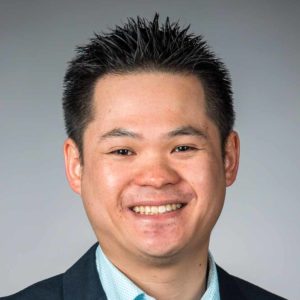
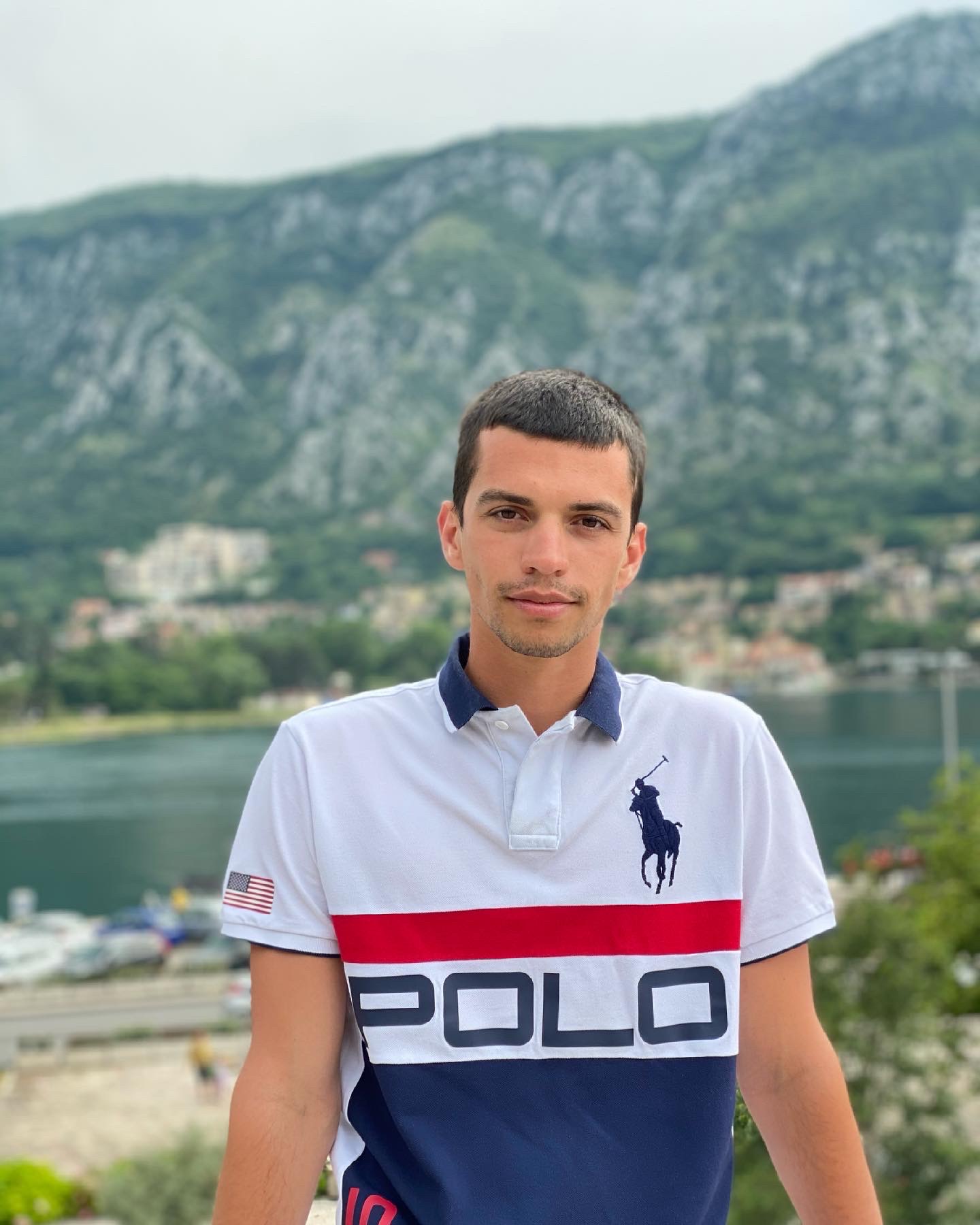
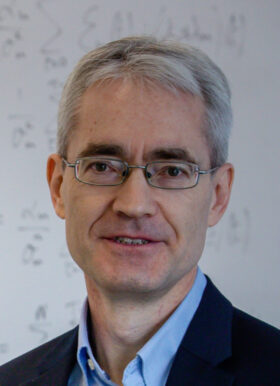
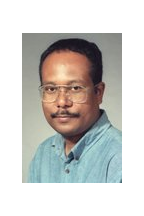
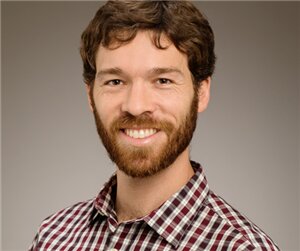
Nisarg Shah is an Associate Professor in the Department of Computer Science at the University of Toronto, affiliated with the Theory Group. He also serves as a Research Lead at the Schwartz Reisman Institute for Technology and Society and a Faculty Affiliate at the Vector Institute for Artificial Intelligence. Education: Ph.D. in Computer Science, Carnegie Mellon University (2016) B. Tech. with Honors in Computer Science & Engineering, IIT Bombay (2011) Shah's research focuses on the theoretical foundations of artificial intelligence, particularly algorithmic fairness, social choice theory, game theory, and mechanism design. His work addresses fair resource allocation, strategic agent behavior, and robust AI system design through interdisciplinary approaches combining computer science, economics, and cognitive psychology. Recent publications highlight temporal fair division, constrained allocations, and market value integration in fair division. His 2024 awards include the prestigious IJCAI Computers and Thought Award and Kalai Prize for game theory contributions. Scientific Awards: 2024 - IJCAI Computers and Thought Award 2024 - Kalai Prize in Game Theory and Computer Science 2022 - MIT Technology Review Innovators Under 35 2020 - IEEE Intelligent Systems AI's 10 to Watch 2016 - Victor Lesser Distinguished Dissertation Award (IFAAMAS) 2014 - Facebook Graduate Fellowship 2013-14 - Hima and Jive Graduate Fellowship 2011 - IIT Bombay President's Gold Medal Shah supervises numerous graduate students across diverse institutions and leads research initiatives at the intersection of technology and society. His lab collaborates with institutions like Carnegie Mellon University and Harvard University, while developing practical applications such as Spliddit.org for fair decision-making in everyday life.
Sameer Deshpande is an Assistant Professor in the Department of Statistics at the University of Wisconsin–Madison. His research bridges Bayesian methodology development with applications in public health and sports analytics. Prior to joining UW–Madison, he completed a postdoctoral fellowship with Professor Tamara Broderick at MIT and earned his Ph.D. in Statistics from the Wharton School under Professors Ed George and Veronika Rockova. His educational background includes undergraduate studies in mathematics at MIT and a year at Jesus College, Cambridge through the Cambridge-MIT Exchange program. His research focuses on advancing Bayesian hierarchical modeling, treed regression, and causal inference techniques, with particular emphasis on flexible tree-based methods like BART variants for complex data structures. Deshpande's recent publications reveal a strong trend toward developing scalable Bayesian methods for high-dimensional data while maintaining rigorous uncertainty quantification. His work frequently applies these techniques to sports analytics (particularly baseball and football) and public health studies examining long-term effects of adolescent sports participation. The consistent focus on methodological innovation paired with substantive applications demonstrates his dual commitment to statistical theory and real-world impact. He actively mentors graduate students at UW–Madison, requiring STAT 775 as preparation for research collaboration. His Deshpande Lab focuses on Bayesian computation and causal inference, though specific grant details are not publicly listed. Notable projects include the NFL Big Data Bowl submission analyzing quarterback decision-making using Expected Hypothetical Completion Probability. Outside academia, Deshpande maintains interests in cooking, cocktail making, and photography, while remaining a devoted fan of Dallas sports teams – often seen wearing a Texas belt buckle.
Peter Bui is a Teaching Professor in the Computer Science and Engineering department at the University of Notre Dame , located within the College of Engineering. He teaches courses such as Data Structures, Systems Programming, and Ethical and Professional Issues, while also managing the core Elements of Computing programming sequence for the Computing & Digital Technologies minor. Education: Ph.D. in Computer Science and Engineering from University of Notre Dame (2012) His research interests span systems programming, operating systems, parallel computing, cloud computing, distributed computing, programming languages, compilers, and web services . He actively integrates these domains into his teaching and extracurricular work with the Linux Users Group. Recent publications highlight his work in distributed computing frameworks , including the development of tools like WorkQueue and Madeup for scalable scientific workflows and 3D printing integration. Projects such as ROARS and Weaver demonstrate his focus on robust data management and workflow automation. Outside academia, he stewards the Linux Users Group , engages with open-source communities, and balances personal interests like gaming in RuneScape with family time.
Jovan Stojkovic is an incoming Assistant Professor at the Department of Computer Science at the University of Texas at Austin, set to join in Fall 2026. Prior to his appointment at UT Austin, he will spend a year at Meta working with the AI and Systems Co-design group. His research focuses on cloud computing and datacenters, with particular emphasis on cloud-native workloads and machine learning inference. Education: PhD in Computer Science from the University of Illinois at Urbana-Champaign, advised by Professor Josep Torrellas Undergraduate studies at the School of Electrical Engineering, University of Belgrade, Serbia, where he was recognized as the best student of the Computer Engineering and Information Theory Department every year from 2017-2020 Research Interests: Jovan's research focuses on cloud computing and datacenters , with two primary domains: Cloud-native workloads , such as microservices and serverless computing. He investigates how to co-design novel hardware platforms and software systems that deliver orders-of-magnitude improvements in performance, energy efficiency, and resource utilization for these emerging workloads. Machine Learning (ML) inference , particularly large language models (LLMs). His work addresses the challenges of ML inference through smart scheduling, workload placement, and system-level configuration tuning to reduce energy, power, and thermal overheads while maintaining performance and accuracy guarantees. Publication Trends: Jovan's publications demonstrate a strong focus on optimizing cloud infrastructure for emerging workloads. His research spans across serverless computing, microservices, and large language model inference. A clear trend emerges in his work: addressing the performance, energy efficiency, and resource utilization challenges of modern cloud workloads through innovative hardware-software co-design approaches. His most recent work shows increasing focus on LLM inference optimization, particularly in the areas of thermal management, power efficiency, and scheduling for many-adapter environments. Awards and Honors: HPCA Best Paper Award (2025) IEEE MICRO Top Picks Honorable Mention (2024) 6 patents with IBM and Microsoft on: Serverless systems, Processor overclocking in the cloud, and Energy-efficient LLM inference W. J. Poppelbaum Memorial Award (2025) for hardware and architecture innovation Mavis Future Faculty Fellowship (2024–2025) Invited to present at 11th Heidelberg Laureate Forum (2024) Kenichi Miura Award (2022) for excellence in High Performance Computing Multiple student travel grants to ISCA, MICRO, ASPLOS, and HPCA Advising and Grants: Jovan is actively seeking prospective PhD students for his research group at UT Austin. His research has been supported through collaborations with major tech companies including IBM, Microsoft, and Meta. His six patents with IBM and Microsoft demonstrate the practical impact of his research in serverless systems, processor overclocking, and energy-efficient LLM inference. His work on serverless computing (MXFaaS, EcoFaaS) and LLM inference optimization has received significant recognition in top-tier computer architecture conferences. Research Groups: During his PhD at UIUC, Jovan worked with Professor Josep Torrellas on cloud infrastructure research. He has collaborated extensively with researchers at IBM Research (particularly Hubertus Franke) and Microsoft (particularly Íñigo Goiri and Ricardo Bianchini). His upcoming position at UT Austin will establish his independent research group focused on cloud computing and datacenter systems. His year at Meta working with the AI and Systems Co-design group will further strengthen his expertise in AI infrastructure.
Anastasios Zafeiropoulos serves as Assistant Professor at Harokopio University of Athens, specializing in Spatial Data Management and Analysis within the Postgraduate Studies Program for “Applied Geography and Spatial Management” (Direction C: Geoinformatics). His academic role encompasses teaching “Spatial Databases” and advancing research at the intersection of geospatial technologies and distributed computing systems. His research program focuses on Spatial Databases, Internet of Things (IoT), Cloud/Edge Computing, and 6G Network Orchestration, with significant extensions into Knowledge Graph applications for Sustainable Development Goals (SDGs) and socio-emotional learning in education. Key innovations include the EduCardia methodology for student competency assessment and frameworks for climate vulnerability analysis using knowledge graphs. Analysis of his 2024-2025 publications reveals three dominant thrusts: (1) AI-driven orchestration of 6G services across the computing continuum using reinforcement learning; (2) Knowledge Graph applications for SDG interlinkage analysis and materials science; (3) EU-funded IoT/Edge Computing project ecosystems. His work consistently bridges theoretical networking concepts with practical sustainability and educational applications. Dr. Zafeiropoulos actively contributes to EU-funded initiatives in IoT and Edge Computing standardization, particularly through AIOTI WG Standardisation. His project portfolio includes NEPHELE multi-cloud ecosystem development and O-RAN slice admission control research, demonstrating strong industry-academia collaboration in next-generation networking. He leads the development of innovative tools including Palindrome.js for distributed system visualization and the EmoSocio open-access emotional intelligence model, reflecting his commitment to translating research into practical educational and environmental solutions.
Debarati Das is an Assistant Professor in Computer Science and Engineering , specializing in Clustering Algorithms , Edit Distance , and Approximation Algorithms . Her research focuses on theoretical computer science, particularly in algorithm design for data streams, permutation clustering, and sequence alignment. Grants: NSF CAREER Award (2024), NSF Student Travel Grant (2023). Her work includes breakthroughs in consensus clustering, achieving sub-2-approximation, and developing space-efficient algorithms for edit distance in distributed models. Recent projects explore dynamic shortest paths in planar graphs and pseudorandomness extraction. Her publications span journals like the Journal of the ACM and conferences such as SODA, STOC, and FOCS. Collaborations include researchers from institutions in the U.S. and Europe, with applications in computational biology and parallel computing.
Elena Grigorescu is an Adjunct Associate Professor in the Department of Computer Science at Purdue University, where she has been a faculty member since Fall 2012. Her research program spans theoretical computer science with a focus on foundational algorithmic challenges in large-scale data processing and computational limits, maintaining strong connections to cryptography, communications, and optimization applications. Her educational background includes a PhD from the Massachusetts Institute of Technology (MIT), establishing her expertise in rigorous theoretical frameworks. Professor Grigorescu's research emphasizes designing algorithms that operate in sublinear time or space for massive datasets, analyzing complexity of error-correcting codes and lattices, and exploring information-theoretical computation limits. Current investigations integrate differential privacy with learning-augmented techniques to solve online optimization problems, network design challenges, and data stream processing bottlenecks. Her work bridges abstract theory with practical implementations in cryptographic systems and quantum computing paradigms, demonstrating consistent innovation in algorithmic foundations. Analysis of her recent publications (2022-2025) reveals a dominant focus on sublinear-time algorithms, particularly at the intersection with differential privacy and machine learning augmentation. Key contributions include novel spanner constructions for network design, privacy-preserving clustering frameworks, and breakthroughs in trace reconstruction and coding theory. A pronounced trend shows increasing integration of learning-based predictions to enhance classical online algorithms for packing/covering problems while maintaining theoretical guarantees, alongside sustained contributions to error-correcting code analysis and graph-theoretic foundations. No specific scientific awards or major fellowships were documented in the provided materials, though her publication record in premier venues like STOC, FOCS, and APPROX/RANDOM indicates significant peer recognition. Professor Grigorescu actively mentors graduate students in theoretical computer science research, guiding investigations in sublinear algorithms, complexity theory, and coding theory. Her collaborative projects involve interdisciplinary teams across institutions, focusing on cryptographic applications and quantum information theory, though specific grant details were not included in the source texts. Ongoing work suggests expansion into quantum algorithm design and privacy-preserving machine learning frameworks. While dedicated laboratory facilities were not specified, her research operates within Purdue's theoretical computer science group, leveraging university-wide computational resources and fostering collaborations through conference participation and workshop organization.
Rameshwar Pratap is an Associate Professor in the Department of Computer Science and Engineering at the Indian Institute of Technology Hyderabad (IIT Hyderabad). Previously, he served as an Assistant Professor at the School of Computing and Electrical Engineering, IIT Mandi for three years. Education: Ph.D. in Theoretical Computer Science, Chennai Mathematical Institute Research Interests: His research lies at the intersection of theory and practice, focusing on extremely simple yet practical approximation algorithms with provable guarantees . Key themes include: Sketching and dimensionality reduction algorithms for tensors and similarity measures Improving speed, scalability, and accuracy of existing sketching methods Applications in machine learning: node embedding in large-scale networks, itemset mining, model compression He extensively employs techniques from matrix and tensor algebra, sampling, random projection, and randomized hashing . Publications Overview: Across 2021–2025 his work has appeared in top venues such as IEEE Globecom, Theoretical Computer Science, Acta Informatica, Information Processing Letters, Algorithmica, UAI, ICALP, Machine Learning, TKDE, and ACML. Recurring themes are randomized sketching, locality-sensitive hashing, compressed matrix multiplication, variance reduction, and subspace approximation , demonstrating both theoretical depth and practical impact. Awards & Honors: Early Career Research Grant (PM-ECRG) 2025, Anusandhan National Research Foundation (ANRF) Best Paper Award, COCOON 2020 Students & Funding: First Ph.D. student: Bhisham Dev Verma (co-advised with Prof. Manoj Thakur) graduated June 2025 MS by Research student: Punit Pankaj Dubey graduated October 2022 Currently hiring 1 Junior Research Fellow for the PM-ECRG project “Improving Similarity Search in Practice” Labs & Teams: Works within the Algorithms & Theory group at IIT Hyderabad, collaborating with national and international researchers. Erdös number is 3.
Nishchal K. Verma is a Professor at the Department of Electrical Engineering, Indian Institute of Technology Kanpur. He holds a PhD from IIT Delhi (2007), an M.Tech from IIT Roorkee (2003), and a B.Tech from DEI Agra (1996). His postdoctoral research includes work at the University of Tennessee (2009) and Louisiana Tech University (2008). Specialization: Fuzzy Logic, Health Monitoring, Intelligent Informatics Current Research Interests: Intelligent Data Mining, Computer Vision, Smart Grids, Biomedical Applications His research focuses on Fuzzy Systems , Machine Learning , and Health Monitoring with applications to power systems, biomedical data, and wireless sensor networks. He has developed technologies like the Transducers and Instrumentation Virtual Laboratory and Brain Computer Interface Laboratory , emphasizing predictive modeling and fault diagnosis. Key sponsored projects include DST-funded Fuzzy Rule-Based Image Prediction and DRDO-supported Visual Surveillance Systems . His work spans 15+ years of interdisciplinary publications in journals and conferences. Scientific Awards : Devendra Shukla Young Faculty Research Fellowship (2013-16) He has served as Associate Editor for journals and Chairman of IEEE chapters, with leadership roles in academic administration at IIT Kanpur.
Geoffrey Goodhill is Professor of Neuroscience and Professor of Developmental Biology at Washington University School of Medicine, where he directs the Center for Theoretical & Computational Neuroscience. His laboratory bridges experimental and theoretical approaches to study brain development. Goodhill earned his BSc in Mathematics and Physics from the University of Bristol (1986), MSc in Artificial Intelligence from the University of Edinburgh (1988), and PhD in Cognitive Science from the University of Sussex (1992). His postdoctoral training included a Medical Research Council Fellowship and a Sloan Theoretical Neuroscience Fellowship at the Salk Institute. His research focuses on computational principles of brain development, particularly using larval zebrafish to investigate neural coding development, behavioral emergence, and alterations in Autism Spectrum Disorders. Key projects examine neural coding and spontaneous activity patterns zebrafish behavioral development autism-related circuit dysfunction calcium imaging analysis methods historical work on axon guidance mechanisms His recent publications show a clear trajectory from molecular gradient studies toward complex systems neuroscience using zebrafish models. Scientific recognition includes: Paxinos-Watson Prize (2012) Elspeth McLachlan Plenary Lecture (2019) Keynote at Computational Neuroscience Meeting (2020) Sloan Theoretical Neuroscience Fellowship (1995) The Goodhill Lab maintains an interdisciplinary team with backgrounds in biology, mathematics, physics and engineering. Current research analyzes human video data for early autism detection while continuing zebrafish neural circuit investigations. The lab has received consistent funding for its innovative approaches to developmental neuroscience questions.
Amin Mesmoudi serves as Associate Professor in Data Engineering at the University of Poitiers' IUT (Institut Universitaire de Technologie), with dual laboratory affiliations at LIAS-ENSIP (Poitiers campus) and LIAS-ISAE-ENSMA (Chasseneuil campus). His research bridges theoretical database systems with practical large-scale data engineering challenges, particularly in semantic web technologies and machine learning applications. The laboratory maintains physical presences at both ENSIP's Bâtiment B25 in Poitiers and ISAE-ENSMA's Téléport 2 facility in Chasseneuil, facilitating cross-institutional collaboration. Mesmoudi's research program centers on scalable data management systems, with three interconnected pillars: (1) RDF and graph-based query optimization techniques for billion-triple datasets, (2) machine learning integration for spatial query performance and anomaly detection, and (3) explainability frameworks for complex black-box models. His work demonstrates consistent evolution from foundational database systems (2011-2016) toward contemporary AI-driven data engineering, particularly evident in his 2023-2025 publications on temporal dependency preservation and co-selection explainability. The Data Engineering team within LIAS laboratory provides the primary research context for these investigations. Publication analysis reveals strong methodological continuity in addressing scalability bottlenecks across database paradigms. Early work focused on SQL-on-MapReduce benchmarking for astronomy databases (2015-2016), transitioning to specialized RDF processing frameworks (2019-2021), and culminating in current hybrid approaches combining temporal modeling with machine learning (2023-2025). Key technical themes include fragmentation strategies for distributed data, optimizer feedback mechanisms, and graph-based query acceleration - all targeting real-world performance constraints in big data environments. As a core member of LIAS laboratory's Data Engineering team, Mesmoudi contributes to France's national research infrastructure in computer science and automation systems. The laboratory's dual-university structure enables unique cross-pollination between University of Poitiers' academic programs and ISAE-ENSMA's engineering specialization, with Mesmoudi's work exemplifying this synergy through applications spanning astronomy databases to wireless sensor networks.
Ming Li is a Professor of Electrical and Computer Engineering at Duke Kunshan University's Division of Natural and Applied Science, and a Principal Research Scientist at the Digital Innovation Research Center. He holds an adjunct position as a Professor at Wuhan University's School of Computer Science. His research focuses on audio/speech processing, multimodal behavior signal analysis, and applications in autism spectrum disorder diagnosis. Li has over 200 publications and serves on editorial boards of journals like IEEE Transactions on Audio, Speech and Language Processing. Education: Ph.D. in Electrical Engineering from the University of Southern California (2013). Awards include the IBM Faculty Award (2016), ISCA 5-Year Best Paper Award (2018), and Youth Achievement Award (2020). He leads initiatives in anti-spoofing countermeasures, voice conversion, and speech synthesis. Recent Courses: Random Signals and Noise Speech Recognition Data Science Key Research Contributions: Development of datasets like KunquDB, TMCSpeech, and systems for speaker verification, deepfake detection, and autism diagnosis tools. His work bridges signal processing with clinical applications, leveraging AI for social interaction improvement in neurodiverse populations.
Kshirasagar Naik is a Professor in the Department of Electrical and Computer Engineering at the University of Waterloo, Ontario. He is actively involved in graduate research supervision and has been a member of IEEE since 1994. His academic career spans decades, with a focus on wireless communication, energy efficiency, and cybersecurity. 1992, Doctorate in Computer Engineering from Concordia University, Ontario 1988, Master of Mathematics in Computer Science from University of Waterloo, Ontario 1983, MTech in Computer Engineering from Indian Institute of Technology, Kharagpur, India 1981, BScEng in Electronics and Telecommunication from Sambalpur University, India His research interests include Mobile and Ad Hoc Networks , Cybersecurity , Internet of Things (IoT) , and Intelligent Transportation Systems . He has published extensively on energy optimization in wireless devices, delay-tolerant networks, and security protocols for vehicular systems. Recent publications highlight the integration of Machine Learning and IoT in environmental monitoring, particularly forest fire detection and prediction. Other works focus on cybersecurity , vehicular networks , and energy optimization in data centers and handheld devices. Professor Naik is currently accepting graduate students for research in mobile systems, network protocols, and green computing at the University of Waterloo.
Martin Steinegger is a researcher affiliated with Johns Hopkins School of Medicine and previously held roles at institutions such as the Max Planck Institute for Biophysical Chemistry and Technical University of Munich. His research focuses on bioinformatics, protein structure prediction, and computational methods for analyzing large genomic datasets. He has contributed to tools like MMseqs2, ColabFold, and Foldseek, advancing fields like metagenomics and structural biology. His work emphasizes scalable algorithms and open-source software development. Education includes a Master of Computer Science from Ludwig-Maximilians-Universität München (2013-2014) and a Ph.D. from Technical University of Munich (2014-2018). He has also held visiting scholar positions at Seoul National University, Centre for Genomic Regulation, and University of California, San Francisco. Key research interests revolve around protein structure prediction, metagenomic analysis, and developing machine learning frameworks for biological data. His publications highlight innovations in protein language models, structural phylogenetics, and database management systems. Notable contributions include the AlphaFold Protein Structure Database, MMseqs2 sequence search tool, and ColabFold for accessible protein folding predictions. His work bridges computational methods with biological discovery, addressing challenges in structural biology and genomic data interpretation.
Ilan Shomorony is an Assistant Professor at the University of Illinois at Urbana-Champaign, affiliated with the Grainger College of Engineering, Electrical and Computer Engineering Department, and Coordinated Science Lab. He also holds an affiliation with the Carl R. Woese Institute for Genomic Biology. His research focuses on genomic data science, information theory, and their applications in DNA storage, bioinformatics, and machine learning. He has received an NSF CAREER Award for his work on genomic data science. Shomorony’s academic journey includes roles in multiple departments and labs, reflecting his interdisciplinary approach. His recent publications explore topics such as molecular communication channel capacity, metagenomic binning, and efficient sequence alignment algorithms. Education: Not explicitly stated in provided text, but his academic roles suggest advanced degrees in electrical engineering or computer science. Research Interests: His work bridges theoretical information theory and practical genomic applications. Key areas include DNA storage systems, algorithmic improvements for sequence analysis, and the application of machine learning to biological data. He develops novel coding schemes for molecular data storage and explores fundamental limits of genomic data reassembly. Grants & Awards: NSF CAREER Award (2021): Supported research on genomic data science, integrating informational theory and algorithm design. Labs & Teams: Active in the Coordinated Science Lab and collaborates with the Carl R. Woese Institute for Genomic Biology, emphasizing interdisciplinary research in genomics and computational biology.