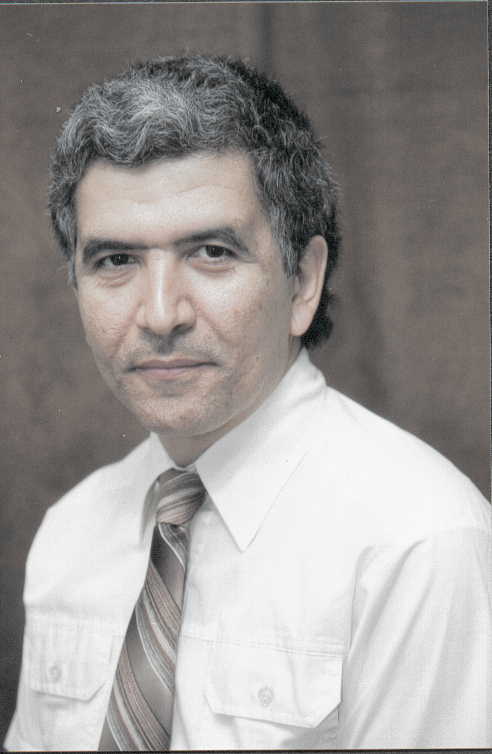
Mustapha C.E. Yagoub is a Full Professor at the School of Electrical Engineering and Computer Science, University of Ottawa, with over 500 publications in RF/microwave CAD, RFID systems, neural networks, and applied electromagnetics. He leads research in the ELEMENT Laboratory and RFM Research Group , focusing on wireless communication systems and nonlinear device modeling. PhD in Electronics (Institut National Polytechnique de Toulouse, 1994) Magister in Telecommunications (École Nationale Polytechnique d'Alger, 1987) Dipl.-Ing. in Electronics (École Nationale Polytechnique d'Alger, 1979) His research bridges Microwave Circuit Design with Artificial Intelligence , including applications in Energy Conservation and Telecommunication Systems . Key trends in his publications include hybrid modeling techniques combining Neural Networks with Computational Electromagnetics for optimizing Antenna Design and RF Components . He is a Senior Member of IEEE and licensed with the Professional Engineers of Ontario and Ordre des Ingénieurs du Québec . His lab teams focus on High-Tc Superconducting Devices and Directional Antenna Optimization for RFID networks.
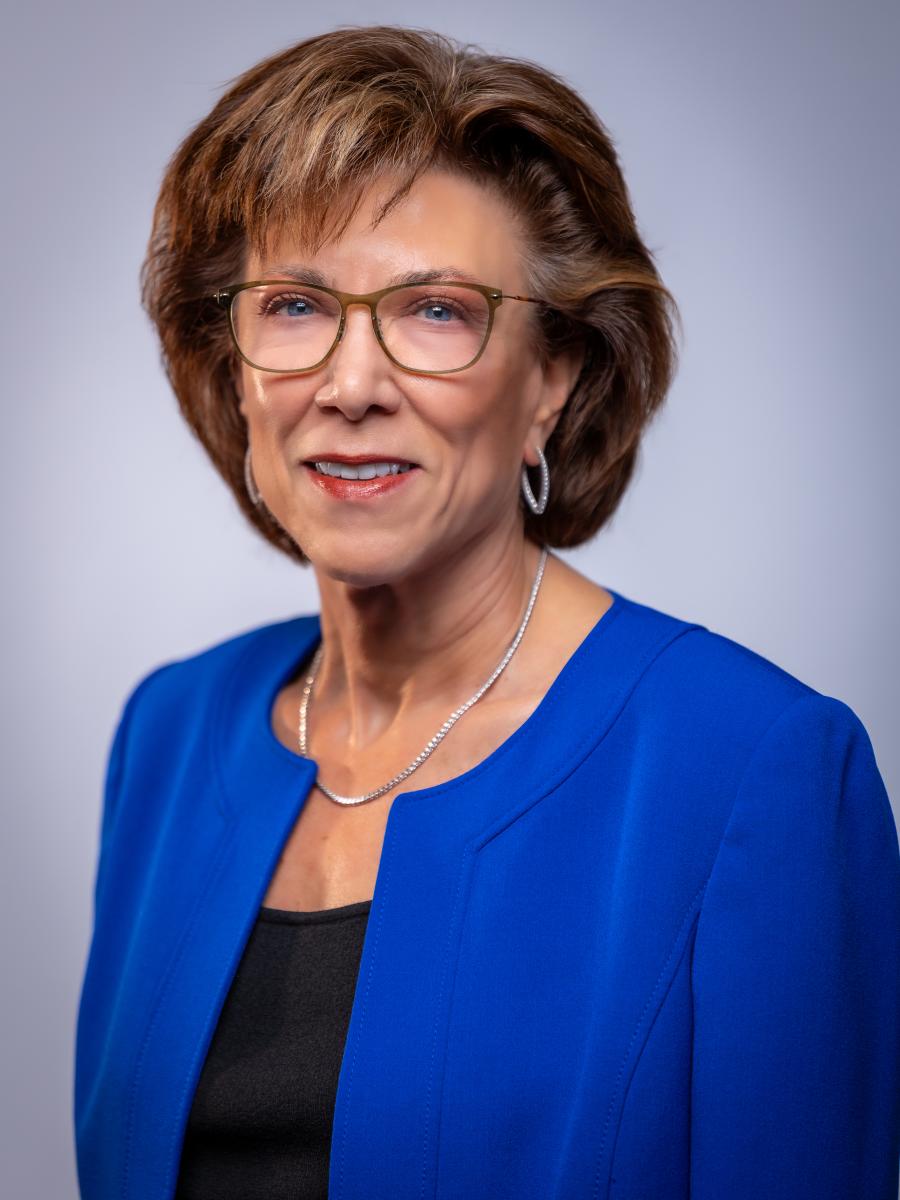
Donatella Strangio serves as Professor of Economic History and Director of the Department of Methods and Models for the Economy, Territory and Finance (Memotef) at Sapienza University of Rome. She also holds the position of Deputy Rector for Chile and Brazil in the Latin America and Caribbean region. Her academic leadership extends to directing international research projects including the European Project PNRR Changes 5 and the Jean Monnet Project EUMCHA. Her research spans economic development and underdevelopment, financial history, tourism economics, international migration patterns, and colonial-decolonization processes. She examines these topics through historical lenses, particularly focusing on pre-industrial economic systems, 20th century European history, famines, food policies, and institutional evolution. Her work often bridges historical analysis with contemporary policy challenges. Professor Strangio's recent publications demonstrate strong thematic coherence across economic history, with particular emphasis on resilience mechanisms during crises, migration as knowledge transmission, and tourism's economic dimensions. Her scholarship shows consistent engagement with both Italian and global contexts, especially regarding Mediterranean and Latin American connections. She actively mentors through multiple master's programs including the Master in Migration and Development and the Master in Tourism Economics and Management. Her leadership in the Civis short-term courses on Crisis Sustainability and Cultural Heritage Enhancement demonstrates commitment to innovative teaching approaches. Professor Strangio directs significant research initiatives including the Spoke9 of PNRR Cultural Heritage and coordinates the Scientific Guarantee Committee for the 'Repertory of Italian banks from 1861 to today.' Her international collaborations span Columbia University, Universidad de Quilmes, University of Adelaide, London School of Economics, and numerous Latin American institutions.
Dr. Andrea L. Dixon serves as Executive Director of Baylor University's Center for Professional Selling and holds the Frank M. and Floy Smith Holloway Professorship within the Hankamer School of Business, Department of Marketing. Since 2009, she has transformed Baylor's sales program into one of the nation's premier sales centers, commemorating its 25th anniversary as the oldest sales center in the United States. Education PhD in Marketing, Indiana University MS in Marketing, Indiana University MBA, Boston University BBA in Marketing, Kent State University BBA in Management, Kent State University BVA in Theatre, Kent State University Research Focus Her pioneering work centers on Sales Management , Salesperson Performance , and Internal Selling , examining critical aspects like burnout coping mechanisms, inside sales force configurations, and sales education frameworks. Dixon's research bridges academic rigor with industry relevance through publications in top journals including Journal of Marketing and Harvard Business Review . Publication Trends Recent publications (2014-2025) reveal evolving focus on mentalizing skills in salesperson resilience, business-to-business inside sales structures, and international research collaboration. Key thematic clusters include sales leadership development, omnichannel integration in personal selling, and evidence-based sales education methodologies that address talent pipeline challenges. Scientific Recognition Cornelia Marschall Smith Award for teaching/research/service excellence (2020) Academy of Marketing Science Marketing Teacher Award (2008) AMA Sales SIG Excellence in Teaching Award (2014) ERB Best Paper Award for omnichannel framework (2016) AMA Sales SIG Best Paper Award (2003) Academic Leadership Dixon serves on editorial boards for Journal of Personal Selling and Sales Management , Journal of Marketing Education , and Journal of Business-to-Business Marketing , while providing ad hoc reviews for Journal of Marketing . She has built Baylor's sales program into a national model through industry partnerships and curriculum innovation, advising numerous students in sales management courses including MKT 4328 and MKT 4331. Center for Professional Selling As Executive Director, she leads initiatives connecting academic research with industry practice, focusing on developing sales talent through practitioner partnerships, certification programs, and the Center's 30th Anniversary issue of the Journal of Personal Selling and Sales Management .
Prof. Dr.-Ing. Richard Membarth is a Research Professor for System-on-a-Chip and AI at the Edge Computing at Technische Hochschule Ingolstadt (THI). He is affiliated with the Hardware-Software Co-Design group and holds a secondary position at the German Research Center for Artificial Intelligence (DFKI) Saarbrücken. Co-creator of DSL frameworks like AnyDSL and Hipacc Key contributor to MetaDL (AI metaprogramming) and PRIME (predictive rendering) His research bridges GPU computing , domain-specific languages , and compiler technology , with recent work on Vulkan SPIR-V compilation and device-driven SpMV algorithms . Notable awards include the HiPEAC Paper Award (2018) and multiple Best Paper Awards for his compiler frameworks.
Prof. Dr. Stefan Huber is a Full Professor (W3) at the Faculty of Chemistry and Biochemistry , Ruhr-Universität Bochum , Germany. His research focuses on non-covalent interactions in organocatalysis , particularly halogen bonding , chalcogen bonding , and cyclopropenium derivatives for applications in molecular recognition , crystal engineering , and radical stabilization . Full Professor since 01/2022 Associate Professor (W2) 2014-2021 Independent Researcher at TU Munich 2009-2013 Research Interests include: Design of halogen/chalcogen bond donors for catalysis Supramolecular chemistry in solution and solid phases Quantum chemical modeling of transition states and binding strengths His work bridges experimental synthesis (NMR, X-ray, ITC) with computational methods , supported by the ERC Starting Grant (2015-2020) and collaborations within the RESOLV Cluster . Scientific Awards : Hoechst Dozentenpreis (2016) Robert-Sauer-Preis (2014) Hans-Fischer-Gedächtnispreis (2013) Ernst-Otto-Fischer-Lehrpreis (2012) Thieme Chemistry Journals Award (2010) Students : Over 20 Ph.D. and Master’s students, including Dominik Reinhard, Tim Steinke, Raffaella Papagna, and Julian Stoesser. The group maintains modern synthesis labs and collaborates with institutions like the University of Geneva and TU Munich .
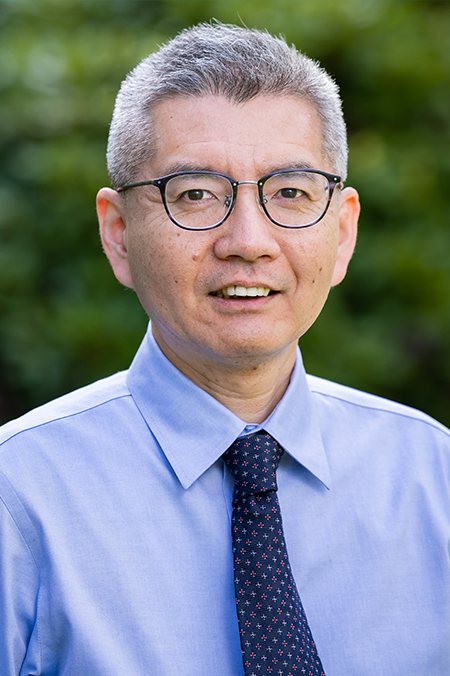
Osamu Iyama is a Professor at the Graduate School of Mathematical Sciences, University of Tokyo. He leads research in algebra and representation theory while mentoring PhD and Master's students. Previously affiliated with Nagoya University, he maintains editorial roles for Mathematische Zeitschrift , Nagoya Mathematical Journal , and other journals. His research focuses on representation theory of orders, categorical structures (module categories, derived categories, cluster categories), and applications to cluster algebras and noncommutative resolutions of singularities. Key areas include higher-dimensional Auslander-Reiten theory, tilting theory, and Cohen-Macaulay representations. His recent publications (2016–2020) explore triangulated categories, noncommutative resolutions, Auslander-Gorenstein algebras, and combinatorial aspects of representation theory, demonstrating consistent innovation in homological algebra and singularity theory. Awards and honors: 2019 Inoue Prize for Science 2011 JSPS Prize 2010 Spring Prize of the Mathematical Society of Japan 2008 Algebra Prize of the Mathematical Society of Japan 2007 ICRA Award 2001 Takebe Katahiro Prize He leads an active research group, organizes international conferences (e.g., Oberwolfach workshops, China-Japan-Korea symposia), and directs the Tokyo-Nagoya algebra seminar.
Wolfgang Windl is a Professor in the Department of Materials Science and Engineering at The Ohio State University with a joint appointment in Physics. He co-founded Goniotech LLC and previously worked at Motorola as a Principal Staff Scientist. He holds a doctoral degree in physics from the University of Regensburg and completed postdoctoral research at Los Alamos National Laboratory and Arizona State University. His research specializes in computational materials science, focusing on: Atomistic simulations and density-functional theory Machine learning applications in materials design Semiconductor transport and layered materials (e.g., Dirac semimetals) Atom probe tomography and characterization techniques Analysis of his 15 most recent publications (2023-2025) reveals dominant themes: advanced simulations of field evaporation, topological quantum materials (PtTe 2 , PdTe 2 ), and computational frameworks for materials characterization. His work frequently integrates spectroscopy, tomography, and Bayesian methods to study alloys, 2D materials, and additive manufacturing defects. Awards and Honors Fraunhofer-Bessel Research Award (2006) Four Lumley Research Awards Boyer Award for Teaching Excellence (2015) Faculty Diversity Excellence Award (2020) Two Mars Fontana Best Teacher Awards (2006, 2015) ASEE Best Paper & Diversity Awards (2019) He advises 11+ graduate students (7 alumni, 5 current) and leads the Windl Group research team focused on computational materials modeling. His group develops simulation tools for atomic-scale characterization and collaborates with national laboratories.
Ryozo Nagamune is a Professor in the Department of Mechanical Engineering within the Faculty of Applied Science at the University of British Columbia (UBC). His research focuses on control engineering with specific expertise in floating offshore wind turbines, integrated solar thermal systems, and metal additive manufacturing processes. He maintains active collaborations with NSERC, MITACS, and industry partners including Ascent Systems Technologies. Dr. Nagamune received his B.Sc. and M.Sc. degrees from Osaka University, followed by a Ph.D. from the Royal Institute of Technology in Stockholm, Sweden. His educational background laid the foundation for his expertise in control systems theory and applications. His primary research interests center on control engineering, with particular emphasis on the control of floating offshore wind turbines and wind farms, integrated solar thermal systems, directed energy deposition metal additive manufacturing processes, engine aftertreatment systems, and data-driven modeling and control of dynamical systems. His work addresses critical challenges in renewable energy, manufacturing, and automotive applications, focusing on optimization, robustness, and efficiency improvements. The research spans theoretical developments in control algorithms to practical implementation in real-world systems. Analysis of Dr. Nagamune's recent publications reveals a strong focus on floating offshore wind turbine control, which constitutes approximately 40% of his recent work. Another significant portion (30%) addresses automotive control systems, particularly selective catalytic reduction for emissions control. The remaining publications cover diverse applications including haptic interfaces, spacecraft control, and precision manufacturing systems. His research demonstrates a consistent pattern of applying advanced control methodologies to solve practical engineering problems across multiple domains. Dr. Nagamune leads the Control Engineering Laboratory at UBC (located in KAIS 3104) and actively seeks collaborations with industry partners, research clusters, and interdisciplinary teams. His research is supported by major funding agencies including NSERC and MITACS, as well as industry partnerships. He is available for supervision of graduate students and expresses interest in working with undergraduate students on research projects. Dr. Nagamune welcomes interdisciplinary research opportunities and is particularly interested in collaborations that bridge multiple engineering domains.
Jing Yang is a full Professor and Director of MS CS Program in the Computer Science Department at the University of North Carolina at Charlotte (UNCC). She has been actively involved in data visualization and visual analytics research since joining UNCC in 2005 after completing her PhD at Worcester Polytechnic Institute. Dr. Yang earned her Bachelor's degrees in Engineering Mechanics and Computer Science from TsingHua University in 1997 and completed her Ph.D. in Computer Science from Worcester Polytechnic Institute in May 2005 under advisors Matthew O. Ward and Elke A. Rundensteiner. Her research focuses on developing visual analytics techniques for abstract data including multidimensional data, time-oriented data, networks, hierarchies, text documents, and trajectory data. She conducts design studies for application domains such as sports, bioinformatics, finance, network security, and health, while exploring fundamental visualization topics like interactions, insight management, clustering-based approaches, and animations. Her recent work emphasizes sports analytics, urban data, and multivariate time series visual analytics. Analysis of Dr. Yang's publication record reveals a strong focus on practical applications of visualization techniques across diverse domains. Her work consistently bridges theoretical visualization frameworks with real-world data challenges, particularly in transportation (taxi trajectories), sports (tennis match analysis), financial transactions, and bioinformatics. The publications demonstrate an evolution from foundational visualization techniques to increasingly sophisticated domain-specific applications. Dr. Yang has secured substantial research funding from NSF, EPA, DHS, and industry partners including Google and Bank of America. Her grants portfolio includes significant projects like TrajAnalytics (NSF, $200,950), Visualizing Event Dynamics (NSF EAGER, $75,317), and Visualizing High Dimensional Categorical Datasets (Google Faculty Research Award, $60,000), among others totaling over $4 million in research support. As an educator, Dr. Yang has taught numerous courses including Visual Analytics, Information Visualization, and Database Design. She directs the Charlotte Visualization Center and has mentored numerous students through research projects. Her collaborative approach is evident in her extensive co-authorship network spanning multiple institutions and disciplines. Current research directions include narrative animation for streaming text visualization and advanced techniques for exploring high-dimensional categorical datasets.
Associate Professor Feng Chen is a faculty member at the School of Mathematics & Statistics, University of New South Wales, specializing in statistical methodology development and applications. His research bridges theoretical statistics and practical implementations across financial modeling, spatiotemporal processes, and public health analysis. PhD in Statistics from University of Hong Kong (2008) MSc in Applied Probability & Statistics from Lanzhou University (2004) BSc in Mathematics from Lanzhou University (2001) Research focuses include: Nonparametric and semiparametric statistical methods Point process modeling with emphasis on Hawkes processes Statistical computing and algorithm development Applications to financial data, earthquake analysis, and public health Recent publications demonstrate methodological advances in: Hawkes process estimation with complex data structures Renewal process applications in seismology GARCH modeling with missing data Spatiotemporal clustering analysis Scientific recognition includes: UNSW Science Staff Impact Award (2023) Professional roles: Director of Research Postgraduate Studies (2023--) Associate Editor for multiple journals Statistics Honours Coordinator (2013-2018) Active participant in statistical societies
Professor Robert Mokaya OBE FRS is Provost and Deputy Vice-Chancellor at the University of Sheffield, joining in 2024 after serving as Pro Vice-Chancellor for Global Engagement at the University of Nottingham. As Professor of Materials Chemistry within the School of Mathematical and Physical Sciences, he leads significant research in porous materials for energy applications. His distinguished academic career spans over three decades with major contributions to materials chemistry and sustainable energy solutions. Mokaya received his B.Sc. in Chemistry from the University of Nairobi (1988) followed by a Ph.D. from the University of Cambridge (1992). His academic journey includes a Research Fellowship at Trinity College, Cambridge (1992), an EPSRC Advanced Fellowship (1996), and progressive appointments at Nottingham University culminating in Professor of Materials Chemistry (2008). His research focuses on the design, synthesis and characterization of novel porous materials with applications in hydrogen storage, CO2 capture, and sustainable energy. His work particularly emphasizes templated porous solids, zeolite templated carbons, and mesoporous molecular sieves. Mokaya's research group has pioneered approaches to optimize porosity in carbon materials for enhanced gas storage capacity. Mokaya's extensive publication record demonstrates consistent leadership in porous materials research with recent work emphasizing practical applications for sustainable energy storage solutions. His articles show a clear progression from fundamental materials characterization to applied energy storage technologies, with particular emphasis on optimizing pore structures for specific gas storage requirements. OBE (2022) for services to the Chemical Sciences Fellow of the Royal Society (FRS) (2023) Royal Society Wolfson Research Merit Award holder (2017-2022) President-Elect of the Royal Society of Chemistry (2024-2026) Mokaya has secured significant research funding supporting his work on sustainable materials for energy applications. His leadership extends to capacity building in porous materials research globally, with particular focus on developing nations. He has supervised numerous PhD students and postdoctoral researchers who have gone on to establish their own research programs in materials science. His research laboratory focuses on the synthesis and characterization of advanced porous materials, with specialized equipment for gas sorption analysis, materials synthesis, and electrochemical characterization. Mokaya leads international collaborations focused on sustainable energy materials, with particular emphasis on creating practical solutions for clean energy storage challenges.
Professor Katarzyna Marciniak is a distinguished scholar at the Faculty of Artes Liberales, University of Warsaw, where she serves as Director of the Center for Research on Ancient Tradition (OBTA) and Head of The Cluster: The Past for the Present – International Research and Educational Programme. She was Vice-Dean for International Cooperation from 2016 to 2024 and has established herself as a leading expert in classical reception studies, particularly regarding children's literature. Professor Marciniak earned her Master of Arts in Classical Philology (2000) and Italian Philology (2003) from the University of Warsaw, completing the Inter-Faculty Individual Studies in the Humanities in 2003. She received her Doctor of Humanities degree in 2004 (summa cum laude) with a dissertation on Cicero's translations from Greek to Latin as ideological manipulation tools, supervised by Professor Jerzy Axer. She completed her habilitation in 2009 and was awarded the title of Professor of Humanities in 2019. Her research focuses on the reception of Classical Antiquity in children's and young adults' culture, exploring how ancient myths function as transformation markers in contemporary societies. She examines the role of mythical creatures in youth literature across different cultures and how classical mythology serves as a cultural code that facilitates intergenerational communication. Her work bridges classical philology with modern literary studies and educational theory. Professor Marciniak's publications reveal a consistent trajectory examining how classical antiquity, particularly mythology, is adapted for younger audiences. Her work spans from scholarly analyses of Cicero to accessible mythological guides for children. The most recent publications focus on how ancient myths serve as medicine for life's hardships and how mythical beasts function as cultural transformation markers across global youth literature. Prime Minister's Award for best doctoral dissertation (2004) Klio Award 2nd class for best historical book (2011) Polityka Scientific Award (2012) Title of Young Ambassador of the Polish Language (2013) Medal of the 200th Anniversary of the University of Warsaw (2016) ERC Consolidator Grant (2016-2022) ERC Proof of Concept Grant (2023-2025) Professor Marciniak has secured significant research funding, including the prestigious ERC Consolidator Grant (the first in humanities in Poland) and ERC Proof of Concept Grant for her "Our Mythical Childhood" program. She has also received multiple Alexander von Humboldt Foundation awards and has been elected to the Academy of Young Scientists of the Polish Academy of Sciences. She serves on the Management Board of the International Federation of Classical Studies and the Board of Curators of Department I of the Polish Academy of Sciences. She directs the Center for Research on Ancient Tradition (OBTA) which coordinates the international "Our Mythical Childhood" research program. This initiative has grown into a global network connecting scholars from Europe, North America, Africa, Asia, Australia, and New Zealand. The program has produced several major publications and educational initiatives, including the "Modern Argonauts" multicultural educational program.
Anastassia N. Alexandrova is a Professor of Chemistry and Biochemistry and Materials Science and Engineering at the University of California, Los Angeles (UCLA). She holds the Charles W. Clifford Jr. Endowed Chair and leads a research group focused on computational and theoretical design of functional materials, with applications in heterogeneous catalysis, quantum information science, and enzyme reactivity. Her work integrates quantum mechanics, machine learning, and multi-scale modeling to address environmental and energy challenges. Education: B.S./M.S. in Chemistry, Saratov State University (2000, Summa cum laude) Ph.D. in Theoretical Physical Chemistry, Utah State University (2005) Postdoctoral Associate, Yale University (2005-2009) Research interests span heterogeneous catalysis (CO2 reduction, methanol synthesis), quantum information science (qubit design, nuclear clocks), and enzyme reactivity (electric field effects, artificial metalloenzymes). Recent publications highlight her focus on dynamic catalytic interfaces, quantum functional groups, and AI-driven material discovery. Scientific Awards: Royal Society of Chemistry Fellow (2024) Max Planck-Humboldt Medal (2021) NSF CAREER Award (2014) Sloan Research Fellowship (2013) DARPA Young Investigator (2011) Her lab collaborates with experimental teams in catalysis, surface science, and quantum physics, emphasizing method development and applied projects. Students and postdocs in her group work on diverse topics from CO2 hydrogenation to topological insulators, reflecting her interdisciplinary approach.
Kyle Dawson is a Professor of Physics and Astronomy at the University of Utah, where he has been employed since 2009. He currently serves as both a full Professor and Director of Graduate Studies in the Department of Physics and Astronomy, having progressed from Assistant Professor (2008-2015) to Associate Professor (2015-2019) before achieving his current position in 2019. His institutional affiliation places him within the College of Science at the University of Utah, a major research university in the western United States. Dawson earned his BA in Physics from Cornell University in 1998, followed by a PhD in Physics from the University of California, Berkeley in 2004. After completing his doctoral studies, he served as a postdoctoral researcher at the Lawrence Berkeley National Laboratory before joining the University of Utah faculty. His educational background in physics provided the foundation for his transition into observational cosmology, where he has made significant contributions through large-scale spectroscopic surveys. Professor Dawson's research focuses on observational cosmology through large spectroscopic surveys designed to measure the fundamental properties of the universe. He is currently the co-Spokesperson for the Dark Energy Spectroscopic Instrument (DESI), a major cosmological survey that has produced numerous high-impact publications in 2024-2025. Previously, he served as Principal Investigator for the Extended Baryon Oscillation Spectroscopic Survey (eBOSS), which concluded in 2020 with final cosmological measurements. His work centers on measuring baryon acoustic oscillations to constrain cosmic expansion history, dark energy properties, neutrino masses, and to test General Relativity. His research group employs techniques including galaxy clustering analysis, quasar astrophysics, and large-scale structure mapping to address fundamental questions in cosmology. The analysis of Dawson's recent publications reveals a strong focus on extracting cosmological constraints from the DESI survey data. His work spans multiple aspects of cosmological analysis, including baryon acoustic oscillation measurements, full-shape power spectrum analysis, imaging systematics mitigation, and cross-correlation studies with cosmic microwave background data. The publications demonstrate collaborative work with large international teams and contribute to increasingly precise measurements of cosmological parameters, with particular attention to dark energy equation of state, neutrino masses, and potential deviations from General Relativity. Professor Dawson has secured significant research funding throughout his career, including multiple grants from the Department of Energy (DOE), NASA, and the National Science Foundation. His grant portfolio includes leadership roles in major cosmological surveys like DESI and eBOSS, as well as support for postdoctoral researchers and graduate students. His research group has mentored numerous students who have gone on to successful careers in academia, industry, and data science fields. Dawson leads a vibrant research group at the University of Utah focused on cosmological data analysis from large spectroscopic surveys. His current team includes two postdoctoral researchers (Angela Berti and Sarah Eftekharzadeh) and a graduate student (Allyson Brodzeller). The group specializes in galaxy clustering analysis, quasar astrophysics, and machine learning applications to spectroscopic data. The research environment fosters collaboration with international teams working on DESI and related cosmological surveys, providing students with opportunities to engage with cutting-edge cosmological research and large-scale data analysis techniques.
Prof. Dr. Sabine Feist serves as Professor and Head of the Department of Christian Archaeology within the Faculty of Philosophy at the University of Bonn, holding an Endowed Professorship (W2) established by the Gielen-Leyendecker Foundation with a five-year initial term extended through a 2023 call to the newly created chair. Her academic formation includes: 2005-2011: Studies in Christian Archaeology and Byzantine Art History (major), Classical Archaeology and Ancient History (minors) at Freiburg, Athens, Basel and Göttingen 2012-2016: Doctoral research in Late Antique and Byzantine Art History (major) and Classical Archaeology (minor) at Munich Feist's research centers on Christianity's constitutive role in late antique/early medieval life, specializing in Byzantine sacred architecture and the scientific history of Christian archaeology. Her work integrates architectural analysis with material culture studies to examine how religious beliefs shaped urban landscapes and building practices during antiquity's transition to the Middle Ages. Key projects include the Crypt of San Marco in Venice, Constantinian Episcopal Church of Ostia, and relic dependency studies. Analysis of her 2020-2024 publications reveals dominant focus on early Christian church architecture (particularly Constantinian to Justinianic periods), with recurring themes of 'dark age' building continuity, spatial organization, and relic-related material culture. Her methodological approach combines archaeological fieldwork with art historical analysis across Italy, Turkey, and Greece. Major recognitions include: Doctoral scholarship from Hanns Seidel Foundation (2012-2015) University of Munich Travel Scholarship (2013) Junior Fellowship at Koç University's Research Center for Anatolian Civilizations (2014-2015) As lead investigator for the Cluster of Excellence 'Beyond Slavery and Freedom' and member of Bonn's 'Past Worlds – Contemporary Questions' research area, Feist directs projects including the Ostia Episcopal Church excavation and Venice's San Marco Crypt study. Her institutional roles encompass the Scientific Advisory Board of the Romanic Bulletin (DAI) and Bonn Graduate Center selection committee, demonstrating active research leadership and mentorship capacity. Feist maintains international collaborations across Germany, Turkey, Italy and Greece, evidenced by multi-author publications with scholars like Heinzelmann and Zimmermann. Her fieldwork spans Ostia Antica, Ephesus, Thessaloniki, and Istanbul, reflecting extensive engagement with Mediterranean archaeological sites and teams.