Laurence Perreault-Levasseur is an Associate Professor at Université de Montréal and an Associate Member of Mila. She specializes in applying machine learning methods to cosmology, with affiliations at the Flatiron Institute and Perimeter Institute. Her research focuses on gravitational lensing, dark matter, and precision cosmology. She holds a Canada Research Chair in Computational Cosmology and Artificial Intelligence. Education: PhD (University of Cambridge, 2015), M.Sc. and B.Sc. (McGill University). Research Interests: Machine learning for cosmological inference, strong gravitational lensing, galaxy cluster characterization, and dark matter studies. Affiliations: CRAQ (Québec Astrophysics Research Centre), Mila (Quebec AI Institute). Her work includes developing Bayesian methods for inverse problems and neural networks for astrophysical data analysis. Key projects involve precision cosmology via machine learning and reconstructing early-universe conditions using generative models.
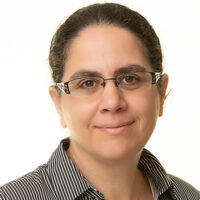
Sivan Sabato is an Associate Professor at McMaster University's Department of Computing and Software , a Canada CIFAR AI Chair, and faculty member at the Vector Institute of Artificial Intelligence . She holds a joint appointment at Ben-Gurion University's Department of Computer Science while on leave. Her research focuses on machine learning theory, active learning algorithms , and fairness in machine learning . Education: PhD in Computer Science, Hebrew University of Jerusalem Postdoctoral Fellowship, Microsoft Research New England Her theoretical work develops interactive learning frameworks that optimize information costs through algorithmic interaction patterns. Recent publications emphasize differential privacy and discriminative feature analysis with applications to healthcare and social data. She serves as Action Editor for Journal of Machine Learning Research and organizes conference tracks including ICML 2022-2023 and ALT 2021 . Awards include the Alon Scholarship and Google Anita Borg Memorial Scholarship . Advising: Actively supervises Computer Science PhD and MSc students through McMaster's Faculty of Engineering. Research interns can apply via the Vector Institute program with Summer 2026 opportunities.
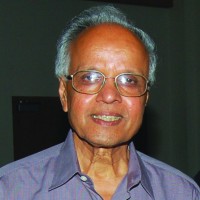
J.N.K. Rao is a Distinguished Research Professor in the Department of Mathematics & Statistics at Carleton University. A leading expert in survey sampling and statistical inference, he has made groundbreaking contributions to small area estimation (SAE) and data integration methodologies. Research Focus: Specializes in survey methodology, poverty mapping, Bayesian inference, and empirical likelihood techniques. Honors: Gold Medal of the Statistical Society of Canada (1993), Fellow of the Royal Society of Canada (1991), Waksberg Award (2005), SAE Outstanding Achievement Medal (2017). His recent work explores model-based SAE, combining probability and non-probability samples, and improving inference validity through robust calibration. Awards highlight his decades-long impact on statistical theory and practice. Email: jrao@math.carleton.ca
Liqun Diao is an Associate Professor (Tenured) in the Department of Statistics and Actuarial Science at the University of Waterloo. He holds affiliations with the Health Data Science Lab and the Waterloo Artificial Intelligence Institute. His research focuses on developing statistical methods and machine learning algorithms for applications in medicine, public health, and insurance. Education: B.Econ. in Statistics, Renmin University of China (2007) M.Math. in Statistics (Biostatistics), University of Waterloo (2009) Ph.D. in Statistics (Biostatistics), University of Waterloo (2013) Research Interests: Recursive partitioning and tree-based methods for survival and health data Causal inference and missing data methodologies Bayesian nonparametric models and copula dependence structures Mortality forecasting and actuarial science applications Awards: 2013 Pierre Robillard Award (best doctoral thesis in Canadian statistics) 2024 Outstanding Performance and Teaching Awards at UW Professional Activities: Led research groups in health data science and AI Recipient of multiple grants from NSERC and industry partners Advises graduate students in statistics and actuarial science Labs/Teams: Active contributor to the Health Data Science Lab and Waterloo AI Institute, focusing on applying statistical innovations to real-world health and insurance challenges.
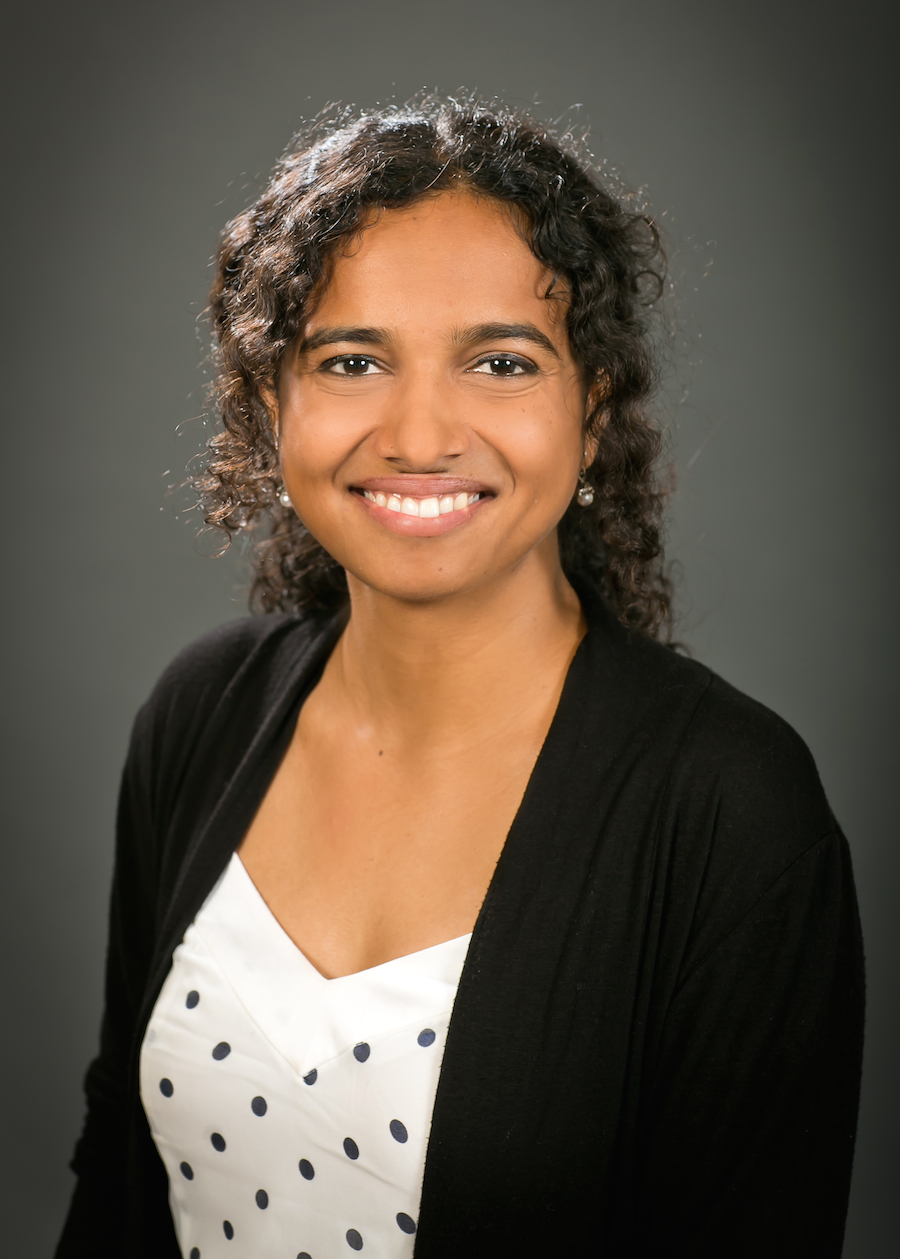
Ramya Korlakai Vinayak is the Dugald C. Jackson Assistant Professor in the Department of Electrical and Computer Engineering at the University of Wisconsin-Madison. She also holds affiliations with the Department of Computer Science and the Department of Statistics at UW-Madison. Her research program bridges theoretical machine learning with practical applications in data science and crowdsourcing. Education: PhD in Electrical Engineering from California Institute of Technology (Caltech), advised by Prof. Babak Hassibi B.Tech in Electrical Engineering with minor in Physics from Indian Institute of Technology Madras (IIT Madras) Dr. Vinayak's research focuses on developing theoretically grounded machine learning tools for reliable inference using data from human sources. Her work spans machine learning theory, statistical inference, and crowdsourcing systems, with particular emphasis on preference learning, metric learning, and robust dataset construction. She has pioneered methods for learning from limited pairwise comparisons, auto-labeling systems, and human-in-the-loop out-of-distribution detection. Her recent publications reveal a consistent trajectory toward building practical machine learning systems that incorporate human feedback while maintaining theoretical guarantees. The pattern shows increasing focus on ethical considerations in AI, particularly regarding bias in generative models and reliable human-AI collaboration frameworks. Scientific Awards: Faculty for the Future fellowship (2013-2015) from Schlumberger Foundation NSF CAREER Award American Family Funding Initiative Award with Fred Sala Dr. Vinayak leads an active research group with multiple PhD students across ECE and CS departments. She has secured significant research funding including an NSF grant for "Uncovering the cognitive and neural fingerprints that make each of us unique" in collaboration with Tim Rogers, Rob Nowak and Brad Postle. She is also co-organizing the MidWest Machine Learning Symposium and NeurIPS tutorials on dataset construction. Her research group operates at the intersection of theory and practice, developing mathematically grounded frameworks that address real-world challenges in dataset construction, human-AI collaboration, and reliable machine learning systems.
Donald R. Sheehy is an Associate Professor of Computer Science in the College of Engineering at North Carolina State University. His research focuses on the intersection of geometric algorithms and topological data analysis, with significant contributions to computational geometry and persistent homology. Sheehy's research interests span geometric algorithms, topological data analysis, computational geometry, persistent homology, metric spaces, Voronoi diagrams, and Delaunay triangulations. His work bridges theoretical computer science with practical applications in data analysis, where he develops algorithms that extract meaningful topological information from complex datasets. His research has particular relevance for understanding the structure of high-dimensional data through geometric and topological lenses. Analysis of his recent publications reveals a strong focus on developing efficient algorithms for topological data analysis. His work on sparse filtrations, greedy permutations, and metric properties of persistence diagrams has advanced the field by providing computationally tractable methods for analyzing large datasets. Sheehy frequently explores how geometric structures like Voronoi diagrams and Delaunay triangulations can be adapted to topological contexts, creating bridges between classical computational geometry and modern data analysis techniques. Sheehy actively collaborates with researchers across multiple institutions, as evidenced by his extensive publication record in top venues like SOCG (Symposium on Computational Geometry) and SODA (Symposium on Discrete Algorithms). His work demonstrates a consistent trajectory of advancing both theoretical foundations and practical applications of geometric and topological methods in computer science.
Lele Wang is an Assistant Professor in the Department of Electrical and Computer Engineering (ECE) at the University of British Columbia (UBC), Vancouver. He is affiliated with the Mathematics of Information, Learning and Data (MILD) research cluster and the Institute of Applied Mathematics. His research focuses on information-theoretic approaches to data science and machine learning, with contributions to universal compression, coding theory, statistical inference on graphs, and noisy computing. Before UBC, he held postdoctoral positions at Stanford University, Tel Aviv University, and as an NSF Center for Science of Information fellow. Education: PhD in Electrical Engineering from the University of California San Diego (2015), B.E. in Academic Talent Program from Tsinghua University (2009). Research Interests: Developing tools in information theory, coding theory, high-dimensional statistics, combinatorics, random graphs, and deep generative models for data-driven challenges. Notable works include universal graph compression for stochastic block models and coding-theoretic approaches to distributed machine learning. Awards: Recipient of the 2017 IEEE Information Theory Society Thomas M. Cover Dissertation Award and NSF CSoI Postdoctoral Fellowship. His students have won multiple awards including GSI Awards and NSERC grants. Mentoring: Prioritizes student development in critical and creative thinking, offering courses in real analysis, probability theory, and theoretical frameworks. Hosts round-robin group meetings inspired by Thomas Cover to foster concise communication and problem-solving skills.
Dr. Andrew Roth is an Assistant Professor in the Departments of Pathology & Laboratory Medicine and Computer Science at the University of British Columbia, with additional appointments at the BC Cancer Research Centre and BC Cancer Agency's Department of Molecular Oncology. His interdisciplinary work bridges computational science and cancer biology, focusing on developing novel methods to understand tumor evolution and heterogeneity. Dr. Roth's research centers on applying statistical machine learning to high-dimensional cancer biology, with expertise in probabilistic graphical models, non-parametric Bayesian methods, and computational statistics. His primary focus is developing computational methods for studying clonal population structures and tumor evolution. His work leverages variational and sequential Monte Carlo methods to extract biologically interpretable insights from complex genomic datasets, with significant implications for understanding cancer progression, treatment resistance, and metastasis. Dr. Roth's publication record demonstrates consistent innovation in computational cancer genomics, particularly in clonal evolution, tumor heterogeneity, and single-cell analysis. His methodological contributions (including PyClone, ReMixT, and TITAN) have advanced our ability to reconstruct evolutionary histories of tumors and identify critical transitions in cancer progression across multiple cancer types including breast, ovarian, and medulloblastoma. Scientific Recognition Publications in high-impact journals including Nature, Nature Methods, Genome Biology, and Genome Research Work applied in high-profile studies of breast and ovarian cancer published in Nature and Nature Genetics Academic Supervision Dr. Roth actively mentors graduate students across Bioinformatics and Computer Science programs. His lab currently includes PhD student Eric Lee working on 'Computational approaches for exploring the spatial dynamics of the cellular ecosystem,' along with numerous other graduate students and trainees. He has supervised Master's theses on liquid biopsies for cancer monitoring, differential RNA expression analysis using Bayesian phylogenetic modeling, and spatial characterization of tumor microenvironments with spatially aware clustering methods. Research Environment Dr. Roth leads a research group at the BC Cancer Research Centre within the Genome Sciences Centre, a high-throughput genome sequencing facility recognized as a leader in genomics and bioinformatics. His lab collaborates extensively with clinicians, molecular biologists, and bioinformatic scientists to develop and apply single-cell multiomic methods for studying cancer evolution, particularly in follicular lymphoma. The lab operates within one of Canada's premier cancer research environments with access to robust computational and sequencing technology facilities.
Yuejiao Cindy Fu is a Full Professor in the Department of Mathematics and Statistics at York University's Faculty of Science. Her office is located in the Ross Building. Research specializes in mixture models, empirical likelihood, density ratio models, and statistical analysis of high-dimensional spatial, genetic, and DNA methylation data. Methodologies include homogeneity testing, dimension reduction techniques, and robust inference for genomic applications. Education: Ph.D. in Statistics from University of Waterloo (2004). Contact: (647) 831 1208.
James G. MacKinnon is the Sir Edward Peacock Professor of Econometrics at Queen’s University, Department of Economics. He holds a B.A. (York University), M.A., and Ph.D. (Princeton University). His research focuses on bootstrap methods, cluster-robust inference, and econometric theory. He has authored influential textbooks like *Estimation and Inference in Econometrics* and *Econometric Theory and Methods*. MacKinnon has served as Head of the Department of Economics (2003–2013) and President of the Canadian Economics Association (2001–2002). His honors include Fellowships from the Econometric Society, Royal Society of Canada, and International Association for Applied Econometrics. His work spans over 150 publications, emphasizing robust statistical methods and empirical practice. Notable contributions include numerical distribution functions for cointegration tests and cluster-robust inference guidelines. He has advised numerous graduate students and collaborates on software tools for econometric analysis, such as Stata modules for bootstrap inference.
Zeinab Mashreghi is an Associate Professor in the Department of Mathematics and Statistics at the University of Winnipeg, holding this position since July 2020. Previously, she served as an Assistant Professor at the same institution from January 2016 to June 2020. She is also an Adjunct Professor in the Department of Community Health Sciences at the University of Manitoba since October 2021. Her educational background includes a Ph.D. in Statistics from Université de Montréal, an M.Sc. in Pure Mathematics from Université Laval, and a B.Sc. in Applied Mathematics from the University of Kashan, Iran. Dr. Mashreghi’s research focuses on sampling methodology , particularly addressing nonresponse , resampling methods , imputation , and variance estimation . She also develops R packages and contributes to infectious disease modelling . Currently, she holds an NSERC Grant to support student researchers in these areas. Her work bridges statistical theory and practical applications, such as analyzing gonorrhea clusters in Manitoba using spatio-temporal methods. Teaching : She instructs courses including Mathematical Statistics II, Survey Sampling I & II, and Applied Regression Analysis. Her publications** span bootstrap techniques for imputed survey data, optimization algorithms, and disease surveillance. No scientific awards explicitly mentioned .
Dr. Jeanette O'Hara Hines is Professor Emerita/Adjunct Faculty at the University of Waterloo's Department of Statistics and Actuarial Science. Her research specializes in developing statistical methods for biological sciences, particularly longitudinal data with categorical responses and non-random dropouts. She has directed the Statistical Consulting Unit and contributed to statistical education through textbook authorship. Major research areas: Analysis of clustered/longitudinal categorical data Statistical methods for biological and medical research Sensitivity analysis for missing data mechanisms Applications in ecology and environmental studies Honors include PSTAT accreditation and leadership roles in the Statistical Society of Canada, where she chaired committees on accreditation and women in statistics.
Jean Philippe Thivierge is a Professor in the Department of Psychology at the University of Ottawa, Faculty of Social Sciences. His research integrates experimental and computational approaches to study the dynamics of neuronal networks underlying memory and cognition. Research Interests: Dr. Thivierge's work centers on neural dynamics , neurosciences , and systems biology . He investigates how large-scale neuronal populations encode and maintain memories by combining multielectrode recordings with biologically realistic simulations. His lab explores principles of network organization across spatial and temporal scales, focusing on phenomena like neuronal avalanches, attractor dynamics, and functional connectivity. The analysis of his recent publications reveals a strong emphasis on computational modeling , statistical analysis of neural data , and network-level neuroscience . His work bridges experimental findings with theoretical frameworks, particularly in understanding scale-free dynamics, criticality, and information processing in cortical and hippocampal circuits. Scientific Contributions: While specific awards are not listed, his publication record in high-impact journals such as Neuron , PLoS Computational Biology , and Journal of Neurophysiology reflects significant contributions to computational and systems neuroscience. Advising and Research: Dr. Thivierge mentors several trainees, including graduate students and postdoctoral fellows, many of whom are co-authors on his publications. His lab employs multielectrode array technology and large-scale neural simulations to probe the mechanisms of memory formation and network stability. Although grant details are not provided, his sustained research output suggests active funding support. Laboratory Focus: The Thivierge Lab operates at the intersection of experimental neurophysiology and computational modeling, utilizing both in vitro recordings and in silico simulations to test hypotheses about brain network function. The lab's approach enables rigorous testing of biophysical mechanisms linking synaptic properties to emergent network behaviors.
Jean Vaillancourt is an Affiliated Professor at the Department of Decision Sciences, HEC Montréal. He holds a PhD in Mathematics from Carleton University. His research focuses on stochastic processes, probability theory, and data mining applications in social media analysis. Key areas include martingale theory, random walks in random environments, and social network dynamics. He has contributed to methodologies for estimating multi-modal histograms and predicting network restructuring following node removals. His work integrates mathematical rigor with computational techniques, appearing in venues like Stochastic Analysis and Applications and Neural, Parallel and Scientific Computations . Active on platforms like Academia.edu and ResearchGate, his research bridges theoretical probability with practical applications in data science and network analysis. Education: PhD in Mathematics, Carleton University Research Interests: Probabilities, stochastic equations, social media analysis, data mining, and network science. His work emphasizes statistical methods for pattern extraction, centrality-based network prediction, and measure-valued processes. Articles Overview: Recent publications explore martingale convergence theories, random walk periodicity detection, and cascading removals in social networks. These studies highlight his dual focus on foundational probability theory and applied data-driven analysis. Grants & Advising: Supervision activities span the last five years, though specific grants or advisees aren't detailed here. His work on road database automation and edge detection showcases interdisciplinary impact. Labs & Teams: Collaborates across disciplines, integrating mathematical modeling with computational tools. Active in HEC's research ecosystem, contributing to formal concept analysis and SAR imagery processing initiatives.
Dr. Manar Amayri is a researcher affiliated with the CIISE (College/Institution name not explicitly provided), focusing on machine learning, data science, and their applications in energy management systems. Her work emphasizes smart buildings, smart cities, and human-in-the-loop AI systems. She explores advanced clustering techniques, domain adaptation, and anomaly detection in smart environments. Research Interests: Machine Learning, Explainable AI, Energy Management Systems, Smart Buildings, Data Clustering, Domain Adaptation, and Anomaly Detection. Her studies address challenges in load forecasting, occupancy estimation, and energy disaggregation using deep learning, Bayesian methods, and probabilistic models. Publications highlight innovations in hybrid models (e.g., Transformer-BiLSTM networks), data imputation for electric vehicle charging, and unsupervised learning techniques for smart grid applications. Recent work emphasizes interpretability and robustness in AI systems. No scientific awards or grants were explicitly mentioned in the provided texts. No student advisees or lab affiliations were listed.