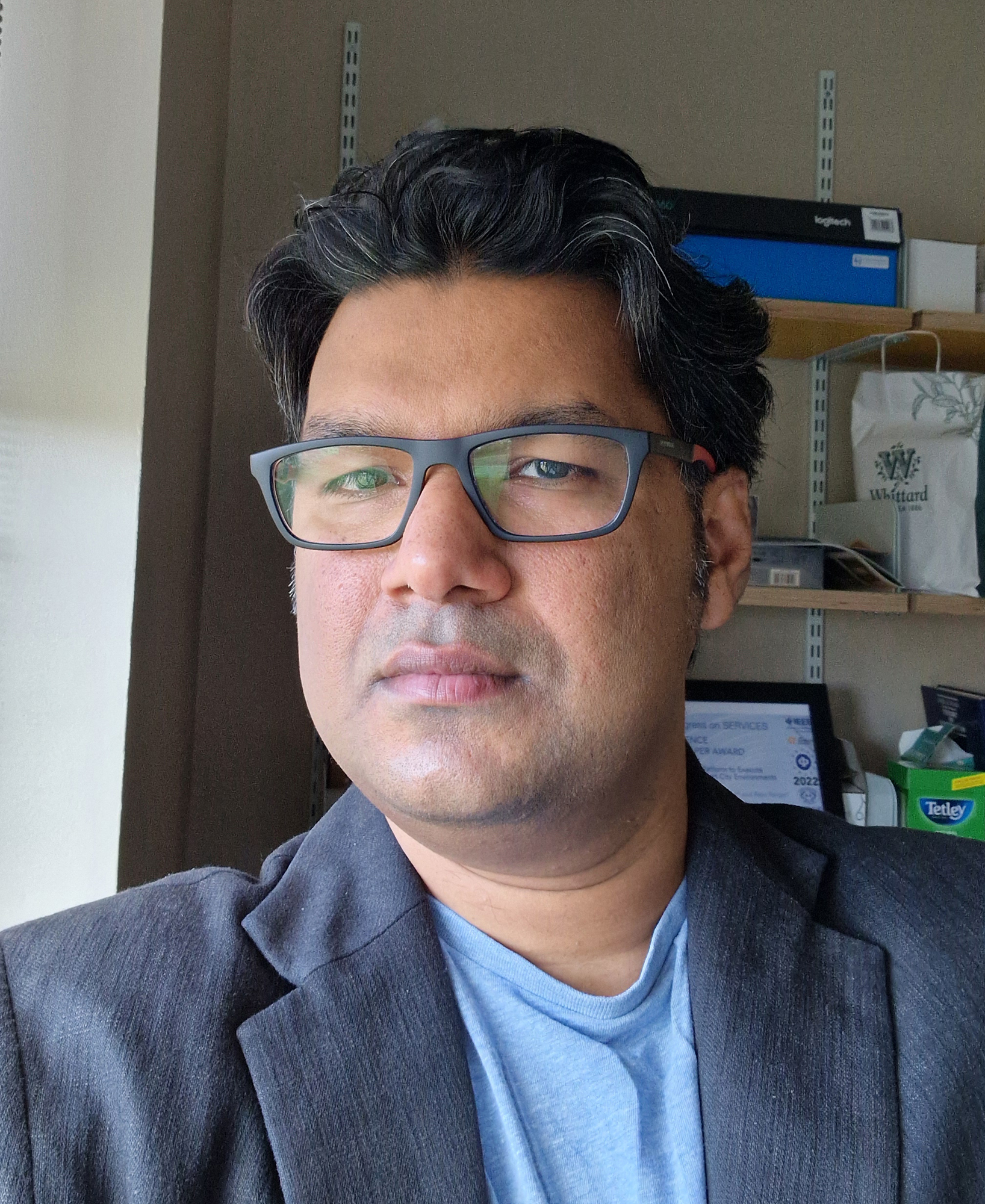
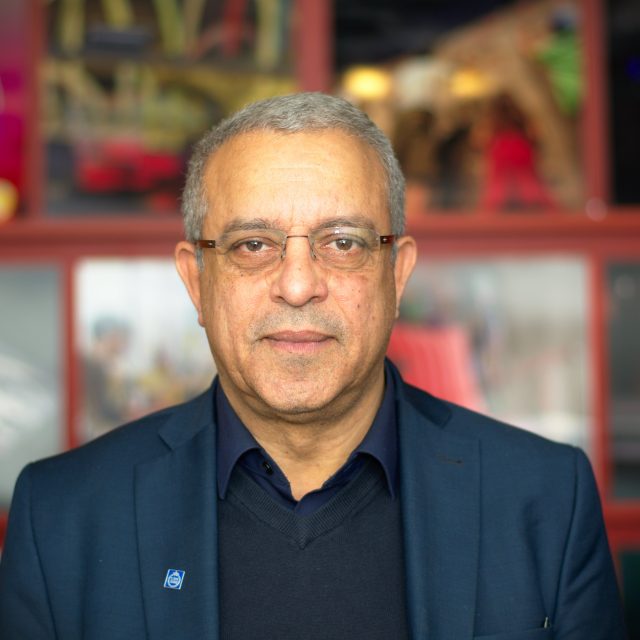
Haakon Bryhni is a Research Professor at Simula Research Laboratory's Center for Resilient Networks and Applications, focusing on telecommunications infrastructure and network resilience. His work spans optical fiber sensing, Cloud-RAN architecture, 5G networks, and network security. Expertise in telecommunications and network infrastructure Contributions to optical fiber sensing and AI-driven network outage classification Active in public outreach and policy analysis for ICT resilience Recent research explores Sagnac loop sensing systems , Cloud-RAN integration , and cybersecurity preparedness in Norway. Collaborations include international conferences and publications in Optics & Laser Technology , Sensors , and IEEE journals. Contact: haakonbryhni@simula.no
Patrizia Scandurra is an Associate Professor at the Department of Management, Information and Production Engineering, University of Bergamo, Italy. Her academic appointment in Computer Science (01/B1) spans from 2022 to 2033. She previously held roles as a researcher at the University of Bergamo (2009-2017) and postdoctoral fellow at the University of Milan (2006-2008). She earned her PhD in Computer Science (2006) and Bachelor's degree (2002) from the University of Catania. Research Focus : Software architectures and formal methods for modeling, validation, and verification of software-intensive systems. Specializations : Runtime analysis of self-adaptive, autonomous, and uncertain systems including IoT-Edge-Cloud applications, embedded systems, and system-on-chip. Collaborations : STMicroelectronics, Atego, Bialetti, and ENEA. Conference Involvement : Program/organizing committees for ICSE, ASE, ISSRE, ICSA, ECSA, SEAMS@ICSE, ABZ, SA-TTA@SAC, FAACS@ECSA. Research Projects : Model-driven development for robotics, adaptive architectures for pervasive systems, big data in smart cities, and digital twins for medical systems. Notable Contributions : Development of the ASMETA formal method community tools and frameworks for rigorous system design. She has published over 100 peer-reviewed works in international journals and conferences.
Jasmine Gnanadurai serves as an Associate Professor in the Department of Electrical Engineering & Computer Science at George Fox University's College of Engineering. She teaches a range of courses including Introduction to Computer Science, Software Engineering, Servant Engineering, and Senior Design. Her office is located in Wood-Mar 222, where she holds regular office hours for student consultation. Dr. Gnanadurai's educational background includes: Ph.D. in Computer Science (2017) from Anna University, Chennai, India M.Phil (2006) from Bharathidasan University, Tiruchirappalli, India M.C.A. (2000) from Bharathidasan University, Tiruchirappalli, India B.Sc. in Computer Science (1997) from Bharathidasan University, Tiruchirappalli, India Dr. Gnanadurai's research spans multiple cutting-edge domains in computer science and engineering. Her work in wireless sensor networks has focused on optimization algorithms for zone-based networks, particularly using techniques like DBSCAN clustering and particle swarm optimization. She has made significant contributions to cloud computing architecture, especially in resource allocation and load balancing for peer-to-peer networks. Her expertise extends to machine learning applications across diverse fields including agriculture productivity, student feedback analysis, and crowd behavior recognition. Her recent publications demonstrate a strong interdisciplinary approach, bridging computer science with practical applications in healthcare, education, smart cities, and transportation. She has published extensively on deep learning techniques for EMG-based hand gesture recognition, blockchain applications for electric vehicle charging infrastructure, and immersive technologies for educational settings. These works reflect her commitment to addressing real-world challenges through technological innovation. Dr. Gnanadurai actively contributes to the engineering education mission at George Fox University through multiple channels. She teaches foundational computer science courses, advanced software engineering, and participates in the university's distinctive Servant Engineering program where students develop solutions to humanitarian needs. She also guides senior engineering students through their capstone Senior Design projects, which partner with industry sponsors to solve real-world problems. As part of the College of Engineering, Dr. Gnanadurai works within interdisciplinary teams that collaborate on projects addressing humanitarian needs through the Servant Engineering program. This program connects students with community partners to develop engineering solutions that serve vulnerable populations, reflecting the university's Christian mission of service. Her involvement in Senior Design connects students with industry partners including Xerox, Intel, Garmin, and numerous regional companies, providing students with valuable real-world experience.
Mahanth Gowda is an Associate Professor in the Department of Computer Science and Engineering, leading a prolific research program at the intersection of mobile systems, wireless sensing, and human-computer interaction. His work has been continuously funded by the U.S. National Science Foundation since 2019, serving as Principal Investigator on four awards and Co-PI on two others, collectively spanning edge computing for XR, sign-language recognition, next-generation wireless networking, and healthcare-oriented wearables. Research Interests Millimetre-wave and ultra-wideband sensing for 3-D finger motion tracking and speech eavesdropping Edge-IoT platforms for real-time sign-language recognition and translation Neural-augmented game streaming and super-resolution on commodity mobile devices Open-source wearable systems for sports analytics and rehabilitative healthcare Security and privacy implications of motion sensors in smartphones and IoT devices Over the past five years his publication trajectory has concentrated on leveraging emerging radio modalities—especially millimetre-wave radar, Wi-Fi, and UWB—to extract fine-grained human-centric information such as finger gestures, facial micro-motions, and spoken content. A complementary thread develops edge-native machine-learning frameworks that push intelligence to resource-constrained devices, enabling immersive AR/VR experiences and assistive technologies for the Deaf and hard-of-hearing communities. Grants & Projects CAREER: Sign-to-Speech – NSF, $500k, 2021-2026; Edge-IoT platform for real-time ASL recognition. SHF: Medium: Next-Gen XR Edge Platform – NSF, $1.2M, 2022-2025; Co-PI with Das, Sivasubramaniam, Kandemir. CNS Core: IoTScope – NSF, $450k, 2020-2025; Sensing physical materials via low-cost IoT radios. CNS Core: Medium: ML-driven Next-G Wireless – NSF, $800k, 2020-2024; Co-PI with Yang and Mahdavi. I-Corps: Smart Ring for Healthcare Analytics – NSF, $50k, 2023-2025; Commercialization of finger-motion wearables. Labs & Teams Gowda directs a research group that operates at the confluence of wireless networking, embedded systems, and applied machine learning. The lab maintains active collaborations with faculty in computer architecture, augmented reality, and accessibility studies, and routinely mentors graduate researchers whose work appears in top-tier venues such as ACM MobiCom, IEEE INFOCOM, ISCA, and ACM IoTDI.
Chung Hwan Kim serves as an Assistant Professor in the Department of Computer Science at the University of Texas at Dallas, where he directs the Software & Systems Security Laboratory (S³ Lab). His research focuses on critical security challenges in cyber-physical systems, embedded devices, and cloud infrastructure, with recognition including the NSF CAREER Award and UT Dallas New Faculty Research Symposium Grant. His expertise spans Computer Systems Security , Cyber-Physical Security , and Software Security and Reliability , emphasizing practical solutions for robotic vehicles, autonomous systems, and trusted execution environments. Current projects address signal injection attacks, resilience testing, and confidential computing through innovative fuzzing frameworks and hardware-assisted protections. Recent publications (2020-2026) reveal three dominant research thrusts: (1) Security for autonomous/robotic systems ( DriveFuzz , IMUFUZZER ), (2) Trusted execution in constrained environments ( Vessels , GEVisor ), and (3) Automated vulnerability discovery ( HFL , TZ-DATASHIELD ), consistently appearing in top venues like IEEE S&P and USENIX Security. Key honors include: NSF CAREER Award (premier early-career recognition) UT Dallas New Faculty Research Symposium Grant Top 10 finalist for CSAW Best Applied Research Paper Award (2018) As principal investigator of the S³ Lab, Kim mentors graduate researchers and secures competitive funding for projects spanning robotic vehicle security, embedded systems hardening, and confidential computing. His teaching portfolio includes Operating Systems, Information Security, and specialized courses on CPS/IoT security. The S³ Lab develops deployable security tools like TZ-DATASHIELD for embedded data protection and IMUFUZZER for resilience testing of aerial vehicles, collaborating with industry partners to translate research into real-world solutions for autonomous systems and critical infrastructure.
Dr. Hui Han is a Senior Lecturer at Luleå University of Technology (LTU) in Sweden, working within the Machine Learning Group with a Wallenberg AI, Autonomous Systems and Software Program (WASP) professorship. She is affiliated with the Department of Computer Science, Electrical and Space Engineering, specifically within the Embedded Intelligent Systems LAB. Her office is located in Luleå at room A3424. Dr. Han earned her Ph.D. in Industrial Engineering from the Technical University of Madrid (UPM), Spain. Following her doctoral studies, she completed postdoctoral research at the Data Science department of Fraunhofer IESE in Germany and later served as a postdoctoral fellow in the Department of Computer Science at the Norwegian University of Science and Technology (NTNU), Norway. Dr. Han's research focuses on data science with specific expertise in Edge AI and TinyML (Tiny Machine Learning). She leads research efforts in developing sustainable modeling for Sustainable Supply Chain Management, particularly in reverse logistics and circular economy. Her work also encompasses social commerce and Industry 4.0 applications. As the first author, she has published 17 papers including 10 journal papers, 4 conference papers, and 3 magazine papers, accumulating over 1,000 citations according to Google Scholar. Her publications appear in high-impact journals such as Technological Forecasting & Social Change (IF 13.3), Expert Systems with Applications (IF 8.5), and Education and Information Technologies (IF 5.5). Dr. Han's teaching portfolio includes Management Information Systems, Project in Industrial AI, and TinyML. She has created an introductory TinyML course available on her YouTube channel. Her research spans multiple interdisciplinary areas including Industry 4.0, IoT, Cloud Computing, Big Data Analytics, Cyber-Physical Systems, Multicriteria decision support systems (particularly Fuzzy TOPSIS), Complex Relationships Analysis (PLS-SEM), Data Science, TinyML, Edge AI, Random Forest techniques, Information Systems, Social commerce, E-commerce, Sustainable Supply Chain Management, Reverse logistics, Closed-loop Supply Chains, Circle Economy, and Healthcare applications. Her Embedded ML for Health Project demonstrates practical applications of TinyML in healthcare, using Arduino Nano 33 BLE Sense and OV7675 Camera for melanoma detection through image processing and machine learning algorithms. This project showcases her ability to apply theoretical research to real-world healthcare challenges.
Marco MAMEI is a Full Professor at the Department of Engineering Sciences and Methods (DISMI) of the University of Modena and Reggio Emilia. His research focuses on digital twins, pervasive computing, and smart city technologies. He leads projects like NOUS (European cloud services) and MODENA AUTOMOTIVE SMART AREA, emphasizing Industry 5.0 and human-centric manufacturing. MAMEI teaches courses on Data Science, Pervasive Computing, and Cloud Services in Management and Engineering programs. His work bridges IoT, edge computing, and AI to solve challenges in energy systems, urban mobility, and disaster management. Roles: Full Professor, DISMI Director Affiliations: NOUS Project Lead, MODENA AUTOMOTIVE SMART AREA Research spans: IoT/Edge/Cloud Continuum Digital Twin Entanglement Metrics (ODTE) AI-Driven Telecom Security Smart Grid Optimization Publications (2025): 8+ papers on digital twin applications, accessibility theory, energy forecasting, and pandemic modeling. Recent work emphasizes fluid computing architectures and federated learning in decentralized systems. Teaching includes: Data Science & Management Pervasive Computing Programming Fundamentals Student reception: Mondays 14-17.
Ranjan Rajiv is a Professor and Chair of the Internet of Things (IoT) at the School of Computing, Newcastle University, UK, serving as Academic Director (School’s Chair) from 2020–2024. He leads the Networked and Ubiquitous Systems Engineering (NUSE) Group and directs the Newcastle Urban Observatory. Previously, he held roles at CSIRO Australia, ANU, and UNSW. His research focuses on distributed systems, including IoT, edge computing, and sustainable computing. Education: Integrated MPhil/PhD from the University of Melbourne (2003–2008), BEng (Computer Engineering) from North Gujarat University. Early education in India included top academic distinctions. Research interests span IoT, cloud computing, big data analytics, and edge computing. He has secured over $68M in grants and published 300+ peer-reviewed articles. Awards include the IEEE TCSVC Rising Star Award (2019), TCCPS Early Career Award (2018), and multiple best paper recognitions. Leadership roles include editorial boards of IEEE Transactions on Cloud Computing, ACM Computing Surveys, and others. He is a Fellow of IEEE, Academia Europaea, and the Asia-Pacific Artificial Intelligence Association.
Seif Haridi is a Professor at KTH Royal Institute of Technology in Stockholm, Sweden, specializing in parallel and distributed computing systems. He holds dual roles as Chair-Professor of Computer Systems and Chief Scientific Advisor at RISE SICS. His research integrates systems engineering with theoretical foundations, focusing on programming systems, distributed computing, and big data technologies. Key contributions include co-designing SICStus Prolog, the Mozart Programming System, and Apache Flink, as well as leading the development of HOPS, a European big data platform awarded the IEEE Scale Prize 2017. He has led major EU projects like EIT-Digital’s cloud computing initiative and co-founded startups such as LogicalClocks and HiveStreaming. His teaching includes courses on distributed algorithms and peer-to-peer computing at KTH. Notable awards include the European Data Science Technology Innovation 2019. His work spans systems like HOPS, Flink, and Kompics, emphasizing scalability and robustness in distributed environments. Current projects include CDA (Continuous Deep Analytics) and ExtremeEarth for geospatial data analysis. Research interests include distributed algorithms, consensus protocols, and cloud-native systems. His lab’s contributions to scalable storage (e.g., HopsFS) and stream processing (Apache Flink) highlight his impact on both academia and industry.
Dr. Peter J. Robinson is an Honorary Research Fellow at the School of Electrical Engineering & Computer Science, The University of Queensland. His academic career spans over three decades, focusing on foundational research in programming languages, formal methods, and distributed systems. His work includes contributions to Qu-Prolog, a multi-threaded Prolog implementation, and TeleoR, a robotic task programming framework. Research interests include agent-based systems, blockchain security for aerospace applications, software verification, concurrent programming, and education technology. Notable projects include the Pedro publish/subscribe server and MyPyTutor, an interactive Python learning tool. He has collaborated on railway safety protocols and spacecraft control systems using blockchain. Publications span journals like Formal Aspects of Computing and conferences such as IEEE Symposium on Computers and Communications. Technical reports include work on unification algorithms and multi-agent verification frameworks. He has advised on projects involving IoT architectures and swarm intelligence simulations.
Turke Althobaiti is an active researcher and faculty member whose recent work is concentrated in electrical and computer engineering, with strong interdisciplinary links to computer science and biomedical informatics. Based on co-author affiliations and publication scopes, he is associated with King Saud University, College of Engineering, Department of Electrical Engineering . Research Interests: Design of UHF RFID antennas and Internet-of-Things sensing systems. Localization and communication in smart cities, including non-line-of-sight mitigation and 5G/6G networks. Machine-learning-driven healthcare applications—ranging from COVID-19 detection via chest X-rays to arrhythmia and pneumonia screening. Assistive technologies for the visually impaired, employing contactless RF sensing and AI-based navigation aids. Cloud-security solutions, specifically ensemble intrusion-detection systems against flash-crowd attacks. Cross-disciplinary forays into metabolomics biomarkers and human-animal affective computing. Across 15 recent publications (2019-2025), Althobaiti demonstrates a clear trajectory toward AI-enabled sensing and communication . Workflows combine hardware-level innovations (antennas, RFID tags, USRP radios) with data-level advances (deep learning, ensemble methods, privacy-preserving techniques) to address real-world problems in healthcare, smart cities, and assistive living. Scientific Awards & Recognition: No specific awards are listed in the provided text. Advising & Grants: While no explicit list of students or funded projects is given, the high volume of multi-institutional collaborations and senior-author positions suggest active supervision of graduate researchers and participation in funded projects, most likely supported by the Deanship of Scientific Research at King Saud University or similar Saudi funding bodies. Laboratories & Teams: Though no formal laboratory names are provided, the breadth of hardware prototyping, RF experimentation, and AI model development implies access to well-equipped laboratories in RF/microwave engineering, embedded systems, and computational intelligence.
Nitinder Mohan is a computer science researcher specializing in distributed systems and edge computing, currently affiliated with Delft University of Technology. Previously, he held positions at Technical University of Munich and completed his PhD at the University of Helsinki. His research focuses on optimizing edge computing platforms, cloud-edge architectures, and network protocols for next-generation distributed systems. Recent work investigates performance aspects of satellite networks (Starlink), virtualization orchestration, and multipath transport for aerial vehicles.
Veera Ragavan Sampath Kumar is a Senior Lecturer at the Malaysia School of Engineering, Monash University. With over 17 years of industrial experience in factory automation and systems integration, his research focuses on Industry 4.0, Cyber-Physical Systems, Robotics, and Machine Learning. He holds leadership roles in IEEE technical committees, including Co-Chair of the IEEE Working Group for Ontologies in Autonomous Robotics (IEEE1872.2 AuR). Research Interests: Industry 4.0, Cyber-Physical Systems, Real-time Embedded Systems, Robotics, Industrial IoT, Machine Learning Projects: Agriculture 4.0 (2023-2025), Model Synthesis Framework for CPS (2015-2018) Collaborations: IEEE Robotics and Automation Society, ASME, IEEE Standards Association His work aligns with UN SDGs, particularly in advancing sustainable manufacturing and technology. Teaching commitments include TRC2001 (Systems Engineering) and TRC3000 (Mechatronics Project II).
Georg Simhandl is affiliated with the Faculty of Computer Science, specifically within the Research Group Software Architecture. His work focuses on advancing theoretical and practical aspects of software engineering with a strong emphasis on cybersecurity, microservices, and empirical studies. Research Interests: His core research spans Microservices Architecture , Cybersecurity in Software Systems , Formal Methods , and Empirical Software Engineering . He investigates topics such as secure firmware updates, threat modeling for microservices, and developer cognition in system maintenance. Recent work highlights include leveraging TPMs for cryptographic anchoring and analyzing how dataflow diagrams enhance security analysis. Activities: He has presented at conferences like the ACM SIGPLAN International Conference on Software Language Engineering (SLE '24) and participated in workshops such as the IEEE/ACM International Workshop on Eye Movements in Programming (EMIP). His research bridges theoretical frameworks with practical software development challenges. Labs/Teams: Works within the Research Group Software Architecture, contributing to projects on secure architecture design and empirical evaluation of software practices.
Marc Alier Forment is an Associate Professor at the Universitat Politècnica de Catalunya (UPC), affiliated with the Department of Services and Information Systems Engineering within the Faculty of Informatics of Barcelona (FIB). He is also associated with the Institut de Ciències de l'Educació and serves as Coordinator of the Doctoral Program in Engineering, Science, and Technology Education. His research is conducted through the UPC EduSTEAM - STEAM University Learning Research Group. His research interests span Educational Technology , Artificial Intelligence in Education , Learning Management Systems , Open Source in Education , Ethics in Computing , Sustainability in Education , Mobile Learning , Learning Analytics , and Privacy in EdTech . He emphasizes ethical, secure, and sustainable applications of technology in higher education, particularly in engineering contexts. The recent scholarly output highlights a strong focus on the integration of AI in education (especially through the LAMB framework), ethical implications of generative AI, privacy in learning analytics using edge and fog computing, and innovative pedagogical methods in computer science education. His work increasingly bridges technical computing with humanistic concerns such as ethics, privacy, and social responsibility. Best Paper Award TEEM'22 Premis de Programari lliure 2005 de l'AGAUR VI Premi Davyd Luque a la innovació en les TIC Best interoperability innovation: Moodle simple learning tools for interoperability consumer – Spain Marc Alier Forment has led and participated in numerous educational innovation and R&D+i projects, particularly focused on Moodle/LMS integration, mobile learning, open-source educational tools, and the development of ethical and privacy-preserving technologies. He has mentored and collaborated extensively with colleagues on curriculum development, particularly in embedding sustainability and ethics into computing education. His work is central to UPC’s digital education strategy, especially through the Atenea platform. He leads and contributes to the UPC EduSTEAM research group and has been instrumental in developing STEAM-based lecturer training programs. His projects often involve interdisciplinary collaboration across computing, education, and social sciences, aiming to create holistic, responsible technological solutions for learning.

.jpg)