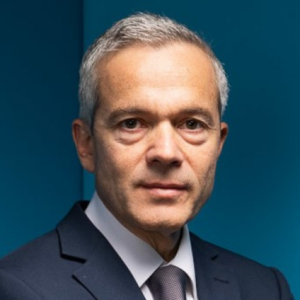
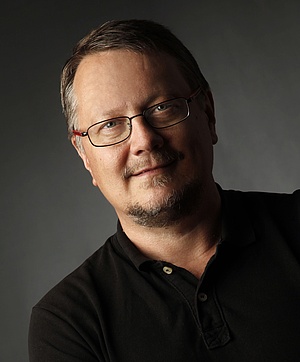
Ivano Malavolta is an Associate Professor in Software Engineering at the University of Urbino , focusing on energy-efficient software, software architecture, and model-driven engineering (MDE). His research bridges robotics, mobile systems, and sustainability, emphasizing empirical methods and industrial applicability. Key Research Areas: Energy-efficient software, microservices, robotics systems, collaborative modeling, mobile application performance. Affiliations: Department of Software Engineering, University of Urbino. His recent publications highlight empirical studies on energy consumption patterns in robotics, mobile apps, and AI systems. He has contributed to frameworks like the Green Software Measurement Model (GSMM) and tools for architectural technical debt analysis. Notably, he has co-authored 15+ peer-reviewed articles in venues such as Journal of Systems and Software , Information and Software Technology , and ACM/IEEE conferences . His work often involves cross-platform comparisons (e.g., Electron vs. Web, Pandas vs. Polars) and systematic mappings of software engineering practices.
Stefan Rass is a Professor at the Institute of Networks and Security within the Faculty of Engineering & Natural Sciences at Johannes Kepler University Linz (JKU), where he leads the LIT Secure and Correct Systems Lab. As Principal Investigator for FFG-funded projects including reSilienz (digital supply chain resilience, 2023–2025) and ITPUK (AI signature verification, 2022–2024), he bridges theoretical game theory with practical cybersecurity solutions for critical infrastructures and robotics systems. His research spans game-theoretic security models (patrolling games, defense-in-depth strategies), quantum cryptography (QKD network architectures), and cyber deception frameworks like Honeyquest for measuring honeypot effectiveness. Recent work addresses robotics security benchmarking (RobotPerf), cryptographic instruction chaining for control flow protection, and risk assessment methodologies for interdependent infrastructures. His mathematical decision-making approach integrates bounded rationality and stochastic modeling to solve real-world security challenges. Professor Rass actively shapes the field through program committee roles (ARES 2023), peer reviews, and invited talks on security transparency. His current projects focus on cost-benefit-aware monitoring for cyber-physical systems and quantum key distribution standardization, reflecting Austria’s strategic priorities in digital resilience. The LIT Secure and Correct Systems Lab under his direction develops foundational theories while deploying tools for industrial applications, particularly in critical infrastructure protection and secure robotics workflows.
Thomas Werner Pusztai is a Researcher at the Department of Distributed Systems, TU Wien. His work focuses on cloud-edge continuum systems, serverless computing, and service-level objective (SLO) management. He contributes to projects like RapidREC, TEADAL, and the EU-funded RAINBOW initiative. His research spans distributed scheduling algorithms, edge-cloud resource allocation, and SLO-aware middleware frameworks like Polaris and HyperDrive. Education: Completed a Diploma in Computer Science at TU Wien with a thesis on Model-based design and architecture of fog computing applications (2019). Active in academic conferences, presenting at IEEE/ACM Edge Computing, Cloud, and Fog/Edge events. Research interests include edge computing, cloud-native systems, IoT applications, and optimizing SLO compliance through novel scheduling techniques. His work emphasizes practical frameworks for real-world distributed systems challenges. Projects include developing HyperDrive for serverless function scheduling in 3D edge-cloud spaces, Polaris for SLO-aware microservices orchestration, and SLO Script for complex elasticity-driven SLO implementations.
Fengjunjie Pan is a PhD student and research assistant at the Chair of Robotics, Artificial Intelligence and Embedded Systems at the Technical University of Munich since 2021. He holds an M.Sc. in Electrical Engineering from TU Berlin (2019) and a B.Eng. in Electrical Engineering from Hamburg University of Applied Sciences. His research focuses on automotive systems engineering and generative AI applications in model-based engineering. His publications (2022-2025) demonstrate expertise in: LLM integration for automotive software development Containerized architectures for autonomous driving Virtualization technologies in vehicular systems Constraint generation and model transformation He supervises multiple Master's and Bachelor's theses on generative AI applications and privacy-enhancing technologies in automotive contexts, working alongside Prof. Alois Knoll's team.
Edgar Vadimovich Vatamanitsa serves as an Assistant Professor in the Department of Computer Science at Chernivtsi National University, specializing in cross-platform software development and cloud computing applications. His work bridges academic research with industry practice through active engagement in both university teaching and commercial software development. Education: Yuriy Fedkovych Chernivtsi National University (2013): Systems Software, Software Engineer Dr. Vatamanitsa's research centers on Java/Android pattern development, client-server architectures, and distributed systems. He pioneers practical implementations of design patterns in cloud environments, with significant contributions to optical field simulation, semiconductor modeling, and intelligent transportation systems. His methodology emphasizes cross-platform efficiency and real-world applicability of theoretical computing concepts. Analysis of his 2022-2024 publications reveals dominant themes in cloud-based optical computation (AWS infrastructure), Java pattern implementation for Android, and cross-platform solutions for traffic management and semiconductor physics. His work consistently integrates distributed systems with domain-specific challenges in optics, printing technology, and educational analytics, demonstrating exceptional versatility across engineering disciplines. Professional Activities: Member of Bukovina Information Technology Cluster (since 2022) Senior Software Developer at EPAM SYSTEMS Certificate in Cross-platform Programming and Information Security (Ternopil National Technical University, 2023) Tech Summer Bootcamp for Teachers participant (2023)
Dr. Ramon Antonio Rodriguez Zalepinos is an Associate Professor at the Department of Software Engineering, Faculty of Computer Science, National Research University Higher School of Economics (HSE). With 16+ years of scientific and teaching experience, he specializes in geospatial data systems, distributed databases, and high-performance computing. Doctor of Science in Computer Science (2024) Candidate of Technical Sciences (2013) Master's in Computer Science (2008, Donetsk National Technical University) His research focuses on geospatial array databases , distributed systems , and Big Earth Data engineering , particularly through his ChronosDB and Quantum Tensor DBMS projects. He has pioneered cloud-native solutions for multi-terabyte environmental datasets and developed novel approaches for in-database road traffic simulations. Key publication trends show 7+ years of contributions to VLDB and SIGMOD conferences, with special emphasis on: Quantum-enhanced geospatial processing Web-based array database systems Cellular automata integration High-speed raster data aggregation Scientific recognition includes: Best Teacher award (2017-2021, 2023) HSE Personnel Reserve member Additional post-doctoral funding (2024-2027) Multiple publication bonuses (2019-2023) He supervises student research in geospatial data science and leads projects on satellite data processing systems, with implementations at major institutions including Amazon and Planet Labs.
Michael Landis is Assistant Professor of Biology at Washington University in St. Louis, developing statistical models and computational tools to reconstruct evolutionary patterns. Research integrates phylogenetics, biogeography, and trait evolution to study historical biodiversity dynamics across deep timescales. Key research areas: Developing Bayesian methods for phylogenetic biogeography Modeling biome shifts and diversification patterns Creating open-source software for evolutionary analysis (RevBayes, phyddle) Reconstructing ancestral networks for pierid butterflies Recent work includes novel approaches for state-dependent diversification modeling, deep learning applications in phylogenetics, and global-scale analyses of butterfly evolution. The lab emphasizes collaborative software development and evolutionary hypothesis testing.
Professor Diomidis Spinellis is a renowned academic in Software Technology at Athens University of Economics and Business (AUEB). He specializes in software engineering practices, code quality, AI ethics, and system architecture. His work bridges theoretical advancements with practical applications in industry, emphasizing reproducibility and empirical methods. Recipient of the IEEE Computer Society's prestigious 'Distinguished Contributor Recognition,' Spinellis is the sole Greek scientist to achieve this honor. His research spans software evolution, security, and open-source ecosystems, with a focus on methodologies like refactoring, static analysis, and debugging strategies. Key research interests include AI-generated content detection, modular data analytics, and incident management systems. His studies often leverage large-scale datasets (e.g., Unix evolution, Linux supercomputing analysis) to uncover patterns in software behavior and development practices. Publications frequently address emerging technologies' societal impacts, such as energy-efficient computing and ethical AI deployment. He advocates for reproducible research through tools like the Alexandria3k framework and contributes to open-source initiatives.
Stefan Rass is a full Professor at Alpen-Adria-Universität Klagenfurt (AAU), with additional affiliation at Johannes Kepler University Linz (JKU). He holds the academic title Univ.-Prof. (Universitätsprofessor) and possesses advanced degrees including PD (Privatdozent), Dipl.-Ing. (Diplom-Ingenieur), and Dr. (Doctor). His research spans multiple institutions and projects, with a focus on security and risk management through game theory applications. Professor Rass's research interests center around Security and Risk Management, Decision and Game Theory for Security, Security Infrastructures (including Key Distribution and Management, PKI, and Authentication), Unconditional and network security, Applied Quantum Cryptography, and Complexity Theory and Statistics in Security. His work bridges theoretical computer science with practical security applications, particularly in quantum networks and critical infrastructure protection. His recent publications demonstrate a strong trend toward interdisciplinary security research, combining game theory with quantum cryptography, robotics security, and AI-powered penetration testing. The articles reveal increasing focus on practical applications of theoretical security concepts, with notable work in quantum networks, deniable encryption techniques, robotics security benchmarking, and AI-assisted security testing. His research shows consistent evolution from theoretical foundations toward real-world implementation challenges. Professor Rass leads multiple ongoing research projects including Machine Learning for Risk Management, Safe and Secure Robotic Systems Engineering (SEEROSE), Simulation and analysis of critical network infrastructures in cities (ODYSSEUS), and security for cyber-physical value networks Exploiting smaRt Grid systems (synERGY). These projects, primarily funded by FFG (Austrian Research Promotion Agency), demonstrate his leadership in securing critical infrastructure and developing next-generation security frameworks.
Joydeep Mukherjee is an Assistant Professor in the Department of Computer Science and Software Engineering at California Polytechnic State University (Cal Poly), San Luis Obispo, USA. He also holds an Adjunct Assistant Professor role at the University of Calgary's Department of Electrical & Software Engineering, where he collaborates on research and student supervision. His research focuses on software performance management in cloud computing and IoT systems, with a particular emphasis on detecting and mitigating performance interference in cloud-native applications. Education: Ph.D. and M.Sc. in Computer Science from the University of Calgary (supervised by Dr. Diwakar Krishnamurthy) Bachelor's in Computer Science and Engineering from NIT Durgapur, India Research Interests: Dr. Mukherjee's work addresses challenges in cloud and IoT systems, including performance anomaly detection, resource contention management, and machine learning-driven optimization. His Ph.D. introduced a novel model-based runtime performance management technique that avoids reliance on hardware counters, enabling cloud subscribers to autonomously manage application performance. He has also contributed to frameworks for IoT security, FaaS scalability, and DevOps automation. Key Research Contributions: His publications explore predictive auto-scaling, interference modeling, and anomaly detection using spectrograms and CNNs. He co-developed PRIMA and RAD systems for subscriber-driven performance mitigation in cloud environments. Awards: No specific awards mentioned in the provided text. Lab and Collaborations: Active in the CERAS Lab at York University (during his postdoc) and collaborates with the University of Calgary on research programs. His work bridges academic and industrial challenges in cloud computing and IoT through interdisciplinary approaches.
Wilhelm Hasselbring is Professor of Software Engineering at the School of Electronics and Computer Science, University of Southampton. His research focuses on software system quality, architecture design, and distributed systems with emphasis on fault-tolerance and monitoring. Software System Quality Architecture Design and Evaluation Microservices and DevOps Digital Twins and Prototyping Open Science Practices Current research explores digital twin prototypes for smart farming applications, metamorphic testing methodologies, and scalable microservice architectures. His work bridges theoretical frameworks with industrial applications in middleware and cloud systems. Recent awards include the Ernst Denert Award for Software Engineering (2019-2020). Publications span topics from JavaBERT language models to MQTT bridge evaluations, emphasizing software visualization and reverse engineering techniques. Contact: W.Hasselbring@soton.ac.uk
Franz Wotawa is a Professor of Software Engineering at Graz University of Technology. He holds a M.Sc. (1994) and PhD (1996) from Vienna University of Technology. He has served as head of the Institute for Software Technology from 2003–2009 and since 2020. His research focuses on model-based reasoning, software testing, autonomous systems, and diagnosis, with over 390 peer-reviewed publications. He founded Softnet Austria (2006) to bridge research and industry. He leads the Christian Doppler Laboratory for Quality Assurance Methodologies for Autonomous Cyber-Physical Systems since 2017 and has supervised 90+ master and 36+ PhD students. His awards include the 2016 Lifetime Achievement Award from the International Diagnosis Community. He is a member of Academia Europaea, IEEE, and AAAI. **Education**: M.Sc. in Computer Science, Vienna University of Technology, 1994 PhD, Vienna University of Technology, 1996 **Research Interests**: Model-based reasoning, qualitative reasoning, theorem proving, mobile robotics, verification/validation, software testing/debugging, AI, and autonomous systems. **Notable Projects**: A-IQ Ready (2022–2026): Quantum sensing for autonomous systems. ALFA (2024–2027): AI for smart diagnosis in building automation. Bilateral AI (2024–2029): Combining symbolic and sub-symbolic AI. VARCOS (2025–2028): Vehicle-road cooperative systems for autonomous driving. **Awards & Memberships**: Lifetime Achievement Award (2016, International Diagnosis Community) Senior Member, AAAI Member of Academia Europaea, IEEE, ACM, and Austrian Computer Society **Labs/Teams**: Christian Doppler Laboratory for Quality Assurance Methodologies (since 2017). Active in Cluster of Excellence “Bilateral AI” at TU Graz.
Mohsen Amini is an Associate Professor in the Department of Computer Science and Engineering at the University of North Texas (UNT). He previously held tenured positions at the University of Louisiana Lafayette (UL Lafayette) and completed postdoctoral research at the University of Miami and Colorado State University. His research focuses on Cloud 2.0 systems, AI-friendly serverless architectures, and domain-specific computing for Industry 4.0, multimedia, and edge-to-cloud integration. He leads the High Performance Cloud Computing (HPCC) Lab and has attracted over $2.7 million in research funding, including an NSF CAREER Award (2021). His work emphasizes democratizing cloud-native development and enhancing system resilience through heterogeneous computing frameworks. Education: Ph.D. in Computing and Software Engineering, University of Melbourne (2012) M.Sc. in Software Engineering, Ferdowsi University (2006) B.Sc. in Software Engineering, Azad University (2003) Research Interests: Cloud+AI Integration Fluid Computing across Edge-to-Cloud Continuum Domain-Specific Cloud Platforms (e.g., Industry 4.0, Multimedia) Confidential Computing Security Awards: NSF CAREER Award (2021) Best Service Award at IEEE/ACM CCGrid 2023 Francis Patrick Clark/BORSF Endowed Professorship (2021–2024) Grants & Projects: NSF IRES Track 1: Wireless Federated Fog Computing for Remote Industry 4.0 ($400k grant) NSF CAREER: Special-Purpose Cloud for Serverless Multimedia Streaming ($513k grant) SmartSight: AI-Based Platform for Visually Impaired Assistance ($499k grant) Teaching & Advising: Current advising 5 PhD students and leading a team of 25+ researchers Teaches courses on Cloud Computing, Distributed Systems, and Software Engineering Lab & Collaborations: HPCC Lab develops open-source tools like the E2C simulator and OaaS framework. Active collaborations with institutions like IMDEA Networks and industry partners like Hub Enterprise Inc.
Dr. Bartosz Marcinkowski serves as Professor and Head of the Department of Business Informatics at the University of Gdańsk's Faculty of Management, concurrently holding the positions of Deputy Dean for Research and Head of the Doctoral School. His academic leadership spans departmental administration, faculty research strategy, and doctoral program oversight within Poland's prominent management education institution. Marcinkowski's research centers on the intersection of information systems and practical business applications, with dominant focus areas including agile software development methodologies, digital transformation frameworks, and facility management technology adoption. His work consistently addresses contemporary challenges such as post-pandemic recovery in IT projects, generative AI integration, and sustainable business practices through empirical industry-academia collaborations. Recent publications demonstrate particular expertise in scaling agile frameworks for distributed teams and implementing blockchain solutions in enterprise environments. Analysis of his 2022-2025 publications reveals a strategic research trajectory emphasizing practical solutions for complex business-technology challenges. His work shows increasing integration of sustainability considerations across domains, from facility management to corporate governance, while maintaining strong methodological focus on agile approaches and systems integration. The recurring industry-academia collaboration theme highlights his commitment to bridging theoretical research with real-world business applications.
Dilum Bandara is a Principal Research Scientist at CSIRO's Data61 in Australia and an Adjunct Senior Lecturer at the School of Computer Science and Engineering, Faculty of Engineering, University of New South Wales (UNSW). He has previously served as a Senior Lecturer at the University of Moratuwa, Sri Lanka, and has over two decades of experience in research, teaching, and consultancy in distributed systems, security, and software engineering. His academic qualifications include: PhD in Computer Science, Colorado State University, USA (2012) MS in Computer Science, Colorado State University, USA (2008) BSc Eng. (Hons) in Computer Science and Engineering, University of Moratuwa, Sri Lanka (2004) Dilum's research interests are centered on Distributed Systems (Blockchain, Cloud, P2P), Computer Security , Software Architecture , Data Engineering , Performance Engineering , and the Internet of Things (IoT) . He applies these technologies in multidisciplinary domains such as Supply Chains , Digital Finance , Environmental, Social, and Governance (ESG) , Fleet Management , and Weather Monitoring . His work emphasizes real-world impact through trusted data management in multi-party ecosystems. The analysis of his recent publications reveals a strong focus on blockchain for transparency and security, cloud-native performance engineering, IoT integration with edge and cloud, and data-driven solutions for smart cities and sustainability. His work consistently bridges theoretical innovation with practical deployment, particularly in national and international infrastructure projects. His scientific awards include: Best Paper Award at BPM 2024 Multiple CSIRO internal awards (Customer First, Engineering and Technology, Collaboration) from 2021–2023 Student Paper Award (Merit) at IEEE SOLI 2018 Award of Excellence for Outstanding Research at University of Moratuwa (2015–2018) Dilum has led and contributed to several research grants, particularly during his time at the University of Moratuwa, including projects on smart city integration, real-time data forecasting, and cloud platforms for scientific computing. He has also held leadership roles such as Director of the Engineering Research Unit and co-founder of VaticHub. He is actively involved in professional communities as a Senior Member of IEEE and a Chartered Engineer with IESL. At CSIRO, he serves as a Health and Safety Representative, reflecting his commitment to corporate citizenship. He has advised students and early-career researchers, though specific names are not listed in the provided text. His labs and research teams include the Architecture and Analytics Platforms (AAP) team at CSIRO Data61 and collaborations with academic institutions like UNSW and University of Moratuwa.