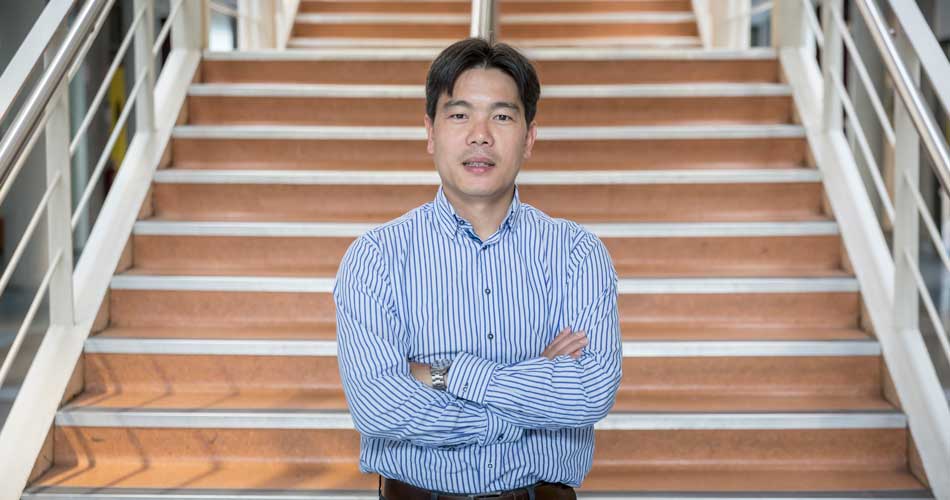
Dr Ian Gray serves as a Senior Lecturer in the Department of Computer Science at the University of York, where he also holds the position of Deputy Head of Department (Teaching). His academic career at York began as a Research Associate in 2010, progressing to Research Fellow in 2012, Lecturer in 2017, and ultimately Senior Lecturer. His research focuses on real-time systems and their programming models , with significant contributions to embedded systems, FPGA and reconfigurable computing architectures, and many-core/multicore system design. His work extends to application-specific high-performance computing solutions and cloud computing infrastructure within distributed systems frameworks. Gray maintains active involvement in the Real-Time and Distributed Systems research group, where his expertise bridges theoretical computer science with practical hardware implementation challenges. Gray's professional trajectory demonstrates steady progression from industry (as Lead Software Developer at Stockholm Environment Institute in 2005) into academia, where he has developed substantial expertise across multiple computing domains requiring precise timing constraints and efficient resource utilization. His leadership role as Deputy Head of Department (Teaching) reflects his significant contribution to curriculum development and academic administration within the department.
Daehyeok Kim is an Assistant Professor in the Department of Computer Science at The University of Texas at Austin, where he co-leads the UT Networked Systems Research Group and participates in the Wireless Networking and Communications Group and 6G@UT. He serves as co-PI for the LDOS NSF Expeditions in Computing project, a major initiative rethinking operating systems through AI. His educational background includes a Ph.D. in Computer Science from Carnegie Mellon University under advisors Vyas Sekar and Srinivasan Seshan, where his dissertation introduced abstractions for elastic in-network computing. He also earned B.S. and M.S. degrees in Computer Science and Engineering from POSTECH, South Korea, followed by research scientist work at KAIST prior to his Ph.D. Kim's research centers on hardware-software co-design for cloud and edge data centers, targeting speed, efficiency, and resilience. Key projects include resource management for programmable infrastructure, robust cellular network design, end-to-end network transport frameworks, and learning-directed operating systems. His work bridges computer networks, operating systems, distributed systems, and 5G/6G technologies, with emphasis on virtualized radio access networks (vRAN) and edge computing challenges. Analysis of his recent publications reveals a dominant focus on enhancing 5G/6G infrastructure reliability—particularly in virtualized RANs—through innovations in failover mechanisms, integrity protection, and latency-sensitive resource allocation. His research consistently addresses critical industry pain points like sub-second availability requirements, fronthaul security vulnerabilities, and end-to-end service-level objective (SLO) guarantees for mobile-edge applications. Notable scientific awards include: NSF CAREER Award (2025) for advancing cloud hardware efficiency Microsoft Research PhD Fellowship (2019) Bronze Award at Samsung HumanTech Paper Awards (2018) Qualcomm Innovation Awards (2016) His grant portfolio features leadership in the $10M+ LDOS NSF Expeditions project and the NSF CAREER award, both driving transformative work in AI-integrated operating systems and resilient network infrastructure. These projects demonstrate strong industry-academia collaboration with Microsoft Research, wireless vendors, and cloud providers. Kim co-leads the UT Networked Systems Research Group, which operates within the Wireless Networking and Communications Group and 6G@UT consortium. These labs maintain a 5G/6G testbed for Open RAN validation and focus on solving real-world problems in cellular infrastructure, edge computing, and network security through close partnerships with industry leaders.
Luo Mai is an Assistant Professor at the University of Edinburgh's School of Informatics , with an upcoming promotion to Associate Professor (UK Reader) in August 2025. He leads the Large-Scale Machine Learning Systems Group and co-leads the UK EPSRC Centre for Doctoral Training in Machine Learning Systems and an ARIA Project on Scaling AI Compute by 1000X . PhD in Computer Science (Imperial College London, 2018) MRes in Advanced Computing (Imperial College London, 2012) His research focuses on the intersection of computer systems , machine learning , and data management . Key contributions include award-winning systems like WaferLLM (wafer-scale LLM inference), Tenplex (elastic ML), and ServerlessLLM (serverless LLM serving), published at top venues (OSDI, SOSP, ICML, NeurIPS, JMLR). Recent publications demonstrate trends in GPU-based distributed systems , LLM optimization , and adaptive machine learning . His team has developed groundbreaking open-source projects including TensorLayer , TorchOpt , and ServerlessLLM . Awarded Microsoft Research StarTrack Scholar (2024) , secured ARIA grant (2024) with Imperial College & Cambridge University, and received Google Fellowship during PhD (2012-2016). As an educator, he designed Edinburgh's popular Machine Learning Systems course (150+ students). His group supervises multiple PhD students including Yao Fu (recognized as 2024 Rising Star in ML & Systems) and Leyang Xue .
Valérie Fernandez is a Professor of Digital Economics at Télécom Paris – Institut Mines-Télécom, where she holds the Responsibility for Digital Identity Chair . She is affiliated with the Interdisciplinary Institute of Innovation (i3) and leads the Master's in Digital Innovation Management in partnership with Sciences Po Paris and Télécom Paris. Her research focuses on the socio-economic analysis of digital technologies , including governance of digital innovation, responsible innovation, market analysis, and social acceptability. She has contributed to European Commission projects and collaborations with international (e.g., Cai Yuanpei China) and national (e.g., ANR) research organizations, aiming to inform public policies and business strategies for teleservice platforms, cloud computing, and facial recognition technologies. Scientific Awards Prize for the Best Scientific Program in Telemedicine (Malakoff-Médéric laboratory) AEI Prize 2023 FNEGE Prize 2023 Best Educational Device in the Digital Age 2023 Educational Innovation Prize 2023 Valérie has supervised approximately fifteen doctoral theses, including Flavien Bazenet (awarded the 2023 Sphinx Thesis Prize). Her work with Thomas Houy on the Decision Model Canvas (DMC) has been widely adopted by industries and public sectors, emphasizing decision-making in unpredictable environments.
Janne Heikkilä is a Professor at the Faculty of Information Technology and Electrical Engineering, University of Oulu, Finland. With over 30 years of experience in computer vision and machine learning, he leads the Center for Machine Vision and Signal Analysis (CMVS) and has contributed extensively to both theoretical and applied research. Research Interests: 3D computer vision, biomedical image analysis, computational photography, and deep learning. Scientific Leadership: IAPR Fellow, Senior IEEE Member, and former President of the Pattern Recognition Society of Finland. His work spans computer vision, radiotherapy planning, and biomedical imaging, with over 200 publications and 14,000 citations. He has secured funding from prestigious organizations like the Academy of Finland and Business Finland. His recent research focuses on debiasing AI models, 6D object pose estimation, and radiotherapy dose prediction. Scientific Awards: IAPR Fellow Senior Member of IEEE
Prof. Dr. Gerald Urban is a distinguished Professor at the Institute for Microsystems Technology (IMTEK) within the Faculty of Engineering at the University of Freiburg, Germany. With over three decades of academic and research experience, he has established himself as a leading expert in biomedical microtechnology and sensor systems. His career spans prestigious institutions including the Vienna University of Technology and collaborations with major research centers worldwide. His educational journey includes: 1973: Graduated from Sigmund Freud Gymnasium in Vienna 1979: Completed studies in Technical Physics at Vienna University of Technology 1985: Earned Doctorate (Dr.-Ing.) with distinction (Summa cum Laude) from Vienna University of Technology 1994: Completed habilitation in Sensorics Prof. Urban's research focuses on the development and application of miniaturized integrated sensors for clinical and industrial applications. His work bridges the gap between fundamental materials science and practical medical devices, with particular emphasis on biomedical microtechnology , electrochemical biosensors , and organ-on-chip systems . His team has pioneered innovations in point-of-care diagnostics, therapeutic drug monitoring, and micro energy harvesting technologies. The research group maintains strong collaborations with clinical partners to ensure translational impact of their technological developments. Analysis of Prof. Urban's recent publications reveals a clear trajectory toward increasingly sophisticated multiplexed sensing platforms that integrate CRISPR-based diagnostics with electrochemical detection systems. His work demonstrates growing emphasis on point-of-care applications, with particular focus on making complex diagnostic capabilities accessible outside traditional laboratory settings. The integration of additive manufacturing techniques with sensor technology represents another significant trend in his recent work, enabling customized microreactor and organ-on-chip platforms. Among his notable scientific achievements: Stefan Schuy Prize for Biomedical Engineering (1990) AVL-List Prize (1993) Best Poster at Eurosensors (1993) Hoechst-Price (1994) Corresponding member of the Austrian Academy of Sciences (2010) EAMBES-Fellow (2018) Prof. Urban has successfully secured substantial research funding throughout his career, with accumulated third-party funding reaching approximately 5 million euros between 1986-1995. He has established multiple spin-off companies including Otto Sensorenfabrikationsgesellschaft (1985), Biosensor GnbR (1994), and Jobst Technologies GmbH (2002), demonstrating his commitment to translating research into practical applications. His leadership extends to major research initiatives including the excellence initiative "µMAT" and the graduate school "PolyMIC". At the University of Freiburg, Prof. Urban leads a vibrant research group within the Institute for Microsystems Technology, which forms part of the larger BrainLinks-BrainTools and BIOSS research clusters. His laboratory maintains state-of-the-art facilities for microsensor fabrication, including cleanroom access through the WebFab service center. The research environment benefits from strong connections with the Freiburg Material Research Center (FMF) and the Freiburg Institute for Advanced Studies (FRIAS), where he served as an Internal Fellow (2008-2010).
Jung-Eun Kim is an Assistant Professor in the Department of Computer Science at North Carolina State University, where she conducts research at the intersection of artificial intelligence, machine learning, and cyber-physical systems. Her work focuses on creating trustworthy, interpretable, and efficient AI systems, particularly for safety-critical applications. Education: Ph.D. in Computer Science, University of Illinois at Urbana-Champaign (2017) M.S. in Computer Science and Engineering, Seoul National University (2009) B.S. in Computer Science and Engineering, Seoul National University (2007) Dr. Kim's research primarily investigates how to make AI systems more trustworthy, interpretable, and efficient, with particular emphasis on understanding failure modes, safety risks, vulnerabilities, and biases in deep learning models. Her work bridges theoretical understanding with practical applications in safety-critical systems. She explores how efficiency considerations interact with these issues, seeking to fundamentally anatomize neural networks to understand what causes failure modes and how to mitigate them. Her approach has been described as 'like a heart surgeon, we open the heart of a neural network architecture, look into it, interpret it, and cure it.' Her recent publications demonstrate a strong focus on safety alignment in large language models, mitigation of spurious correlations, privacy preservation against membership inference attacks, and sustainable AI development. Her work spans theoretical foundations of trustworthy AI while addressing practical challenges in model deployment, particularly for resource-constrained environments. She has made significant contributions to understanding how model compression techniques like pruning and quantization can inadvertently amplify biases and vulnerabilities. Scientific Awards: ICLR Spotlight, 2025 IBM Faculty award, 2023 CRA Early & Mid Career Mentoring Workshop, 2023 Cloud GPU provided by Lambda, worth $17,280, for course, Spring 2023 NeurIPS Spotlight and nomination for Best Paper Award, 2022 CRA Career Mentoring Workshop, 2022 GPU Grant by NVIDIA Corporation, 2018 The MIT EECS Rising Stars, 2015 The Richard T. Cheng Endowed Fellowship, 2015-2016 Dr. Kim actively mentors PhD students, currently advising Xingli Fang, Varun Mulchandani, Jianwei Li, Rishi Singhal, and Minseon Kim. She has secured significant research funding, including an NSF SaTC (Secure and Trustworthy Cyberspace) grant as Co-PI for 'Partition-Oblivious Real-Time Hierarchical Scheduling' ($281,629.00, 2022-2024). Her research has also been supported by an NVIDIA GPU Grant and cloud resources from Lambda. She serves on program committees for top AI conferences including ICLR, ICML, NeurIPS, AAAI, and IJCAI, and has held roles such as Publicity Chair for IJCAI 2024. Her research group focuses on developing methods to make AI systems more trustworthy, interpretable, and efficient, with particular attention to safety-critical applications. The group investigates how to identify and mitigate failure modes in neural networks while maintaining efficiency, exploring the fundamental relationship between model architecture, safety risks, and computational constraints.
Christophe Danjou is an Associate Professor in the Department of Mathematical and Industrial Engineering at Polytechnique Montréal . He joined as a professor in January 2018 and serves as Scientific Director of the Poly-Industries 4.0 Laboratory since June 2021. His expertise spans Industrial Engineering , Industry 4.0/5.0 , Manufacturing Systems , and Blockchain . His research focuses on solving interoperability challenges in digital transformation through ontological approaches (OntoSTEP-NC) and blockchain technology. Key themes include strategic positioning frameworks for Industry 4.0/5.0, knowledge management , and smart manufacturing . Recent work explores digital twins for system-of-systems resilience , data integrity in IoT , and AI-driven food processing optimization . He teaches courses like Industry 4.0 and Manufacturing Processes . Under his supervision, 7 PhD and 6 Master’s students are advancing research in areas such as blockchain-based smart maintenance , distributed manufacturing , and carbon emission traceability . He is affiliated with institutions including IVADO (Member), CIRRELT (Member), and Data Intelligence Lab (Member). His publications highlight contributions to digital transformation across construction, agri-food, and SMEs, with 83 total publications (15+ recent articles shown).
Guillaume Pierre is a Professor and research leader at Univ Rennes, affiliated with Inria, CNRS, and IRISA, where he leads the Magellan research team. He is based at the Institute of Science and Technology of Information and Communication (ISTIC), Department of Computer Science and Electronics. His research focuses on fog computing, cloud computing, and large-scale distributed systems, with applications in scalable web hosting and edge intelligence. Research Interests: Fog and Edge Computing Cloud Computing and Resource Management Scalable Web Application Hosting Peer-to-Peer and Decentralized Systems Stream Processing and Kubernetes Orchestration Elasticity and Energy Efficiency in Distributed Environments His recent publications highlight a strong trend in geo-distributed systems, particularly focusing on Kubernetes cluster federation, fog-based environmental monitoring, and elasticity in stream processing. His work bridges theoretical advances with practical implementations in real-world fog and cloud infrastructures. Scientific Awards: Best Paper Award, IEEE International Symposium on Applications and the Internet (2005) Best Paper Award, IEEE International Conference on Cloud Engineering (IC2E 2014) Guillaume Pierre has advised numerous PhD students, many of whom now hold positions at Google, Amazon, Ericsson, and Ansys. He has coordinated major research projects such as the H2020 FogGuru initiative and the DiPET project on distributed data stream processing. His work is supported by EU funding and institutional collaborations. Labs and Teams: He leads the Magellan research team at the INRIA/IRISA lab, which is at the forefront of innovation in fog and cloud computing technologies.
Martin Carlsson-Wall is a Full Professor at Stockholm School of Economics (SSE) in the Department of Accounting within the House of Governance and Public Policy. He serves as Center Director for both the Center for Municipality Governance and the Center for Security and Resilience. In 2024, he was named "The Linder Chair in Sports and Business," the first Chair at SSE on Sports and Business topics. Since 2017, he has been Program Director for the MSc in Accounting, Valuation and Financial Management, and in 2015, he founded the Center for Sports and Business, which now includes 40 faculty members and has strategic partnerships with major Swedish sports organizations across football, hockey, golf, and skiing. Martin Carlsson-Wall's research focuses on accounting in sports organizations and accounting in inter-organisational relationships across both private and public sectors. His work extensively examines management control systems , particularly in contexts of innovation , growth companies , and risk management . His research often takes a qualitative approach, investigating how accounting practices function in extreme situations (such as the Swedish migrant crisis), high-intensity organizations (like football clubs), and during organizational change processes. Analysis of Professor Carlsson-Wall's recent publications reveals a strong thematic focus on the intersection of accounting practices with sports management and public sector administration. His work demonstrates how management control systems adapt to different organizational contexts, from football clubs to technology firms and public administration during crises. A recurring theme is how accounting practices mediate tensions between different stakeholder interests and how they evolve in response to organizational challenges. His research methodology typically employs in-depth case studies that examine accounting as a social practice rather than merely a technical function. Professor Carlsson-Wall has received significant recognition through his appointment as "The Linder Chair in Sports and Business" in 2024, establishing the first dedicated research position at SSE focusing on the business aspects of sports. As an educator, Professor Carlsson-Wall serves as Program Director for the MSc in Accounting, Valuation and Financial Management and teaches several key courses including BE901 Hybrid Organizations: Value Creation and Strategy at the bachelor's level, and course 3313 Investments and Value Creation in Global Sports (which he directs) and course 3302 Management Control at the master's level. He also supervises master's theses in Accounting and Financial Management. In Executive Education, he teaches on management control, costing, performance management, transfer pricing, investment management, and financial analysis through both open programs and customized corporate offerings. Professor Carlsson-Wall founded and directs the Center for Sports and Business, which has grown to include 40 faculty members and established partnerships with major Swedish sports organizations. He also leads the Center for Municipality Governance and the Center for Security and Resilience, demonstrating his commitment to applying accounting and management control research to practical governance challenges in both public and private sectors.
Prof. Blerim Rexha is a full professor at the University of Prishtina's Faculty of Electrical and Computer Engineering, Kosovo. With a Ph.D. in Computer Engineering from Vienna University of Technology (2004), he has led research in cybersecurity, blockchain, machine learning, and electronic voting systems. His teaching portfolio includes data, computer, and internet security courses. Education : Ph.D. in Computer Engineering (Vienna), Electrical Engineer MSc (Prishtina), specialized certifications in software engineering, biometrics, and .NET programming. His research spans cybersecurity (DDoS mitigation, face authentication attacks), blockchain applications (electronic voting bridges, transaction privacy), and machine learning integration (boosted trees for intrusion detection, LSTM for vulnerability scanning). He has contributed to cloud security through novel encryption methods and AI-driven attack detection. Recent publications focus on energy efficiency in cloud vs on-premises systems, XGBoost/CatBoost/LightGBM comparisons for network security, and blockchain bridges for e-voting. His work has addressed privacy preservation in video data, SMS encryption, and eID card pseudo-profiles. Awards include the 2024 Marin Barleti Prize for academic contributions and Best Paper Awards in election security (2015) and Kosovo website vulnerabilities (2013). Honors : Marin Barleti Prize (2024) Cyber Security Ambassador (2018) ICT Academician of the Year (2016) Best Paper Awards (2015, 2013) As academic advisor to the KosovaCyberTeam , he mentors students like Korab Keqekolla and Abian Morina. His leadership extends to Kosovo's Cyber Security State Training Center curriculum development and jury roles in Albanian ICT Awards .
Alessandro Battaglia is an Associate Professor at the Department of Environmental, Land and Infrastructure Engineering (DIATI) at the Polytechnic University of Turin. He specializes in microwave remote sensing of clouds and precipitation, with expertise in Doppler radar, cloud and snow microphysics, and microwave radiometer technology. His research spans atmospheric physics, meteorology, and climate science with applications in Earth observation from space. Dr. Battaglia's research interests focus on remote sensing of atmospheric phenomena, particularly using advanced radar technologies. His work encompasses cloud microphysics, precipitation measurement, and wind observation from space. He is particularly known for his contributions to the development of spaceborne Doppler radar systems for measuring in-cloud winds, which represents a significant advancement in atmospheric observation capabilities. His research bridges engineering, physics, and meteorology to improve our understanding of Earth's atmospheric processes and climate systems. His recent publications demonstrate a strong focus on the WIVERN (Wind Velocity Radar Nephoscope) mission, with research spanning cloud microphysics, snowfall measurement, wind field reconstruction, and innovative radar signal processing techniques. These works highlight the interdisciplinary nature of his research, connecting atmospheric science, engineering, and computational methods to advance space-based Earth observation capabilities. NASA Group Achievement Award (2015) Fellow of the National Center for Earth Observation, UK (2014-present) Dr. Battaglia actively mentors several PhD students including Marco Coppola, Francesco Manconi, Riccardo Rabino, Susmitha Sasikumar, Aida Galfione, and Paolo Martire across Civil and Environmental Engineering and Aerospace Engineering programs. He serves as Principal Investigator for multiple research projects funded by ESA (3 projects), UK-NERC (1 project), UK-NCEO (1 project), and the US Department of Energy (1 project). His current research focuses on the WIVERN mission, EarthCARE mission, and NASA's INCUS mission, with particular emphasis on developing algorithms for spaceborne Doppler radar systems. He leads research teams working on cutting-edge remote sensing technologies for atmospheric observation, with particular focus on developing the next generation of spaceborne instruments capable of measuring in-cloud winds—a capability that has been missing from Earth observation systems until now.
Dr. Le-Nam Tran is a researcher at the UCD School of Electrical & Electronic Engineering , University College Dublin. His work focuses on optimizing the last hop of 5G/6G wireless networks through mathematical programming, with emphasis on energy efficiency, interference management, and security against eavesdropping. Develops low-cost, low-complexity transmission techniques Projects supported by Science Foundation Ireland Career Development Award Author of over 80 peer-reviewed publications Research Keywords: Wireless Communications Network Security Signal Processing Energy-Efficient Systems Beamforming Optimization Interference Mitigation
Dr. Cong Pu is an Assistant Professor in the Department of Computer Science at Oklahoma State University (OSU), Stillwater, Oklahoma. He holds a Ph.D. and M.S. in Computer Science from Texas Tech University and a B.S. in Computer Science and Technology from Zhengzhou University, China. His primary research focuses on network security, data privacy, applied cryptography, wireless networking, and mobile computing. He leads the Security & Networking Lab at OSU and has secured grants from NSF, NSA, and other agencies. His work emphasizes secure IoT and drone networks, privacy-preserving protocols, and AI-driven cybersecurity solutions. Education Ph.D. and M.S. in Computer Science, Texas Tech University, USA B.S. in Computer Science and Technology, Zhengzhou University, China Research Interests Dr. Pu's research spans network security , data privacy , applied cryptography , wireless networking , and mobile computing . He specializes in designing lightweight authentication protocols for IoT and drone networks, enhancing privacy in distributed systems, and developing AI-driven cybersecurity frameworks. Recent efforts include blockchain-assisted authentication, fault-tolerant data aggregation, and resource-efficient cryptographic protocols. Grants & Awards NSF SaTC Award ($288,398) for securing Internet of Drones systems (2024) NSA Cybersecurity Training Program Grant ($127,128) (2023) Best Paper Award at IEEE CCNC 2024 Listed in Stanford/Elsevier Top 2% Scientists (2025) Advising & Training He mentors Ph.D., M.S., and undergraduate students in areas like network security and applied cryptography. Offers research assistantships, independent studies, and visiting scholar collaborations. Has developed training programs for K-12 educators in cybersecurity via NSF/OSRHE grants. Labs & Infrastructure Leads the Security & Networking Lab , focusing on secure IoT/drones, privacy-preserving systems, and AI-driven security tools. Collaborates on projects involving blockchain, reinforcement learning, and hardware-software co-design for defense mechanisms.
Professor Kenneth M. Anderson is Chair of the Department of Computer Science and holds the Palmer Endowed Chair at the University of Colorado Boulder's College of Engineering & Applied Science. He co-directs Project EPIC, a $4M NSF-funded initiative on social media use during mass emergencies, and serves as Co-Director of the Center for Software and Society. Ph.D. in Computer Science, University of California, Irvine (1997) Joined CU Boulder in 1998; tenured in 2005 Former Associate Dean for Education (2016-2019) Former Associate Chair (2010-2013) His research bridges software engineering, crisis informatics, and human-computer interaction. Current projects focus on large-scale social media analytics, crisis response systems, and software architecture for data-intensive environments. Recent publications explore multilingual social media analysis (ML-EPIC), bug fix patterns in software development (FIXR), and collaborative big data platforms. Themes include disaster risk communication, data modeling challenges, and asynchronous analysis tools. ATLAS Fellow (2010) As department chair, he spearheaded initiatives for inclusivity, including creating a Bachelor of Arts in Computer Science and establishing the NSF Broadening Participation in Computing plan. He oversees major academic reforms and departmental operations.