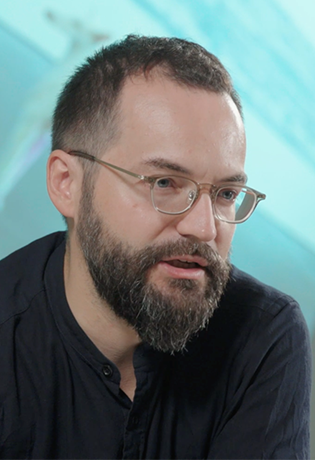
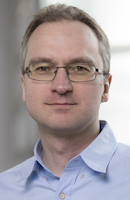
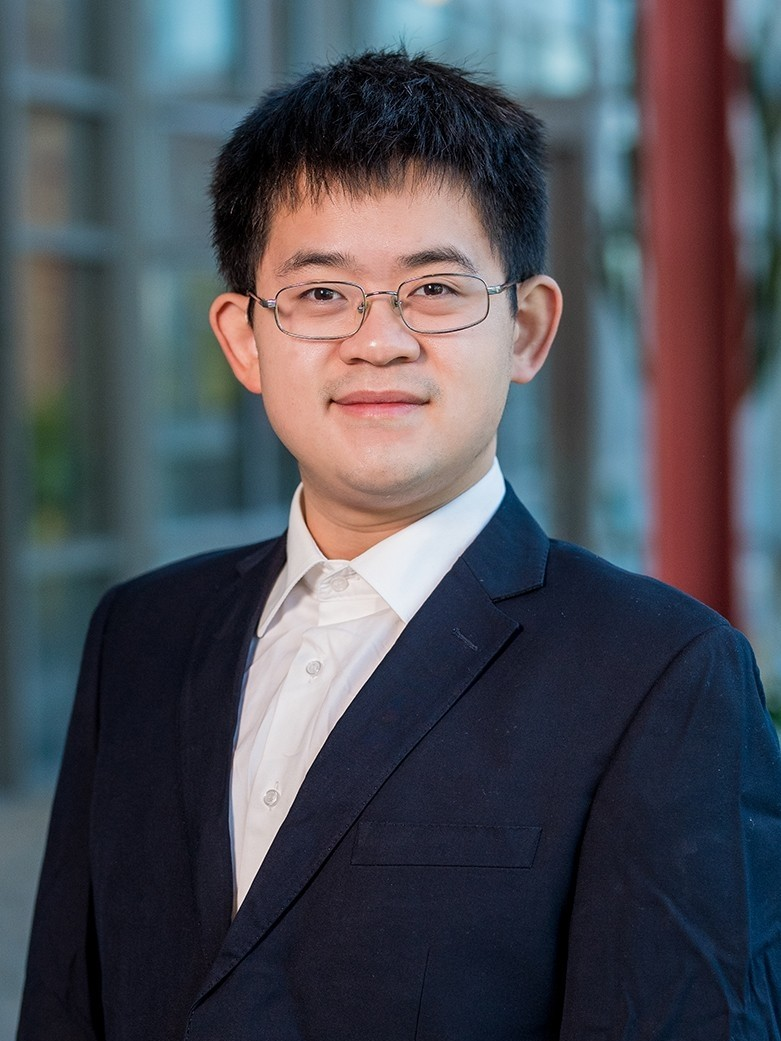
Mariano Scazzariello is a Lecturer at KTH Royal Institute of Technology, Sweden, affiliated with the School of Electrical Engineering and Computer Science and the Department of Network and Systems Engineering. He teaches the course 'Network Systems with Edge or Cloud Datacenters (IK2227)'. His research focuses on advanced networking topics including machine learning in networks, high-speed packet processing, network emulation, and software-defined networking innovations. His work spans contributions to network emulation tools like Kathará and Megalos, stateful packet processing at terabit scales, and leveraging large language models (LLMs) for network configuration and vulnerability detection. Recent research emphasizes low-latency protocols (e.g., SRv6/DetNet integration) and GPU-centric networking on commodity hardware. Mariano’s publications (2020–2025) highlight expertise in network function virtualization, ASIC-based switching, and optimizing network configurations through AI-driven approaches. He has pioneered frameworks for evaluating routing protocols and virtualizing large network scenarios at scale.
Dr. Damien Charrieras is an Associate Professor at the School of Creative Media , City University of Hong Kong, where he serves as Program Leader for the Master of Art in Creative Media and deputy program leader for the PhD in Creative Media. His work bridges cultural studies, new media theory, and the intersection of financial technologies with artistic practices through the ACIM Laboratory for Interventions in Speculative Finance . Doctoral research on digital artists' trajectories in Montreal FRQSC Postdoctoral Fellowship at McGill University Research spans game engine design , datafication of creativity , blockchain in art , and post-anthropocentric creative processes . With over HK$3.14M in grants as Principal Investigator, he explores situated digital creativity in urban contexts, critical worldbuilding pedagogy , and the mediation of technical systems in cultural production. His publications in Cities , Organized Sound , and Human Relations analyze the reconfiguration of artistic practices through software infrastructures and automation paradigms. Scientific awards include: FRQSC Postdoctoral Fellowship
Affiliation & Education Scott Hauck is a Professor at the University of Washington's Department of Electrical & Computer Engineering and an Adjunct Professor in Computer Science & Engineering. He leads the Adaptive Computing Machines and Emulators (ACME) Lab . He earned his BS in EECS from UC Berkeley (1990), and MS/PhD in CSE from the University of Washington (1992/1995). Research Focus Dr. Hauck specializes in FPGA-based reconfigurable computing with applications in: Quantum Computing: FPGA controllers for trapped-ion quantum systems enabling precise laser control and quantum state readout. Medical Imaging: Portable radiation sensors for personalized cancer therapy and PET scanner enhancements. High-Energy Physics: FPGA readout systems for ATLAS pixel detectors at CERN's Large Hadron Collider. AI Acceleration: Real-time machine learning inference for scientific applications via projects like hls4ml. His work bridges hardware innovation with computational physics, emphasizing real-time processing and low-latency systems. Publication Trends Recent research focuses on FPGA-accelerated machine learning for particle physics (e.g., transformer networks for LHC trigger systems) and quantum computing instrumentation. Earlier work established foundations in reconfigurable computing architectures and medical imaging electronics. Awards & Recognition Distinguished Teaching Award, University of Washington (2010) Advising & Funding Leads the ACME Lab with extensive funding from NSF, DARPA, NIH, DOE, and industry partners including Intel, Xilinx, and Microsoft. Mentored over 30 MS/PhD students in VLSI, reconfigurable systems, and scientific computing. Collaborations & Labs Directs the ACME Lab (EE1-307), collaborating with UW Radiology (Prof. Robert Miyaoka), UW Physics (Prof. Shih-Chieh Hsu), and Drexel University (Prof. Josh Agar). Projects include quantum control systems, LHC readout electronics, and medical sensor networks.
Dr. Jeewanie Jayasinghe Arachchige is a Lecturer in the Department of Computer Science at Vrije Universiteit Amsterdam, Faculty of Science. She teaches undergraduate courses including Bachelor Project Computer Science, Professional Development, and Software Engineering Processes for the academic year 2024–2025. Her research focuses on process mining , healthcare informatics , and data security . She applies process mining to analyze healthcare pathways and subpopulation treatment variations, develops explainable AI frameworks for predictive analytics, and examines data governance in emerging architectures like Data Lakehouses. Her work intersects legal informatics, particularly formalizing Sri Lankan civil court processes using ontology engineering. Recent publications highlight trends in balancing simplicity and complexity in process modeling, Industry 4.0 healthcare applications, and cybersecurity in model-driven web development. She has contributed to over 20 peer-reviewed articles since 2006, spanning topics from service-oriented architectures to value network analysis. Her teaching and research emphasize practical applications of IT in healthcare, legal systems, and enterprise environments. No ancillary activities are currently recorded.
Thomas Hacker is a Professor in the Department of Computer and Information Technology at Purdue Polytechnic Institute, Purdue University. His research focuses on cloud computing, high-performance computing, operating systems, computer networking, and cyber infrastructure . He holds a Ph.D. and M.S. in Computer Science & Engineering from the University of Michigan, along with dual B.S. degrees in Computer Science and Physics from Oakland University. Education: PhD (Computer Science & Engineering), University of Michigan (2004) MS (Computer Science & Engineering), University of Michigan (1993) BS (Computer Science, Mathematics Minor), Oakland University (1989) BS (Physics), Oakland University (1989) Dr. Hacker's research spans cloud and grid computing, operating systems, and distributed systems , with applications in earthquake engineering data systems and AI-driven infrastructure analysis. His recent work explores extended layer 2 networking for bare-metal provisioning ( 2023 IEEE Cloud Summit ) and machine-supported bridge inspection using artificial intelligence ( Transportation Research Record, 2023 ). Notable scientific contributions include 15+ publications on topics like cyberinfrastructure for earthquake engineering, container-based virtualization, and data-intensive systems. His work has been recognized with awards such as the NSF CAREER Award (2010) and multiple Purdue Seed for Success Awards . Key Scientific Awards: NSF CAREER Award (2010) Purdue Seed for Success Awards (2008-2013) ASEE Information Systems Division Best Paper Award (2012) College of Technology Outstanding Faculty in Discovery Award (2010) He has held leadership roles at Purdue, including Department Head (2018-2021) and Interim Department Head (2011-2016) . His career spans academic positions at Indiana University, University of Michigan, and industry roles at Storage Technology Corporation.
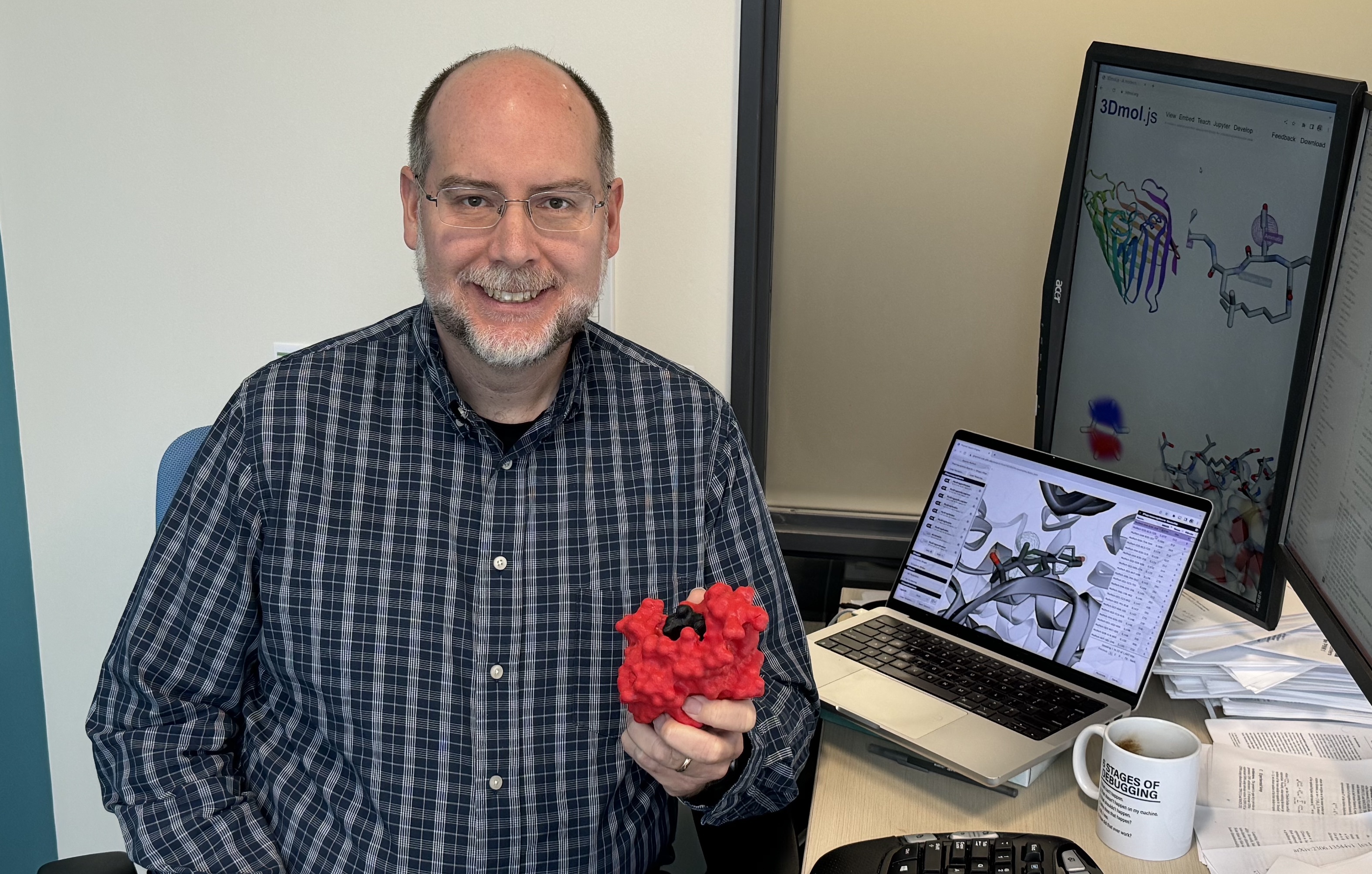
David R. Koes is an Associate Professor in the Department of Computational and Systems Biology at the University of Pittsburgh, affiliated with the School of Medicine. He holds roles such as Associate Director of the Joint CMU-Pitt Computational Biology PhD Program (CPCB) and is involved in multiple graduate programs including Intelligent Systems and Computational Biomedicine. His research focuses on developing computational algorithms and systems for drug discovery, emphasizing open-source software and machine learning applications in biomedical data. Koes teaches courses like MSCBIO2025 (Bioinformatics Programming in Python) and MSCBIO2065 (Scalable Machine Learning for Big Data Biology). He has secured NIH funding (R35GM140753) and collaborated on projects with institutions like NVIDIA and Google Cloud. His lab develops tools such as GNINA, Pharmit, and 3Dmol.js, and actively contributes to open drug discovery initiatives. Education: PhD in Computer Science from Carnegie Mellon University (CMU). Research Interests: Leveraging computation and AI for drug design, molecular docking, pharmacophore modeling, and open science. Specific areas include developing scalable machine learning pipelines, virtual screening systems, and tools for 3D molecular analysis. Grants and Funding: Current NIH R35 grant and prior support from NSF, Relay Therapeutics, and others. His work emphasizes translating computational methods into practical drug discovery solutions. Lab and Teams: Directs a lab focused on computational drug discovery, collaborating with multiple academic and industry partners. Supervises graduate students and postdocs in projects spanning AI-driven drug design, molecular modeling, and software development.
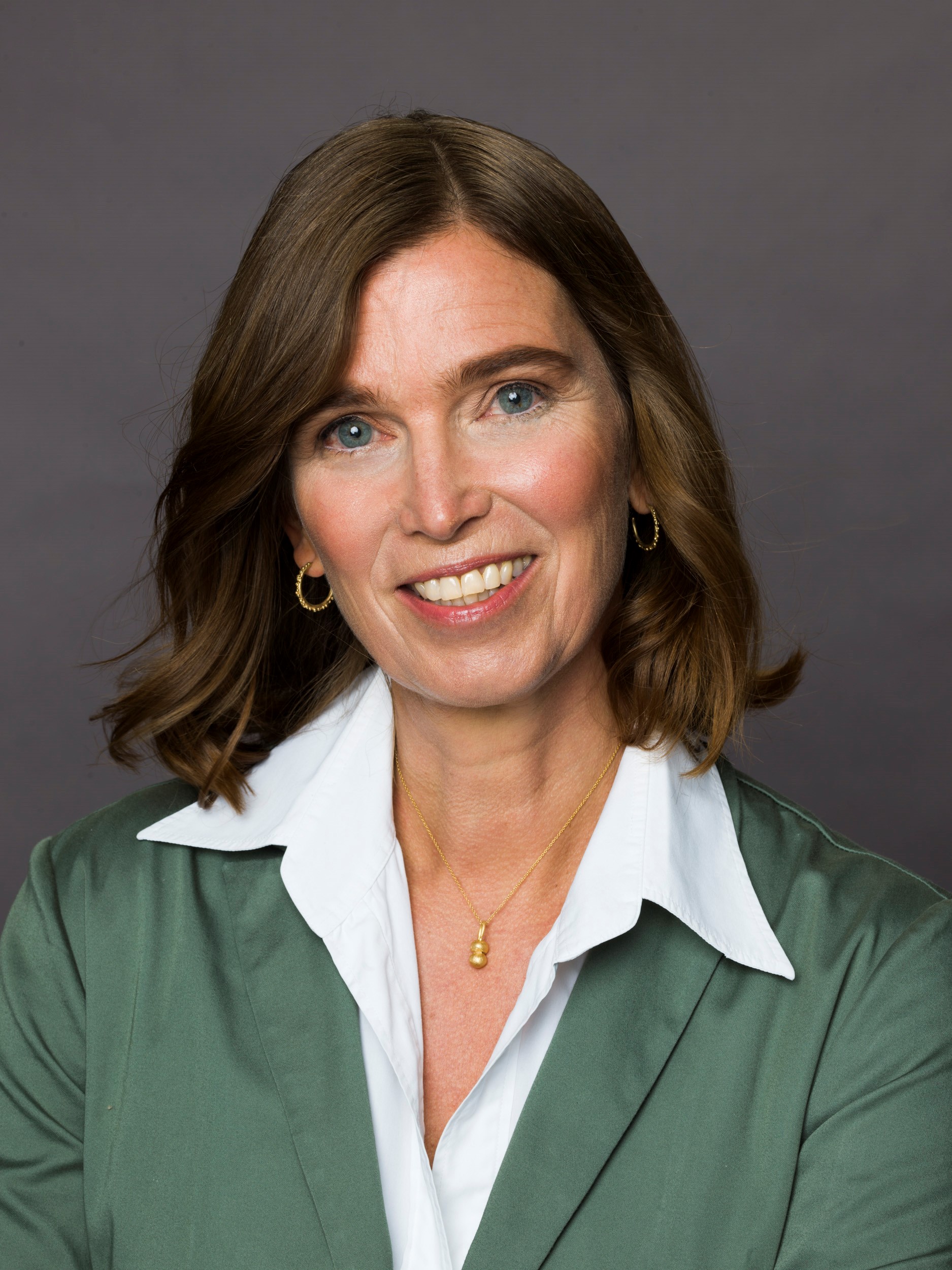
Veronika Eyring serves as Head of the Earth System Model Evaluation and Analysis Department at the German Aerospace Center (DLR) Institute of Atmospheric Physics and Professor of Climate Modelling at the University of Bremen. She holds dual appointments at these leading institutions, directing cutting-edge research at the intersection of climate science and artificial intelligence. Education: 2008: Habilitation in Environmental Physics at the University of Bremen 1999: PhD in Physics from the University of Bremen 1994: Diploma in Physics from the University of Erlangen Professor Eyring's research program focuses on improving climate models and projections through innovative integration of machine learning techniques and spaceborne Earth observations. Her work spans process-oriented modeling, development of observationally-based performance metrics, and understanding systematic biases in climate models. She has pioneered approaches to weighting model projections based on their performance using machine learning, significantly advancing the field of climate model evaluation. Her research has critical applications across multiple sectors including aeronautics, space research, transportation, and energy systems. Analysis of her recent publications reveals a clear trajectory toward deeper integration of machine learning with traditional climate modeling approaches. Her work has increasingly focused on developing community tools like the Earth System Model Evaluation Tool (ESMValTool) and leading major international initiatives such as the USMILE project (Understanding and Modelling the Earth System with Machine Learning). The publications span climate science, machine learning, Earth system modeling, and remote sensing, with specific emphasis on climate model evaluation, parameterization techniques, and improved climate projections. Scientific Awards: AGU Ambassador Award (2024) TUM Distinguished Affiliated Professor (2024) Gottfried Wilhelm Leibniz Prize (2021) ERC Synergy Grant (2019) Thomson Reuters Highly Cited Researcher (2016-2021) Top female researchers award, Helmholtz-Society (2015) Professor Eyring actively supervises a large research group comprising PhD students working on ML-based sea ice parameterizations, causal model evaluation for air-sea interactions, and machine learning-based detection of droughts in climate projections. She leads the prestigious ERC Synergy Grant USMILE and secured significant funding through the DFG Gottfried Wilhelm Leibniz Prize. Her research group at DLR includes multiple postdocs, research scientists, and software engineers working collaboratively on climate informatics projects. Professor Eyring leads the Earth System Model Evaluation and Analysis Department at DLR, which encompasses research groups focused on CMIP model evaluation, ESMValTool development, and machine learning applications in climate science. She founded and supervises the 'Climate Informatics' Group at the DLR Institute for Data Science in Jena. Her department maintains strong international collaborations, particularly with the National Center for Atmospheric Research (NCAR) in Boulder, Colorado, where she serves as an Affiliate Scientist.
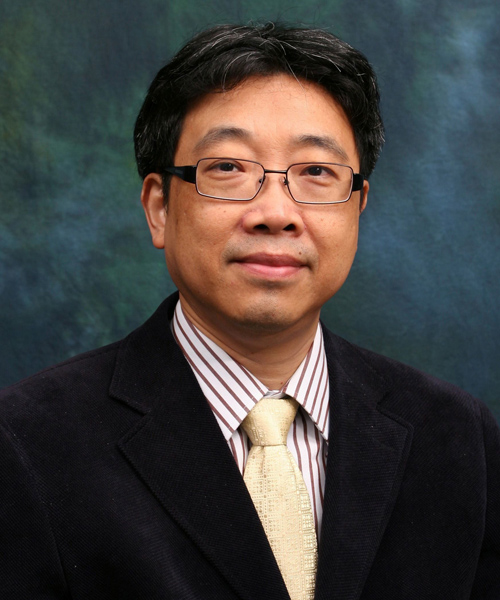
Cao Jiannong is currently a Chair Professor and Director of the University Research Facility in Big Data Analytics at Hong Kong Polytechnic University . He has held academic roles including Assistant Professor at City University of Hong Kong and University Lecturer at the University of Adelaide and James Cook University. His research spans Cloud and Edge Computing , Parallel and Distributed Systems , Big Data Analytics , and Wireless Sensing . Ph.D. in Computer Science, Washington State University (1990) MSc in Computer Science, Washington State University (1986) BSc in Computer Science, Nanjing University, China (1982) His work focuses on solving theoretical and practical challenges in distributed computing , mobile cloud systems , and wireless sensor networks . Recent projects include coupled network embedding models for heterogeneous networks and SDN architectures for vehicular communication. His research also pioneers WiFi-based non-invasive health monitoring and fault-tolerant sensor deployment for structural health applications. Dr. Cao's publications highlight advancements in network embedding , edge computing , and WSN optimization . Key papers address multi-user computation partitioning , energy-efficient SHM systems , and consensus protocols for mobile networks. These works have been cited over 15,000 times, with an h-index of 60. Ministry of Education (China) Natural Science Award (2018) Distinguished Member, ACM (2017) Fellow, IEEE (2014) Best Paper Awards at IEEE DSAA, SMARTCOMP, and WCNC Dr. Cao has advised multiple PhD students, including Linchuan Xu and Weigang Wu , whose research on WSN-based SHM and coupled network embedding has practical impact. His leadership includes directing Hong Kong Polytechnic University's Big Data Research Facility and serving on technical committees for IEEE INFOCOM and ACM/IEEE conferences.
Rong Zheng is a Professor in the Department of Computing and Software and a member of the School of Biomedical Engineering at McMaster University, Canada. She holds a Tier-1 Canada Research Chair in Mobile Computing and serves as Acting Chair of the Computing and Software department from July to December 2025. She is also an Associate Member of the Electrical & Computer Engineering department. Education: Ph.D. in Computer Science, University of Illinois, Urbana-Champaign, USA Master of Engineering (thesis) in Electrical Engineering, Tsinghua University, Beijing, China Bachelor of Engineering in Electrical Engineering, Tsinghua University, Beijing, China Dr. Zheng's research lies at the intersection of mobile computing, wireless networking, and machine learning, with a strong focus on applications for aging populations. She directs the NSERC Smart Mobility for the Aging Population CREATE program. Her work encompasses sensor development, wireless network design, and mobile data analytics to address real-world challenges in healthcare, mobility, and data center monitoring. She has developed innovative solutions like the MacQuest campus navigation app and has captured first prize in indoor localization competitions. Her recent publications demonstrate a clear trajectory toward applying wireless sensing technologies (particularly acoustic, Wi-Fi, and mmWave) to health monitoring and mobility assessment for older adults. There's a strong emphasis on developing efficient edge computing solutions that can process data in real-time on resource-constrained devices, as exemplified by her TeamNet framework for collaborative inference on the edge. Her work bridges theoretical advances with practical applications that have social impact. Scientific Awards: Tier-1 Canada Research Chair in Mobile Computing US National Science Foundation CAREER Award (2006) Joseph Ip Distinguished Engineering Fellow (2015-2018) Dr. Zheng leads the Wireless System Research Group (WiSeR) at McMaster University, which has secured significant funding including a $1.65M NSERC CREATE grant for smart mobility research for older adults. Her research has been supported by multiple funding agencies including NSERC, NSF, UH GEAR, and DURIP. She actively mentors graduate students and has developed specialized courses including CAS 772 (Mobile Data Analytics) and CAS 781 (Mobility in the Aging Population). The WiSeR group conducts impactful research on communication, networking, and data analytics issues in Cyber Physical Systems, with applications spanning healthcare, smart infrastructure, and data center monitoring. Their work on data center infrastructure monitoring networks has been featured in EurekAlert and Data Center Dynamics, and they've made significant contributions to indoor localization technology.
Peter N. Belhumeur is a Professor in the Department of Computer Science at Columbia University and Director of the Laboratory for the Study of Visual Appearance (VAP LAB). He holds a Sc.B. from Brown University and a Ph.D. from Harvard University, followed by a postdoctoral fellowship at the University of Cambridge. His career includes roles at Yale University before joining Columbia in 2002. Education: Brown University (Sc.B., 1985), Harvard University (Ph.D., 1993) Postdoc: Isaac Newton Institute, University of Cambridge (1994) His research focuses on computer vision and machine learning, with applications in biodiversity and mobile technology. Notable projects include the Leafsnap, Birdsnap, and Dogsnap apps – pioneering species/breed identification tools using machine learning. He has received awards such as the PECASE, Helmholtz Prize, and EO Wilson Biodiversity Technology Pioneer Award. His work bridges academia and industry, demonstrated by collaborations with Dropbox and contributions to consumer-facing AI applications. The VAP LAB explores visual appearance modeling and computational photography.
Máté Szabó is an Assistant Professor at the University of Debrecen , affiliated with the Faculty of Informatics and the Department of Information Technology . His email contact is szabo.mate@inf.unideb.hu . He works in areas such as Machine Learning , Smart Cities , and Mobile Computing . His research spans topics like microservice architecture for ensemble models, Markov modeling of traffic flows, and distributed machine learning on mobile platforms. He has explored neural models for conversational AI and gamification in programming education through Minecraft-based challenges. His work also addresses edge computing and data parallelism in mobile environments. His publications (2016–2024) reflect trends in machine learning deployment on Android platforms smart city traffic analytics gamified educational tools cognitive modeling of numerical understanding microservice-based model integration .
Paulo Blikstein serves as Associate Professor of Communications, Media and Learning Technology Design at Columbia University. Previously, he was Assistant Professor of Education and (by courtesy) Computer Science at Stanford University and co-founded the Lemann Center for Brazilian Education (2008-2018). Education: Ph.D. in Learning Sciences, Northwestern University (2009) M.A. in Media Arts & Sciences, MIT Media Lab (2002) M.Eng. in Electronic Engineering, University of São Paulo (2000) B.S. in Metallurgical Engineering, University of São Paulo (1998) His research pioneers constructionist learning environments through digital fabrication, educational robotics, and tangible interfaces—focusing on equitable access for underserved communities. Inspired by Paulo Freire and Seymour Papert, he develops open-source tools like the GoGo Board robotics platform and leads the global FabLab@School initiative establishing fabrication labs in schools across four continents. Current work emphasizes multimodal learning analytics to study student interactions in maker-centered classrooms. Publications reveal strong focus on democratizing invention through maker education, with recurring themes in constructionist theory application, multimodal assessment, and context-specific technology adaptation. Brazilian education reform and low-cost computational solutions form significant threads, particularly in 2016-2017 publications. Scientific Awards: Two Google Faculty Awards National Science Foundation Early Career Award (highest U.S. government honor for early-career scientists) Blikstein directs the Transformative Learning Technologies Lab (TLTL) and co-founded Stanford's Center for Educational Entrepreneurship and Innovation in Brazil. His FabLearn conference established the first academic forum on Maker Movement applications in education. While specific grant details aren't listed, the NSF CAREER Award signifies major federal research funding. He spearheads the FabLab@School project deploying advanced fabrication labs in K-12 institutions worldwide and founded the FabLearn conference series. His work integrates teams of engineers, educators, and designers to create scalable solutions for resource-constrained learning environments.
Yannis Chronis is an incoming Assistant Professor at the Department of Computer Science , ETH Zurich (starting August 2025), where he will join the ETH Systems Group . Prior to this, he spent 3 years as a Systems Researcher at Google's Systems Research Group in Sunnyvale, USA. He holds a Ph.D. in Computer Science from the University of Wisconsin-Madison (advised by Prof. Jignesh Patel) and a Bachelor's/Master's from the University of Athens, Greece (advised by Prof. Yannis Ioannidis). His research focuses on optimizing databases and data processing for modern hardware through software-hardware co-design. Key areas include database efficiency in memory-centric architectures, learned query optimizers, and cloud resource management. His work is supported by a Facebook Fellowship and has been recognized with the EDBT 2016 Medal for best paper. Teaching: Taught CS 564 - Database Management Systems at UW-Madison (Spring 2022). Service: Served on program committees for SIGMOD, VLDB, CIDR, and others, and chairs the CIDR Proceedings Committee. Key Publications: His recent work includes studies on memory-centric computing for databases, cardinality estimation benchmarks, and adaptive query processing techniques.
Peter Pietzuch is a Professor in the Department of Computing at Imperial College London, where he leads the Large-Scale Data & Systems (LSDS) group. He also serves as the Director of Research and is a Visiting Researcher at Microsoft Research Cambridge. Pietzuch holds a Ph.D. from the University of Cambridge and a B.A. from Girton College. His research spans distributed systems, cloud computing, big data processing, and systems security. Key interests include: Scalable architectures for cloud-native applications Efficient stream processing and machine learning systems Trusted execution environments and secure cloud infrastructure Optimization of serverless computing and distributed databases His recent publications focus on adaptive machine learning frameworks, secure cloud resource management, and high-performance stream processing systems. Trends show strong emphasis on hardware-software co-design, confidential computing, and fault-tolerant architectures. Awards include: Best Paper Award at Middleware'03 He actively advises PhD students and secures grants for projects like Faasm (serverless computing) and Teechain (blockchain security). His LSDS group collaborates with industry partners including Microsoft Research. Pietzuch teaches undergraduate and graduate courses including Scalable Systems for the Cloud and Operating Systems . He co-founded the ACM DEBS conference and serves on steering committees for EuroSys and Middleware.
Linyi Li is an Assistant Professor in the School of Computing Science at Simon Fraser University (SFU), leading the Trustworthy Artificial Intelligence (TAI) Lab. His research focuses on certifiably trustworthy deep learning systems, combining machine learning and computer security. He holds a PhD from the University of Illinois Urbana-Champaign (UIUC) and a B.Eng. from Tsinghua University. Affiliations: Simon Fraser University, TAI Lab Education: PhD in Computer Science, UIUC, 2023 B.Eng (Cum Laude), Tsinghua University, 2018 His research interests include deep learning , trustworthy machine learning , large language models , and software engineering . He emphasizes rigorous certification of robustness, fairness, and numerical reliability in AI systems. Recent work includes the InfiBench benchmark for evaluating code LLMs and advancements in neural network verification. Recent Research Trends: His publications span certified robustness, fairness guarantees, and scalable verification techniques for deep learning models. He also explores scientific evaluation of foundation models and adversarial defense mechanisms. Awards: Rising Stars in Data Science AdvML Rising Star Award Wing Kai Cheng Fellowship Finalist: Qualcomm Innovation Fellowship (2022) Winner: VNN-COMP'23 Competition (Team α, β-CROWN) Advising & Grants: As a PI, he oversees the TAI Lab's research. Though no specific grants are listed, his work is funded through competitive awards and university resources. Labs/Teams: Leads the TAI Lab at SFU, focusing on foundational and applied research in trustworthy AI.