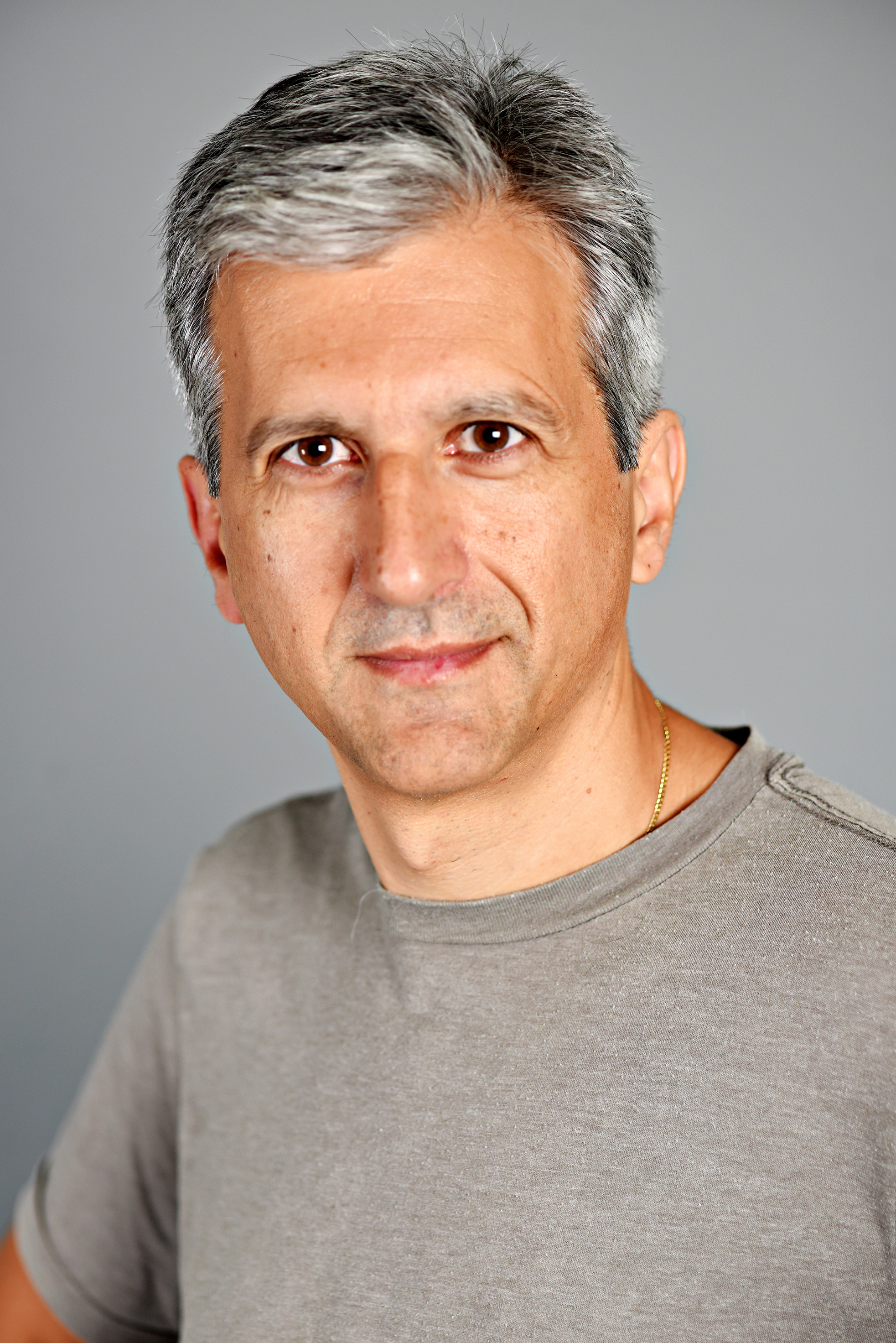
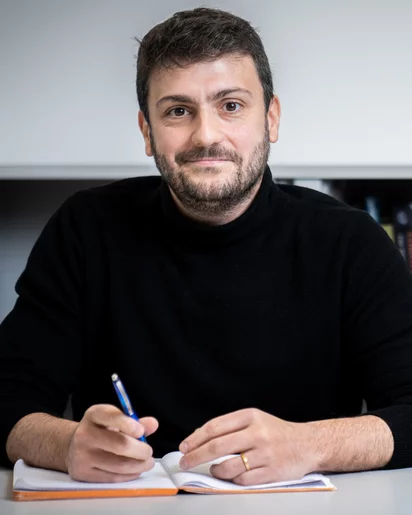
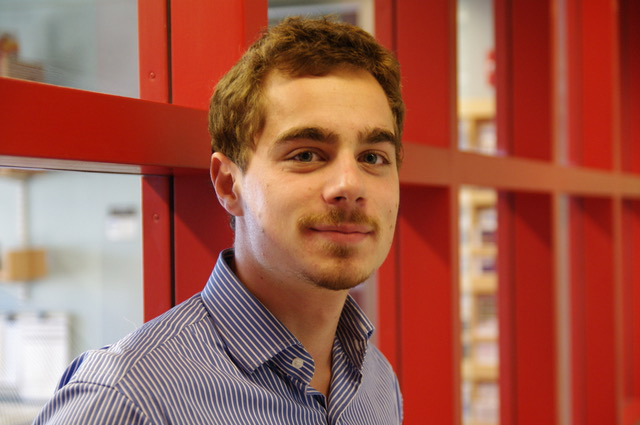
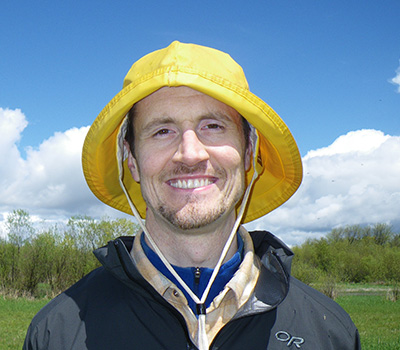
Kyros Kutulakos is a Professor in the Department of Computer Science at the University of Toronto, where he leads research in computational imaging and 3D sensing. His affiliations include the Toronto Computational Imaging Group, Computer Vision Group, Dynamic Graphics Project (DGP), and Vector Institute Group. He teaches graduate and undergraduate courses such as CSC320 (Introduction to Visual Computing) and CSC2530 (Computational Imaging & 3D Sensing). His research interests span computational imaging, non-line-of-sight imaging, single-photon detectors, 3D sensing, and neural rendering. Notable contributions include advancements in structured-light imaging, time-of-flight systems, and super-oscillatory microscopy. He has advised numerous PhD and MSc students, fostering cutting-edge research in imaging technologies. Kutulakos has received prestigious awards, including the Dean’s Research Excellence Award (2023) and multiple best paper prizes (e.g., Marr Prize at ICCV 2023). He has served as program chair for ICCV 2013, ICCP 2010, and CVPR 2003, contributing to academic leadership in computer vision. His work bridges optics, photonics, and computation, with applications in autonomous systems, medical imaging, and astronomy. Current research focuses on extreme imaging scenarios, such as imaging in pitch-black environments and around corners, leveraging novel sensor designs and computational techniques.
Joanna Millstein is a Post-doctoral Fellow in Geophysics at the Colorado School of Mines. She earned her Ph.D. in Geophysics from the Massachusetts Institute of Technology in 2023 as part of the MIT-WHOI Joint Program in Oceanography and Engineering, where her dissertation focused on The Flow and Fracture of Antarctic Ice Shelves . She also holds an A.B. in Earth Sciences from Dartmouth College (2017). Her research centers on the deformation and fracture of glacier ice, working at the intersection of fracture mechanics, remote sensing (particularly SAR and InSAR processing), statistical mechanics, and stochastic models. Millstein uses observational data from satellites and field measurements to derive mechanical and statistical models for glacier ice processes, with particular focus on reconciling observations of ice fracture and iceberg calving with theoretical models. Her work aims to resolve the nonlinear physics of glacier ice to better understand future global climate change impacts. Millstein's publication record shows a strong focus on Antarctic ice dynamics, with recent work applying extreme value theory to analyze 47 years of iceberg calving events. Her research demonstrates consistent attention to both theoretical modeling and practical applications for understanding climate change impacts on polar regions. She has developed computational tools including CryoCloud, reflecting her commitment to open science and cloud-based infrastructure for cryosphere research. Her scientific contributions span ice shelf mechanics, fracture prediction, rheology, and statistical modeling of glacial processes. Millstein maintains an active research presence with publications extending to 2025, demonstrating ongoing contributions to the field of glaciology and climate science. She is affiliated with the glaciology research center at Colorado School of Mines and maintains an active GitHub presence with climate-related code repositories. Her work bridges theoretical geophysics with practical climate change impact assessment, particularly regarding ice sheet stability and sea level rise projections.
Tim Colonius is the Frank and Ora Lee Marble Professor of Mechanical Engineering and Medical Engineering and holds the Cecil and Sally Drinkward Leadership Chair at the California Institute of Technology. He has been affiliated with Caltech since 1994 and currently serves as Executive Officer for Mechanical and Civil Engineering . Colonius earned his B.S. from the University of Michigan (Ann Arbor), and both his M.S. and Ph.D. from Stanford University. Research Interests: His work focuses on fluid dynamics (global instabilities, cavitation, aerodynamic sound), flow control (closed-loop control, reduced-order modeling), and biomedical applications (shock waves, lithotripsy, ultrasound). He also develops advanced numerical methods for interface capturing, immersed-boundary techniques, and high-order accuracy. Scientific Contributions: Recent publications highlight his research in multiphase flows, vortex ring collisions, turbulent jet analysis, GPU-accelerated simulations, and biomedical applications. His group uses computational and data-driven approaches to study turbulence, instabilities, and flow optimization. Scientific Awards: AIAA Aeroacoustics Award Fellow of the Acoustical Society of America Fellow of the American Physical Society (APS) NSF and DoD research grants
Dr. Imad El Haddad serves as Group Head of the Molecular Cluster and Particle Processes group at the Laboratory of Atmospheric Chemistry (LAC), part of the Center for Energy and Environmental Sciences at Paul Scherrer Institute (PSI), Switzerland, since 2018. Previously, he held positions as Tenured Scientist and Deputy Head (2018-2019), Senior Scientist in the Smog Chamber group (2015-2018), and Postdoctoral Fellow (2011-2015) at PSI. His research aims to quantify how anthropogenic emissions alter atmospheric pollutant composition and impact Earth's climate and public health through molecular-level analysis using advanced mass spectrometry techniques. His academic background includes: Ph.D. in Atmospheric Chemistry, University of Provence, Marseille (2007-2011) Master's in Environmental Sciences (with distinction, rank 1/9), University of Provence (2006-2007) Master's in General Chemistry (with distinction, rank 1/10), Saint-Joseph University of Beirut (2005-2006) Bachelor of Science in Chemistry (with distinction, rank 1/14), Saint-Joseph University of Beirut (2002-2005) El Haddad's work centers on molecular fingerprinting of atmospheric aerosols , utilizing mass spectrometry (GC/MS, HPLC/APCI-MS2, HPLC/ESI-MS2) to identify primary and secondary molecular markers. He conducts smog chamber experiments to characterize emissions from wood burning, traffic, and cooking processes, determining secondary organic aerosol potential and oxidation state evolution. His group also studies in-cloud aqueous-phase aging and collaborates with global modelers to link aerosol composition to climate forcing and health outcomes like oxidative stress. Recent publications (2025-2024) reveal three dominant trends: (1) rigorous molecular-scale analysis of secondary aerosol formation under varying humidity/temperature, (2) source apportionment breakthroughs in diverse regions (India, Europe, Arctic) using 14C and AMS data, and (3) quantification of health-relevant aerosol properties such as oxidative potential through DTT assays. High-resolution mass spectrometry is a consistent methodological thread across these studies. His scientific awards include: MENRT research fellowship from French ministry of research (2007-2010) Excellence Scholarship (top 1% student, University of Saint Joseph, 2005) Distinction Prize (best student, University of Saint Joseph, 2005) As Group Head, El Haddad oversees the Molecular Cluster and Particle Processes group's research direction and mentorship of junior scientists. While specific grant details are absent from the text, his leadership in multi-institutional publications (e.g., CERN CLOUD, iCUPE) implies active grant management and international collaboration. The group's work bridges laboratory simulations, field deployments, and health/climate modeling to address air pollution complexities. The Molecular Cluster and Particle Processes group develops cutting-edge online/offline mass spectrometers for 1 Hz-resolution atmospheric analysis. They deploy instruments in laboratory smog chamber experiments and global field studies, focusing on molecular marker identification, emission source characterization, and aging process quantification. Collaborations with biochemists and climate modelers extend their impact beyond pure aerosol physics into health risk assessment and policy-relevant climate science.
Tom Beucler is a Conditional Pre-Tenure Assistant Professor in Geo-Environmental Data Science at the University of Lausanne’s Institute for Earth Surface Dynamics (IDYST). He holds a Master’s degree in Science and Mechanics from École Polytechnique (2014) and a PhD in Atmospheric Science from MIT (2019). Postdoctoral research at Columbia University and UC Irvine focused on machine learning applications in climate science under Professors Pierre Gentine and Michael Pritchard. Research Interests: Climate informatics, atmospheric physics, fluid dynamics, tropical meteorology, and integrating machine learning into climate models for extreme weather prediction and hydrological cycle modeling. Collaborations: Works with environmental scientists and computer engineers to improve climate models using neural networks and causal discovery methods. Initiatives: Organizes weekly brainstorming sessions to promote machine learning adoption in environmental sciences. Publications span climate-invariant machine learning, data-driven parameterizations, and hybrid AI-climate modeling frameworks like ClimSim. His work emphasizes causal consistency and generalizability across climate conditions.
Anja Feldmann is Director at the Max Planck Institute for Informatics in Saarbrücken and Professor of Internet Network Architectures at Technische Universität Berlin (since 2006). Previously she held a full professorship at Technische Universität München (2002–2006) and conducted research at AT&T Labs Research , Saarland University , and Carnegie Mellon University , where she earned her Ph.D. in 1995. Education Ph.D. in Computer Science, Carnegie Mellon University, 1995 M.Sc. in Computer Science, Carnegie Mellon University, 1991 Diplom in Computer Science, Universität Paderborn, 1990 Research Interests Anja Feldmann’s research centers on measurement-driven understanding of the Internet. She tackles challenges such as software-defined networking , cloud-network interactions , performance debugging , and traffic characterization . A growing focus is the privacy and security of networked systems, evidenced by recent studies on online tracking, DNS security, and disinformation ecosystems. Her group designs scalable measurement platforms that combine passive and active monitoring , programmable data planes , and machine-learning analytics to dissect phenomena ranging from terabit-scale traffic to covert tracking on illegal streaming sites. Recent Publication Themes The 2021-2025 publications reveal a methodological evolution toward large-scale, longitudinal measurement . Topics include: Impact of global events (COVID-19, CrowdStrike outage) on Internet traffic Cross-country tracking ecosystems and privacy leaks DNS root and routing plane stability and security ML-driven real-time monitoring at terabit speeds Disinformation campaigns on encrypted messaging platforms Scientific Awards Gottfried Wilhelm Leibniz Prize (2011) – Germany’s highest research honor Berliner Wissenschaftspreis (2011) Elected Member of the German National Academy of Sciences Leopoldina (2009) Advising & Grants While individual student names are not listed, Prof. Feldmann leads a vibrant team at MPI-INF’s Internet Architecture department. She has supervised numerous doctoral candidates and post-doctoral researchers whose work is reflected in the co-authored papers. Funding sources include the German Research Foundation (DFG) via the Leibniz Prize and EU Horizon projects, although explicit grant numbers are not provided in the source material. Labs & Teams She heads the Internet Architecture department at MPI-INF, located at the Saarland Informatics Campus . The department operates state-of-the-art measurement infrastructure—including programmable switches, honeynets, and global vantage points—to support empirical network science.
Chongai Kuang is an Assistant Scientist in the Atmospheric Sciences Division at Brookhaven National Laboratory, currently serving in the Environmental Science and Technologies Department. His research focuses on atmospheric aerosol physical and chemical processes, with particular expertise in aerosol nucleation and instrumentation development for detecting sub-1 nm particles. Education: Ph.D. in Chemical Engineering (major) & Nanoparticle Science and Technology (minor) - University of Minnesota, Minneapolis B.S. in Chemical Engineering (major) & Chemistry (major) - University of California, Berkeley Research Interests: Dr. Kuang's work is broadly bounded by the study of atmospheric aerosol physical and chemical processes, with specific focus on aerosol nucleation mechanisms and the development of advanced instrumentation capable of detecting newly formed particles down to below 1 nm. His current scientific efforts concentrate on developing microphysical-based parameterizations for aerosol nucleation and initial growth processes, integrating findings from intensive field campaigns and controlled laboratory experiments into large-scale atmospheric models. Research Methodology: His approach combines extensive field campaign participation with sophisticated laboratory experiments, utilizing state-of-the-art instrumentation to characterize aerosol properties across diverse environments including marine boundary layers, Amazon rainforest, Antarctic regions, and urban atmospheres. Scientific Recognition: 2012: American Association for Aerosol Research (AAAR) Sheldon K. Friedlander Award - recognizing outstanding contributions to aerosol science and technology Professional Service: Dr. Kuang actively contributes to the scientific community through various roles including proposal review for the German Science Ministry, journal review for Atmospheric Chemistry & Physics, membership in the Young Investigators Committee for AAAR, and co-leadership of the New Particle Formation Focus Group in the ASR Aerosol Life Cycle Working Group. He holds memberships in the American Geophysical Union, American Association for Aerosol Research, and American Institute of Chemical Engineers. Laboratory and Facilities: Dr. Kuang is based at Brookhaven National Laboratory's Environmental Science and Technologies Department, located in Building 815E, Room 1-45, where he conducts his cutting-edge research in atmospheric aerosol science.
Simon de Szoeke is a Professor in the College of Earth, Ocean, and Atmospheric Sciences at Oregon State University. His research focuses on atmosphere-ocean interaction and its influence on climate, with particular emphasis on tropical regions. He conducts observational studies and modeling work to understand air-sea interactions, cloud processes, and their representation in climate models. Dr. de Szoeke received his Ph.D. in Atmospheric Sciences from the University of Washington in spring 2004, with a dissertation on "Evolution of the cross-equatorial atmospheric boundary layer in the east Pacific: observations and models." He earned his B.A. summa cum laude in Physics with departmental honors and Mathematics from the University of Oregon Robert D. Clark Honors College in 1997. His research interests center on atmosphere-ocean interaction, stratiform clouds, and tropical meteorology . He investigates how clouds influence the Earth's radiative heating, the processes responsible for the transition from stratiform to cumuliform clouds, and the role of inversion strength in cloud maintenance. His work on the Madden-Julian oscillation (MJO) involves analyzing data from the DYNAMO international field campaign to study air-sea flux feedbacks and the role of sea surface temperature in tropical weather phenomena. Dr. de Szoeke is particularly known for his groundbreaking research on cold pools in the tropical ocean, which he describes as "footprints" of convection. His research shows that these cold, invisible phantoms play an important role in the atmospheric heat budget and can organize towering clouds at their intersection points. Contrary to previous assumptions, he found that cold pools are drier than their surroundings, challenging existing theories about their role in convection. His scientific contributions include numerous publications on air-sea interaction, tropical meteorology, and cloud processes. His research has been supported by major field campaigns including DYNAMO in the Indian Ocean and VOCALS in the southeastern Pacific, with findings published in leading journals such as Journal of Climate, Bulletin of the American Meteorological Society, and Monthly Weather Review. Dr. de Szoeke teaches courses in atmospheric sciences including The Changing Climate (AS 320), Atmospheric Thermodynamics and Cloud Physics (AS 411/511), and Large-Scale Interactions of the Atmosphere and Oceans (AS 615). He has advised several graduate students, including June Marion who graduated in summer 2014 with a thesis on turbulent heat flux estimates, as well as Michael Makiyama and Kathryn Verlinden.
Hauke Schmidt is a Group Leader in the Department of Climate Physics at the Max Planck Institute for Meteorology (MPI-M) in Hamburg, Germany. He leads the 'Global Circulation and Climate' research group and serves as Deputy Director of the 'Atmosphere in the Earth System' department. His work focuses on climate modeling, atmospheric circulation, and climate sensitivity, using tools such as the ICON-Sapphire storm-resolving model and idealized radiative-convective equilibrium models. His research interests center on understanding how atmospheric circulation influences Earth's climate response to forcings, particularly equilibrium climate sensitivity (ECS). He investigates processes in the upper tropical troposphere, pattern effects, and the vertical structure of climate models. His work spans atmospheric dynamics, chemistry-radiation interactions, solar and volcanic forcing, climate engineering, and adjoint modeling for sensitivity analysis. The recent publications highlight a strong focus on high-resolution climate modeling (ICON-Sapphire), radiative feedbacks, stratospheric aerosol effects, volcanic and solar forcing, and model development. His work bridges theoretical atmospheric dynamics with practical Earth system modeling, contributing significantly to CMIP and GeoMIP intercomparisons. Scientific Awards and Honors: Contributing Author, IPCC AR5 WG1 (Chapter 7: Clouds and Aerosols) Advising and Grants: Hauke Schmidt has advised numerous PhD and Master’s students, including Helene Glöckner, Abisha Gnanaraj, Moritz Günther, Paul Keil, Clarissa Kroll, and Sally Dacie. He has led and participated in multiple major research projects funded by DFG, BMBF, and EU programs, such as VolImpact, CELARIT, ComparCE, EUTRACE, and IMPLICC. These projects focus on volcanic impacts, climate engineering, and solar variability. Labs and Teams: He leads the 'Global Circulation and Climate' group within the Department of Climate Physics at MPI-M. He is actively involved in the development and application of the ICON and ECHAM/HAMMOZ family of models. He has contributed to the UA-ICON extension for middle atmosphere simulations and the konrad radiative-convective model.
Dr. Nikole Nielsen is an Adjunct Associate Professor at Swinburne University of Technology and an Assistant Professor at the University of Oklahoma. She holds dual appointments in the Centre for Astrophysics and Supercomputing (Swinburne) and the Homer L. Dodge Department of Physics and Astronomy (OU). Her research focuses on the circumgalactic medium (CGM) of galaxies, studying gas kinematics, ionization states, and metal content to understand galaxy evolution processes like accretion and outflows. She has held roles including ASTRO 3D Fellow and Postdoctoral Research Associate at Swinburne from 2015–2024. Education: PhD in Astronomy (New Mexico State University, 2015), M.S. in Astronomy (2013), B.S. in Astrophysics (Michigan State University, 2009). Awards include the Swinburne Director's Outstanding Achievement Award (2022) and multiple recognitions for research excellence. She supervises PhD students in areas like galactic outflows and CGM dynamics. Research highlights include mapping the transition between galactic disks and CGM using emission-line data (Nature Astronomy, 2024), resolving outflow properties in starburst galaxies (Monthly Notices of the Royal Astronomical Society, 2024), and studying gas kinematics in multiphase CGM (2024). Her work bridges observations with simulations, emphasizing resolved spatial data to understand galaxy evolution. Grants include an NSF East Asia-Pacific Summer Institute fellowship (2012) and ASTRO 3D funding. Teaching includes courses on extragalactic astronomy and cosmology at OU. Outreach efforts include coordinating public astronomy events and mentoring students. Current team includes postdocs and graduate students at OU.
Dr. Julian Tachella is a CNRS Research Scientist at the Sisyph Laboratory of École Normale Supérieure de Lyon, with co-founder/CSO roles at Blur Labs. His career spans signal processing, machine learning, and computational imaging, focusing on inverse problems and self-supervised learning. Affiliation: CNRS (French National Centre for Scientific Research), Sisyph Laboratory, École Normale Supérieure de Lyon Co-founder & CSO: Blur Labs (AI/Imaging startup) Research Interests: At the intersection of signal processing and deep learning , his work addresses imaging inverse problems through self-supervised methodologies (e.g., UNSURE, Generalized R2R) that eliminate ground-truth requirements. Key contributions include equivariant imaging frameworks for stability, spline sketches for photon-counting lidar compression, and uncertainty quantification techniques with equivariant bootstrapping. Recent Trends: 2025 publications emphasize lightweight architectures for multi-domain reconstruction (CT, super-resolution) and noise-agnostic SURE methods. 2024 works focus on audio declipping , compressed lidar , and nonlinear algorithm unrolling with applications in autonomous vehicles and medical imaging. Scientific Awards: Best Student Paper Award at ICASSP’22 Collaborations & Leadership: He leads the DeepInverse open-source project and develops algorithms for real-time 3D lidar reconstruction. His team includes researchers from University of Edinburgh and Grenoble INP, with applications in automotive lidar and underwater imaging.
Bjorn Stevens is the Managing Director of the Max Planck Institute for Meteorology and a Professor (§17) at the University of Hamburg. He leads the Climate Physics department, focusing on understanding how atmospheric water vapor, clouds, and radiative processes shape global and regional climates. His research explores turbulent mixing, cloud microphysics, and their role in climate feedback mechanisms, with contributions to observational techniques and high-resolution climate modeling. Education: PhD in Atmospheric Science (1996, Colorado State University), M.Sc. and B.Sc. in Electrical Engineering (1990 and 1987, Iowa State University). Professional experience includes roles at UCLA, NCAR, and leadership in major initiatives like HD(CP)2 and NextGEMS. He has supervised 25 PhD students, 29 master’s students, and 30 postdocs. Research interests span climate variability, cloud organization, and interactions between clouds and large-scale circulation. Recent work emphasizes storm-resolving models, tropical convection, and radiative feedbacks. Stevens has contributed to the Nobel Prize-winning IPCC assessments and leads projects like the Earth Virtualization Engines (EVE) to advance climate simulation capabilities.
Francis-Yan Cyr-Racine is an Assistant Professor in the Department of Physics and Astronomy at the University of New Mexico, holding the Robert E. Young Origins of the Universe Chair. His research focuses on particle astrophysics, cosmology, and dark matter interactions, particularly exploring how non-standard dark matter impacts structure formation and astrophysical observations. He leads projects like DREAMS (DaRk mattEr and Astrophysics with Machine Learning and Simulations), which employs advanced computational techniques to study subhalo populations and dark matter dynamics. His work also addresses cosmological tensions, such as the Hubble constant discrepancy, through novel parametrizations and observational systematics analyses. Education: PhD in Physics from the University of British Columbia (2012). His research interests include dark matter self-interactions, neutrino physics, and the interplay between fundamental physics and cosmological observations. He contributes to major initiatives like the CMB-S4 experiment and the Vera C. Rubin Observatory to probe dark matter and cosmological parameters. Research interests span particle astrophysics, cosmological data analysis, and machine learning applications. Recent work includes studies of self-interacting dark matter subhalo evolution, constraints on neutrino models, and leveraging gravitational lensing anisotropies to test dark matter hypotheses. His projects often bridge theoretical frameworks with observational data from telescopes like the James Webb Space Telescope and CMB surveys. Publications emphasize interdisciplinary approaches, combining astrophysical observations with particle physics models to uncover the nature of dark matter and resolve cosmological anomalies. His work frequently addresses high-redshift phenomena and the early universe, including cosmic dawn studies and dark acoustic oscillations.
Dr. Jan Streffing is a Scientific Programmer in the Climate Dynamics department at the Alfred Wegener Institute (AWI) in Bremerhaven, Germany. His work focuses on advancing Earth System Models (ESMs) with an emphasis on coupled climate modeling, paleoclimate simulations, and ensuring model scalability while preserving mass and energy conservation. He coordinates Earth System Model development efforts, particularly with the AWI-CM3 climate model framework. His research interests include high-resolution climate projections, atmosphere-ocean coupling mechanisms, and improving model physics through numerical methods. Streffing contributes to global kilometer-scale simulations using frameworks like IFS-FESOM, addressing challenges in resolving ocean eddies and cloud processes. He has developed ESM-Tools infrastructure to modularize climate modeling workflows and enhance computational efficiency. Key projects involve the MOSAiC expedition evaluation, where nudging techniques were applied to align model outputs with in-situ observations, revealing model deficiencies in cloud dynamics and snowpack representation. His work also explores deep-water formation impacts on climate sensitivity and integrates data assimilation techniques to improve sea ice forecasts in the AWI coupled prediction system. Streffing's contributions bridge climate science and computational practices, supporting advancements in model resolution, scalability, and accuracy for understanding future climate scenarios.
Mohamed Houssem Kasbaoui is an Assistant Professor in the Department of Mechanical and Aerospace Engineering at Arizona State University's School for Engineering of Matter, Transport and Energy. His research focuses on Computational Fluid Dynamics and Multiphase Flow simulations, with expertise in particle-laden flows, immersed boundary methods, and high-fidelity numerical tools. PhD, Aerospace Engineering (Cornell University, 2017) MSc, Aerospace Engineering (Cornell University, 2015) MSc, Theoretical Physics (Université Paris-Sud, 2014) Diplôme d'Ingénieur (Ecole Centrale Paris, 2013) BSc, Theoretical Physics (Université Paris-Sud, 2011) His work spans particle-resolved DNS , turbulent flow modulation , and environmental applications like microplastic transport in riverbeds. He leads the Kasbaoui Research Group , developing open-source tools like LEAP for CFD simulations. Recent publications highlight expertise in: Vortex dynamics in dusty flows Drag reduction mechanisms Immersed boundary modeling Microplastic trapping in sediment Swirling flow simulations Scale-separated combustion modeling Awarded the 2021 ACS Petroleum Research Fund Doctoral Investigator Award , his group actively seeks students with skills in Applied Mathematics and Parallel Programming . Research spans NSF-funded projects on Environmental Microplastics and Planetary Dust Clouds .