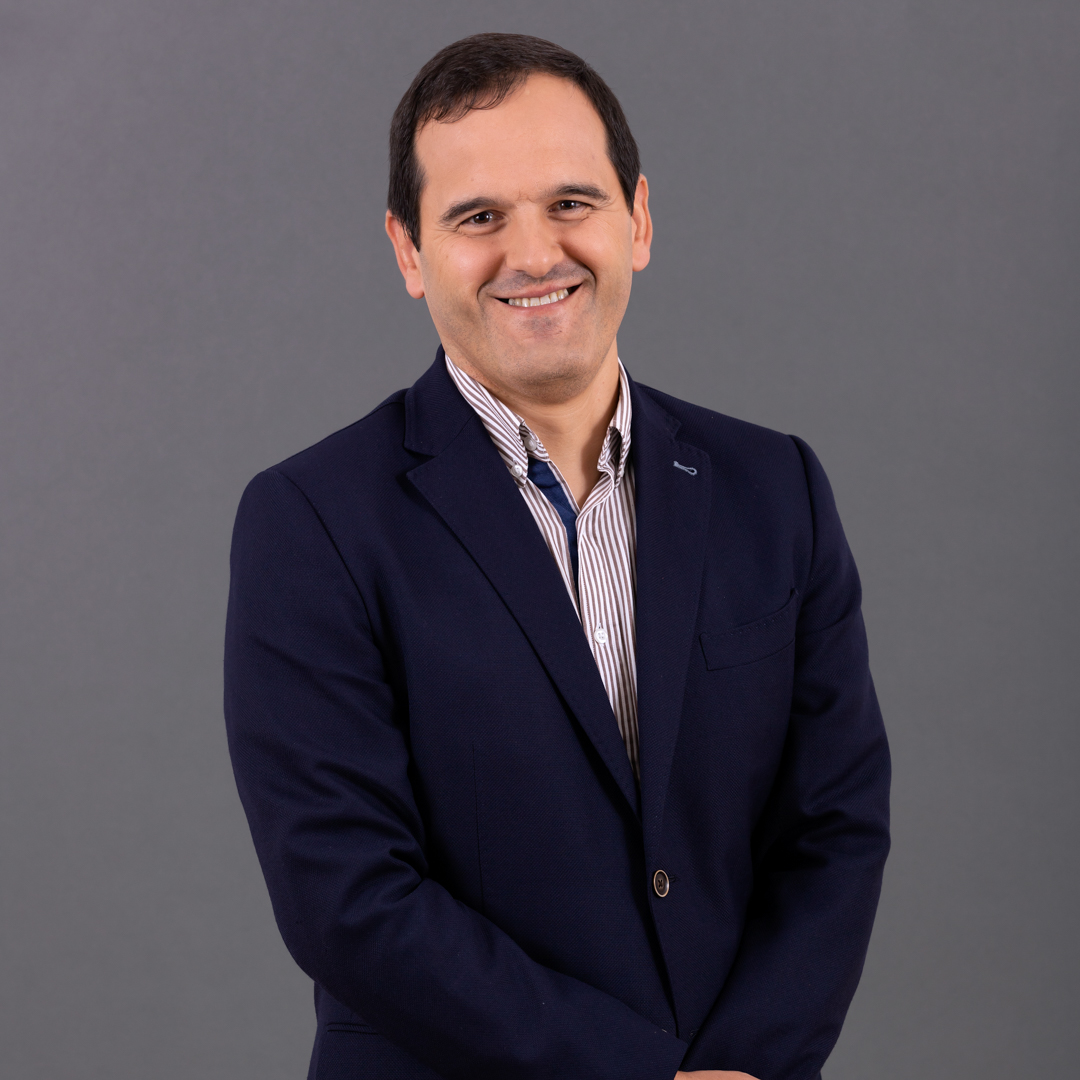
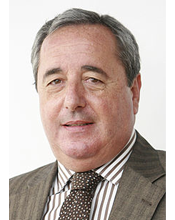
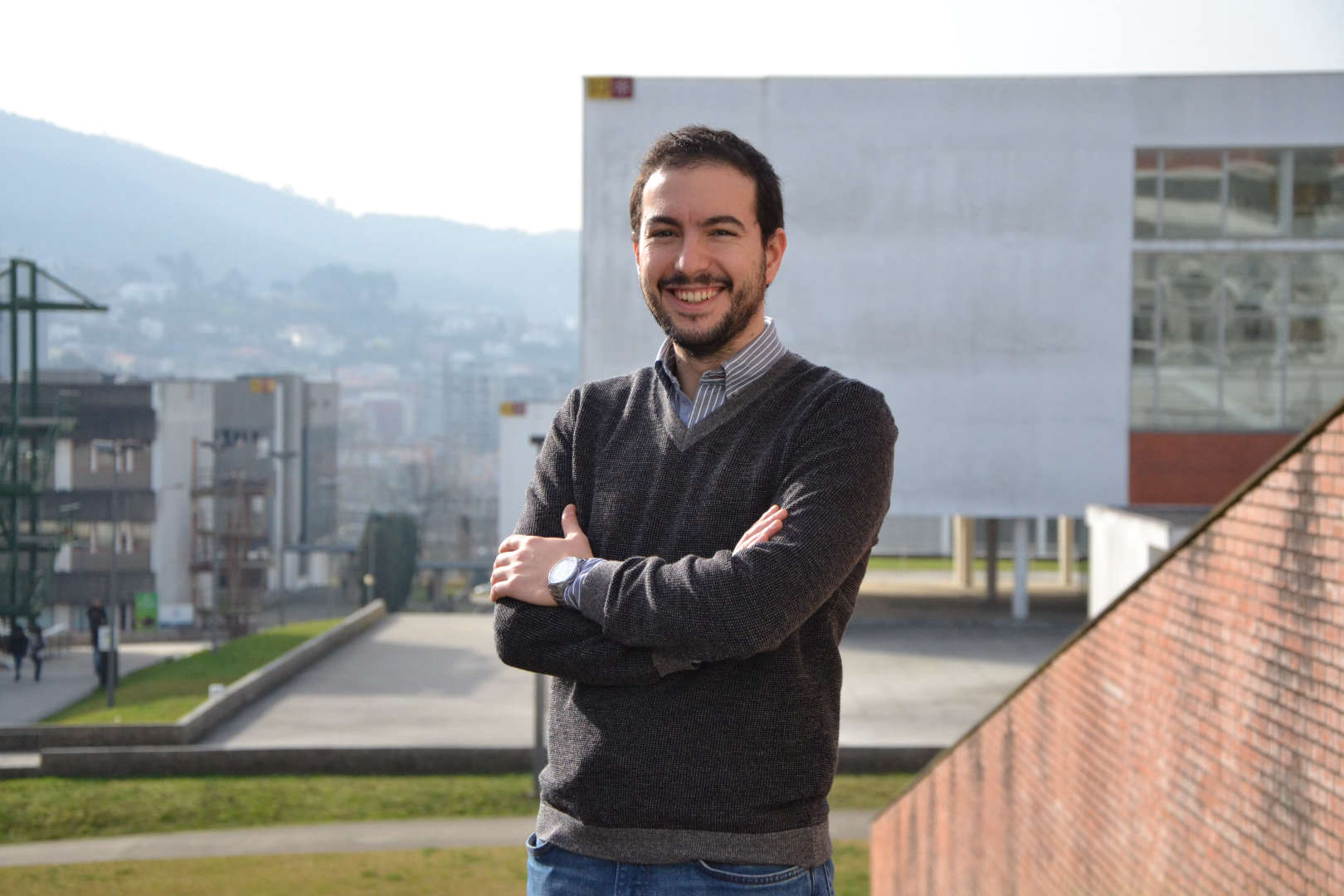
Luís Miguel Mendonça Rato is an Associate Professor at the Universidade de Évora and a Senior Researcher with a PhD at Centro ALGORITMI. He is affiliated with the CST R&D Group and VISTA Lab R&D Lab, focusing on interdisciplinary research at the intersection of Electrical Engineering, Computer Science, and Agricultural/Biomedical applications. Academic Degree: PhD Current Position: Associate Professor Labs: VISTA Lab Researcher IDs: ORCID 0000-0003-4492-7548, ResearcherID A-9152-2013, CiênciaID A914-6344-CD2D His research spans machine learning applications in Agricultural Engineering (Sentinel-2 satellite data for nutrient analysis), Biomedical Imaging (MRI-ADC texture analysis for tumor classification), and Control Systems (predictive control algorithms for water delivery canals and solar fields). With an h-index of 11 and 51 publications, his work emphasizes hybrid systems combining traditional engineering with computational innovation. Recent publications highlight trends in SLAM efficiency (2024), cloud service optimization (2022), and deep learning for medical imaging (2022-2023). He has contributed to Smart Cities initiatives through projects like M-Traffic (2006) and NanoSen-AQM (2020). As a senior researcher, he leads projects in the CST R&D Group and VISTA Lab , with notable work in the Universidade de Évora ecosystem.
Rute C. Sofia is Industrial IoT Head at fortiss – the Bavarian research institute for software-intensive systems – and Invited Associate Professor at Universidade Lusófona de Humanidades e Tecnologias (ULHT). She is also an Associate Researcher at ISTAR, Instituto Universitário de Lisboa (Iscte-IUL). Previously she co-founded and served as Scientific Director of COPELABS/ULHT (2013-2017) and was Senior Researcher there from 2010-2019. Education Ph.D. in Computer Science, University of Lisbon, 2004 Visiting Scholar, Northwestern University (ICAIR) & University of Pennsylvania, 2000–2003 M.Sc. in Computer Science, University of Lisbon, 1999 B.Eng. in Computer Engineering, University of Coimbra, 1995 Research Interests Her work spans network architectures and protocols , Internet of Things (IoT) , edge and in-network computing , deterministic wired/wireless industrial networks , and network mining . A current focus is on resilient, AI-driven orchestration across the IoT–Edge–Cloud continuum for 6G and Industrial IoT systems. Scientific Awards & Recognition ACM Europe Councilor (2021–2025) ACM Senior Member & IEEE Senior Member IEEE ComSoc N2Women Awards co-chair (2020–2021) Highly Cited Paper Award, Applied Sciences MDPI (2023) Labs, Teams & Grants She currently leads the Industrial IoT competence field at fortiss, coordinating projects such as SemComIIoT (semantic communications for IIoT) and the open-source ns-3 DetNetWiFi framework. Earlier she co-founded the Portuguese startup Senception Lda (2013-2019) and the research unit COPELABS , driving EU H2020 initiatives like UMOBILE and shaping national strategies for cyber-physical systems.
Maria Leonilde Rocha Varela is an Associate Professor with Habilitation at the School of Engineering, University of Minho, Portugal, where she also serves as a Senior Researcher at the Algoritmi Research Centre. She has been an integrated member of the Algoritmi Research Centre since 2012 and works in the Department of Production and Systems. Dr. Varela earned her degree in Production Engineering from the University of Minho in 1994, completed a Master's in Computer Integrated Production at DPS-UMinho in 1999, and received her Ph.D. in Production and Systems from the University of Minho in 2007. Her primary research focuses on Manufacturing Management, particularly Production Planning, Control and Optimization, and Collaborative Paradigms, Networks and Decision Making Models. She maintains extensive international collaborations with institutions worldwide including the National Institute of Industrial Engineering, VSB-Technick Univerzita Ostrava, University of Belgrade, and others. Her research spans Web Applications and Services for supporting Engineering and Production Management, with increasing emphasis on Artificial Intelligence, Robotic Process Automation, and Industry 4.0/5.0 applications. She has made significant contributions to scheduling algorithms, optimization techniques, and decision support systems for manufacturing environments. Analysis of her recent publications reveals a strong trend toward integrating Artificial Intelligence with traditional manufacturing processes, particularly in Robotic Process Automation applications. Her research increasingly focuses on sustainable manufacturing practices, with numerous publications addressing energy efficiency, environmental sustainability, and resource optimization. There is a clear emphasis on multi-objective optimization approaches to solve complex manufacturing problems, particularly in distributed job shop scheduling. Her work demonstrates an evolution from traditional production planning methods to more advanced AI-driven approaches for Industry 4.0 and 5.0 environments. Dr. Varela has held significant academic leadership roles, currently serving as the director of the master's course in Engineering and Quality Management at DPS-UMinho. She previously coordinated the industrial management and systems subgroup from 2012 to 2021 and was part of the steering committee for the master's course in systems engineering between 2016 and 2019. She has successfully supervised more than 70 MSc projects, with over 15 currently ongoing, focusing on Production and Systems Engineering. Her supervision encompasses collaborative management models, traditional decision approaches, and web-based platforms incorporating AI techniques. She coordinates research projects including 2 concluded Ph.D. projects and 6 ongoing ones. She collaborates as a research member in several R&D projects with national and international industrial enterprises and institutions, and in international Erasmus projects. Dr. Varela is an active participant in the academic community, serving on editorial boards of several international journals and as a member of organizing and scientific committees for numerous international conferences. She is a member of several prestigious research networks including the Euro Working Group of Decision Support Systems (EWG-DSS), Institute of Electrical and Electronics Engineers (IEEE), Industrial Engineering Network, and the Institute of Industrial and Systems Engineers (IISE).
Pedro R. M. Inácio is an Associate Professor at the University of Beira Interior (UBI) , where he teaches information assurance, cybersecurity, and computer simulation courses in undergraduate and graduate programs. He serves as Pro-Rector for the Digital University and Data Protection Officer at UBI, and leads the Cross Cutting Skills Lab and the Network Security research group at Instituto de Telecomunicações. His work bridges academia and industry, including a PhD at Nokia Siemens Networks Portugal.
Pedro U. Lima is a Full Professor at Instituto Superior Técnico (IST), University of Lisbon, and President of the Institute for Systems and Robotics (ISR/IST), coordinating the Intelligent Robots and Systems group (IRSg). He holds a Ph.D. in Electrical Engineering from Rensselaer Polytechnic Institute (1994). His research focuses on intelligent control systems, multi-robot coordination, and human-robot interaction, with contributions to robotics competitions like RoboCup and initiatives like the European Robotics League (E.R.L.). Lima has served as Vice President of the RoboCup Federation, Trustee of IEEE Portugal RAS Chapter, and Portuguese National Delegate to the European Space Agency’s Human Spaceflight Program Board. He led the Cátedra de Excelencia sabbatical at UC3M (2010), contributing decision-theoretic approaches to human-robot interaction. His work integrates robotics with societal impact, including outreach through the Pavilhão do Conhecimento and media appearances. He coordinates large projects like euROBIN (EU Horizon Europe) and CRAI (Portugal’s PRR), advancing robotics in domains like autonomous delivery and social robotics.
Nuno Fernandes Crespo is an Associate Professor at the Department of Strategic Management and Marketing, Lisbon School of Economics & Management (ISEG), University of Lisbon. He holds a PhD in Management (2013), a Master's in Management and Industrial Strategy (2004), and a Bachelor's in Management (1999) from ISEG. His research focuses on International Business, Entrepreneurship, and Strategic Agility in international new ventures (INVs), particularly during crises. He has published extensively in journals like International Business Review , Journal of International Management , and Technological Forecasting & Social Change . His 15 most recent works (2023–2025) explore themes including: Business model innovation during crises Supplier-country image effects in B2B marketing Sustainable entrepreneurship in family firms Digitalization and early internationalization strategies Country-of-origin stereotypes in industrial marketing Dynamic capabilities in INVs He supervises Master's students in topics spanning internationalization, digital transformation, family business strategy, and innovation. Professional roles include coordinating the Master's in Management and Industrial Strategy (2016–2022), serving on ISEG’s Executive Commission, and leading the Doctoral Program in Management (2018–2022). His methodology integrates empirical research, mixed methods, and configurational approaches.
Johan Eker is an Adjunct Professor at Lund University and Principal Researcher at Ericsson. He works at the intersection of computer science and control theory, focusing on control of large-scale compute systems, machine learning, and networked control systems. His research includes optimizing cloud deployments, virtualized network functions, and edge computing for industrial applications. He collaborates closely with Ericsson to leverage real-world data and infrastructure. Education & Affiliations: Affiliated with the Department of Automatic Control at Lund University and Ericsson Research. Active in teaching and supervising projects related to systems engineering, machine learning, and control theory. Research Interests: Large-scale systems, control of interconnected systems, distributed control, and applications in industrial IoT and autonomous systems. His work emphasizes scalability and real-time adaptation in complex computing environments. Grants & Collaborations: Involved in projects like WASP (Wallenberg AI, Autonomous Systems Program) and ELLIIT (Excellence Center in Information Technology). Collaborates with Ericsson on cloud computing resource management and network dynamics. Labs & Teams: Engaged with the RobotLab LTH and initiatives like the Nordic University Hub on Industrial Internet of Things (HI2OT). His research bridges academic theory with industrial applications in autonomous systems and cloud optimization.
Teresa Cristina de Freitas Gonçalves is an Associate Professor at the Department of Informatics, School of Sciences and Technology, University of Évora, where she has been employed since 1999. She serves as an integrated researcher at the ALGORITMI research centre and is the Director of the VISTA Lab (Video, Image, Speech and text Analysis Lab), the unit of the ALGORITMI research centre at University of Évora. Her leadership roles include Director of the Master programme in Informatics Engineering and deputy Director of both the Master programme in Artificial Intelligence and Data Science and the Doctoral program in Computer Science. She earned her PhD in Computer Science from University of Évora and a MSc degree in Informatics Engineering from New University of Lisbon. Her academic journey at University of Évora has included significant leadership positions including Head of the Computer Science Department (2011-2015), Director of the Bachelor programme in Informatics Engineering (2016-2021), and Deputy Director roles for various undergraduate and graduate programs. Dr. Gonçalves' research focuses on intelligent systems, particularly Machine Learning approaches, with substantial contributions in evolutionary algorithms, information extraction and retrieval, and supervised learning across multiple data modalities including tabular data, text (in both Portuguese and English), and images (medical and satellite). Her work bridges theoretical advances with practical applications in healthcare, remote sensing, and natural language processing. She has successfully supervised 6 doctoral theses, 19 master theses, and 3 postdocs, and currently mentors 5 doctoral and 6 master students from diverse international backgrounds including Bangladesh, Cabo Verde, Nepal, Philippines, India, Sri Lanka, China, Mongolia, and Portugal. Her publication record includes over 100 scientific articles indexed by Scopus with 640 citations and an h-index of 12, demonstrating significant international impact with 56% of her work involving international collaboration. Her recent research shows a strong trend toward applying advanced machine learning techniques to healthcare applications, information retrieval systems, and remote sensing analysis, with particular emphasis on transformer networks, learning-to-rank methodologies, and multimodal data analysis. Dr. Gonçalves has made substantial contributions to the academic community through her service as a reviewer for over 50 articles in prestigious international journals and conferences, and as chair for major international conferences including IDEAL 2023, PROPOR 2020, SKIMA 2017 and 2018, and CLEF 2016. She serves on the board of APRP (Associação Portuguesa de reconhecimento de Padrões) and as a jury member for APRP prizes for best MSc and PhD theses. Her current research portfolio includes coordination of the Horizon Europe MSCA Staff Exchange HarmonicAI project and local coordination of WP6 in the NewSpace Portugal mobilising agenda. She is also actively involved in numerous other international research initiatives including Interreg VI-B Sudoe SenforFire, PRR CANTE, La Caixa INCOME, Erasmus+ KA220-HED REDINEST, Interreg POCTEP TID4AGRO, and ATTRACT DIH projects. Previously, she led the FCT AI in the Public Administration SNS24.Scout.IA project and coordinated the FEDER R&D NIIAA project. As Director of the VISTA Lab, Dr. Gonçalves leads a dynamic research team focused on video, image, speech, and text analysis. The lab serves as the Évora hub of the ALGORITMI research centre and has established strong international collaborations. Under her leadership, the VISTA Lab has developed innovative approaches in medical image analysis, natural language processing for Portuguese, and satellite image classification, with applications spanning healthcare, environmental monitoring, and public administration.
Pedro M. B. Silva Girão is a Full Professor in the Department of Electrical Engineering at Instituto Superior Técnico (IST), University of Lisbon (UL), and a Senior Researcher at Instituto de Telecomunicações where he heads the Instrumentation and Measurements Group and coordinates the Basic Sciences and Enabling Technologies area. His dual institutional roles position him at the forefront of academic research and technological innovation in Portugal. His research program focuses on instrumentation, transducers, and measurement techniques with specialized applications in biomedical and environmental domains. Key interests include wireless sensor networks for health monitoring, metrology standards, and digital data processing methodologies. This work bridges engineering principles with real-world healthcare and ecological challenges, emphasizing practical implementations in diagnostic systems and environmental sensing. Analysis of his 2019-2024 publications reveals a strong thematic trajectory in IoT-enabled healthcare solutions and precision environmental monitoring. Recurring motifs include gait rehabilitation through mixed reality systems, advanced dosimetry for liver cancer radioembolization, microvascular reactivity assessment, and water quality sensor networks. His output demonstrates consistent interdisciplinary collaboration between engineering, medical, and environmental science communities. Dr. Girão's scientific recognition includes: IEEE Senior Member status IEEE IMS Distinguished Lecturer appointment Honorary Chairmanship of IMEKO TC19—Environmental Measurements As leader of the Instrumentation and Measurements Group at Instituto de Telecomunicações, he directs a multidisciplinary team developing next-generation measurement systems. Current initiatives integrate microwave Doppler radar, wearable biopotential sensors, and wireless networks for unobtrusive health monitoring and environmental assessment, with active partnerships across medical institutions and ecological agencies.
Rodrigo Miragaia Rodrigues is a full professor at the Instituto Superior Técnico (ULisboa) and a researcher at INESC-ID since 2015. He previously held roles as an associate professor at Universidade Nova de Lisboa, tenure-track faculty at MPI-SWS, and completed his PhD at MIT in 2005 under Barbara Liskov. Education: PhD in Computer Science, MIT, 2005 Research Interests: Focuses on distributed systems, fault-tolerant computing, cloud infrastructure, and consistency models. His work bridges theoretical foundations and practical implementations, addressing challenges in geo-replication, secure analytics, and resource allocation in serverless environments. He emphasizes scalable systems and resilient data management. Awards: Best Paper Award at SOSP ERC Starting Grant Google Faculty Research Award Advising & Grants: Has advised 7 PhD students as main advisor, with graduates in top institutions like Purdue, TU Munich, and USTC. Secured funding from the European Research Council (ERC) and Google, focusing on projects like DependableCloud (ERC Grant 307732). Labs & Teams: Leads research at INESC-ID and previously directed the Dependable Systems Group at MPI-SWS. Active in academic leadership roles, including President of the Scientific Council at IST.
Francisco Almeida Maia is a Senior Researcher at HASLab (High Assurance Lab) affiliated with the University of Minho and INESC TEC. His research focuses on distributed systems, cloud computing, large-scale data management, and gossip-based protocols. He holds a Ph.D. in Computer Science from the MAP-i Doctoral Program (Universities of Minho, Aveiro, and Porto, 2015), advised by Professor Rui Oliveira. His doctoral work introduced DataFlasks, a scalable and resilient data store for large-scale systems using gossip protocols. Current research explores enhancing DataFlasks’ guarantees while maintaining scalability. Education: Ph.D. in Computer Science, MAP-i Doctoral Program (2015) Research Interests: Distributed systems security, privacy-aware cloud storage, scalable data architectures, and fault-tolerant protocols. Recent work emphasizes secure multi-cloud databases and distributed system testing frameworks. Publications: Focus on scalable systems, privacy in distributed environments, and testing methodologies. Notable contributions include d'Artagnan (secure NoSQL on untrusted clouds) and Minha (large-scale distributed testing). Advising & Grants: Supervised two theses at INESC TEC. Active in collaborative projects on distributed systems and security. Labs/Teams: Core member of HASLab, contributing to interdisciplinary research on high-assurance software and distributed computing.
Helder Araujo is a Professor at the Department of Electrical and Computer Engineering, University of Coimbra. His research focuses on Robot Vision , Computer Vision , and Medical Imaging , with applications in Capsule Endoscopy , Autonomous Driving , and Sensor Fusion . Recent publications highlight advancements in 3D Object Detection using transformer networks (e.g., RetSeg3D , DDet3D ), Medical Robotics (e.g., Self-supervised monocular pose estimation ), and Federated Learning (e.g., FAIR-FATE ). Key subfields include Transformer Models , Deep Learning , and Autonomous Navigation . His projects span Medical Imaging (e.g., Multi-Cam Capsule Endoscopy ), Autonomous Robotics (e.g., Learning to Navigate Endoscopic Capsule Robots ), and Edge Computing (e.g., Benchmarking CNN Inference on Low-Power Devices ). Grants include funding from Fundação para a Ciência e a Tecnologia (e.g., PTDC/EEI-ROB/1155/2020) and the European Commission (e.g., AdvanCed Hardware/Software Components for Embedded Vision). He has served as an invited researcher at Université Blaise Pascal (2012–2014). Peer review activities cover journals like IEEE Transactions on Pattern Analysis and Machine Intelligence and Autonomous Robots . His work bridges Medical Imaging , Autonomous Systems , and AI Fairness .
Nuno Santos is an Associate Professor in the Department of Computer Science and Engineering at Instituto Superior Técnico (IST), University of Lisbon, and a senior researcher at INESC-ID Lisbon, where he leads the SysSec team within the Distributed, Parallel and Secure Systems (DPSS) group. He is an active member of the international security community, serving as Program Vice Co-Chair for USENIX Security 2025 and on program committees for top venues such as IEEE S&P, CCS, and USENIX Security. Education: Ph.D. in Computer Science, 2013 – Max Planck Institute for Software Systems (MPI-SWS) & Saarland University Research internships at Microsoft Research Redmond (2010), Vrije Universiteit Amsterdam (2018), and Technical University of Munich (2024) Research Interests Nuno Santos’s research centers on the security and privacy of computer and networked systems, with particular emphasis on trusted execution environments, secure systems design, and the intersection of machine learning with security. His group investigates vulnerabilities and defenses in widely deployed platforms, including TrustZone, JavaScript runtimes, and cloud infrastructures. Additional themes include censorship-resistant communication, privacy-preserving analytics, and automated exploit generation. Recent Publication Trends Over the past five years, his work has increasingly targeted emerging threat models in confidential computing (AMD SEV-SNP, Intel TDX), large-language-model integration into web applications, and automated security analysis of JavaScript ecosystems. These publications consistently appear in the most selective venues (PLDI, SIGMETRICS, ICSE, NDSS, S&P, USENIX Security), evidencing strong empirical evaluation and real-world impact. Awards & Honors IST Outstanding Teaching Award (2019/2020) ISOC.PT Best Portuguese Internet Research Award (2024) Prémio Científico Universidade de Lisboa / Caixa Geral de Depósitos (2024) Multiple IST Teaching Excellence Awards Advising & Service Nuno Santos has supervised numerous MSc and PhD students whose theses span secure systems, network privacy, and trustworthy computing. Recent defenses include Bernardo Ribeiro, Cristi Savin, Hugo Mantinhas, João Aragonez, João Sá, and Tomás Tavares. He actively participates in doctoral committees and mentors junior researchers within the DPSS group. Labs, Teams & Collaborations He leads the SysSec team inside the Distributed, Parallel and Secure Systems (DPSS) group at INESC-ID Lisbon. The team maintains strong collaborative ties with MPI-SWS, VUSec at VU Amsterdam, the Systems Research Group at TU Munich, and multiple industry partners including Microsoft Research.
João Luís Marques Pereira Monteiro is a Full Professor at the Department of Industrial Electronics, School of Engineering, University of Minho, Portugal. He has been with the university since 1980, progressing from Assistant Trainee to his current position. He has held significant leadership roles including Pro-rector (2005-2009), Director of the Algoritmi Center (1998-2006, 2010-2013), and Dean of the School of Engineering (2013-2019). He currently coordinates the Embedded Systems Research Group (ESRG) and is a Senior Researcher at the Algoritmi Research Center. His educational background includes: Bachelor's degree in Electrical Engineering and Computers from the University of Porto (1980) PhD in Informatics and Systems Engineering - specialization in Computer Engineering - from the University of Minho (1991) Habilitation (Dr habil) from the University of Minho (2003) Professor Monteiro's research spans multiple domains in engineering and computer science, with a strong focus on practical applications. His work in embedded systems has led to innovations in real-time processing, sensor networks, and hardware-software co-design. In medical applications, he has developed textile-based sensors for vital sign monitoring. His recent work focuses on computer vision for autonomous vehicles, particularly 3D object detection from point clouds. He also contributes to educational initiatives in data science and AI, particularly in developing countries. His recent publications show a clear progression toward applications requiring real-time processing on resource-constrained devices. There's a strong emphasis on autonomous systems, particularly self-driving vehicles, with multiple papers on 3D object detection from point clouds. His work bridges embedded systems, computer vision, and wireless communications, often focusing on practical implementations for real-world applications like emergency responder localization and medical monitoring. Professor Monteiro has supervised more than a dozen doctoral students, many of whom have gone on to become faculty members at national and international universities. His research has been supported by various funding agencies including FCT (Portuguese), ADI (Portuguese), and FP7 (European funding), as well as industry partners. He leads the Embedded Systems Research Group (ESRG), which is part of the Algoritmi Research Center. The ESRG focuses on developing embedded solutions for various applications including autonomous vehicles, medical devices, and industrial monitoring systems. The group works on both hardware and software aspects of embedded systems, with particular expertise in real-time processing and resource-constrained environments.
Tiago Manuel Ribeiro Gomes is an Assistant Professor at the Department of Industrial Electronics within the School of Engineering at the University of Minho, Portugal. He is also a Senior Researcher at Centro ALGORITMI and a member of both the IE R&D Group and the ESRG R&D Lab. Holding a Ph.D. in Electronics and Computers Engineering, his research focuses on embedded real-time systems, computer architectures, and hardware/software co-design for IoT devices. Academic Degree: Ph.D. in Electronics and Computers Engineering Current Position: Assistant Professor, School of Engineering, University of Minho Gomes has led extensive research in IoT systems over 15 years, particularly in hardware acceleration for automotive LiDAR sensors, secure embedded systems, and efficient OS frameworks for low-end devices. His work includes the EU-funded CROSSCON project and spans hardware-assisted security, dynamic binary translation, and wireless sensor networks. Recent publications highlight his expertise in automotive sensor technology, with articles like FOG-Zip for LiDAR compression, SecureQNN for TinyML security, and Hardware-Assisted Range Image Generation for LiDAR processing. His work bridges IoT, embedded systems, and cybersecurity, focusing on real-time performance and hardware-software co-design. Projects include the development of reliable/secure automotive sensor solutions and EU project CROSSCON. He contributes to open-source frameworks like UTango for IoT security and investigates heterogeneous fault tolerance architectures using Arm/RISC-V processors. Labs: IE R&D Group, ESRG R&D Lab Education: Ph.D. in Electronics and Computers Engineering, Master’s in Telecommunications Engineering (both from University of Minho)