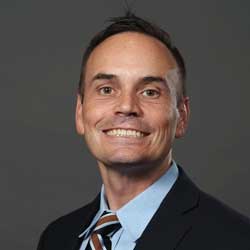
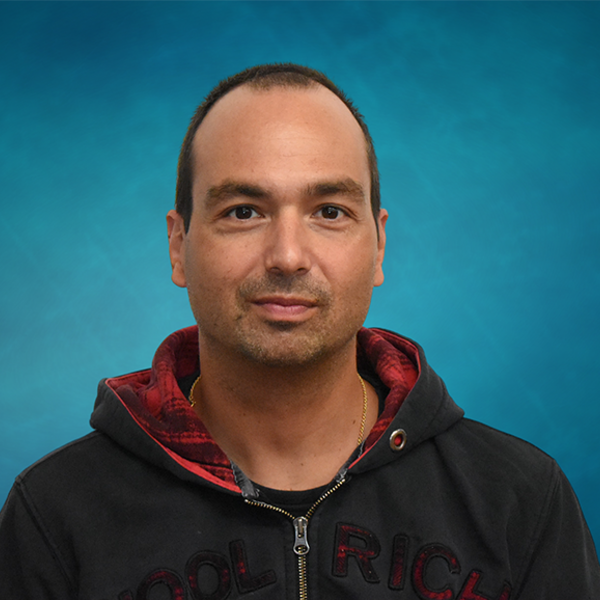
Dr. Jordan Shropshire is the Lawrence Minto Sylvestre Endowed Chair in Computing and a Professor in the Information Systems and Technology Department at the University of South Alabama's School of Computing. His academic journey includes a Ph.D. in Management Information Systems from Mississippi State University (2008) and a B.S. in Business Administration from the University of Florida (2004). Dr. Shropshire's research focuses on cybersecurity, data center management, cloud computing, IoT ecosystems, and systems architecture. His work addresses critical challenges such as post-quantum cryptography, embedded system vulnerabilities, and compliance frameworks for autonomous systems. He has also contributed to studies on developer platform risks, real-time operating system security, and AI-driven systems hardening. Education: Ph.D. – Management Information Systems, Mississippi State University, 2008 B.S. – Business Administration, University of Florida, 2004 His teaching career spans roles at the University of South Alabama (2008–present) and Georgia Southern University, where he held tenure (2008–2014). His publications emphasize practical cybersecurity solutions, including tools for drone compliance and frameworks for secure cloud infrastructure. He has also explored behavioral aspects of security policy adherence and IT professional retention. Dr. Shropshire's work often bridges theoretical research and real-world implementation, with a focus on mitigating emerging threats in cloud systems, IoT, and embedded devices. His research has been supported by grants such as the NSF TWC Small Grant for hypervisor security detection techniques.
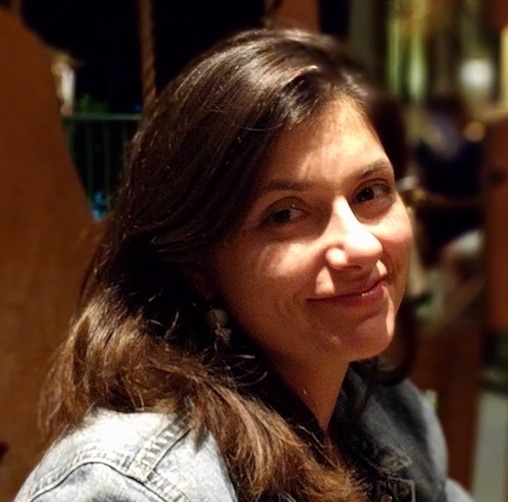
Susanne Lloyd-Jones is a Cyber Security CRC Post-Doctoral Fellow at the UNSW Allens Hub for Technology, Law and Innovation, affiliated with the School of Law, Society & Criminology. Her research focuses on cyber security law, critical infrastructure regulation, national security frameworks, and the legal implications of quantum computing. She holds a PhD (UNSW), LLM (UNSW), and multiple legal qualifications, with significant experience across academia, government (e.g., Australian Communications and Media Authority), and industry (e.g., Foxtel). Her work bridges public law, regulatory theory, and political economy to address challenges in national security obligations of regulated industries. Key projects include analyzing regulatory overlap in cloud services and developing quantum-resilient legal frameworks. She has contributed to high-profile submissions on Australia’s cyber security strategy and critical infrastructure protection. Recent engagements include presentations at CyberCon 2022, PlatGov 2023, and RUMLAE’s Digital Resilience Conference. Publications span cyber security policy, quantum computing governance, and telecommunications regulation. She is writing a book on national security regulation in Australia’s communications sector and actively collaborates with institutions like the Centre for Media Transition at UTS.
Athinagoras Skiadopoulos is a computer systems researcher at Stanford University's School of Engineering, Department of Computer Science, focusing on the intersection of database systems and operating systems. His work centers around the innovative DBOS (Database-oriented Operating System) project and large-scale machine learning infrastructure, collaborating with prominent researchers including Christos Kozyrakis and Michael Stonebraker. His primary research interests include: Database-oriented Operating Systems (DBOS) Distributed systems for large-scale machine learning Resource management and optimization in data-intensive systems Transaction processing and data governance High-performance networking for accelerated computing Fault tolerance in distributed training systems Skiadopoulos's research trajectory shows a clear evolution from foundational DBOS architecture toward applications in large-scale machine learning systems. His early publications established the DBOS framework for operating system design using database principles, while his recent work addresses critical challenges in distributed training of massive neural networks. Systems like ReCycle and SlipStream demonstrate innovative approaches to pipeline adaptation and failure recovery during distributed training. His most recent 2025 work on accelerating Mixture-of-Experts training represents the cutting edge of efficient large model training infrastructure. Through his research, Skiadopoulos has established himself in both the database and systems research communities, with publications in premier venues including SOSP, OSDI, VLDB, and CIDR. His work consistently bridges theoretical database concepts with practical systems implementations, demonstrating how database techniques can solve real-world systems challenges in modern computing environments.
Dr. Shaun Aghili serves as an Assistant Professor in the Faculty of Management at Concordia University of Edmonton (CUE), bringing extensive industry experience from the financial services sector. His academic focus centers on internal audit, fraud prevention, and information systems assurance within financial institutions. His educational credentials include: D.B.A. from Argosy University, USA (2003) M.Sc. in Financial Planning and Wealth Management from College for Financial Planning, USA (1999) B.A. from The Catholic University of America, USA (1985) Dr. Aghili's research integrates Risk Management , Cybersecurity , and Financial Services through frameworks like COBIT 5 and Lean Six Sigma. His work develops methodologies for fraud detection using data analytics, improves information systems audit protocols, and addresses security challenges in cloud computing and biometric authentication systems. Notable contributions include operational audit frameworks and corporate forensics governance models. His publication trend (2009-2014) reveals a strategic shift toward interdisciplinary solutions combining information security standards with financial risk management. This evolution demonstrates increasing focus on automated forensic approaches, e-government security models, and cloud computing SLA evaluations within financial contexts. Award recognitions include: IMA Certificate of merit for advancing management accounting literature 2009 IMA merit award for Lean Six Sigma audit framework research As a doctoral advisor, Dr. Aghili has successfully guided three PhD candidates through dissertation research on leadership dynamics in Taiwanese hospitality, workers' compensation fraud patterns, and RFID privacy implications in identification systems. His professional certifications—including CISSP, CISA, and CIA—enhance his industry-relevant research approach within the ISSAM Research Cluster. He actively contributes to CUE's ISSAM (Information Systems Security and Assurance Management) Research Cluster, focusing on cybersecurity risk mitigation strategies for financial institutions through collaborative framework development.
Hongxin Hu is a Professor and Associate Chair in the Department of Computer Science and Engineering at the University at Buffalo, State University of New York (SUNY). His research spans security, networking, and machine learning, with publications across top conferences including security (S&P, CCS, USENIX Security, and NDSS), networking (SIGCOMM and NSDI), machine learning (NeurIPS, ICML, and EMNLP), and human-computer interaction (CHI and CSCW). His work has been funded by NSF (SaTC, CNS, IIS, OAC, SOC), USDOT, VMware, Amazon, Google, and Dell. Dr. Hu earned his PhD in Computer Science and Engineering from Arizona State University in 2012. His academic journey has led him to become a prominent researcher in cybersecurity with a strong publication record and significant research impact. Dr. Hu's research interests encompass a wide range of topics at the intersection of security, networking, and artificial intelligence. His work focuses on Emerging Network Technologies and Security (5G/Future-G, NFV, SDN, Edge computing), Machine Learning for Security and Privacy , Security and Privacy in IoT and Cyber-Physical Systems , and AI for Social Good (addressing online abuse, unsafe children's games, and cyberbullying). His interdisciplinary approach has enabled him to tackle complex security challenges through innovative solutions that combine networking expertise with machine learning techniques. His recent publications demonstrate a strong trend toward applying large language models and advanced machine learning techniques to security challenges, particularly in content moderation, vulnerability detection, and privacy protection. The research spans multiple domains including voice assistant security, IoT security, network security, and social media safety, showing a consistent pattern of addressing real-world security problems with cutting-edge technical approaches. IEEE Big Data Security Senior Research Award (2025) ACM SACMAT Test-of-Time Award (2024) NSF CAREER Award (2019) Multiple Best Paper Awards from ACM ASIACCS (2022), ACSAC (2020), IEEE ICC (2020), and ACM SIGCSE (2018) Amazon Faculty Research Award (2022) First Place Award in ACM SIGCOMM 2018 Student Research Competition Dr. Hu has successfully advised multiple PhD students, including Nishant Vishwamitra who joined UT San Antonio as a tenure-track Assistant Professor. His research has been generously funded by major agencies and industry partners. As an active member of the academic community, he serves as Associate Editor for IEEE Transactions on Dependable and Secure Computing and Computers & Security, and has held numerous leadership roles in major security conferences including TPC Co-Chair for ASONAM 2025 and IWSPA 2024/2025. Dr. Hu leads a vibrant research group that has produced significant contributions in network security function virtualization, intrusion detection systems, and privacy-preserving technologies. Current projects include developing LLM-assisted vulnerability detection systems, defenses against jailbreak attacks on large language models, and security mechanisms for emerging networking technologies. His team's work on IoT security, voice assistant applications, and online content moderation has received wide recognition and press coverage.
Bina Ramamurthy is a Professor of Teaching in the Department of Computer Science and Engineering at the University at Buffalo, affiliated with the School of Engineering and Applied Sciences. With over three decades of experience in STEM education and research, her work focuses on blockchain technology, data-intensive computing, and decentralized systems. PhD in Electrical Engineering, University at Buffalo (1997) Her research centers on blockchain application development, smart contracts, and decentralized finance (DeFi). She directs the Blockchain ThinkLab at UB and developed the SUNY-approved certificate program in Data-Intensive Computing. Her Coursera MOOC specialization on Blockchain (launched 2018) has enrolled over 400,000 learners globally. Selected for prestigious recognition: SUNY Chancellor’s Award for Excellence in Teaching (2019) UB President's Circle Award (2017) She has secured multiple NSF grants, including as Principal Investigator on four HDR/IIS-CISE grants, and co-led six SUNY Instructional Technology grants. Her teaching emphasizes hands-on learning, with in-person lectures and practical exercises in courses like CSE4/506 and CSE4/526.
Lillian Wang is a Lecturer at the School of Information Technology, Monash University Malaysia. She holds a PhD in IT from Multimedia University (2020), MEngSc from Multimedia University (2012), and BSc (Hons) in Software Engineering (2006). With 15+ years of experience, she has served as an educator, trainer in educational technologies (e.g., Google Education, Blended Learning), and reviewer for international journals/conferences. Research focuses on Cloud e-learning, IoT in wastewater treatment, and security/privacy in educational platforms. Contributions to UN SDGs: Education (4) and Clean Water & Sanitation (6). Active in IoT-based solutions for healthcare (medication dispensing), smart attendance systems, and environmental monitoring. Her work includes 19+ peer-reviewed publications and collaborations across multiple disciplines. She is currently accepting PhD students in VR in education and AI/ML in wastewater management.
Magdalini Eirinaki is a Professor and Academic Program Coordinator for the MS in Artificial Intelligence at San José State University's Charles W. Davidson College of Engineering. With a career spanning two decades, her work bridges recommender systems , machine learning , and smart city applications . PhD in Computer Science (2006), Athens University of Economics and Business MSc in Advanced Computing (2000), Imperial College London BSc in Computer Science (1998), University of Piraeus Her research focuses on machine learning and recommender systems with extensions to generative AI , privacy-sensitive algorithms , and social network analysis . Recent publications explore federated learning , multi-resolution diffusion models , and autonomous network defense using reinforcement learning. Current projects include NSF-funded CollaborAIte (2024) EU Horizon/Marie Sklodowska-Curie's MUSIT (2024) IBM SkillsBuild Cloud Credits for Sustainability (2024) She has received multiple teaching and mentorship awards including: Newnan Brothers Award (2019) Applied Materials Award (2017) 5-time SJSU Distinguished Faculty Mentor Award Dr. Eirinaki advises students in AI , ML , and smart city projects, with recent graduates presenting at IEEE CAI (2025) and CSU Conference (2025).
Vasit Sagan is a Professor of Geospatial Science and Computer Science at Saint Louis University's School of Science and Engineering . He directs the Remote Sensing Lab , serves as Deputy Director of the Taylor Geospatial Institute , and holds the role of Associate Vice President for Geospatial Science in the Office of the Vice President for Research and Partnership. Education: Ph.D. from Peking University (2006) Leadership: Director of Remote Sensing Lab; Deputy Director, Taylor Geospatial Institute Research Interests center on geospatial computer vision , integrating remote sensing, photogrammetry, machine learning/AI, and imagery analysis. His work addresses critical challenges in food and water security , ecosystem monitoring , and social instability at scales ranging from local to global. He has secured over $50M in grants as PI/Co-PI and authored 150+ peer-reviewed publications. Recent Publications highlight his interdisciplinary approach, with studies on crop yield prediction via satellite/UAV imagery, disease detection in wheat, urban tree species classification, and deep learning applications for water quality monitoring. These works span agricultural technology , environmental science , and security informatics , emphasizing data fusion and AI-driven geospatial analysis. Scientific Awards include: 2021 Best Paper Award (Remote Sensing) Best Paper Award (International Archives of Photogrammetry) Advising and Grants : He has mentored numerous doctoral, master's, and postdoc researchers, and led major funded projects focused on geospatial AI and environmental sustainability. Labs and Facilities : Remote Sensing Lab at Saint Louis University and collaborative work with the Taylor Geospatial Institute.
Daniele Bringhenti is a Fixed-term Researcher at the Department of Control and Computer Engineering (DAUIN) , Politecnico di Torino , and also holds external teaching roles at the University of Eastern Piedmont . His work focuses on Cybersecurity , Network Security , and Security Automation , with expertise in Distributed Systems , Theoretical Computer Science , and Formal Methods . His research integrates ERC sectors PE6_2 (Distributed Systems), PE6_5 (Security, Privacy), and PE6_4 (Theoretical Computer Science). Recent publications address automated cybersecurity management , firewall policy optimization , and intent-based network isolation . Scientific Awards include the ICICS Best Demo Award (2022) . He serves as Guest Editor for the Journal of Network and Systems Management (2024-2025) . His teaching roles span Master's and Bachelor's programs , including courses on Distributed Systems Programming , Threat Intelligence , and Network Security .
David Pointcheval is a CNRS Researcher at the Computer Science Department of École Normale Supérieure (ENS) in Paris, France. Since 2005, he has led the Cryptography Team, which has been associated with Inria since 2008. He became the Chair of the Computer Science Department at ENS in 2017. Education: PhD in Computer Science (1996) from University of Caen. His research focuses on the provable security of cryptographic primitives and protocols. He has contributed to privacy-preserving aggregation techniques for data from multiple sources, including work on homomorphic encryption and functional encryption. He has served as program chair for major cryptography conferences (PKC 2010, Eurocrypt 2012) and held leadership roles in the International Association for Cryptologic Research (IACR) as one of nine elected directors for nine years. He holds over 150 international publications and a dozen patents. Scientific Awards: ERC Advanced Grant (Privacy for the Cloud)
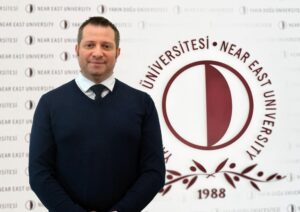
Prof. Dr. Fadi AL-TURJMAN serves as the founding Dean of the Faculty of AI and Informatics at Near East University (NEU), Cyprus. He holds multiple leadership roles including Head of the Software Engineering Department and Director of the AI and Robotics Institute and the International Research Center for AI and IoT. With a PhD in Computer Science from Queen’s University (2011), he specializes in AIoT systems, wireless networks, and blockchain integration. Affiliation: Near East University Leadership: Founding Dean for AI and Informatics, Director of AI & Robotics Institute Research Focus: His work bridges Artificial Intelligence of Things (AIoT) , Blockchain Applications , and Smart Networking . He explores cybersecurity frameworks for smart cities, quantum state optimization techniques, and novel AI-driven solutions for healthcare, agriculture, and energy systems. Key Article Trends: Recent publications emphasize Transformer models for environmental monitoring, blockchain-enabled security protocols , and evolutionary algorithms for resource optimization. His research spans interdisciplinary domains including medical diagnostics, vehicular networks, and sustainable infrastructure. Scientific Awards: Lifetime Golden Award of Dr. Suat Gunsel (2022) Multiple Best Research Awards at International Venues Labs & Teams: Directs the International Research Center for AI and IoT at NEU, leading multidisciplinary teams in developing advanced networking technologies and AI-driven solutions for global value chain applications.
Dong Xie is an Assistant Professor in the field of Computer Science and Engineering , with a focus on database systems and privacy-preserving computation. His work spans indexing techniques, oblivious RAM, and high-throughput data processing. Key Research Areas: Encrypted databases, access pattern privacy, dynamic data structures, spatial analytics. Collaborations: Active in database optimization and security, with external partnerships reflected in recent publications. Over the past decade, Dong Xie has contributed to advancements in oblivious query processing , index dynamization , and spatial data management . His research addresses challenges in secure data access , concurrent updates , and storage efficiency , particularly for cloud and distributed environments. Recent publications highlight his work on low-latency transaction scheduling (2025), dynamic sampling indexes (2023), and SSD-based storage optimization (2022). His articles explore intersections of privacy , performance , and scalability .
Dr. Giulia Rubino is a Royal Commission 1851 Fellow and Proleptic Lecturer in the School of Physics at the University of Bristol. Her academic credentials include a BSc, MSc, and PhD, establishing her expertise in quantum physics and related disciplines. She maintains an active research presence with numerous publications and collaborations across international institutions. Dr. Rubino's educational background, though not detailed in specific institutions, demonstrates a strong foundation in physics through her BSc, MSc, and PhD qualifications. Her career progression has led to her current prestigious position at the University of Bristol, where she contributes significantly to quantum research. Her research program spans three interconnected pillars: Indefinite Quantum Causality , where she explores how causal structures might need to be both dynamic (as required by general relativity) and indefinite (due to quantum theory); Integrated Photonics Technologies , where she applies quantum optics principles to develop sophisticated photonic circuits; and Quantum Thermodynamics , where she addresses fundamental questions about defining work in quantum systems. Her work on indefinite causal structures challenges conventional space-time understanding, with significant implications for both foundational physics and quantum information processing. In experimental physics, she bridges quantum foundations and technologies through state-of-the-art photonic implementations. Her theoretical contributions to quantum thermodynamics address critical gaps in understanding work definitions for nanoscale quantum devices. Dr. Rubino's publication record reveals a clear research trajectory focused on quantum foundations and information processing. Her most recent work (2024-2025) shows increasing sophistication in quantum thermodynamics and causal structure experiments, with notable papers on quantum work fluctuation frameworks and quantum key distribution. The consistent theme across her publications is the exploration of quantum phenomena that challenge classical notions of causality, time, and thermodynamics, often with practical applications to quantum technologies. Her scientific recognition includes the prestigious Royal Commission 1851 Fellowship , awarded to exceptional early-career researchers with potential for significant contributions to their fields. This fellowship supports her innovative research at the University of Bristol and recognizes her standing in the quantum physics community. While specific student names aren't listed in the available information, Dr. Rubino's position as Lecturer suggests active involvement in mentoring graduate students. Her collaborative research approach is evident in her numerous co-authored publications with researchers from multiple institutions, indicating strong research networks. Her grant portfolio likely includes the Royal Commission fellowship and potentially other research council funding supporting her quantum physics investigations. Dr. Rubino is affiliated with the Quantum Engineering Technologies and Theoretical Physics research groups at the University of Bristol. Her work contributes to the university's strong reputation in quantum information science, particularly in the experimental realization of quantum phenomena that challenge conventional understanding of space-time and thermodynamics. She appears to be involved in sophisticated photonic circuit development and quantum information processing experiments that require specialized laboratory facilities.
Giorgio Scorzelli is a researcher at the University of Utah, serving as Director of Software Development for the Center for Extreme Data Management, Analysis, and Visualization (CEDMAV) and the National Science Data Fabric (NSDF) . He specializes in extreme data management, scientific visualization, and computational topology, with a focus on scalable solutions for climate science, materials science, and neuroscience datasets. His work emphasizes democratizing data access through platforms like OpenVisus , enabling efficient analysis of petascale and exascale data. Key contributions include orchestrating cyberinfrastructure, optimizing parallel I/O, and developing real-time visualization systems for heterogeneous resources. Notable scientific contributions include the NSF Grant #2127548 for NSDF development . His projects integrate cloud computing, geo-distributed storage, and FAIR digital objects to lower barriers to data democratization. Giorgio's research spans multi-resolution algorithms , computational topology , and 3D geometric modeling , with applications in infrastructure security, archaeological reconstruction, and biomedical imaging. His work bridges abstract mathematical frameworks (e.g., Boolean algebras, chain complexes) with practical software solutions.