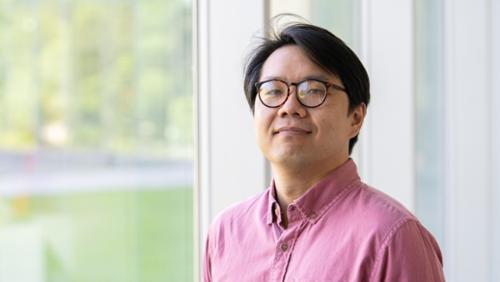
Daniel S. Berger is a Principal Researcher at Microsoft's Azure Systems Research Group in Redmond, focusing on the efficiency, sustainability, and reliability of cloud platforms . He is also an Affiliate Assistant Professor at the Paul G. Allen School of Computer Science at the University of Washington, where he teaches graduate classes. His research spans systems stack innovations for sustainability , including work on memory tiering , repair operations , and cooling systems (Zissou). He leverages system prototyping , simulation , and statistical modeling in his work, often collaborating with PhD students and postdocs from institutions like Columbia, University of Toronto, CMU, and Princeton. Recent publications highlight his leadership in CXL-based memory management , carbon-efficient cloud design , and latency-aware caching . His tools, such as Belatedly and FOO , have demonstrated significant improvements in cache performance and latency optimization. Best Paper Awards: USENIX OSDI 2023, HotCarbon 2023, ACM SOSP 2021. Distinguished Paper: ASPLOS 2023. His work has been integrated into Apache Traffic Server and Microsoft production systems , with open-source tools and datasets released for reproducibility. Collaborations include hardware and OS development teams within Azure and academia.
Claudia Loebbecke is a full Professor holding the Chair of Media and Technology Management at the University of Cologne's Faculty of Business, Economics, and Social Sciences. Her career spans over two decades of academic leadership combined with extensive industry engagement, including positions at Copenhagen Business School, Erasmus University Rotterdam, and numerous visiting professorships at institutions including MIT, LSE, and LUISS Guido Carli University. Her educational foundation includes a PhD in Business Administration (summa cum laude) from the University of Cologne (1995), an MBA from Indiana University (1991, Top 3% of class), and a Diplom-Kauffrau (Master in Business Administration) from the University of Cologne (1989, Top 1% of class). She has augmented her credentials with executive education from MIT (Artificial Intelligence Strategy, Management Leadership) and UNESCO/IEEE (AI and Rule of Law). Loebbecke's research centers on digital transformation , technology management , and business model innovation , with particular focus on societal implications of technological change. Her work bridges theoretical rigor with practical application, evidenced by her extensive consulting engagements with organizations including McKinsey & Company and Deutsche Telekom. She maintains fluency in German (native), English, and French, with working knowledge of Spanish, Dutch, and Danish. Her publication portfolio demonstrates consistent impact in information systems research, with her 2015 paper on societal transformation through digitization ranking among the top 1% of cited German management papers. Her research trajectory shows evolution from foundational work on retail technology implementation (2004) through SME collaboration frameworks (2001) to contemporary explorations of AI governance and big data analytics. European Academy of Sciences and Arts (EASA) Elected Member (2018) AIS Fellow and former President (2012) Marquis Lifetime Achievement Award (2018) Top Cited JSIS Paper 2017 Multiple Best Paper awards at SIM, ECIS, and EFMD Loebbecke actively transfers knowledge through board memberships including WDR (German Public Broadcaster), WIK Scientific Advisory Board, and McKinsey Quarterly Executive Panel. Her citizen science initiatives at the University of Cologne demonstrate commitment to public engagement, particularly through courses on media-enhanced facts and app development for senior citizens and children. Current research focuses on AI governance frameworks and the societal implications of digital transformation.
Prof. Dr.-Ing. André Nitze is a faculty member at the Brandenburg University of Technology in the Department of Economics . His research focuses on Internet of Things (IoT) , Digital Business Models , Software Architectures , Cloud Computing , Mobile Computing , and Predictive Analytics . He leads research projects on municipal LoRaWAN infrastructure, rural on-demand transport systems, and user-centered digitalization for sustainable development. Area of Expertise: IoT Applications, Software Engineering, Digital Transformation Current Research: Sustainable Municipal LoRaWAN, Rural Mobility Solutions Projects: risKI - KatKomm (2024-2026): Protocol development for disaster communication InNoWest (2023-2027): Subproject leader for digital sustainability OSLO (2023): Rural on-demand transport software architecture Awards: Best Paper Award at ICDS 2024 for work on LoRaWAN infrastructure Education & Supervision: M.Sc. and B.Sc. in Business Informatics Supervised over 15 theses including topics on GIS analysis, sensor networks, and AI applications
Siobhán Clarke is a Professor at the School of Computer Science and Statistics, Trinity College Dublin, specializing in software systems for smart urban environments . Her work addresses dynamic software adaptation in large-scale, mobile IoT ecosystems , with a focus on QoS optimization and collaborative agent models . Director, Enable : National SFI IoT Research Programme Director, Future Cities Centre for Smart & Sustainable Cities Co-Lead, ADVANCE : SFI Centre for Advanced Networks Co-PI, CONNECT (Future Networks) and Lero (Software Research) Her research spans smart city infrastructure , edge computing , and multi-agent coordination , informed by 15+ years of publications on service-oriented architectures , QoS prediction , and self-adaptive systems . Key project contributions include DIVERSIFY (2016) and TRANSFoRm (2015). Scientific awards include election to the Royal Irish Academy (2023) and a Best Student Paper at IEEE ICWS 2011. She has supervised 20+ PhD/MSc students, including Fan Li (2020: SLA Negotiation Systems), Gary White (2020: IoT QoS Forecasting), and Andrei Palade (2019: Stigmergic Optimization).
Edgar Vadimovich Vatamanitsa serves as an Assistant Professor in the Department of Computer Science at Chernivtsi National University, specializing in cross-platform software development and cloud computing applications. His work bridges academic research with industry practice through active engagement in both university teaching and commercial software development. Education: Yuriy Fedkovych Chernivtsi National University (2013): Systems Software, Software Engineer Dr. Vatamanitsa's research centers on Java/Android pattern development, client-server architectures, and distributed systems. He pioneers practical implementations of design patterns in cloud environments, with significant contributions to optical field simulation, semiconductor modeling, and intelligent transportation systems. His methodology emphasizes cross-platform efficiency and real-world applicability of theoretical computing concepts. Analysis of his 2022-2024 publications reveals dominant themes in cloud-based optical computation (AWS infrastructure), Java pattern implementation for Android, and cross-platform solutions for traffic management and semiconductor physics. His work consistently integrates distributed systems with domain-specific challenges in optics, printing technology, and educational analytics, demonstrating exceptional versatility across engineering disciplines. Professional Activities: Member of Bukovina Information Technology Cluster (since 2022) Senior Software Developer at EPAM SYSTEMS Certificate in Cross-platform Programming and Information Security (Ternopil National Technical University, 2023) Tech Summer Bootcamp for Teachers participant (2023)
Dr. Robert Eadie is a Senior Lecturer in Construction Management at Ulster University's Belfast School of Architecture and the Built Environment. He serves as MSc Civil and Infrastructure Engineering Course Director and Academic Lead for Civil Engineering Apprentices. Biography: 20 years in construction industry prior to academia Research Focus: BIM, procurement, pedagogy, and sustainable construction practices Professional Roles: Fellow of Engineers Ireland, Chartered Committee Member of CIHT Northern Ireland Accomplishments: 89+ peer-reviewed publications, 11 scientific awards His work contributes to UN Sustainable Development Goals through social responsibility in construction procurement. Recent research explores point cloud solidification for BIM, virtual reality applications, and IT project management frameworks. Key Research Areas Building Information Modeling (BIM) automation Sustainable procurement practices Construction pedagogy innovation Public-private partnership performance frameworks Scientific awards include: 2018 Doctor Honoris Causa (European Technical University) 2016 Distinguished Teaching Fellowship 2014 Engineering Council UK Registration 2018 Bulgarian Scientific and Technical Union Award
Roy Sterritt is a Lecturer in Informatics at the School of Computing, Ulster University. His research focuses on autonomic computing, robotics, machine learning, and cybersecurity. He has contributed extensively to decentralized systems and fault management in autonomous environments. Research Interests: Roy’s work spans autonomic computing, robotics, and AI, with applications in cloud systems, space exploration, and drone fleets. He emphasizes self-adaptation, fault tolerance, and security protocols. Scientific Awards: Highly Ranked Scholar in Autonomic Computing (2024) Multiple Best Paper Awards (2016–2023) Recent Trends: His recent publications highlight autonomic solutions in cloud security, robot swarms, and space systems, leveraging machine learning and adaptive communication protocols. Projects & Collaborations: Roy has led projects like SPAAACE-Ware and DEL CAST AWARD, focusing on autonomic analytics and apoptotic computing. He organizes international conferences on autonomous systems and collaborates globally.
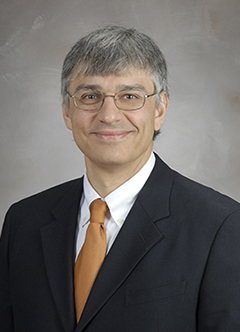
Elmer Bernstam, MD, MSE, is Professor of Biomedical Informatics and Internal Medicine at the University of Texas Health Science Center at Houston (UTHealth Houston). He holds the Reynolds and Reynolds Professorship in Clinical Informatics and serves as Associate Dean for Research at the McWilliams School of Biomedical Informatics while maintaining a joint appointment with the McGovern Medical School. Dr Bernstam is board-certified in internal medicine and continues to practice, and he directs the Biomedical Informatics Group within UTHealth’s Center for Clinical and Translational Sciences (CCTS). Education MS, 2001 – Biomedical Informatics, Stanford University Medical Center MSE, 1999 – Computer Science and Engineering, University of Michigan College of Engineering MD, 1995 – Integrated Medical-Premedical Program, University of Michigan Medical School BSE, 1992 – Computer Engineering, University of Michigan College of Engineering BS, 1992 – Biomedical Sciences and Psychology, University of Michigan College of Literature, Science, and the Arts Research Focus Dr Bernstam’s research centers on clinical and translational informatics . He and his team investigate how to improve health care through better information management, with specific emphasis on: Information retrieval from biomedical literature and EHRs Consumer informatics and online health information quality Clinical decision support systems, especially for personalized cancer therapy Health data warehousing, interoperability, and large-scale phenotyping Natural language processing for clinical narratives and pharmacovigilance Under his leadership, the UTHealth clinical data warehouse now curates longitudinal data for more than 400,000 patients, serving as a foundational resource for multi-institutional research and learning health-system initiatives. Scientific Awards & Honors John P. McGovern Outstanding Teacher Award (2004) – conferred by student vote at McWilliams School of Biomedical Informatics Fellow, American College of Physicians Fellow, American College of Medical Informatics Grants, Labs & Teams Dr Bernstam leads the Biomedical Informatics Group housed in UTHealth’s Center for Clinical and Translational Sciences. The group’s portfolio includes federal and foundation grants that fund the UTHealth clinical data warehouse, national collaboratory projects such as the ENACT network, and work on AI-driven decision support tools for precision oncology. The lab’s current initiatives focus on (1) scalable infrastructure for multi-site EHR-based research, (2) fairness and bias evaluation in AI models, and (3) harmonization of social determinants of health data across Texas CTSA institutions. Clinical & Educational Roles In addition to directing research programs, Dr Bernstam maintains an active internal-medicine practice and mentors graduate students, clinical informatics fellows, and junior faculty. His teaching emphasizes evidence-based use of informatics tools and translational approaches that move innovations from bench to bedside.
Athanasios D. Panagopoulos is a Full Professor at the School of Electrical and Computer Engineering, National Technical University of Athens (NTUA), specializing in Satellite & Space Communications , Antennas and Propagation , and Quantum Communication . He leads the Division of Information Transmission Systems and Material Technology, with a focus on wireless systems, machine learning, and 5G/6G technologies. Born in Athens (1975), received summa cum laude Diploma and Dr. Engineering from NTUA (1997, 2002). Former roles: part-time Assistant Professor (2003-2007), head of Satellite Division at Hellenic Authority for Information Security (2005-2008). Research Trends emphasize Quantum Key Distribution (QKD) , Reconfigurable Intelligent Surfaces , and Deep Learning Applications in satellite networks. His work bridges atmospheric propagation effects with terrestrial-satellite convergence , including AI-driven excess attenuation prediction and UAV channel modeling. Scientific Awards include URSI General Assembly Young Scientist Award (2002, 2005) Best Paper Awards: IEEE RAWCON 2006, IEEE ISWCS 2015 Grants & Collaborations : Principal Investigator for EU/ESA R&D programs, with editorial roles at IEEE Transactions on Antennas and Propagation, and Elsevier Physical Communication. Member of ITU-R , ETSI Study Groups , and IEEE (Senior) .
Dr. Ramon Antonio Rodriguez Zalepinos is an Associate Professor at the Department of Software Engineering, Faculty of Computer Science, National Research University Higher School of Economics (HSE). With 16+ years of scientific and teaching experience, he specializes in geospatial data systems, distributed databases, and high-performance computing. Doctor of Science in Computer Science (2024) Candidate of Technical Sciences (2013) Master's in Computer Science (2008, Donetsk National Technical University) His research focuses on geospatial array databases , distributed systems , and Big Earth Data engineering , particularly through his ChronosDB and Quantum Tensor DBMS projects. He has pioneered cloud-native solutions for multi-terabyte environmental datasets and developed novel approaches for in-database road traffic simulations. Key publication trends show 7+ years of contributions to VLDB and SIGMOD conferences, with special emphasis on: Quantum-enhanced geospatial processing Web-based array database systems Cellular automata integration High-speed raster data aggregation Scientific recognition includes: Best Teacher award (2017-2021, 2023) HSE Personnel Reserve member Additional post-doctoral funding (2024-2027) Multiple publication bonuses (2019-2023) He supervises student research in geospatial data science and leads projects on satellite data processing systems, with implementations at major institutions including Amazon and Planet Labs.
Chris Wiley serves as the Physical Sciences and Engineering Research and Data Services Librarian and Associate Professor at the University of Illinois at Urbana-Champaign. Based at the Grainger Engineering Library, he focuses on data management, research practices, and digital accessibility across scientific disciplines. Research Interests: Specializing in data governance and stewardship across engineering and physical sciences Advancing FAIR data principles and open repository systems Developing accessible data visualization tools Researching data privacy frameworks for scientific contexts Exploring cloud storage limitations for academic institutions Creating educational resources for data management transitions Contact: Email: cawiley@illinois.edu Phone: 217-300-5801 Location: Grainger Engineering Library, 1301 W. Springfield Ave., Urbana, IL 61801
Dr. Belén Bermejo González serves as Tenured Senior Lecturer in the Department of Computer Architecture and Technology at the University of the Balearic Islands' Faculty of Mathematics and Computer Science. Her institutional affiliations include: Core member of the ACSIC Research Group (Architecture and Behaviour of Computer and Telecommunication Systems) Chair of Women in Engineering for IEEE Spain section Former research collaborator at Newcastle University and University of Seville Her research program centers on energy-performance optimization in virtualized cloud environments, with recent expansion into surveillance capitalism's computational energy footprint. This work integrates hardware-level architecture analysis with systemic examination of data economy impacts, positioning her at the intersection of sustainable computing and socio-technical systems. Teaching responsibilities span critical courses including: Performance Evaluation of Information Systems (undergraduate) Advanced Architectures and Cloud Computing Governance of ICT and Research Management (Master's level) Her scholarly output features numerous JCR-indexed publications and conference contributions, with ongoing projects examining energy metrics in modern data infrastructure. As IEEE Women in Engineering Chair, she actively promotes gender diversity through national initiatives while maintaining rigorous academic productivity in computer systems research.
El Mustapha Mouaddib is a Professor in the Perception and Robotics department at Universite de Picardie Jules Verne, affiliated with Laboratory Heudiasyc (UMR CNRS 7253). His research bridges advanced robotics with cultural heritage preservation, focusing on developing novel computer vision techniques for complex documentation challenges. His primary research interests include omnidirectional vision systems , hyperspectral imaging , and 3D reconstruction methodologies , with significant emphasis on applications for cultural heritage documentation. Mouaddib's work particularly addresses challenges in temporal illumination compensation , laser scanning registration , and multi-scale digitization of historical structures, as evidenced by his extensive Notre-Dame de Paris cathedral research. Analysis of his 15 most recent publications reveals a consistent trajectory toward heritage robotics - developing specialized computer vision algorithms for cultural preservation. His work demonstrates increasing sophistication in integrating multi-modal sensor data (TLS, hyperspectral, RGB-D) solving illumination challenges in historical documentation developing adaptive robotic systems for complex environments Notably, his Notre-Dame research forms a cohesive body of work examining structural changes through advanced 3D analysis. Mouaddib actively participates in major interdisciplinary projects including SAMURAI , ASSIDUITAS , SCANBOT , ADAPT , and SUMUM , which focus on heritage digitization and robotic exploration. His collaborative approach is evident through extensive co-authorship with institutions like CNRS and international partners in Japan and Italy. His laboratory work centers on the E-Cathedrale initiative, creating comprehensive digital twins of Gothic cathedrals through multi-temporal and multi-scale documentation. This involves developing specialized hardware (like the HDROmni camera system) alongside novel algorithms for processing challenging heritage environments.
Edris Noori serves as the Director of Information Technology at Herkimer College, where he also holds an adjunct faculty position as an Instructor in Information Science. Additionally, he is an Adjunct Professor of Graduate Cybersecurity at New York University and an executive board member of SUNY ITEC. His educational qualifications are: Master of Science in Cybersecurity from New York University Bachelor of Science in Cybersecurity with a concentration in Forensics from Norwich University Associate of Applied Science in Criminal Justice and Cybersecurity from Herkimer County Community College With over 18 years of experience, Mr. Noori specializes in cybersecurity, IT infrastructure, and digital transformation. His technical expertise encompasses penetration testing, risk management, enterprise security architecture, and cloud computing, with a focus on strengthening cybersecurity resilience in academic settings. He is certified as a Global Information Assurance Penetration Tester (GPEN), Cisco Certified Network Professional (CCNP), Cisco Certified Design Professional (CCDP), Cisco Certified Security Professional (CCSP), Microsoft Certified Systems Engineer (MCSE), Cisco CyberOps Associate, and CompTIA Security+. In his academic roles, he mentors graduate students in cybersecurity at NYU and teaches information science courses at Herkimer College.
Han Dong is an Assistant Professor in the Department of Computer Science at Hamilton College, appointed to the faculty in 2025. His research bridges software and hardware systems to address sustainability challenges in large-scale computing environments. His educational background includes: Ph.D. in Computer Science from Boston University M.S. in Computer Science from University of Maryland Baltimore County B.S. in Computer Science from University of Maryland Baltimore County Dong specializes in optimizing datacenter-scale systems through machine learning-driven approaches to energy-performance trade-offs. His work targets fundamental improvements in software-hardware heuristics for sustainable computing infrastructure, with applications in distributed systems and operating system design. This research addresses critical industry needs for reducing the environmental impact of cloud-scale computing while maintaining performance. His professional recognition includes: Oak Ridge Institute for Science and Education (ORISE) Fellowship at the Food and Drug Administration Prior to joining Hamilton College, Dong held research positions at Red Hat (3 years) and served as a postdoctoral associate at Boston University. His technical contributions are reflected in active open-source projects related to network drivers and systems optimization, as evidenced by his GitHub repository activity.