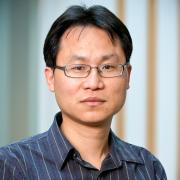
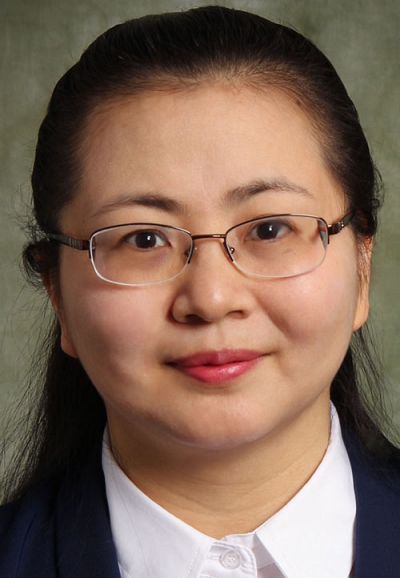
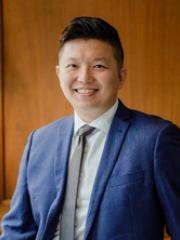
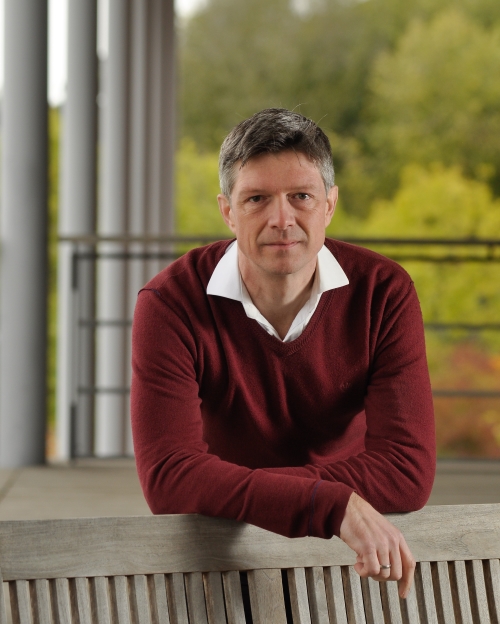
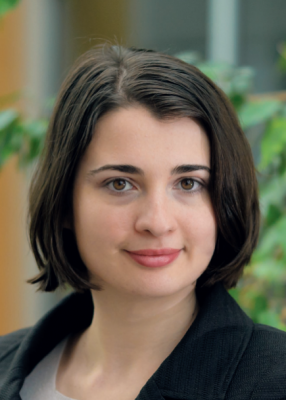
Dr. Xiaodong Lin is a Professor at the University of Guelph's School of Computer Science and an IEEE Fellow (2017) for contributions to secure vehicular communications. He leads the Blockchain Technology and Cybersecurity (BTC) lab, focusing on privacy-enhancing technologies, digital forensics, wireless network security, blockchain applications, and DeFi security. PhD, Beijing University of Posts and Telecommunications, China PhD, University of Waterloo, Canada His research bridges theoretical and applied domains in cybersecurity, particularly vehicular networks, smart grids, and decentralized systems. Recent work examines blockchain security, privacy-preserving protocols for IoT, and secure data aggregation in wireless networks. Key publication trends include secure fog computing for vehicular crowdsensing, privacy-preserving authentication in 5G, and cryptographic solutions for smart grids. Awards highlight multiple Best Paper recognitions at IEEE conferences. IEEE Fellow (2017) Best Paper Awards (IEEE INFOCOM 2018, GLOBECOM 2017, SECURECOMM 2016) Dr. Lin supervises graduate students in blockchain security, AI security, and digital forensics. His lab provides financial support to qualified students.
Aaron J. Elmore is an Associate Professor in the Department of Computer Science and the College of the University of Chicago. His research focuses on cloud computing, databases, and distributed systems, with an emphasis on resource-efficient database execution and collaborative analytics. PhD in Computer Science from University of California, Santa Barbara MS in Computer Science from University of Chicago Research interests include: Elastic databases and multitenancy (Database-as-a-Service) Resource-efficient systems (CrocodileDB, DenseStore, EdgeTSD) Database versioning (Datahub, Decible, OrpheusDB) Data discovery (DataSwamp, Relic) Recent publications highlight advancements in cloud-native query execution, dynamic compression frameworks, and time-series anomaly detection. His work often bridges systems design with practical data science applications. Scientific awards include: NSF CAREER Award (2021) Multiple Google and Intel research grants ACM SIGMOD Best Demo Honorable Mention Aaron has advised multiple PhD students including Jun Hyuk Chang and Riki Otaki, with former advisees now at institutions like MIT, Harvard, and UC Berkeley. He leads the ChiDATA research group and collaborates with Systems Group and CERES Center.
Cyrille Artho is an Associate Professor in the Division of Theoretical Computer Science at KTH Royal Institute of Technology, actively contributing to research in formal methods, software testing, and cybersecurity. His work spans model checking, smart contract security, and concurrent systems verification, with significant contributions to tools like Java Pathfinder and Modbat. PhD from ETH Zurich (2005) with dissertation on multi-threading fault detection Teaches Software Safety and Security, Software Engineering Fundamentals, and supervises degree projects His research focuses on developing formal techniques for safety-critical systems, particularly in blockchain security and distributed applications. Recent work emphasizes smart contract verification, anomaly detection in microservices, and trusted execution environments for secure cloud analytics. The 15 most recent publications reveal a strong trend toward blockchain security (6 articles), formal verification of distributed systems (5), and novel testing methodologies (4), with increasing integration of machine learning for vulnerability detection. As chair of the FTSCS workshop series and contributor to major conferences like ASE and ICST, Artho has significantly shaped the formal methods community. His leadership in organizing workshops demonstrates commitment to advancing safety-critical systems research. Principal investigator for C3.ai DTI Cyber Safety Cage for Networks project Develops Modbat framework for model-based API testing Active in Digital Futures research initiative at KTH
Ping Yang is a Professor and Associate Director for Research and Graduate Programs in the School of Computing at Binghamton University (SUNY). She holds a Ph.D. in Computer Science from Stony Brook University, an ME from the Chinese Academy of Sciences, and a BS from Zhongshan University. Her research focuses on cybersecurity, AI-based security, virtual machine security, privacy policy analysis, and formal methods. She directs the Center for Information Assurance and Cybersecurity and coordinates cybersecurity programs at both undergraduate and graduate levels. Education: BS in Computer Science, Zhongshan University ME in Computer Science, Chinese Academy of Sciences MS and PhD in Computer Science, State University of New York at Stony Brook Research Interests: Dr. Yang's work spans information and systems security, security in virtualized computing, access control mechanisms, privacy policies, and formal methods for security verification. Her projects include blockchain-based provenance storage, real-time anomaly detection in workflows, and privacy-preserving virtual machine migration. She has led NSF-funded initiatives on security in cloud environments and scientific workflows. Awards: Not explicitly listed in the provided materials. Advising & Grants: Advised over 30 PhD/Master’s students and contributed to grants including NSF Scholarship for Service and GenCyber programs. Her team develops tools like RBAC-PAT for access control analysis. Labs/Teams: Leads the Center for Information Assurance and Cybersecurity and collaborates on projects involving secure data workflows and blockchain applications in scientific research.
Professor Ryan Ko is a leading academic in Cyber Security at the University of Queensland (UQ), serving as Chair and Director of the UQ Cyber Research Centre, Director of Research at the School of Electrical Engineering and Computer Science, and a member of UQ's Academic Board. He holds a BEng (Computer Engineering) and PhD from Nanyang Technological University, Singapore. His research focuses on data provenance, industrial control systems (ICS) security, privacy-preserving technologies, and AI-driven cybersecurity solutions. Ko has pioneered initiatives such as the UQ Cyber Centre, interdisciplinary cybersecurity education programs (MCyber, PGDipCyber), and the Oceania Cybersecurity Challenge. He has attracted over AUD 20 million in competitive grants as lead investigator, including the NZ$12.2M STRATUS project. Ko’s work spans industry and policy, including advisory roles with INTERPOL, governments, and NGOs. He has authored over 100 publications, contributed to ISO standards (e.g., ISO/IEC 21878), and co-founded cybersecurity startups. Awards include Fellowships from the Australian Computer Society and Queensland Academy of Arts and Sciences, and the CSA Ron Knode Service Award. Education: Bachelor of Engineering (Computer Engineering) (Hons.), Nanyang Technological University (2005) PhD in Computer Science, Nanyang Technological University (2011) Awards: Fellow, Australian Computer Society (2016) Fellow, Queensland Academy of Arts and Sciences (2020) Young Professional Award, Singapore Government (2018) Grants & Leadership: AUD 20M+ lead investigator grants; NZ$12.2M STRATUS project (2014–2018) Established UQ Cyber Centre (2019) and NZ’s first cybersecurity graduate program (2012) His research emphasizes returning data control to users, with applications in agriculture, energy, and critical infrastructure. Ko’s contributions include patents, open-source tools (e.g., Kali Linux), and frameworks like TrustCloud for cloud accountability.
Mohammad Hamdaqa is an Associate Professor in the Department of Computer Engineering and Software Engineering at Polytechnique Montréal, where he leads the Laboratory of Software and Emerging Technologies. His academic journey includes a Ph.D. in Electrical and Computer Engineering from the University of Waterloo (2016), a Master's in Electrical and Computer Engineering from Concordia University, an MBA from the New York Institute of Technology, and a Bachelor's in Computer Engineering from Jordan University of Science and Technology. His research focuses on the intersection of software engineering and emerging technologies, particularly examining how software engineering approaches can be adapted for complex new platforms like cloud computing and blockchain. His work spans model-driven software engineering, cloud application architecture, smart contract development, and infrastructure as code. He investigates both how traditional software engineering practices can evolve to address the challenges of modern distributed systems and how emerging technologies can transform software development processes themselves. Analysis of his recent publications reveals a strong emphasis on blockchain technologies (particularly smart contracts), cloud-native applications, and the application of AI to software engineering tasks. His work shows a consistent thread of empirical research combined with practical tool development, with increasing focus on sustainability aspects of software systems in recent years. Much of his research bridges theoretical foundations with practical implementation concerns. Professor Hamdaqa serves as a thesis supervisor for multiple graduate students, with recent completed Master's theses focusing on smart contract auditing, prompt engineering for OCL generation, model-driven epidemiology, and security practices in infrastructure as code. He actively recruits students for research projects in his laboratory. He is a member of both the IEEE Computer Society and the Association for Computing Machinery (ACM), has served on program committees for major software engineering conferences, and is on the editorial board of Service Transaction on Internet of Thing. His laboratory, the Laboratory of Software and Emerging Technologies, serves as the hub for his research activities in blockchain, cloud computing, and model-driven engineering.
Alastair Beresford is Professor of Computer Security and Head of the Department of Computer Science and Technology (The Computer Laboratory) at the University of Cambridge. He is also the Robin Walker Fellow in Computer Science at Queens' College, Cambridge. His leadership spans both academic administration and research innovation within one of the world's leading computer science departments. Professor Beresford's research focuses on the security and privacy of large-scale distributed computer systems, with particular emphasis on networked mobile devices such as smartphones, tablets, and laptops. His work examines both device-level security and the privacy implications of interactions between mobile devices and cloud-based services. His methodological approach combines critical evaluation of existing products, development of novel prototype technologies, and empirical measurement of human behavior in security contexts. His recent publications reveal a strong focus on confidentiality computing, anonymity networks, mobile security, and secure group communication. Notable projects include Pudding (private user discovery in anonymity networks), CoverDrop (secure whistleblower-journalist communication), and research on the practical viability of anonymity networks on smartphones. His work consistently bridges theoretical security concepts with practical implementations that have led to real-world security improvements in iOS, Android, and OpenSSH. Scientific Awards: Andreas Pfitzmann Best Student Paper Award (PETS 2022) for work on secure initial contact between whistleblowers and journalists Professor Beresford leads several major collaborative research initiatives including the Centre for Mobile, Wearable Systems and Augmented Intelligence (co-directed with Prof Cecilia Mascolo), the Cambridge Cybercrime Centre, and the Raspberry Pi Computing Education Research Centre. He also serves as technical director for the Isaac Learning Platform, which has supported over 500,000 users making more than 120 million question attempts since 2015. His research has practical impact, with findings leading to security fixes in major commercial products including iOS 12.2 (CVE-2019-8541), watchOS 5.2, Android 11, and OpenSSH 9.8 (CVE-2024-39894).
Roxana Geambasu is an Associate Professor at Columbia University's Department of Computer Science, with affiliations to the Software Systems Lab and the Cybersecurity Committee . She specializes in systems security, differential privacy, and resource management for modern computing environments. PhD: University of Washington (2011) Undergraduate: Polytechnic University of Bucharest, Romania Her research focuses on integrating differential privacy as a first-class computing resource in infrastructure systems, with key contributions in: Privacy Budget Management (PrivateKube, DPack, Turbo) Web & Mobile Privacy (Cookie Monster, Big Bird) Security Abstractions (POSIX, Vanish, XRay) Article trends show a strong emphasis on differential privacy (8/15), resource scheduling (5/15), and privacy-preserving advertising (3/15). Key subfields include budget optimization, browser APIs, and ML pipeline privacy. Scientific awards include: Alfred P. Sloan Fellowship NSF CAREER Award Google Ph.D. Fellowship in Cloud Computing Best Paper Awards at SOSP, EuroSys She advises M.S. and undergraduate students, teaching courses in Distributed Systems and Privacy Curriculum . Her lab develops tools like PixelDP and Sunlight for operationalizing privacy in real-world systems.
Michela Bertolotto is a Professor in the School of Computer Science at University College Dublin (UCD). Her research focuses on spatio-temporal data modeling, GIScience, and applications of geospatial technologies in fields like urban planning and health informatics. She leads a research group and has supervised 19 PhD and 8 MSc students. Her work includes innovations in LiDAR-based flood risk visualization, semantic web quality assurance, and open-source spatial data analysis. Bertolotto has held roles including College Lecturer at UCD (2000–2006) and postdoctoral research positions at the University of Maine and University of Genoa. Education: BSc and PhD in Computer Science from the University of Genoa (1993, 1998). Professional achievements include over 100 publications, 24 grants (e.g., Science Foundation Ireland-funded Urban ARK project), and editorial roles at journals like the International Journal of Geographical Information Science. Awards include the UCD President's Research Award (2001) and NATO Postdoc Fellowship (1998–1999). Research interests span map personalization, volunteered geographic information (VGI), and geospatial data quality. Her lab develops tools like the LAMSkyCam (low-cost sky imaging system) and dynamic flood risk viewers. She chairs international conferences and serves on program committees for GIScience events.
Jeanna Matthews is a Full Professor of Computer Science at Clarkson University and an affiliate at Data and Society. She holds a PhD from UC Berkeley (1999) and teaches courses ranging from operating systems to cybersecurity. Her research focuses on algorithmic transparency, AI ethics, and societal impacts of automated systems. Matthews is a prominent ACM leader, serving on multiple committees including the Technology Policy Subcommittee on AI Accountability. She has pioneered work on forensic software analysis in criminal justice systems and delivered DEF CON presentations on virtualization security and adversarial testing. Awards include ACM Distinguished Speaker and Fulbright Specialist roles. Her work emphasizes open-source tools and critical thinking in education, extending to global service learning programs in the Dominican Republic and Brazil. Education: PhD in Computer Science (UC Berkeley, 1999), B.S. in Math/Computer Science (Ohio State, 1994), B.A. in Spanish (SUNY Potsdam, 2016). Research Interests: Cybersecurity vulnerabilities, algorithmic accountability frameworks, automated decision systems in justice contexts, and ethical AI design. Recent projects include investigating bias in DNA forensic software through a Brown Institute grant and analyzing political polarization on social platforms. Awards & Recognition: ACM Distinguished Speaker (2018-present) Fulbright Specialist (2018-present) 2018-2019 Brown Institute Magic Grant ACM SIGOPS Chair (2011-2015) ACM Special Interest Group Governing Board Chair (2016-2018) Teaching & Outreach: Designed courses integrating open-source tools and critical inquiry, including abroad programs in Mexico, Brazil, and the Dominican Republic. Advocates for lifelong learning strategies and questioning underlying assumptions in computing systems. Key Projects: Forensic Software Accountability: Examining discrepancies in DNA analysis tools Algorithmic Transparency: Frameworks for auditing automated systems Cybersecurity Education: Adversarial testing methodologies for justice software
Mathias Lécuyer is an Assistant Professor in the Computer Science Department at the University of British Columbia (UBC) , part of the Faculty of Science . His research focuses on trustworthy AI systems, with emphasis on privacy (differential privacy), adversarial robustness, and causal machine learning. He leads the Systopia Lab and collaborates with groups such as UBC S&P, TrustML, and CAIDA. Education: PhD in Computer Science from Columbia University (2019), MSc from Columbia University (2013) and École Polytechnique (2011). Research Interests: Ensuring rigorous guarantees for AI systems via differential privacy, robustness against adversarial attacks, and causal inference. His work spans theoretical foundations and practical implementations in areas like privacy-preserving systems, federated learning, and transparent machine learning. Awards: SOSP Distinguished Artifact Honorable Mention (2024), Google Research Award (2022), Bourse Carnot Fellowship (2011), and UBC’s top teaching evaluations (2021). Advising & Service: Supervised over 20 students (PhD, MSc, undergrad) across privacy and machine learning topics. Serves on PCs for top conferences (OSDI, S&P, NeurIPS) and organizes workshops like TrustML @ UBC. Actively mentors high school students in ML research through outreach programs. Labs/Teams: Leads the Systopia Lab at UBC, focusing on AI safety and privacy. Collaborates with MSR, Google, and industry partners on practical system implementations.
Dr. Mahesh Tripunitara is a Professor in the Department of Electrical and Computer Engineering at the University of Waterloo, serving as Associate Chair for Undergraduate Studies. He holds a PhD (2005) and Master's (1995) in Computer Science from Purdue University, along with a BSc (1993) in Computer Science from Dalhousie University. His research focuses on information security, authorization mechanisms, cryptographic key management, and hardware security, with industry experience at Motorola's R&D labs and Silicon Valley. His work spans theoretical advancements like access control policy analysis and practical applications such as secure payments systems and IoT device reliability. Notable awards include the Best Student Paper at Usenix Security 2013 and Best Paper at ACM SACMAT 2013. He actively serves on program committees for major security conferences including CCS, CODASPY, and SACMAT. Recent publications highlight innovations in cellular security (SUCI-Catchers defense), role-mining optimization, and blockchain smart contract auditing. Teaching includes advanced algorithm design courses (ECE 406/606) and digital computation (BME 121). His research emphasizes balancing security rigor with usability in authorization systems and hardware protection mechanisms.
Thomas Pasquier is an Assistant Professor in the Department of Computer Science at the University of British Columbia, affiliated with the Systopia Lab and UBC Security & Privacy Group. His research focuses on digital provenance, system auditing, intrusion detection, and performance optimization. He investigates systems security through provenance graph analysis, developing practical frameworks for intrusion detection (including PROVNET and Kairos) and provenance summarization tools. His work combines machine learning with systems research to enhance cybersecurity transparency. Recent Publications (2022-2025) Provenance-based intrusion detection systems analysis Whole-system provenance for practical security eBPF kernel extension security enhancements LLM-driven provenance summarization Research code quality assessment Scientific Awards Incredible Instructor Awards Amazon Science Research Award He supervises graduate students in systems security research and teaches courses on security & privacy and operating systems. His lab welcomes diverse students for thesis-based research opportunities.
Dr. Anitha Chinnaswamy is a Senior Lecturer in Cyber Security Management at Aston Business School, Aston University, where she serves as Deputy Director of the Cyber Security Innovation (CSI) Research Centre. She leads the MSc Cyber Security Management program and directs multiple research initiatives focusing on cyber security risk management, cryptocurrency regulation, AI applications in cybersecurity, and gender diversity in the field. Her educational background includes a PhD in Computing, an MSc in Informatics, and a PG Cert in Higher Education, all from Coventry University. As a CRISC certified professional and APMG Certified Cyber Security Instructor, she brings both academic rigor and industry relevance to her work. Dr. Chinnaswamy's research spans critical cybersecurity areas including cyber security risk management, cryptocurrency and illicit money flows, cloud-based artificial intelligence applications, and addressing the gender gap in cybersecurity. Her work bridges technical cybersecurity solutions with organizational behavior, risk management, and awareness strategies, creating holistic approaches to security challenges. She has developed award-winning curricula that empower future leaders in the rapidly evolving cybersecurity landscape. Her publications reveal a strong focus on applying AI to cybersecurity challenges, particularly in banking and financial crime detection, while also addressing regulatory frameworks for cryptocurrencies and the social dimensions of cybersecurity through work on gender diversity and inclusion. Tech for Good Award, Midlands Women in Tech Awards, 2023 Academic Award, Midlands Women in Tech Awards, 2024 Finalist - Cyber University of the Year, National Cyber Awards, 2024 As Programme Director for the MSc Cyber Security Management, Dr. Chinnaswamy has secured substantial research funding from Horizon Europe, Innovate UK, DSIT, and WMCA. Her current projects include CyVAWG: Cyber Violence Against Women and Girls (£75,000), CyberKali 2024 (£42,000), and a KTP with BlueScreen IT (£202,024). She actively collaborates with LEAs, regional cybercrime units, corporate partners, government agencies, and academic institutions across multiple projects. Dr. Chinnaswamy leads the Cyber Security Innovation Centre research team and serves as Chapter Leader for ISACA Central UK. As a founding member of the Ethnic Minorities in Cyber (EMiC) Network supported by DSIT, she champions diversity and inclusion in cybersecurity, while also serving as a STEM Ambassador in the West Midlands to inspire the next generation of cybersecurity professionals.
Param Vir Singh is the Carnegie Bosch Professor of Business Technologies and Marketing and Associate Dean for Research at Carnegie Mellon University’s Tepper School of Business. His research examines how AI and algorithmic systems reshape markets, influence consumer trust, and redefine platform strategy, pricing, and fairness. He leads the Collaborative AI Initiative at CMU, focusing on adaptive learning environments for business education. Affiliations : Carnegie Mellon University, Tepper School of Business Editorial Roles : Senior Editor at Information Systems Research , Associate Editor at Management Science Research Themes : AI ethics, algorithmic fairness, platform economics, consumer behavior, and generative AI applications. Key Research Contributions : His work spans algorithmic pricing, bias mitigation, sharing economy dynamics, and AI-driven inequality analysis. Articles often intersect computer science, economics, and marketing. Scientific Recognition : INFORMS Information Systems Society Distinguished Fellow Award Don Lehmann Award (Winner) John DC Little Award Don Morrison Long-Term Impact Award (Finalist) AIS Senior Scholar's Best Paper Award (Winner) Academic Leadership : Served as Director of the PNC Center for Financial Services Innovation, securing $5.5M for research programs. Mentored PhD students now at Harvard, NYU, Michigan, and other top institutions.