Mark R. Greenstreet is a Professor in the Department of Computer Science at the University of British Columbia (UBC). He holds a BSc from Caltech (1981), MA (1988), and PhD (1993) in Computer Science from Princeton University. His primary research focuses on formal verification of analog and mixed-signal (AMS) circuits, VLSI design, and hybrid systems. Notable contributions include the STARI signaling technique, tools like Coho for reachability analysis, and PReach for parallel model checking. He has advised numerous graduate students and collaborators, including Brad Bingham, Chao Yan, and Yan Peng. His work has been recognized with a Best Paper Award at the ASYNC Symposium. Supported by NSERC, Intel, and Oracle, his research bridges theoretical foundations and practical challenges in circuit design and verification. He teaches courses on formal methods, computer architecture, and automata theory at UBC.
Thorsten Schumm - Academic Overview Thorsten Schumm is an Associate Professor at Vienna University of Technology (TU Wien), leading the Quantum Metrology research group within the Atomic Institute. He is a key member of the Erwin Schrödinger Center for Quantum Science & Technology (ESQ) and the Vienna Center for Quantum Science and Technology (VCQ). His research focuses on developing novel quantum measurement techniques, particularly nuclear clocks using thorium-229 isotopes and matter-wave interferometry with collective many-body states. Key Affiliations & Roles Associate Professor, TU Wien (since 201X) ERC Synergy Grant recipient (2019) for the 'Thorium Nuclear Clock' project Principal Investigator for EU-funded MoSaiQC network (2019) and AQUclock project (2022) Research Interests His work bridges quantum metrology with nuclear physics , precision spectroscopy , and many-body quantum systems . He pioneers the development of nuclear clocks—next-generation timekeeping devices using nuclear transitions instead of electronic transitions for unprecedented accuracy. Recent breakthroughs include direct measurement of the thorium-229 isomer energy and advances in laser-driven nuclear excitation techniques. Notable Achievements 2019 ERC Synergy Grant: Enabled global collaboration toward the world's most precise atomic clock 2022 AQUclock project: TU Wien collaboration with Austrian authorities to build state-of-the-art atomic infrastructure 2019: First experimental determination of thorium-229 isomer energy published in Nature Academic Leadership He has mentored 5 PhD students and hosted 5 postdoctoral researchers. His group actively participates in the Vienna Graduate Program on Complex Quantum Systems (COQUS), training the next generation of quantum scientists.
Prof. Andrew Zhang is a Professor at the School of Electrical and Data Engineering, University of Technology Sydney (UTS). He leads the UTS Radio Sensing and Pattern Analysis (RaSPA) Lab and serves as Technical Director of the UTS-TPG Network Sensing Lab. His research focuses on integrated sensing and communications (ISAC), wireless signal processing, and autonomous vehicular networks. He holds a PhD from the Australian National University and has over 15 years of industry experience, including roles at CSIRO and ZTE Corp. Education: B.S. (Xi’an Jiaotong University), M.Sc. (Nanjing University of Posts and Telecommunications), Ph.D. (Australian National University). Research Interests: ISAC, radio sensing, machine learning for communications, and 6G waveform design. Key projects include developing perceptive mobile networks and flood/storm sensing via ISAC. Publications: Over 290 papers, 5 patents, and notable works on ISAC frameworks, joint communication-sensing systems, and mmWave technologies. Recent trends emphasize ISAC, 6G waveforms, and IoT integration with federated learning. Awards: CSIRO Chairman’s Medal, Australian Engineering Innovation Award, and multiple best paper awards. Active in IEEE leadership roles, including Editor-in-Chief of ISAC-Focus. Grants: ~$8M in research funding. Advises on ISAC-ETI initiatives and collaborates with industry partners like TPG Telecom. Labs: RaSPA Lab (radio sensing analytics) and UTS-TPG Lab (ISAC industrial solutions).
Prof. Dr.-Ing. habil. Gero Mühl is a W2-Professor at the University of Rostock, where he holds the chair for "Architecture of Application Systems" since October 2009. His academic journey includes positions as a Heisenberg Fellow at the Technical University of Berlin (2009), postdoctoral research at TU Berlin (2002-2009), and doctoral studies at TU Darmstadt where he received his Dr.-Ing. degree with distinction in 2002. He completed dual Diplomas in Computer Science (Dipl.-Inform.) and Electrical Engineering (Dipl.-Ing.) from FernUniversität in Hagen in 1998. Prof. Mühl's research focuses on Self-Organizing Distributed Systems , with particular expertise in distributed systems, distributed algorithms, event-based systems, middleware, energy-efficient systems, organic computing, sensor networks, web services, and electronic commerce. His work bridges theoretical foundations with practical implementations in real-world distributed environments. His recent publications show a strong trend toward time-sensitive networking, content-based publish/subscribe systems, and P4 programmable data planes. These works address critical challenges in industrial communication, real-time systems, and network reliability. His research group has made significant contributions to making distributed systems more autonomous, reliable, and efficient. Scientific awards and recognitions include: Nomination for the Berlin Science Award for Young Scientists (2008) Heisenberg Fellowship by the German Research Foundation (DFG) (2008) Best paper award in System Software and Security at SAC 2015 Prof. Mühl has been actively involved in numerous research projects and collaborations, particularly focusing on self-organizing and self-stabilizing systems. His work on the REBECA publish/subscribe middleware represents a significant contribution to autonomous distributed systems. He has supervised numerous students and researchers, contributing to the development of the next generation of computer scientists specializing in distributed systems. His laboratory at the University of Rostock focuses on practical implementations of self-organizing distributed systems, with current projects investigating time-sensitive networking, publish/subscribe systems, and energy-efficient distributed computing. The team combines theoretical analysis with practical system development to address real-world challenges in industrial and commercial applications of distributed systems.
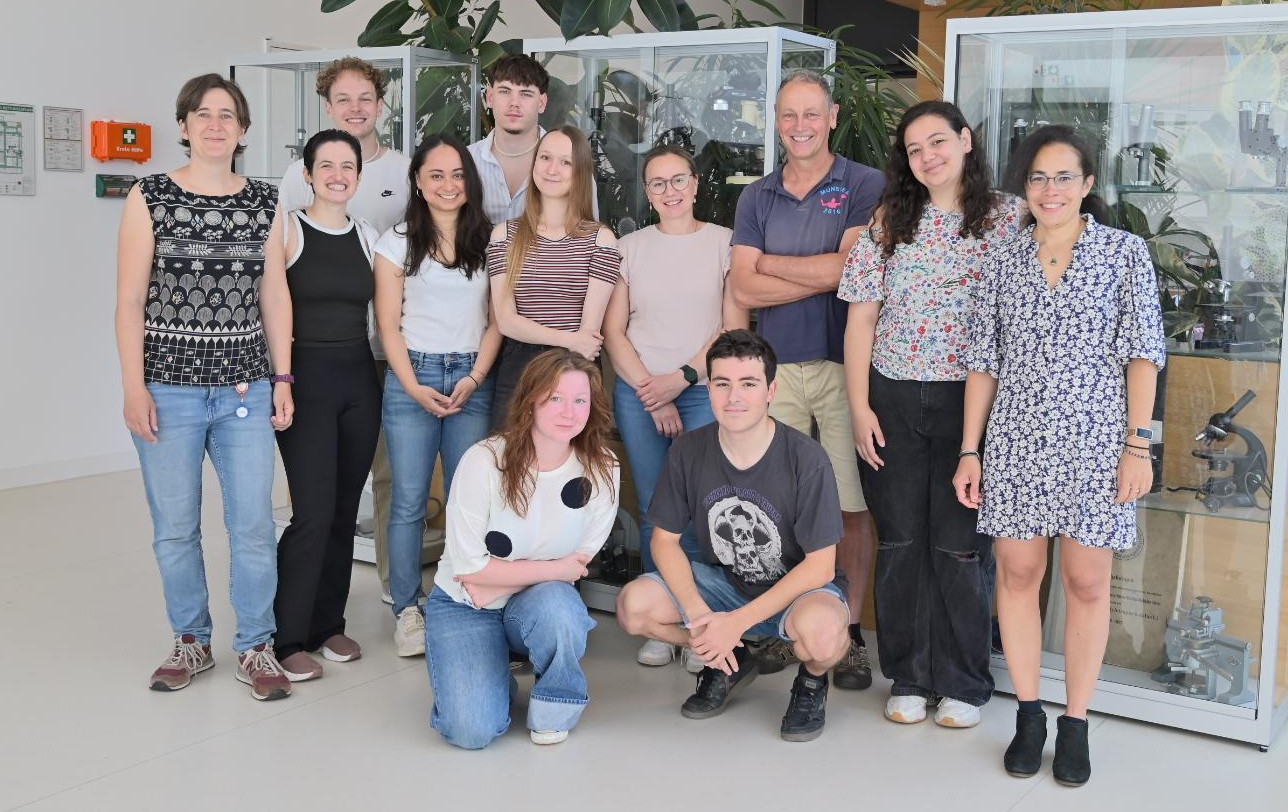
Professor Ralf Stanewsky leads the Stanewsky Group at the Institute of Neuro- and Behavioral Biology, University of Münster. His research focuses on the molecular mechanisms of circadian rhythms in Drosophila melanogaster , particularly how environmental cues like light and temperature reset the circadian clock. The group employs genetic, molecular, histological, and behavioral approaches to study sensory pathways and their integration in central clock neurons. Member of the Multiscale Imaging Centre (MIC) and Imaging Network – Microscopy Current lab members: Ph.D. students Anna Katharina Eick, Angelica Coculla, Maia Zabel Barroso Technical assistants Regina Hube and Ume Aiman Research Themes Light and temperature synchronization of circadian clocks Temperature compensation mechanisms in biological timing Neuronal integration of environmental signals Evolutionary aspects of circadian regulation Professor Stanewsky’s work spans molecular clock components (e.g., cryptochromes, timeless gene variants) to broader ecological implications of temporal niche choice. His lab investigates how clock gene expression responds to seasonal changes and environmental stressors, while also exploring novel synchronization pathways beyond classical photoreceptors. Publication Trends Recent articles emphasize temperature-dependent clock regulation , evolutionary capacitance via Hsp90 , and non-canonical phototransduction in circadian systems. Key subfields include nuclear transport dynamics, kinase evolution, and computational modeling of periodic patterns across species. Contact Information Institute of Neuro- and Behavioral Biology, University of Münster MIC | Röntgenstraße 16, D-48149 Münster, Germany Email: stanewsky@uni-muenster.de Phone: +49 251 8321029
Dr. Colin Garroway is an Associate Professor in the Department of Biological Sciences at the University of Manitoba, Faculty of Science. His research focuses on understanding how population-level processes influence biodiversity at genetic, population, and species levels. He employs interdisciplinary approaches, including genomics, ecological modeling, and data synthesis, to address challenges in conservation and climate change impacts. His work often targets systems undergoing significant environmental changes, such as urbanized areas and Arctic ecosystems. Dr. Garroway teaches advanced courses in Evolutionary Genetics and Evolutionary Biology. His research emphasizes the interplay between human-driven environmental changes—such as urbanization and climate warming—and their effects on genetic diversity, species distribution, and adaptation. He leads the Garroway Lab, which collaborates on global projects like biodiversity assessments in protected areas and epigenetic studies in wildlife. Key research themes include: biodiversity conservation, climate adaptation genetics, urban evolution, and the genetic consequences of human activities. His work integrates field studies, genomic analyses, and computational models to provide actionable insights for conservation strategies.
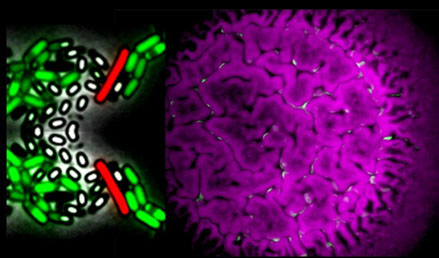
Gurol Suel is a Professor in the Department of Molecular Biology at the University of California San Diego (UCSD), affiliated with the Division of Biological Sciences. His research focuses on understanding electrical signaling in bacterial biofilms and the emergent collective behaviors they exhibit. His lab integrates quantitative biology, mathematical modeling, and synthetic biology approaches to explore principles of microbial organization and coordination. Dr. Suel earned his PhD in Molecular Biophysics from UT Southwestern Medical Center under Dr. Rama Ranganathan, followed by postdoctoral training in Dr. Michael Elowitz's lab at Caltech, combining biology and applied physics. His work has revealed groundbreaking discoveries about ion channel-mediated electrical signaling in biofilms, including their role in nutrient time-sharing between distant communities and the segmentation clock driving cellular differentiation. Key research areas include: biofilm signaling networks, bacterial collective computation, membrane potential dynamics, and engineering controllable microbial systems. His lab develops novel tools for studying bioelectronic interactions, such as potassium ion-based bioelectronic delivery systems. Spatial and temporal patterning in biofilms, including fractal interface formation and memory encoding through membrane potentials, are central themes in his work. Though no specific student names are listed, his lab actively conducts PhD rotations and trains researchers in experimental and theoretical microbiology. His work is supported by grants enabling exploration of biofilm communication and synthetic microbial systems. Contact information includes the UCSD Pacific Hall address and the email 'gsuel@ucsd.edu'. The lab's physical location includes specialized equipment for biofilm electrophysiology and quantitative imaging, as shown in lab photo collections.
Gonzalo Manzano Paule is a Ramón y Cajal tenure-track researcher at IFISC (Instituto de Física Interdisciplinar y Sistemas Complejos), a joint research institute of CSIC (Consejo Superior de Investigaciones Científicas) and UIB (University of the Balearic Islands), where he has been working since January 2023. He previously held a Juan de la Cierva Incorporation fellowship (2021-2023), was an ESQ Postdoc at IQOQI Vienna (2020-2021), and a Postdoc at ICTP Trieste (2018-2020) funded by Scuola Normale Superiore. He obtained his PhD in Physics from Universidad Complutense de Madrid in July 2017, followed by a short Postdoc at IFISC (2017-2018). His research interests focus on quantum and stochastic thermodynamics, open quantum systems, information theory, and the foundations of nonequilibrium statistical physics and quantum mechanics. He is particularly interested in applying concepts from nonequilibrium thermodynamics to understand classical and quantum complex systems. While his work is primarily theoretical, he actively seeks collaborations with experimentalists. His research has been featured in popular science journals including Physics, Quanta Magazine, and Diario de Mallorca. He has also collaborated with artist Evarist Torres to merge art and science and has written a popular science article for Investigación y Ciencia (Scientific American). Manzano Paule's recent publications demonstrate a strong focus on quantum thermodynamics, fluctuation theorems, and quantum information processing. His work spans theoretical foundations of quantum thermodynamics to applications in quantum heat engines and molecular motors. A notable pattern in his research is the exploration of how quantum effects can enhance thermodynamic processes and the relationship between information theory and thermodynamics. His scientific achievements have been recognized through prestigious fellowships including the Ramón y Cajal program, Juan de la Cierva Incorporation fellowship, and ESQ Postdoc fellowship. His work has also garnered attention in popular science media, indicating its broader impact beyond academic circles. As an educator, Manzano Paule supervises Master's students and teaches advanced courses including Open Quantum Systems for the Master's Degree in Advanced Physics and Applied Mathematics and the Master's Degree in Physics of Complex Systems. His teaching portfolio also includes Quantum Collective Phenomena, Quantum and Nonlinear Optics, Thermodynamics, and Atomic and Molecular Physics. He currently leads the research project 'QTD-InFlexity Quantum thermodynamics: information, fluctuations and complexity' and participates in the 'CoQuSy Complex Quantum Systems' project. He is also part of the María de Maeztu Unit of Excellence at IFISC, which has received continuous funding since 2008.
Eric TOTEL is a Professor at Telecom SudParis, specializing in cybersecurity and network security. His research focuses on intrusion detection systems, graph-based anomaly detection, machine learning applications in security, and data confidentiality in distributed systems. He has contributed to projects such as DAMS (DDoS mitigation using deep reinforcement learning), Sec2Graph (novelty detection on graph-structured data), and DAEMON (dynamic autoencoder-based anomaly detection). His work emphasizes scalable solutions for multi-step attack detection and privacy-preserving infrastructure for encrypted DNS logs. Key contributions include developing correlation engines for distributed systems, formalizing invariant-based attack detection in web applications, and exploring static analysis for information flow control. He has authored over 50 peer-reviewed publications and served on program committees for conferences like RAID, CRiSIS, and EuroS&P. His HDR (2012) formalized error-detection techniques applied to intrusion detection. Advising and grants: He collaborates on projects funded by French national research agencies and has mentored students in cybersecurity, AI for defense (CAID conferences), and cloud infrastructure security. His research often bridges theoretical models and practical implementations, with tools like STARLORD for 3D graph visualization of security data.
Professor Jacob Savir is a distinguished academic in the Department of Electrical and Computer Engineering at the New Jersey Institute of Technology . He specializes in testability, built-in self-test (BIST), and fault detection for digital and analog circuits. His work focuses on improving integrated circuit testing methodologies, including BIST pretesting, defect level analysis, and reliability optimization in safety-critical systems. His research interests span BIST architectures, delay fault analysis, analog circuit testing, and power-constrained test synthesis . He has contributed extensively to the development of testing algorithms for embedded memories, scan designs, and fault diagnosis in complex systems. Notable contributions include studies on the impact of BIST pretesting on IC defect levels and yield optimization. His work bridges theoretical advancements with practical applications in aerospace and industrial electronics. Despite no awards listed, his substantial citation count (1,897) and h-index (22) reflect his influential contributions to the field. Prof. Savir has collaborated on 114 research outputs since 1977, with a focus on enhancing circuit testability and reliability across domains like FPGA-based systems and embedded memory diagnostics. His research emphasizes both academic rigor and industrial relevance, addressing challenges in modern VLSI design and testing.
Elham Kashefi is a Professor of Quantum Computing at the University of Edinburgh and holds the position of Directeur de recherche at CNRS, Sorbonne Universite, LIP6. Her research focuses on quantum cloud computing, verification of quantum technology, and their applications in secure delegated computing, quantum key distribution, and quantum networks. She leads the UK Computing and Simulation Hub as Senior Science Team Leader and co-founded VeriQloud Ltd to advance quantum technology applications. Her work addresses the integration of classical and quantum devices in future networks, emphasizing trust and functionality across varying technological stages. Research interests span trans-disciplinary efforts to bridge theoretical frameworks with industrial applications, particularly through initiatives like the Quantum Protocol Zoo—a platform cataloging protocols for emerging quantum networks. This initiative aims to standardize and simulate protocols for quantum internet use cases such as quantum digital signatures and clock synchronization. Elham has delivered keynote speeches on these topics, including a 2020 presentation at the LIG event. Her contributions bridge academia and industry, fostering collaboration across quantum information science communities.
Montek Singh serves as an Associate Professor and Associate Chair for Academic Affairs in the Department of Computer Science at the University of North Carolina at Chapel Hill. His research focuses on high-performance and energy-efficient digital systems with particular emphasis on asynchronous and mixed-timing circuit design. Dr. Singh received his Ph.D. in Computer Science from Columbia University in 2002 and his B.Tech. in Electrical Engineering from IIT Delhi, India, in 1993. His primary research interests span high-performance and low-power digital systems, with specialization in asynchronous or clockless and mixed-timing integrated chip design. His work encompasses circuit design methodologies, CAD tools for automated synthesis, analysis and optimization techniques. He has also explored applications in energy-efficient mobile graphics hardware, secure chip design for computer security, and design challenges in emerging computing technologies. His research has practical applications in industry, with work transferred to companies including IBM, Boeing, and Handshake Solutions. Analysis of Dr. Singh's publications reveals a strong focus on asynchronous circuit design spanning two decades. His work covers fundamental pipeline architectures (MOUSETRAP), high-speed asynchronous systems, latency-insensitive design methodologies, and practical applications in graphics hardware and mobile devices. The research demonstrates consistent innovation in making asynchronous design more practical for real-world implementation while addressing performance, power efficiency, and testing challenges. His notable scientific achievements include: Best Paper Award at the 6th IEEE Intl. Symp. on Adv. Res. in Async. Circ. and Syst. (ASYNC-2000) Best Paper Finalist at the 8th IEEE Intl. Symp. on Async. Circ. and Syst. (ASYNC-02) Dr. Singh has secured significant research funding including participation in the DARPA CLASS Program (led by Boeing) in 2005, where he collaborated with Philips/Handshake Solutions to develop an industrial-strength automated synthesis flow for high-speed asynchronous systems. His research has strong industry connections and practical applications, with technology transferred to major companies including IBM and Boeing. He has also organized major academic events such as the International Symposium on Asynchronous Circuits and Systems 2009 (ASYNC 2009) at UNC Chapel Hill. Dr. Singh leads research in asynchronous systems design with connections to industry partners and practical applications. His work has been featured in prominent media outlets including The New York Times, International Herald Tribune, and Technology Review Magazine, highlighting the significance of clockless design approaches as traditional synchronous design approaches face limitations.
Arpan Gujarati is a Sessional Lecturer in the Department of Computer Science at the University of British Columbia (UBC), affiliated with the Systopia Lab. He teaches graduate and undergraduate courses such as CPSC 538G (Distributed Systems), CPSC 416 (Operating Systems), and CPEN 432 (Real-Time System Design). He holds a PhD from the Max Planck Institute for Software Systems and TU Kaiserslautern, where he was supervised by Björn B. Brandenburg. PhD: Max Planck Institute for Software Systems & TU Kaiserslautern (2020) Undergraduate: Birla Institute of Technology and Science (BITS Pilani) Postdoctoral Researcher: MPI-SWS Research Associate: UBC Software Development Engineer: Citrix R&D, India His research focuses on real-time and distributed systems, with applications in cyber-physical systems, fault tolerance, and machine learning reliability. He investigates scheduling algorithms, reliability analysis, and the integration of learning-enabled components into safety-critical systems. His work combines theoretical analysis with practical system implementations, often involving real-world testbeds and open-source tools. His recent publications span top-tier venues including RTSS, OSDI, ECRTS, DSN, and Middleware, with a strong emphasis on performance predictability, resilience of ML systems, and real-time communication. His work frequently addresses challenges in timing guarantees, fault tolerance, and system reliability in both cloud and embedded environments. SIGBED Paul Caspi Memorial Dissertation Award Best Paper Award at RTSS 2022 Distinguished Artifact Award at OSDI 2020 Best Student Paper Award at Middleware 2017 Outstanding Paper Award at RTCSA 2025 He advises several PhD students and undergraduate researchers at UBC, including Heng Zhao, Aida Aminian, Zainab Saeed Wattoo, and Philip Schowitz. He has led multiple research projects involving robotic arms, NVIDIA Holoscan, FreeRTOS, and distributed key-value stores. His lab work emphasizes reproducibility, open datasets, and practical system building. He has served on program committees for RTSS, RTAS, ECRTS, and Middleware, and contributes to journals such as Real-Time Systems and JSys.
Mustapha C.E. Yagoub is a Full Professor at the School of Electrical Engineering and Computer Science, University of Ottawa, with over 500 publications in RF/microwave CAD, RFID systems, neural networks, and applied electromagnetics. He leads research in the ELEMENT Laboratory and RFM Research Group , focusing on wireless communication systems and nonlinear device modeling. PhD in Electronics (Institut National Polytechnique de Toulouse, 1994) Magister in Telecommunications (École Nationale Polytechnique d'Alger, 1987) Dipl.-Ing. in Electronics (École Nationale Polytechnique d'Alger, 1979) His research bridges Microwave Circuit Design with Artificial Intelligence , including applications in Energy Conservation and Telecommunication Systems . Key trends in his publications include hybrid modeling techniques combining Neural Networks with Computational Electromagnetics for optimizing Antenna Design and RF Components . He is a Senior Member of IEEE and licensed with the Professional Engineers of Ontario and Ordre des Ingénieurs du Québec . His lab teams focus on High-Tc Superconducting Devices and Directional Antenna Optimization for RFID networks.
Prof. Danny Dolev is a distinguished academic holding the Berthold Badler Chair in Computer Science at The Hebrew University of Jerusalem's Rachel and Selim Benin School of Computer Science and Engineering. He is an ACM Fellow and IEEE Fellow. His research focuses on distributed computing, fault-tolerant systems, algorithms, and secure protocols. He has held leadership roles, including Director of his school (1999–2002) and Chair of the Israeli National Committee for Information Technology (1994–1998). Education: B.Sc., The Hebrew University of Jerusalem, 1971 M.Sc., Weizmann Institute of Science, 1973 PhD., Weizmann Institute of Science, 1979 Research Interests: Danny Dolev's work spans distributed algorithms, Byzantine fault tolerance, consensus protocols, and hardware algorithms. His contributions include groundbreaking research on self-stabilizing systems, secure communication, and fault-tolerant clock synchronization. His HEX and Chronos protocols exemplify innovations in scalable synchronization and network security. Publications: His recent work emphasizes Byzantine agreement, asynchronous fault tolerance, and game-theoretic distributed systems. Key papers address optimal resilience in consensus algorithms and secure multi-party computation. Awards: ACM Fellow (2010) IEEE Fellow (2004) Grants & Leadership: Member of the Scientific Council, European Research Council (2010–2014) Chair of Israel's National Committee for Information Technology (1994–1998) Leadership roles at IBM Almaden Research Center (1987–1993) and Stanford University (1979–1981) Labs & Teams: His research group at Hebrew University focuses on distributed systems, with collaborations on projects like Steward (wide-area Byzantine replication) and Self-Stabilizing Circuits .