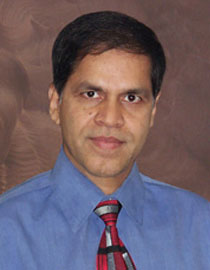
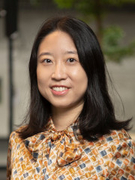
Rabi N. Mahapatra is a Professor in the Department of Computer Science & Engineering at Texas A&M University, within the College of Engineering. His research focuses on embedded systems, reconfigurable architectures, real-time systems, and semantic networks. He holds a Ph.D. in Computer Engineering from the Indian Institute of Technology (1992), an M.S. in Electrical Engineering (Sambalpur University, 1984), and a B.S. in Electronics & Communication (Sambalpur University, 1979). His research interests include Network-on-Chip (NoC), data analytic co-design, IoT protocols, and temperature-aware energy management. His work emphasizes hardware-software co-design for complex systems, with applications in many-core processors, semantic search engines, and real-time embedded systems. Key publications highlight contributions to collaborative filtering on many-core architectures, low-jitter clock distribution circuits, and energy-efficient scheduling. He has been recognized as an IEEE Computer Society Distinguished Visitor (2005–2007) and received the BOYS-CAST Indo-US Young Scientist Award. He leads the Codesign Embedded Systems group at Texas A&M, exploring cutting-edge topics such as photonics NoC, reservoir computing, and IoT security. His research bridges theory and practice, addressing challenges in scalable systems and embedded applications.
Renjie Zhao is an Assistant Professor in the Department of Computer Science at Johns Hopkins University and a member of the Data Science and AI Institute. His research focuses on wireless networking and mobile computing, with significant contributions to millimeter-wave communications, software-defined radio, and IoT systems. Dr. Zhao received his B.E. in Electric Power Engineering and Automation from Shanghai Jiao Tong University in 2018, followed by an M.S. (2020) and Ph.D. (2023) in Electrical and Computer Engineering from the University of California San Diego, where he was advised by Professor Xinyu Zhang. His research centers around three main areas: next-generation wireless network architectures (5G millimeter wave, 6G joint communication and sensing, Internet of Things), novel radio hardware and software design (software-defined radio, wireless brain interfaces, low-power ultra-wide-band), and ubiquitous communication and sensing systems (smart homes, virtual/augmented reality, localization, ultra-reliable RFID for supply chains). His work bridges theoretical innovation with practical implementation, often resulting in open-source hardware and software platforms that advance the field. Dr. Zhao's research has been published in top conferences including ACM SIGCOMM, MobiCom, and NSDI. His work demonstrates a clear progression from foundational wireless communication systems to increasingly sophisticated sensing and localization applications, with consistent focus on practical deployment challenges and solutions. Scientific Awards: Best Paper Award at ACM MobiCom 2020 for work on massive MIMO millimeter-wave software radio Best Paper Award at ACM SenSys 2023 for NeuroRadar paper Hopkins AITC funding for AI technologies promoting healthy aging Dr. Zhao actively serves the research community as TPC member for major conferences including MobiCom'25, NSDI'25, and MobiSys'25, and as a reviewer for leading journals. He is involved in multiple NSF-funded projects, including an NSF CIRC project developing the next-stage M-Cube platform. His lab, focused on wireless systems, maintains strong industry connections with companies like Qualcomm and Samsung. Dr. Zhao leads the M-Cube project, an open-source millimeter-wave massive MIMO software radio platform that has been adopted by numerous research institutions worldwide. His team continues to develop innovative wireless technologies with practical applications in supply chain management, healthcare, and smart environments.
Vincent John Mooney III is an Associate Professor at the School of Electrical and Computer Engineering and an Adjunct Associate Professor at the School of Computer Science, Georgia Institute of Technology. His research focuses on Hardware-Software Co-Design , Cyber Physical Systems Security , and Low-Power Architectures . He has authored numerous publications on topics such as probabilistic computing, hardware security, and embedded systems design. Dr. Mooney has received prestigious awards including the NSF Career Award , National Semiconductor Fellowship , and ARCS Best Paper Award . Education: Ph.D. in Electrical Engineering (1998), Stanford University MA in Philosophy (1997), Stanford University MS in Electrical Engineering (1994), Stanford University Certificate of Graduate Study (1992), University of Navarra BS in Electrical Engineering and Computer Science (1991), Yale University Research interests span hardware/software codesign, cybersecurity in embedded systems, and synthesis of reconfigurable architectures. His recent work includes Gridtrust for decentralized supply chain cybersecurity and COPPER for computation obfuscation. Dr. Mooney has supervised numerous Ph.D. students and held leadership roles in conferences such as HOST and CASES . Scientific awards include NSF Career Award (2000) National Semiconductor Fellowship (1997-1998) AT&T Engineering Scholarship Program (1987-1991) NCAA Postgraduate Scholar (1991) Senior Member, IEEE (2003) ARCS 2012 Best Paper Award Advising and grants highlight his mentorship of students like Jun Cheol Park and Yudong Tan , along with grants such as the U.S. Air Force Summer Faculty Fellowship (2007). He leads the Hardware/Software Codesign for Security Group at Georgia Tech and has contributed to advancements in real-time operating systems and deadlock detection algorithms.
Mendel Rosenblum is the Cheriton Family Professor and holds dual appointments as Professor in the Departments of Computer Science and Electrical Engineering at Stanford University. He is a co-founder of VMware Inc. and served as its Chief Scientist for its first decade, playing a pivotal role in designing foundational virtualization technologies. Rosenblum's research focuses on system software, distributed systems, and computer architecture, with notable contributions to virtualization, data center networks, and operating systems. He leads the Platform Lab at Stanford, exploring next-generation data center technologies and high-performance computing systems. Administrative Role: Faculty Director of Stanford Computer Forum (2012–present) Education: PhD (UC Berkeley, 1992), MS (UC Berkeley, 1989), BA (University of Virginia, 1984) His research interests span disk storage management, computer simulation, scalable operating systems, and security. Recent work emphasizes deployable consensus algorithms, programmable smartNICs, and self-programming networks. Rosenblum has authored over 80 publications and holds multiple patents in virtualization and system software. Awards & Recognition: ACM System Software Award (2009) IEEE Computer Entrepreneur Award (2011) ACM Thacker Breakthrough in Computing Award (2018) Member, National Academy of Engineering (2013) He advises PhD and Master's students, including current advisees Sina Jandaghi Semnani and Zixi Liu. Rosenblum teaches advanced courses on web applications, distributed systems, and independent research projects.
Tathagata Srimani is an Assistant Professor in the Department of Electrical and Computer Engineering at Carnegie Mellon University (CMU), affiliated with the College of Engineering. He previously served as a Postdoctoral Scholar in Electrical Engineering at Stanford University. His academic journey includes a Ph.D. and S.M. in EECS from MIT (2022 and 2018 respectively) and a B.Tech. in E&ECE from IIT Kharagpur (2016). Research Focus: Srimani’s work centers on nanoelectronics and transformative NanoSystems. Key areas include: Carbon nanotube field-effect transistors (CNFETs) and their monolithic 3D integration with silicon Ultra-dense 3D integration of logic and memory to address the 'memory wall' in AI/ML Technology-architecture co-design frameworks for energy-efficient computing Key Achievements: Developed first silicon fab-compatible CNFET processes (TNANO ’18, Nature ’19) Enabled CNFET RISC-V microprocessor and monolithic 3D integration with Analog Devices/SkyWater Recipient of MIT Presidential Fellowship (2016) and Morris Joseph Levin Award (2018) Teaching & Outreach: Teaches semiconductor devices and hardware design, including hands-on 'Hacker Fab' courses. Leads the NEXUS Research Group exploring heterogeneous nanomaterials (e.g., magnetic and oxide semiconductors) and thermal/power management in 3D systems. Future Directions: Expanding into probabilistic computing hardware, co-design frameworks for application-specific systems, and scaling 3D NanoSystem technologies for industrial adoption.
Dr. Yiting Xia is a tenure-track faculty member at the Max Planck Institute for Informatics (MPI-INF), leading the Network and Cloud Systems research group. She previously worked as a research scientist at Facebook and holds a PhD in Computer Science from Rice University (2018) and a B.S. in Telecommunications Engineering from Beijing University of Posts and Telecommunications and Queen Mary University of London (2011). Her research focuses on high-performance and energy-efficient networking for cloud computing, including reconfigurable data center networks, optical communications, and network protocols. Notable contributions include innovations in transport protocols, time synchronization for optical networks, and failure-resilient network design. Education: PhD in Computer Science, Rice University, 2018 M.S. in Computer Science, Rice University, 2014 B.S. in Telecommunications Engineering, BUPT & QMUL, 2011 Research Interests: Data center networking, optical communications, cloud systems, network protocols, distributed systems, and network security. Her work bridges theoretical contributions with practical implementations, addressing challenges in latency-sensitive flows, traffic engineering, and system reliability. Awards include the Ken Kennedy-Cray Fellowship and the N2Women Rising Star Award (2021). She has co-lectured courses on distributed systems and data networks at Saarland University and previously contributed to teaching at Rice University. Key projects include Aurora (for MoE inference optimization), Lighthouse (an open research framework for optical networks), and Occam (a reliable network management system). Grants & Projects: Focus on deployable optical network architectures and resilient backbone management during pandemic-driven traffic shifts. Labs/Teams: Leads the Network and Cloud Systems group at MPI-INF, collaborating with academia and industry on cutting-edge networking solutions.
Dr. Penina Axelrad is a University of Colorado Distinguished Professor and Joseph T. Negler Professor of Aerospace Engineering Sciences at the University of Colorado Boulder. She has held academic roles since 1992, serving as Department Chair from 2012–2017. A member of the National Academy of Engineering since 2019, her research focuses on GNSS technology, satellite navigation, and remote sensing applications. She has authored over 223 publications and secured $17.5M in research grants. Education: Ph.D., Aeronautics and Astronautics, Stanford University, 1991 S.M., Aeronautical and Astronautical Engineering, MIT, 1986 S.B., Aeronautical Engineering (Avionics Option), MIT, 1985 Research Interests: Global Navigation Satellite Systems (GNSS), multipath mitigation, GNSS reflectometry, orbital dynamics, and quantum sensing for Earth science. Her work bridges astrodynamics, satellite navigation, and environmental monitoring. Awards: Member, National Academy of Engineering (2019) Women In Aerospace Educator Award (2016) Institute of Navigation Samuel Burka Award (2012) AIAA Summerfield Book Award (2011) Advising & Grants: Advised numerous students (no names listed) and led major grants including NASA Quantum Pathways Institute and Sentinel-6 orbit determination projects. Active in Institute of Navigation leadership roles. Labs/Teams: Colorado Center for Astrodynamics Research (CCAR), Quantum Pathways Institute, and collaborative efforts on CubeSat atomic clock experiments.
Orla Feely is the President of University College Dublin (UCD), having previously served as Vice-President for Research, Innovation and Impact (2014–2023). She holds a BE from UCD and MS/PhD degrees from UC Berkeley, where her thesis won the DJ Sakrison Memorial Prize. Her research focuses on nonlinear circuits and systems, supported by grants from Science Foundation Ireland and the Wellcome Trust. She is a Fellow of IEEE, Engineers Ireland, and the Royal Irish Academy, and has held leadership roles in organizations like CESAER and the Irish Research Council. Education: BE, University College Dublin MS, University of California, Berkeley PhD, University of California, Berkeley Research interests include nonlinear circuits, systems dynamics, and MEMS technology. Key grants include funding for gravitational turbulence studies (Wellcome Trust, 2024–2026) and nonlinear effects in communications circuits (SFI, 2003–2012). Awards include the IEEE Fellow distinction for contributions to nonlinear discrete-time circuits and systems. Professional activities include chairing the IEEE Technical Committee on Nonlinear Circuits and Systems, serving on the Higher Education Authority Board, and judging panels for the BT Young Scientist and Queen Elizabeth Prize for Engineering.
Luciano Lavagno is a Full Professor at the Department of Electronics and Telecommunications, Polytechnic University of Turin, with over two decades of academic and research contributions. His work bridges hardware acceleration, low-power electronics, and intelligent system design. Research Focus: Hardware-accelerated machine learning, high-level synthesis (HLS) for FPGA/ASIC, heterogeneous CPU/GPU/FPGA platforms Key Projects: SPACE (predictable acceleration), REBECCA (secure AI acceleration), HPC-National Center (quantum computing), and oral history preservation via "Ti racconto una storia" initiative His recent publications analyze CNN inference optimization, subgraph isomorphism, and superword-level parallelism exploitation. Lavagno supervises multiple PhD students working on FPGA acceleration, neural network hardware, and embedded systems. As Principal Investigator for national and EU-funded projects (PRIN, JTI-ECSEL, PNRR), he drives advancements in sustainable computing infrastructure. His patented technologies include MIx&Latch timing methodology, capacitive sensing innovations, and 5G acceleration frameworks.
Prof. Jay Guo is a Distinguished Professor and Founding Director of the Global Big Data Technologies Centre at the University of Technology Sydney (UTS). He also leads the New South Wales Connectivity Innovation Network (CIN) and the TPG-UTS Network Sensing Lab. With over 700 publications, 350+ IEEE journal papers, and 27 patents, his work focuses on 5G/6G antennas, integrated sensing and communications (ISAC), and environmental sensing using 5G/6G networks. Research Interests: 5G/6G Antenna Systems (reconfigurable arrays, multibeam antennas) In-Band Full-Duplex Wireless Systems Integrated Sensing and Communications (ISAC) Environmental Sensing via Network Infrastructure Awards & Recognition: IEEE Schelkunoff Prize Paper Award (2023) Fellowships: IEEE, Australian Academy of Engineering, Royal Society of NSW Australia Engineering Excellence Award (2007) Australia's Top Researcher in Electromagnetics (2020-2023) Highly Ranked Scholar (top 0.05% globally) Grants & Projects: NSW Government-funded environmental sensing projects Industry collaborations with TPG Telecom, Telstra, and CSIRO Leadership in global antenna conferences (e.g., IEEE APS, ISAP) Labs & Initiatives: Global Big Data Technologies Centre TPG-UTS Network Sensing Lab NSW CIN (Connectivity Innovation Network)
Prof. Andrew Zhang is a Professor at the School of Electrical and Data Engineering, University of Technology Sydney (UTS). He leads the UTS Radio Sensing and Pattern Analysis (RaSPA) Lab and serves as Technical Director of the UTS-TPG Network Sensing Lab. His research focuses on integrated sensing and communications (ISAC), wireless signal processing, and autonomous vehicular networks. He holds a PhD from the Australian National University and has over 15 years of industry experience, including roles at CSIRO and ZTE Corp. Education: B.S. (Xi’an Jiaotong University), M.Sc. (Nanjing University of Posts and Telecommunications), Ph.D. (Australian National University). Research Interests: ISAC, radio sensing, machine learning for communications, and 6G waveform design. Key projects include developing perceptive mobile networks and flood/storm sensing via ISAC. Publications: Over 290 papers, 5 patents, and notable works on ISAC frameworks, joint communication-sensing systems, and mmWave technologies. Recent trends emphasize ISAC, 6G waveforms, and IoT integration with federated learning. Awards: CSIRO Chairman’s Medal, Australian Engineering Innovation Award, and multiple best paper awards. Active in IEEE leadership roles, including Editor-in-Chief of ISAC-Focus. Grants: ~$8M in research funding. Advises on ISAC-ETI initiatives and collaborates with industry partners like TPG Telecom. Labs: RaSPA Lab (radio sensing analytics) and UTS-TPG Lab (ISAC industrial solutions).
Prof. Dr.-Ing. Jürgen Teich is a full Professor and Chair for Hardware-Software Co-Design at the Department of Computer Science, Friedrich Alexander University Erlangen-Nuremberg (FAU). He serves as Head of Department Computer Science and Vice Dean of the Technical Faculty since August 2024, and has been Speaker of the FAU Research Center Embedded System Initiative (FAU ESI) since 2023. His educational background includes: Diploma degree in Electrical Engineering, University of Kaiserslautern (1989) Dr.-Ing. degree in Electrical Engineering, University of Saarland (1993) Habilitation (PD Dr.-Ing.) entitled "Synthesis and Optimization of Digital Hardware/Software Systems" (1996) Prof. Teich's research focuses on Embedded Systems , Invasive Computing , Hardware-Software Co-Design , and Reconfigurable Computing . His work spans from theoretical foundations to practical implementations, with particular emphasis on resource-constrained systems, many-core architectures, and energy-efficient computing. He has pioneered research in invasive computing paradigms that enable more efficient use of many-core processors by allowing applications to dynamically claim resources. His recent publications reveal a strong trend toward energy-efficient AI deployment on embedded devices , security of embedded systems , and novel memory technologies . There's a clear focus on practical implementations of machine learning on microcontrollers (TinyML), hardware acceleration for data processing, and innovative approaches to power management in self-powered systems. Among his notable scientific awards are: IEEE Fellow (since 2018) Member of Academia Europaea, Section Informatics (since 2011) Member of the National Academy of Science and Engineering (acatech) (since 2018) Member of the German Society of Humboldtians (since 2021) Prof. Teich has been Principal Investigator for numerous DFG-funded projects including SFB/Transregio 89 "Invasive Computing" (2010-2022), SFB 694, and multiple priority programs. He has coordinated large collaborative research efforts across Germany and internationally, with significant funding from DFG and other sources. His research group has produced influential work in embedded systems design and co-design methodologies. He leads the Hardware-Software Co-Design research group at FAU, which focuses on innovative approaches to embedded system design, invasive computing architectures, and efficient implementation of machine learning on resource-constrained devices. The group maintains strong collaborations with industry partners including Intel, Xilinx, and automotive companies.
Gianluca Setti is a Full Professor at the Department of Electronics and Telecommunications (DET) at Polytechnic University of Turin, where he has been serving since 2017. He previously held positions at the University of Ferrara from 1997 to 2017. His institutional roles include being the Contact Person for the Research Quality Evaluation process, Member of the Interdepartmental Center SmartData@PoliTO - Big Data and Data Science Laboratory, and Member of the University Quality Assurance Committee. He serves as Editor-in-Chief of the Proceedings of the IEEE, the first non-US editor to hold this position. Dr. Setti's research spans multiple interdisciplinary fields including machine learning, artificial intelligence, big data analytics, Internet of Things, biomedical signal processing, power electronics, and electromagnetic compatibility. His work bridges theoretical foundations with practical applications, particularly focusing on compressed sensing, neural networks, and circuit design for specialized applications. His research has significant implications for healthcare, sustainable infrastructure, and next-generation electronics. His publication record reveals a consistent trajectory from foundational work in chaotic systems and neural networks to contemporary applications in AI, IoT, and edge computing. The most recent publications demonstrate his focus on anomaly detection at the edge, neural oracles for biosignal processing, and power electronics innovations. His work shows strong integration between theoretical signal processing and practical circuit implementation. 1998 Caianiello prize (best Italian Ph.D. thesis on Neural Networks) IEEE Fellow (2006) IEEE Circuits and Systems Society Distinguished Lecturer (2004, 2015) 2004 IEEE CAS Society Darlington Award 2013 IEEE CAS Society Meritorious Service Award 2013 IEEE CAS Society Guillemin-Cauer Award 2019 IEEE Transactions on Biomedical Circuits and Systems best paper award Multiple best paper awards at major conferences including ECCTD2005, EMCZurich2005, ISCAS2011, PRIME2019, and EMCCOMPO2019 Dr. Setti has supervised numerous PhD students across various research domains including electromagnetic compatibility, signal and power integrity, communication networks, mechatronics and robotics. His research is supported by significant funding including national PRIN projects, EU-funded JTI-ECSEL initiatives, and commercial contracts. He leads the VLSILAB Group at DET, focusing on circuit architectures, embedded systems, and AI applications. His current projects include DECORI (anomaly detection), StorAIge (embedded storage for AI), PROGRESSUS (energy infrastructure), CONNECT (smart grid), and CONVERGENCE (wearable healthcare applications).
Dirk Koch is an Associate Professor in the Department of Computer Science at the University of Manchester. He specializes in reconfigurable computing, FPGA architecture, and hardware acceleration. His research addresses challenges in field-programmable gate arrays (FPGAs), high-level synthesis, and stream processing. He leads the Advanced Processor Technology group and contributes to the Digital Futures Institute for Data Science and AI. Education: Doctorate in Computer Engineering Affiliations: Centre for Digital Trust and Society, EPSRC Functional Oxide Reconfigurable Technologies Programme His work focuses on optimizing FPGA performance, reducing power consumption, and advancing reconfigurable hardware systems. Recent projects include bitstream manipulation frameworks, runtime stream processing pipelines, and FPGA fabric optimization techniques. He has collaborated extensively with industry partners like AMD-Xilinx. Dirk Koch has supervised 11 research projects, including work on clock region process variation analysis and FPGA virus scanning. He holds grants from EPSRC and has published 62 peer-reviewed works.
Zhou Tong serves as an Assistant Professor in the Computer Science Department at Wheaton College in Norton, MA. His academic foundation includes a Ph.D. in Computer Science from Florida State University and a B.S. in Computer Science from Millsaps College. His educational background: Ph.D. in Computer Science, Florida State University B.S. in Computer Science, Millsaps College Dr. Tong specializes in parallel computing and high performance computing (HPC), with significant contributions to performance modeling of HPC applications, workload characterization, and interconnect topology design. His secondary research domains include Machine Learning and Natural Language Processing, where he explores computational efficiency in data-intensive systems. His publication record reveals a concentrated focus on HPC networking innovations from 2016-2021, particularly in adaptive routing algorithms for dragonfly topologies, software-defined networking integration, and MPI application classification using logical clocks. These works consistently address performance optimization challenges in large-scale parallel computing environments. No scientific awards are documented in the available materials. Information regarding student advising, research grants, and laboratory facilities remains unspecified in current records.