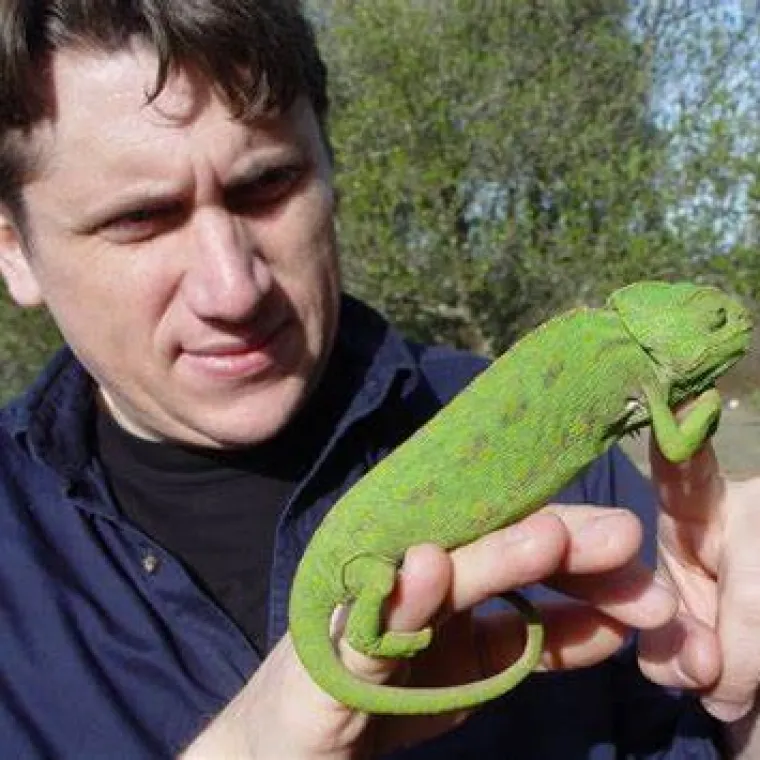
Philippas Tsigas is a Professor at the Department of Computer Science and Engineering at Chalmers University of Technology. He leads the Distributed Computing and Systems Research Group and has held roles as co-leader of research initiatives such as the PEPPHER project. His research spans distributed/parallel computing, information visualization, and fault-tolerant communication mechanisms. He has supervised numerous PhD students, including Yi Zhang, Håkan Sundell, and Farnaz Moradi. Research interests include lock-free data structures, multicore algorithms, secure network services, and visualization tools like Lydian and DataMeadow. Notable awards include Best Paper Awards at IPDPS 2003 and SNS 2012. His work has been published in top venues like IEEE Transactions on Parallel and Distributed Systems and ACM Journal of Experimental Algorithmics. Awards highlight contributions to lock-free algorithms and network modeling. Students have contributed to projects like NBmalloc (memory reclamation) and GPU Quicksort. Collaborations with institutions like SSF and VR have supported his research. Tsigas is also involved in teaching distributed systems and mentoring early-career researchers.
Rodrigo Miragaia Rodrigues is a full professor at the Instituto Superior Técnico (ULisboa) and a researcher at INESC-ID since 2015. He previously held roles as an associate professor at Universidade Nova de Lisboa, tenure-track faculty at MPI-SWS, and completed his PhD at MIT in 2005 under Barbara Liskov. Education: PhD in Computer Science, MIT, 2005 Research Interests: Focuses on distributed systems, fault-tolerant computing, cloud infrastructure, and consistency models. His work bridges theoretical foundations and practical implementations, addressing challenges in geo-replication, secure analytics, and resource allocation in serverless environments. He emphasizes scalable systems and resilient data management. Awards: Best Paper Award at SOSP ERC Starting Grant Google Faculty Research Award Advising & Grants: Has advised 7 PhD students as main advisor, with graduates in top institutions like Purdue, TU Munich, and USTC. Secured funding from the European Research Council (ERC) and Google, focusing on projects like DependableCloud (ERC Grant 307732). Labs & Teams: Leads research at INESC-ID and previously directed the Dependable Systems Group at MPI-SWS. Active in academic leadership roles, including President of the Scientific Council at IST.
John J. Wiens is a Professor in the Department of Ecology and Evolutionary Biology at the University of Arizona since 2013. Previously, he held positions at Stony Brook University as an Assistant (2002–2006) and Associate Professor (2006–2012), and roles at the Carnegie Museum of Natural History as Curator (1995–2002). He earned a B.S. in Systematics and Ecology from the University of Kansas (1991) and a Ph.D. in Zoology from the University of Texas at Austin (1995). His work is distinguished by honors like the ISI Highly Cited Researcher award and editorial leadership roles at journals including Quarterly Review of Biology and Ecology Letters . Research Interests: Wiens’ lab focuses on three key areas: (1) integrative phylogenetic approaches to evolutionary and ecological questions, (2) phylogenetic theory and methods, and (3) reptile/amphibian evolution. Specific topics include species richness patterns, niche evolution, life-history traits, and climate change impacts. Methodologies combine genetic, morphological, and environmental data with computational approaches. Awards: His recognition includes the President’s Award from the American Society of Naturalists (2011) and the BIOS Distinguished Lecturer (2009). He has served on editorial boards for major journals and contributed to policy through biodiversity research. Grants and Advising: Wiens has advised numerous students (not listed here) and secured funding for projects on phylogenomics, climate change, and biodiversity. His lab collaborates globally, emphasizing open-access data sharing through tools like SuperCRUNCH. Labs/Teams: His research group integrates fieldwork and computational biology, focusing on amphibians, reptiles, and broader evolutionary patterns. Collaborations emphasize large-scale datasets and phylogenetic synthesis.
Dr. John Abbott is an Associate Professor and Chief Curator at the University of Alabama Museums , where he leads the Department of Museum Research & Collections. With a PhD in Entomology from the University of North Texas (1999), his career spans academic research, conservation initiatives, and public outreach. Education: PhD (1999), MS (1998) from University of North Texas; BS (1993) from Texas A&M Academic Role: Associate Professor at University of Alabama Museums since 2016 Research Leadership: Editor-in-Chief of International Journal of Odonatology Research Focus: Specializes in Odonatology (dragonfly and damselfly studies), combining systematics , biogeography , and conservation biology with innovative citizen science approaches. Key projects include: Conservation genetics of endangered dragonflies Population dynamics of American Burying Beetle Citizen science data collection networks Field guide development (Texas and North America) Wing evolution and digitization projects Scientific Contributions: Author of 4+ field guides, with 1500+ research photos documenting global insect diversity. His work appears in journals like Freshwater Biology and Biological Invasions . Awards: Notable recognition includes the Hamilton Book Award at UT Austin for his Damselflies of Texas publication. Outreach: Active nature photographer and science communicator, maintaining platforms like OdonataCentral and PondWatch for public engagement.
George Mann is a Professor at Memorial University of Newfoundland's Faculty of Engineering and Applied Science. He holds a B.Sc. in Mechanical Engineering from the University of Moratuwa (Sri Lanka), an M.Sc. in Computer Integrated Manufacturing from Loughborough University (UK), and a Ph.D. in Intelligent Control from Memorial University. His research focuses on intelligent control systems, robotics, and machine vision, with significant contributions to autonomous navigation, sensor fusion, and UAV technologies. He leads the Intelligent Systems Laboratory (ISLAB) and has pioneered work on LiDAR-assisted radar enhancement, multi-robot localization, and exoskeleton control systems. **Education**: B.Sc., Mechanical Engineering, University of Moratuwa (Sri Lanka) M.Sc., Computer Integrated Manufacturing, Loughborough University (UK) Ph.D., Intelligent Control, Memorial University (Canada) **Research Interests**: Dr. Mann’s work spans autonomous systems, UAV navigation, sensor fusion (e.g., LiDAR, radar, INS), and robotics applications in mining, healthcare, and environmental monitoring. His recent projects include developing computationally efficient NMPC algorithms for UAVs and creating robust localization systems for heterogeneous multi-robot networks. **Publications**: His articles emphasize advancements in navigation algorithms, disturbance estimation for multi-rotor stability, and AI-driven sensor integration. Key themes include improving system robustness under uncertainty and optimizing computational efficiency in real-time control. **Labs & Teams**: Director of ISLAB, collaborating on exoskeleton development (e.g., Anthro-X) and UAV plume tracking for environmental sensing. Active in industry partnerships like C-CORE for mining automation.
Dr. Liqiang Zhang is a Professor at the Department of Computer and Information Sciences, Indiana University South Bend. He holds a Ph.D. in Computer Science from Wayne State University (2005). His research focuses on wireless networks, mobile computing, resource allocation, IoT, cognitive radio networks, and network security. His work is supported by IU and the National Science Foundation. He has organized multiple conferences including ICCCN 2013 (Track Chair), GLOBECOM 2010 (Publicity Co-Chair), and founded/co-chaired WiMAN workshops. He serves as a Guest Editor for journals like ACM Transactions on Autonomous and Adaptive Systems and Elsevier's Computer Communications. He reviews for top journals including IEEE Transactions on Mobile Computing and IEEE Transactions on Parallel and Distributed Systems. Dr. Zhang teaches courses such as Computer Structures, Mobile App Development, and Network Security. Recent publications (2019-2009) include advancements in network scheduling, cognitive radio protocols, radar positioning, and digital design education. His research spans both theoretical and applied aspects of networking and distributed systems.
Phillip Raffeck is a researcher at the Department of Computer Science (INF) within the Chair of Computer Science 4 (System Software) at Friedrich-Alexander-Universität Erlangen-Nürnberg (FAU). His work focuses on real-time systems, embedded systems, and energy-aware computing, with a particular emphasis on worst-case execution time (WCET) and energy consumption (WCEC) analysis. He has contributed to projects like the Invasive Run-Time Support System (iRTSS) and tools for energy-neutral system design. Department: Department of Computer Science (INF) University: Friedrich-Alexander-Universität Erlangen-Nürnberg (FAU) Position: Researcher His research spans real-time systems , multi-core optimization , and power-aware computing . Key contributions include migrative synchronization protocols , energy-neutral operating systems , and code metrics for timing analysis . Recent work explores carbon-aware co-design and predictable migration in embedded environments. Publications highlight collaborations with teams across Germany and international symposia like RTSS, WCET, and EMSOFT. His article trends reflect advancements in intermittent execution models , transactional networking , and static analysis toolchains . He serves as a secondary reviewer for conferences including RTAS and ISORC. Phillip supervises graduate theses on topics such as DMA-based OS offloading , dynamic migration , and interrupt latency analysis . He contributes to teaching courses like Betriebsystemtechnik and Systemnahe Programmierung in C at FAU.
Dana Weinstein is a Professor in the Department of Electrical and Computer Engineering at Purdue University, West Lafayette campus. Her research focuses on cutting-edge MEMS resonators, RF device integration, and acoustoelectronic systems. Academic Rank: Professor Department: Electrical and Computer Engineering University: Purdue University Email: danaw@purdue.edu Research Interests: Microelectronics and MEMS Resonators Radio Frequency (RF) Devices and 2D Materials Silicon Photonics and Ferroelectric Transducers Acoustoelectronics and GaN/SiC Heterostructures Integrated Nonreciprocal RF MEMS Devices Scientific Awards: NSF CAREER Award (2017) NSF CAREER Award (2012) Editorial Leadership in IEEE Nanotechnology Express (2015) Key Article Trends: Her recent publications explore advanced MEMS resonators, high-frequency RF devices, acoustoelectric interactions, and integration of 2D materials into CMOS-compatible platforms. Topics include Sezawa wave SAW devices, GaN/SiC heterostructures, BEOL-compatible transistors, and ferroelectric-based transducers.
Dr. Nicholas Matzke is a Senior Lecturer at the School of Biological Sciences , University of Auckland, New Zealand. His research revolutionizes biogeography by integrating extinction, fossils, organismal traits, and paleogeography into computationally efficient frameworks. Education: PhD in Integrative Biology (2013), University of California, Berkeley MA in Geography (2003), University of California, Santa Barbara Double BSc in Biology and Chemistry (1998), Valparaiso University Dr. Matzke's research spans three major domains: phylogenetic biogeography (developing methods to model trait-dependent dispersal), bacterial flagellum evolution (collaborating on experimental and bioinformatic analyses), and macroevolutionary modeling (integrating fossils and morphological data). His work on the FBD-MSC model and trait-dependent dispersal has transformed divergence time estimation and biogeographical inference. Recent publications show consistent focus on: Integrating molecular and fossil data in phylogenies Quantifying trait-dispersal interactions in rails and crocodiles Modeling historical biogeography using BioGeoBEARS Reconstructing evolutionary timelines with Bayesian methods His 2021 work on Caninae phylogeny demonstrates the power of combined MSC-FBD approaches, while 2019 studies on crocodilian range expansion revealed unexpected trait-dispersal correlations. Scientific Recognition: 2015-2018: Discovery Early Career Researcher Award (DECRA) Fellow at Australian National University 2017: Associate Fellow of The Higher Education Academy As an accredited PhD supervisor with active Marsden Grant projects, Dr. Matzke trains students in phylogenetics, computational modeling, and paleogeographic reconstruction. His lab combines custom software development with empirical studies across diverse taxa, from Rana frogs to Crocodylus crocodiles.
Prof Darran O'Connor is a Professor of Molecular Oncology at the Royal College of Surgeons in Ireland (RCSI), leading the School of Postgraduate Studies. His academic journey includes postdoctoral training at Columbia University and the University of Glasgow, followed by roles at UCD and RCSI. He specializes in molecular determinants of cancer progression, focusing on genomics, drug resistance, and therapeutic development. His lab is funded by SFI, EU, and cancer-focused foundations. Awards include the St Luke's Young Investigator Award and EMBO fellowships. Education: PhD in Cancer Biology, Trinity College Dublin/RCSI (1995–2000) MSc in Biological Sciences, Dublin City University (1994–1995) BA (Mod) Microbiology, Trinity College Dublin (1990–1994) Research Interests: Molecular oncology, cancer genomics, spatial transcriptomics, tumor microenvironment, and translational therapeutics. His work integrates functional genomics, in vitro/ex vivo models, and clinical translation using tissue microarrays. Grants & Awards: Science Foundation Ireland (SFI), EU, Susan G. Komen Foundation 9th St Luke's Young Investigator Award (2012) EMBO and Human Frontiers Science Programme Fellowships Labs & Teams: Leads a multidisciplinary team at RCSI's Molecular & Cellular Therapeutics department, focusing on cancer biology and precision medicine. Collaborates globally with institutes like Dana-Farber Cancer Institute and Netherlands Cancer Institute.
Prof. Dr. rer. nat. Matthias S. Müller is a Universitätsprofessor and Director of the IT Center at RWTH Aachen University. His research focuses on High-Performance Computing (HPC), parallel programming models, correctness verification, energy-aware computing, and tools for distributed systems. He leads the High-Performance Computing group, contributing to advancements in HPC resource management, runtime systems, and sustainable computing practices. Key areas of expertise include MPI and OpenMP correctness checking, static and dynamic analysis techniques, performance optimization for heterogeneous architectures, and energy footprint modeling. Müller has extensively collaborated on projects like MUST (MPI correctness tool), OMPT tools, and frameworks for analyzing hybrid parallel applications. His work bridges theoretical computer science with practical implementation challenges in large-scale computing environments. Notable contributions include developing methods for data race detection in Remote Memory Access (RMA) programs, latency-aware power management models, and educational frameworks for HPC lab courses. His research often emphasizes tool development, runtime systems, and interdisciplinary applications of HPC across engineering domains. Müller's lab is part of RWTH Aachen's IT Center, which provides infrastructure and expertise for computational research. He actively publishes in top-tier conferences and journals, addressing challenges in parallel programming, energy efficiency, and distributed computing systems.
Takeshi Shirabe is an Associate Professor in the Division of Geoinformatics at KTH Royal Institute of Technology, Sweden. He holds positions in the Department of Urban Planning and Environment, School of Architecture and the Built Environment (ABE), and is part of the Digital Futures cross-disciplinary research center. His research focuses on spatial optimization, geographic information science (GIS), and geodesign, with particular emphasis on raster-based models for spatial decision support and route improvisation. He has taught numerous courses including GIS Architecture and Algorithms, Computational Methods in GIS, and Spatial Planning with GIS. Shirabe's academic journey includes a PhD from the University of Pennsylvania (USA), a Master’s in City and Regional Planning from the same institution, and a Bachelor of Engineering from the University of Tokyo. Before joining KTH in 2010, he served as an Assistant Professor at Vienna University of Technology, Austria, where he earned his Habilitation in Geoinformation. His research interests span combinatorial optimization in geography, spatial decision support systems, and GeoDesign. Notable projects include the Space Time Alarm Clock (STAC), an Android app for pedestrian route improvisation, developed with Adrian C. Prelipcean and Falko Schmid. This tool uses real-time spatial-temporal analysis to guide users toward destinations efficiently. Shirabe has contributed to over 30 peer-reviewed publications since 2002, focusing on raster-based GIS methods for corridor design, least-cost path analysis, and spatial allocation modeling. His work bridges theoretical computational geometry with practical urban planning applications. Courses he oversees emphasize algorithmic and computational foundations of geospatial technologies.
Carla Hass is a Teaching Professor of Biology at the Department of Biology, Pennsylvania State University. She specializes in ecology, molecular phylogeny, and biogeography, with a focus on amphibians and reptiles. Her work explores evolutionary relationships, island biogeography, and genetic divergence patterns in species across Caribbean and North American regions. Education: B.S., Dickinson College, 1981 M.S., University of Maryland, College Park, 1985 Ph.D., University of Maryland, College Park, 1990 Postdoctoral Training: Penn State University Biology Department with Dr. Linda Maxson, 1990–1991 Penn State University Institute of Molecular and Evolutionary Genetics, 1991–1992 Research interests include molecular systematics of amphibians and reptiles, Caribbean biogeography, and the application of albumin immunology to evolutionary studies. Her publications span over three decades, focusing on topics such as snake phylogeny, salamander speciation, and West Indian vertebrate relationships. Her work frequently integrates molecular data with historical biogeography to understand species diversification patterns. Labs/Teams: Affiliated with the Department of Biology at Penn State, with research conducted in the Mueller Laboratory (418 Mueller Lab, University Park, PA).
Jean-Yves Le Boudec is a Professor at École Polytechnique Fédérale de Lausanne (EPFL), affiliated with the School of Computer and Communication Sciences and the Institute of Electrical Engineering. He has been a key figure in advancing the theory and application of network calculus and deterministic networking, contributing significantly to standards such as IEEE Time-Sensitive Networking (TSN) and IETF DetNet. His research focuses on network calculus , time-sensitive and deterministic networking , traffic regulation , worst-case delay analysis , and cyber-physical systems , with cross-cutting applications in smart grids , real-time communication , and network security . He has co-authored foundational texts on network calculus and developed theoretical frameworks for traffic regulators, service curves, and delay bounds in complex networked systems. The recent publications highlight a strong trend in analyzing and improving performance guarantees in deterministic networks, including scheduling mechanisms like Deficit Round-Robin and Cyclic Queuing and Forwarding, traffic shaping via interleaved regulators, and security against time-synchronization attacks in power systems. The work spans theoretical modeling using stochastic and min-plus/max-plus algebra, practical algorithm design, and application to critical infrastructure. IEEE Fellow Le Boudec has advised numerous researchers and PhD students, including Ehsan Mohammadpour, Ludovic Thomas, and Seyed Mohammadhossein Tabatabaee. His collaborative projects often involve grants related to European and Swiss research initiatives in networking and smart grid technologies. He leads a research group focused on networked systems at EPFL, contributing to both theoretical advances and real-world implementations in industrial and energy-critical networks. His lab work centers on modeling and verification of time-sensitive network behaviors, integrating formal methods with practical experimentation. The team investigates regulators, shapers, and synchronization mechanisms, aiming to ensure robustness, predictability, and security in next-generation communication infrastructures. Future work continues to explore the interplay between communication, control, and energy systems in highly reliable environments.
Bo Wang is an active academic researcher primarily affiliated with multiple Chinese institutions, with strong connections to Tsinghua University, Beijing Jiaotong University, and other leading Chinese universities. His research spans artificial intelligence, machine learning, computer vision, medical image analysis, and intelligent control systems, demonstrating significant interdisciplinary work across computer science, engineering, and biomedical applications. Primary institutional affiliation: School of Computer Science and Technology at multiple Chinese universities Active research areas: AI/ML applications in healthcare, computer vision, federated learning, and intelligent control systems Extensive publication record across top-tier venues in multiple disciplines Wang's research interests focus on the intersection of artificial intelligence and practical applications. His work demonstrates strong expertise in developing novel machine learning architectures for medical image analysis, including applications in CT imaging, MRI, and sperm tracking. He has made significant contributions to federated learning approaches for large language models, sliding mode control systems, and molecular optimization frameworks. His research consistently bridges theoretical advances with practical implementations across healthcare, manufacturing, and environmental monitoring domains. Analysis of Wang's recent publications reveals a strong trend toward interdisciplinary AI applications, particularly in medical imaging and bioinformatics. His work on VAE-GANMDA for microbe-drug association prediction, ACE-QSM for accelerating MRI acquisition, and text-guided molecular optimization demonstrates innovative approaches at the intersection of AI and life sciences. Wang also maintains active research in industrial applications including digital twin technology for energy systems and robust scheduling approaches for multi-factory production. Notable research contributions include: FLFT: A Large-Scale Pre-Training Model Distributed Fine-Tuning Method with Federated Learning VAE-GANMDA: Microbe-drug association prediction model ACE-QSM: Accelerating quantitative susceptibility mapping using diffusion models Digital twin-empowered power consumption prediction systems Wang actively collaborates with researchers across China and internationally, with publications spanning computer science, engineering, medical imaging, and environmental science journals. His work demonstrates strong technical depth across multiple AI methodologies while maintaining focus on practical applications that address real-world challenges in healthcare, manufacturing, and environmental monitoring.