Andrew Ho is an active academic researcher with publications spanning computer science, electrical engineering, and interdisciplinary applications. His recent work focuses on hybridizable discontinuous Galerkin methods for plasma simulations (2024) and AI/LLM applications in scholarly knowledge organization. 2025: Project Alexandria (LLM for copyright-free knowledge) 2024: Hybridizable DG plasma methods, GPU-accelerated kinetic simulations 2023: Low-resource translation techniques 2022: Multimodal VR interfaces 2003-2006: High-speed serial link transceivers and radiography artifact detection His research interests include: Computer science applications in plasma physics and medical imaging LLM-based scholarly knowledge graphs and literature reviews High-speed communication systems Educational technology implementations Co-authors include Vladimir Stojanovic (Stanford, 2003-2005), Carl W. Werner (2003-2005), and Genia Vogman (GPU plasma simulations, 2024).
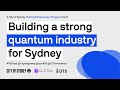
Professor Simon Devitt is Research Director of the Centre for Quantum Software and Information (QSI) at the University of Technology Sydney's Faculty of Engineering and Information Technology, School of Computer Science. He also holds several prestigious international appointments including InstituteQ Visiting Chair of Excellence in Quantum Technologies at Aalto University, Finland, and visiting positions at RIKEN in Japan. As a leading figure in quantum computing research, he directs the Australian Quantum Software Network and co-founded quantum education startup Eigensystems Pty Ltd. His educational background includes: PhD in Physics from University of Melbourne (2004-2007) BSc (Hons) in Physics from University of Melbourne (2000-2003) Professor Devitt's research spans quantum software, quantum architecture, and quantum error correction, with a focus on making quantum computing practical at scale. His work addresses fundamental challenges in quantum computing architecture when scaled to millions or billions of qubits. He has pioneered approaches to quantum error correction, resource estimation, and quantum network design, particularly through his leadership of the Quantum Technology at Scale (QTS) research group. His research bridges theoretical foundations with practical implementation challenges, aiming to shape the evolution of quantum technology over the coming decades. His recent publications demonstrate a strong focus on practical quantum computing challenges, with particular emphasis on error correction techniques, resource estimation, and quantum architecture. A significant portion of his work addresses the surface code and its variants, exploring ways to optimize qubit usage and error rates. He has also made important contributions to quantum networking, particularly through the concept of "quantum sneakernet," and to quantum education and standardization efforts that will be critical for the emerging quantum industry. His notable awards and recognitions include: Fellow of the Australian Institute of Physics Fellow of the Royal Society of New South Wales Warren Prize from the Royal Society of NSW InstituteQ Visiting Chair of Excellence in Quantum Technology Professor Devitt actively mentors numerous PhD students, postdocs, and researchers through his Quantum Technology at Scale group. His research is supported by significant funding from diverse sources including Google Academic Research Awards, Sydney Quantum Academy, DARPA, and the Japanese Society for the Promotion of Science. He has led projects on quantum sneakernet networks, quantum algorithm benchmarking frameworks, and quantum software tools that address critical challenges in the field. He leads the Quantum Technology at Scale (QTS) research group at UTS, which focuses on the design and architectural challenges of quantum computing and communications technology at scale. The group includes researchers working on quantum computing architectures, quantum networking (Rottnest Quantum Sneakernet project), and quantum software (Quokka project). The team collaborates extensively with international partners including Aalto University in Finland, University of New South Wales, Keio University in Japan, and industry leaders like Rigetti Computing.
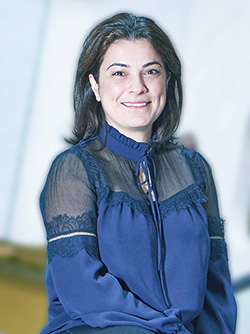
Elham Kashefi is a Professor of Quantum Computing at the University of Edinburgh and holds the position of Directeur de recherche at CNRS, Sorbonne Universite, LIP6. Her research focuses on quantum cloud computing, verification of quantum technology, and their applications in secure delegated computing, quantum key distribution, and quantum networks. She leads the UK Computing and Simulation Hub as Senior Science Team Leader and co-founded VeriQloud Ltd to advance quantum technology applications. Her work addresses the integration of classical and quantum devices in future networks, emphasizing trust and functionality across varying technological stages. Research interests span trans-disciplinary efforts to bridge theoretical frameworks with industrial applications, particularly through initiatives like the Quantum Protocol Zoo—a platform cataloging protocols for emerging quantum networks. This initiative aims to standardize and simulate protocols for quantum internet use cases such as quantum digital signatures and clock synchronization. Elham has delivered keynote speeches on these topics, including a 2020 presentation at the LIG event. Her contributions bridge academia and industry, fostering collaboration across quantum information science communities.
Dr. Nusha Keyghobadi is a Professor in the Department of Biology at Western University, specializing in population genetics, conservation biology, and landscape ecology. Her research examines how landscape modification and climate change impact genetic diversity and spatial structure of populations, with a focus on butterflies and other insects. She leads a lab investigating alpine ecosystems, endangered species reintroduction (e.g., mottled duskywing), and the genetic resilience of populations under extreme weather conditions. Dr. Keyghobadi teaches courses in molecular ecology and environmental biology, and collaborates globally on conservation genetics projects. Her lab includes current students Aaya Aboulnaga, Laura Bax, and Evan Bennett, among others. Education details are not explicitly stated, but her extensive research history indicates advanced training in ecology. Her work integrates field studies, molecular techniques, and spatial analysis to address applied conservation challenges. She has supervised over 30 students, many of whom have advanced to postdoctoral positions or professional roles in conservation, medicine, and policy. Her lab's current projects include: 1) studying Rocky Mountain Apollo butterflies to assess climate impacts on alpine populations; 2) monitoring genetic diversity in reintroduced mottled duskywing populations; and 3) exploring edge effects and dispersal in fragmented landscapes. Collaborations span institutions like the Carolinian Canada Coalition and the Queensland Institute of Medical Research. Lab alumni have pursued diverse careers, including conservation biology, medical research, and policy roles. Dr. Keyghobadi emphasizes interdisciplinary training and ethical scientific practice.
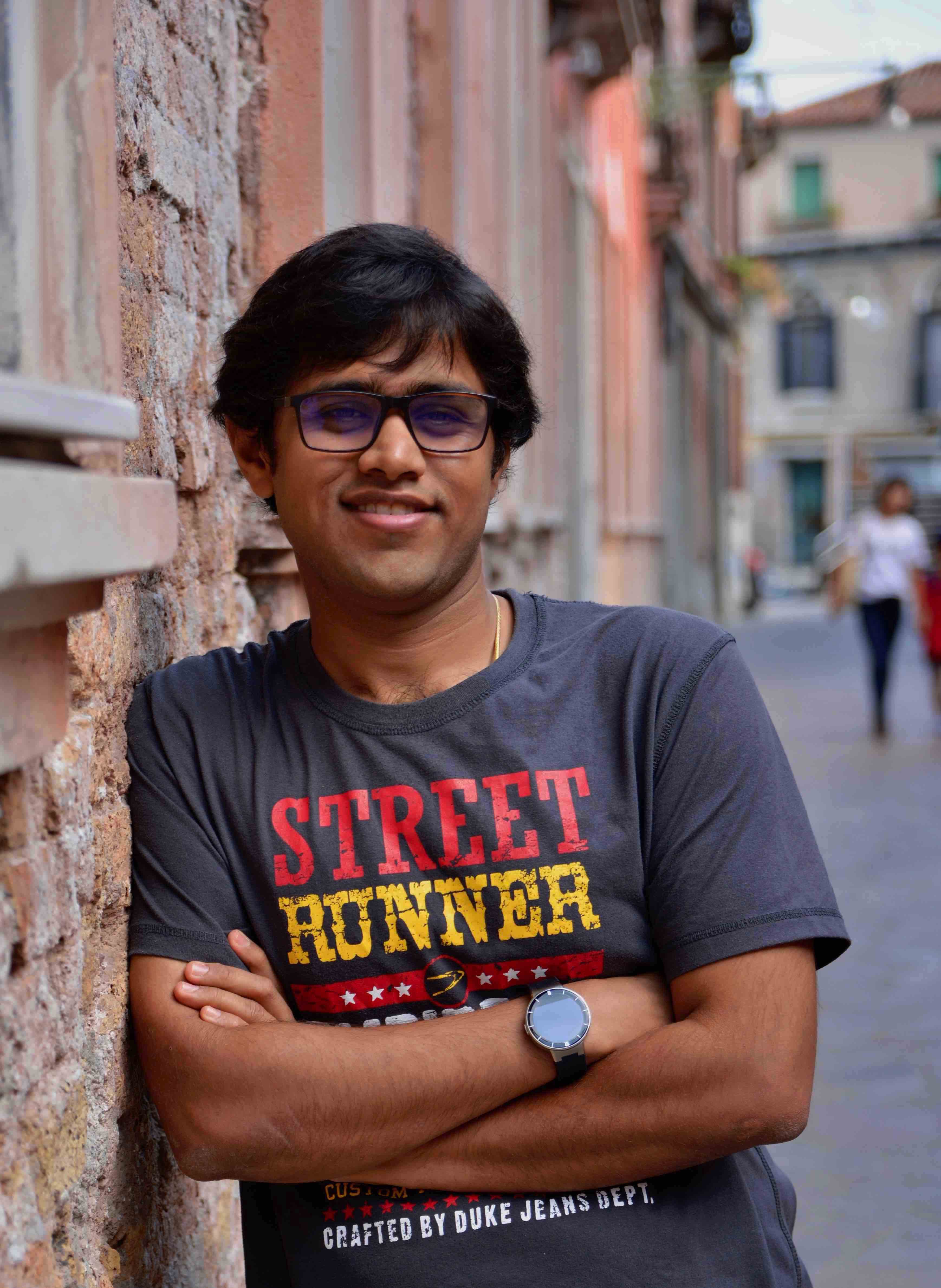
Arpan Gujarati is a Sessional Lecturer in the Department of Computer Science at the University of British Columbia (UBC), affiliated with the Systopia Lab. He teaches graduate and undergraduate courses such as CPSC 538G (Distributed Systems), CPSC 416 (Operating Systems), and CPEN 432 (Real-Time System Design). He holds a PhD from the Max Planck Institute for Software Systems and TU Kaiserslautern, where he was supervised by Björn B. Brandenburg. PhD: Max Planck Institute for Software Systems & TU Kaiserslautern (2020) Undergraduate: Birla Institute of Technology and Science (BITS Pilani) Postdoctoral Researcher: MPI-SWS Research Associate: UBC Software Development Engineer: Citrix R&D, India His research focuses on real-time and distributed systems, with applications in cyber-physical systems, fault tolerance, and machine learning reliability. He investigates scheduling algorithms, reliability analysis, and the integration of learning-enabled components into safety-critical systems. His work combines theoretical analysis with practical system implementations, often involving real-world testbeds and open-source tools. His recent publications span top-tier venues including RTSS, OSDI, ECRTS, DSN, and Middleware, with a strong emphasis on performance predictability, resilience of ML systems, and real-time communication. His work frequently addresses challenges in timing guarantees, fault tolerance, and system reliability in both cloud and embedded environments. SIGBED Paul Caspi Memorial Dissertation Award Best Paper Award at RTSS 2022 Distinguished Artifact Award at OSDI 2020 Best Student Paper Award at Middleware 2017 Outstanding Paper Award at RTCSA 2025 He advises several PhD students and undergraduate researchers at UBC, including Heng Zhao, Aida Aminian, Zainab Saeed Wattoo, and Philip Schowitz. He has led multiple research projects involving robotic arms, NVIDIA Holoscan, FreeRTOS, and distributed key-value stores. His lab work emphasizes reproducibility, open datasets, and practical system building. He has served on program committees for RTSS, RTAS, ECRTS, and Middleware, and contributes to journals such as Real-Time Systems and JSys.
Dr. Hafizul Asad serves as a Lecturer in Dependability at City St George's, University of London, leveraging his PhD in Electrical Engineering (City University of London, 2016) and MS in Aerospace Engineering (University of Belgrade, 2008) to advance cybersecurity and formal verification research. His expertise bridges critical infrastructure protection and cyber-physical systems security, with significant contributions to IoT/IIoT security frameworks. His educational journey includes: PhD in Electrical Engineering, City, University of London (2012-2016) MS in Aerospace Engineering, University of Belgrade, Serbia (2007-2008) BSc in Electrical and Electronics Engineering, University of Engineering and Technology Peshawar, Pakistan (1999-2003) Asad's research centers on formal verification of hybrid systems and verifiable intrusion detection mechanisms for interconnected environments. He pioneers provably robust security architectures for IoT/IIoT systems, emphasizing mathematical verification to ensure system resilience against cyber threats. His work integrates diversity principles to create defense-in-depth strategies for critical infrastructure, with recent focus on wind turbine cyber-safety and industrial control system protection. Analysis of his 15 most recent publications (2014-2025) reveals an evolution from aerospace applications and analog circuit verification toward cutting-edge cybersecurity for cyber-physical systems. His 2023-2025 work demonstrates increasing specialization in IoT security and formal methods, while maintaining foundational contributions to diversity-based security architectures established in his 2015-2018 research. No scientific awards or prizes are documented in the provided materials, though he maintains professional standing as a British Computer Society member and Higher Education Academy Associate Fellow. Details regarding doctoral student supervision or specific research grants are not disclosed in the source text. His professional trajectory indicates significant project involvement, including the D3S security project at City University of London (2015-2018) and Rolls-Royce-funded Future Systems Simulator development at Cranfield University (2018-2019), though current laboratory affiliations remain unspecified.
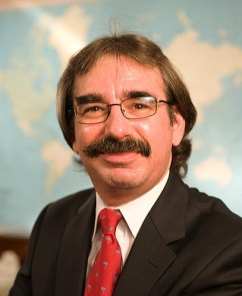
Prof. Danny Dolev is a distinguished academic holding the Berthold Badler Chair in Computer Science at The Hebrew University of Jerusalem's Rachel and Selim Benin School of Computer Science and Engineering. He is an ACM Fellow and IEEE Fellow. His research focuses on distributed computing, fault-tolerant systems, algorithms, and secure protocols. He has held leadership roles, including Director of his school (1999–2002) and Chair of the Israeli National Committee for Information Technology (1994–1998). Education: B.Sc., The Hebrew University of Jerusalem, 1971 M.Sc., Weizmann Institute of Science, 1973 PhD., Weizmann Institute of Science, 1979 Research Interests: Danny Dolev's work spans distributed algorithms, Byzantine fault tolerance, consensus protocols, and hardware algorithms. His contributions include groundbreaking research on self-stabilizing systems, secure communication, and fault-tolerant clock synchronization. His HEX and Chronos protocols exemplify innovations in scalable synchronization and network security. Publications: His recent work emphasizes Byzantine agreement, asynchronous fault tolerance, and game-theoretic distributed systems. Key papers address optimal resilience in consensus algorithms and secure multi-party computation. Awards: ACM Fellow (2010) IEEE Fellow (2004) Grants & Leadership: Member of the Scientific Council, European Research Council (2010–2014) Chair of Israel's National Committee for Information Technology (1994–1998) Leadership roles at IBM Almaden Research Center (1987–1993) and Stanford University (1979–1981) Labs & Teams: His research group at Hebrew University focuses on distributed systems, with collaborations on projects like Steward (wide-area Byzantine replication) and Self-Stabilizing Circuits .
Lawrence M. Ausubel is a Professor of Economics in the Department of Economics at the University of Maryland. He received his PhD in Economics (1984), Master of Legal Studies, and MS in Mathematics from Stanford University. His research focuses on microeconomic theory, game theory, and the economics of asymmetric information, with applications to auction theory and market design. PhD in Economics (Stanford University, 1984) Master of Legal Studies (Stanford Law School) MS in Mathematics (Stanford University) AB in Mathematics (Princeton University) A leading expert in auction theory, Ausubel has made significant contributions to dynamic auctions, combinatorial bidding, and market mechanisms. His work includes developing the efficient ascending-bid auction format (known as the 'Ausubel auction'), analyzing durable goods monopoly, and studying bargaining under incomplete information. He has also explored credit card market dynamics, financial rescue strategies, and electricity market design. Recent research involves cryptographic choice mechanisms, core-selecting auctions with incomplete information, and iterative pricing models. His publications span journals like Review of Economic Studies , American Economic Review , and Econometrica , with patents in auction technology and applications in telecommunications, energy, and finance. 23 U.S. patents related to auction technology Testified before U.S. Congress on credit card markets Founded Power Auctions LLC (2003) Co-inventor of auction formats used by FCC, ISED Canada, and ACMA
George Bosilca is a Research Professor at the University of Tennessee, Knoxville, affiliated with the Department of Electrical Engineering and Computer Science and the Innovative Computing Laboratory. He holds a PhD in Computer Science (University of Paris XI, 2004) and an MS in Math and Computer Science (University of Paris XI, 1999). His research focuses on distributed algorithms, parallel programming paradigms, performance modeling/optimization, and resilience in programming models. He contributes to exascale computing initiatives through projects like PaRSEC and Open MPI. Key research areas include task-based runtimes, MPI standardization for exascale systems, and fault-tolerant distributed computing. His work emphasizes scalable and portable constructs for high-performance applications. Bosilca is involved with the Innovative Computing Laboratory (ICL) and collaborates on projects like the EPEXA ecosystem and Argobots threading framework. Recent publications highlight advancements in asynchronous many-task systems, GPU-accelerated collective operations, and resilience strategies for HPC platforms. His contributions span theoretical frameworks and practical implementations, bridging algorithmic innovation with real-world HPC challenges.
Dr. Julián Proenza Arenas is an Associate Professor at the University of the Balearic Islands (UIB) within the Mathematics and Informatics Department of the Higher Polytechnic School. As Secretary of the Politechnical School, he contributes to the management of all engineering bachelor degrees and serves as Academic Coordinator for the EU EMJMD Programme on Engineering of Data-Intensive Intelligent Software Systems (EDISS) since 2021. Ph.D. in Informatics (2007), University of the Balearic Islands Licenciatura in Physics (1989), University of the Balearic Islands His research focuses on Dependable and Real-Time Systems , particularly fault tolerance in distributed environments, Clock Synchronization , and Fieldbus Networks . Recent work emphasizes Time-Sensitive Networking (TSN) and adaptive mechanisms for industrial automation. He has co-authored over 100 publications and three patents, with multiple best paper awards at IEEE conferences (2004–2023). IEEE Workshop on Factory Communication Systems Best Paper (2004) IEEE ETFA Best Work-in-Progress Paper (2012, 2014, 2016) IEEE ETFA Factory Automation Best Paper (2023) Dr. Proenza supervises 6 completed and 2 ongoing Ph.D. theses and leads national research projects like FT4TSNgrid (2022–2025) and DFT4FTT (2016–2019). He is Principal Investigator of the Sistemas Empotrados Inteligentes y Robótica (SRV-INTER) R&D group and actively collaborates with international institutions including Mälardalen University and Universidade do Porto.
Riadul Islam serves as an Assistant Professor in the Department of Computer Science and Electrical Engineering at the University of Maryland, Baltimore County (UMBC), maintaining his primary office in room 316 of the Information Technology and Engineering (ITE) Building. His academic appointment focuses on hardware design and verification within the institution's engineering framework. His educational qualifications include: Ph.D. in Computer Engineering from UCSC (2017) M.A.Sc. in Electrical and Computer Engineering from Concordia University, Montreal (2011) B.Sc. in Electrical and Electronic Engineering from Bangladesh University of Engineering and Technology (2007) Professor Islam's research centers on VLSI CAD tools and low-power digital/mixed-signal IC design , with significant contributions to current-mode clock networks, vehicular security systems, and error-robust circuit architectures. His work increasingly integrates machine learning for design automation while exploring neuromorphic computing applications and secure hardware implementations. This multidisciplinary approach bridges traditional IC design with modern AI-driven optimization techniques. Analysis of his 2023-2025 publications reveals three dominant research thrusts: (1) Machine learning applications in early-stage Design Rule Checking (DRC) prediction and clock network optimization, (2) Graph-based intrusion detection systems for automotive networks (particularly CAN bus security), and (3) Event-based vision systems and neuromorphic computing architectures. These areas demonstrate consistent innovation in merging hardware design with AI/ML methodologies for enhanced system reliability and efficiency. He directs the UMBC VLSI and SoC Research Group , which develops energy-efficient clocking networks, secure vehicular communication protocols, and compute-in-memory architectures. The lab maintains active collaboration with industry partners on hardware security and neuromorphic computing initiatives while supporting graduate student research in cutting-edge IC design methodologies.
Y. Charlie Hu is the Michael and Katherine Birck Professor of Electrical and Computer Engineering and Professor of Computer Science (by courtesy) at Purdue University, where he leads the PurNET Lab and contributes to the Systems and Networking Group. His research spans Mobile Systems, Distributed Systems, Operating Systems, and Computer Networks , with a focus on energy-efficient AI systems and edge computing. His groundbreaking work on smartphone energy management has been widely adopted by the mobile industry and recognized with multiple test-of-time awards , including from ACM SIGOPS and ACM SIGMOBILE . He has received prestigious honors like the NSF CAREER Award , Honda Initiation Grant , and industry accolades from Google Research and Qualcomm . Notable Funded Projects: NSF's NeTS: Black-box Optimization of White-box Networks (2023-2026) Intel -NSF's SPLICE initiative His research has produced 15+ PhD graduates now in academia (University of Arizona, Virginia Tech) and industry (Google, Apple, Qualcomm). The articles reflect a career-long focus on edge computing , 5G network optimization , and energy-aware systems , with recurring themes in mobile AR/VR , video analytics , and network protocol design . Scientific Awards Honda Initiation Grant NSF CAREER Award Purdue Early Career Research Award Google Research Award Qualcomm Faculty Award ACM SIGOPS EuroSys Best Student Paper Award ACM MobiCom Best Community Paper Award IEEE Fellow ACM Distinguished Scientist Purdue PRF Innovator Hall of Fame
Edwin Barnes is a Professor in the Department of Physics at Virginia Tech, affiliated with the College of Science and the Virginia Tech Center for Quantum Information Science and Engineering (VTQ). He holds the Roger H. Moore and Mojdeh Khatam-Moore Dean's Faculty Fellow title. His research focuses on theoretical condensed matter physics and quantum information science, with particular emphasis on quantum computing, control, communication, algorithms, and many-body dynamics. He earned his Ph.D. in Physics from the University of California, San Diego. His work bridges mathematical constructs with experimental quantum systems, addressing challenges in quantum error correction, quantum repeaters, and scalable quantum architectures. Barnes leads the Barnes group, which explores topics like dynamically corrected gates, photonic graph states, and quantum resource optimization. Recent research highlights include developing adaptive variational quantum algorithms (e.g., ADAPT-VQE), improving quantum gate fidelity in superconducting and spin qubit systems, and analyzing quantum thermalization in driven systems. His publications span top journals like Physical Review X , npj Quantum Information , and PRX Quantum . Key awards include the Dean’s Faculty Fellowship. Barnes collaborates widely, contributing to national initiatives in quantum education and workforce development. His lab’s work on quantum control and error mitigation aims to advance practical quantum technologies.
Felix Sperling is a Professor in the Biological Sciences Department at the University of Alberta's Faculty of Science. His research focuses on insect systematics, evolution, and biodiversity, with a particular emphasis on Lepidoptera (butterflies and moths) and Coleoptera (beetles). He leads the Sperling Lab, which integrates molecular genetics, morphological analysis, and computational tools to study speciation, phylogenetics, and conservation. Current projects include investigating mountain pine beetles, spruce budworms, and swallowtail butterflies, with applications to pest management and biodiversity preservation. Courses taught include BIOL 335 (Principles of Systematics), ENT 327 (Terrestrial Arthropod Diversity), and ENT 527 (Advanced Terrestrial Arthropod Diversity). His lab trains students in taxonomy and genomics, with recent alumni including Leah Jackson (MSc 2024), Oksana Vernygora (PhD 2020), and Victor Shegelski (PhD 2020). The lab’s work frequently involves collaborations with museums and conservation agencies, leveraging natural history collections and genomic data to address ecological and evolutionary questions. Notable achievements include groundbreaking studies on species delimitation in butterflies and beetles, as well as the development of interactive tools for taxonomic analysis. The lab has also contributed to understanding the genetic basis of dispersal in forest pests like the mountain pine beetle.
Umang Mathur is an Assistant Professor at the National University of Singapore's School of Computing, where he leads the FOCS Lab and is affiliated with PLSE@NUS. His research focuses on Formal Methods , Concurrency , and Decidability in Programming Languages and Software Engineering . PhD in Computer Science from the University of Illinois at Urbana-Champaign (advisor: Prof. Mahesh Viswanathan) Former Research Scientist at Facebook Inc. and Research Fellow at the Simons Institute Recipient of Google PhD Fellowship, 2024 CPP Distinguished Paper Award, 2023 ACM SIGPLAN Award, and ASPLOS 2022 Best Paper Award His recent work explores algorithmic techniques for detecting concurrency bugs , decidable program verification , and synthesis , with a focus on weak memory models, predictive monitoring, and automata-theoretic approaches. Articles span topics like causal concurrency, tree clock data structures, and probabilistic counting algorithms, reflecting interdisciplinary intersections of logic and systems research. Scientific Awards Google PhD Fellowship 2024 CPP Distinguished Paper 2023 ACM SIGPLAN Distinguished Paper 2022 ASPLOS Best Paper 2018 ESEC/FSE Distinguished Paper He advises PhD students in Formal Methods and supervises teams in the FOCS Lab. Teaching includes advanced modules on Automata Theory, Logic, and Verification at NUS.