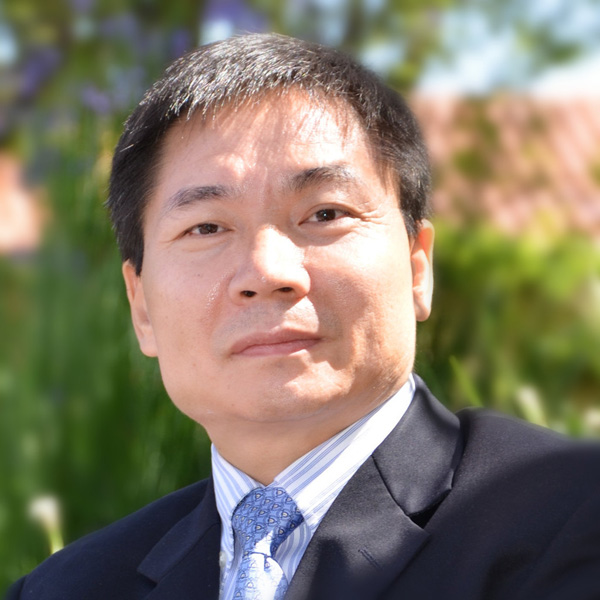
Dr. Li Baowen is Chair Professor at Southern University of Science and Technology (SUSTech) with joint appointments in the Department of Physics and Department of Materials Science and Engineering. A pioneer in phononics and thermal metamaterials, he previously held endowed professorships at University of Colorado Boulder and UC Berkeley. His research focuses on controlling heat transfer at nano scales, developing thermal metamaterials like thermal cloaks, and applying complex networks to physical systems. Dr. Li has published over 400 papers including 3 in Reviews of Modern Physics and 30 in Physical Review Letters, with more than 34,800 citations (H-index 98). He is recognized with the Brillouin Medal from the International Phononics Society and is a Fellow of the American Physical Society. He founded research centers including the China-EU Joint Lab for Nanophononics at Tongji University. His current research explores quantum phononics, machine learning applications in thermal materials, phonon lasers, and quantum sensing technologies.
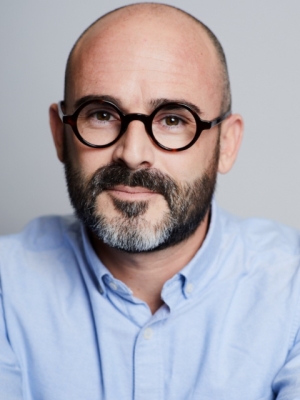
Romain Fleury is an Associate Professor at the Laboratory of Wave Engineering (LWE) , part of the École Polytechnique Fédérale de Lausanne (EPFL) School of Engineering and Institute of Electrical and Micro Engineering (IEL) . He earned a Ph.D. in Electrical and Computer Engineering from the University of Texas at Austin in 2015 under Andrea Alù, followed by a Marie-Curie Postdoctoral Fellowship at ESPCI Paris-Tech and CNRS Langevin Institute (2016). His research explores wave physics and engineering , focusing on topological insulators , nonreciprocal wave propagation , and time-modulated metamaterials . He has co-authored over 70 peer-reviewed articles in journals like Science , Nature , and Physical Review series, with recent work on topological acoustics , active metamaterials , and wave-based analog computing . Dr. Fleury received the Eccellenza Grant (2021) from the Swiss National Science Foundation and an ERC Starting Grant (2022) . He co-founded Minwave , a startup selling miniaturized microwave devices patented by his lab, which has garnered awards such as ESA-BIC CH , FIT , and Venture Kick . He has served as Technical Program Committee Chair for Eucap 2019 and on the Editorial Board of the New Journal of Physics . Recognized for teaching excellence with the STI Polysphere Award (2019) and IEL Best Teacher Award , he teaches courses including Electromagnetics , Antennas , and Advanced Photonics . His work bridges fundamental wave physics with applied technologies , emphasizing topological effects , nonlinear systems , and metamaterials . Collaborations span institutions such as ESPCI Paris , University of Texas at Austin , and University of Vienna , with applications in acoustic imaging , 5G antennas , and optical signal processing . His recent publications highlight ultrafast anti-lasing , reconfigurable metasurfaces , and disorder-assisted photonic crystals , reflecting a career dedicated to advancing wave engineering through topological and nonreciprocal designs .
Wan Shou is an Assistant Professor in the Department of Mechanical Engineering at the University of Arkansas. His research focuses on multiscale manufacturing, advanced materials, and functional devices, with applications in wearables, robotics, and sustainable technologies. Ph.D., Mechanical Engineering, Missouri University of Science and Technology M.S., Mechanical Engineering, University of Louisiana at Lafayette B.E., Textile Engineering, Tianjin Polytechnic University, China Dr. Shou’s research spans laser-based manufacturing , nanomanufacturing , machine learning-assisted processes , and bioresorbable electronics . He explores 3D printing of polymer and metal composites, energy materials , and functional textiles for wearable sensors and environmental applications. Recent publications highlight his work in additive manufacturing , computational design of composites, and self-powered sensing systems . His team integrates machine learning with materials discovery to optimize performance. Editor’s pick of Science Magazine US Patent 11,752,700: Data-driven material formulation US Patent 11,993,850: Laser-assisted nanoparticle printing Dr. Shou’s patents and publications reflect a commitment to innovative manufacturing and environmentally conscious design . His work bridges materials science , robotics , and smart systems , advancing energy and water technologies.
Prof. Dr. Johan Robertsson is a Full Professor of Applied Geophysics and Head of the Exploration and Environmental Geophysics (EEG) Group at ETH Zürich's Department of Earth and Planetary Sciences. He holds a MSc from Uppsala University (1991) and a PhD in Geophysics from Rice University (1994). Before joining ETH in 2012, he spent 15 years at Schlumberger in R&D roles, leading projects that revolutionized marine seismic data acquisition. His research focuses on wave propagation physics, seismic data inversion, and applications in exploration and environmental geophysics. He pioneered the use of Distributed Acoustic Sensing (DAS) for landslide monitoring and contributed to Mars seismology via the InSight mission. Education: MSc in Engineering Physics, Uppsala University (1991) PhD in Geophysics, Rice University (1994) Research Interests: Seismic wavefield modeling and inversion Planetary seismology (Mars, Moon) Acoustic metamaterials and wave control Environmental geohazard monitoring Marine seismic acquisition techniques His work on the Martian soil properties using InSight data and lunar exploration instrumentation (ALGEP) reflects his cross-disciplinary approach. He holds 90+ patents and has secured prestigious grants like the ERC Advanced Grant. Awards: EAGE Guido Bonarelli Award (2020) ERC Advanced Grant MATRIX (2017) EAGE Conrad Schlumberger Award (2018) Grants & Advising: Led the MATRIX ERC project advancing seismic imaging algorithms Advised over 20 PhD/MS students (names not listed) Secured Schlumberger's largest R&D project in marine seismic sampling His EEG Group operates cutting-edge labs for immersive wave experimentation and planetary geophysical instrumentation. Current initiatives include lunar subsurface exploration and acoustic invisibility experiments.
Kumar Vaibhav Srivastava is a Professor in the Department of Electrical Engineering at the Indian Institute of Technology Kanpur (IIT Kanpur). His research focuses on electromagnetic theory, meta-materials, and antenna design, with significant contributions to the field of computational electromagnetics and microwave engineering. Dr. Srivastava received his B.Tech from Kamla Nehru Institute of Technology, Sultanpur U.P. in 2002, followed by an M.Tech from IIT Kanpur in 2004. He completed his PhD at IIT Kanpur in 2008 with a thesis titled "Studies on Inhomogeneous Dielectric Resonators for Improved Mode Separation in MIC Environment using Efficient FDTD Algorithm and its Application to Band-pass Filter" under the supervision of Prof. Animesh Biswas. His research interests span a wide range of topics in electromagnetics, with particular expertise in Meta-Materials , Microwave Antennas , Microwave Absorbers , Microwave Cloaking , and the Finite-Difference Time-Domain (FD-TD) Technique . Dr. Srivastava's work has significant applications in wireless communications, radar systems, and electromagnetic compatibility. His innovative approaches to meta-material absorbers and antenna design have garnered attention in both academic and industrial circles. Dr. Srivastava's recent publications demonstrate a strong focus on advancing meta-material absorber technology and antenna design. His work shows consistent innovation in bandwidth enhancement techniques, polarization independence, and compact antenna designs for ultra-wideband applications. His research bridges theoretical electromagnetic principles with practical engineering solutions. Cadence Gold Medal-2005 for Best M.Tech. Thesis Best Teaching Assistantship Award (2005-06) Appreciation Letter from GE Global Research Centre Young Research Fellowship (Class of 1979) Best Paper Award at ATMS Conference (2013) IEI Young Engineer Award 2014 Dr. Srivastava has supervised numerous research projects and students in the field of electromagnetics and antenna design. His work with industry partners, including GE Global Research Centre, demonstrates his ability to translate theoretical research into practical applications. He maintains active collaborations with researchers both within IIT Kanpur and internationally. Based in the Advanced Centre for Electronic Systems (ACES) at IIT Kanpur, Dr. Srivastava works within a vibrant research ecosystem that supports cutting-edge work in electronic systems and electromagnetic applications. His laboratory focuses on computational electromagnetic simulations and experimental validation of novel meta-material structures and antenna designs.
A. Alperen Günay is an Assistant Professor in the Department of Mechanical Engineering at Bilkent University . He previously served as an Assistant Professor at METU (2021-2023) and as a researcher at The University of Tokyo (2019-2021). Günay earned his PhD and MS in Mechanical Engineering from the University of Illinois at Urbana-Champaign under Dr. Nenad Miljkovic. Current Affiliation: Bilkent University Prior Affiliations: METU, University of Tokyo Education: PhD (UIUC), MS (UIUC), BS (METU) Research Focus : Developing green passive thermal devices through nanomaterials and phase change technologies. Key areas include radiative cooling , thermophotovoltaic systems , and nanomaterial-based heat sinks . His work spans energy conversion, thermal management, and optical property characterization. Scientific Awards : TÜBİTAK 2232-B Award Laboratory Leadership : Dr. Günay directs the Thermal Research & Optics Laboratory (TROL), focusing on projects like metal-organic framework systems , passive evaporative cooling , and greenhouse films for year-round thermal regulation .
Prof. Dr. Romain Quidant is a Full Professor in the Department of Mechanical and Process Engineering at ETH Zürich, where he also serves as Head of the Institute for Energy and Process Engineering. His research focuses on nanophotonics, optomechanics, and plasmonics with applications in quantum optics, biomedical engineering, and thermal control systems. He leads a multidisciplinary team exploring light-matter interactions at the nanoscale, particularly in levitated nanoparticles and plasmonic therapies. Key research interests include quantum optomechanical systems, plasmonic nanothermometry, and targeted photothermal therapies. His work bridges fundamental physics with practical applications such as precision measurement, medical imaging, and energy-efficient materials. Recent studies highlight advancements in optical trapping techniques, thermal wavefront shaping, and robotic surgery guidance using fluorescent nanothermometry. Prof. Quidant’s publications showcase innovations in reconfigurable meta-surfaces, optofluidic platforms for high-throughput analysis, and adaptive thermal microscopy for brain imaging. His lab develops integrated systems for medical diagnostics, environmental sensing, and quantum-enabled technologies. These efforts have been applied to cancer treatment optimization and novel materials for energy systems.
Professor Chen Xiaodong is a Distinguished University Professor at Nanyang Technological University (NTU), Singapore, holding primary appointment in the School of Materials Science & Engineering with courtesy appointments in the Lee Kong Chian School of Medicine and School of Chemistry, Chemical Engineering and Biotechnology. He serves as Deputy Director of the Institute for Digital Molecular Analytics and Science (IDMxS) and Director of both the Innovative Centre for Flexible Devices (iFlex) and Max Planck-NTU Joint Lab for Artificial Senses. His research spans mechanomaterials science and engineering, flexible electronics, sense digitalization, cyber-human interfaces and systems, and carbon-negative technology. Professor Chen's work focuses on developing methods for controlling materials architecture at 1-100 nm scale to solve fundamental and applied problems in energy, environment, and healthcare. His group integrates expertise from materials science, chemistry, biology, physics, and engineering to create innovative solutions. His scientific contributions have been recognized through numerous prestigious awards including the Singapore President's Science Award, National Research Foundation Investigatorship and Fellowship, Friedrich Wilhelm Bessel Research Award, Dan Maydan Prize in Nanoscience and Nanotechnology, and election to multiple national academies including Singapore National Academy of Science, Academy of Engineering Singapore, and German National Academy of Sciences Leopoldina. Professor Chen serves as Editor-in-Chief of ACS Nano and sits on editorial boards of numerous prestigious journals including Advanced Materials, Chemical Reviews, and Matter. He has mentored numerous PhD students and research fellows who have gone on to faculty positions at institutions worldwide. His laboratory develops cutting-edge technologies in flexible electronics, bio-inspired materials, and nano-bio interfaces, with strong industry collaborations and translational research focus.
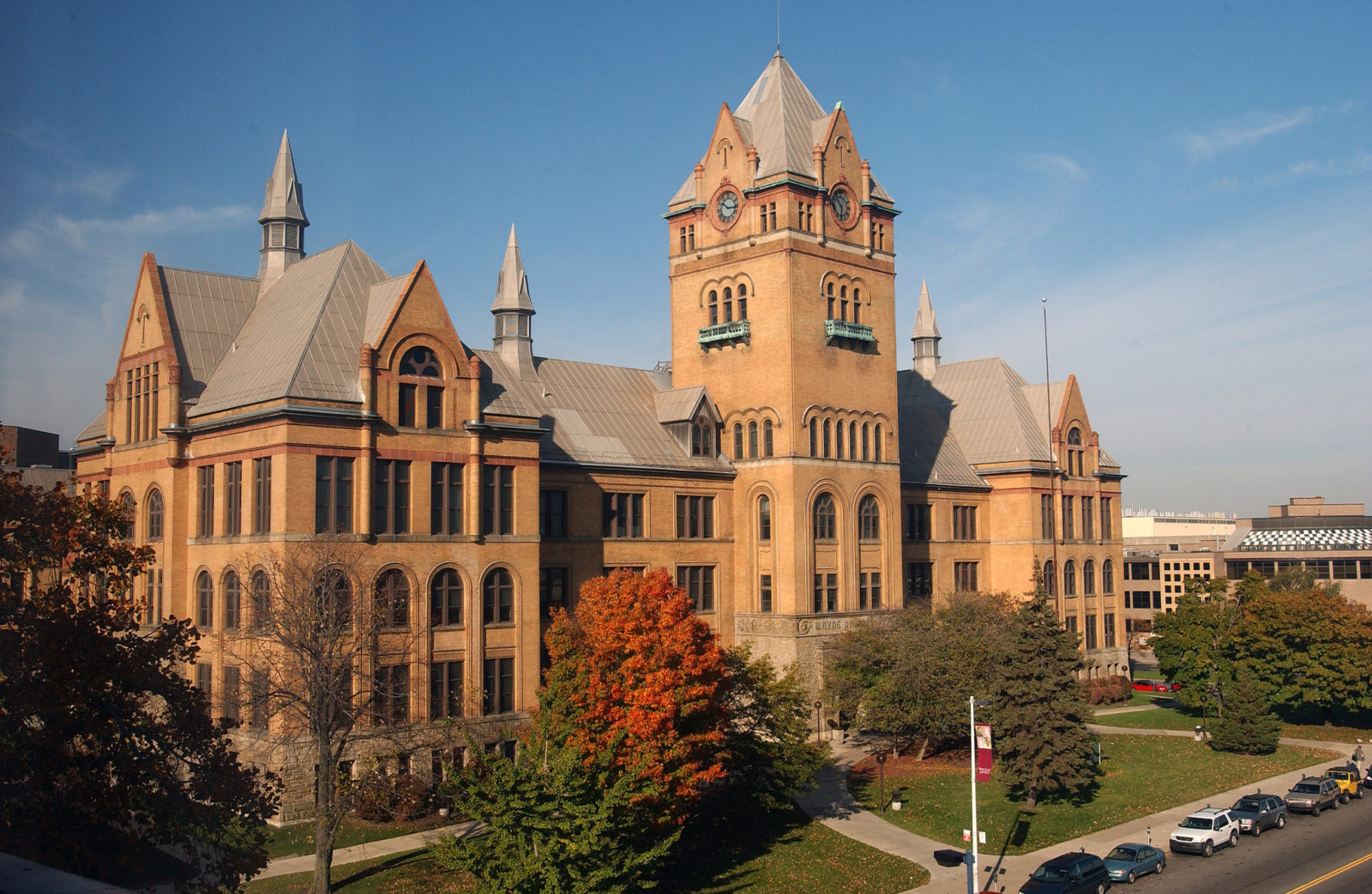
Dimitrios Sounas is an Assistant Professor in the Department of Electrical and Computer Engineering at Wayne State University's College of Engineering. His research bridges electromagnetics, metamaterials, and acoustic systems, with a focus on nonreciprocal devices and time-modulated technologies. He has held academic roles at The University of Texas at Austin and Polytechnique Montreal. Ph.D. in Electrical and Computer Engineering, Aristotle University of Thessaloniki (2009) Diploma/M.Eng. in Electrical and Computer Engineering, Aristotle University of Thessaloniki (2004) His research explores advanced electromagnetic systems, including magnetless circulators, time-modulated metasurfaces, and topological phonon transport. Current projects investigate nonreciprocal acoustic filters and broadband delay lines. Recent publications highlight innovations in time-varying capacitors for energy trapping (2023), non-reciprocal Willis coupling (2023), and magnet-free circulators via photonic crystal modulation (2023). Earlier works established foundational concepts in microwave nonreciprocity and optical signal processing. Scientific accolades include: Brillouin Medal, International Phononics Society (2023) EurAAP Leopold B. Felsen Award (2020) IEEE Senior Membership (2020) He supervises research students in electromagnetic theory, metamaterial simulations (CST, COMSOL), and microwave measurements, with recent Ph.D. advisee Saeed Keshavarz completing work on topological microwave components for wireless systems.
Dr. Steven Cummer is the William H. Younger Distinguished Professor of Engineering and Associate Chair of Faculty Affairs in the Department of Electrical and Computer Engineering at Duke University's Pratt School of Engineering. He is also recognized as a Bass Fellow at Duke University. Dr. Cummer received his educational foundation at Stanford University, earning his B.S.E.E. in 1991, M.S.E.E. in 1993, and Ph.D. in Electrical Engineering in 1997. After completing his doctorate, he spent two years at NASA Goddard Space Flight Center as an NRC postdoctoral research associate before joining Duke University in 1999. B.S.E.E. Stanford University, 1991 M.S.E.E. Stanford University, 1993 Ph.D. Stanford University, 1997 Dr. Cummer's research focuses on theoretical and experimental electromagnetic problems related to geophysical remote sensing and engineered electromagnetic materials. His work spans multiple disciplines, including lightning physics, terrestrial gamma-ray flashes, acoustic metamaterials, and transformation optics. He has made significant contributions to understanding the connection between lightning discharges and high-energy atmospheric phenomena, particularly terrestrial gamma-ray flashes (TGFs). His research in acoustic metamaterials has pioneered new approaches to sound manipulation and control, with applications in medical imaging, underwater acoustics, and noise control. Analysis of Dr. Cummer's recent publications shows a continued focus on atmospheric electricity phenomena, particularly lightning and terrestrial gamma-ray flashes, while simultaneously advancing the field of acoustic metamaterials. His work integrates experimental observations with theoretical modeling, often using sophisticated radio frequency and optical measurement techniques. The interdisciplinary nature of his research bridges electrical engineering, atmospheric science, and physics. Dr. Cummer has received numerous prestigious awards for his research contributions: National Science Foundation CAREER award (2001) Presidential Early Career Award for Scientists and Engineers (PECASE) (2001) Fellow of the Institute for Electrical and Electronics Engineers (2011) Stansell Family Distinguished Research Award from the Pratt School of Engineering (2018) As an educator, Dr. Cummer has taught a range of courses in electrical and computer engineering, including Fields and Waves, Waves in Matter, and various project-based courses. His research group has been consistently supported by grants from the National Science Foundation and other agencies, enabling both fundamental research and student training. Dr. Cummer has mentored numerous graduate students who have gone on to successful careers in academia and industry. Dr. Cummer leads a research laboratory that combines experimental and theoretical approaches to study electromagnetic phenomena. His team utilizes sophisticated radio frequency measurement systems, optical instrumentation, and computational modeling to investigate lightning physics, atmospheric electricity, and acoustic metamaterials. Recent field campaigns have included airborne observations of gamma-ray emissions from thunderstorms.
Yuri Kivshar is a Distinguished Professor in the Department of Materials Physics at the Australian National University (ANU), where he leads research in nonlinear physics and metamaterials. His work focuses on nanophotonics, plasmonics, and topological photonics, with applications in optical metamaterials and quantum systems. He has contributed significantly to understanding bound states in the continuum, nonlinear effects in nanostructures, and metasurface engineering. His research group explores advanced optical phenomena using all-dielectric resonators, metamaterials, and topological insulators. Key areas include high-harmonic generation, vortex beam manipulation, and chiral photonics. Kivshar has authored over 20 books and 2,000 scientific papers, reflecting his global influence in photonics and materials science. He has pioneered studies on optical solitons, Fano resonances, and metamaterial cloaking. His work bridges fundamental physics and practical applications, such as nanoscale lasers and biosensors. Collaborations span institutions worldwide, emphasizing interdisciplinary innovation in light-matter interactions and nanoscale optics.
Professor Nicole Kessissoglou is a distinguished academic in the School of Mechanical and Manufacturing Engineering at the University of New South Wales (UNSW Sydney). She holds the position of Professor and conducts her research within the Ainsworth Building (J17), Level 4, Room 408 at the Kensington Campus. Her academic profile is prominently featured on UNSW's research portal, highlighting her expertise in structural vibration, acoustics, and fluid-structure interaction. Professor Kessissoglou's research interests span across several critical areas of mechanical engineering, with a particular focus on Structural vibration and transmission , Acoustics , Structure-fluid coupling , Active vibration control , and Active structural acoustic control . Her work falls within the broader Fields of Research categories of Mechanical Engineering, Dynamics, Vibration and Vibration Control, and Acoustics and Noise Control. Her research addresses fundamental challenges in how structures interact with fluids and how sound and vibrations propagate through these systems. Analysis of her most recent publications (2023-2025) reveals a strong focus on wave phenomena in periodic and resonant systems, with significant attention to underwater applications. Her work spans theoretical modeling, numerical simulation, and experimental validation of acoustic and vibration phenomena. Key themes include structural cloaking technology, uncertainty quantification in resonant systems, vibroacoustic responses of coated cylindrical shells, and novel acoustic metamaterial designs. Her research has important applications in naval engineering, underwater acoustics, and noise control technologies. Professor Kessissoglou maintains an extensive publication record with 140 journal articles, 9 book chapters, 187 conference papers, and various other scholarly outputs. Her work demonstrates a consistent trajectory of advancing knowledge in structural acoustics and vibration control, with increasing focus on metamaterial applications and hybrid active-passive control systems in recent years. Her research activities appear to be well-integrated within UNSW's broader engineering research ecosystem, particularly within the university's strengths in aerospace, structural engineering, and technology for good initiatives. While specific grant information isn't detailed in the available materials, her publication output suggests sustained research funding and active collaboration with other researchers in her field.
Claire Prada is a CNRS Research Director at the Institut Langevin , specializing in laser ultrasound , guided wave propagation , and time-reversal acoustics . Her work bridges fundamental wave physics and applied nondestructive testing. Research Pillars : Zero-group-velocity (ZGV) Lamb modes for material characterization Anisotropic wave propagation and negative refraction phenomena Time-reversal operator decomposition for structural monitoring Passive acoustic defect localization with ambient noise Technological Innovations : Fourier-domain reconstruction algorithms for 3D imaging Single-pixel photoacoustic microscopy Adaptive projection methods for rib-cage ultrasound focusing Wave Physics Discoveries : Documentation of power flux skewing in anisotropic plates Identification of beating resonance patterns in elastic media Experimental validation of negative reflection in chaotic waveguides Medical & Industrial Applications : Quantitative elastography for tissue stiffness measurement Jet engine blade damage detection Cortical bone femoral neck assessment Thin layer thickness measurement via ZGV resonance shifts
Dr. Ping Sheng is Chair Professor of Nanoscience and Professor of Physics at the Hong Kong University of Science and Technology (HKUST). A pioneer in acoustic metamaterials, he established the conceptual foundation for locally resonant sonic materials and developed innovative metamaterial absorbers. His research encompasses wave-matter interactions across phononic, photonic and electronic systems, with seminal contributions to acoustic metamaterials, carbon nanostructure superconductivity, and electrorheological fluids. Current work focuses on broadband absorption technologies for underwater and microwave applications. Dr. Sheng has received the Brillouin Medal, Rolf Landauer Medal, and Bloch Prize for his transformative contributions. He co-founded Acoustic Metamaterials Group (AMG), enabling commercial applications of metamaterial technologies.
Prof. Dr.-Ing. Sabine C. Langer is a Full Professor of Acoustics and Director of the Institute of Acoustics at Technische Universität Braunschweig. She holds a PhD in Engineering and has extensive experience in academia, including leadership roles such as President of the Deutsche Gesellschaft für Akustik (DEGA) and Deputy Speaker of the DFG Collaborative Research Center 880 (SFB 880). Her research focuses on acoustics, numerical modeling, aircraft noise reduction, and innovative materials for sound absorption. She has pioneered studies on acoustic black holes, metamaterials, and AI-driven design optimization. Langer’s work also includes contributions to educational platforms, such as developing MATLAB-based sound quality analysis tools and online learning resources for engineering students. Education: Civil Engineering degree (1991–1996, TU Braunschweig), PhD in Engineering (2001, TU Braunschweig). Key positions include W2 Professor for Vibroacoustics (2013–2018) and Junior Professor for Wave Propagation and Building Acoustics (2003–2013). She led the Graduate School at SFB 880 and advised numerous research initiatives in structural acoustics and noise mitigation. Research interests span numerical acoustics, sound quality assessment, and sustainable acoustic design. Her recent work emphasizes AI integration in engineering design, stochastic modeling, and additive manufacturing of acoustic materials. She has published extensively on aircraft cabin noise prediction, vibration isolation, and metamaterial applications. Professional roles include membership in the DIN/VDI Normenausschuss Akustik and the Advisory Board of the Excellence Cluster Hearing4All. She has organized major acoustics conferences, including DAGA 2020 in Hannover, and contributed to standard-setting in noise reduction and vibration technology.