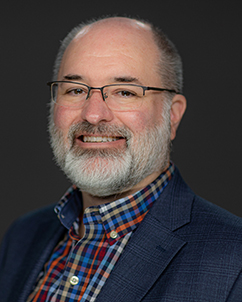
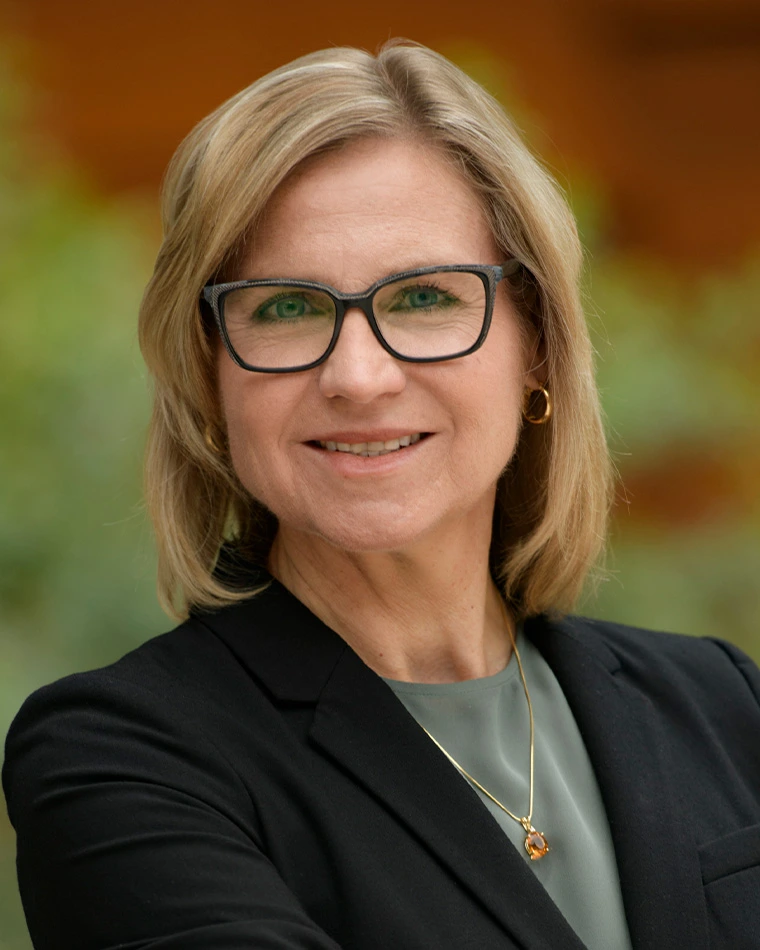
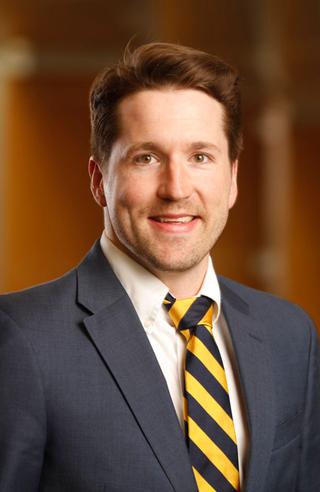
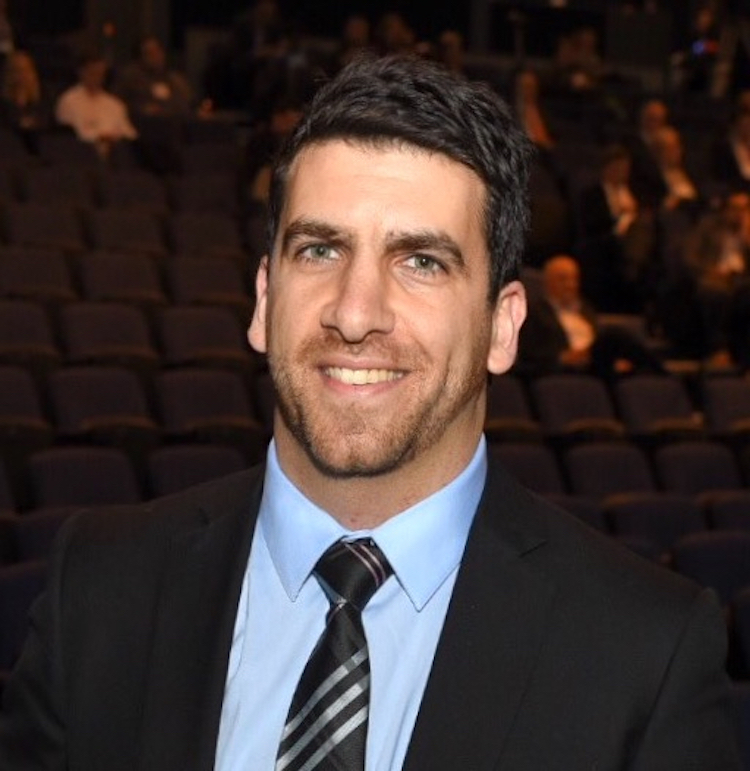
Andreas Groll is a Professor at the Technical University of Dortmund, affiliated with the Department of Statistical Methods for Big Data under the Faculty of Statistics. His research focuses on variable selection, regularization techniques in generalized linear models, categorical data analysis, and sports statistics, particularly predicting international soccer and tennis tournaments. He leads a working group including researchers like Dr. Daniel Horn and Dr. Rouven Michels. Key research areas include semiparametric regression and event data analysis. Recent work explores machine learning applications in sports analytics and healthcare, such as predicting hospital readmissions and modeling environmental data. Groll has published extensively in journals like Journal of Quantitative Analysis in Sports and Statistical Modelling .
Colin Mulligan is a Clinical Assistant Professor in the Department of Kinesiology at Oregon State University's School of Exercise, Sport, and Health Sciences. His research focuses on biomechanical factors influencing ACL injury risk, particularly during deceleration and agility maneuvers, and improving return-to-sport protocols for athletes post-ACL reconstruction. He holds a PhD and is a certified athletic trainer (ATC). Key research interests include: Mechanics of deceleration in sport movements Functional testing for athlete readiness Musculoskeletal injury rehabilitation strategies Biomechanics of aging and fall prevention His recent work emphasizes translational research to reduce ACL reinjury rates through better understanding of landing mechanics, quadriceps strength symmetry, and movement patterns. Articles from 2020-2025 consistently address ACL injury prevention programs, biomechanical analysis of cutting maneuvers, and rehabilitation outcomes for female athletes. No scientific awards or grant information is explicitly listed in the provided materials.
Wayne G. Lutters is a Professor and Associate Dean for Faculty in the College of Information Studies (INFO) at the University of Maryland. He holds office in Patuxent 1109C and can be reached at lutters@umd.edu. His research focuses on sociotechnical systems, computer-supported cooperative work (CSCW), and social informatics, with emphasis on IT-mediated infrastructural work and cybersecurity advocacy. Current projects include studies on scientific cyberinfrastructure, usable privacy and security, and moderation in social media. Dr. Lutters advises the Dean’s Student Advisory Council and explores topics like data privacy, sociotechnical cybersecurity, and the future of work. His recent work addresses challenges in security awareness programs, code set redundancy in healthcare, and collaborative systems design. He is actively involved in developing tools like the Value Set Hub to improve healthcare data curation practices. His research consistently bridges theory and practice, emphasizing ethical technology design and interdisciplinary collaboration. Notable contributions include frameworks for cybersecurity advocacy roles and methodologies for synthesizing scholarly knowledge. While currently not accepting new PhD students, he remains a key figure in shaping academic and infrastructural innovation at UMD.
Anjolein Schmeits is a Clinical Professor of Finance at the Leonard N. Stern School of Business, New York University, where she has been a faculty member since 2005. She previously served as a Visiting Assistant Professor and later as a Clinical Associate Professor before her current appointment. She holds a Ph.D. in Finance from the University of Amsterdam and an M.Sc./B.S. in Economics from Tilburg University, earned with highest honors. Ph.D. in Finance, University of Amsterdam, 1999 M.Sc./B.S. in Economics, Tilburg University, 1991 (summa cum laude) Her research centers on the interface between financial intermediation and corporate finance, particularly examining the economic role of banks and credit rating agencies, corporate governance, and financial contracting under asymmetric information. She investigates how the structure and competitiveness of the financial sector influence firms' financing choices and contract design. Her work combines theoretical modeling with empirical analysis and has strong policy implications, especially in the context of banking systems and capital market regulation. The 15 most recent publications reflect a consistent focus on financial intermediaries, credit ratings, corporate governance, and the cost and structure of corporate financing. These works span top journals and policy-oriented publications, showing a blend of academic rigor and real-world relevance. Key themes include the coordination function of credit ratings, discretion in loan contracts, and comparative analyses of bank lending and capital costs across countries. Her scientific awards highlight her excellence in teaching and research: Excellence in Teaching Award, Stern Executive MBA Program, 2008 Best Finance Paper in Economische Statistische Berichten, 1999-2000 Voted in top 3 of Best Professors in Executive MBA Program, NYU Stern, 2007 Multiple Reid Teaching Awards from Washington University (1999–2004) She has supervised and taught numerous students across undergraduate, MBA, and executive education programs at both Washington University and NYU Stern. She has led courses in Corporate Finance, Valuation, and Financial Management. Her research has been supported through academic collaborations and policy consulting, particularly in the Netherlands. She is an active member of the American Finance Association, Western Finance Association, European Finance Association, and the Financial Intermediation Research Society. Professor Schmeits maintains active research projects on credit ratings, bank competition, and corporate governance, often in collaboration with leading scholars such as Arnoud W.A. Boot and Anthony Saunders. She contributes to both academic discourse and public policy through publications in Dutch economic journals and policy reports.
Laura Murray is a Senior Scientist at Johns Hopkins University , affiliated with the Bloomberg School of Public Health in the Department of Mental Health and International Health . A clinical psychologist by training, she co-founded the Applied Mental Health Research (AMHR) group and developed the Common Elements Treatment Approach (CETA) , a scalable mental health intervention for low-resource settings. Education: PhD in Clinical Psychology, Western Michigan University (2002) MA in Clinical Psychology, Western Michigan University (1999) BS in Psychology, Drake University (1996) Her research spans global mental health , child trauma , implementation science , and cross-cultural interventions , with fieldwork in Zambia, Democratic Republic of Congo, Myanmar, Lebanon, and other conflict zones. She has led clinical trials on CETA's effectiveness for trauma, depression, and substance abuse in diverse populations, including Syrian refugees and orphans in sub-Saharan Africa. Recent publications highlight CETA's adaptability via telehealth in humanitarian crises (2025) and its role in addressing HIV-mental health comorbidities (2024). Her work emphasizes cost-effective training models , software solutions like CareConfidence™, and capacity-building in low-income regions. For grants and collaborations, she has partnered with NGOs and academic institutions across Africa, Southeast Asia, and the Middle East, focusing on mental health workforce challenges and policy-relevant research .
Silvio Inzucchi, MD , is Professor of Medicine (Endocrinology) at Yale University School of Medicine , where he serves as Clinical Chief of the Section of Endocrinology, Medical Director of the Yale Diabetes Center, and Program Director of the Endocrinology & Metabolism Fellowship. He is a leading expert in diabetes management, with a focus on pharmacological therapies and cardiovascular outcomes. Education: BS, Fordham University (1981) MD, Harvard Medical School (1985) Residency, Internal Medicine, Yale-New Haven Hospital Fellowship, Endocrinology and Metabolism, Yale-New Haven Hospital Dr. Inzucchi’s research centers on clinical diabetes management , particularly pharmacological antihyperglycemic therapy and the cardiovascular complications of type 2 diabetes and insulin resistance . His work bridges clinical practice and large-scale trials, aiming to improve patient outcomes through evidence-based strategies. He has been instrumental in shaping national and international guidelines, including co-chairing the 2012 and 2015 ADA-EASD Position Statements on Hyperglycemia in Type 2 Diabetes. His recent publications reflect a strong trend in cardiovascular and renal outcomes of diabetes medications, especially SGLT2 inhibitors and GLP-1 receptor agonists. These studies, published in top journals like Circulation , JAMA Cardiology , and Diabetes Care , often involve meta-analyses of major trials such as SOUL, DAPA-HF, and DELIVER, highlighting the real-world impact of these therapies on heart failure, kidney function, and quality of life. Scientific Awards and Recognition: David J. Leffell Prize for Clinical Excellence, Yale University Named 'Top Doctor' by local and national rankings Dr. Inzucchi is actively involved in clinical mentoring and education as Fellowship Program Director and through his academic clinical practice. He has led and participated in numerous federally and industry-funded clinical trials , contributing to the advancement of diabetes therapeutics. His work is supported by affiliations with the Yale Diabetes Center , Diabetes Research Center , and Yale Center for Clinical Investigation (YCCI) . He is a frequent national and international speaker on diabetes management and has served on editorial boards for Diabetes Care and the Journal of Clinical Endocrinology and Metabolism .
Jennifer Barton is a Professor at the University of Arizona in the College of Engineering, with appointments in Biomedical Engineering, Electrical and Computer Engineering, Optical Sciences, and Biosystems Engineering. She serves as the Interim Director of the BIO5 Institute and has held leadership roles such as Department Head of Biomedical Engineering and Interim Vice President for Research. BS and MS in Electrical Engineering from the University of Texas at Austin and University of California Irvine PhD in Biomedical Engineering from the University of Texas at Austin (1998) Her research in Biomedical Optics focuses on developing miniature endoscopes combining optical coherence tomography and fluorescence spectroscopy for early ovarian and colon cancer detection . She also explores light-tissue interaction and dynamic optical properties of blood , leading to novel laser therapies for skin disorders. Her publications span optical imaging device design , cancer detection , and multimodal endoscopes . Recent works emphasize machine learning integration for diagnostic accuracy and 3D printed optical components . Women of Impact Research Innovation & Impact, University of Arizona (2022) Thomas R. Brown Distinguished Chair, College of Engineering (2020) Best Campus Collaborator, Tech Launch Arizona (2019) President's Award, SPIE (2016) She mentors students in biomedical engineering and leads the Tissue Optics Lab , an interdisciplinary team building novel imaging devices for healthcare innovation.
Anis Yazidi is a Professor at Oslo Metropolitan University, affiliated with the Faculty of Technology, Art and Design and the Department of Information Technology. His research focuses on Artificial Intelligence, Machine Learning, Medical Technology, and IoT Security, with a particular emphasis on Applications of AI in Healthcare, EEG Signal Processing, and Digital Transformation. Active research projects include AI Mind (dementia diagnostics), Glycopathology in dry eyes, and Pain and mental distress analysis Completed projects: Digital hate speech analysis, AI in reproductive technology, Nano-antibiotics development His recent publications (2023-2025) demonstrate expertise in: Tsetlin Automaton algorithms for concept learning EEG classification using visibility graphs and vision transformers AI ethics frameworks for medical practice Deepfake detection methodologies Collaborative work spans institutions in Norway, Czech Republic, and international AI research communities.
Dr. Joel Williams is an Associate Professor in the Department of Public Health Sciences at Clemson University's College of Behavioral, Social and Health Sciences. His academic foundation includes a Ph.D. in Public Health (University of South Carolina, 2004), MPH (2001), Graduate Certificate in Applied Statistics (2008), and B.S. in Exercise Studies (Lander University, 1996). With clinical experience in sports medicine and hospital settings, Dr. Williams specializes in implementing and evaluating health promotion programs. His research examines obesity prevention, chronic disease management, and mobile health technology applications. Primary interests include: Community-based interventions for physical activity and nutrition Pediatric and population health behavior change Telemedicine solutions for chronic conditions Methodological approaches to program evaluation Dr. Williams' recent publications (2017-2022) demonstrate consistent focus on diabetes management, mobile health innovations, pediatric health, and epidemiological studies. His work frequently employs multidisciplinary approaches across public health, clinical medicine, and digital technology domains. Honors include: Clemson University School of Health Research Scholar (2017) Institute for Advancement of Health Care Faculty Fellow (2015) Clemson University Service Alliance Faculty Fellow (2008) He has advised 21 graduate students as primary or co-advisor, with mentees contributing to research on pediatric asthma, diabetes, nutrition, and telemedicine. His externally funded research portfolio includes projects supported by CDC, NIH (NCI, NHLBI, NICHD), DoD, USDA, and HRSA. Dr. Williams leads interdisciplinary teams for community and clinical trials, frequently collaborating with medical institutions and public health agencies. His research emphasizes practical applications of mobile technology for chronic disease self-management in diverse populations.
Susan Davies is a Professor and Interim Dean at the Tulane School of Social Work, where she also serves as Associate Dean for Research. She previously held leadership and research roles at the University of Alabama at Birmingham, including directing the CDC-funded Prevention Research Center and holding scientific appointments in multiple interdisciplinary centers such as the Center for AIDS Research (CFAR) and the Minority Health Research Center. Her research is centered on improving behavioral health outcomes among vulnerable populations, particularly focusing on HIV/STI prevention among adolescents, maternal mental health, and the social determinants of health. She employs ecological and ecosystemic frameworks to understand risk and protective factors within families and communities, with a strong emphasis on intervention development, program evaluation, and community organizing. Her work often integrates interdisciplinary collaboration across public health, medicine, nursing, and psychology. The recent publications reflect a sustained focus on adolescent sexual health, maternal well-being, and community-level influences on risk behaviors. Her studies utilize diverse methodologies including longitudinal analysis, randomized trials, and qualitative assessments, often targeting underserved populations in the Deep South. Common themes include health equity, family functioning, neighborhood effects, and innovative intervention strategies such as entertainment education and social media outreach. Susan Davies has secured significant research funding from federal agencies including the CDC and NIH. Notable grants include a five-year CDC Prevention Research Center award on community health renewal and an NIH/NICHD-funded prenatal behavioral intervention study to prevent cytomegalovirus in pregnancy. She has served as Principal Investigator on twelve studies and as co-PI or investigator on numerous others, demonstrating a robust and sustained research program. She is deeply committed to mentoring, having guided five junior faculty recipients of K-awards across disciplines such as Medicine, Surgery, Public Health, Nursing, and Psychology. She has chaired 15 dissertation committees and served on over 40 others, advising students from various departments across her institutions. Her leadership extends to academic administration, where she plays a central role in shaping research strategy and educational programs at Tulane School of Social Work.
Professor Timothy Walsh serves as Chair of Critical Care at the University of Edinburgh's Usher Institute within the College of Medicine and Veterinary Medicine. He concurrently holds the position of Director of Innovation for NHS Lothian and Health Innovation South East Scotland, bridging academic research with clinical implementation. His dual roles position him at the forefront of critical care research and healthcare innovation in the UK. Walsh's research spans critical and perioperative care, with a programmatic approach building complex multi-center trials. His work integrates epidemiology, systematic reviews, cohort studies, and stakeholder engagement to develop pragmatic trials. Recent focus includes AI algorithm validation, sedation protocols, transfusion medicine, and sepsis management. His fingerprint reveals deep expertise in Intensive Care Medicine (100%), Intensive Care Unit operations (74%), and Critical Illness (70%), with notable contributions to sedation research (35%) and sepsis (26%). His 221 research outputs include high-impact publications in NEJM, JAMA, and The Lancet. Current projects like the SHORTER antibiotic trial and aerosolized virus quantification study demonstrate ongoing leadership in trial methodology. As Director of Innovation for NHS Lothian (2018-2024), he established data-driven innovation frameworks connecting academic and industry partners to address NHS challenges. Walsh has secured £9 million as Chief Investigator and £34 million as co-applicant from NIHR, MRC, Wellcome, and industry sources. His leadership extends to founding the NIHR critical care specialty group (2007-15) and UK critical care research group (2007-16), which remain foundational to UK critical care research infrastructure. Trustee at Chest Heart & Stroke Scotland (2021-present) Director of Research & Development for NHS Lothian (2017-2021) Chair of 19 trial steering/data safety monitoring committees Leadership in 13 ECTU trials, 9 UK trials, and multiple international studies
Dr. Elena Link is a Junior Professor for Science Communication at the Institute of Journalism at Johannes Gutenberg University Mainz since 2023. Her research focuses on health communication, particularly examining information seeking behaviors, information avoidance, and the impact of digital technologies on health communication processes. She has established herself as a leading researcher in understanding how individuals navigate health information in digital environments, with particular attention to trust dynamics and the emerging role of AI tools in health information contexts. Dr. Link's research interests span several key areas in health and science communication: Health information seeking and avoidance behaviors Digital health communication and AI applications Patient-provider communication dynamics Trust in health information sources Gender differences in health information behaviors Science communication regarding medical innovations Her recent publications demonstrate a strong focus on contemporary issues in health communication, particularly the emergence of AI tools in health information seeking, longitudinal analyses of information behaviors during health crises, and nuanced examinations of how physical and mental health conditions influence information practices. Her work often employs mixed-methods approaches, combining survey research with behavioral data analysis to provide comprehensive insights into health information behaviors across different population segments. Dr. Link has received numerous prestigious awards for her research, including: Best Paper Award from the DGPuK Health Communication Section (2024) Sibylle Kalkhof-Rose University Prize 2024 for humanities/social sciences Best Paper Award from the ICA Health Communication Division (2023) Acceptance into the Female Science Talents Program of the Falling Walls Foundation (2022) German Study Prize of the Körber Foundation in the Humanities section (2019) As an active contributor to the academic community, Dr. Link serves as Associate Editor of the European Journal of Health Communication and Co-Chair of the Health Communication Section of ECREA. Her research has significant implications for improving health communication practices, addressing health inequalities, and shaping the digital transformation of health information provision. She is particularly interested in empowering patients through effective communication strategies and combating information disparities in healthcare contexts.
Dr. Liza Rovniak is an Associate Professor at Penn State University's College of Medicine , with dual appointments in the Department of Medicine and Department of Public Health Sciences . Her work focuses on creating sustainable environments for health behavior change across diverse settings like workplaces, healthcare facilities, and neighborhoods. MPH - San Diego State University (2008) PhD - Virginia Tech (2003) BA - McGill University (1996) Research spans physical activity promotion , healthy eating interventions , and policy development using ecological frameworks. Key projects include: NIH-funded clinical trials PCORI-supported population health studies WalkLink email-based walking program SilverSneakers osteoarthritis intervention Her work contributes to UN Sustainable Development Goals related to health and well-being, with significant collaborations in transport policy and community health . Scientific recognition includes: Excellence in Research Award (2014) Scholarship in Education Award (2015)
Tyler Schmidt, D.O., is an Assistant Professor in the Department of Neurosurgery at the University of Rochester Medical Center. He serves as Surgical Director of the Metastatic Brain and Spinal Tumor Program within the Wilmot Cancer Institute and is actively involved in the Translational Brain Mapping Program, integrating neuroscience research to optimize neurological outcomes in brain tumor surgery. Clinical Focus: Neurosurgical oncology, brain/spinal tumor surgery, metastasis management, and degenerative spine conditions. Technical Expertise: Minimally invasive techniques, stereotactic neuro-navigation, brain mapping, and tumor fluorescence-guided resection. Research Emphasis: Patient-centered value-based care for spinal disorders and surgical complication risk modeling. His publications span glioma surgery, spinal reconstruction, pediatric neurosurgical emergencies, and mobile stroke units, reflecting interdisciplinary collaborations. Recent works (2017-2020) highlight outcomes research in spinal surgery, thromboembolic complications in meningioma resection, and innovative approaches to neonatal neurovascular malformations. Dr. Schmidt completed his neurosurgical residency (2014-2020) and fellowship (2017-2018) at Rochester, with prior internship (2013-2014) at the same institution. He holds certification from the American Board of Neurological Surgery and contributes to national neurosurgical organizations.
Associate Professor Abdul Ihdayhid is a Research Leader in Cardiovascular Biology at the Curtin Medical School , Curtin University, within the Faculty of Health Sciences. His work focuses on advanced cardiac imaging techniques, particularly coronary CT angiography, fractional flow reserve modeling, and AI integration in cardiovascular diagnostics. Key Research Areas: Cardiovascular imaging, artificial intelligence applications, aortic stenosis interventions, and ethical implications of AI in medicine. Recent Publications: Analysis of high-risk coronary plaque, telehealth adaptations during pandemics, and AI-driven CAC scoring innovations. Collaborations: Extensive partnerships with institutions across Australia and New Zealand on multicenter studies like the Australian-New Zealand SCAD cohort. His 2024-2025 work emphasizes machine learning for plaque quantification and ethical frameworks in AI implementation. Email: Abdul.Ihdayhid@curtin.edu.au