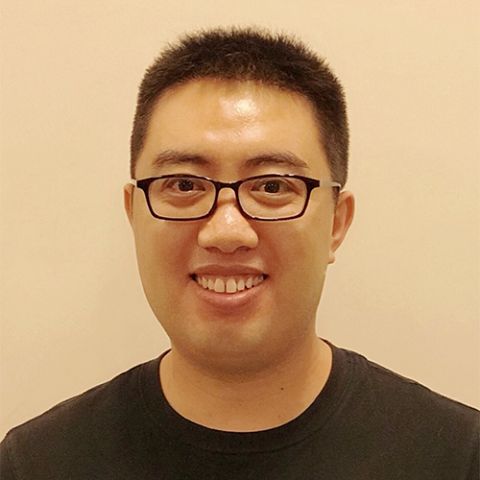
Carlos Wong is an Assistant Professor at The University of Hong Kong, affiliated with the Department of Pharmacology and Pharmacy and the Department of Family Medicine and Primary Care. His research focuses on epidemiology and health services research, particularly using retrospective administrative databases and cost-effectiveness analysis of healthcare interventions. PhD in Pharmacology/Health Services Research (University of Hong Kong) Bachelor & MPhil in Mathematics (Hong Kong University of Science and Technology) Research interests integrate big data , machine learning , and AI with epidemiological modeling and health policy evaluation , emphasizing real-world evidence generation for chronic and infectious diseases. Recent publications in The Lancet , Clinical Infectious Diseases , and Diabetes Care demonstrate cross-disciplinary expertise in pharmacoeconomics , diabetes complications management , and COVID-19 treatment optimization . Glasgow/HKU Early Career Mobility Fund (2016) HMRF Research Fellowship (2017)
Ming Li is a Professor of Electrical and Computer Engineering at Duke Kunshan University's Division of Natural and Applied Science, and a Principal Research Scientist at the Digital Innovation Research Center. He holds an adjunct position as a Professor at Wuhan University's School of Computer Science. His research focuses on audio/speech processing, multimodal behavior signal analysis, and applications in autism spectrum disorder diagnosis. Li has over 200 publications and serves on editorial boards of journals like IEEE Transactions on Audio, Speech and Language Processing. Education: Ph.D. in Electrical Engineering from the University of Southern California (2013). Awards include the IBM Faculty Award (2016), ISCA 5-Year Best Paper Award (2018), and Youth Achievement Award (2020). He leads initiatives in anti-spoofing countermeasures, voice conversion, and speech synthesis. Recent Courses: Random Signals and Noise Speech Recognition Data Science Key Research Contributions: Development of datasets like KunquDB, TMCSpeech, and systems for speaker verification, deepfake detection, and autism diagnosis tools. His work bridges signal processing with clinical applications, leveraging AI for social interaction improvement in neurodiverse populations.
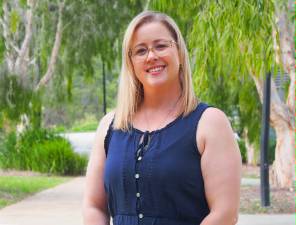
Arlen Rowe is a Postdoctoral Research Fellow at the University of Southern Queensland (USQ) within the Centre for Health Research, affiliated with the School of Psychology and Wellbeing. Her work focuses on improving health outcomes for vulnerable populations through technology-driven interventions. BPych(Hons), University of Southern Queensland (2017) PhD, University of Southern Queensland (2020) Dr. Rowe's research examines digital mental health engagement, particularly for youth and rural populations. Key areas include: Adherence and engagement behaviors in online programs Digital mental health solutions for adolescents Adaptive technology applications Chronic health population interventions Cancer survivorship support Her recent work explores adolescent anxiety interventions, eHealth user experience frameworks, and geographical disparities in cancer care. Notable grants include the HCF Health Services Research Grant (2022) and Australian Rotary Health funding (2020). Awards: Advance Queensland PhD Scholarship (2017) Australian Psychological Society Health Psychology Thesis Award (2021) Dr. Rowe contributes to digital mental health supervision and collaborates on projects addressing rural healthcare challenges.
Scott E. Crouter is a Professor in the College of Education, Health, and Human Sciences at the University of Tennessee, Knoxville. He serves as director of the Applied Physiology Laboratory and is a Fellow of the American College of Sports Medicine. His research focuses on improving physical activity and energy expenditure measurement using wearable monitors and machine learning algorithms, with applications in youth, adults, and special populations like pregnant individuals and cancer survivors. Education: Postdoctoral in Nutritional Sciences (Cornell, 2005-07), PhD in Exercise Physiology (University of Tennessee, 2005), MS in Cardiac Rehabilitation/Adult Fitness (University of Wisconsin, 2000), BS in Exercise Science (Linfield College, 1998) Dr. Crouter's work spans physical activity assessment , sedentary behavior analysis , and technology validation . He has developed machine learning models for energy expenditure estimation using ActiGraph GT9X and Cosmed K5 devices. His recent studies examine pregnancy hyperglycemia interventions, urban environment impacts on activity patterns, and robotic exercise aids. He has secured significant NIH funding for projects including digital health weight management , pediatric obesity treatment translation , and fall risk factors in the elderly . As associate editor for Medicine and Science in Sports and Exercise and Journal for the Measurement of Physical Behaviors , he contributes to methodological advancement in activity monitoring. Scientific Awards: Fellow, American College of Sports Medicine Editorial Leadership National Physical Activity Plan Alliance Participation CDC/National Collaborative on Childhood Obesity Research Contributions National Academy of Sciences Committee Member Dr. Crouter's student collaborations include works with Natalie Butte on youth compendiums, Allan Opotowsky in cardiac rehabilitation trials, Patrick Hibbing in metabolic equivalent research, and Sara LaMunion in consumer monitor validation. His lab has produced over 100 publications and 15 recent articles focusing on sensor technology and population health.
Muhammad Waqas is a researcher affiliated with COMSATS University Islamabad , where he holds a position in the Department of Meteorology under the School of Applied Sciences and Humanities . His academic collaborations span institutions like Bahria University, National University of Technology, and University of Bahrain, indicating a multidisciplinary approach. Research interests include Mechanisms for integrating fuzzy logic and machine learning in health monitoring Application of deep learning to medical imaging and clinical diagnostics Development of smart sensors for wearable technology in biomechanics Analysis of social media data for public health surveillance and sentiment analysis Investigation of digital citizenship and ICT leadership in educational contexts Trends in his 15 most recent publications (2025-2024) reveal a focus on medical diagnostics (e.g., monkeypox, breast cancer), smart infrastructure (e.g., sensor placement, structural health monitoring), and social media analytics for health and behavioral insights. These works leverage machine learning , fuzzy systems , and multi-objective optimization .
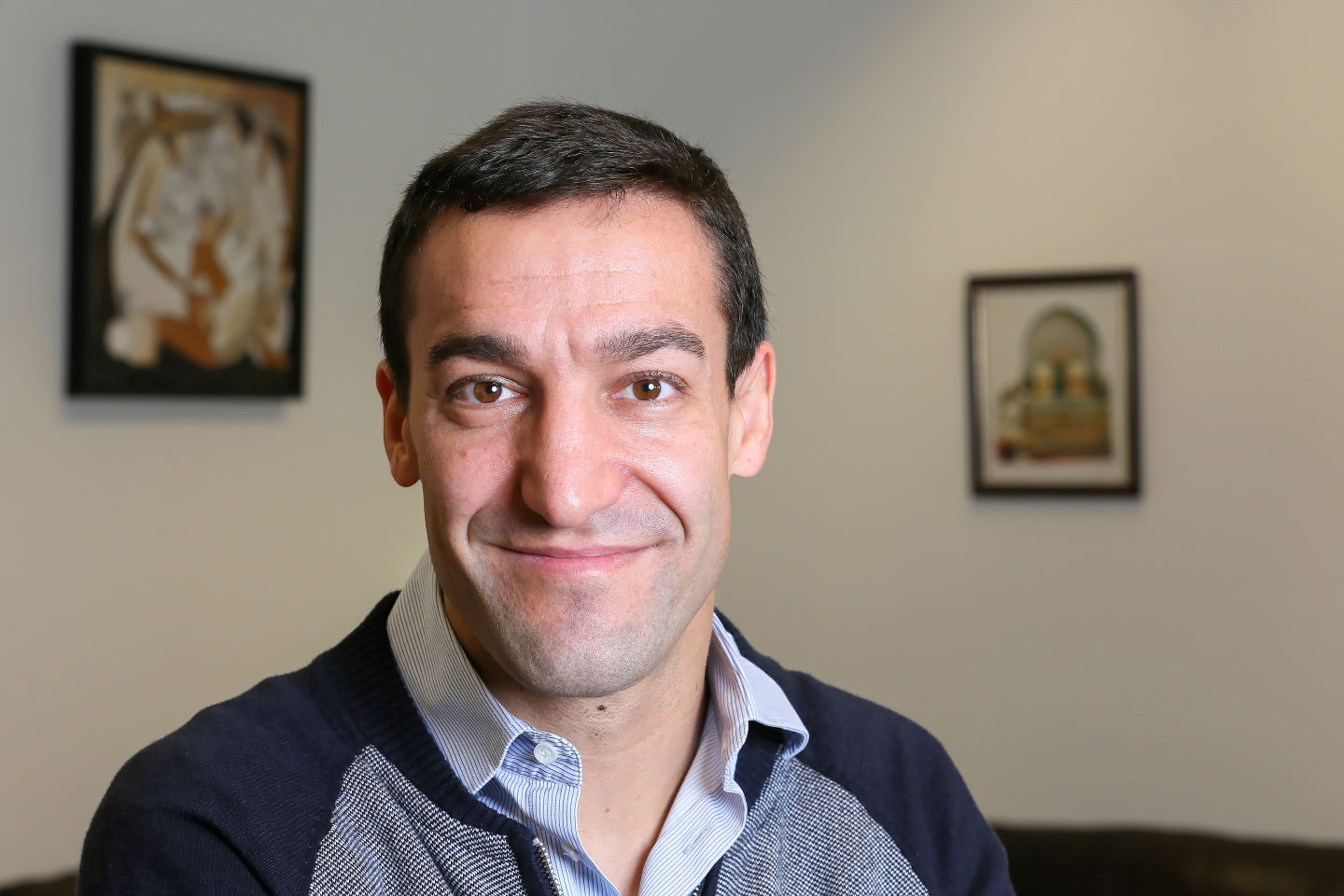
Andrea Maurino is a Full Professor at the University of Milano-Bicocca and leads the Insid&s LAB. His research focuses on data quality, knowledge graphs, machine learning, and their applications in healthcare, finance, urban planning, and organizational analysis. He explores cutting-edge techniques like Large Language Models (LLMs) for decision support systems and semantic annotation of tabular data. Key research interests include improving data quality frameworks for large RDF datasets, developing enterprise knowledge graphs for organizational insights, and applying AI to social media analysis and hate speech detection. His work bridges theoretical advancements with real-world applications such as smart city mobility prediction and nutritional strategies for healthy aging. Notable contributions include scalable tools like ABSTAT-HD for knowledge graph profiling and the 3d-clost mobility prediction model. Maurino’s interdisciplinary approach integrates data science with fields like psychology (ICD-11 decision support) and environmental science (ESG activity detection in financial texts). His lab collaborates on projects like Food NET, combining nutrition science with social network analysis. While no formal awards are listed here, his prolific publication record reflects sustained innovation in data-driven methodologies.
Dr. Hung Cao is an Assistant Professor of Computer Science at the University of New Brunswick, where he directs the Analytics Everywhere Lab. His work focuses on interdisciplinary research in Cyber-Physical Systems (CPS), IoT, Edge/Fog/Cloud Computing, and Explainable AI, addressing societal challenges through data-driven solutions. Prior roles include PostDoc Fellow and Data Scientist at the People in Motion Lab, UNB, and Lecturer/Researcher at Vietnam National University. He holds a Ph.D. in Geomatics Engineering (specializing in Data Science) from UNB (2020), an M.Sc. in Computer Science from University College Dublin (2015), and a B.Eng. from Vietnam National University (2011). Research interests span Smart Cities, Embedded AI, TinyML, Federated Learning, and Real-time Systems. He has led projects with Cisco, NB Power, and other industry partners to develop scalable analytics frameworks for IoT applications. Dr. Cao actively contributes to technical communities (IEEE Smart City, Edge Computing, etc.), serving as a reviewer for journals and conferences, and a Topic Editor for Electronics Journal . His innovations include the Analytics Everywhere framework for spatio-temporal data analysis, MACeIP platform for smart cities, and energy-efficient IoT systems for environmental monitoring. Current work emphasizes human-centered AI for healthcare diagnostics and industrial inspection systems.
Min Lee is a Full-time Assistant Professor of Computer Science at Singapore Management University's School of Computing and Information Systems (SCIS). Holding a PhD from Carnegie Mellon University (2021), Lee specializes in Artificial Intelligence with a focus on Human-AI Collaborative Systems and their applications in healthcare. Their research bridges technical innovation with human-centric design, emphasizing trustworthiness, explainability, and accessibility in AI systems. Research interests include decision-making optimization, human-machine collaboration, and AI-driven solutions for healthcare challenges such as stroke rehabilitation, elderly care monitoring, and clinical decision support. Lee has pioneered low-cost AI/robotic solutions for post-stroke rehabilitation exercises, integrating socially assistive robotics with real-time feedback mechanisms. Recent work highlights AI's role in enabling trustworthy clinical decision-making through explainable AI (XAI) techniques like counterfactual explanations and gradient-based methods. Their systems address ethical concerns in predictive healthcare and advocate for stakeholder-inclusive design processes. Awards and grants: No specific awards mentioned in the profile, though research has been supported through collaborative projects with clinical partners and iterative user evaluations involving therapists and patients. Advising focuses on multidisciplinary projects spanning AI, healthcare, and human-computer interaction. Current advisees include BHOSALE Rimmon Saloman, TRAN Truong Thuy, and YANG Xinlin. Lee collaborates closely with clinical stakeholders to translate technical advancements into practical healthcare solutions, emphasizing iterative design and real-world applicability. Labs/teams: Active in SCIS's AI and Data Science initiatives, leading projects on intelligent decision support systems, socially assistive robotics for rehabilitation, and human-centered AI ethics frameworks.
Fenglong Ma is an Associate Professor at Pennsylvania State University, affiliated with the Institute for Computational and Data Sciences and the Center for Socially Responsible Artificial Intelligence. His research focuses on data mining, healthcare informatics, machine learning, natural language processing, and multimodal learning. He holds a Ph.D. from the University at Buffalo (2019) and degrees from Dalian University of Technology. His work addresses challenges in federated learning, medical AI, adversarial robustness, and multimodal systems. Key contributions include innovations in quantization for large language models, federated knowledge injection, and medical vision-language benchmarking. Recent publications explore topics like collaborative fairness in federated learning, robust medical vision-language models, and adversarial attack mitigation. His research bridges theory and practical applications in healthcare, cybersecurity, and personalized recommendation systems. He leads the PSU Data Science Lab and collaborates on projects involving AI ethics, multimodal data integration, and scalable medical foundation models.
Dr. Nicholas Cummins is a Lecturer in AI for Speech Analysis at King’s College London, specializing in applying machine learning to health conditions, particularly mental health disorders. He holds roles in the Department of Biostatistics & Health Informatics and is affiliated with the NIHR Maudsley Biomedical Research Centre. His research focuses on speech processing, affective computing, and digital phenotyping, with projects like RADAR-CNS and DE-ENIGMA. He earned his PhD from UNSW Australia (2016) and conducted postdoctoral work in Germany before becoming habilitation candidate at the University of Augsburg. Education: PhD in Electrical Engineering, UNSW Australia (2016) Habilitation Candidate, Chair of Embedded Intelligence for Healthcare, University of Augsburg Research Interests: Machine learning for mental health monitoring Speech-based biomarkers for depression and psychosis Wearable device integration for health tracking Multilingual speech analysis Key Projects: RADAR-CNS: Data analysis for neurological conditions DE-ENIGMA, TAPAS, sustAGE (Horizon 2020) National Science Foundation of China project on speech-based depression diagnosis Grants & Awards: Over 100 peer-reviewed publications (h-index: 23) NSFC-funded project on speech analysis for depression Reviewer for IEEE, ACM, ISCA journals Labs & Teams: Involved in the NIHR HealthTech Research Centre in Brain Health and the EMBRACE initiative for maternal/child health with AI.
Emily Callander is a Professor of Women’s Health Economics at the Monash Centre for Health Research and Implementation, Monash University, and Head of Discipline in Health Services Management at the University of Technology Sydney (UTS). She leads the Women’s Economics and Value Based Care research program and holds leadership roles in national health policy, including as Vice President of Women's Healthcare Australasia and member of the Pharmaceutical Benefits Advisory Committee Economics Subcommittee. BA in Economics and Policy, Griffith University PhD in Health Economics, University of Sydney Postdoctoral training at NHMRC Clinical Trials Centre and Charles Perkins Centre, University of Sydney Her research focuses on maternal and women's health, utilizing linked administrative data, economic evaluation, and modelled analysis to influence health policy and delivery. Her work spans efficient staffing models, rural health access, national maternity initiatives (e.g., Safer Baby Bundle, Normal Birth Strategy), and cost analyses for global maternal health programs supported by the Gates Foundation. Her recent publications reflect a strong trend in health economic evaluations of maternity care models, medication use in pregnancy, digital health implementation, and preterm birth prevention. These works emphasize real-world applicability, equity, and cost-effectiveness, aligning with her mission to embed economic evidence into health systems. She has been supported by prestigious NHMRC awards, including a Doctoral Scholarship, Early Career Fellowship, and Career Development Fellowship. Her scientific contributions are recognized through active research projects and expert media commentary on maternity care policy. NHMRC Doctoral Scholarship NHMRC Early Career Fellowship NHMRC Career Development Fellowship Emily Callander advises on multiple national and international research projects, often as Chief or Associate Investigator, and collaborates with institutions such as Coventry University. She is actively accepting PhD students and contributes to policy through advisory roles in government and non-profit organizations. Her research is supported by grants from NHMRC, government departments, and international foundations. She leads the Women’s Economics and Value Based Care program at Monash and is a key member of the Transforming Maternity Care Collaborative. Her work is embedded in real-world health systems, partnering with consumers, providers, and policymakers to improve women’s health outcomes globally.
Daniel Livingstone is a researcher at The Glasgow School of Art (GSA) specializing in the application of games and 3D technologies to enhance learning and public engagement. His work spans medical visualization, heritage interpretation, and broader educational technology domains. Current PGR supervisee: Shaojie Ni (AR & Gamification in Museums) Email: D.Livingstone@gsa.ac.uk Research Themes : Serious games, virtual reality, 3D anatomical modeling, disease education, digital heritage preservation, and AI-driven simulations. Highlights include AR tools for rheumatology engagement, VR applications in diabetes management, and digital reconstructions of historical surgical instruments. Article Trends : Focus on merging immersive technologies with healthcare education, heritage storytelling, and interdisciplinary applications of game engines. Recurring keywords: Augmented Reality , 3D Visualization , Medical Education , Public Health , Virtual Environments .
David Atienza is a Professor in the Department of Electrical Engineering at the School of Engineering, Swiss Federal Institute of Technology in Lausanne (EPFL), renowned for pioneering embedded systems education and research in ultra-low power computing. His innovative teaching methods, including using Nintendo DS consoles and smartphones to teach embedded systems, earned him the 2015 EPFL Teaching Award in Electrical Engineering. His research focuses on Embedded Systems , Edge AI , and Wearable Healthcare , with breakthroughs in energy-efficient hardware-software co-design for biomedical applications. Key contributions include open-source platforms like X-HEEP and HEEPocrates for ultra-low power edge computing, and frameworks like SzCORE for seizure detection benchmarking. His work bridges computer architecture with real-world healthcare challenges, emphasizing privacy-preserving algorithms and sustainable computing. Recent publications (2023-2025) reveal a dominant trend toward biomedical edge AI and sustainable computing , with 70% of articles targeting healthcare wearables (seizure detection, cough monitoring) and 30% addressing energy efficiency in data centers and edge devices. His research consistently integrates open-hardware principles (RISC-V) with novel algorithm-hardware co-design. Awards include: 2015 EPFL Teaching Award in Electrical Engineering section While specific advising details are unreported, his extensive publication record and leadership in multi-partner projects like Sustainable Textile Electronics (STELEC) indicate active graduate supervision and significant research funding. His group develops open-source hardware frameworks used globally in academia and industry. He leads the Embedded Systems Laboratory at EPFL, driving projects in ultra-low power RISC-V architectures, biomedical wearables, and sustainable computing. Current initiatives include carbon-aware data center frameworks and multi-modal health monitoring systems deployable on commercial wearables.
Dr. Erik Linstead is an Associate Professor and Senior Associate Dean at Chapman University, affiliated with the Fowler School of Engineering, School of Pharmacy, and George L. Argyros College of Business and Economics. His expertise spans Machine Learning, GPU Programming, Autism Spectrum Disorder, Assistive Technologies, Predictive Analytics, and Virtual Reality. Education: Bachelor of Science, Chapman University Master of Science, Stanford University Ph.D., University of California, Irvine Dr. Linstead's research integrates machine learning with diverse domains, including autism treatment, environmental monitoring, and software engineering. His recent publications focus on coral reef health, land surface temperature trends, and embedded machine learning systems. His scholarly work includes collaborations in remote sensing, medical informatics, and neurodiversity support. Articles highlight his interdisciplinary approach, applying AI to ecological challenges (e.g., Red Sea coral reefs, Nile Basin droughts) and human-centered technologies (e.g., VR therapy for autism, medication adherence analysis).
Amy Mullens is a Professor at the School of Psychology and Wellbeing , University of Southern Queensland. She serves as Research Theme Leader for Health Equity at the Centre for Health Research (CHR) and contributes to the Institute for Resilient Regions (IRR). Her work focuses on vulnerable communities , with emphasis on sexual health/HIV , diabetes , COPD , substance use , and health behavior change . Education : BA (St Catherine), MSc (North Dakota SU), PhD (QUT). She is a Fellow of the Australian Psychological Society with Clinical and Health Psychology Endorsements . Her research spans public health , gender studies , and clinical psychology , particularly transgender health , health equity , and social determinants of health . Recent work includes STI/HIV risk modeling , prison health interventions , and LGBTQIA+ mental health . Key scientific awards include: Fellow, Australian Psychological Society Clinical Psychology Endorsement Health Psychology Endorsement Accredited Supervisor (STAP) She supervises doctoral and masters students in areas like transgender incarceration , STI prevention , and health equity . Industry affiliations include clinical credentialed work with West Moreton Health Service , membership in Australasian Society of Behavioural Medicine , and advocacy through Sexual Health Society Queensland .