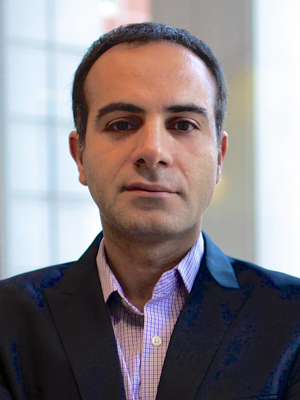
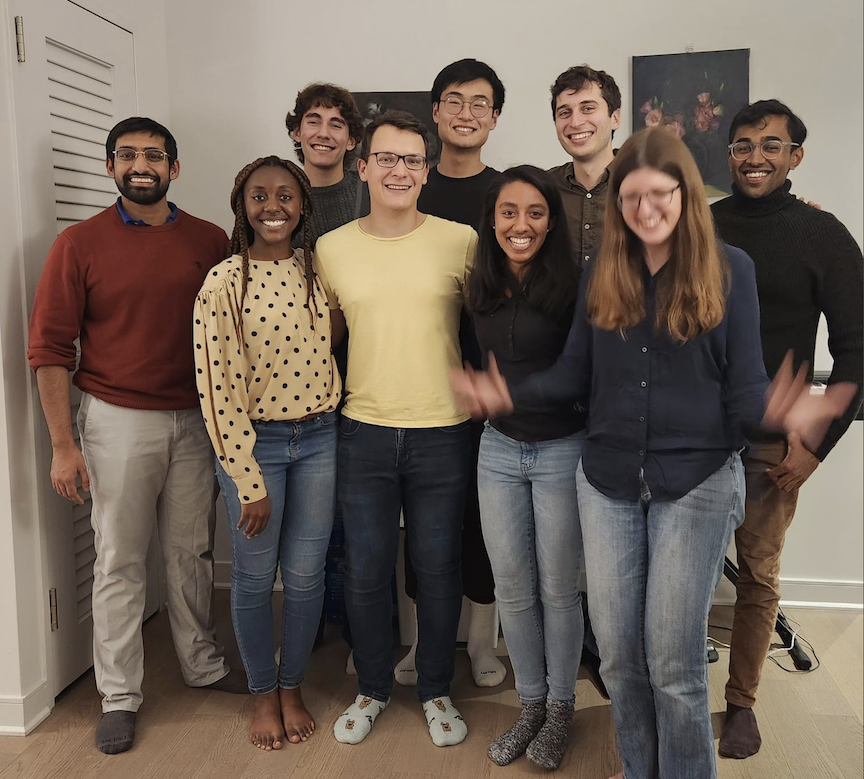
Patrick Slade is an Assistant Professor of Bioengineering at Harvard University's School of Engineering and Applied Sciences (SEAS). His lab, the Slade Lab, focuses on developing assistive devices to enhance mobility through the integration of biomechanics, robotics, and human-centered artificial intelligence. Key research areas include exoskeletons, prosthetics, wearable sensors for health tracking, and navigation aids for visually impaired individuals. Research Interests: The lab emphasizes translating research into practical solutions, such as personalized exoskeletons and robotic systems to improve mobility. Recent work includes optimizing human-robot interaction algorithms and publishing in high-impact journals like Nature . Collaborations with labs like the Biodesign Lab and BIONICs Lab highlight cross-disciplinary efforts. Publications: Over 15 articles since 2017 span topics like exoskeleton design, energy expenditure modeling, and Bayesian reinforcement learning. Notable contributions include a 2022 Nature paper on personalized exoskeleton assistance and a 2021 study on navigation aids for impaired vision. Awards & Grants: Students in his group have received prestigious NSF GRFP fellowships and conference awards, reflecting the lab's emphasis on innovation. The lab actively engages in grant-funded projects to advance assistive technology. Lab & Team: The Slade Lab opened at Harvard in 2023 and includes PhD students and postdocs working on devices like robotic exoskeletons and health-tracking systems. Future work focuses on scalable solutions for mobility challenges through interdisciplinary approaches.
Dr. Birgit Frauscher is the Lincoln Financial Group Distinguished Professor in Neurobiology at Duke University School of Medicine, where she serves as Professor of Neurology and holds a secondary appointment in the Department of Biomedical Engineering at the Duke Pratt School of Engineering. She is currently the Director of the Duke Comprehensive Epilepsy Center and leads the Analytical Neurophysiology (ANPHY) Lab. Her clinical and research work focuses on epilepsy and sleep medicine, utilizing both invasive and non-invasive electrical recordings to study brain activity in humans. Dr. Frauscher completed her medical training, neurology residency, and subspecialty training in electroencephalography, epilepsy, and sleep medicine at the Medical University of Innsbruck in Austria. After completing her clinical training in 2008, she earned her habilitation degree in 2011. She further specialized in intracranial EEG and signal analysis during a visiting professorship at the Montreal Neurological Institute and Hospital, McGill University (2013-2015), where she later served as an Attending Epileptologist and Group Leader of Epilepsy. Her research interests focus on developing novel seizure-independent EEG markers for the epileptogenic zone, investigating sleep-epilepsy interactions, and using intracranial EEG to study brain physiology during wakefulness and sleep. Her work aims to improve epilepsy diagnosis, prognosis, and treatment outcomes by better localizing the epileptic focus. Dr. Frauscher's recent publications demonstrate her continued leadership in epilepsy research, with over 170 peer-reviewed papers and an H-index of 62. Dr. Frauscher has received several prestigious awards including the Clinician-Scientist awards of the FRSQ (2018-2023), the Michael Prize of the International League against Epilepsy (2019), and the Ernst Niedermeyer Prize from the Austrian Epilepsy Society (2015). Her scholarly work has significantly advanced clinical knowledge in epilepsy and sleep medicine, establishing her as a leading figure in the field. As Director of the Duke Comprehensive Epilepsy Center and head of the ANPHY lab, Dr. Frauscher oversees a research program dedicated to advancing neuroscience through innovative approaches to studying brain activity. Her lab employs quantifiable tools to investigate neurophysiological and pathological processes related to epilepsy and sleep, with the ultimate goal of improving patient outcomes through better understanding of brain function.
Nima Mesgarani is an Associate Professor of Electrical Engineering at Columbia Engineering, Columbia University, affiliated with the Sense, Collect and Move Data Committee. His research bridges engineering and neuroscience through reverse-engineering neural signal processing mechanisms, leading to advancements in brain-machine interfaces, neural prosthetics, and speech processing algorithms. He received his PhD in Electrical Engineering from the University of Maryland and completed postdoctoral training at Johns Hopkins University's Center for Language and Speech Processing and UC San Francisco's Neurosurgery Department. Research Focus Professor Mesgarani's lab integrates computational neuroscience and engineering to study acoustic signal processing. Key areas include: Neural decoding of speech and auditory attention in multi-talker environments Development of brain-controlled hearing technologies Novel speech separation and synthesis algorithms inspired by cortical processing Cross-modal learning between auditory and visual systems Applications of large language models in neural signal interpretation Publication Trends Analysis of his 15 most recent articles (2025) reveals dominant themes: neural decoding techniques using intracranial EEG, brain-inspired speech separation models (e.g., Mamba architectures), applications of large language models in auditory neuroscience, cross-modal distillation methods, and clinical translation of audio processing algorithms. A strong emphasis emerges on real-time brain-computer interfaces and noise-robust speech processing. Laboratory and Collaborations Mesgarani directs an interdisciplinary lab developing neurotechnology for hearing restoration. His team collaborates with neurosurgery departments and speech processing centers, focusing on translating theoretical models into clinical brain-machine interfaces. The lab's work has yielded patents for brain-informed speech separation systems and attention-decoding frameworks.
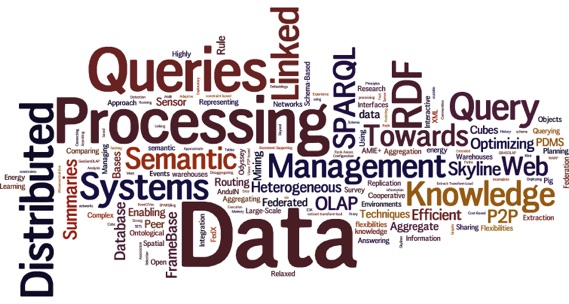
Katja Hose is a Full Professor of Data Management at TU Wien's DBAI research unit, heading the Data Management and Knowledge-Driven AI Lab. She previously held a Poul Due Jensen Foundation Professorship at Aalborg University. Her research focuses on data and knowledge engineering, including graph databases, knowledge graphs, querying, analytics, and machine learning, with interdisciplinary applications in bioscience, healthcare, and environmental assessment. Education: PhD in Computer Science (Ilmenau University of Technology, 2009), Postdoc at Max Planck Institute for Informatics (2009–2012). Academic roles include Program Co-Chair for ISWC 2024 and EDBT 2023, and editorial board membership at VLDBJ and TGDK. She leads projects like TARGET (health virtual twins) and ARMADA (data management). Research Interests: Knowledge Graphs, Semantic Web, Big Data, Machine Learning, Data Integration, and Provenance Systems. Key contributions include SHACL shape extraction, conversational data analytics, and environmental knowledge graphs. Awards include the 2025 Distinguished Meta-Reviewer Award and 2024 Manfred Paul Award. Advising and Grants: Supervised students including E. Pürmayr (Diploma Thesis 2025). Active in EU projects (TARGET, ARMADA) and grant coordination. Labs/Teams: DMKI Lab at TU Wien, collaborating with interdisciplinary teams in healthcare and environmental science.
Dr. Jeewanie Jayasinghe Arachchige is a Lecturer in the Department of Computer Science at Vrije Universiteit Amsterdam, Faculty of Science. She teaches undergraduate courses including Bachelor Project Computer Science, Professional Development, and Software Engineering Processes for the academic year 2024–2025. Her research focuses on process mining , healthcare informatics , and data security . She applies process mining to analyze healthcare pathways and subpopulation treatment variations, develops explainable AI frameworks for predictive analytics, and examines data governance in emerging architectures like Data Lakehouses. Her work intersects legal informatics, particularly formalizing Sri Lankan civil court processes using ontology engineering. Recent publications highlight trends in balancing simplicity and complexity in process modeling, Industry 4.0 healthcare applications, and cybersecurity in model-driven web development. She has contributed to over 20 peer-reviewed articles since 2006, spanning topics from service-oriented architectures to value network analysis. Her teaching and research emphasize practical applications of IT in healthcare, legal systems, and enterprise environments. No ancillary activities are currently recorded.
Susan A. Murphy is the Mallinckrodt Professor of Statistics and of Computer Science at Harvard University, with affiliations to the Kempner Institute. She leads the Statistical Reinforcement Learning Lab, focusing on developing algorithms to inform sequential decision-making in health, particularly for Just-in-Time Adaptive Interventions (JITAIs) and micro-randomized trials (MRTs). Her work is funded by NIH institutes, including NIDA, NHLBI, and NIBIB. Dr. Murphy has been awarded a MacArthur Fellowship (2013) and is a member of the National Academy of Medicine (2014) and the National Academy of Sciences (2016). Her research integrates statistical methods with computer science techniques to optimize mobile health interventions. She collaborates with d3Lab and mDOT on projects like HeartSteps and Sense2Stop, evaluating real-time treatment policies. Notable contributions include advancing MRT designs, sample size calculations, and reinforcement learning algorithms for personalized healthcare. Dr. Murphy advises a large team of postdocs, graduate students, and undergraduates, many of whom hold academic and industry roles globally. She emphasizes engagement in digital interventions, balancing personalization with ethical considerations. Her lab’s work spans algorithm development, clinical trial design, and causal inference, aiming to improve health outcomes through adaptive interventions.
Danai Koutra is an Associate Professor in Computer Science and Engineering at the University of Michigan, Ann Arbor, and an Amazon Scholar. Her research focuses on large-scale graph mining, graph neural networks, and interpretable machine learning methods for understanding complex networks. Key roles include leading the GEMS Lab and contributing to projects like DeltaCon (graph similarity) and VoG (graph summarization). She holds a PhD from Carnegie Mellon University and has authored over 80 publications in top venues like KDD, SDM, and NeurIPS. Educations: PhD in Computer Science, Carnegie Mellon University (2015) MS in Computer Science, Carnegie Mellon University (2015) Diploma in Electrical & Computer Engineering, National Technical University of Athens (2010) Research Interests: Her work spans graph mining, anomaly detection, knowledge graph completion, and applications in neuroscience, healthcare, and social networks. Recent projects include MAGNET (multi-agent graph networks) and GT2VEC (multimodal graph-text encoders). Grants & Awards: Recipient of the 2025 PECASE award, NSF CAREER Award (2019), and the 2016 ACM SIGKDD Dissertation Award. Active in organizing conferences like KDD and ECML/PKDD. Labs & Teams: Directs the GEMS Lab, collaborating on projects like FIDDLE (clinical data preprocessing) and SpecGreedy (dense subgraph detection). Engages in interdisciplinary efforts, including M-DICE (urban mobility analysis with Detroit).
Dr. Daniel Dutton is an Associate Professor in the Department of Community Health and Epidemiology at Dalhousie University's Faculty of Medicine, based at the Dalhousie Medicine New Brunswick campus in Saint John. His research focuses on how social environments influence health outcomes and the role of government policies in mitigating these impacts, particularly in areas like poverty, homelessness, and health economics. He holds adjunct roles at the University of New Brunswick (Sociology) and is the Scientific Director of APPTA, a hub bridging aging research and policy. He teaches courses in epidemiology, population health, and statistics. Education: PhD in Community Health Sciences (University of Calgary) MA in Economics (University of Calgary) BA Honours in Economics (Queen’s University) Research Interests: Dr. Dutton examines population-level health determinants, government policy effectiveness, and socioeconomic disparities. His work employs large datasets and econometric models to analyze topics such as homelessness incidence, healthcare cost savings through preventive measures, and the distributional impacts of public spending. Key Contributions: Scientific Director of the APPTA aging and technology hub. Co-founder of the IMPART research collaborative. Author of influential studies on Housing First programs, opioid prescribing patterns, and the fiscal benefits of guaranteed annual income policies. Advising & Grants: Supervises multiple MSc students and has collaborated on grants analyzing healthcare utilization in New Brunswick and Alberta. His work often intersects with policy-making, emphasizing actionable insights from quantitative research. Labs & Teams: Leads the Dutton Research Group, which uses mascot Odin the Saint Bernard to foster team cohesion. Active in interdisciplinary collaborations across public health, sociology, and economics.
Zakia Hammal is an Assistant Research Professor with dual appointments at Carnegie Mellon University, holding positions in the Robotics Institute within the School of Computer Science and the Department of Biomedical Engineering in the College of Engineering. Her work bridges computer science, machine learning, artificial intelligence, and social/behavioral psychology to advance computational models for human behavior analysis. Dr. Hammal's educational background includes a PhD in Computer Science, a Master of Artificial Intelligence and Algorithmic with specialization in Image Processing, and an Engineer's degree in Computer Science with specialization in Computer Systems. Her academic journey has positioned her at the intersection of technical expertise and healthcare applications. Her research focuses on multimodal human behavior modeling in social interaction, with particular emphasis on health informatics and affective computing (Emotion AI). Dr. Hammal's work has pioneered computational models for multimodal assessment of psychiatric disorders, including depression severity evaluation, automatic pain intensity measurement, assessment of expressiveness in children with facial abnormalities, analysis of non-verbal communication in mother-infant interaction, and identification of behavioral markers in autism spectrum disorder. Her approach integrates computer vision, machine learning, and behavioral psychology to create systems that can objectively measure human behaviors that are often subjective in clinical settings. Analysis of her recent publications reveals a consistent trajectory toward more sophisticated multimodal approaches to healthcare challenges, particularly in pain assessment and mental health diagnostics. Her work increasingly emphasizes interpretable AI models that can translate complex behavioral patterns into clinically meaningful insights, with growing attention to applications for vulnerable populations including infants, elderly patients, and those with craniofacial abnormalities or autism spectrum disorder. Women in AI Awards North America 2023 – AI Researcher of the Year Award Outstanding Reviewer Award at FG 2015 Best Paper award at ACII 2015 Outstanding Paper award at ICMI 2012 Dr. Hammal has secured significant research funding, primarily from the U.S. National Institutes of Health, including an R01 grant for developing a Multimodal Behavioral AI platform for pain assessment and management, and additional grants for automatic pain assessment in older adults with dementia. Her leadership extends to mentoring through her involvement in organizing workshops and conferences that train the next generation of researchers in affective computing and health informatics. As an active leader in her field, Dr. Hammal serves as ACM ICMI Steering Board Committee Member, Associate Editor for IEEE Transactions on Affective Computing and IEEE Transactions on Multimedia, and has organized numerous influential workshops including the International Workshop on Automated Assessment of Pain and Face and Gesture Analysis for Health Informatics. She is set to serve as Program Chair for FG 2025, ACII 2025, and ICMI 2026, demonstrating her growing influence in shaping the future direction of research in multimodal interaction and affective computing.
Yin Tat Lee is an Associate Professor at the Paul G. Allen School of Computer Science & Engineering , University of Washington, and a Senior Principal Researcher in Microsoft AI. His research spans convex optimization , convex geometry , graph algorithms , online algorithms , and differential privacy , with applications in machine learning and theoretical computer science.
Daniel Adelman is the Charles I. Clough, Jr. Professor of Operations Management at the University of Chicago Booth School of Business. He joined the faculty in 1997 after completing his PhD in industrial engineering and operations research at Georgia Tech. Adelman is a leading expert in Business Analytics and Management Analytics, helping companies deploy data and decision analysis to build world-class strategic and tactical management capabilities. Adelman received his PhD in industrial engineering and operations research in 1997, along with a bachelor's degree in industrial engineering and a master's degree in operations research, all from the School of Industrial and Systems Engineering at the Georgia Institute of Technology. Daniel Adelman's research focuses on applying analytical models to solve complex business problems across multiple industries. He has worked with firms from diverse sectors including internet services, chemical distribution, airlines, third party logistics, fiber-optics manufacturing, semiconductor manufacturing, oil, and healthcare. His research integrates real-world data with analytical models to bring structure and discipline to decision and control processes, enabling firms to achieve higher profits with lower risk. Adelman's recent work has concentrated heavily on healthcare analytics, where he leads the Healthcare Analytics Laboratory at Chicago Booth. This lab works with teams of doctoral and MBA students on projects with major healthcare institutions to optimize clinical, operational, and financial outcomes. His research spans foundational operations research including approximate dynamic programming, inventory theory/supply chain management, and revenue management/pricing optimization, as well as examining the linkage between operational performance metrics and financial performance of firms. Adelman's publications show a clear trend toward increasing focus on healthcare applications while maintaining strong theoretical foundations in operations research. His earlier work focused more on general operations management problems like inventory control and supply chain optimization, while his recent publications demonstrate a strategic shift toward healthcare analytics, particularly examining surgical team dynamics, hospital performance metrics, and resource allocation during public health emergencies like the COVID-19 pandemic. George B. Dantzig Prize (1998) for the best dissertation in operations research and management sciences that is innovative and relevant to practice Adelman regularly advises doctoral and MBA students through the Healthcare Analytics Laboratory at Chicago Booth. He has served as Associate Editor for Management Science, currently serves as Associate Editor for Manufacturing and Service Operations Management, and is the Area Editor for Operations and Supply Chain at Operations Research. His industry collaborations include significant projects with Akamai on internet pricing, with GE Global Research Labs on the electricity smart grid, with BP on gasoline supply contract portfolio optimization, and with Symantec on software release planning. Adelman leads the Healthcare Analytics Laboratory at Chicago Booth, which brings together interdisciplinary teams of doctoral and MBA students to work on a portfolio of projects with major healthcare institutions. The lab focuses on optimizing clinical, operational, and financial outcomes through advanced analytics and decision modeling.
Emma Pierson is an Assistant Professor of Computer Science at the University of California, Berkeley, affiliated with the Berkeley Artificial Intelligence Research Lab (BAIR) , Computational Precision Health , and the Center for Human-Compatible AI . She focuses on developing data science and machine learning methods to address issues in healthcare equity and social inequality . Her work includes studies on race adjustments in clinical algorithms, migration patterns, and leveraging LLMs for health equity. Education: Ph.D. in Computer Science from Stanford University (2020), Master’s in Statistics from the University of Oxford. Prior roles include Assistant Professor at Cornell Tech, Senior Researcher at Microsoft Research, and data scientist at 23andMe and Coursera. Research Interests: Her research spans fair clinical prediction , sparse autoencoders , health disparities , and algorithmic fairness . Notable projects include the MIGRATE dataset for granular migration analysis and studies on policing disparities. Awards: NSF CAREER Award, Rhodes Scholarship, Hertz Fellowship, MIT Technology Review 35 Innovators Under 35, and Samsung AI Researcher of the Year. She writes a statistics blog ( Obsession with Regression ) and contributes to media outlets like The New York Times and FiveThirtyEight . Labs/Teams: Leads the MIGRATE project, a collaboration to analyze fine-grained migration data. Engages in interdisciplinary work across AI, healthcare, and social science.
Itsik Pe'er is a Full Professor and Vice-Chair in the Department of Computer Science at Columbia University's Fu Foundation School of Engineering & Applied Science, and holds a joint appointment as Professor of Systems Biology at the Vagelos College of Physicians and Surgeons. His research focuses on computational methods in human genetics, including genetic variation analysis, disease association studies, and algorithm development for genomic data. He leads the Itsik Pe'er Lab of Computational Genomics, which develops tools like Xplorigin, Germline, and SEACells to address challenges in genomics and medical research. His work spans machine learning applications in healthcare, microbiome analysis, and cancer genomics. Notable contributions include studies on hypertensive disorders in pregnancy, bias correction in predictive models, and the development of non-Euclidean learning libraries like Manify. Pe'er has advised students including Vladimir Vacic, Anat Kreimer, and Arthi Ramachandran, and collaborates on grants addressing genetic epidemiology and computational biology. His lab's location is in the Computer Science Building at Columbia's Morningside Campus.
Jakob Schoeffer is a tenure-track Assistant Professor in the Artificial Intelligence department at the Bernoulli Institute for Mathematics, Computer Science and Artificial Intelligence, Faculty of Science and Engineering, University of Groningen (Netherlands). His work focuses on the intersection of human decision-making and artificial intelligence, particularly in high-stakes contexts where fairness, transparency, and appropriate human-AI collaboration are critical. Dr. Schoeffer's research interests center on responsible and explainable AI, with specific focus areas including: Human-AI collaboration dynamics in decision-making processes Fairness perceptions and interventions in AI systems Appropriate reliance on AI recommendations Explainable AI techniques for high-stakes domains Transparency mechanisms that improve human-AI team performance Label indeterminacy issues in medical AI applications His recent publications (2023-2025) reveal a strong trend toward applying AI research in critical domains like healthcare (particularly neurological recovery prediction), while maintaining a rigorous focus on the human aspects of AI deployment. His work spans both theoretical foundations of human-AI interaction and practical implementations, often employing mixed-methods approaches that combine technical AI development with behavioral studies. Dr. Schoeffer actively collaborates with researchers across institutions including the University of Texas at Austin and has made significant contributions to top conferences in AI ethics, fairness, and human-computer interaction. His research has been featured in multiple news outlets and policy discussions, indicating real-world impact of his work on responsible AI development. Prior to his current appointment, Dr. Schoeffer was a Postdoctoral Research Fellow at the University of Texas at Austin. He received his PhD from the Karlsruhe Institute of Technology (KIT) in Germany with a dissertation titled "On the Interplay of Transparency and Fairness in AI-Informed Decision-Making." He also holds a master's degree in Operations Research from Georgia Tech and industry experience as a Senior Data Scientist at IBM.
Suchi Saria is the John C. Malone Associate Professor at Johns Hopkins University , with appointments in the Whiting School of Engineering (Computer Science), the Bloomberg School of Public Health (Health Policy & Management), and the Whiting School (Applied Math & Statistics). She directs the Machine Learning and Healthcare Lab and co-founded the Bayesian Health startup. Education: PhD in Computer Science from Stanford University (advisor: Daphne Koller), NSF Computing Innovation Fellowship at Harvard (2011), prior research at UMass (Barto, Madhavan), and industry experience at Aster Data Systems (acquired by Teradata). Research Focus: Saria develops statistical machine learning tools to extract insights from heterogeneous clinical data (structured/unstructured EHRs, sensor streams). Her work enables counterfactual reasoning for personalized treatment plans, dataset shift mitigation in healthcare AI, and weak supervision frameworks for mobile health apps. Key applications include sepsis prediction , Parkinson’s symptom tracking , and critical care optimization . Article Trends: Recent publications emphasize AI safety (2024-2025), addressing racial bias , transparency frameworks , and dynamic monitoring for clinical deployments. Her work spans conformal prediction , causal modeling , and policy guidelines for health AI. Scientific Awards: Sloan Research Fellowship (2018) DARPA Young Faculty Award (2016) MIT Technology Review TR35 Innovator (2017) Popular Science Brilliant 10 (2016) IEEE Intelligent Systems AI’s 10 to Watch (2015) NSF Computing Innovation Fellowship (2011) Rambus Fellowship (2004-2010) Best Paper Awards in ML, Informatics, and Medicine venues Advising & Grants: Saria mentors PhD students/postdocs in machine learning and health informatics , including funded projects like the NSF Smart and Connected Health Grant (2014) and Google Research Award (2014). Her lab’s TREWScore system (Science Translational Medicine 2015) is deployed in hospitals, while her Bayesian Health startup commercializes AI solutions for provider experience.