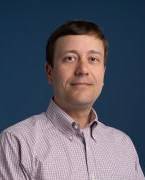
Posy Busby is an Associate Professor in the Department of Botany and Plant Pathology at Oregon State University, affiliated with the College of Agricultural Sciences. Her research focuses on plant microbiome ecology, particularly plant-fungal interactions and their roles in disease dynamics and community ecology. She leads the Busby Lab, which investigates endophyte impacts on plant health and explores microbiome applications in sustainable agriculture and reforestation. Busby has secured grants from USDA-NIFA and participates in the Andrews Forest LTER grant leadership. Her work integrates genomic and ecological approaches to study microbial community assembly, with recent emphasis on Populus and potato systems. Key research themes include host genotype influences on microbiome composition, priority effects in microbial colonization, and microbiome-mediated disease suppression. Collaborative projects, such as the continental-scale Populus mycobiome study with the Peay Lab, highlight her interdisciplinary approach. Busby’s publications emphasize fungal diversity, pathogen interactions, and microbiome functionality. Notable contributions include defining mechanisms of microbiome-plant genotype interactions and identifying beneficial endophytic yeasts in Populus. Her work has been featured in Nature Microbiology , Current Biology , and Annual Review of Phytopathology , reflecting her impact on both fundamental and applied plant science. Grants & Leadership: USDA-NIFA grant (2020), Co-PI on Andrews Forest LTER8 (2022), NSF CAREER Award (2022) Labs/Teams: Busby Lab, part of the OSU Plant Pathology Program Future Work: Expanding microbiome applications in climate-resilient agriculture and forest health
Brenda Konar is a Professor at the University of Alaska Fairbanks (UAF), serving as the Alaska EPSCoR Project Director within the College of Fisheries and Ocean Sciences. Her research focuses on marine biology, phycology, intertidal ecology, and kelp forest dynamics. Key areas include ecosystem change, trophic downgrading, and the impacts of glacial melt and climate variability on subarctic marine ecosystems. She teaches courses such as Scientific Diving and Kelp Forest Ecology, and advises graduate students in marine science. Her work spans projects like Arctic kelp bed monitoring and long-term ecological assessments in Cook Inlet. Current research projects include studying habitat degradation in kelp forests due to glacial melting, detecting long-term changes in Arctic kelp beds, and evaluating nearshore communities in Cook Inlet. She also investigates the ecological consequences of sea otter population collapses and the role of biological and physical drivers in shaping coastal communities. Dr. Konar has received the Chessable Research Award and collaborates on initiatives like the Scientific Diving Program and the Chukchi Sea Offshore Monitoring Project. She actively publishes on topics ranging from kelp decomposition to the effects of marine heatwaves on invertebrates, emphasizing interdisciplinary approaches to understanding subarctic marine ecosystems.
Dr. Zhaoxia Pu is a Professor in the Department of Atmospheric Sciences at the University of Utah and an Adjunct Professor at the School of Computing . Recognized as a Fellow of both the American Meteorological Society and the Royal Meteorological Society, she serves on the NOAA Science Advisory Board and has led 38 federally funded projects from agencies including NOAA, NASA, NSF, DOE, and ONR. Specializes in numerical weather prediction , data assimilation , and AI/machine learning for high-impact weather systems Developed advanced methods integrating satellite/radar data (GOES-R, CYGNSS, TROPICS) with Earth system models (UFS, E3SM, WRF) Recipient of the 2024 Excellence in Research Award and 2023 Provost's Banner Project recognition Research Trends : Her recent publications focus on: Machine learning approaches for precipitation retrieval using GOES-R data Cold fog microphysics and visibility parameterization in complex terrain Tropical cyclone dynamics through radar and lidar data assimilation Boundary layer turbulence in landfalling storms Drought mechanisms linked to synoptic-scale circulation New particle formation in mountainous regions Scientific Leadership : Lead scientist for CFACT NSF field campaign (2021–2025) Editorial board member of leading journals Active reviewer for NSF, DOE, NOAA, and NASA Teaching & Mentorship : Teaches Numerical Weather Prediction , Atmospheric Dynamics , and Introduction to Atmospheric Sciences courses. Has supervised 28 graduate students to completion.
Alejandro Andrade-Rodriguez is an Assistant Professor at the University of Nevada, Reno in the Department of Agriculture, Veterinary & Rangeland Science . His work focuses on optimizing water use in arid and semi-arid agricultural systems through engineering innovations and data-driven approaches. Education: B.S., Universidad Autonoma Chapingo (2007) M.S., University of Arizona (2011) Ph.D., University of Arizona (2013) His research spans: Precision irrigation techniques AI and optimization methods for water management Development of Decision Support Systems (DSS) for farmers Climate resilience in snowmelt-dependent agriculture Wireless sensor networks for irrigation monitoring Machine learning applications in crop stress prediction Recent publications highlight trends in: Integration of climate data into irrigation risk models Machine learning-driven crop yield forecasting Improving cold-weather reliability of solar-powered sensors Soil texture impacts on irrigation efficiency Email: andradea@unr.edu
Sage R. Hiibel is an Associate Professor at the University of Nevada, Reno, affiliated with the Graduate Program of Hydrologic Sciences. His research focuses on environmental engineering, water treatment, and microbial bioremediation, particularly in membrane distillation, nutrient recovery from waste streams, and algal biomass applications. Environmental Engineering Water Treatment and Reuse Microbial Bioremediation Algal Biofuels Nutrient Recovery Systems Sustainable Water-Energy Nexus His recent work (2020–2025) emphasizes microalgae-based methane mitigation , membrane technology integration , and life cycle assessment of resource recovery systems . Key trends include innovations in hydrothermal carbonization , crystallization modeling , and mine drainage bioremediation . Contact: shiibel@unr.edu | Office: LMR 305 | Mail Stop: 0388
Christel Lefrançois is a Lecturer at the University of La Rochelle , France, affiliated with the CNRS scientific institute INEE. She conducts research in fish eco-physiology, bioenergetics, and predator-prey interaction kinematics, focusing on physiological and behavioral responses to environmental stressors like temperature shifts, oxygen variation, and pollutant exposure. Academic Rank: Lecturer Institution: University of La Rochelle Research Affiliation: CNRS INEE Laboratory: AMARE Team Her work spans marine environmental toxicology, climate change impacts on aquatic organisms, and nutritional ecology, particularly omega-3 fatty acid availability. She explores how environmental modifications affect fish metabolism, locomotion, and microbial communities, with recent studies on sunscreen pollution and heatwaves. Analysis of her 15 most recent articles reveals trends in marine pollution , climate adaptation , and nutritional constraints affecting fish physiology. Topics include UV filter contamination, omega-3 deficiency impacts, and microbiota disruption from chemical exposure. Her full portfolio includes collaborations across France and international institutions, with publications in journals like Marine Environmental Research , Aquatic Toxicology , and Journal of Experimental Biology , emphasizing interdisciplinary approaches to environmental challenges.
Dr. Christian Klassert is a researcher at the Department of Economics, Helmholtz Centre for Environmental Research (UFZ) in Leipzig, Germany, where he serves as co-speaker of the Working Group Social-Science Water Research. His work spans international water security projects focusing on Jordan, India, and Germany. Current Position: Postdoctoral Researcher, Department of Economics, UFZ (since 09/2021) Previous Positions: Researcher at UFZ (2017-2021), Researcher at Leipzig University (2014-2017), Research Assistant at UFZ Bioenergy Department (2011-2014), Visiting Postdoctoral Scholar at Stanford University (2022-2023) Dr. Klassert holds a PhD in Economics from Leipzig University (2021), where he received summa cum laude honors for his thesis on decentralized private water service provision in intermittent supply systems in Jordan. He also earned a European Master in Law and Economics and LL.M. from the Universities of Hamburg, Ghent, and Haifa, and a German academic law degree from Mainz University where he ranked second in his state-wide examination. His research combines coupled human-natural systems modeling, agent-based modeling, and econometrics to assess water security impacts of unequal urban water access and agricultural droughts. Klassert contributes to major international projects including the Jordan Water Project, FUSE Project in India's Upper Bhima Basin, and agricultural drought adaptation research through UFZ Graduate Schools AGRI-TRANSFORM and Thirsty Cities. His interdisciplinary approach integrates economic, social, and environmental dimensions of water security challenges. Analysis of his publication record reveals a strong focus on urban water security, particularly examining informal water markets, household water demand under intermittent supply, and the water-energy nexus. His work increasingly incorporates climate change impacts on water resources and agricultural systems, with a growing emphasis on equity dimensions of water access and infrastructure planning. The geographic scope of his research spans the Middle East (particularly Jordan), South Asia (India), and Europe (Germany). Dr. Klassert received the UFZ Research Award in 2022 for his interdisciplinary work assessing future water crisis risks in Jordan. He serves as a reviewer for prestigious journals including Nature Water, One Earth, and Water Resources and Economics, and co-chairs the Working Group Human Systems Modeling within the MultiSector Dynamics community of practice. His research is supported through multiple international projects including the UFZ Graduate Schools AGRI-TRANSFORM and Thirsty Cities, Future Earth project NexusFootprints, Belmont Forum projects FUSE and Jordan Water Project, and BMUB project JordanCap. These projects involve extensive international collaboration with research institutions in Germany, the United States, Jordan, and India. Klassert's work is conducted within the Department of Economics at UFZ, which focuses on interdisciplinary environmental economics research. His projects often involve close collaboration with stakeholders through workshops and participatory approaches, particularly in the Food-Water-Energy Nexus research in Amman, Jordan and Pune, India.
Assoc. Prof. Dr. Wayne FULLER is a faculty member at Near East University's Faculty of Veterinary Medicine, Department of Genetics. He earned his BSc in Zoology from the University of Oxford before pursuing doctoral research at Exeter Universities' Centre for Ecology and Conservation in North Cyprus. Specializing in Mediterranean marine turtle conservation and ecology, his work spans climate change impacts, plastic pollution, and stable isotope applications. Education: BSc in Zoology, PhD in Marine Ecology Current Roles: Head of Department of Genetics, Near East University Key Projects: IUCN Marine Turtle Specialist Group (2017-present), EU Nature 2000 implementation in Cyprus (2008) His recent research explores phenological shifts in sea turtle offspring under climate change, macroplastic ingestion patterns, and avian conservation in Mediterranean forests. Publications emphasize ecological monitoring, habitat connectivity, and conservation technology applications like GPS and stable isotopes. Scientific recognition includes: Member of IUCN Marine Turtle Specialist Group
Kalle Matias Leppälä is a postdoctoral researcher at the University of Helsinki's Faculty of Biological and Environmental Sciences, affiliated with the Organismal and Evolutionary Biology Research Programme. His work focuses on population genetics, statistical modeling, and evolutionary biology through computational approaches. Recent research includes Bayesian Gaussian process models for variance component estimation, generalized D-statistic methods for admixture analysis, and mathematical formulations for odds ratio calculations. His computational work intersects with ecology and genomics. He participates in the TreeBio Center of Excellence (2024–2026), funded by the Research Council of Finland, exploring tree biology and population dynamics. Current projects emphasize genetic admixture patterns in Arctic populations and statistical methodology development.
James Schnable serves as the Charles O. Gardner Professor of Agronomy in the Department of Agronomy and Horticulture at the University of Nebraska-Lincoln. His research integrates genomic, phenomic, and environmental data to advance crop breeding methodologies for maize and sorghum, with particular emphasis on climate-resilient varieties. Dr. Schnable's research program spans plant genomics , high-throughput phenomics , and quantitative genetics , focusing on genetic dissection of nitrogen use efficiency, photosynthetic traits, and stress tolerance mechanisms. His laboratory pioneers UAV- and satellite-based phenotyping systems, machine learning applications for image analysis, and genomic prediction models that bridge genotype-phenotype gaps under variable environmental conditions. Key innovations include nighttime fluorescence phenotyping to reduce environmental noise and spectral feature extraction for accelerated trait assessment. Analysis of his 2021-2025 publications reveals consistent leadership in genotype-environment interaction studies and computational phenotyping , with dominant themes including transcription factor binding site variation explaining heritability, nonphotochemical quenching kinetics in stress responses, and scalable satellite-based yield prediction methods. His work frequently employs the Genomes to Fields Initiative infrastructure for multi-state field validation. Charles O. Gardner Professorship Dr. Schnable directs an active research program involving advanced sensor networks, genomic selection pipelines, and multi-institutional field trials. His team develops computational frameworks like PlantSegNet for 3D plant reconstruction and SPARC-LoRa for agricultural IoT applications. While specific grant details aren't provided in source materials, his extensive publication record in high-impact journals indicates sustained funding from major agricultural research programs. The laboratory maintains cutting-edge phenotyping infrastructure including UAV fleets, hyperspectral imaging systems, and gas sensor networks for early stress detection. Current projects focus on nitrogen-responsive growth trajectories, chilling tolerance mechanisms in panicoid grasses, and gut microbiome interactions with grain composition, reflecting an integrative approach from molecular mechanisms to field performance.
Dr. Lea Svendsen is an Associate Professor at the Geophysical Institute , University of Bergen, Norway. She specializes in climate dynamics, with particular focus on internal climate variability across multiple timescales (interannual to multidecadal), inter-basin interactions, and climate prediction systems. Her work connects tropical and extratropical climate phenomena, particularly examining Pacific-Atlantic-Arctic linkages and their implications for global climate patterns. Education: PhD in Climate Dynamics (2016, University of Bergen) Key Collaborations: University of Bergen, Norwegian Research Center (NORCE), Universidad Complutense de Madrid Research Interests : Dr. Svendsen's work investigates: Mechanisms of internal climate variability across timescales Teleconnection patterns between tropical and high-latitude regions Inter-basin interactions (Pacific-Atlantic-Arctic) Norwegian Climate Prediction Model (NorCPM) development and application Climate services for renewable energy applications Publication Trends : Her 15 most recent publications (2021-2025) demonstrate consistent focus on: Pacific and Atlantic contributions to Arctic warming Monsoon variability and ocean-atmosphere coupling Model uncertainty quantification in climate science Climate prediction systems and reanalysis development ENSO-Atlantic interactions under changing climate Climate services applications for societal sectors Scientific Engagements include: Academic and popular science lectures on Arctic warming and climate change Media interviews about El Niño impacts and climate trends Conference presentations at Ocean Sciences Meeting, Japan Geophysical Union, SPARC General Assembly Contributions to CMIP6 DCPP decadal prediction framework
Ana Bastos is a Professor of Land-Atmosphere Interactions at the Institute of Earth System Science and Remote Sensing, University of Leipzig, since May 2024. She has previously held positions as a Research Group Leader at the Max Planck Institute for Biogeochemistry (2020–2024), Research Assistant at Ludwig Maximilian University of Munich (2018–2020), and PostDoc at the Laboratoire des Sciences du Climat et de l'Environnement in France (2015–2018). Her academic journey began with a PhD in Geophysics and Geoinformation Sciences from the University of Lisbon (2015) and an MSc in Energy and Environmental Engineering (2011). Her research focuses on understanding interannual to long-term variability in the global carbon cycle, integrating atmospheric science, ecology, and biogeochemistry from both observational and modeling perspectives. She investigates the links between internal climate variability and ocean-atmosphere-land teleconnections, as well as the impacts of climate extremes on ecosystem functioning and disturbance regimes. Her work often employs Earth observation data and multi-scale modeling to reconcile carbon budgets and improve climate projections. Recent publications highlight her expertise in carbon cycle dynamics, climate extremes, and ecosystem resilience. Key topics include compensatory effects in climate models, deforestation impacts on drought vulnerability, and regional greenhouse gas budget assessments. Her projects, such as ForExD and NextGenCarbon, address forest vulnerability and Earth's carbon balance under climate change. Early Career Scientist Award, Biogeosciences Division, European Geosciences Union (2022) ERC Starting Grant (2022) Elected President of EGU's Biogeosciences Division (2024) Prof. Bastos teaches courses like "Climate and Water" (BSc), "Earth System Components" (MSc), and "Earth System Modeling" (MSc). She is actively involved in initiatives promoting diversity, inclusion, work-life balance, and mental health in academia.
Dr. Robert G. Chambers is a Professor in the Department of Agricultural and Resource Economics at the University of Maryland's College of Agriculture and Natural Resources. He serves as Editor-in-Chief of the Journal of Productivity Analysis and maintains an active research program spanning production theory, agricultural economics, and decision-making under uncertainty. Education: B.S.F.S. in International Relations, Georgetown University (1972) M.S. in Agricultural and Resource Economics, University of Maryland (1975) Ph.D. in Agricultural and Resource Economics, UC Berkeley (1979) His research integrates neoclassical production economics with agricultural applications, focusing on uncertainty, risk analysis, and productivity measurement. Recent work examines agricultural total factor productivity, environmental accounting in productivity frameworks, and weather risk management through index-based approaches. He bridges theoretical economics with practical policy applications in agricultural and resource management. Analysis of his 2020-2022 publications reveals a cohesive research trajectory centered on methodological advancements in production economics applied to agricultural contexts. Key contributions include foundational work on distance functions, production under uncertainty, and environmental integration in productivity accounting, often through OECD collaborations. His scholarship demonstrates rigorous theoretical grounding coupled with real-world relevance for agricultural policy. No specific scientific awards are documented in the provided materials, though his editorial leadership of the Journal of Productivity Analysis and invitations to contribute to major handbooks like the Handbook of Production Economics indicate significant professional recognition within the field. Professor Chambers advises graduate students in agricultural and resource economics and has secured research funding enabling collaborations with international organizations including the OECD. His work on agricultural productivity measurement and environmental accounting reflects sustained grant-supported research activity, though specific grant details are not enumerated in the source texts. He maintains academic affiliations through the Department of Agricultural and Resource Economics and contributes to scholarly discourse via editorial work and handbook authorship. While no dedicated research laboratory is described, his collaborative projects with institutions like the OECD demonstrate active participation in international research networks focused on agricultural productivity and environmental economics.
Dr. Anthony J. Parolari is an Associate Professor in the Department of Civil, Construction and Environmental Engineering at Marquette University. He holds a Ph.D. in Civil and Environmental Engineering from MIT (2012) and has previously taught courses in engineering computing, urban hydrology, and ecohydrology. Education: Ph.D., 2012, Civil and Environmental Engineering, Massachusetts Institute of Technology M.S.E., 2005, Environmental Engineering, University of Michigan B.S.E., 2004, Civil Engineering, University of Michigan His research focuses on the interactions between hydrology and ecosystems, particularly in urban and engineered environments. Key areas include watershed hydrology, ecohydrology, stormwater management, nutrient cycling, and climate change impacts on urban water systems. He develops quantitative models to link hydrologic variability to ecosystem processes, aiming to improve urban water infrastructure design and real-time control technologies. Analysis of his recent publications reveals trends in machine learning for flood prediction, nutrient management in green infrastructure, and ecohydrological responses to climate variability. His work often integrates experimental data with theoretical models to address water quality and quantity challenges. Dr. Parolari leads grants from the National Science Foundation (NSF), Minnesota Department of Transportation (MnDOT), and Milwaukee Metropolitan Sewerage District (MMSD), focusing on sustainable stormwater solutions and real-time control systems. He collaborates with institutions like MIT, University of Michigan, and Duke University on research initiatives. His team at Marquette’s Water Quality Center investigates soil biogeochemistry in engineered ecosystems, leveraging field studies and simulations to optimize stormwater wetlands and green roofs.
Dr. Yun Qian is a distinguished Earth Scientist and Lab Fellow at Pacific Northwest National Laboratory (PNNL), where he leads the Earth System Modeling Group with over 80 scientists and staff within the Atmospheric, Climate, and Earth Sciences (ACES) Division. He joined PNNL in 2000 and has established himself as a renowned expert in climate modeling, particularly in regional climate systems, aerosol-climate interactions, and urban climate effects. Dr. Qian is also an AMS Fellow with significant contributions to understanding human influences on the Earth system. Dr. Qian received his academic training in China: Ph.D. in Atmospheric Science from Nanjing University, Nanjing, China B.S. in Atmospheric Science from Nanjing University, Nanjing, China Dr. Qian's research focuses on advancing our understanding of climate systems through sophisticated modeling approaches. His work spans regional and global climate modeling, aerosol-climate interactions, snow and glacier impurities and their climatic impacts, land-atmosphere-water interactions, urban and coastal environment modeling, and uncertainty quantification in climate modeling. His pioneering work on Asian aerosols revealed their dominant role in shaping climatic trends in East Asia, while his research on snow and ice impurities provided new insights into changes in snowpacks in the western United States and the Himalayas. Dr. Qian has also made significant contributions to understanding how atmosphere-land-water interactions modulate the influence of human activities on the environment. Analysis of Dr. Qian's recent publications shows a strong focus on urban climate effects, regional climate modeling, and the impacts of human activities on climate systems. His work increasingly incorporates advanced computational methods including machine learning for weather pattern identification. There's a clear trend toward studying the interactions between urban environments and climate systems, with particular attention to heat stress, precipitation patterns, and regional warming effects. His research also shows growing interest in extreme weather events and their changing patterns under climate change scenarios. Dr. Qian has received numerous prestigious awards and recognitions: Fellow of American Meteorological Society Chair of AMS Coastal Environment Committee Program Chair for Annual AMS Coastal Environment Symposium Editor of JGR-Atmospheres, Atmospheric Chemistry and Physics, and Advances in Atmospheric Sciences Director of international workshop on Uncertainty Quantification in Climate Modeling and Projection Member of Scientific Steering Committee for IPCC CMIP6 Global Monsoons Modeling Inter-comparison Project NSR 2020 Best Paper AAS Esteemed Review Paper Award PNNL Exceptional Contribution Program Award PNNL EBSD Mentor of the Year Editors' Citation for Excellence in Refereeing at AGU (2015, 2019) Contributing Author of IPCC Assessment Report Fellowship Award of International Council for Science (ICSU), 1997 Xue-Du-Feng-Zheng Award in Chinese Academy of Sciences, 1998 With over 200 peer-reviewed articles and 20,000 citations (h-index of 74), Dr. Qian has made substantial contributions to climate science. His work has garnered significant media attention, with features in top-tier scientific publications like Nature and Science, as well as major news outlets including the Associated Press, New York Times, Washington Post, BBC, NBC, and NPR. He has served as chair of the AMS Coastal Environment Committee, Program Chair for the Annual AMS Coastal Environment Symposium, and as a member of the Scientific Steering Committee for the IPCC CMIP6 Global Monsoons Modeling Inter-comparison Project. Dr. Qian has also directed international workshops on uncertainty quantification in climate modeling and served as an editor for three prestigious journals. Dr. Qian leads the Earth System Modeling Group at PNNL, which comprises over 80 scientists and staff. His team focuses on developing and applying atmospheric and land surface models to advance understanding of human influence on the Earth system. The group's work spans regional climate modeling, aerosol-climate interactions, snow and glacier impurities, land-atmosphere-water interactions, urban and coastal environment modeling, and uncertainty quantification. Their research has significant implications for understanding climate change impacts and developing adaptation strategies.