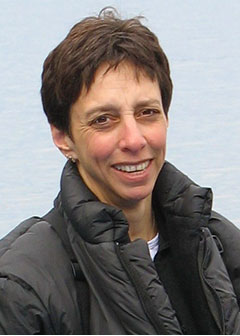
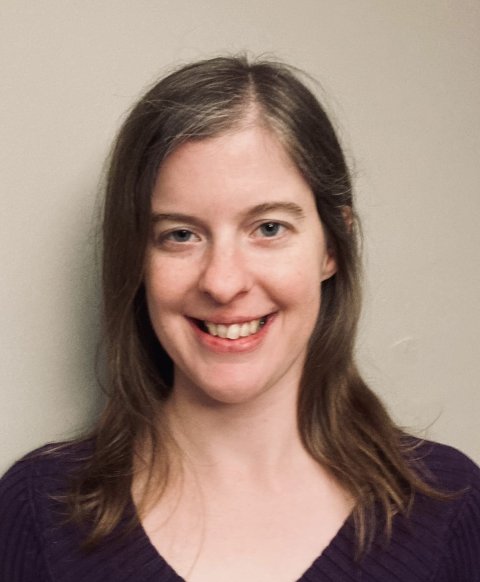
Brenda Konar is a Professor at the University of Alaska Fairbanks (UAF), serving as the Alaska EPSCoR Project Director within the College of Fisheries and Ocean Sciences. Her research focuses on marine biology, phycology, intertidal ecology, and kelp forest dynamics. Key areas include ecosystem change, trophic downgrading, and the impacts of glacial melt and climate variability on subarctic marine ecosystems. She teaches courses such as Scientific Diving and Kelp Forest Ecology, and advises graduate students in marine science. Her work spans projects like Arctic kelp bed monitoring and long-term ecological assessments in Cook Inlet. Current research projects include studying habitat degradation in kelp forests due to glacial melting, detecting long-term changes in Arctic kelp beds, and evaluating nearshore communities in Cook Inlet. She also investigates the ecological consequences of sea otter population collapses and the role of biological and physical drivers in shaping coastal communities. Dr. Konar has received the Chessable Research Award and collaborates on initiatives like the Scientific Diving Program and the Chukchi Sea Offshore Monitoring Project. She actively publishes on topics ranging from kelp decomposition to the effects of marine heatwaves on invertebrates, emphasizing interdisciplinary approaches to understanding subarctic marine ecosystems.
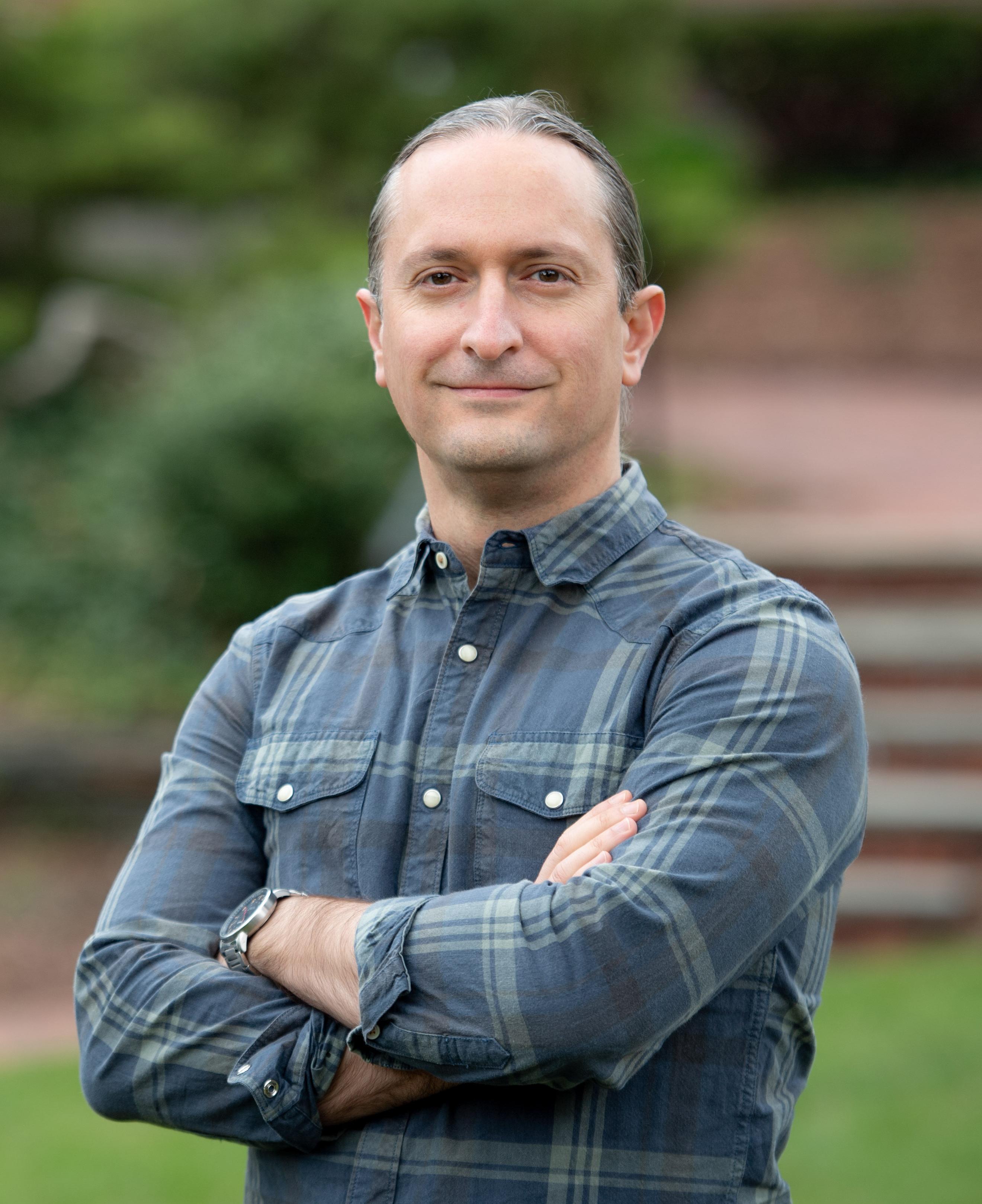
Joshua Schimel is a Professor and Associate Dean of Mathematical, Life, and Physical Sciences (MLPS) at the University of California, Santa Barbara. His research integrates microbial ecology and biogeochemistry to understand how soil microbial communities regulate ecosystem-scale carbon and nitrogen cycling, with field sites spanning Arctic tundra, California grasslands, and Kenyan savannas. His primary research investigates soil carbon dynamics under climate change, focusing on microbial control of carbon storage and release. Work emphasizes bridging scales from microbial processes to ecosystem functions, particularly in water-limited environments experiencing wetting/drying cycles. Recent studies examine drought effects on microbial respiration, nitrogen export from drylands, and megafauna impacts on nutrient cycling. Schimel's publications demonstrate consistent focus on microbial mediation of biogeochemical cycles under global change. Key themes include soil carbon persistence mechanisms, nitrogen transformation responses to precipitation changes, and microbial metabolic efficiency across ecosystems. Methodologically, his work combines field experiments with theoretical modeling to advance predictive understanding of soil processes. Scientific Awards: Aldo Leopold Leadership Fellow Fellow, Ecological Society of America Fellow, American Academy of Microbiology Career Achievement Award, Soil Ecology Society He leads the Schimel Lab at UCSB, which integrates experimental approaches with modeling to study soil microbial communities and their ecosystem functions. The lab maintains active collaborations across multiple continents and ecosystems.
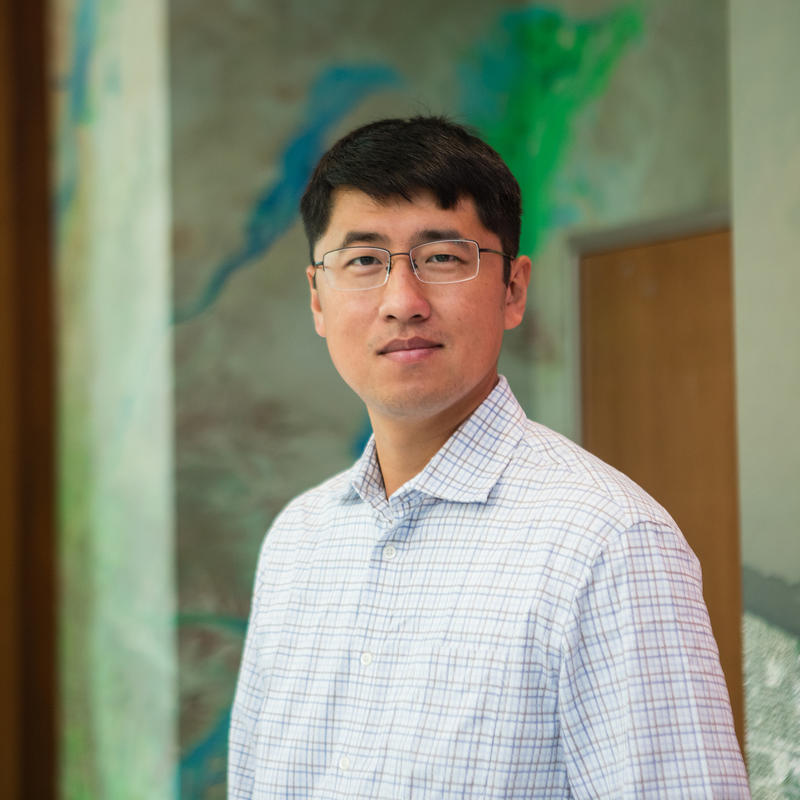
Longxiang Li is an Assistant Professor in the Gangarosa Department of Environmental Health at Emory University's Rollins School of Public Health. His research focuses on environmental pollutants' human health impacts, particularly unconventional oil and gas development (fracking) and radon exposure. Funded by NIH, he develops satellite-based machine learning models to assess exposure risks. Before joining Emory in 2024, he studied/worked at Harvard T.H. Chan School of Public Health. Education: Sc.D. from Harvard T.H. Chan School of Public Health; M.S. from Chinese Academy of Sciences; B.S. from China University of Geosciences (Beijing). Research interests include exposure assessment, spatial analysis/GIS, and machine learning applications in environmental health. Notable work includes high-resolution radon models and collaborations with the White House on radon-related lung cancer prevention strategies. Key articles focus on radon's effects on asthma, cancer, and pregnancy outcomes, using advanced modeling techniques. His work bridges environmental data science with public health policy. Affiliations: International Society of Environmental Epidemiology, International Society of Exposure Science, American Chemistry Society.
Dr. Tamar Kohn is a Full Professor at EPFL, leading the Laboratory of Environmental Virology (LEV) within the Institute of Environmental Engineering (IIE), School of Architecture, Civil and Environmental Engineering (ENAC). She holds additional roles as Director of the IIE-GE unit and serves on the ENAC School Direction. Her expertise focuses on environmental virology, waterborne pathogens, and disinfection mechanisms. Education: 2000–2004: PhD in Environmental Engineering, Johns Hopkins University 1999: Diploma in Environmental Sciences, ETH Zurich 2004–2006: Postdoc at UC Berkeley Research Interests: Her work investigates viral behavior outside hosts, particularly in water and air. Key areas include viral inactivation mechanisms, environmental stability of pathogens, and applications in wastewater surveillance. She explores how factors like pH, salinity, organic compounds, and microbial interactions influence virus survival and transmission. Key Contributions: Recent studies highlight aerosol pH's role in influenza stability, bacterial promotion of viral inactivation in lakes, and mpox monitoring via wastewater. Her lab also models virus transport in Lake Geneva under climate change scenarios. Advising & Grants: Supervised over 20 PhD students, including Chaojie Li (2023), Aline Schaub (2024), and Margot Olive (2022). Her research leverages advanced techniques like mass spectrometry and metagenomics for pathogen detection. Labs/Teams: Leads the LEV lab, collaborating on projects combining virology, environmental chemistry, and engineering to combat waterborne and airborne diseases.
Dr. Narcisa Pricope is Professor of Geography and Geospatial Science in the Department of Geosciences at Mississippi State University (MSU) and concurrently serves as Associate Vice President for Research in MSU’s Office of Research and Economic Development. Previously, she spent a decade at the University of North Carolina Wilmington (UNCW) where she founded and directed multiple high-profile programs, including the NSF-funded Coastal UAS Observatory and the USGIF-accredited Geospatial Intelligence certificate. Education PhD in Geography (minor Environmental Engineering), University of Florida, 2011 MSc in Geosciences, Western Kentucky University, 2006 BA in Geography and English, Babeș-Bolyai University, Cluj-Napoca, Romania, 2004 Research Interests Dr. Pricope is a land-systems scientist who integrates geospatial modelling, remote sensing, and unoccupied aerial systems (UAS) to investigate complex socio-ecological interactions at the food-water-energy nexus. Her work emphasizes understanding environmental variability and human vulnerability to land degradation, drought, and climate change, with a strong commitment to community-engaged research across dryland regions in eastern and southern Africa, Peru, Nepal, and coastal/inland North America. Key methodological thrusts include: Advanced machine-learning and geostatistical analytics Multi-scale remote sensing (satellite, airborne, UAS) Topobathymetric LiDAR for coastal and inland water management GeoAI and geospatial intelligence capacity building Research Trends from Recent Publications Across more than 50 peer-reviewed articles, Dr. Pricope’s recent work demonstrates a pronounced focus on global drying trends, precision mapping of coastal and inland ecosystems, and the deployment of machine-learning techniques to tackle environmental challenges such as salinity intrusion, vegetation classification, and heavy-metal contamination. A strong policy-oriented thread is evident, with several 2024–2025 publications calling for urgent adaptive solutions to aridification and integrating climate policy with disaster planning. Scientific Awards 2022 UNCW Graduate Faculty Mentor Award 2022 Discere Aude Mentorship Award 2021 UNCW College of Arts and Sciences Research Award Grants & Strategic Initiatives Dr. Pricope has secured funding from NSF, NASA, NOAA Sea Grant, USAID, World Bank, Global Environment Facility, NCDOT and NGA, among others. At MSU she leads strategic initiatives in climate resilience, GeoAI programming, and university-wide research support. Laboratories & Teams She previously directed the NSF-funded UNCW Coastal UAS Observatory and oversaw the FAA Collegiate Training Initiative in UAS, positioning UNCW as a national hub for geospatial intelligence education and research. At MSU, she continues to foster interdisciplinary collaboration across geosciences, engineering, and social sciences.
Robert Hall is an Associate Professor in the School of Environmental Sciences at the University of East Anglia, affiliated with the Centre for Ocean and Atmospheric Sciences and Collaborative Centre for Sustainable Use of the Seas. He holds a PhD in Physical Oceanography from University of Liverpool (2009) and MOcean degree from University of Southampton (2005). His research focuses on shelf sea and deep ocean fluid dynamics with emphasis on flow-topographic interactions, internal wave generation, turbulent mixing processes, and interdisciplinary impacts on biogeochemical fluxes. He utilizes autonomous platforms like ocean gliders and leads international field campaigns in challenging environments including Antarctica and the Galápagos. His recent publications demonstrate strong focus on polar processes, ocean mixing mechanisms, and climate interactions, with consistent themes in ice shelf dynamics, internal wave impacts, and advanced observational techniques across 15+ studies. Awards: Challenger Society for Marine Science Fellow (2021) Research Leadership: Principal Investigator for multiple NERC projects including MISSING LINK, eSWEETS3 and PISCES Coordinates PhD students working on internal wave dynamics, carbon cycling, and Antarctic processes Leads the UEA Glider Group conducting worldwide missions
Andrew Scherer is the Pierre and Patricia Bikai Professor of Anthropology and Archaeology at Brown University, where he also serves as Director of the Joukowsky Institute for Archaeology and the Ancient World. His work focuses on Mesoamerican (particularly Maya) archaeology, integrating bioarchaeology, landscape analysis, and political studies to examine Classic Maya polities along the Usumacinta River. Co-directs interdisciplinary projects in Mexico/Guatemala (Lacanja Tzeltal, Piedras Negras, Tikal, El Zotz, Yaxha) Research themes: mortuary archaeology, ritual practice, warfare, political organization, and diet/subsistence Selected Publications : As the Gods Kill: Morality and Social Violence among the Precolonial Maya (2025), Mortuary Landscapes of the Classic Maya (2015), and co-edited volumes including Substance of the Ancient Maya (2024) and Embattled Bodies, Embattled Places (2014). Research Funding : Multiple NSF grants (2003-2015) National Geographic Society support (2009) Wenner-Gren and Heinz Trust grants Academic Affiliations : Society for American Archaeology, Dental Anthropology Association, Dumbarton Oaks (as Pre-Columbian Fellow 2008-2009) Teaching : Courses on human evolution, bioarchaeology, Maya violence studies, and archaeological principles at Brown University.
Maninder Singh is an Associate Professor of Cropping Systems Agronomy at the Department of Plant, Soil and Microbial Sciences, Michigan State University (MSU), located within the College of Agriculture & Natural Resources. His research focuses on improving the productivity, profitability, and resiliency of Michigan's cropping systems through optimized variety selection and management strategies, particularly in corn, soybean, and wheat systems. His work integrates climatic patterns, modern farming practices, and economic conditions to address emerging challenges like mycotoxin contamination, soil health, and pest interactions. Education: Ph.D., University of Florida (Agronomy); M.S., Punjab Agricultural University (Agronomy); B.S. (Hons.), Guru Nanak Dev University (Agriculture). Research Interests: Cropping systems, precision agriculture, crop physiology, climate resilience, and sustainable farming practices. Key Focus Areas: Mycotoxin management in silage crops, soil biological health, and optimizing planting strategies for Michigan's climatic conditions. Dr. Singh's publications (2023–2025) highlight advancements in corn kernel moisture estimation, soybean nitrogen fixation, and biochar application impacts. He collaborates widely with institutions like the Kellogg Biological Station and engages in farmer-focused research to bridge practical agricultural challenges with scientific solutions. Teaching: CSS212 Advanced Crop Production (since 2017). Labs: Cropping Systems Agronomy Lab.
Prof. Markus Meier is a leading academic in physical oceanography and climate modeling, affiliated with the Leibniz Institute for Baltic Sea Research (IOW) and the University of Rostock. He holds a professorship at Rostock and leads the Department of Physical Oceanography at IOW. His work focuses on numerical modeling of the Baltic and Arctic Seas, climate change impacts, and biogeochemical cycles. Key roles include Head of the Oceanographic Research Unit (2006–2015) and adjunct professorships at Stockholm University (2006–2015). Education highlights include a Ph.D. in theoretical oceanography from the University of Kiel (1996) and extensive postdoctoral research at the Rossby Centre (SMHI). His research spans sea ice modeling, saltwater inflows, and hypoxia dynamics, with a focus on regional climate system interactions. Key research interests include: numerical ocean modeling, climate variability, Baltic Sea ecosystem dynamics, and deoxygenation processes. Recent studies address future climate projections, marine heatwaves, and the impact of anthropogenic and natural drivers on marine systems. Publications highlight contributions to understanding Baltic Sea oxygen depletion, Atlantic climate influences, and coupled climate system modeling. He chairs major initiatives like Baltic Earth, advancing interdisciplinary Earth system research in the region.
Dr. Mohammad Naraghi is a Professor in the Department of Mechanical Engineering at Manhattan University, specializing in thermal analysis of rocket engines, sustainable building systems, and radiative heat transfer. His research focuses on rocket thermal evaluation (RTE), solar energy optimization, and crystal growth processes. He holds a PhD from the University of Akron, MS from the University of Wales, and BS from the University of Tehran. Research areas include: Thermal modeling of regeneratively cooled rocket engines Radiative heat transfer in enclosures and aerospace systems Solar energy systems optimization (panel orientation, photovoltaic plants) Energy dynamics of green buildings and data centers CFD analysis of fluid flow and heat transfer in propulsion systems His 30+ years of publications span advanced thermal modeling techniques, including RTE software development and stochastic methods. Key contributions include NASA-recognized rocket engine thermal models and a patented seasonally selective building façade. Grants include NASA-funded rocket thermal research and ARPA/AFOSR crystal growth projects. Awards include ASME Fellow, AIAA Associate Fellow, and multiple NASA/ASEE fellowships. Teaching includes courses on solar energy systems, fluid mechanics, and green building energy dynamics. Advises graduate students in mechanical engineering and contributes to industry partnerships through applied thermal research.
Elizabeth Wallace is an Assistant Professor of Coastal Geology and Climate Science at Old Dominion University's College of Sciences. She is affiliated with the Coastal Climate Hazards Lab and focuses on paleoclimatology, coastal geomorphology, and paleotempestology. Her work integrates sediment core analysis with climate models to study long-term coastal climate extremes like hurricanes and nor'easters, particularly their links to sea level rise and ecosystem impacts. Education: B.S. in Civil Engineering and Philosophy from University of Virginia (2015); Ph.D. in Paleoceanography from MIT/Woods Hole Oceanographic Institution (2020). Postdoctoral research at Rice University. Research emphasizes reconstructing historical storm activity through blue hole sediment records in the Bahamas and Caribbean, analyzing hydroclimate dynamics in the Mississippi River Basin, and developing proxy systems combining tree-ring data with coastal sediments. Her studies address climate change impacts on coastal processes and inform risk assessment strategies. Her publications span over 20 peer-reviewed articles since 2015, focusing on multi-century hurricane frequency patterns, climate variability drivers, and coastal sedimentary archives. Ongoing projects include assessing storm surge risks using integrated climatological-hydrodynamic models and refining paleohurricane reconstruction methodologies.
Ana Dyreson is an Assistant Professor in Mechanical and Aerospace Engineering at Michigan Technological University and Associate Research Director at the Center for Innovation in Sustainability & Resilience (CISR). She leads the Great Lakes Energy Group, focusing on climate change impacts on electric power systems , energy transitions in cold climates , and thermal power plant modeling . Her work bridges solar photovoltaic design , electricity grid operational modeling , and the energy-water nexus . Education : PhD in Mechanical Engineering, University of Wisconsin–Madison (2018) MS in Mechanical Engineering, Northern Arizona University (2014) BS in Engineering Mechanics, University of Wisconsin–Madison (2011) Research emphasizes climate-resilient energy systems , particularly solar energy in cold climates and grid-scale modeling . Her 2025-2022 publications investigate snow mitigation on PV panels , heat pump adoption , floating solar-hydropower hybrids , and climate stressor impacts on thermoelectric plants . She develops inclusive teaching methods and advises on renewable energy deployment through initiatives like the Tech Forward Initiative on Sustainability and Resilience . Her team collaborates on multisector dynamics and energy-water-climate research in the Great Lakes region.
Dr. Andrew Beacham is a Senior Lecturer in Sustainable Crop Production at Harper Adams University. His work focuses on improving crop resilience to environmental stresses through whole-plant stress physiology studies in Brassica, lettuce, carrot, onion, and culinary herbs. He leads and collaborates on projects funded by Defra, BBSRC, and AHDB, aiming to enhance crop performance under climate variability. Research interests include abiotic stress tolerance (drought, salinity, waterlogging), molecular trait analysis (QTLs), and soil-borne pathogen detection. He is affiliated with the Crop Science Group and Agroecology for Sustainable Food Systems research groups at Harper Adams. Teaching expertise spans Sustainable Crop Production, Plant Physiology, Plant Breeding, and Academic Writing. His recent grants include BBSRC-supported PhD projects on climate resilience in Brassicas and lettuce tipburn analysis, as well as AHDB-funded studies on oomycete control in protected environments. Current projects include the Vegetable Genetic Improvement Network (VeGIN), aiming to identify stress-resilient crop varieties through genomic and physiological analyses. Collaboration with Warwick University and industry partners ensures practical application of research findings in breeding programs.
João Miguel Rocha is an academic with diverse roles in Food Science and Engineering. He holds a PhD from the University of Lisbon (2011) and a B.Sc. in Biological Engineering from the University of Minho (1991-1996). His career includes positions such as Assistant Professor at the University of Minho (2017-2018), Lecturer at the Instituto Superior de Engenharia do Porto (2023-2024), and Researcher roles at institutions like the University of Helsinki (2000) and Universidade Nova de Lisboa (2011). Currently, he serves as a Technology Valorization Technician at INESC TEC (2024-2025). His research focuses on food microbiology, fermentation processes, and sustainable food systems, with emphasis on sourdough biotechnology, functional foods, and valorization of industry by-products. He has led and contributed to projects such as SOURDOMICS (COST Action CA18101) and NUTRALLERPHEN , exploring dietary polyphenols and microbial metabolites. His work bridges academia and industry, addressing food safety, nutrition, and environmental sustainability. Key collaborations include studies on colostrum, probiotics, and plant extracts for health applications. Education PhD in Food Science and Engineering, University of Lisbon (2011) B.Sc. (5-year) in Biological Engineering, University of Minho (1991–1996) Research Interests Dr. Rocha’s work spans food microbiology , fermentation technology , and nutraceutical development . He investigates microbial communities in sourdough, biopreservation strategies, and the application of food by-products for functional ingredients. His studies on gamma-aminobutyric acid (GABA) formation in legumes and phytochemicals in plants highlight his focus on health-promoting compounds. He also explores life cycle assessment (LCA) for sustainable food systems. Grants & Projects EU-funded SOURDOMICS (2019–2023): Network for sourdough biotechnology innovation NUTRALLERPHEN (2019–present): Dietary polyphenols as allergy prophylactics SAVAGE : Wild fruit nutritional characterization in Morocco Labs & Teams He leads the Food Polyphenol Lab , focusing on extraction and application of bioactive compounds from agri-food by-products. Collaborates with institutions like the University of Helsinki , INESC TEC , and the International Society for Microbial Ecology (ISME) .
Miao Li is a Senior Lecturer in Engineering at Charles Sturt University, affiliated with the School of Computing, Mathematics and Engineering. She is a member of the Imaging and Sensing Research Group and the Sustainability in Engineering Research Group (SERG) at the Gulbali Research Institute. Her academic journey includes a PhD in Civil Engineering from Griffith University and earlier degrees in geological and engineering geology from Chinese institutions. Doctor of Philosophy (Civil Engineering) Master of Science (Geological Engineering) Bachelor of Science (Engineering Geology) Dr Li's research spans computational mechanics, numerical modeling, wastewater treatment, and non-linear structural dynamics, with a strong focus on sustainable engineering solutions. Her work contributes to UN Sustainable Development Goals through innovations in geotechnical systems, energy storage, and low-carbon construction. She has published extensively in top journals, with recent work focusing on adaptive mesh refinement, rock damage modeling, and frost heave in soils. Her recent publications highlight a trend toward high-fidelity numerical simulations and experimental validation in geotechnical and structural systems, particularly under extreme or cyclic loading conditions. She applies computational fluid dynamics and finite element methods to solve complex engineering problems in energy, infrastructure, and environmental resilience. Executive Dean Teaching Award (2024) Fellow of Advance HE (2025) Dr Li is a registered thesis supervisor and actively mentors students through research projects and industry placements. She has secured research recognition through awards and grants, and her work is frequently covered in press and media, reflecting its real-world impact. She participates in major international conferences in ocean, offshore, and structural engineering, and contributes to editorial and academic organizing roles. She leads research initiatives within the Imaging and Sensing Research Group and SERG, focusing on smart sensing, sustainable materials, and computational modeling for resilient infrastructure.